Getting Stoned in Kenya

phone 27 236

Everything changed when the police started shooting.

High school students had blocked the road to Namanga, so no-one could cross the border. They were protesting because their school had been waiting five years for a bus to be delivered. Trucks and cars were backed up on each side of the road. Drivers stood around chatting and texting their mates. The protesters danced and chanted. One boy pogoed high in the air, as if performing a set piece for tourists. We jumped out of the bus to enjoy the mid-morning sun. Maasai herdsmen strolled along the track by the side of the road in scarlet robes; they carried traditional knobkerrie clubs in one hand, but one held a mobile phone to his ear with the other. A snake nosed out of a bush. Meerkats sat up and took notice then vanished. A vulture settled on an acacia tree.

Then the police arrived. There were half a dozen of them to fifty or more protesters, but they were just kids and the policemen were big, intimidating men; and they had automatic rifles, tear gas and riot shields. Disperse and go home, the senior one said, or words to that effect in Swahili. But the protesters carried on chanting and dancing. The drivers carried on chatting and texting their mates. We carried on enjoying the sun. The vulture left its perch.

The policemen were frustrated at being ignored and started firing over the heads of the protesters, who scattered, except a boy of somewhere around thirteen who lay on the road in a puddle of blood. Someone said he was dead; someone else said just badly injured. He had been shot; no, hit by a rock; no, trampled by fleeing protesters. No one really knew what had happened.

We got back on the bus in an orderly panic and the drivers melted back to their cars. Then the riot began. The protesters flung stones and they thumped off riot shields. The police replied with tear gas. But the tear gas ran out before the stones and the police sprinted across the plain out of sight.

The protesters, then, stormed down the road, stopping to pick up more stones, determined to throw them at someone. When they stopped level with the bus, we dived onto the floor and the stones came through every window. I held my daypack over my head while more stones hammered into the panels beneath the windows and a few landed inside. A chunk of compacted glass went down the back of my shorts; I was bleeding from a cut on my arm. More protesters passed, right by us, banging on the side of the bus as we stayed down on the floor and hoped they would not try to get in.

Then they were gone and it was quiet and we got up and abandoned the bus and walked to a nearby campsite, emptying the glass out of our clothes as we walked. The road was clear within a few hours and we crossed into Tanzania a bit later than planned and I never found out for sure what happened to the boy who was laid in the road.

No doubt the school is still waiting for its bus.

(c) Richard Senior 2014
Salty, Spicy, Sour and Sweet: Eating in Bangkok

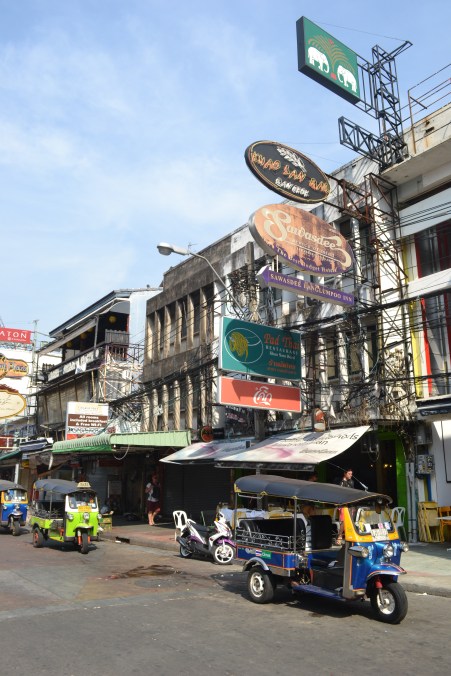
All along the street, there are pushcarts piled up with food; with fried chicken, grilled octopus, satays, spring rolls, meatballs, noodle soup, and pad thai, which the vendor will make to order in seconds. She throws diced chicken into a hot wok, adds beansprouts and rice noodles, an egg if you want one, then soy sauce and tamarind, tosses it together and tips it onto a paper plate. You add a handful of chopped peanuts, a few dried shrimps, a sprinkle of sugar, a glug of fish sauce, chilli flakes, chilli sauce and pickled chilli slices.

My guidebook grumbled that the pad thai from carts around Khao San Road is not authentic, and doubtless it is not, but it was at least as good as I would get in my local Thai restaurant, and I was not complaining for the price of a packet of crisps back home.

DSC_0034

The first few times I ate out in Thailand, I tried to order a starter, a main and a side; but it either all came at once or in whatever order it happened to be ready. Thai meals are not structured like that. Rice – a side dish to us, a change from potatoes – is the heart of the meal for Thais. Khao means rice, but it also means meal. Everything else, the soups, the salads, the curries, the grilled fish, is a garnish for the rice. The idea is to have a balance of flavours: Salty, Spicy, Sour and Sweet, the cornerstones of Thai cuisine (and perhaps also the members of a Nineties girl band).

The fish was laid out on ice at the door of the restaurant and the eyes were black, the gills bright red. I had fish every night for a week. Always on the bone, grilled or deep-fried whole, served with a dipping sauce of fish sauce, chilli, lime juice and sugar. Salty, Spicy, Sour and Sweet.

image1 (9)

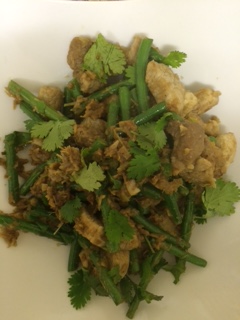
There is a lot more to Thai curries than the soupy green and red clichés the whole world knows. Fiery jungle curry, for instance; and the subtler turmeric, lemongrass and coconut flavours of Massaman curry. Yellow curry paste is smeared over seafood before grilling; red curry paste is stir-fried with pork and green beans in pad prik moo.

I like chilli well enough, but it took me a while to build up the tolerance for incendiary dishes like som tam, made with shredded papaya and enough birdseye chillies to win a bet. I asked a Thai girl how many chillies she would use in a papaya salad. “Hmm, four, six,” she said, as if that were not many.

(c) Richard Senior 2014

Classic travel scams #1: the 20 Baht Temple Tour

DSC_0209

“I take you many temple. Twenny Baht,” the tuk-tuk driver says, and you’re new in Bangkok and the humidity is enervating and it seems like a bargain and you don’t stop to think how it can be worth his while for less than 40p (60c). He might take you to a few temples, but you will end up at a fake gem shop or a bogus travel agent.

I knew about this one before I went to Thailand because a mate of mine fell for it (the same guy once inadvertently paid €900 for a hat to wear to a party). There are a few variants, though. One guy approached me, claimed he was a policeman and flashed what might have been his library card. He warned me that some tuk-tuk drivers were dishonest and that I should only take the “official” tuk-tuks with the Thai flag on one corner and the royal flag on the other. They, he said, would take me round all the temples and then to a special shop where I could arrange cheap travel all over Thailand.

Just then, a tuk-tuk came round the corner with the Thai flag on one corner and the royal flag on the other.

 (c) Richard Senior 2014