Phnom Penh’s Ghosts

DSC_0574

“Phnom Penh city wakes up early to take advantage of the cool morning breeze before the sun breaks through…. Street vendors push food carts piled with steamed dumplings, smoked beef teriyaki sticks, and roasted peanuts along the sidewalks and begin to set up for another day of business.”

Loung Ung, First They Killed My Father

Phnom Penh is still recognisable, forty years on, as the city which Loung Ung so vividly recalled from early childhood, before the horror began.

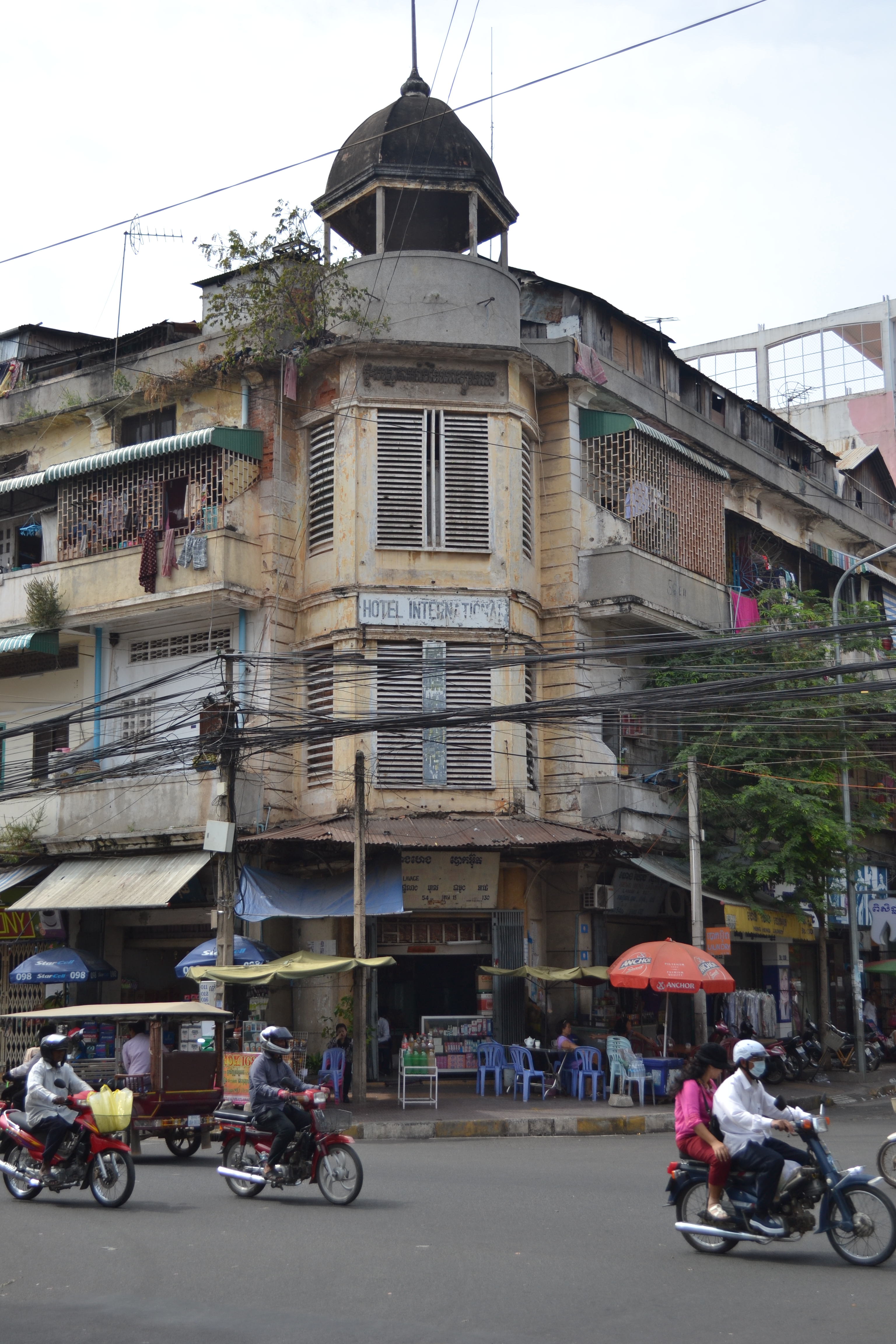
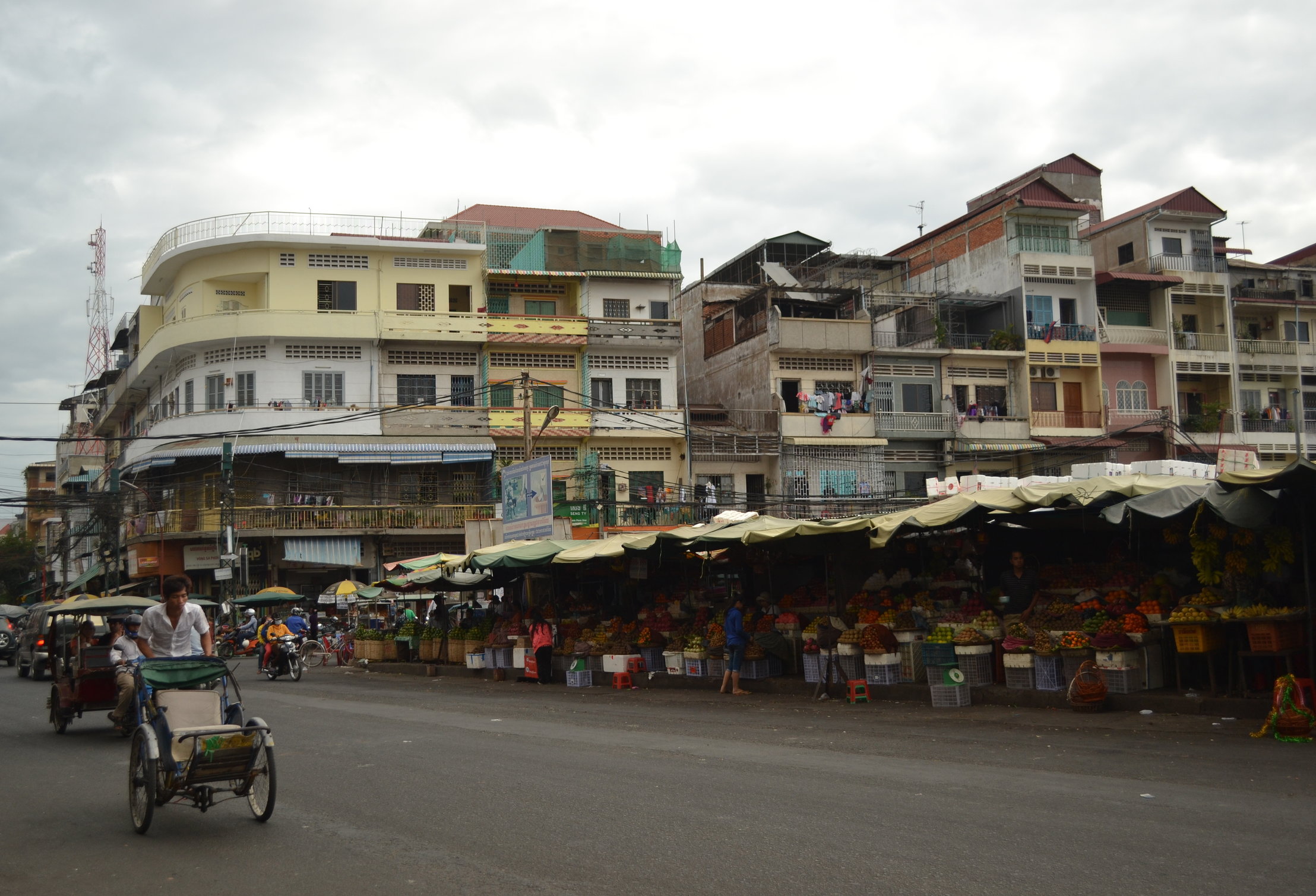
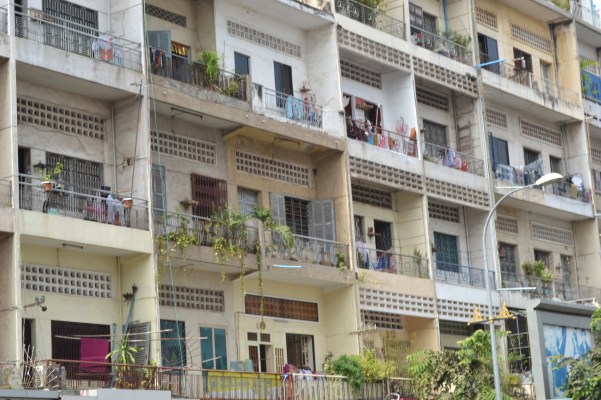
The architecture the French left behind is mostly still standing, although often close to derelict. There are still the apartment blocks built in the optimistic first ten years of independence in the Bauhaus-inspired Modern Khmer style.

Street food vendors still congregate on every corner. Locals still breakfast on Phnom Penh noodle soup. Motorbike engines still echo through the streets; and cyclos still pedal round looking for custom.
rsz_dsc_0612

The old Olympic Market which Ung wrote about – in disrepair then – has since been demolished and replaced with a concrete monstrosity. But the street markets are still what they have always been: meat and vegetables laid out on mats on the ground; fish swimming in washing up bowls.

The French installed Norodom Sihanouk as king, because they imagined him to be malleable; but he ended up leading Cambodia to independence, and tacking to the right or the left as events seem to demand. He was ostensibly neutral in the Vietnam war, but instinctively anti-American and worried about a South Vietnamese invasion; so he let the communist North build sanctuaries in Cambodia.

The US secretly carpet-bombed them, with much collateral damage among the peasants. Sinahouk allegedly approved the bombing in private; and the CIA allegedly approved the coup by General Lon Nol which deposed him.
DSC_0588

Sihanouk, in exile, made an ally of convenience of a Maoist insurgent group known as the Khmer Rouge. His endorsement lent them popular support and they controlled the country by 1975. Sihanouk was nominally head of state again, although in reality under house arrest. They killed much of his family.

The Khmer Rouge cleared everyone out of the cities – even patients from the hospitals – and sent them to work on the land. The five year-old Luong Ung and her family joined what was, for many, a death march. Her parents and two of her sisters were killed.

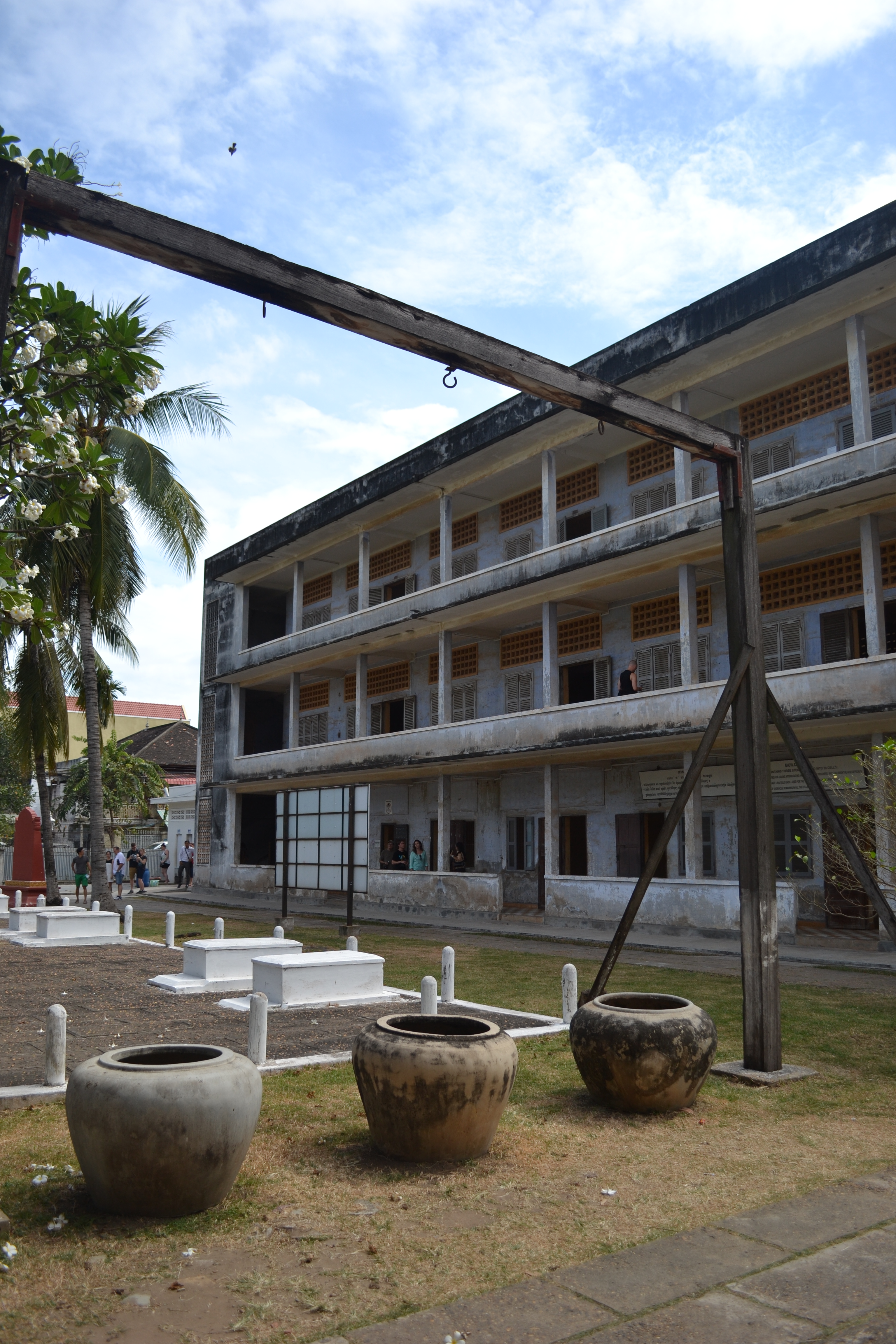
S21 was a school when the Khmer Rouge arrived. They closed it down and turned it into a political prison. It is preserved as the Genocide Museum. Two rooms are filled with photographs of some of the victims, mostly Khmers, but a handful of Westerners too: an Englishman, an Australian, a couple of Americans and Frenchmen.
DSC_0614

All were tortured horribly until they signed preposterous accounts of how they had been recruited by the CIA or KGB (the two were much the same to that paranoid regime). Then they were taken away and killed. But not shot. The Khmer Rouge did not want to waste money on bullets. They used anything heavy or sharp which happened to be to hand.

There are no captions at the Genocide Museum. None is needed. The facial expressions of the victims are as eloquent as a page of text. Many betray the terror which all of them must have felt. Some look beaten in spirit; but quite a few look defiant. One even managed to smile.

Further out of town are the Killing Fields, where the victims were forced to dig their own graves. There are still mounds of earth where the bodies are piled. Human bones sometimes wash up in storms. Few, if any, of those killed had done anything wrong. They might have worked for Lon Nol’s government, like Luong Ung’s father. Or been ethnically Thai or Vietnamese. They might have been monks, or intellectuals, or just looked like intellectuals. Wearing glasses was enough.
rsz_dsc_0565

The West was wary of getting involved in Southeast Asia after the fall of Saigon; and plenty of Western intellectuals convinced themselves that Pol Pot’s Cambodia was, in fact, a socialist utopia and all the reports were smears. It was, ironically, Communist Vietnam which intervened and toppled the Khmer Rouge in 1979. A quarter of Cambodia’s population was dead, by then.

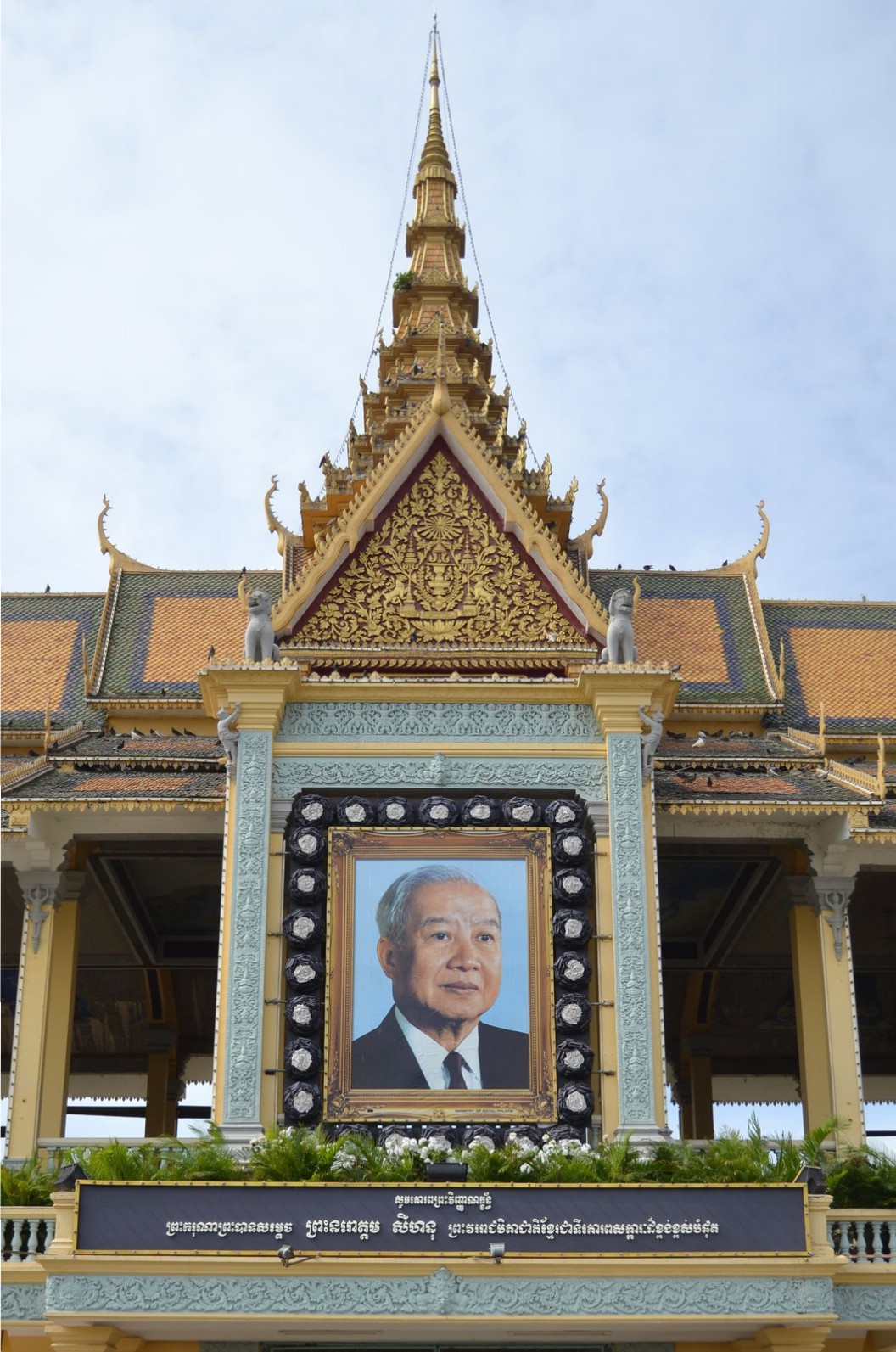
Khmer Rouge leader, Pol Pot, died peacefully at home in 1998. The Western thinkers who had praised the Khmer Rouge or questioned reports of its atrocities simply stopped talking about Cambodia and it did their careers no harm. At least one is now a rock star of political thought. Sihanouk returned as king in 1993. He reigned until 2004. I was in Phnom Penh in January 2013, between his death and cremation. The country was still in mourning.

© Richard Senior 2015   

The Two Japans

DSC_0229

Tokyo seems never to end. Even from 200 metres up, on the observation deck of the Metropolitan Government Building, all you see stretching out until they blur together are thousands of densely packed office and apartment blocks. Only the nearby National Gardens break the monotony of concrete and glass. Rivers, parks, roads and railways are simply swallowed up.

The city streets are as wide as European motorways. The stations are the size of airports. The crowds expand to fill them. Hurrying salarymen toting briefcases. Bent old ladies with surgical masks and bells on their bags which tinkle like the collars which cats are made to wear to stop them catching birds. Orange-haired teenagers hunched over iPhones as they shuffle down the pavement and into the Metro and onto trains and out at the other end without ever looking up.

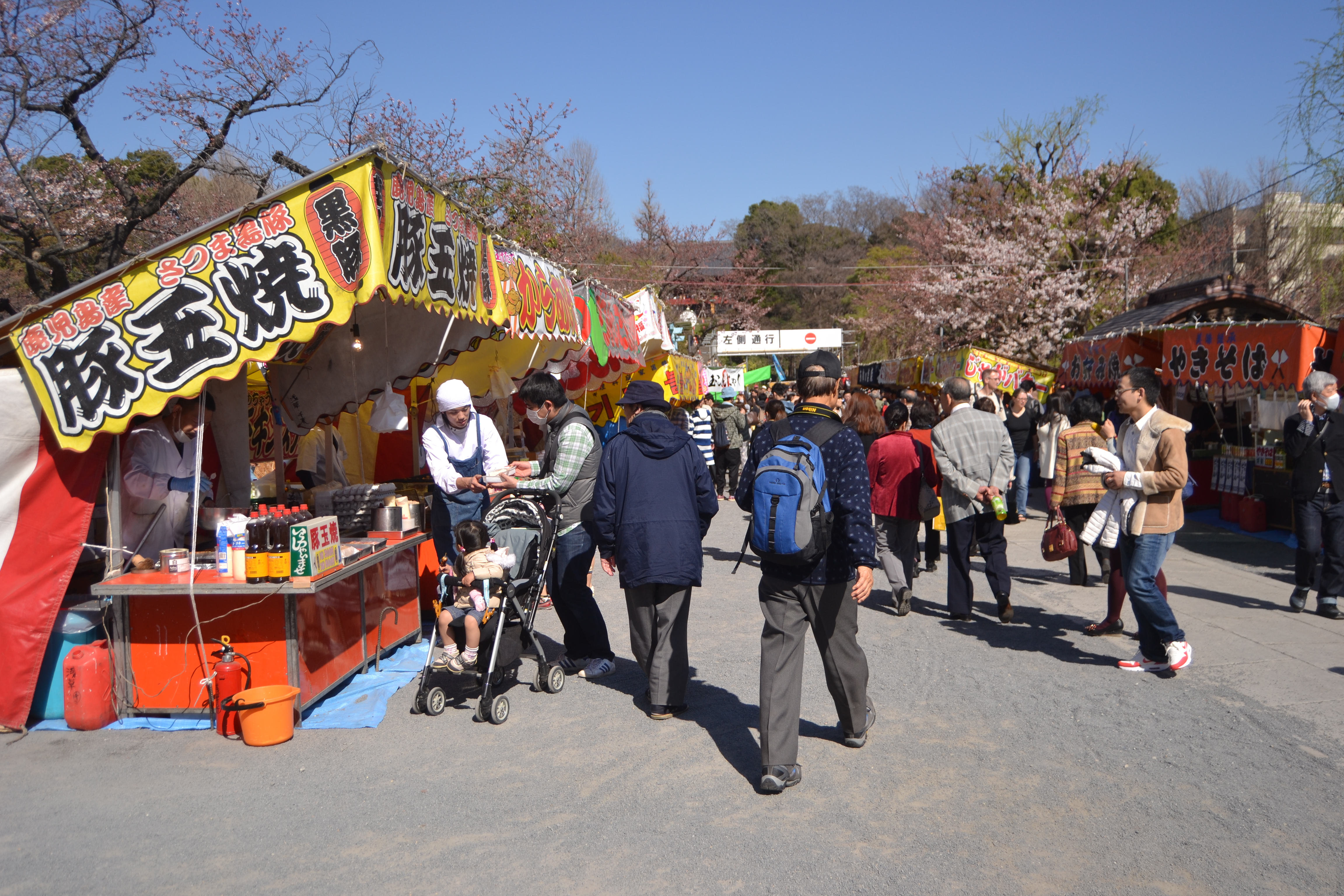
When the cherry blossoms come, the crowds descend on the parks and sit in huddles under the trees, laughing and chatting excitedly, or jostle with selfie sticks held at arm’s length. They take the train en masse to Naka-Meguro at the end of the Hibiya Line and clog the streets either side of the canal, stopping for selfies, street snacks, beer or cherry blossom ice cream.

DSC_0285

Searing neon fizzes from every surface. Music explodes from animated billboards. It follows you across the street along overhead wires. More of it pierces out of the sides of trucks as they inch through the middle of town.

The noise from  Vegas-scale pachinko parlours deafens as you pass by the door. Digital birdsong plays in the stairwells in stations. Elevators and escalators chatter away to you. The station cleaner’s rig plays Fur Elise to warn you that it is approaching from behind. The Yankee Doodle Boy heralds platform announcements; a jingle celebrates a train’s departure.

Yet even in the middle of Tokyo, there are pockets of perfect tranquility. Just a block or two back from Ueno Park, where shrieking couples lark in swan boats and tightly-packed groups share bentos on mats spread underneath the cherry trees, the scale shrinks and the noise is muted, the crowds vanish and the neon never intrudes. The alleys are lined with old wooden shophouses and discrete galleries, and temples and shrines, gnarled pines and ancient cedars.

DSC_0317

Two hours to the north in Nikkō, there are no high-rise blocks; no neon, no gratuitous music, no bustling salarymen, no teenagers with orange hair. There are just quiet restaurants and antique shops and a mineral-green river which hurtles over boulders and flows under a humped-back bridge.

In the forests in the hills, there are gilded temples with intricately painted eaves and dragons and grotesques and the original monkeys to see no evil, hear no evil and speak no evil. It is as beautiful and as peaceful as anywhere I have been in the world.

To the west, deep in the Japanese Alps, the streets of the old town of Takayama are lined with wooden buildings from the seventeenth to nineteenth centuries: inns and craft shops and sake breweries. In the early evening, after the day-trippers have left, an old man potters down the street in pyjamas, and a lady kneels outside her house to pull up weeds, and a couple slowly rolls by on bicycles.

It is hard to comprehend how a single nation can be at once so manic and so sedate, so big, so bright, so loud, yet – at the same time – so quiet and calm; how unspoilt heritage can coexist so closely with ruthless modernity. It is almost as if there are two Japans.

© Richard Senior 2015    
On Planning Trips … and Not Bothering to Plan Trips

simon-migaj-sa7KClvDBpo-unsplash

It was a mixture of idealism and naivety.

I arrived in Bangkok with nothing but a back-of-the-fag-packet list of countries, cities and islands I might want to visit. The plan, such at was, was to book accommodation a night at a time, then decide each day whether to stay on or to go somewhere else. Where to go would depend where the buses, the boats, or the trains might run, and how long it took to get there. I had plenty of time. I was relaxed.

I stayed in Bangkok for longer than I should while I pondered whether to go north to Chiang Mai, south west to Phuket or south east to Ko Samui, and ended up going nowhere.

rsz_dsc_0639

Then I found out by chance that I needed to get my Vietnam visa in advance and had to stay even longer while I made some hurried arrangements. The embassy wanted dates, and I had to guess on the spot how long it would take to get through Thailand and Cambodia, and I was too optimistic by several weeks, and wound up having to cut short the journey round the coast and forget about Chiang Mai.

But it worked out okay, because I had time enough left after Cambodia, Vietnam and Laos to see the rest of Thailand.

There were a few times, as well, when I had to move from a guesthouse in which I could have stayed if I had booked two nights in the first place; and times when the trains were all fully booked and I had to wait until the next day, or settle for a long, uncomfortable journey on a bus. But the guesthouses were always clustered together, and there always was a train or a bus I could take without reserving.

DSC_0203

The setbacks were small, and I have rarely felt as free as I did then, in the knowledge that I could, at any time, pack my bags, check out and get on a bus to the next town, the next country. I chanced upon amazing places that I had never heard of and would not have picked out of the guidebook if I had spent days going through it with a highlighter pen and a packet of Post-it notes. It was a lot more fun than working through a detailed itinerary and knowing where I would be every day for the next six months.

It worked all the way through Southeast Asia. But in Australia I had to compromise. I paid several times more than I wanted to pay for the only place I could find in Sydney with vacancies, and trudged round until almost midnight to find a hostel bed in Byron Bay. I was lucky – a friend spent the night on the beach there.

I was still reluctant to book any more than a night at a time, but now booked it online the day before, at the same time as I booked my bus ticket. I got as far up the East Coast as Hervey Bay, then found that the bus to Airlie Beach left at five in the morning and took fourteen hours to get there. It was a discomfort too far for me, so I backtracked to Brisbane and flew. No worries.

DSC_0206

Eventually, though, I ran out of time and never saw Alice Springs or Uluru, nor drove along the Great Ocean Road. This time, there was no chance to catch up later.

I moved on to New Zealand and got stuck in Auckland, puzzling over where to go next. I had not even come with any scribbled down ideas, this time. When I had eventually mapped out a route, I had no time to spare and could leave nothing to chance and had to book all my buses and hostels upfront.

I have never quite managed to get back to the carefree, spontaneous travel of those early months in Southeast Asia. Either I have been too short of time, or the hotels and hostels have been too far apart and booked up too quickly for walk-ins to be at all practical. But I still only book as far ahead as I have to, and try to leave room to plan as I go along.

And I have not yet had to sleep on the beach.

© Richard Senior 2015
Lead image: Photo by Simon Migaj on Unsplash

Is Melbourne Better than Sydney? Erm…

DSC_0450 edit 3

Canberra qualified as Australia’s capital by being neither Sydney nor Melbourne. The rivalry between the two biggest cities was legendary even then.

The conventional view is that Sydney has all the financiers and Melbourne the artists and restaurateurs. But it is not as clear cut as that. Melbourne was once the biggest city in Australia, the richest in the world. It made its money from gold. But the gold rush ended and the money men gradually moved on to Sydney.

Not all of them, though. Two of the big four Australian banks and five of the ten largest companies have kept their headquarters in Melbourne. It is still one of the world’s most expensive cities. Sydney, in turn, has at least as many of Australia’s best restaurants as Melbourne – some authoritative lists give it more – and it is hard to suggest that it is lacking in culture with one of the great opera houses perched on the end of its harbour.

DSC_0495

I had spent ten days in Sydney already on that trip, and loved it, and after a month of mostly small towns up the East Coast, I was glad to be back in a big city again. Melbourne immediately felt different. Doubtless it, too, has swaggering bankers bellowing into their mobile phones about money; but they are not as conspicuous as they are in Sydney, and I saw only one Lamborghini all the time I was there.

Sydney works hard at being cool – despite the money-mad men in suits – but it is hard to imagine street art flourishing there to the extent that it has in Melbourne. Every lane, every alley is painted end to end with cartoon Buddhas, fluorescent abstracts and politically-charged epigrams. It feels remarkably bohemian for a rich city in which most people, nowadays, must surely do corporate jobs.

Sydney looks, to a European, much like an American city; but Melbourne suggests somewhere closer to home. Not Britain, though, as you might expect. The Greek Precinct and the predominantly Italian Lygon Street add Mediterranean notes. But I was put in mind more of some romantic, tragic old city in Central Europe as I watched the heritage trams clatter down the middle of the street, past stuccoed buildings with cupolas and epic doorways.

DSC_0500

I had the same feeling again in the Royal Arcade, with its chequerboard floor and wrought iron roof, its stained glass windows and marionette-like figures of Gog and Magog. Budapest, perhaps; or Prague.

Then again looking over the dome and clock tower and monumental staircase of Flinders Street station, which could be a setting for a Graham Greene story of spies and émigrés and whisky priests.

But Melbourne, nonetheless, is a forward-looking city; a city still in flux. The population and economy are growing year on year. The suburbs are creeping out. Tired neighbourhoods are being redeveloped. It has the second, third, fourth, fifth, sixth and eighth tallest buildings in Australia. (Sydney starts at ninth.)

DSC_0513

The once bustling, and gangster-riddled, dockyards have been turned into luxury flats and a yacht marina with black swans and lively bars. Fitzroy has morphed from one of the seediest quarters into one of the hippest, with enotecas and bodegas, galleries and vintage emporia doing business out of Victorian shops.

I ate well in Melbourne. Tapas at the iconic MoVida; pleasingly authentic Sicilian at Rosa’s Kitchen; Mod Oz at a gastropub over towards Fitzroy Gardens, and Cantonese in Chinatown. But then I had eaten well in Sydney too.

So which is best, then: Melbourne or Sydney? The old, insoluble argument. It is a sterile debate, because cities cannot sensibly be ranked, except with dry statistics. But after a few days in Melbourne, I was certain I preferred it to Sydney. Then, when I ran out of time and went back to Sydney for my onward flight, I changed my mind and decided that I liked it better.

But if I had returned to Melbourne after that I would probably have changed my mind again.

© Richard Senior 2015
Eating Sushi in London and Kanazawa

image1 (4)

I was part way through a run of long nights at the office. It was hours since the pinstriped crowd had made its way to the Tube, with its furled umbrellas and gym kits and Little Brown Bags. The City was silent then, without the murmur of innumerable phone conversations and the clatter of brogues and stilettos.

The pub on the corner had filled up with after-work drinkers, who got louder with every beer, then thinned out as they drifted off home. It was closed by the time I got out. Lights had been left on for show in the Gherkin and the Lloyd’s Building was uplit in blue. But the streets of the Square Mile were deserted then. Even the cleaners had been and gone. A gust of wind blew grit in my eye, and sent a dropped newspaper scuttling down the street.

It would have been too late for dinner by the time I got home, so I stopped at the sushi bar a little before it closed. The staff were cleaning up and winding down. Only a few plates were left on the conveyor. I watched them do their rounds, and daydreamed about sushi in Japan.

Three years on and I had given up being a lawyer and I was in Kanazawa in a sushi restaurant a few steps from the Omicho market, which bustles each morning with seafood vendors whose stalls are crowded with rows of spider crabs, piles of scallops, and ruby-fleshed tuna, silvery mackerel and bloated puffer fish. Some of the things on the menu were familiar enough. The sushi bar I used to call in after work had prawn nigiri and salmon roe norimaki. But not flounder fin, gizzard shad or horse mackerel; nor salted plum with cucumber makizushi.

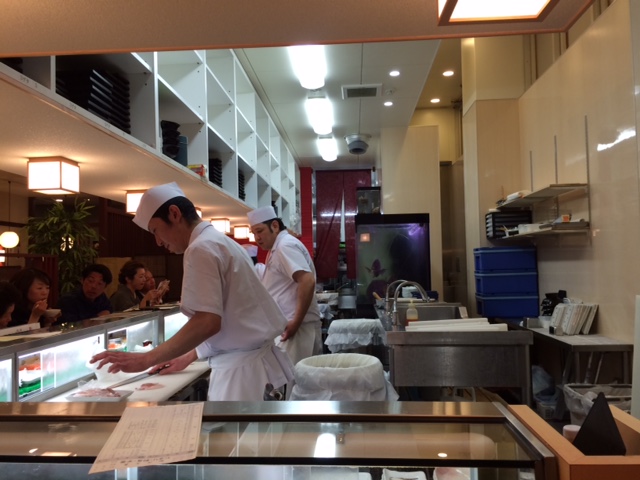
The chef reached in the cabinet for a slab of tuna and sliced off a strip with an easy flick of the wrist. He wet his hand under the tap and, in the same movement, reached behind him into a barrel of rice and scooped up a handful which he had moulded into shape by the time he had brought it up to his board. He dipped his finger into a pot of wasabi and smeared it over the rice then glued on the strip of tuna, plated up and handed it over the counter to the customer.

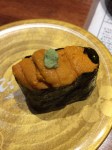
Then he was onto the next order, rolling raw sea urchin and vinegared rice into a square of seaweed; then lightly searing a flounder fin with a woof of flame from a blowtorch. He worked at speed but never noticeably hurried; his movements were fluid, almost balletic, each seemingly casual cut precise.

The sushi there was as different from the sushi I had eaten at home as freshly-made pesto is different from the stuff in jars. I ordered three pieces, then another three, and another three after that.

It seemed a lifetime ago that I was eating sushi because I would be home too late to make dinner.

© Richard Senior 2015

Rapids Response

SONY DSC

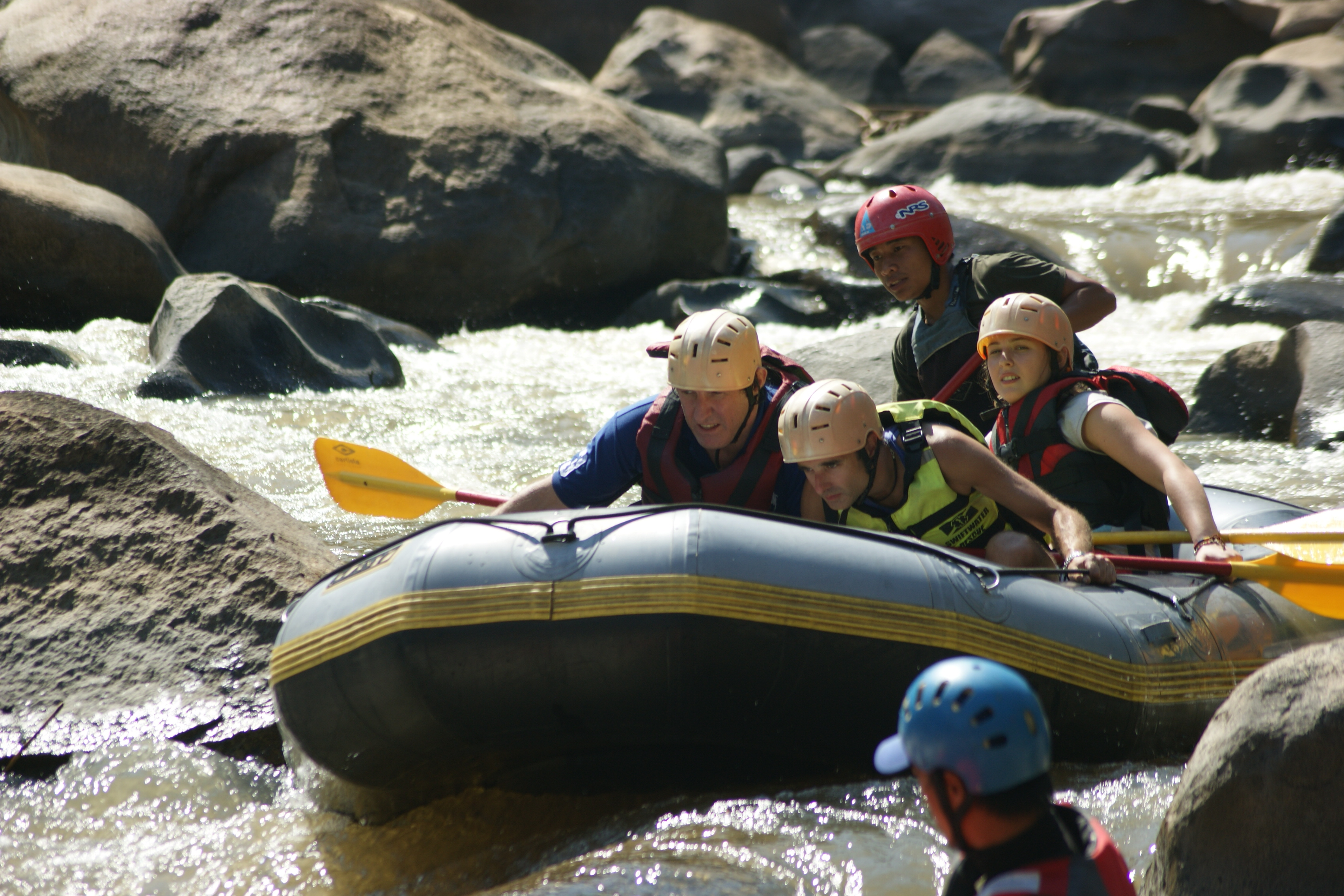
We were rafting a 10km stretch of the Mae Tang River in Northern Thailand.

They told us at the briefing that the rapids were Grades III and IV, but that meant nothing to me at the time. To give it some context, though, a kid in half a barrel could traverse Grade I, while a very lucky maniac in a kayak might survive Grade VI. I got a better sense of what to expect when they said that the river fell sixty metres in a kilometre and a half, sometimes over a metre in one drop.

We were four to a raft – the others were strangers to me – with a professional skipper to shout out instructions, “paddle forwards,” “paddle backwards,” “get inside,” “over to the left,” “over to the right” and “jump,” when we snagged on rocks and had to bounce ourselves off.

It was as leisurely at first as a punt on the Cam as we drifted down a calm stretch of the river, and the sun was hot and the landscape was lovely with mountains and fig trees and thatched huts along the bank.

SONY DSC

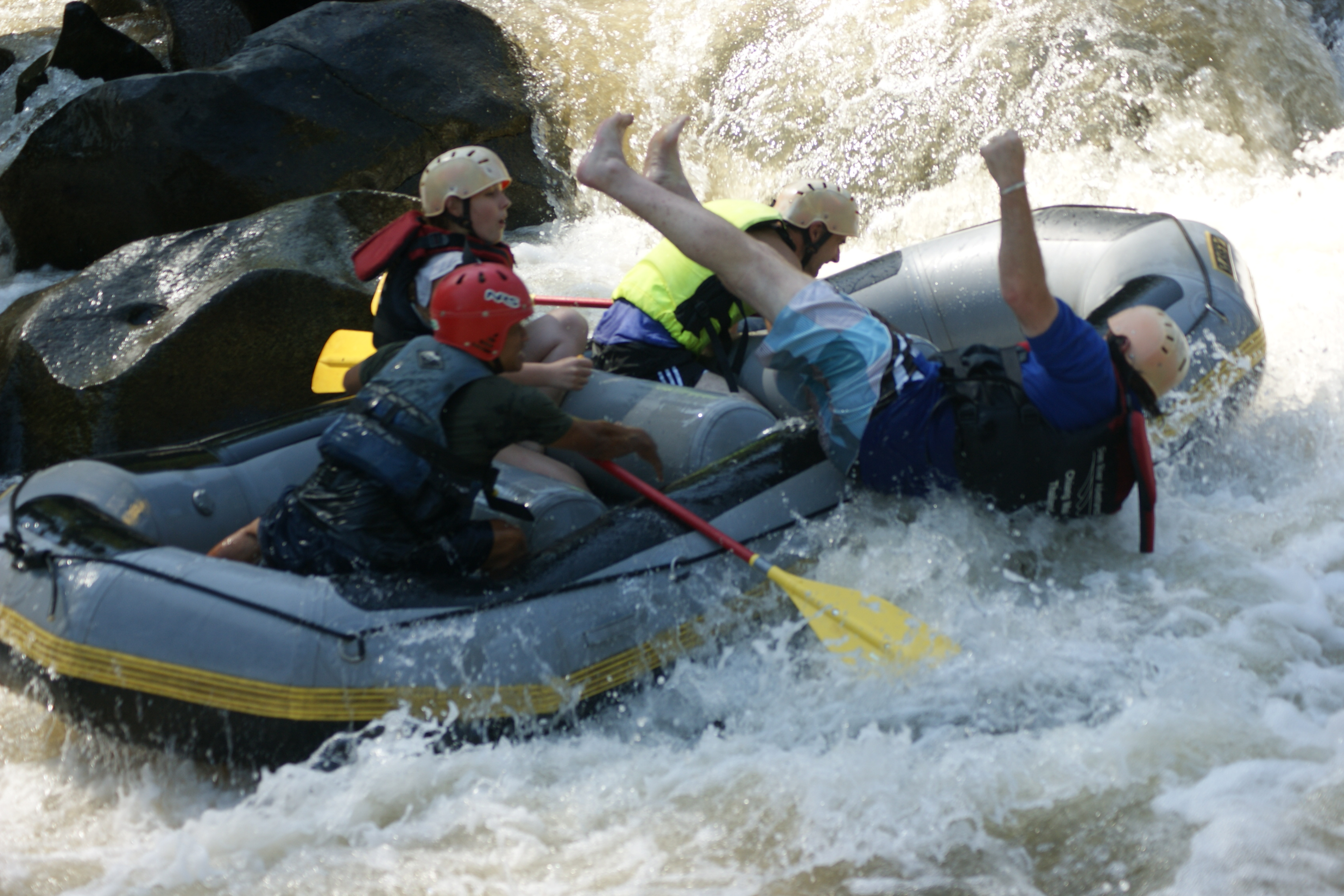
Then we entered the rapids and the skipper’s instructions became urgent, and we tumbled and twisted through rocks, over ledges, like a spider being washed down the plughole. I turned away from the guy next to me and when I turned back he was gone: he was over the side of the raft. The skipper grabbed his life jacket and held him fast, but his head bobbed repeatedly underwater and the raft ran right over him.

I had a sudden horror that I might be watching him drown. But when we were out of the rapids and we hauled him in with a bust lip and grazes, he was laughing like a kid who had come off his bike and wanted to pretend it did not hurt.

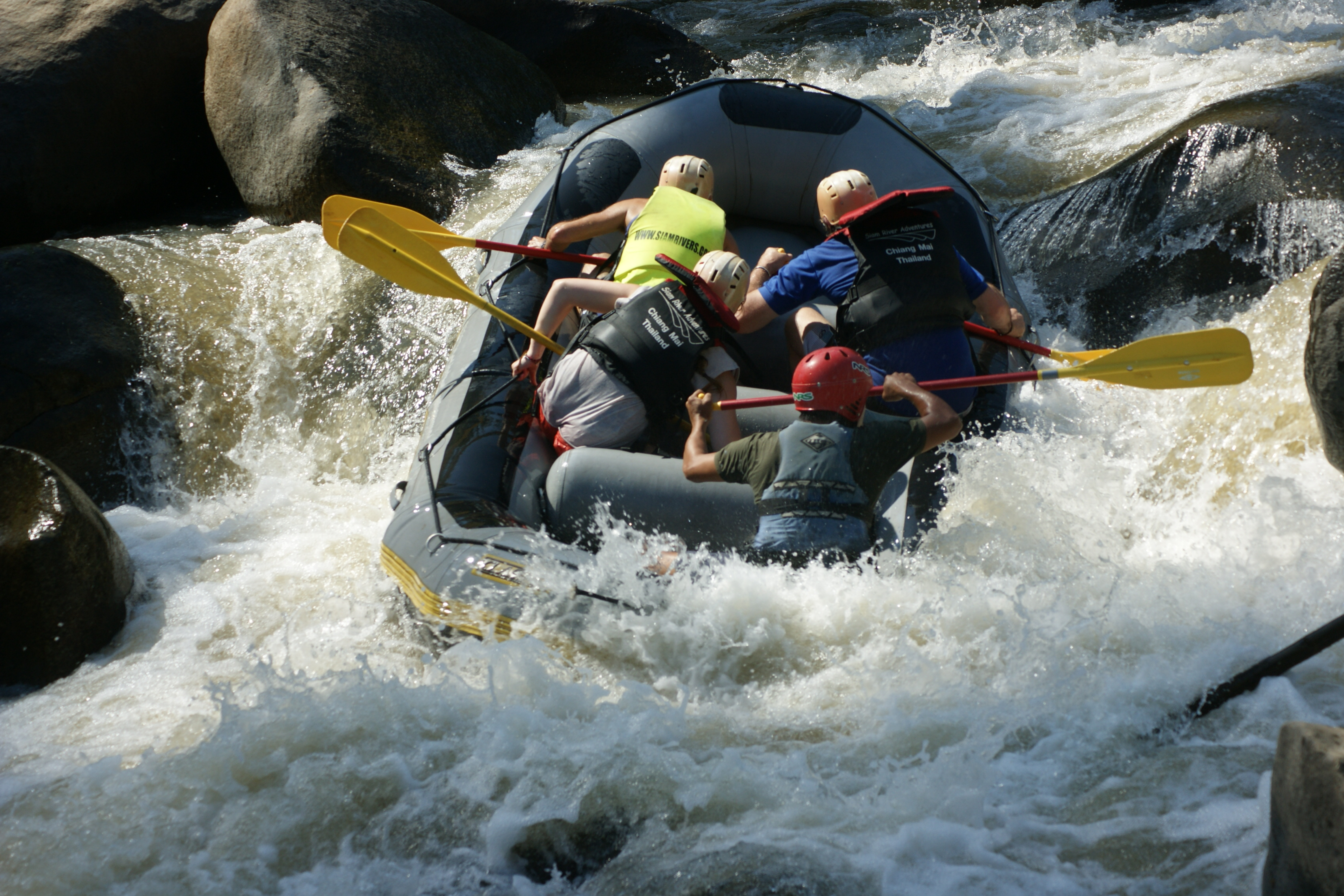
Then another fast stretch, crashing against rocks; spinning one way, then the other. “Jump! Jump!” Plunging forward. “Get inside!” Gripping the safety rope tight, paddle tucked against hip, foot locked under the tube inside the raft. The roar of the rapids overwhelming. Two inches of water in the raft. My trainers soaked. A cut on my knee. But I stayed in.

SONY DSC

Spinning anti-clockwise. “Paddle forward! Paddle forward!” Slamming into another rock, peeling off, and over the edge, spinning in the other direction. Flashback to the time I lost control of a car and pirouetted across the road and bounced off the barrier. Still in, though.

Toppling over another drop backwards, just hanging on. Rocks palpable underneath as the raft scrapes over them. Then another drop, a bigger drop; the raft bending in the middle. And just as it seems that it will tip end over end and catapult us out, we are through.

And then we were floating peacefully again, past a group of elephants whose mahouts had led them down to the river to drink. Some looked up; most ignored us.

I relaxed then, elated that I had managed not to end up in the water; and the skipper capsized the raft.

© Richard Senior 2015
Reunification Delayed: Korea Rail Would Like to Apologise to Passengers

DSC_0549

There is an impressive modern station in the city of Paju in the far north of South Korea.

The walls are plate glass, the roof is swooping brushed steel. Its supporting rods are fashionably exposed. There are seats for a trainload in the waiting area and a long line of toilets and sinks. The station was built to be busy.

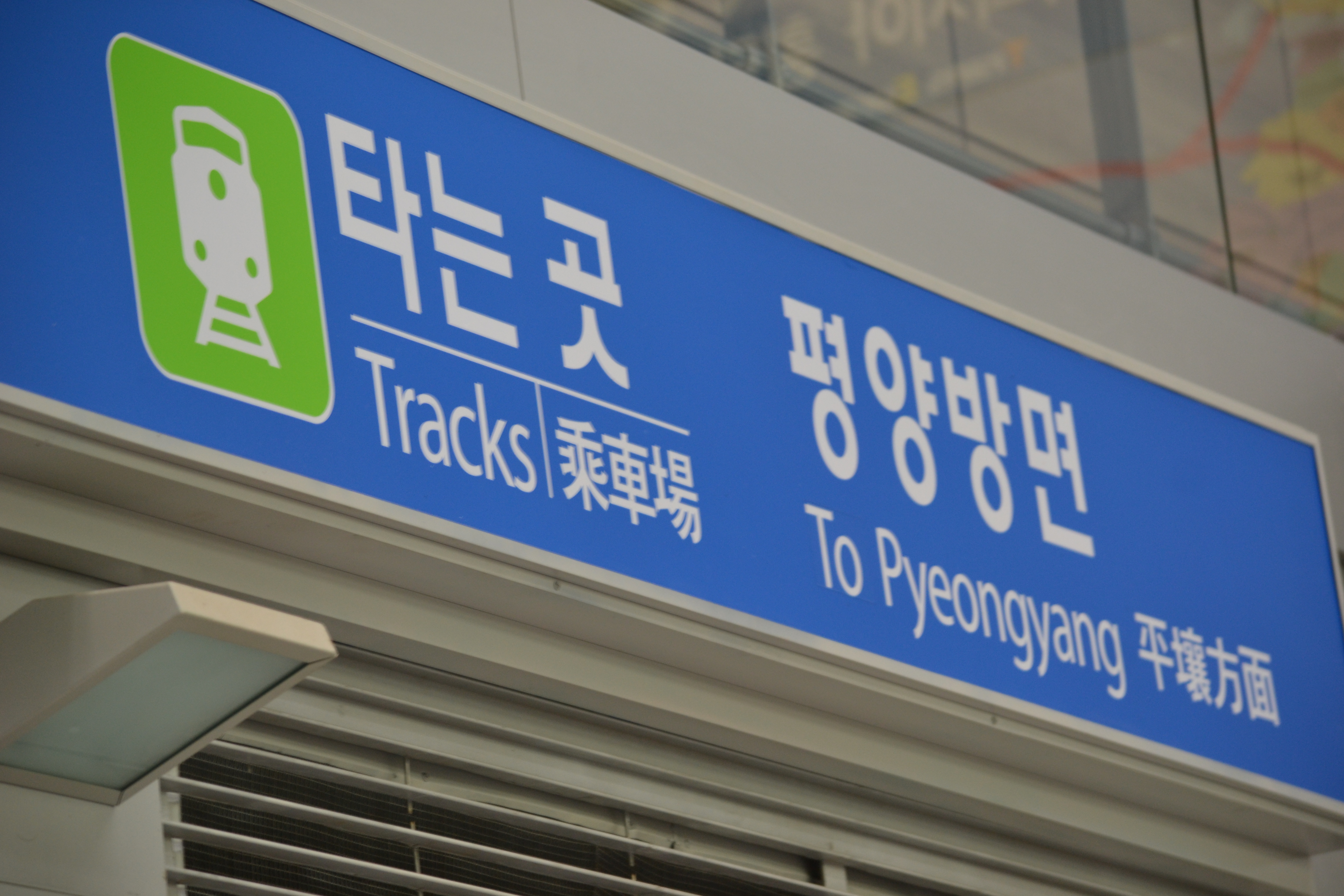
A map on the wall shows connections through Korea, across Asia to every city in Europe; and a sign directs passengers to the trains for Pyongyang, the capital of North Korea. There are carousels, baggage scanners, customs desks and all the paraphernalia of international transport hubs. Across the road, there are goods warehouses and yards big enough for articulated trucks to manoeuvre.

But the warehouses are empty, the carousels stand idle, and no trains go to Pyongyang. The border is sealed with high fences, razor wire, tank traps, and watchtowers manned by soldiers with machine guns trained, and regular patrols by squads in combat gear.

The only trains which run into the station – three or four a day – are specials bringing tourists to see what is ironically known as the Demilitarized Zone and to peer through telescopes into the North at what they claim is a farming village, although the only people you see are the armed guards in the watchtowers. But it has the World’s Third Largest Flagpole. In the South it is known as the Propaganda Village.

DSC_0531

The station, too, looks like nothing more than an elaborate, expensive, political gesture. But things seemed different when it opened in 2002. The Korean Cold War had briefly thawed. North and South had been talking since the end of the nineties. They committed to working towards peaceful reunification. They agreed that the railway lines across the border should reopen, that families separated by the war half a century ago should be able to meet; that Southern companies should build factories on the other side of the border and Northern workers should staff them. Optimists thought that reunification was bound to happen soon.

The mood did not last. Relations grew frostier when the South’s most powerful ally included the North in the ‘Axis of Evil’ together with Iran and Iraq. They chilled further towards the end of the Noughties when a new government in Seoul resolved to take a hard line with Pyongyang and strengthen relations with Washington. The North, in the meantime, froze off any prospect of further cooperation with a series of gross provocations. It sank a ship, bombarded an island, kidnapped soldiers and tested nuclear weapons. By then, the idea of taking a train through Korea, across Asia to cities in Europe seemed entirely fanciful.

Just this week, it was reported around the world that the North had test-fired ballistic missiles from a submarine and might double its stockpile of nuclear warheads by the end of next year. It is hard, now, to imagine peaceful reunification happening any time soon.

Then again, that might have been said about Germany a year before the wall came down.

© Richard Senior 2015
Journey through Zimbabwe, Part 7*

DSC_0513
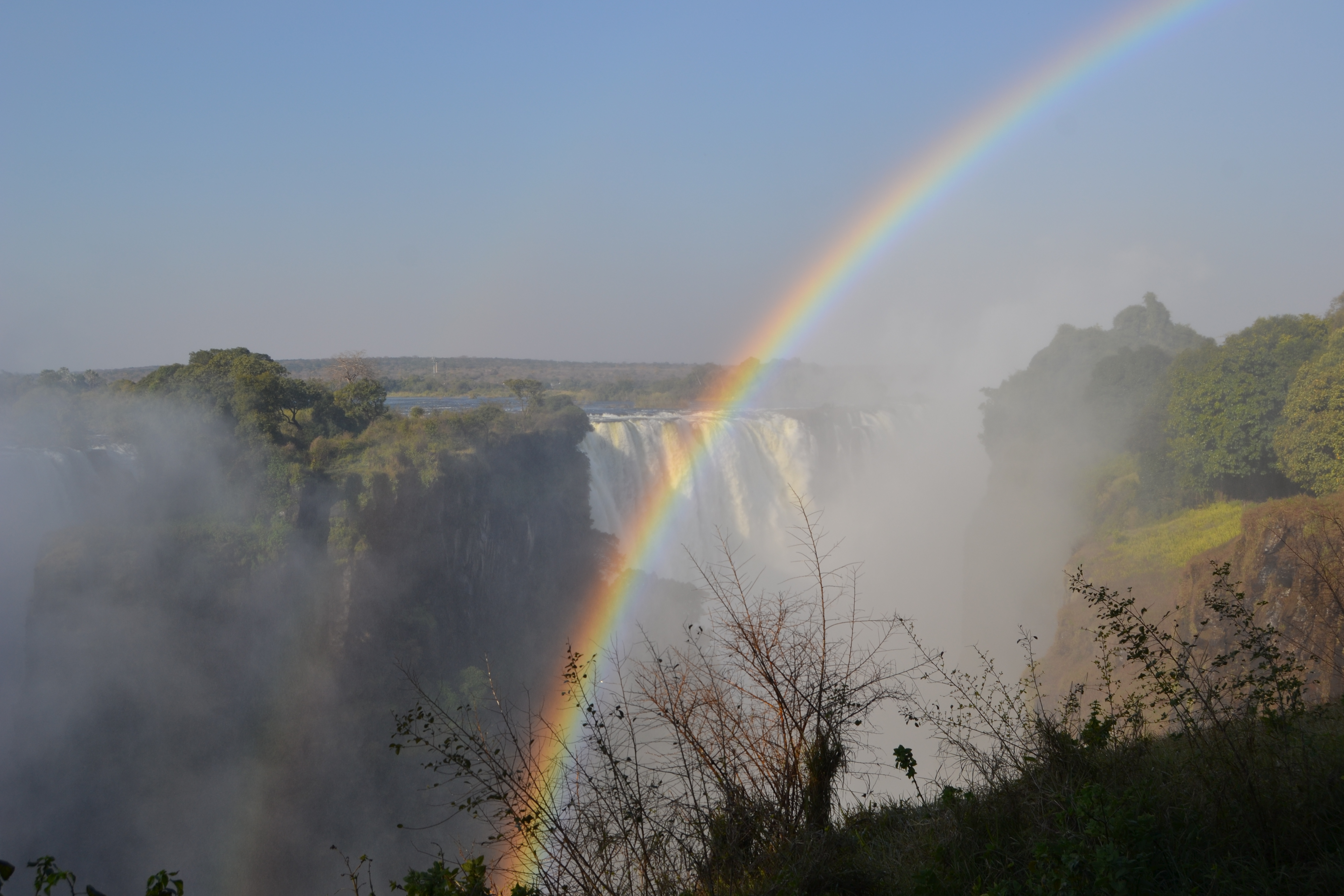
Dr Livingstone thought that Victoria Falls sounded better than the local name, Mosi–oa-Tunya, which means “the smoke that thunders”. It did to him. The government is threatening to change the name back, which has got people worked up in support and against, but is hardly among the more urgent things which need to done in Zimbabwe. As with Myanmar, Ho Chi Minh City, and Uluru, the old name will stick whatever the government says.

The word “awesome” has become as devalued now as the old Zimbabwe dollar; but, when you first see the falls and it pops into your head, it belongs there. A mile of water, hurtling out of control, tumbles over the edge and disintegrates into abstracts: thick gouache white swirling over slime green, tumbling, tumbling, tumbling a hundred metres into the gorge below, hissing and rumbling, roaring and thundering like some massive industrial process; the spray rebounds, a gathering storm, higher – way higher – than the top of the falls, until a perfect rainbow chops it in two and it comes down again as an unseasonal shower and soaks the path and the sightseers who stand there and gawp.

DSC_0474

Victoria Falls is a tourist town, but it was never anything else. Almost as soon as Livingstone had reported back, the curious came to see the falls and curio traders came to sell the curious curios. A village grew up and then a town. The railway came west from Bulawayo, and Cecil Rhodes commissioned a bridge across the Zambezi into modern-day Zambia. What started as temporary quarters for railway workers ended up as the grandly Edwardian Victoria Falls Hotel with its hushed five star luxury, its private path to the falls, and its zebra skin drapes and kudu heads and sepia photos of locally famous white men.

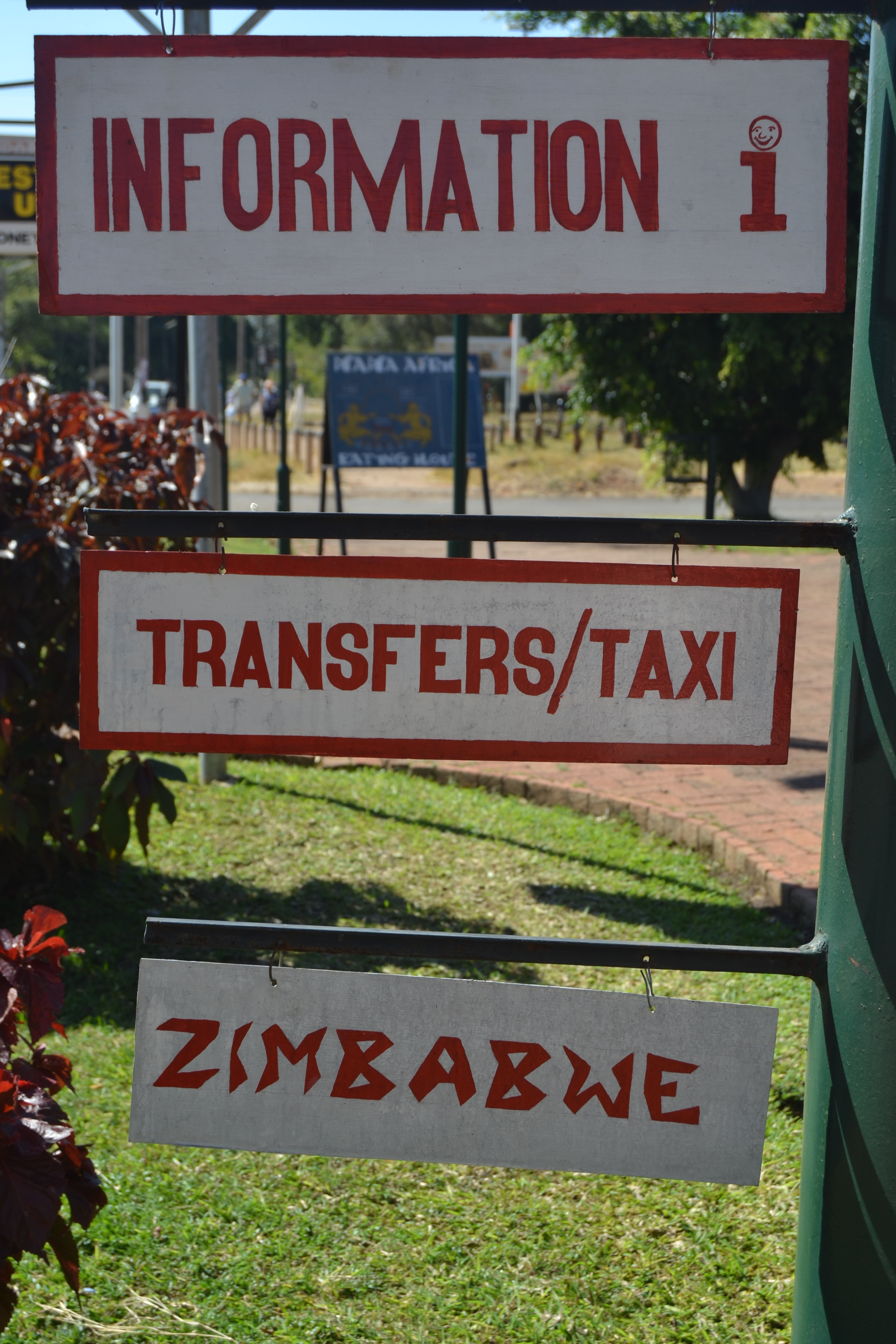
Hawkers follow tourists down the street, waving wooden animals and bundles of worthless billion dollar notes. Agents compete to take them on day trips across the border, or send them bungee jumping, zip-lining and white-water rafting. The shops sell curios and postcards, souvenir t-shirts and safari suits with as many pockets as anyone could want. (The locals shop at markets out of town.) There is pizza and car hire, tapas and bureaux de change; there is French fine dining and Chinese takeaway. And there is Boma.

DSC_0564

A whole goat, on the bone, was splayed across a vertical frame in a fire pit and slowly cooked for hours so that the meat smoked while it grilled and the fat rendered down and fuelled the fire and the aroma filled the room. Marinated warthog steaks, eland meatballs and boerewors sausages were grilled to order in front of you. There were mounds of the polenta-like sadza, which I had read about in Doris Lessing, and found was the same thing as ugali in Kenya; and salads and soups and dried mopane worms – actually caterpillars – which you pick at and crunch like a bag of crisps.

I would miss Zimbabwe, but it was time, now, to move on: time to explore Botswana.

© Richard Senior 2015
*Part originally posted as ‘Smoke that Thunders’ on 11 September 2014

Belgium: Quirky, Understated…But Not Boring


DSC_0858

Poor Belgium. If I got a Euro every time I heard it written off as boring, I could stay there for a week on the proceeds. It is an off-the-shelf comment, the default thing to say: like “you must be very proud” to the father of the bride.

The capital comes in for particular abuse. Here is Bill Bryson:

“Brussels is a seriously ugly place, full of wet litter, boulevards like freeways and muddy building sites. It is a city of grey offices and faceless office workers, the briefcase capital of Europe. It has fewer parks than any city I can think of, and almost no features to commend it…. The best thing that can be said for Brussels is that it is only three hours from Paris.”

But he was being unfair. Every city has litter and traffic and building sites, boring offices and boring office workers  – even his hometown of Des Moines, I should imagine; and I can certainly think of cities with fewer parks than the 51 which Brussels claims.

Most – it is true – are not bang in the centre and a traveller “doing Europe” at a clip might pass through without knowing about them. But just a few steps from the Gare Centrale is what Lonely Planet reckons “one of the world’s most beautiful squares”. The Grand Place is surrounded by tall brooding guild houses, flecked with gold leaf, and a spectacularly gothic town hall. Every other August, the square is carpeted in flowers, a riot of red and yellow, purple and pink.

DSC_0005

Perhaps I was just lucky to be there on a hot summer’s weekend, when the litter was dry and none of the building sites was muddy, and the offices looked brighter and the office workers were out of their suits and dressed as themselves, relaxed and having fun.

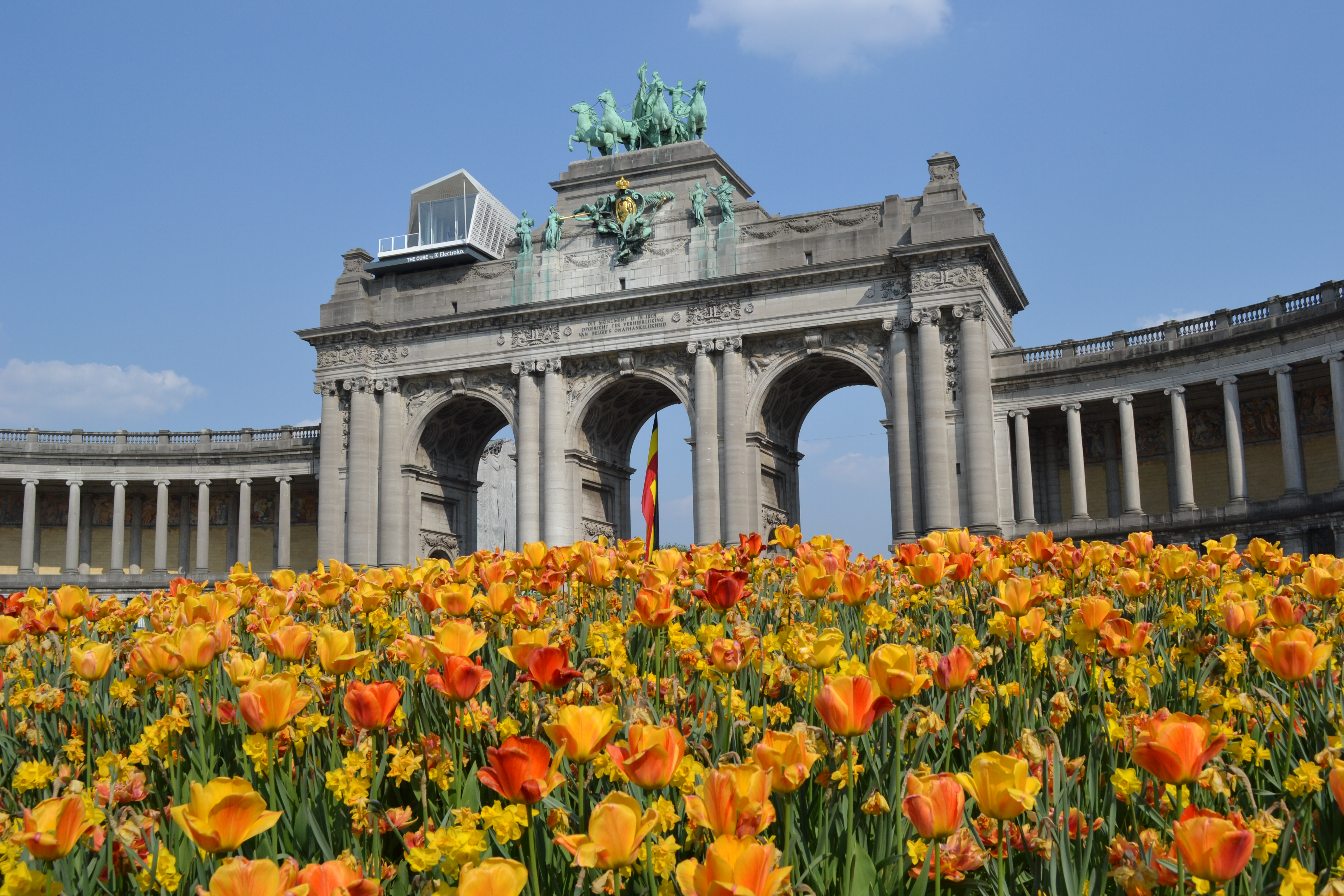
I remember sitting in the sun with a Trappist beer on a lively street crammed with galleries and bars and laughing hipsters; and walking out past the mirror glass behemoth of the European Commission to the Parc du Cinquantenaire with its triumphal arch and eruptions of tulips and young couples sprawling on the grass; and taking a bus to the house and workshop of Victor Horta, the Art Nouveau pioneer.

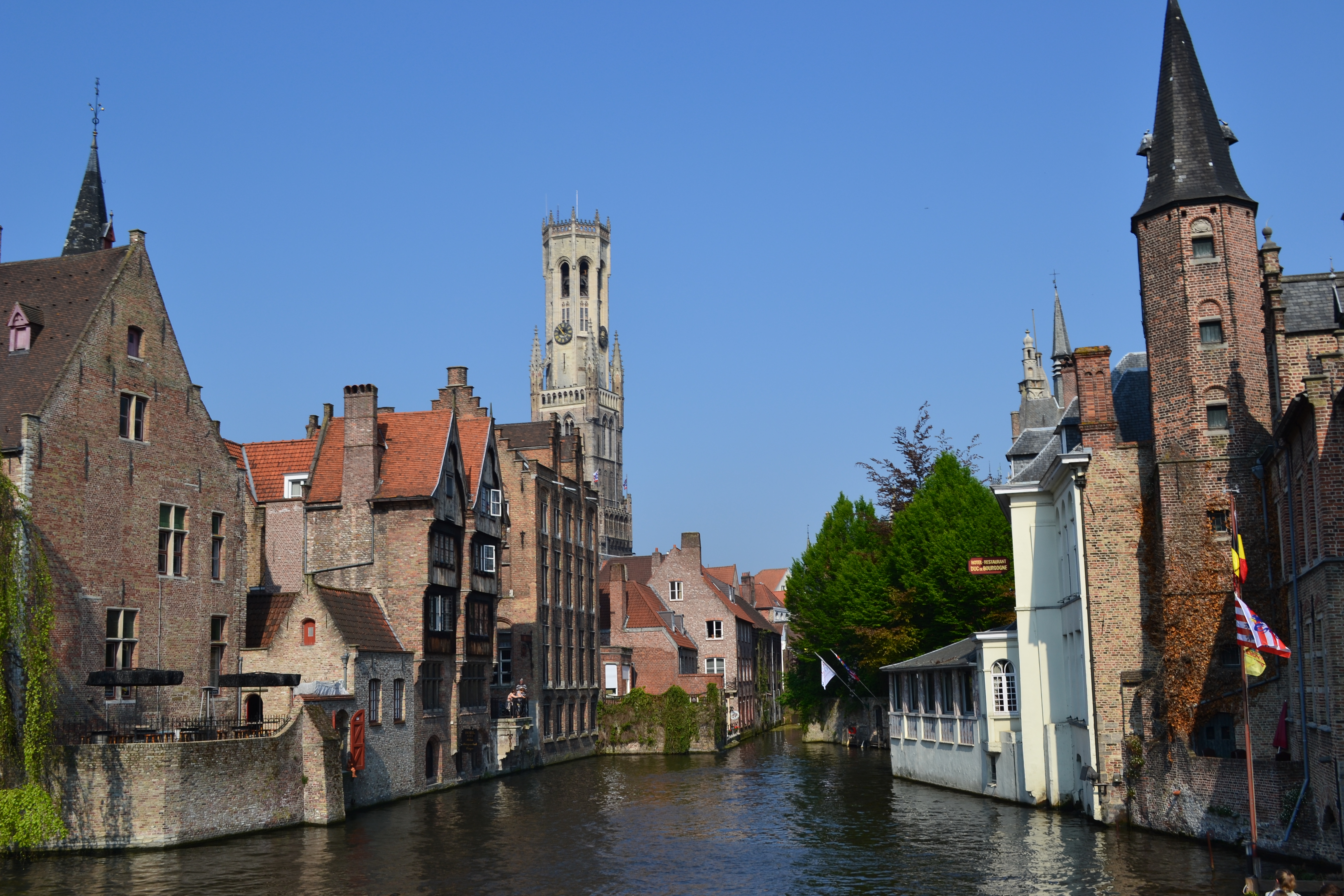
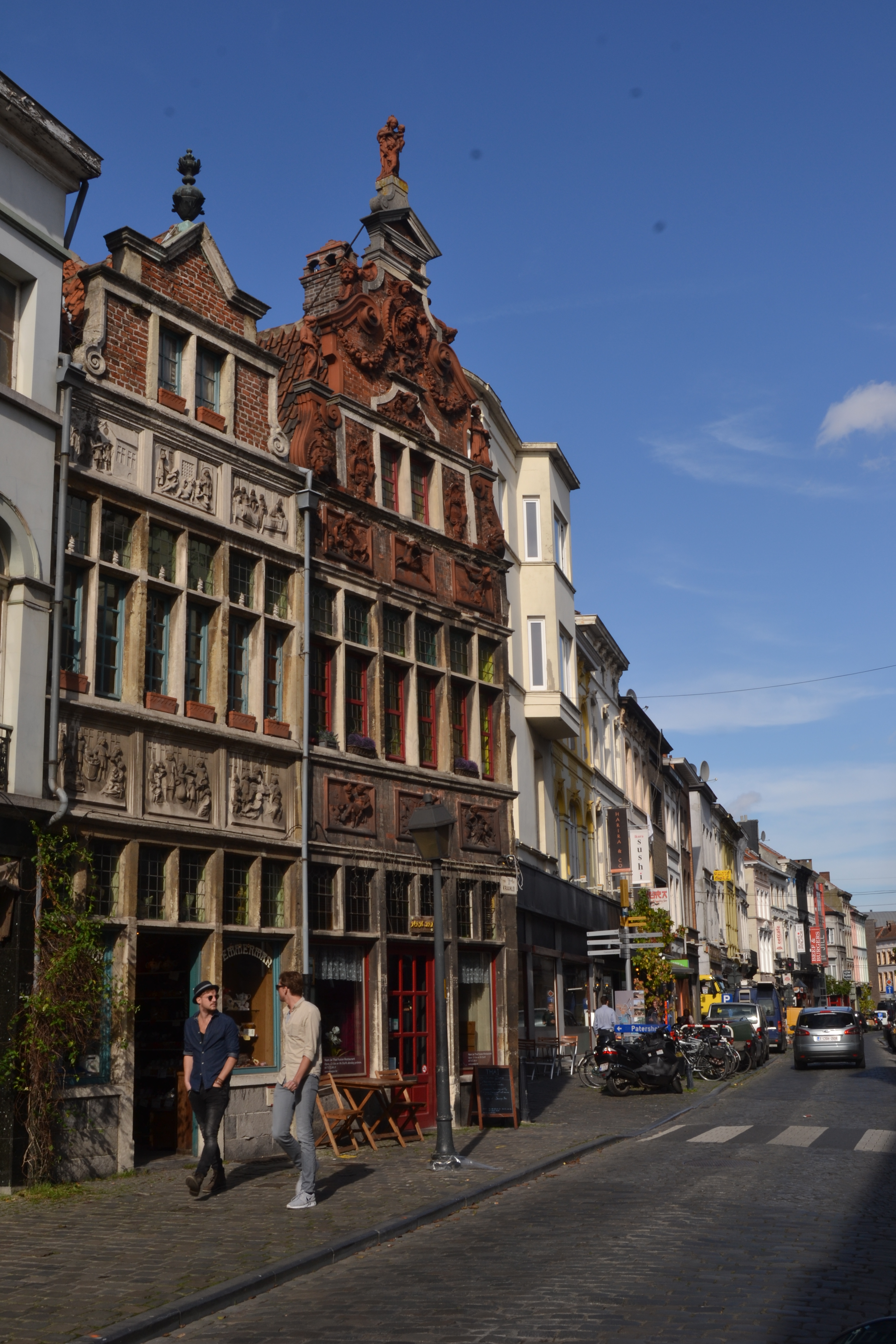
Then there is Bruges. “It’s a shithole,” said Colin Farrell’s character in the movie In Bruges. But no one agrees with him. Condé Nast Traveller voted it one of the best cities in Europe, and even Bryson – as if guilty about the kicking he had administered to Brussels – was extravagantly nice about it. “So beautiful,” he said, “so deeply, endlessly gorgeous…Everything about it is perfect”. It is a dreamy city of canals, humpback bridges, step gables and windmills, which escaped the twin horrors of the twentieth century: aerial bombardment and town planning.

DSC_0009

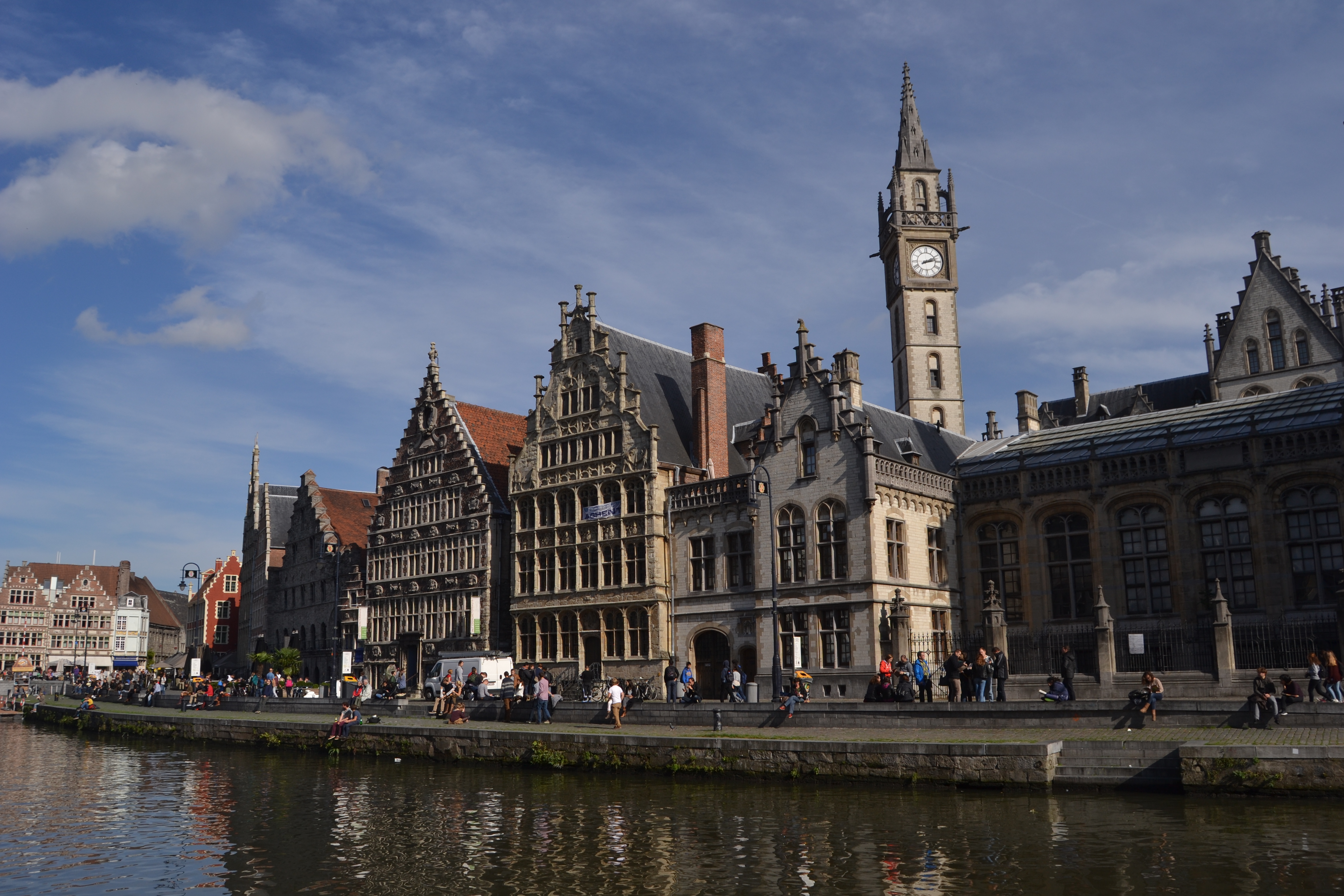
Those who must find fault say there are too many tourists. They should go to Ghent instead, then, which has much of the same magic without the crowds. Both are best explored in aimless urban rambles, walking along the edge of canals, and over bridges and ducking down alleys into a maze of back roads.

Belgium might not be the first country to come to mind when you recall Saki’s comment about nations which “make more history than they can consume locally”.  Yet look at the place names: Waterloo, Flanders, Ypres, Mons, the Ardennes. Ancient Ieper (Ypres) was devastated in World War I, but its medieval buildings were carefully rebuilt. At eight every night, the traffic stops around the Menin Gate and the fire brigade plays the Last Post.

DSC_0842

But for all the historical resonance, and all the poignancy of its war memorials, Belgium is in shirtsleeves where other countries wear black tie. Other capitals have statues of kings and generals, prime ministers and arms manufacturers: Brussels has a sculpture of a little boy having a wee. Ghent has a giant toilet roll. In the nation of Hergé, the comic book is a major art form with a long and distinguished history. One of Horta’s buildings in Brussels is now the Comics Art Museum.

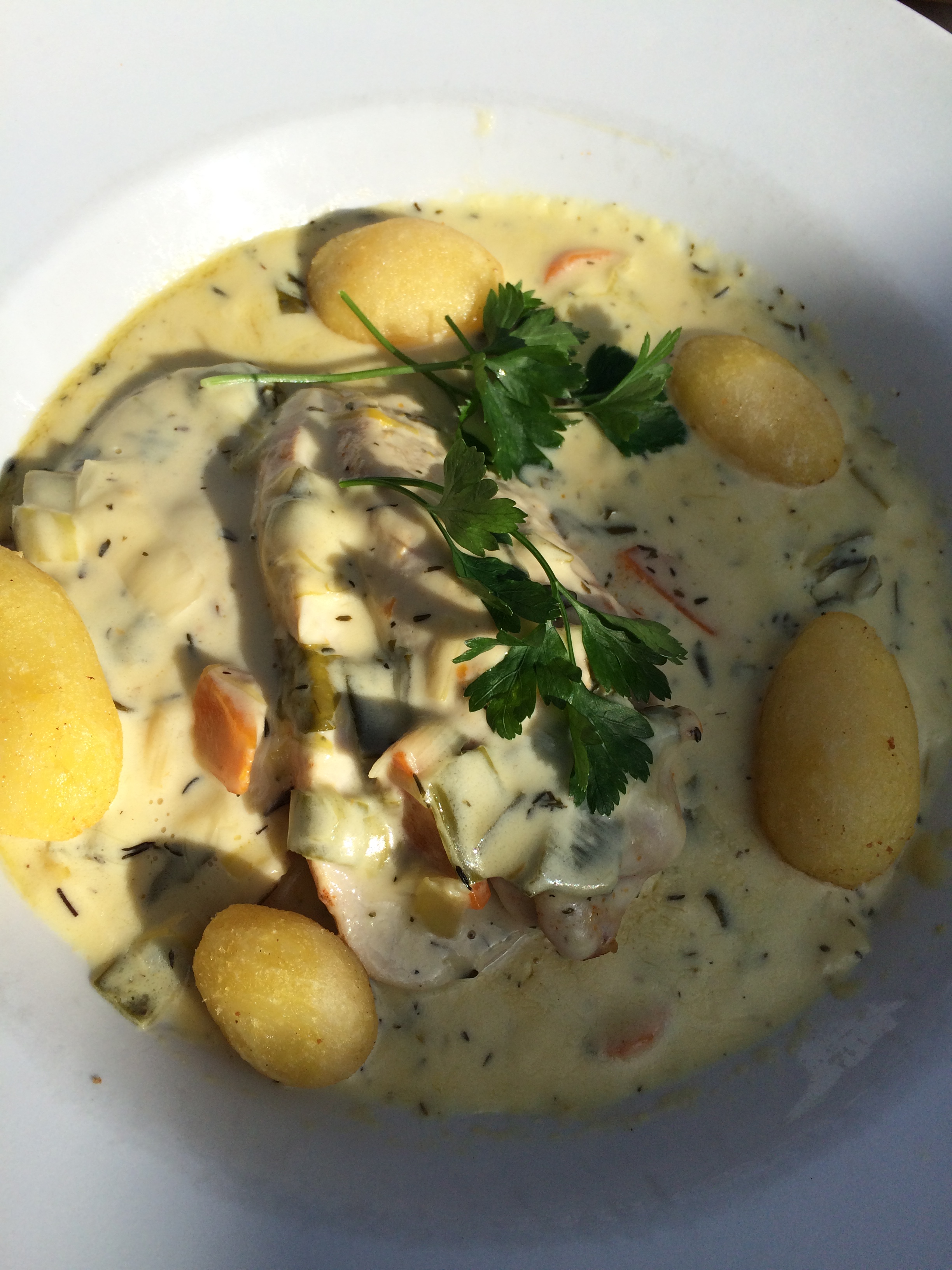
Antwerp is known for Rubens, fashion and nightlife, and takes each about equally seriously. It is as good a place as any to start working your way through Belgium’s thousand or more characterful beers, some dark and gutsy, some as delicate and complex as fine wines. They are used instead of wine in the moules à la marinière iconically served with frites and mayonnaise; also in coq à la bière and stoverij, a take on boeuf bourguignon. But there is more to Belgian cooking than reimagined French dishes: Ghent’s waterzooi, for instance, with chicken in a creamy broth, and Antwerp’s paling in ‘t groen: eel stewed in a herb and shallot sauce.

IMG_1201

I sometimes wonder whether the people who call Belgian boring have even been.

© Richard Senior 2015
Potosí: Rich Hill, Macho Beef and Altitude Sickness

DSC_0925

Un Potosí is a Spanish idiom which loosely means a fortune. It is credited to Cervantes, who had the mad Don Quixote say: “the mines of Potosí would be insufficient to pay thee”. He was alluding to a city four hours southwest of Sucre, where Bolivia’s Central Highlands blend into the Altiplano. 

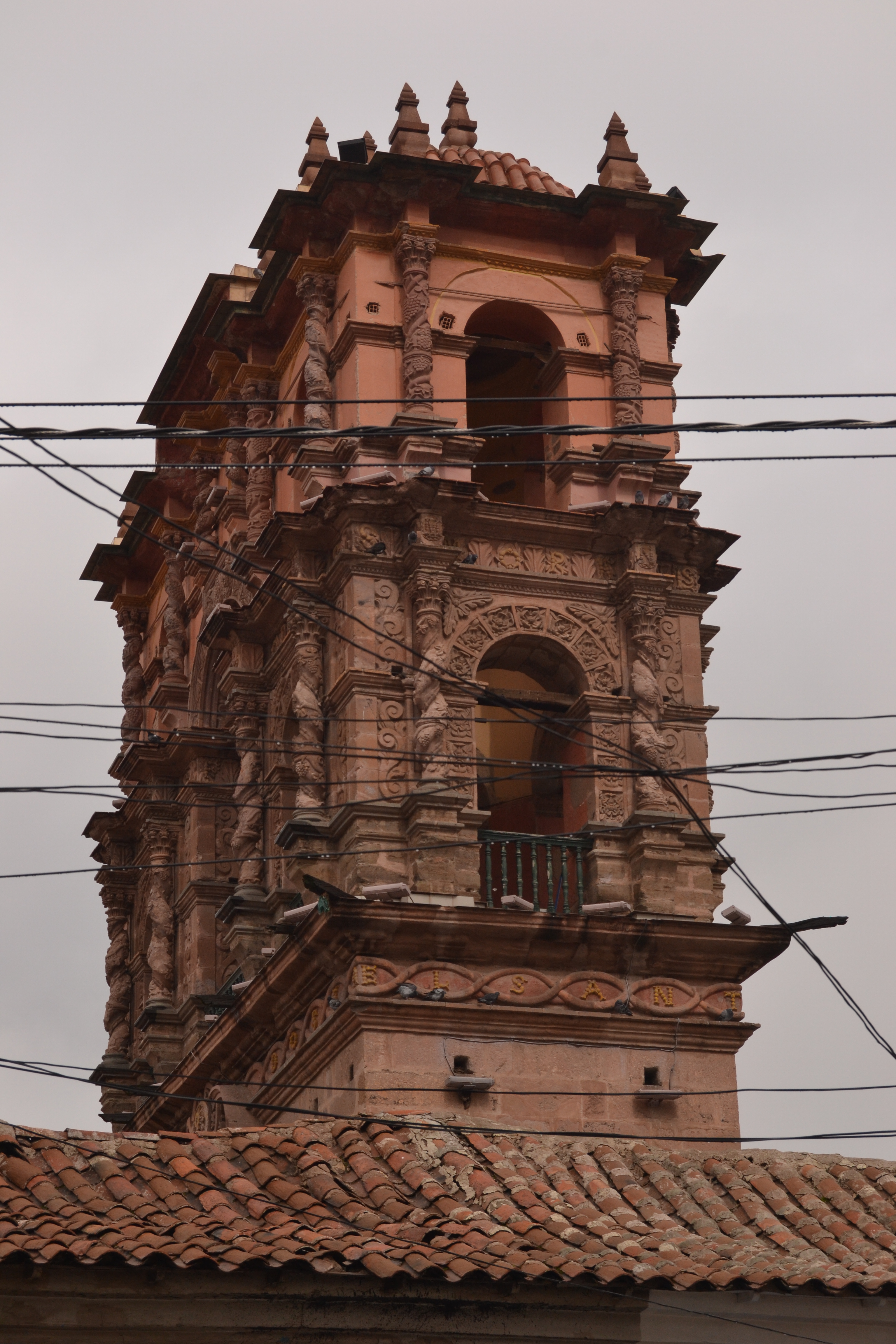
Nowadays it has the look of an old, unloved Rolls Royce, curbed and keyed, filled with junk, but still nonetheless a Rolls Royce. The buildings are painted in blues and reds, yellows and greens, muted now, but obviously striking once. The pompous columns, the intricate doorways, the heavy iron grilles on windows all sing the same song. The words are on the coat of arms:

            I am rich Potosí

            Treasure of the world

            King of all Mountains

            And the envy of kings

The King of all Mountains dominates the city, visible from every street. Cerro Rico (Rich Hill), it is called, because it is laced with silver. It is popularly said that the Spanish shipped out enough of it to build a bridge to Madrid. They shipped slaves the other way, from Africa, because the indigenous workforce kept dying and they still had targets to meet.

The mountain is like a honeycomb, now, after five hundred years of unconstrained digging; and engineers worry that the whole thing might collapse. But the miners are fatalistic. They have to be. They work with hammers and chisels, picks and shovels, breathe the foul air, and carry rock on their backs to the surface. Wads of coca leaves and cheap, strong alcohol get them through the day. They are all likely to be dead before 40. Even if they avoid the frequent cave-ins and runaway trucks, silicosis will get them anyway.

DSC_0968

Agents all over town arrange tours of the mines, with a stop at the market to buy coca leaves, cigarettes and dynamite as presents to give to the miners. Some dismiss it as voyeurism, others think it educational. I was not sure what I thought, but on balance I was minded to go.

Altitude sickness decided the point in the end. It crept up on me during the bus ride from Sucre and left me unable to do much except read and drink coca tea. At 4,090 metres above sea, Potosí is higher than most of the Alps; but the guidebooks overreach themselves when they call it the highest city in the world. It was not even the highest I had been on that trip: El Alto is at 4,150. But altitude sickness is hard to predict. It gives no credit for being fit and healthy, nor for being used to altitude. It can do anything right up to killing you of pulmonary edema; but in my case it was much like a hangover with laboured breath as a bonus. I was fine by the time I went to dinner.

Pique a lo macho is aimed at men with Popeye arms. It seemed the right thing to order in a tough guy town like Potosí. The cook sautés strips of beef with garlic and cumin, adds beer and reduces it, then tosses with slices of onion, tomato and chilli, balances it all on a plate of fries and garnishes with hardboiled eggs. Finishing one alone has about the same significance as eating three Shredded Wheat. It means you are a greedy bastard.

The beef was tender and the flavours were good but I could only manage half. I am not at all a tough guy. I like cats and poetry and even wear a coat in winter.

© Richard Senior 2015