“It is the Journey that Matters in the End…” as Hemingway DIDN’T Say

DSC_0345

It is good to have an end to journey towards; but it is the journey that matters, in the end,” wrote Ursula K Le Guin in her novel, The Left Hand of Darkness, although the internet tends to credit it to Hemingway.

The idea is baffling to regular fortnight a year vacationers, for whom journeys mean getting up early, battling across town, standing in line, getting half undressed, being scanned and frisked, having bits of their hand luggage confiscated, being bullied by cabin staff, sitting for hours between an old lady who thinks out loud and a fat man who snores very loudly, and watching the drinks trolley creep up the aisle to the row before theirs, then shoot back up the other end of the plane and behind the curtain for the rest of the flight, then bowing to pressure from the crowd to stand up the second the plane has come to a stop, even though they know that the doors will not open for ages; then standing in line again and again and again until they have stamps in their passports, cases in their hands and taxis to take them to hotels.

If this is what matters, might as well stay at home.

But on a longer trip, when you are dotting about from place to place, by train, by bus, by car by bike, what you see as you travel between the big sights will lodge in your mind as firmly as the sights themselves. You can get as much from the journey as you can from the end.

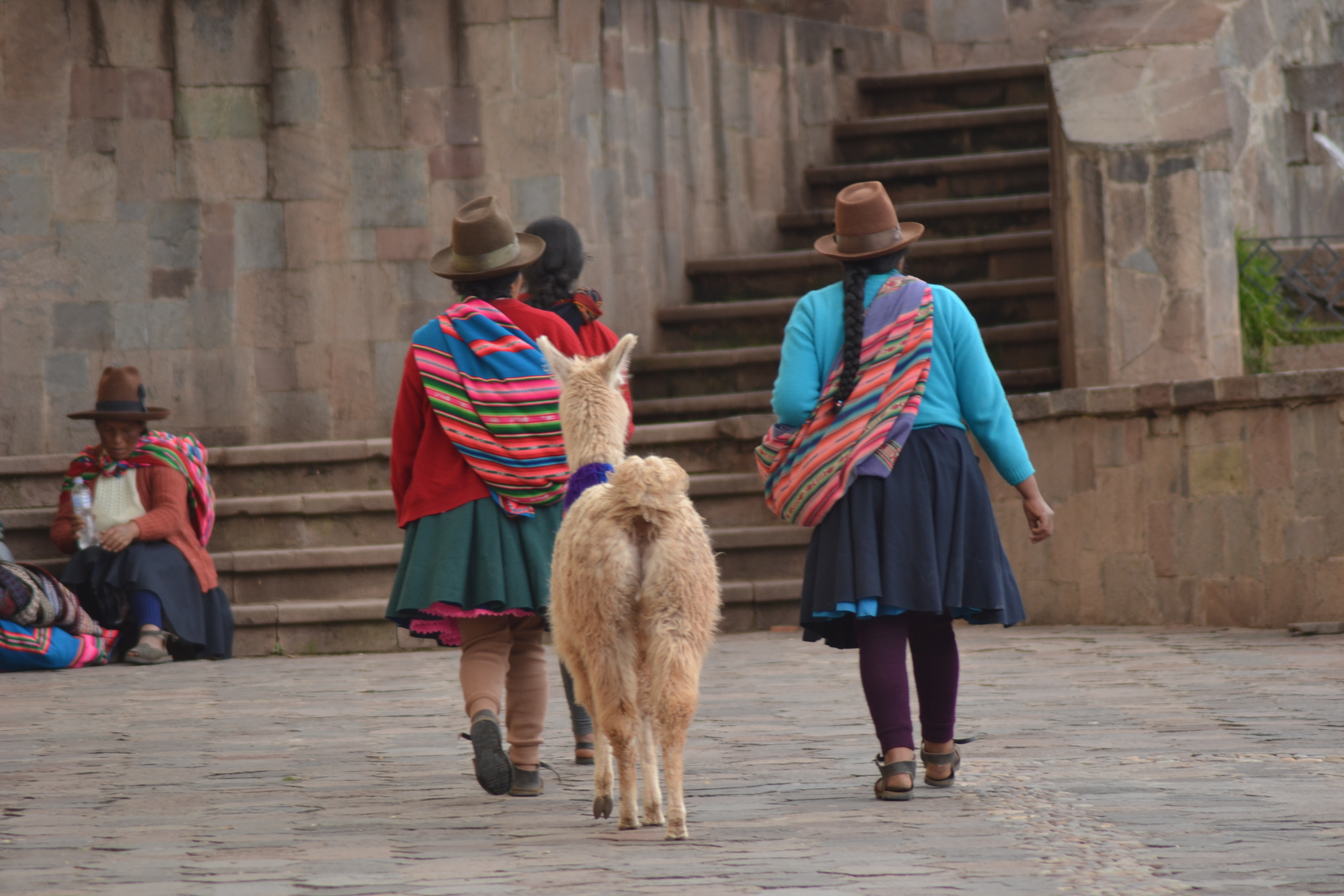
When I think of Cambodia, I think of the bus ride to Phnom Penh from Siem Reap, through rural villages of wooden houses balanced on stilts, of hayricks, pitchforks and ox carts, of broods of chicks jogging after hens. In the bank of memories from Vietnam are the journeys on overnight trains, waking and looking out of the window at villagers kneeling in conical hats to harvest the rice in the half-light of the early morning. I remember long road trips in South America through epic landscapes of mountains and plains which stretched for ever, and the occasional Andean herdsman tending llamas an hour from the smallest town.

In New Zealand it was the journeys I enjoyed the most. There is not much to Picton and little more to Nelson but the Inter City bus took a glorious route between them, through the Marlborough wine region where the vines had turned and flooded the fields with an ocean of yellow on either side of the single track road, where the mountains were stacked three deep: green then grey then blue. The Tranz Alpine Express train threaded its way from coast to coast, from the ruins of Christchurch to the thrift stores of Greymouth with me gazing up at endless mountains, and into the depths of a gorge at a fast-flowing river, and out across the expanse of a pine forest with splashes of yellow and brown among the deep dark green.

I rarely plan a trip in detail, sometimes hardly at all. But I always know where I am going to end up. I need that to give it some kind of structure, and to focus on when things go wrong and half of me wants to jack it all in and go home. There is always an end, and it is always a destination; but there is always a whole lot more to the trip. There are all the intermediate ends, the UNESCO sites, the bucket list staples, the Must Sees, the Wonders of the World and – more mundanely – the towns where the ferries dock, the cities where the buses stop; the stations at the ends of the lines. And there are the landscapes and townships and villages I pass through as I travel between them.

It is good to have an end to journey towards; but, yes, it is the journey that matters in the end.

(c) Richard Senior 2014
How the Llama Didn’t Get Its Name

DSC_0363

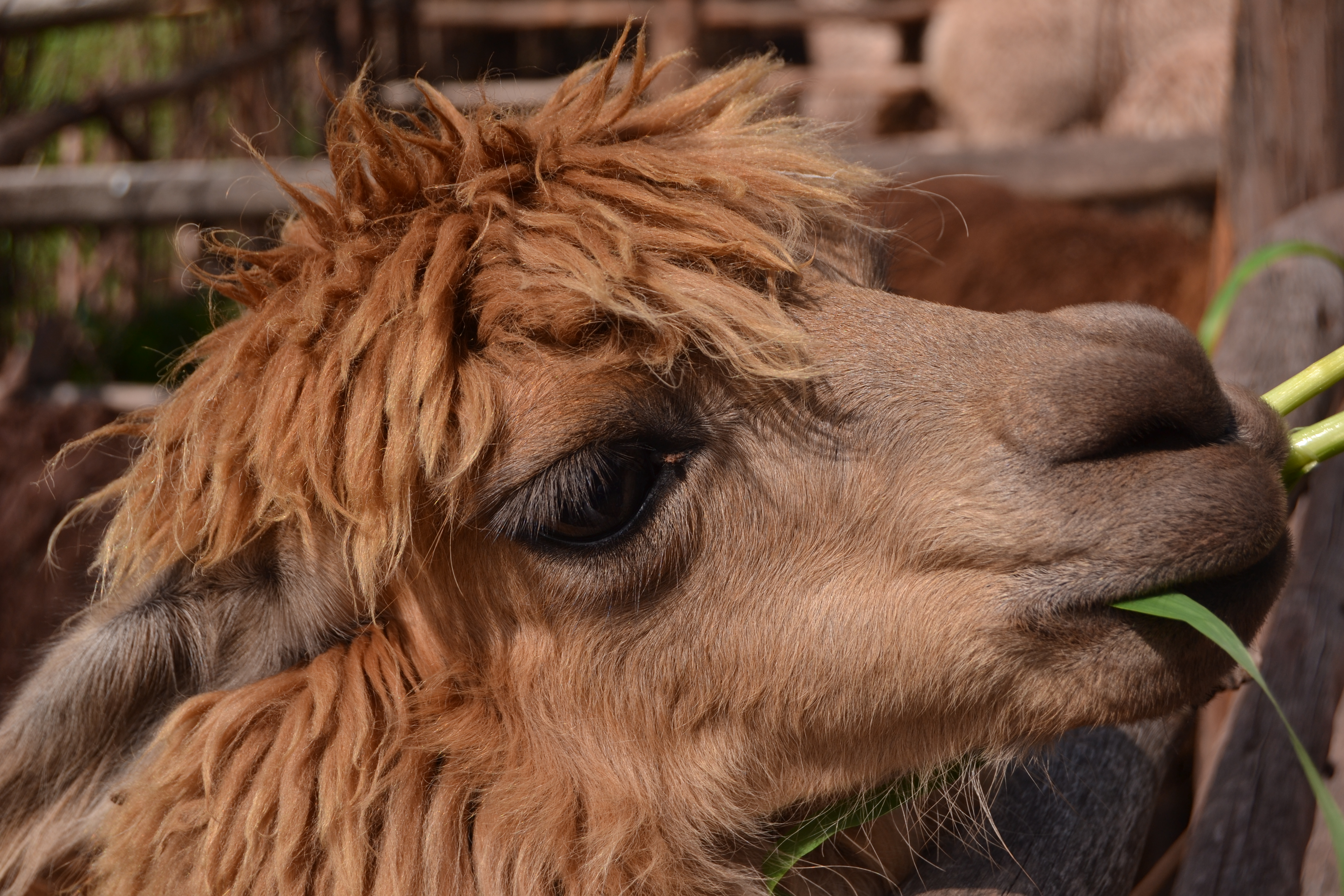
Llamas: larm-errs to the English-speaking world, but yam-ass in Spanish or  jam-ass as it is spoken in Peru. They say that a conquistador approached an Andean herdsman and asked: ¿Como se llama?  (What is this called?) ¿Llama? said the baffled man, who spoke only Quechua. It is strikingly similar to the story told in Britain and Australia of how the kangaroo got its name. And there is just as little truth in it.

DSC_0318

(c) Richard Senior 2014

Salteñas in Sucre

DSC_0838

Freshly cooked pastry, sizzling beef, garlic, oregano, cayenne. The smells from a hole-in-the-wall salteñería wafted after me down the street, caught me up and marched me back.

“Uno salteña por favor.”

¿Pollo, cerdo, o carne de res?”

“Sí.

¿Que?”

“Err, carne.”

¿Carne de res?”

“Sí.

I knew about four words of Spanish, then, and didn’t really know what I was ordering (beef), but I sensed it would be good. Salteñas are pastries stuffed with meat and vegetables in a mildly spiced broth set with gelatine. When they are baked in the oven, the gelatine melts as the pastry crisps, so the filling stays moist and the casing stays dry.

The broth overwhelmed the serviette after the first few bites and started to trickle through my fingers, but the explosion of flavours made me too happy to care.

DSC_0841

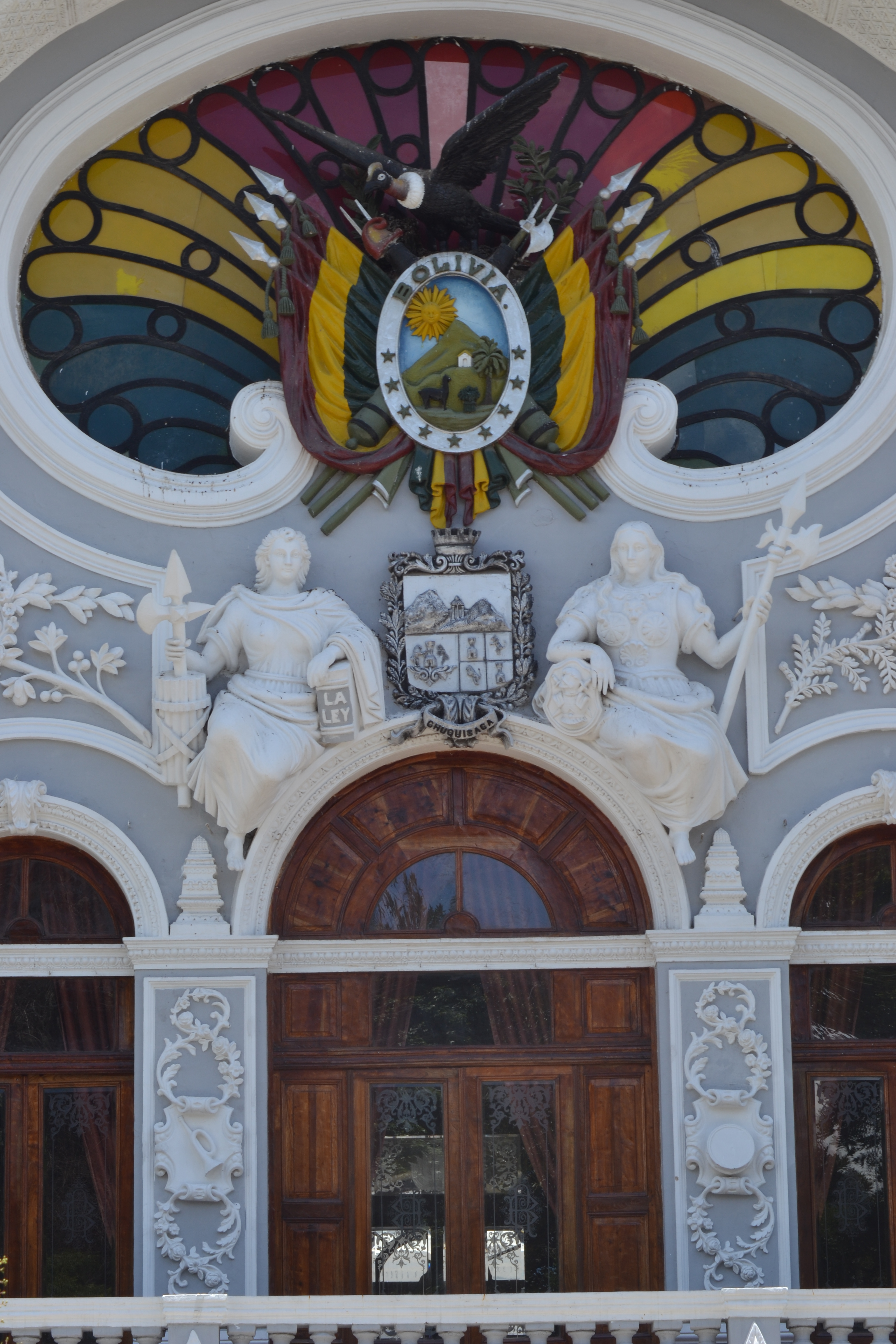
It was the middle of the morning of a glorious day. The sun reflected off the uniform white of the colonial buildings. Only turrets and bell towers disrupted the line of terracotta roofs. Only mountains looked down on the cathedral. It was much as the Spaniards would have seen it when they took a last look as they left in the 1820’s; but the flags which now flutter from every tenth building are Bolivia’s red, yellow and green.

The government has sat in La Paz for more than a century, but Sucre is still the nominal capital, even if it nowadays feels as provincial as Bath. Old men sit on benches in the shade of the palm trees on Plaza 25 de Mayo. Younger men kneel and shine shoes. Drivers stop when the policewoman blows her whistle. No one seems to drop litter or tag walls. It even feels safe late at night.

It is nothing like La Paz.

DSC_0848

(c) Richard Senior 2014

La Paz: Effigies, Offerings and Rebar

DSC_0909

The road from Peru meanders through a poetic landscape, along Lake Titicaca, up and over the mountains, past rivers and plains and glorious eruptions of wildflower. Then all at once you are in honking traffic in the apocalyptic satellite town of El Alto.

A smothering dust covers everything. Every building remains unfinished, and will forever, with rebar sprouting from the floors of notional upper storeys. Aymara ladies buy fruit through the bars on the doors of the shops. Legs protrude from old cars up on jacks on the pavement. Life-sized effigies hang from the lampposts with notices pinned to their chests reading, “This is what we do to thieves”. They do, as well. The 30 lynchings in the first 10 months of 2011 represented “a notable decrease,” according to an upbeat UN.

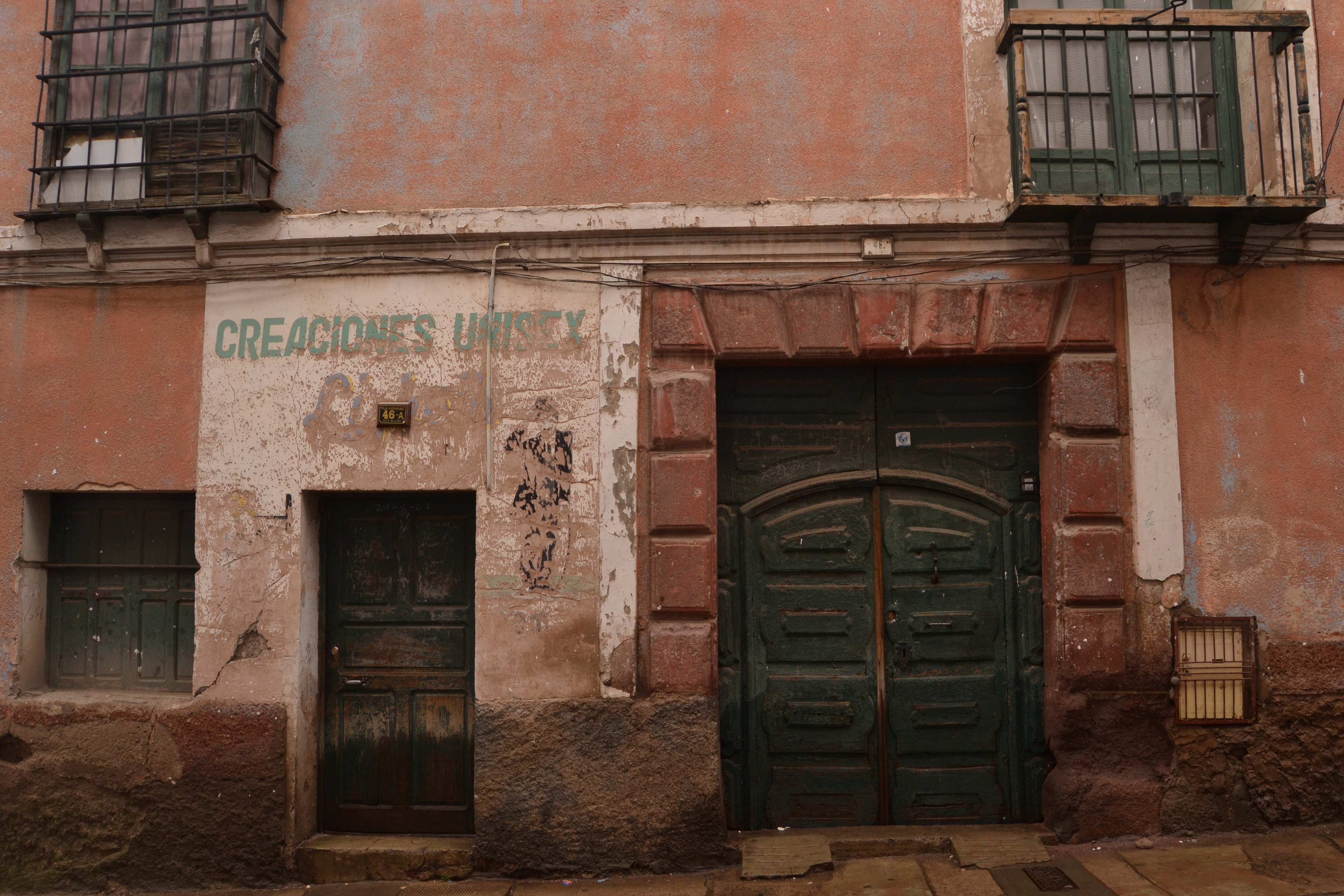
La Paz is picturesque in spite of itself. The first view from El Alto is a sea of ochre buildings embraced by high peaks, and there is a paradoxical beauty in what seems to be nothing but tower blocks. There is, as you see when you roll into town, more heritage than appears from above. The steep streets of sunken cobbles are lined with colonial buildings, crumbling, faded, covered with graffiti and torn fly-posters, but nonetheless photogenic.

There are numberless markets, but they can’t contain the Aymara vendors who spill out down the pavements and into the road. Stocky ladies in bowler hats kneel on sheets laid anywhere they find a space, selling fruit and veg, meat and fish, clothes and shoes, stolen electronics, herbs and potions, figurines and amulets, and llama foetuses to offer to Pachamama.

Oh, thanks for that,” I imagine her saying, in the tone you use when your cat lays a mouse at your feet.

(c) Richard Senior 2014