Journey through Zimbabwe, Part 5

DSC_0287

We set off at first light in an old, open Land Rover.

Hard men in military fatigues paced the edge of the national park with AK47s. Ian stopped and spoke to them in Ndebele and they slung their assault rifles over their shoulders and jumped on the running board and hitched a ride down the road.

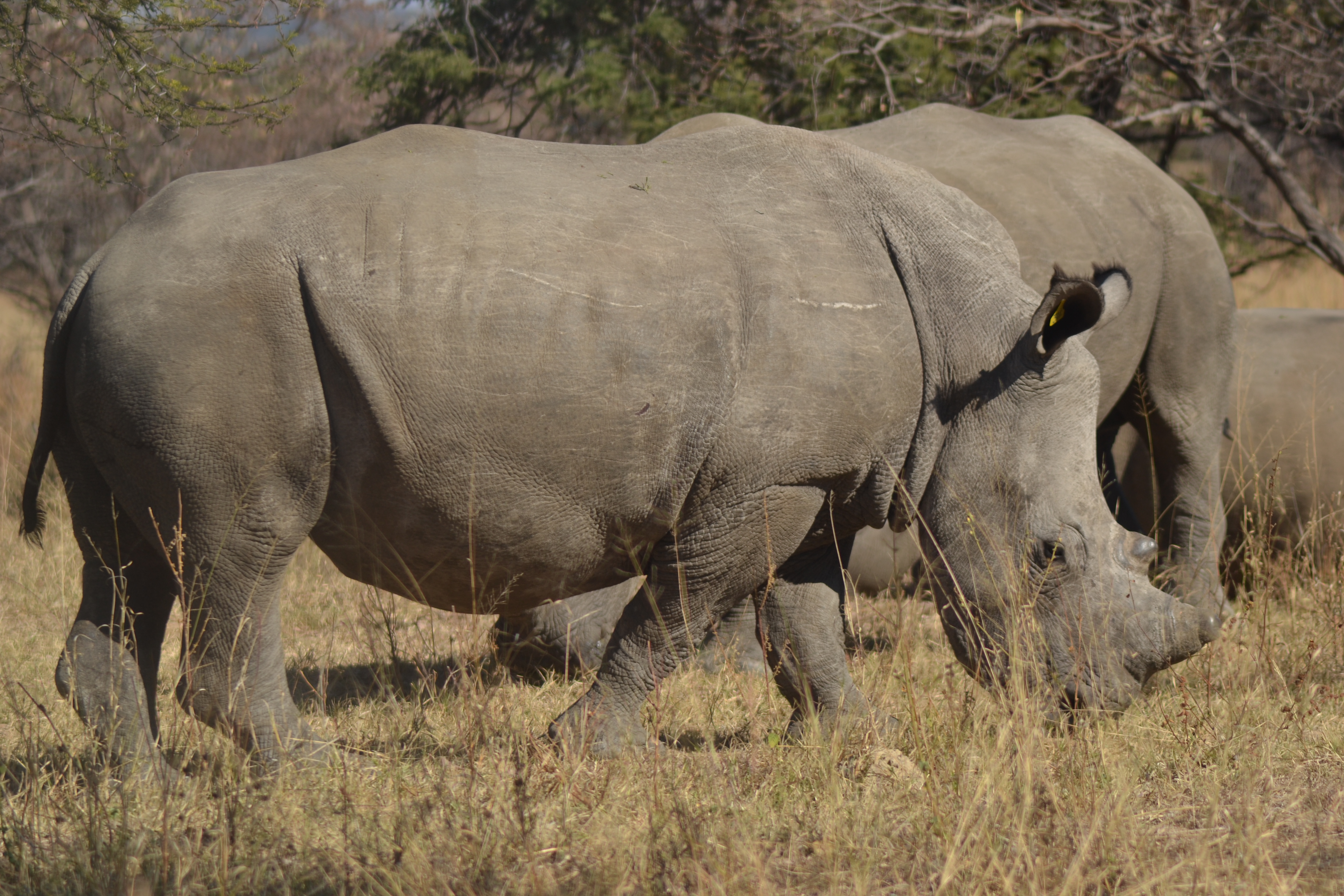
I assumed they were soldiers but Ian said they were rangers, protecting the park’s rhinos from poachers. It is a huge problem in a country with 90% unemployment and a black market willing to pay US $60,000 for a kilo of rhino horn. But it is a problem wherever there are wild rhino. South Africa lost the equivalent of one every eight hours in 2014. Some predict that they will be extinct in the wild within 20 years.

We stopped and jumped out and Ian led us deeper into the park on foot. The sun had taken the chill off the morning by then and the light was beginning to dazzle. The insects hummed and the Cape turtle doves incessantly voiced drink lager, drink lager, drink lager. We weaved around termite mounds taller than us and the gaping holes of old aardvark burrows, and Ian slowed us down and got us to crouch in single file, and we crept to within a few metres of a family of white rhino. The rhino sensed us and some looked up, but they decided that we were no threat to them.
DSC_0189

There is something ethereal about the country around the Matobo Hills. The dusty lanes overhung with trees. The bleached yellow grass, the vivid blue cloudless sky. The famous balancing boulders, the curvaceous granite hills. Water lilies floating on a reflective river. A profound sense of stillness. We drove deep into the communal lands, where joyful children ran out with fruit for sale. “You can leave what you like in the Land Rover,” Ian said confidently, “It’ll be safe enough here”.

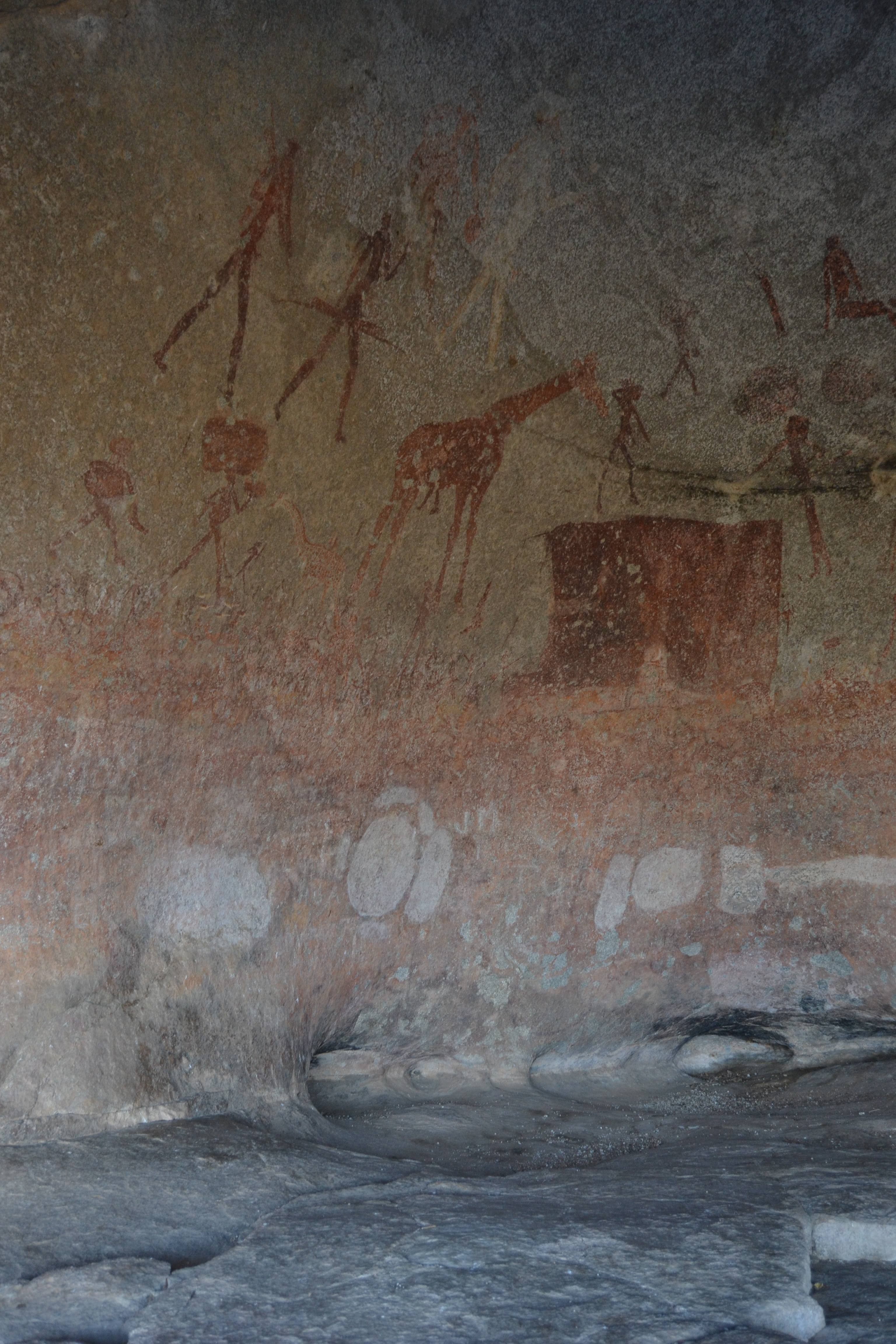
We clambered to the top of a hill where the winds of millennia past had scooped out a cave, and the Bushmen of 11,000 BCE had painted stories on its walls of giraffes and lions and hunting and cooking and setting up camp, which it is easy to make sense of still.

What is harder, though, is to comprehend as you look at these paintings – which are not fenced off, or behind glass, or supervised by guides – were already there at the end of the Ice Age, when the mammoths and sabre-toothed cats died out, when the Bronze and Iron Ages came and went, and Stonehenge was built in England, and the pyramids in Egypt, and a series of great empires waxed and waned, and the modern world slowly emerged and evolved, through wars and inventions and social change, into what it is today.
DSC_0297

At the township bar, where we stopped in the late afternoon, the beer-happy customers gyrated to dancehall which shook the walls, and Ian chatted to a wobbling man in Ndebele, while we nodded and shook hands and said hello and sipped at the porridgy traditional beer served out of gallon drums. I had worried that people in Zim would be hostile, but found nothing but friendliness throughout the country. It is always a mistake, though, to assume that governments speak for their people, any more than mine does for me.

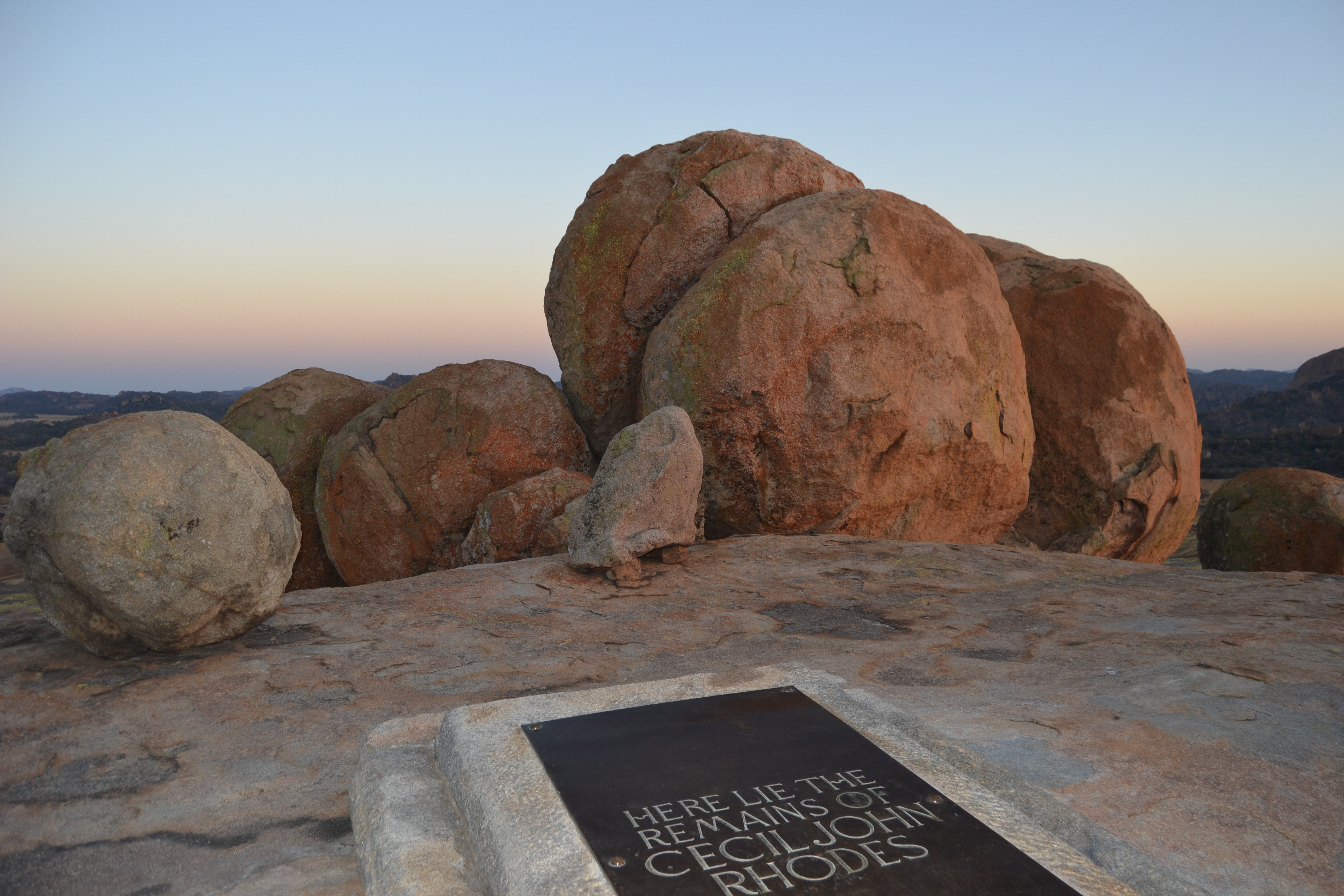
We trooped up the hill which they call World’s View and looked out across illimitable hills and over the park to the horizon with no sign at all that there might be a town within a thousand miles. A century old slab of brass is bolted to the rock and tersely engraved with the words: HERE LIE THE REMAINS OF CECIL JOHN RHODES.

The light began to fail and the sun slipped out of the sky and a band of orange spread up from the horizon and gradually faded out.

The peacefulness of it all,” Rhodes remarked, while sitting on this spot, “The chaotic grandeur of it. It creates a feeling of awe and brings home to one how very small we are”.
DSC_0326

© Richard Senior 2015

The Inca Trail to Machu Picchu

DSC_0474

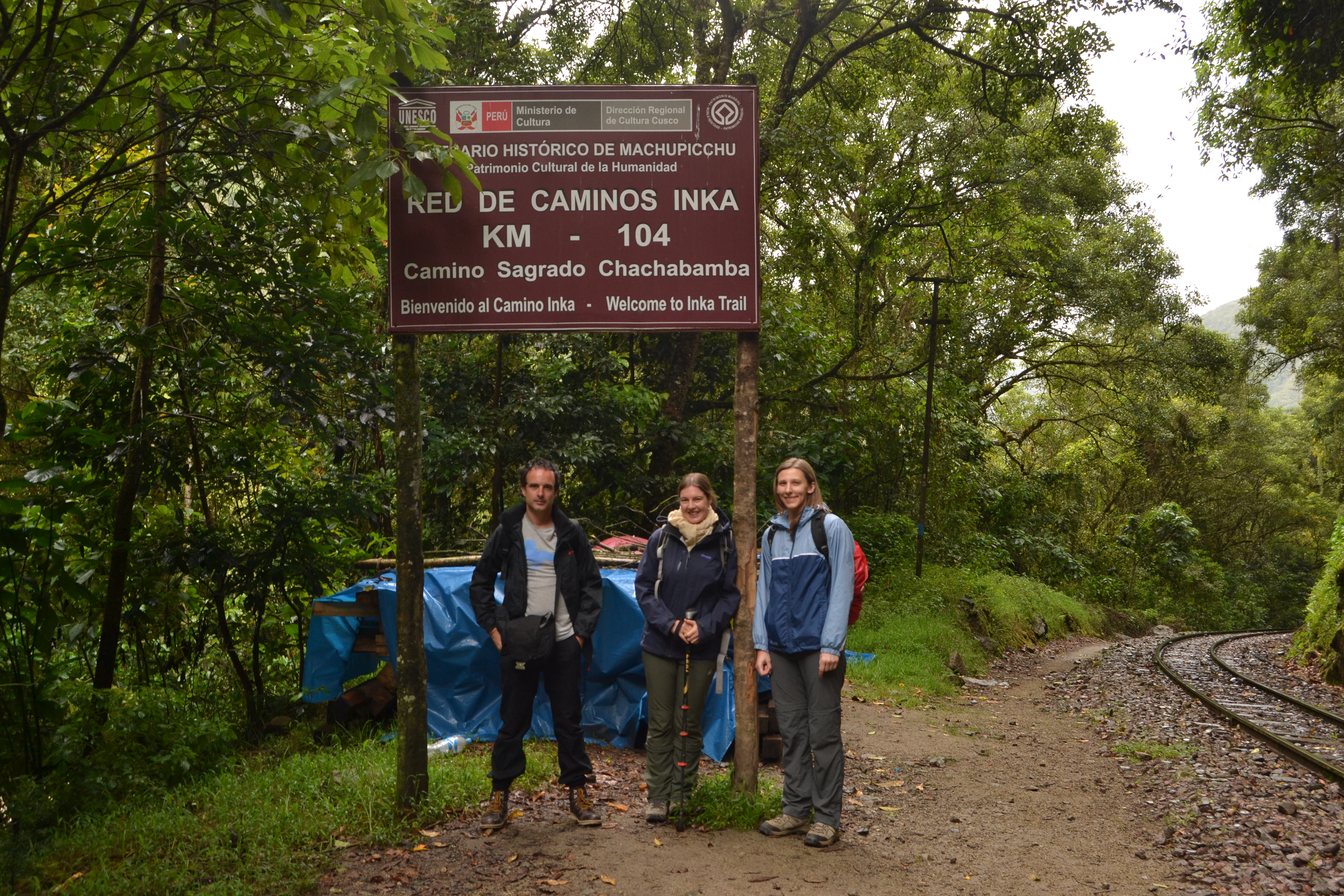
The train rattled alongside a furious river hemmed in by mountains as Andean flute music wafted from speakers above. Then it stopped, nowhere, just like a British train…except that this one was meant to.

Excuse me, esir, you need for to get off

What?”

You do the Inca Trail, no?”

Oh, yeah.

There was no station, no platform: we just opened the door, dropped to the track and crunched through the gravel until we got to a bridge more rickety even than any I saw in Laos. It swayed and creaked as I hurried across the rotten slats, expecting, any minute, that one would give way and leave me dangling over the river.

DSC_0489

It takes three or four days to walk the length of the Inca Trail, but we were cheating a little and starting two thirds of the way in. That still left a long day’s hike.

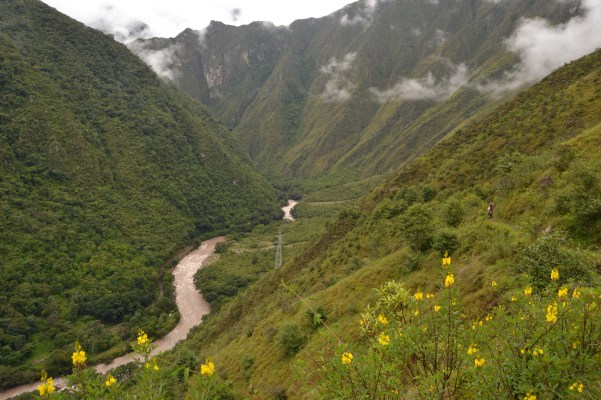
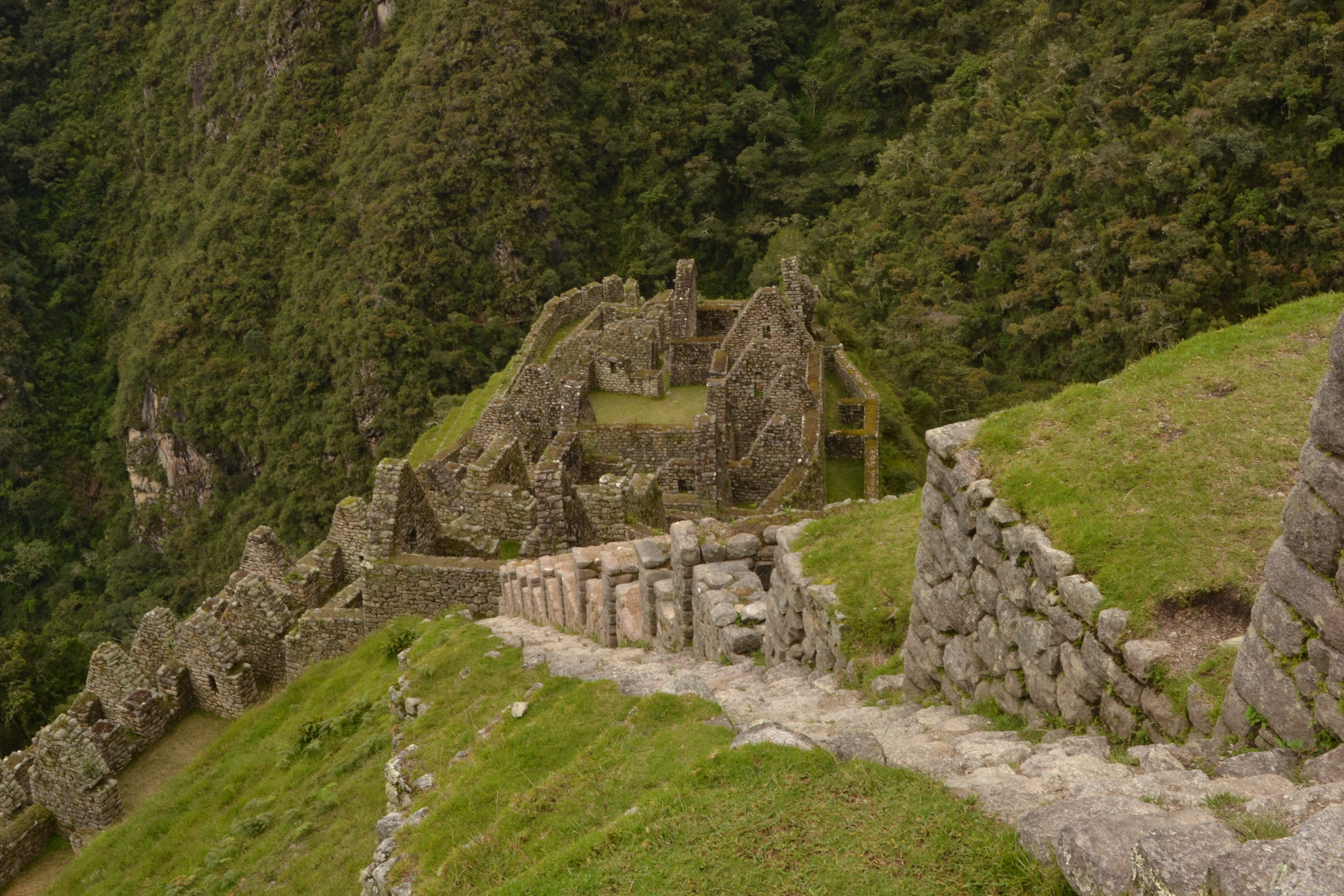
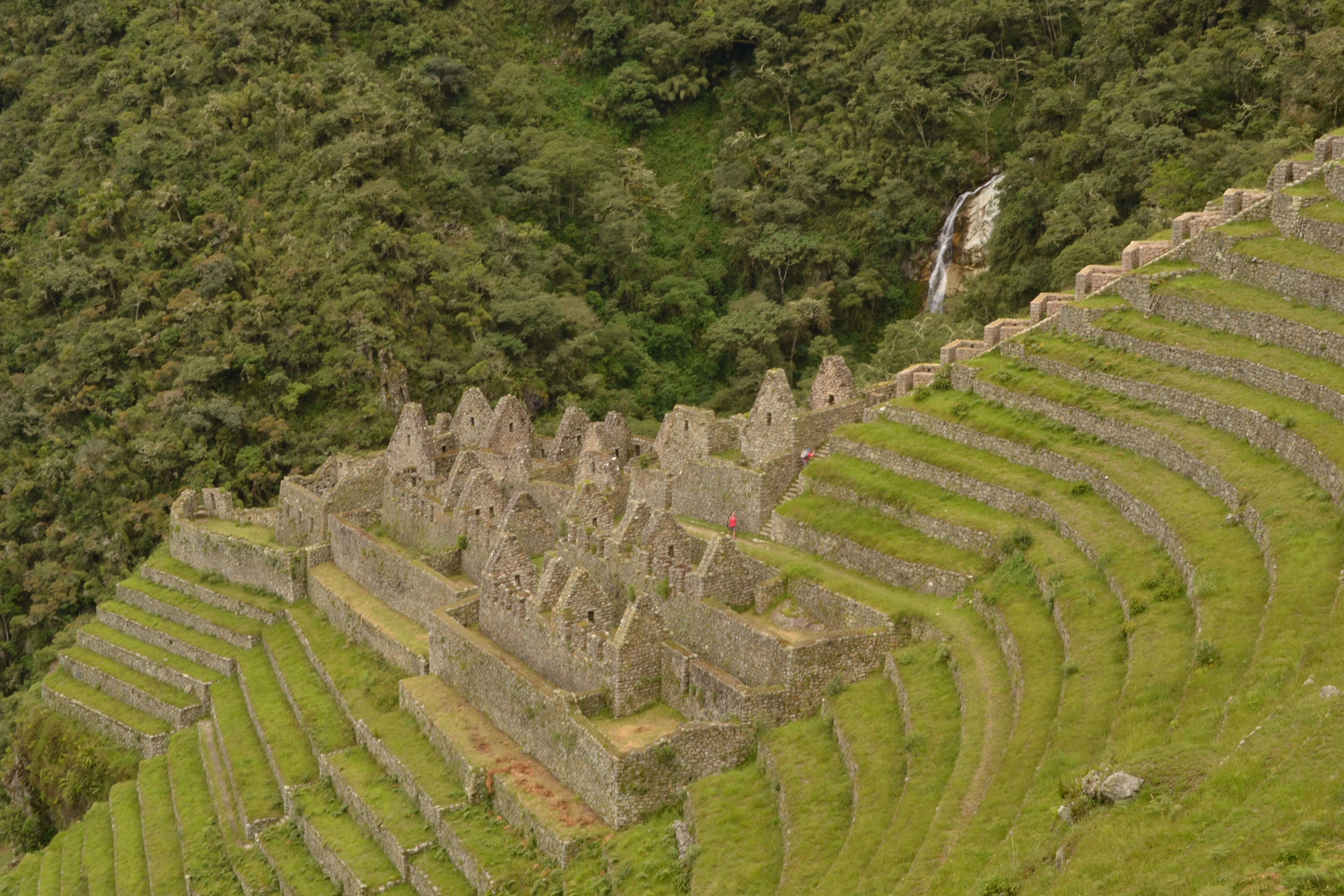
The trail led relentlessly upwards, snaked round the mountain, and continued upwards, until we had left the valley we started from way below and the river was but a scribble and the train track a toy shop display. We scrambled up Incan terraces, passed waterfalls which plunged gorgeously down the face of the rock, and looked across at the neighbour mountains carpeted with trees, and paused to contemplate flowers which erupted from the ledge in shocks of yellow and orange, and pink and red.

Once we saw porters from the four day trail, running down the mountain with mules-worth of weight on their backs. They carry the tents, the chairs, the stoves, the gas bottles and food so the tourists need not worry about weight.

DSC_0531

It started to rain and the clouds slipped down and filled the valley like expanding foam and, for an hour or two, we were walking above them.

Bepe, the guide, kept stopping so we had a chance to catch our breath and he had a chance to share his passion for orchids; but I wanted to press on and did, until I came to a sign with a picture of a bear and some text I did not understand and jumped to the wrong conclusion.

I had just read Bill Bryson’s A Walk in the Woods, in which he worries his way along the Appalachian Trail thinking about bear attacks. But there are no grizzlies in Peru, it turns out, just the spectacled bear: a shy little thing you would expect to have petite-bourgeois manners from the fifties and a bag full of marmalade sandwiches. The sign was urging the walkers not to bother the bears, not warning the walkers that the bears might bother them.

DSC_0532

I went ahead again, and passed a hard-looking man who glared from a step, and I remembered something I had read in a guidebook about muggings along the trail. Three more men emerged from shelter when I climbed up the steps of Inti Punku, the last but one of the ruins on the trail. “Buen’ dias,” one growled and I looked back with relief to see Bepe and the others at the foot of the steps.

Who were those dodgy bastards?” I asked after we turned the corner.

“The rangers,” Bepe said.

“Oh.”

“They’re making esure that nobody is still walking when the trail closes.”

“Ah.”

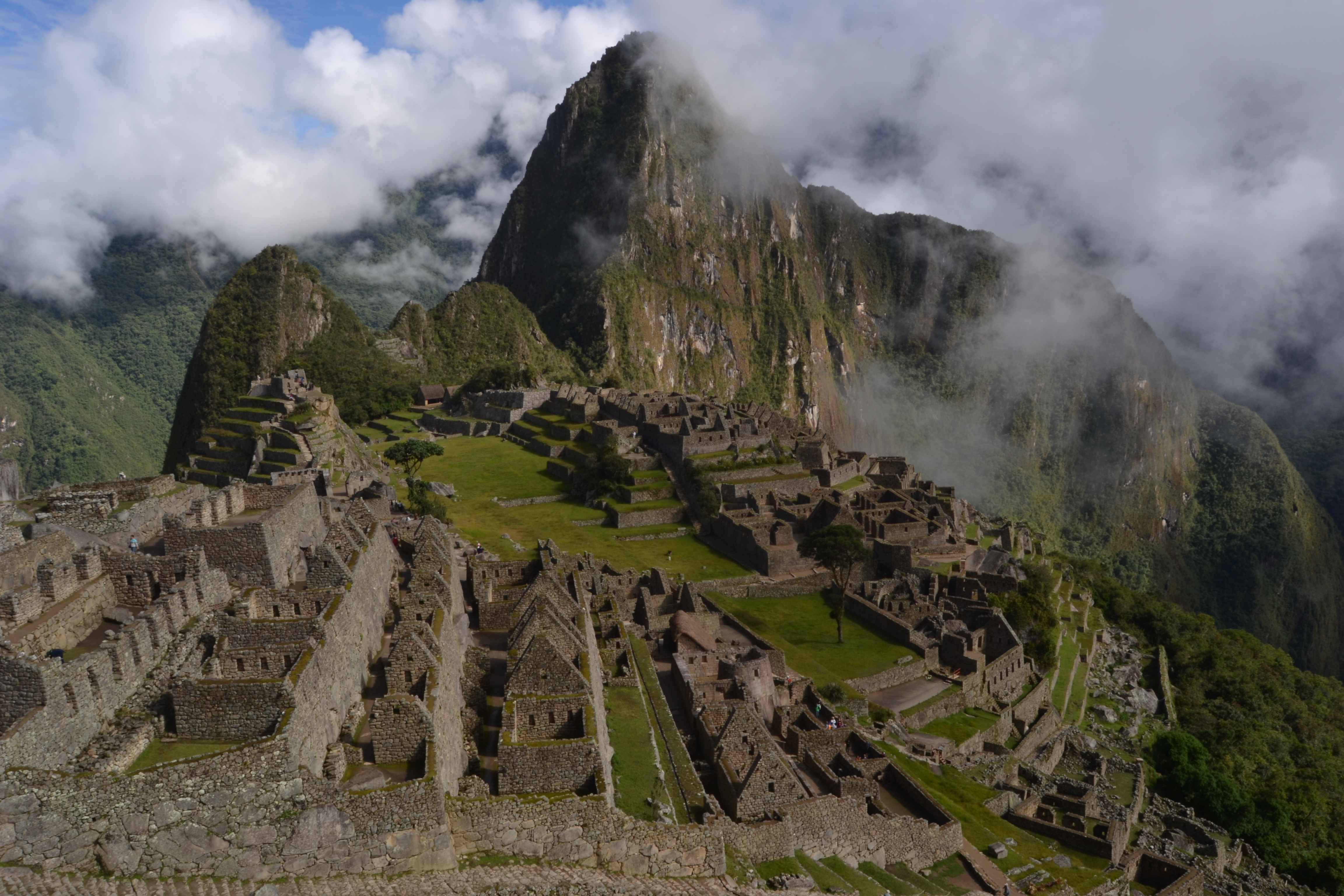
We would, he said, have had a good view of Machu Picchu by then, if it were not for the clouds. I thought he might have kept that to himself. But as we walked on, the clouds dissolved and the iconic image materialised before us, just as it is in the brochures. It was a magical effect.

DSC_0557

© Richard Senior 2015

Queenstown in May

DSC_0170

It was off-season in Queenstown. The sun had apparently been packed away for winter. The mountains were hidden under cloudy drapes. The glorious colours I had seen on the postcards had been taken off display. Tarpaulins were roped across the decks of the sailing boats at anchor on the lake. They had not been touched for months. Even the notorious bars were quiet. I had no winter clothes, so wore everything I had at once, and sat with my back to storage heaters while I was in the hostel.

The jet boats were still taking groups out, and I heard there was whitewater rafting nearby; but it was unthinkable, at that time of year, to do anything which soaked you through. There was bungee as well, but I am too cowardly for that. I took the cable car up Ben Lomond to ride the Luge instead.

The track winds steeply around the mountain and propels you through tunnels and over humps and round banked corners as you barrel along it in a three-wheeled cart. There is a ski lift, then, to take you back to the top so you can do it again and again. There had been a frost in the night and whenever I approached a corner too fast – which I usually did – I went round it sideways and careered into the buffers around the edge, then wobbled back onto the track.

DSC_0152

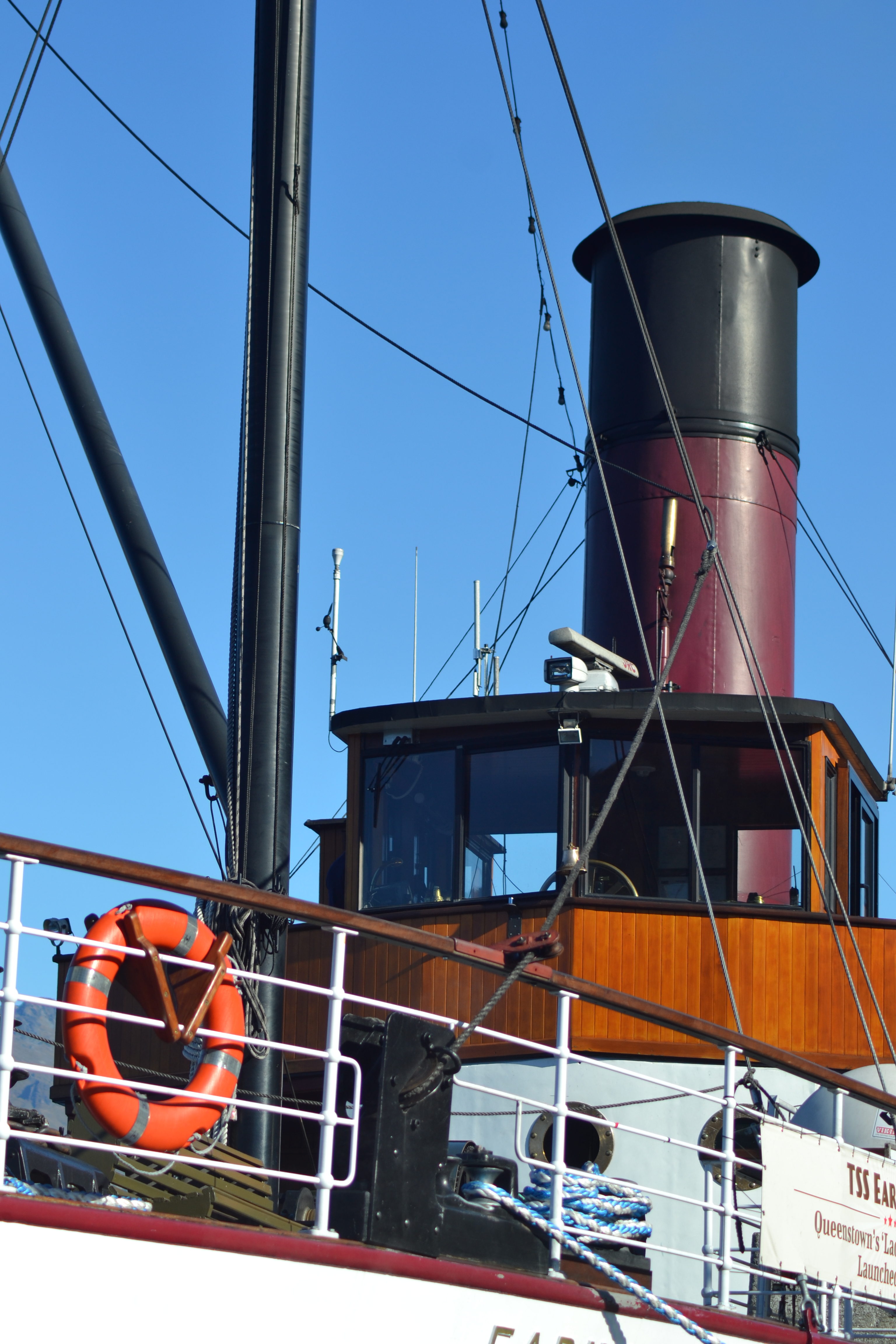
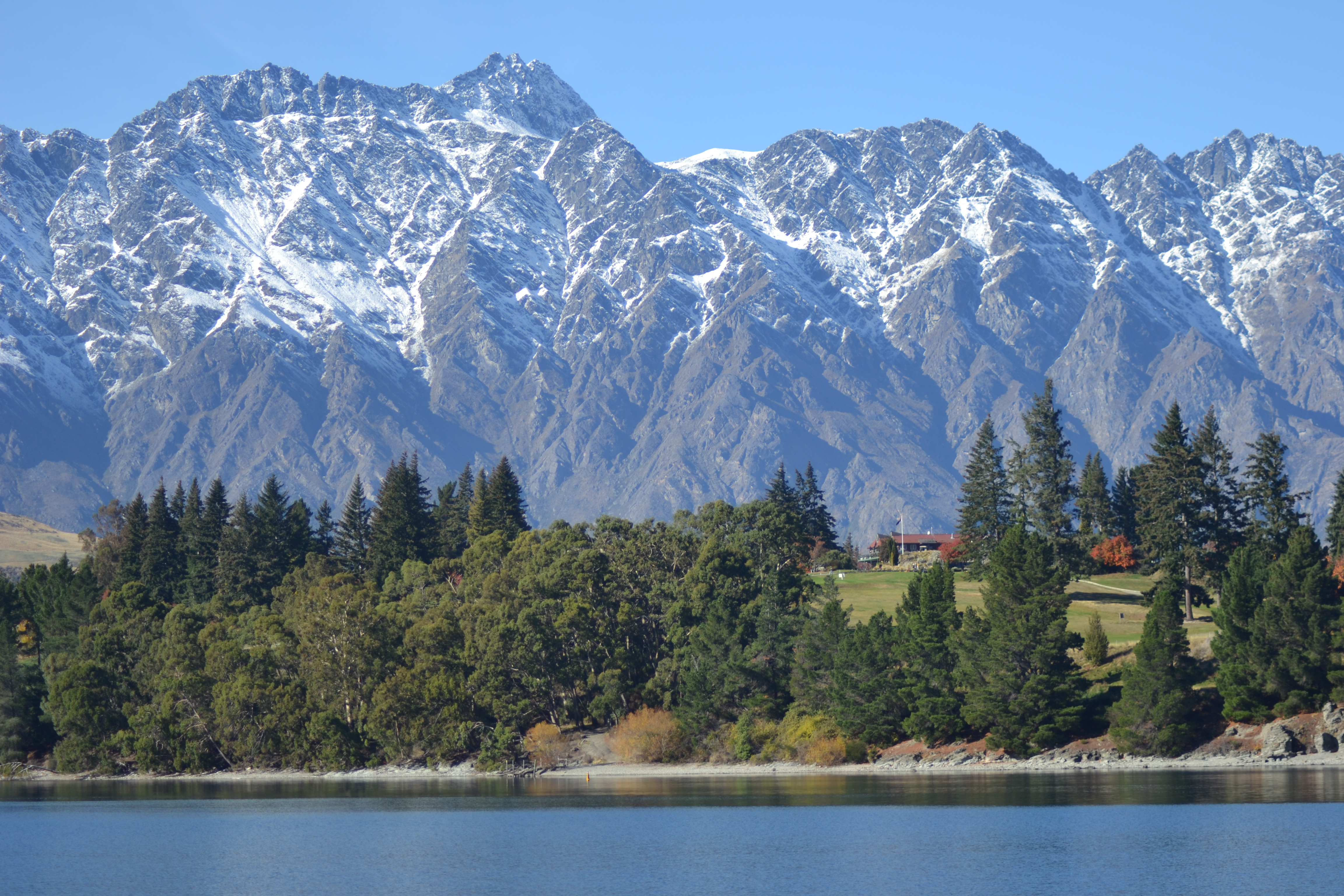
The clouds began to peel away as I waited for the cable car down. It exposed the creases and folds of the mountains and the glorious pallet of colours in the landscape: the dark, dark green of the pine forests, the vivid blue of the lake; the burgundy and green of the heathers; the purple-grey Remarkable Mountains with their white heads stuck in the residual clouds; the wine red leaves, the raspberry leaves, the yellows and oranges, and bronzes and tans; the lime green lawns and the yellow wild grasses. A steamship eased itself across the lake, a stroke of white on a canvas of blue, with a curl of black smoke trailing like a streamer from its funnel.

TSS Earnslaw was built in Dunedin in 1912 and has worked Lake Wakatipi ever since. In the early days, it carried sheep to remote farms which had yet to be connected by road. Now it carries tourists.

You can go stand in the engine room and get in the crew’s way if you like. (They will just shove past you.) The ship was built a long time before health and safety was invented, and the space is crammed with exposed parts which are hot, or sharp or moving. There are big brass gauges and oversize bolts and levers which need swinging on to move.

DSC_0152

A stoker humps coal into the belly of the engine, while another walks round with an oilcan and squirts everything he sees to stop it from seizing up. He turns wheels, opens vents, throws levers, and – after a busy five minutes – the engine begins to chuff and snort and shake. The engineer calls in to look important, wearing white overalls to show that he never has to do the grunt work himself. He points and gives orders and then flicks the telegraph to full ahead and the ship powers across the lake at four knots.

The sun stayed out but the temperature never crept much above seven degrees. The cold seared into my bones. It is a beautiful place, but I was rather glad when I ran out of time and had to head back up to Auckland.

© Richard Senior 2015
A Fresh Look at Bangkok

DSC_0210

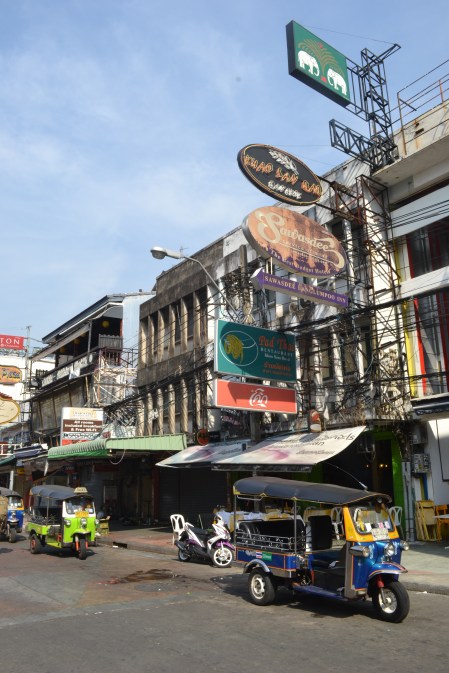
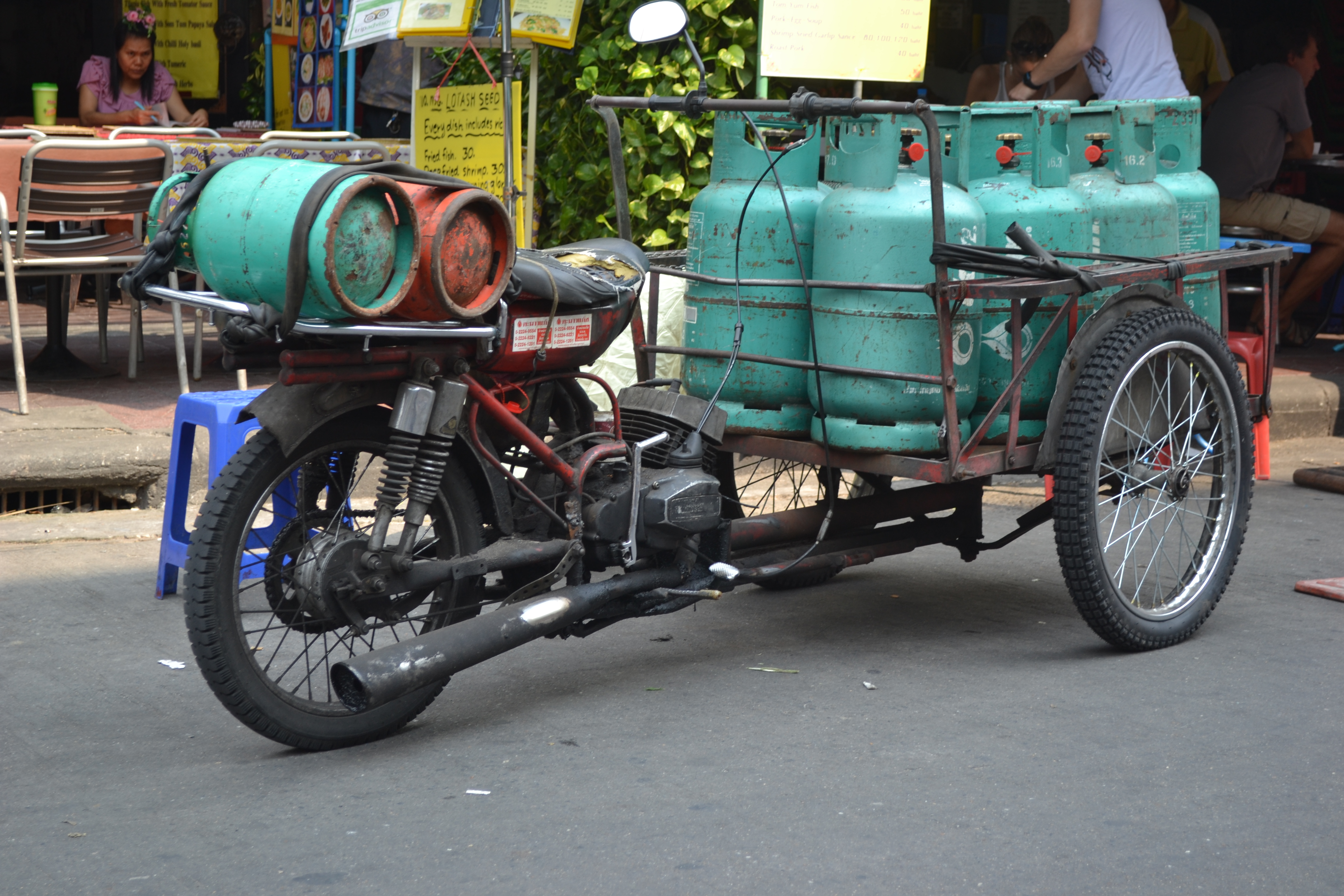
The fruit vendor woke me up when she drove her van down Soi Rambuttri, calling out through a megaphone attached to the roof. The brush seller came after her on a motor tricycle with a putt-putt engine and hee-hawing horn. He had bottle brushes, paint brushes, wire brushes, flue brushes, and every size and every colour of sweeping brush. But no one was buying brushes that morning.

The shopkeepers had rattled up the shutters a few hours before; the barmen had dragged the chairs and tables back onto the street. Travellers sat at a few of them with coffees, cigarettes and Lonely Planet guides; the rest were empty as yet. Tuk-tuk drivers were massing outside the guest houses, like reporters at the home of a shamed politician.

An early ice cream man pedalled past my window on a tricycle with an icebox slung from the handlebars and a tinny chime which suggested a theme from children’s TV. Dee-de-dee; dee-de-dee; dee-de-diddly-dee-de-dee. Behind him was a man with a hundred year-old pushcart piled up with watermelons, who dinged a bicycle bell on the handle as he shoved it down the street. No one was buying watermelons either.

DSC_0058

The street food vendors had claimed their pitches along Rambuttri, around the corner and down the next street. The pad thai, the spring rolls and satays are familiar enough to the travellers passing through, but the rest is new and not all of it welcome, least of all deep-fried crickets and bamboo worms. Thais like them well enough, but if you tell them we eat snails in Europe, they are disgusted.

By the middle of the morning, the roads were an anarchy of honking buses and beeping cars and crazy, fearless motorcycle taxis darting around them; and the pavements were crowded with people and everybody was constantly in somebody’s way. But there were none of the hundred explosions of temper which punctuate every British day, and too readily end in a whirl of fists and knocked over tables. No one seemed to mind very much if someone bumped into them or stood in their way for a moment. And it is easy to say something glib about Buddhist serenity, but it is as much about keeping face.

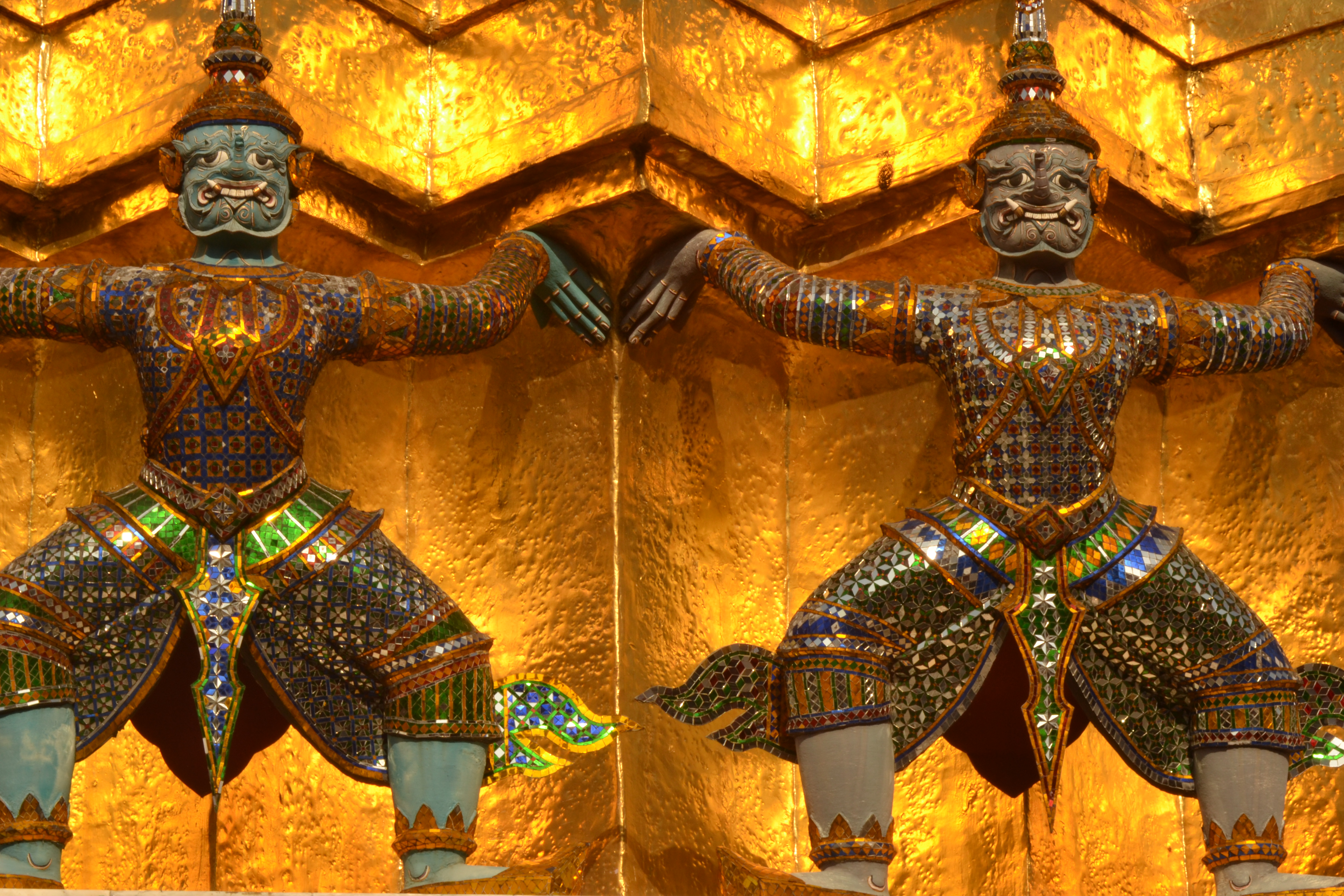
The soaring eaves and gilded stupas of Wat Phrakaew and the Royal Palace shimmered in the haze at the other side of the Sanam Luang public gardens.  There are something like 500 temples in the city and monks are as much an everyday sight as nuns in Rome and estate agents in London.

DSC_0610

There is a long stretch of pavement near the most important temples filled with dozens of stalls selling amulets. The devout believe that they keep them safe or bring them luck. There are effigies and statuettes, medals and coins, bracelets and pendants, stones and used false teeth. Collectors peer at them through magnifying glasses. Groups of monks browse the stalls. Travellers stop and finger the amulets and pretend that they know what they are looking at.

A few blocks away, there is a street on which the shops sells nothing but Buddhas. There are tiny Buddhas and enormous Buddhas and all sizes of Buddha in between; there are sitting Buddhas and lying Buddhas, fat Buddhas, thin Buddhas; Buddhas made of plastic and Buddhas made of steel. Then, next to that is a street on which every shop sells policemen’s caps.

Elsewhere, there are workshops crammed with boxes and drums, bicycle frames, engine parts, pieces of wood and old bathroom fittings, and right in the back there will be an old man engrossed in repairing a pocket watch or stripping an alternator down. Who knows what his business is? There is never a sign (even assuming you know a ช่าง from a ช้าง) and it is often hard to see any connection between the things inside; much of it looks like junk.

DSC_0020

I know that, a couple of miles downtown, there are forests of office blocks which could be in Manhattan, and malls which might be anywhere in Europe, and all your favourite multinationals; and I know that the younger Thais might speak idiomatic, American-accented English, and eat at McDonalds, and stream the same movies and listen to the same music as us.

Yet travellers are way too quick to write off Bangkok as ‘Westernised’. So many people said it to me, so automatically, that it was obvious it was no more a view they had come to themselves than when the man in the pub recites something he read in a tabloid about the economy.

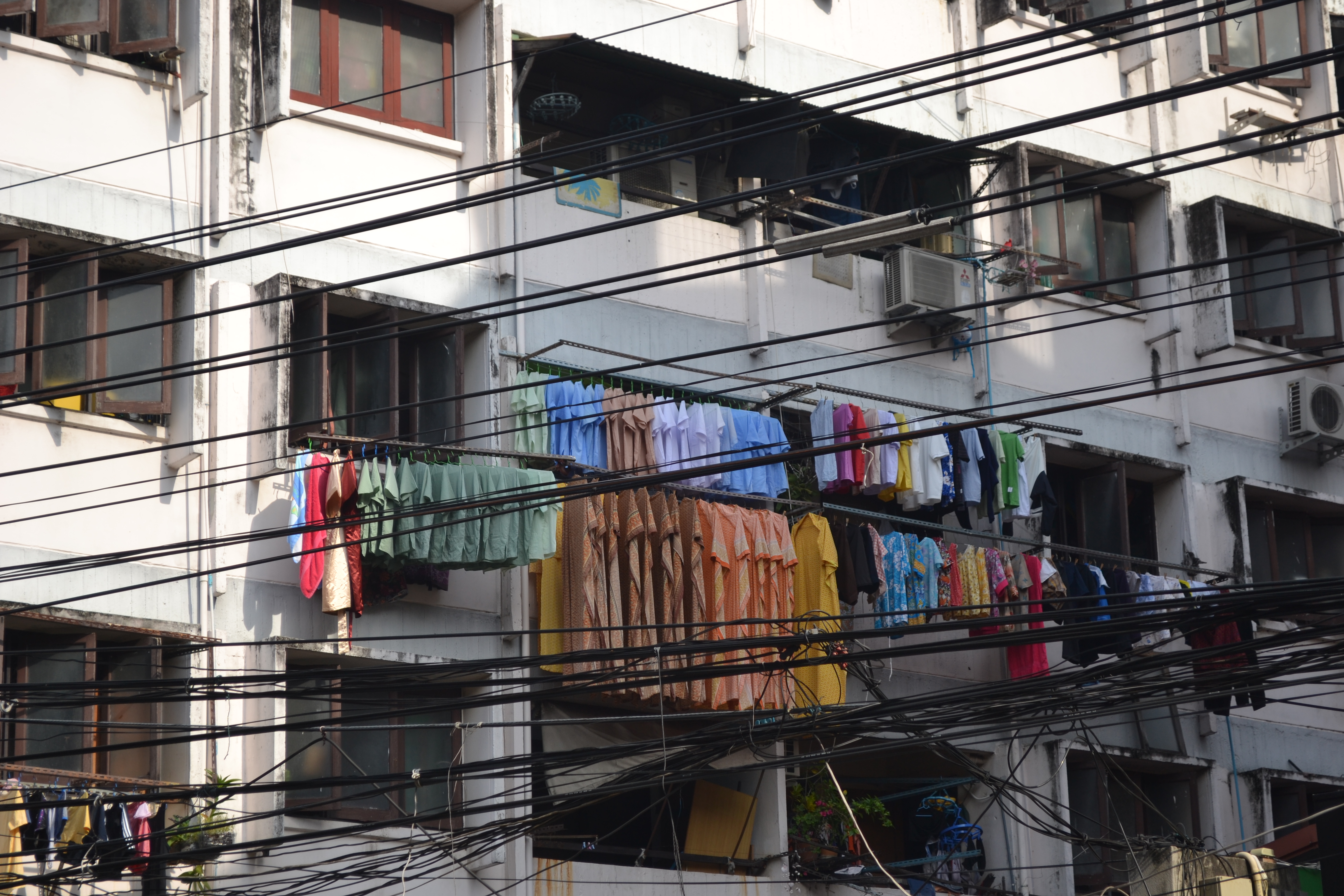
For all that is familiar, there is a great deal that is not; and plenty is all but unfathomable for the average farang traveller.

© Richard Senior 2015

A Hostel Environment

DSC_0227

I was woken at six by the sounds of five people simultaneously stripping beds, emptying lockers and stuffing things into backpacks. Zip – rustle – bang! – thwock – zip – rustle – zip – clang! – zip –  thump, thump! – crackle – zip. 

But they whispered so as not to disturb me.

I had the dorm to myself for most of the morning until a big scowling bloke burst through the door. “Hey, mate; how you doing?” I said, and he glared and said “all right, mate” in a sepulchral tone which made it sound like a threat. Then he collapsed on his bunk, groaned and muttered, jerked and bucked and I wondered if he was drunk, or insane.

I left him to it and he was asleep by the time I got back in the early evening, and I crept around the dorm to be quiet, but I was obviously not quiet enough. “Fuck! Fuck! Fucking-fuck!” he said, as the sleep began to wear off, Then he sprung upright in the bunk and said, “Fucking-fuck, mate! Fucking-fuck!” as if I had just crashed into his car. It was some of the most creative swearing I have heard since a farmer near the village in which I grew up paused to swear in the middle of saying the name of the nearest town.

So I left in a hurry again and went up to the roof terrace where they were having a barbecue and stayed up there until late. Then, at four in the morning, Fucking Fuck’s mobile rang at the volume of a fire alarm and he took the call, had a loud conversation, stumped out and slammed the door.

I went back to sleep for ten minutes or so until I was woken by urgent hammering. I guessed that Fucking Fuck had forgotten his fob – I had done it myself a few times – but it was another, much older guy, who might have been Fucking Fuck’s father. “Is Andrew up yet?” he asked loudly, as if it were quarter to ten. Then he invited himself in and shouted “Andrew! Andrew?” prompting groans and sighs and symbolic turning over from all around the room.

I told him that Andrew had left already and I never saw either of them again.

© Richard Senior 2015
Journey through Zimbabwe, Part 4

DSC_0139

From Masvingo, we drove 150 miles west to Matabeleland and stopped in Bulawayo.

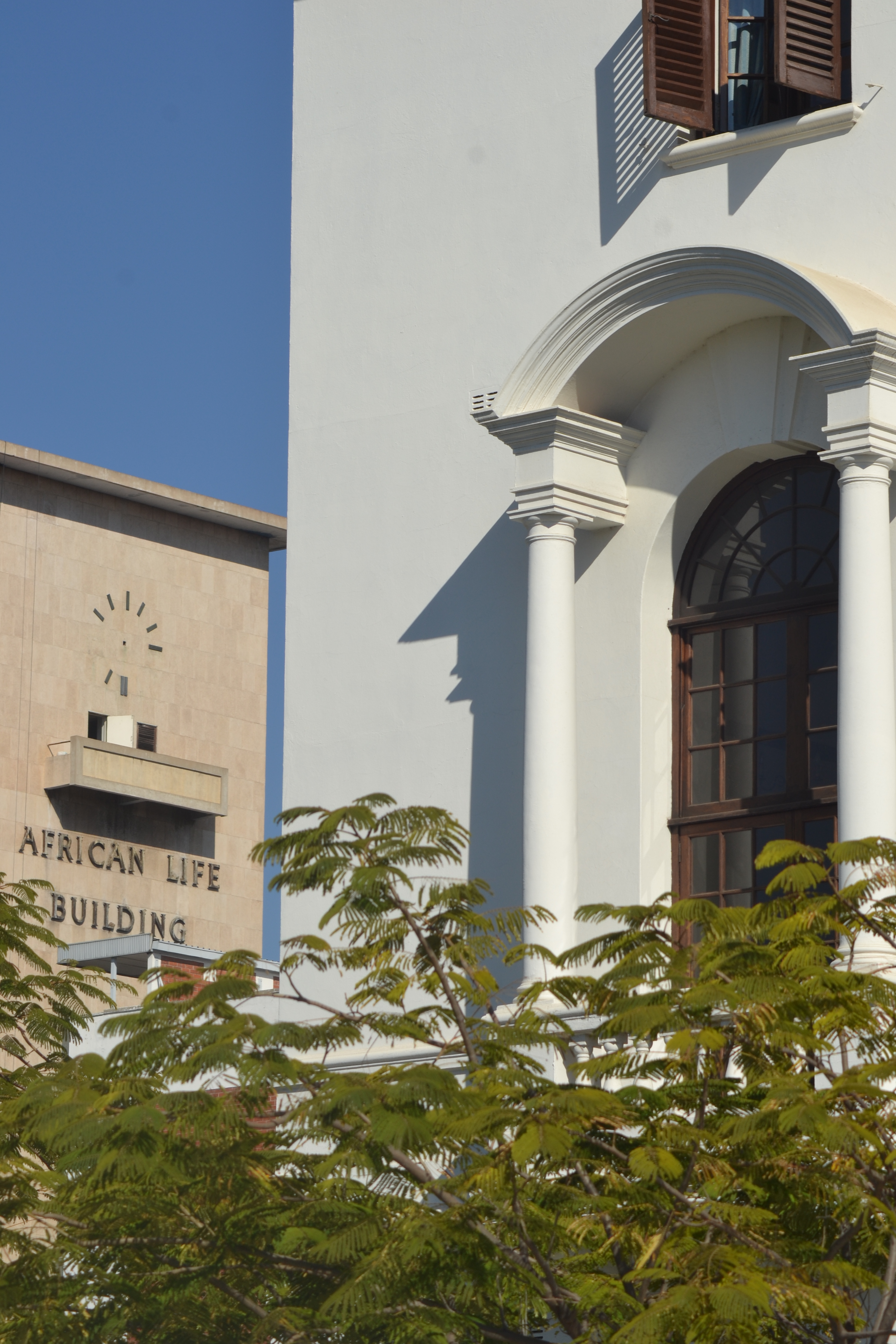
Like a ghost sign on a gable end, old Rhodesia is still plainly visible in the shabby-gentile second city. The Palace Hotel, where Henry Morton Stanley reportedly stayed in the 1890’s, is still open for business. “Scarcely suitable for gentlemen,” he is supposed to have said, “let alone ladies”. It is not as good as that anymore, though.

The joke in Rhodesia’s last stubborn years was that, when international flights came in, the pilots announced, “We are now arriving in Salisbury [Harare] where the local time is 1950”. But that seems like the distant future at the stately Bulawayo Club, with its verandas and courtyards, dark wood and heavy furniture, its chandeliers and hunting trophies, and its 120-year history of giving the right sort of chap a refuge from the wife, the children and hoi polloi: a place for brandy, cigars and snobbery.

DSC_0158

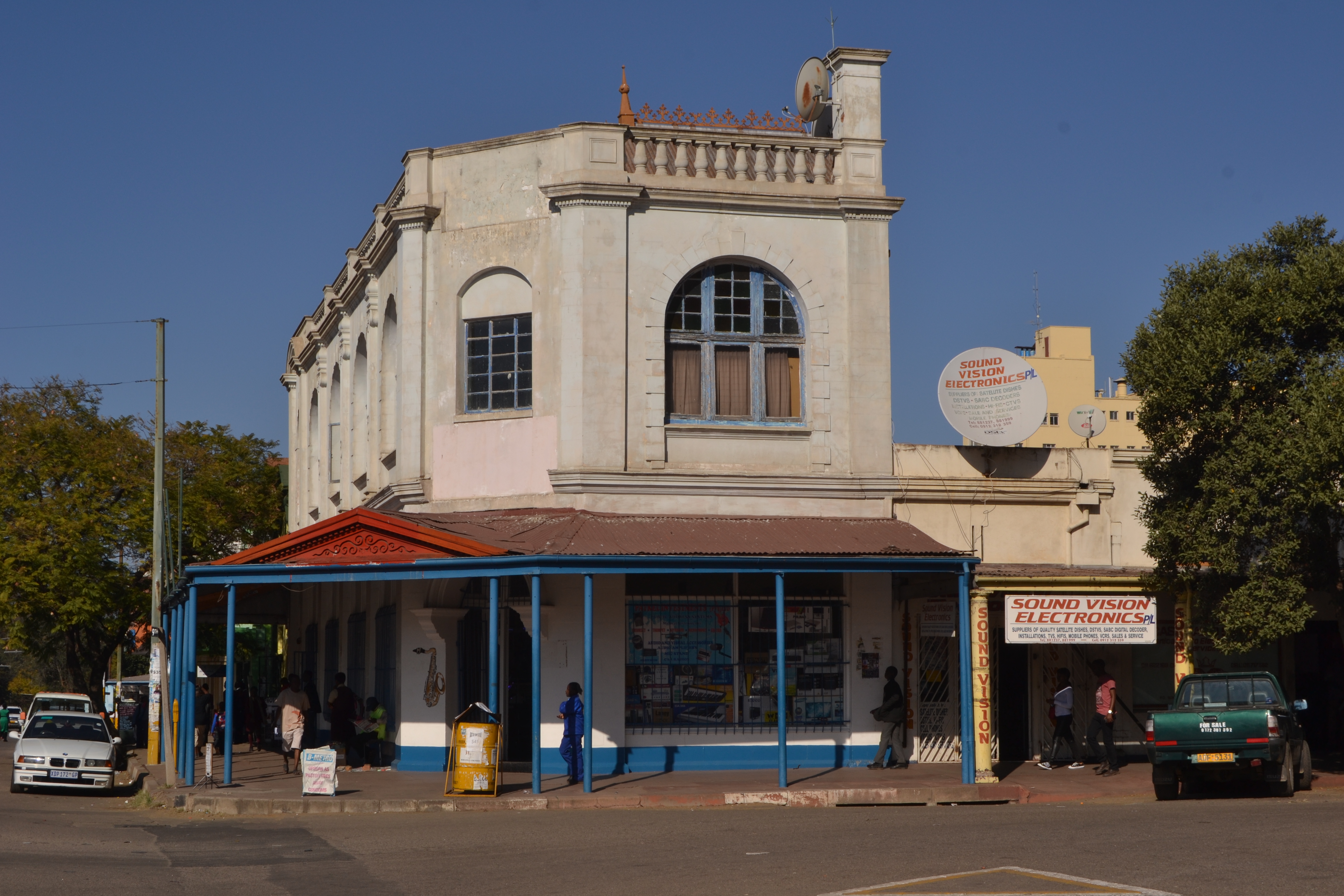
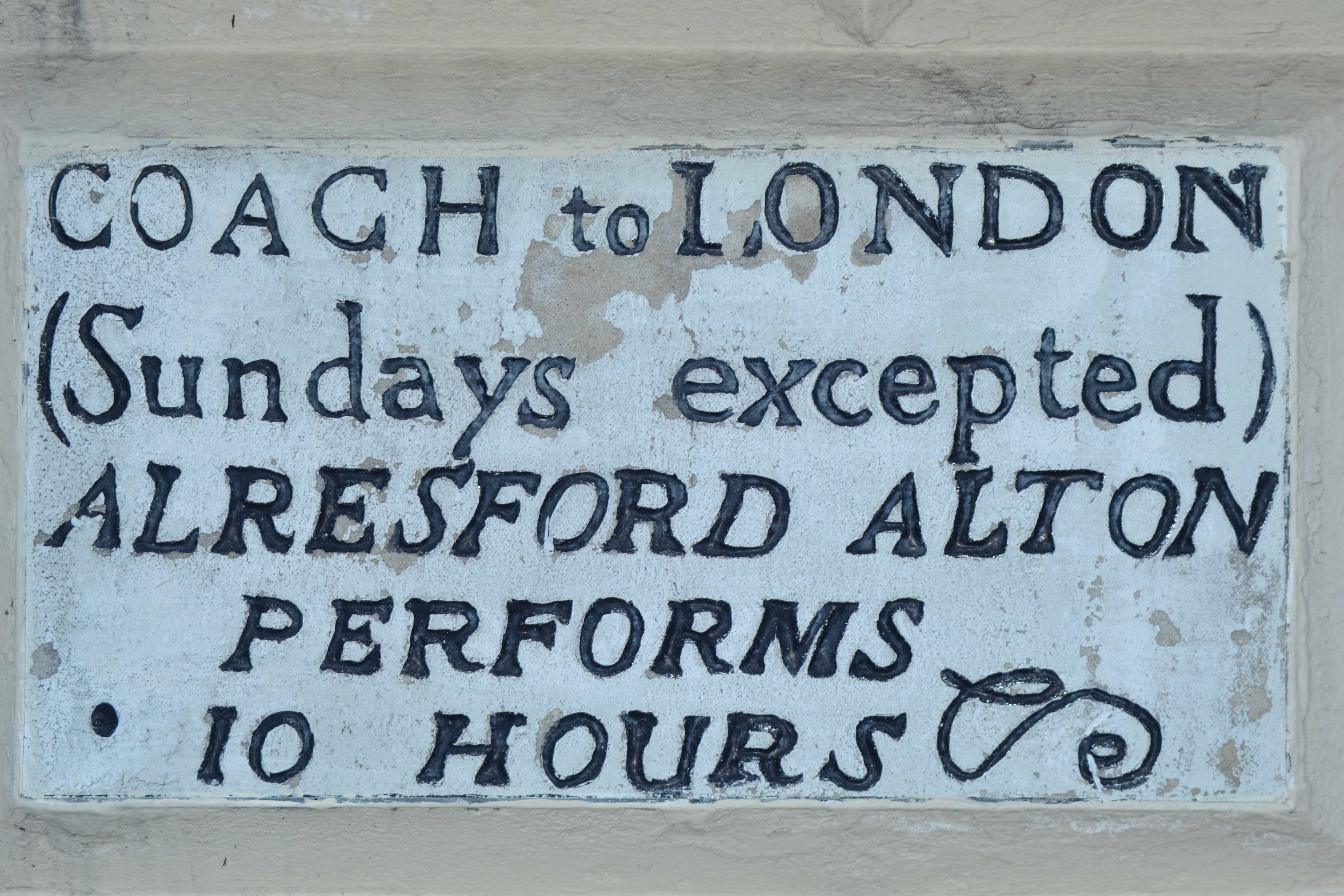
The surrounding streets are lined with parades of Edwardian shops with wrought iron walkways, and signs in Sixties typefaces swinging above the doors: “Le Style Fashions,” “Justin Smith (Pvt) Ltd, the Rexall Chemist”. The paint has faded, the ironwork rusted, the wood is beginning to rot, and the statue of Rhodes which used to stand in the middle of town was toppled long ago; but to outward appearance, little else has changed in the 35 years since Rhodesia was wound up and Zimbabwe came into being.

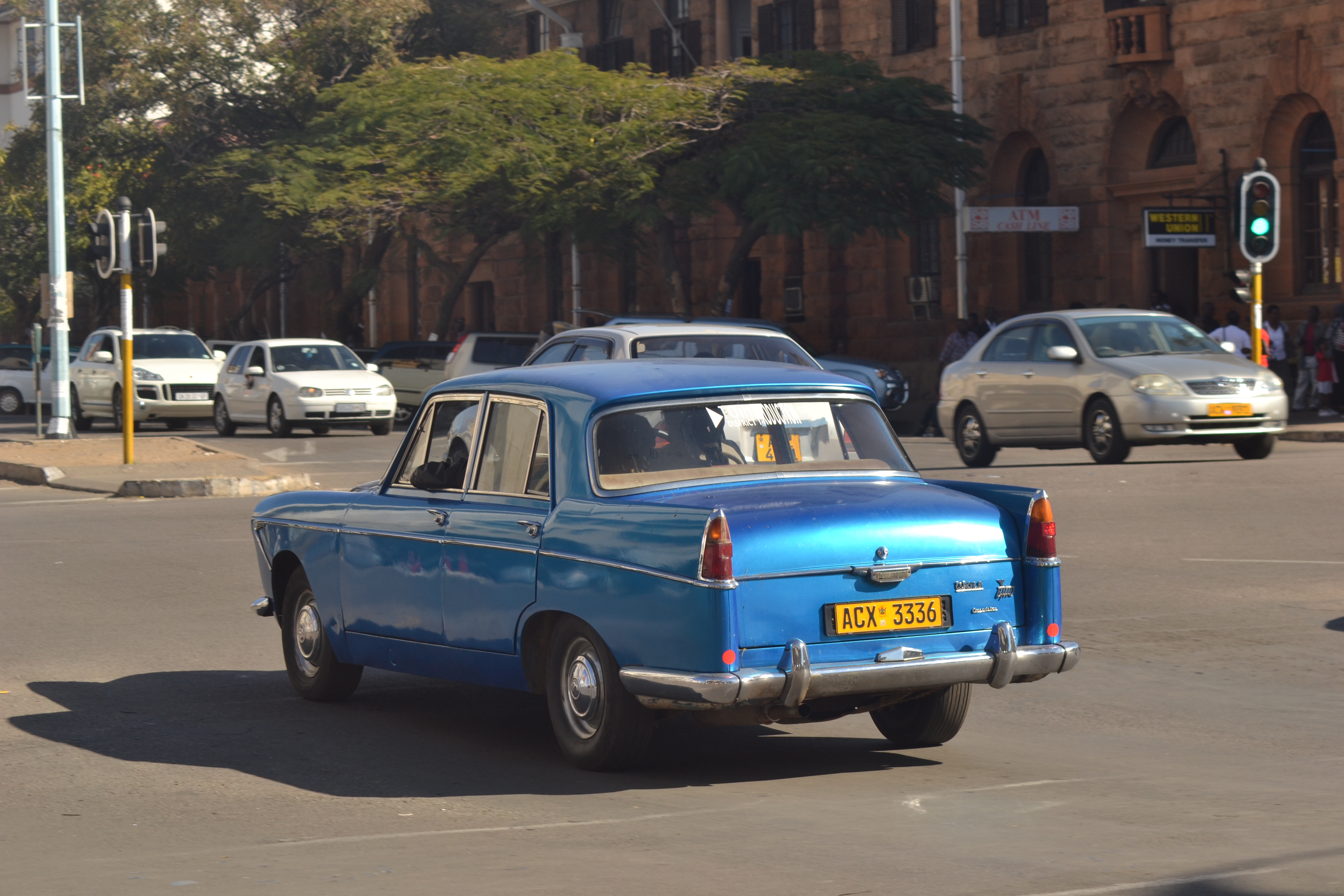
An old Wolseley growled past as I looked around the city centre: a rare classic in Britain, to be polished and taken to shows, but an everyday runabout in Zim. It must have been built sometime around 1960, when the British prime minister spoke in Cape Town of “a wind of change … blowing through this continent,” and signalled the end of the African empire, which entrenched Rhodesia’s white elite, whose prime minister declared that he would “never in a thousand years” agree to majority rule, which in turn led to 15 years of civil war and finally to modern Zimbabwe.

DSC_0129

© Richard Senior 2015

Lies, Damned Lies and Tourist Information

I lived for ten years in St Albans in the London commuter belt. It claims to have more pubs per square mile than anywhere else in the UK. So does Edinburgh. So does York. So does Aberystwyth. And Congleton, Cowes, Glastonbury, Gravesend, Norwich, Pontefract, Portsmouth, Rochdale, Shrewsbury, St Andrews and Weymouth. Nottingham raises the stakes and claims more per square mile than any other city in Europe. But, in Kraków, they will tell you they have more bars per square mile than anywhere else in the world.

Among the fifty-odd pubs in St Albans is Ye Olde Fighting Cocks, which is said to be the oldest in Britain. As is the Bingley Arms in Leeds. And the Man and Scythe in Bolton, the Skirrid Arms in Abergavenny and the Adam and Eve in Norwich. And the Eagle and Child in Stow-on-the-Wold, the Old Ferryboat in Huntingdon, and both the Bell Inn and Ye Olde Trip to Jerusalem in Nottingham.

They cannot all be right. But it is something to tell the tourists.

DSC_0328

There is an ancient earthwork on the edge of town and the archaeologist, Mortimer Wheeler, declared that it could have been where Caesar defeated the Catuvellauni tribe. Sure it could. So could my back garden. But the plaque on the gate maintains that it probably was.

So much of popular history is bunkum. Sir Francis Drake did not casually finish his game of bowls before defeating the Spanish Armada. The Victorians were not so prudish they had to cover the legs of their tables. Marie Antoinette did not tell the poor to eat cake. Washington never said that he could not tell a lie (and you would be suspicious of a politician who did).

But tour guides, like tabloid journalists, never let the truth stand in the way of a good story.

In every historic town in England, the guides will insist that if a Welshman tries to sell you fish inside the city walls on a Sunday, you are entitled to kill him on account of a medieval statute which has never been repealed. Well try telling that to the judge.

DSC_0945

If you go to Australia, you will be told at least once that kangaroo means “I don’t know” in an indigenous language. The story goes that an early settler – sometimes Captain Cook himself – pointed to a kangaroo and asked a local man what it was. “Kangaroo” he replied with a shrug, and thereafter that was its name.

You will hear much the same story about the llama in Peru. ¿Como se llama?  (what is this called?) a conquistador is supposed to have asked. ¿Llama? said the confused indigenous man, trying to make sense of the unfamiliar Spanish. Gracias, said the conquistador and walked away and noted it down for posterity.

Both tales are plainly apocryphal, and linguists have gone to the trouble of debunking them. Yet they are still routinely trotted out to visitors from abroad.

Hiram Bingham, the explorer who ‘rediscovered’ Machu Picchu (the Andean people had never lost it) guessed that it was the birthplace of the Virgins of the Sun. No, no, others demurred, it must have been a prison. Or a royal estate. Or a place of worship. Or an agricultural testing station. Or a drive-through McDonalds. Or a branch office of Allen & Overy. Nobody really knows. But many visitors pay a guide to hypothesise about what each bit might have been.

DSC_0585

In truth, few tourists seem to care whether what they are told is speculation, exaggeration or quite openly made up. There never was a 221B Baker Street. But there is now. It is the Sherlock Holmes Museum, a Georgian townhouse restored to how it wasn’t when Sherlock Holmes didn’t live there. There are always queues outside. When they screwed a sign for “Platform 9¾”  to a wall at King’s Cross station, it drew such crowds of Harry Potter fans they had to move it. But that was nothing compared with the hordes who squeeze into the courtyard to gaze at the balcony outside the house in which the city of Verona pretends that Juliet Capulet lived.

But maybe they have it right and we fool ourselves when we think we travel to learn things. Maybe it is all about entertainment, a distraction from life, an expensive alternative to watching TV.

© Richard Senior 2015
Journey through Zimbabwe, Part 3

DSC_0021

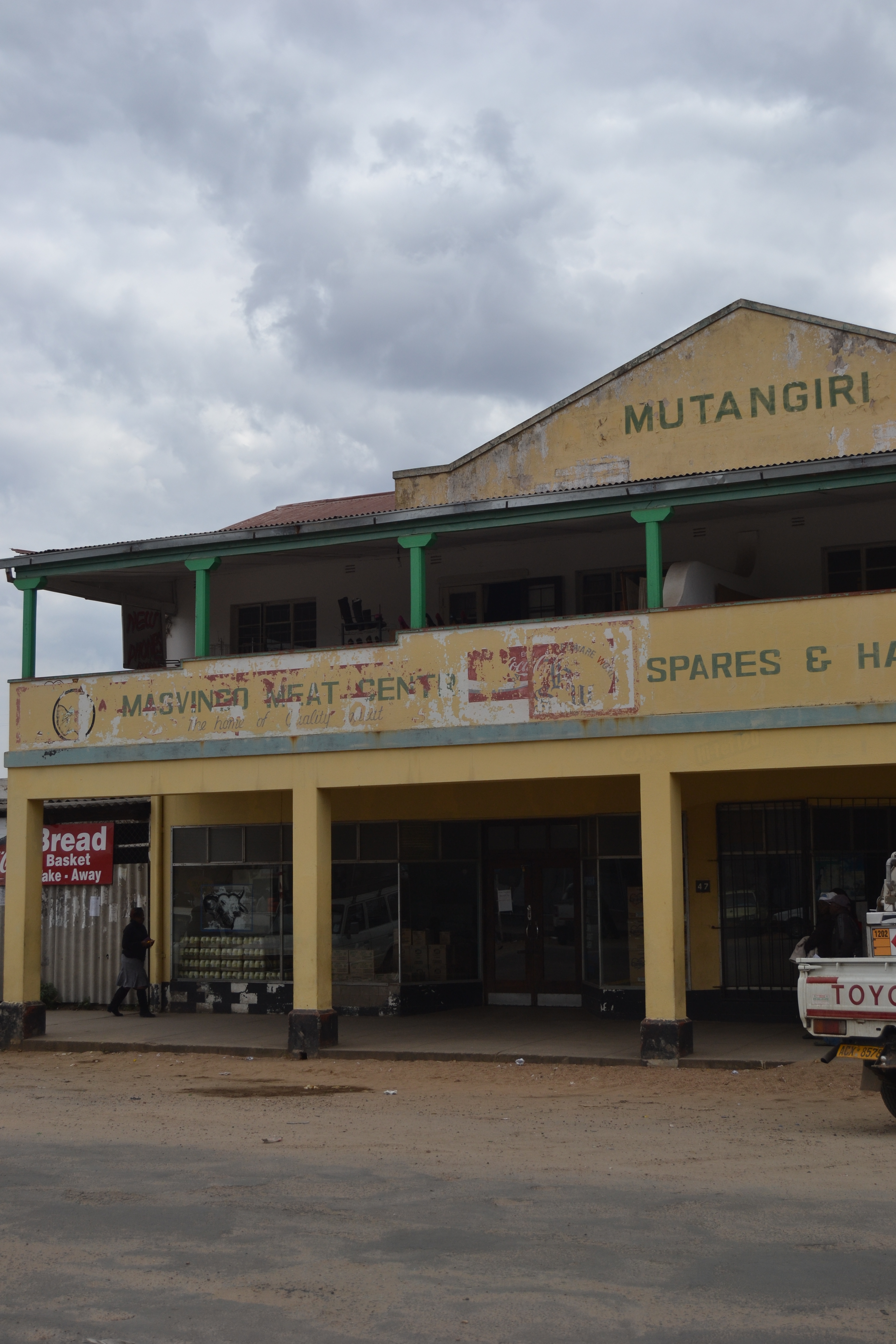
Masvingo is a small, dusty town of functional buildings with scabrous paint and signs mottled with rust.

It never amounted to more than a supply town for cattle ranchers, but it was the Plymouth, Massachusetts of the self-governing colony of Southern Rhodesia, later the unrecognised breakaway state of Rhodesia. Cecil Rhodes’ Pioneer Column set up camp there in 1890 and built the first colonial town. They called it Fort Victoria. The old watch tower and government buildings survive, hidden amongst the low-rise concrete from the back half of the twentieth century.

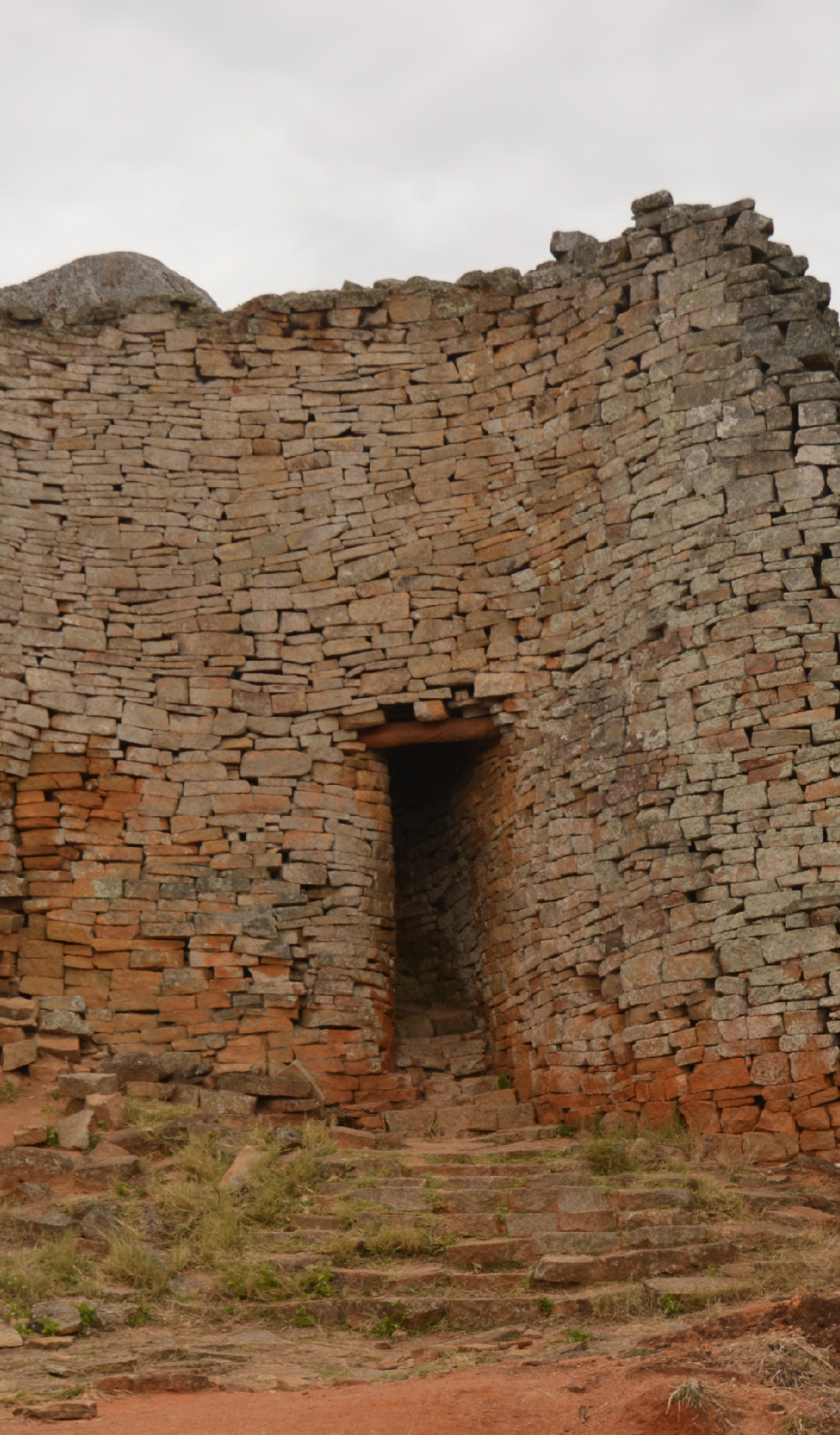
But, while Rhodesia’s history might have begun in 1890, Zimbabwe’s goes back centuries further. The state took its name from a ruined city to the south of Masvingo, known as Great Zimbabwe, a corruption of dzimba-dza-mabwe: great houses of stone. The oldest part was built around the time of the Battle of Hastings: the newest 400 years later, about the same time as Machu Picchu.

DSC_0052edited

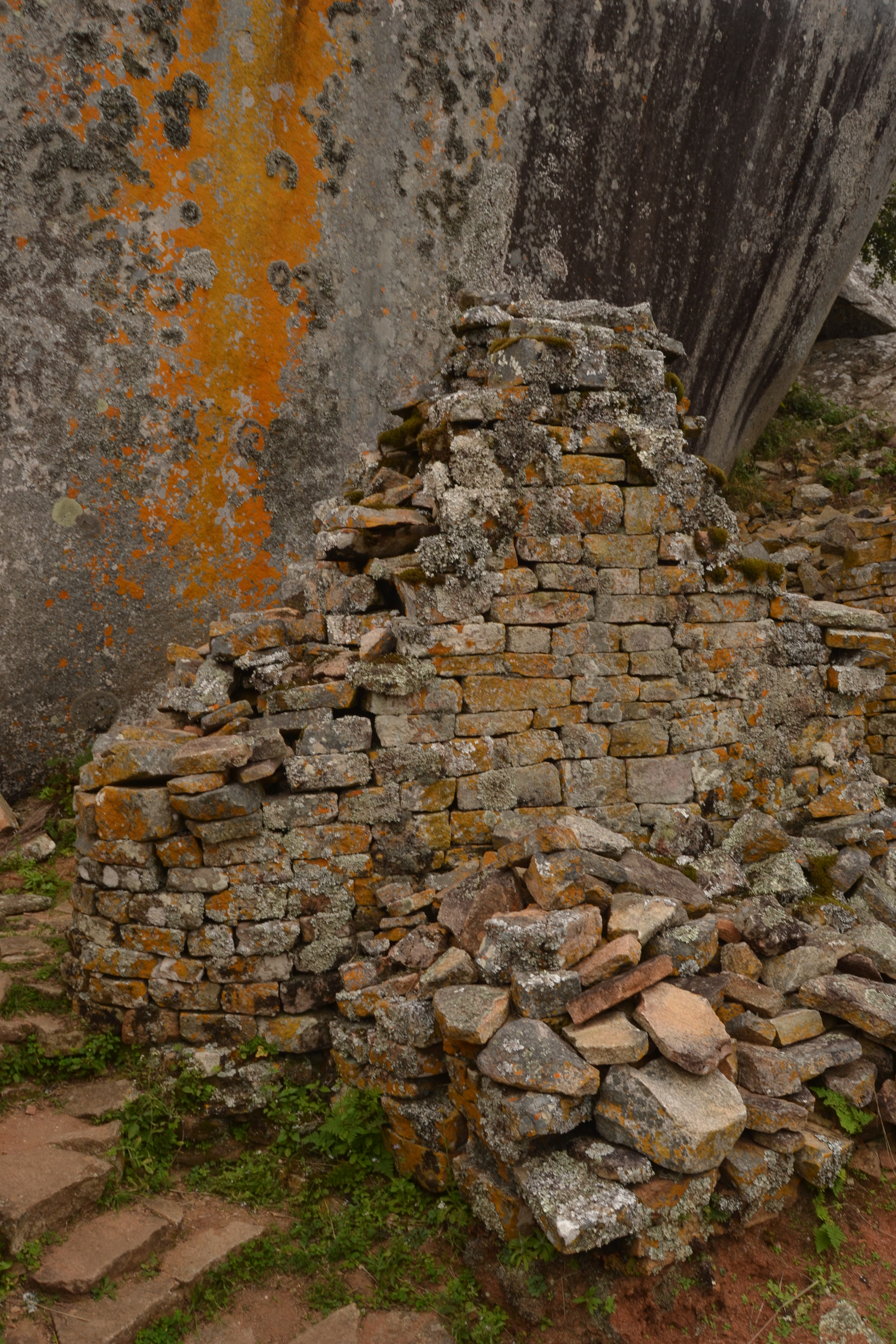
It is a fascinating site, sprawling over 1,800 acres – twice the size of Central Park – with smoothly curving dry-stone walls, speckled with lichen, rising up to 35 feet, and maze-like passages, and trapezoid doorways, and steps wending up between boulders balanced atop one another and emerging in the earliest part of the city – built ten centuries ago – at the crest of a hill overlooking the expansive valley.

It cannot be long before someone influential declares it the Must See sight du jour, and floods it with gushing, purple prose and insists you must see it at sunrise.

DSC_0061

© Richard Senior 2015
Of Poop and Parties: San Pedro de Atacama

DSC_0354edited

They were full of shit.

The islands to the south of Peru were thick with seabird guano. It made excellent fertiliser, and Peru millions. They exported it all over the world. In 1864, the Spanish used a flimsy excuse to occupy the islands, and Peru, Bolivia and Chile went to war with them and won. It was the first time that nations had fought over bird shit.

Then, when saltpetre from the Bolivian desert became even more marketable than seabird crap, a Chilean company secured the right to mine it free of tax. But Bolivia reneged. Talks went nowhere, and they ended up at war. Peru joined in on the Bolivian side. But Chile resoundingly won and shifted its border hundreds of miles north through Bolivia and into Peru. Bolivia lost its saltpetre deposits and coastline; Peru lost some of its guano. There is bitterness about it still, 130 years later.

DSC_0347

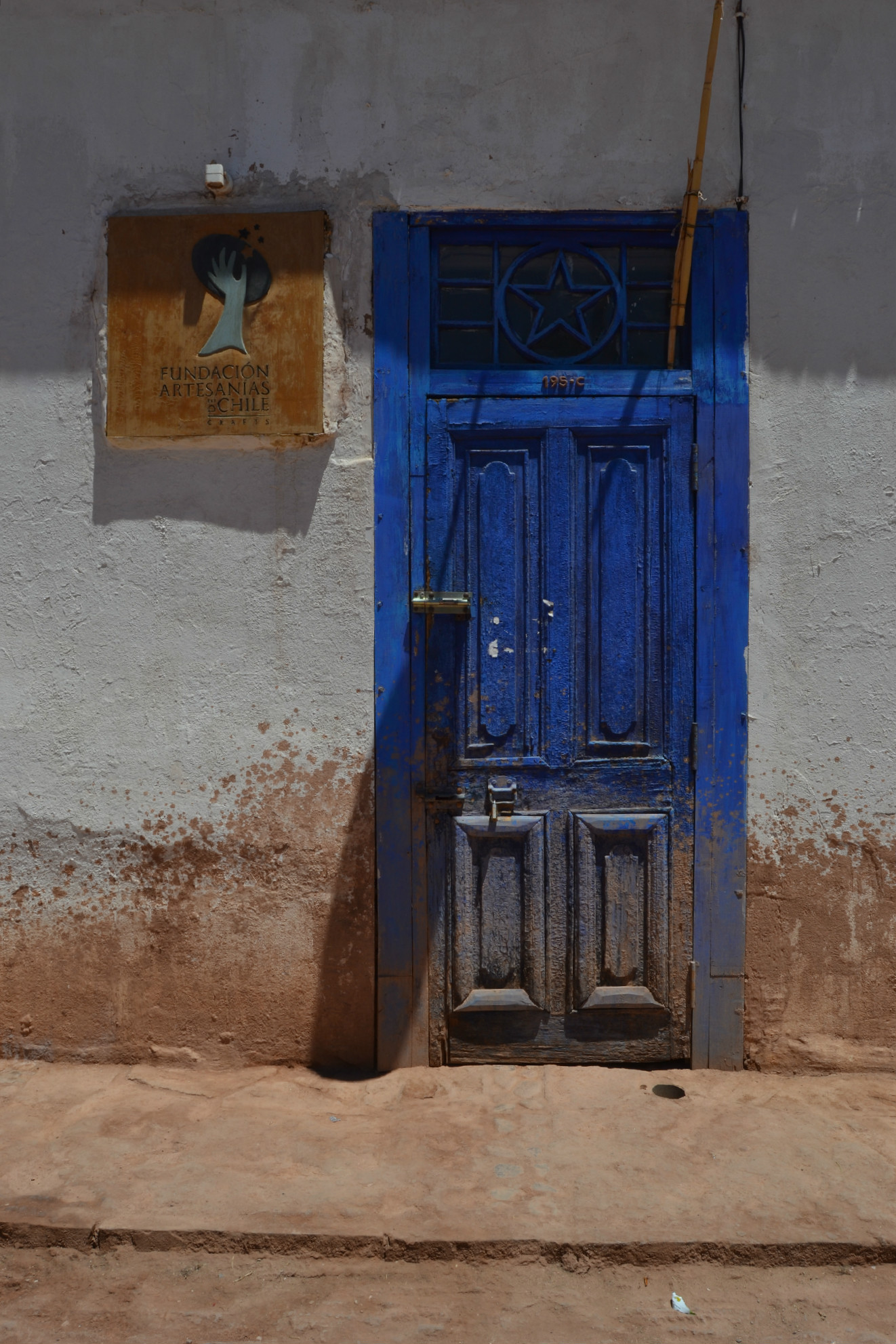
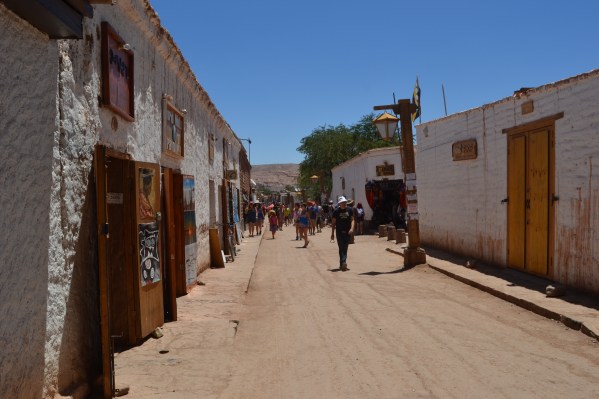
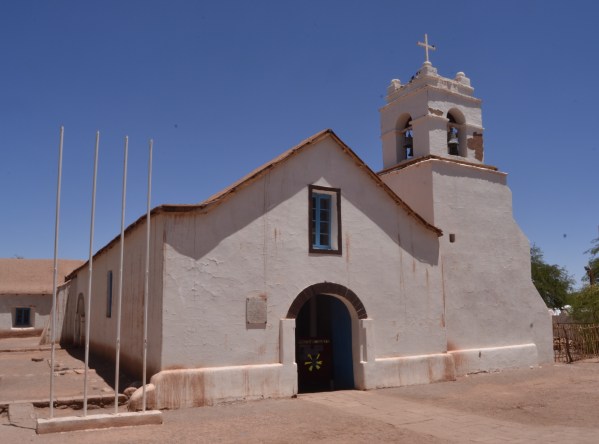
The Chilean army marched on San Pedro de Atacama in 1879 and Bolivia never saw it again. It is an arty, bohemian enclave now, a charming place. Adobe shoeboxes with peeling whitewash and beaten up doors line the main road and half a dozen side streets. The shops sell copper jewellery, textiles and indigenous art. Alternative types sit in the plaza in the shade of the trees overlooking a cute little colonial church.

Two jeeploads of us arrived from Bolivia and, whether it was the waves of positive energy the hippies claim to feel, or the stupefying sun, or just a sense of release after three days driving across the altiplano, everyone seemed to be in a party mood. We went out en masse to eat, swapped stories about scams and overnight buses, and stayed on until late for cocktails.  Some peeled off to their hostels, and the rest of us went looking for a club.

But San Pedro is not as liberal as it seems. There are no clubs, no late bars; in fact, no bars at all outside of the restaurants. There is nowhere to drink legally after one in the morning, and nowhere where it is legal to dance. I discovered that later, though.

DSC_0339

Some locals invited us to a beach party, which was a puzzle because San Pedro is a long way from the coast. Or at least it would have been a puzzle if any of us had been sober. I was not happy with the idea of following them out of town and down a dark lane and away from any houses; but dozens of gringos joined the procession, travellers who had stopped off on their way north or south.

We bought beer from a guy who had stockpiled a few crates and was selling it off can by can, and we plodded up and down the dusty hills, shouting and giggling and talking crap, and the drunkest of our crowd fell over a lot, until we eventually got to the ‘beach’. It was a quarry. The party was a hippie with a Spanish guitar and a bunch of his mates quietly singing along. It was hardly Ko Pha Ngan. But it was all there was in San Pedro.

There was an earthquake next morning which shook the town and knocked things off shelves, but no one who had been to the party noticed. I stumbled out into the blinding sun and trudged in agony to the restobar on the corner, where I ordered two cafés con leche and a medium-sized pizza for breakfast.

My head throbbed, my stomach churned and my mouth felt lined with guano.

© Richard Senior 2015
Forget the Cuckoo Clock


DSC_1387edited

I blame Orson Welles. Him and Graham Greene. That monologue from The Third Man lodged in my mind:

Like the fella says, in Italy for 30 years under the Borgias they had warfare, terror, murder, and bloodshed, but they produced Michelangelo, Leonardo da Vinci, and the Renaissance. In Switzerland they had brotherly love – they had 500 years of democracy and peace, and what did that produce? The cuckoo clock.

I had been all over Italy, and I had been to Vienna and ridden the Wiener Riesenrad, the 1897 Ferris wheel beside which Welles’s character made his speech. But Switzerland had never appealed enough when I had to shoehorn my travelling into a corporate holiday allowance. I imagined it as a dull, pursed-lipped, fur-coated place full of banks and insurance companies.

But this trip was more about the journey than the destinations and Switzerland was on the way home.

DSC_1333

I was not expecting to like Zurich much. I envisaged bloated, smirk-faced men who do something important in banks snarling around town in Ferraris; and haughty women striding between luxury shops. They were there, all right. But so they are in London. There is a lot more to Zurich too.

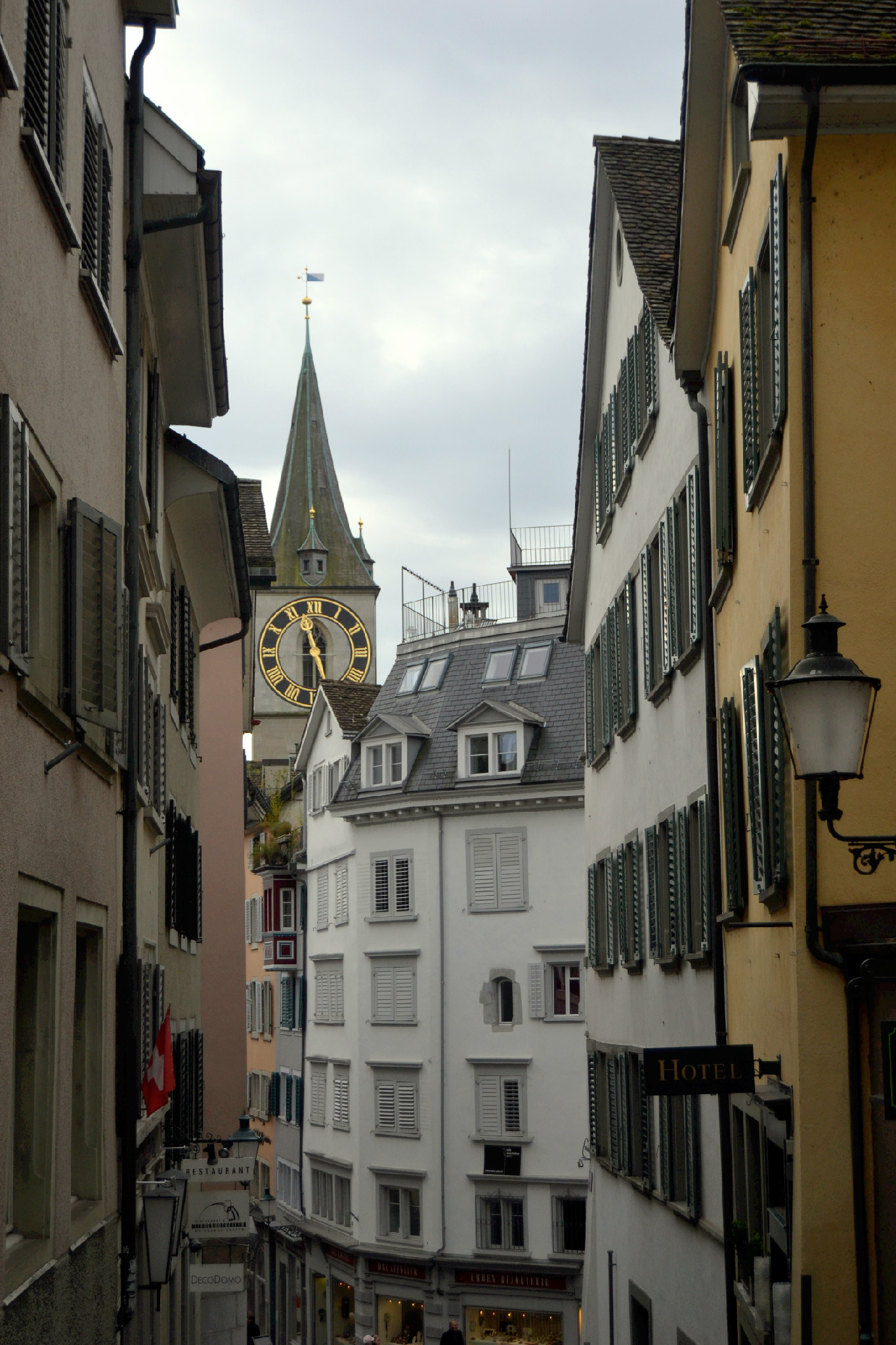
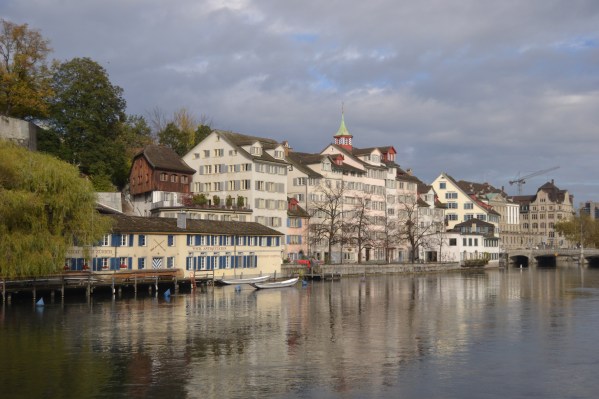
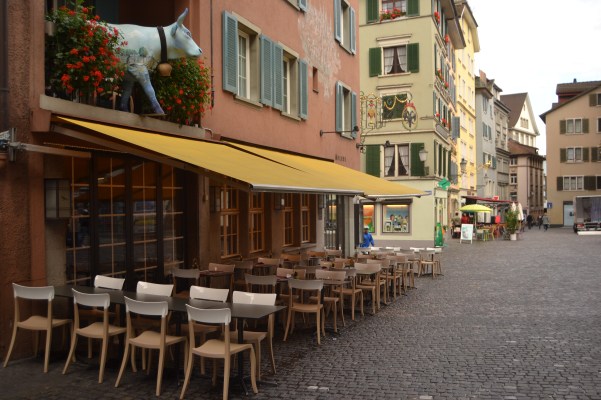
Narrow lanes, cobbles and city walls; buildings painted in faded pastels, dazzling sgraffito, wooden shutters, ornate carriage lamps; a tinkling fountain in every square; shiny black shop signs with the names picked out in gold leaf; a charming deli, a bierhaus, a coffee shop. Sonorous bells, clanking trams, the 6.2 burble of an SLS AMG. A river cutting through the middle of the Aldstadt, emptying into a lake, bordered by a park, reaching out to snow-dusted mountains.

It is far more relaxed than I thought it would be. Bearded hipsters everywhere, funky bars, abstract art, a bedroom DJ mixing EDM above a fusty old whisky shop. There was a man in white tie and tails playing something tragic on a violin in front of a Henry Moore; and another parading outside an optician’s dressed as Charlie Chaplin, for reasons of his own. There was Cabaret Voltaire, where Dadaism started in 1916.

DSC_1302

I sat at an outside table by the river, where the cheesy smell of tourist fondues hung in the air, idly watching as the trams rattled past. I had a fleeting image of passengers facing each other across tables, as at a restaurant, sipping glasses of wine. Surely not? I paid more attention to the next dozen trams and, in each, the passengers were sitting as they would in any other tram anywhere else in the world, and I began to wonder if I was hallucinating, and why. But I saw it again at the stop in the morning. The Fondue Tram, they call it. They serve up cured meats, fondue and wine as the tramcar circuits the city.

I liked Zurich a lot but I was running short of time and had to move on so I took the train to Lucerne; and that was lovely as well. Another river and lake, more distant mountains, cobbled streets and ancient walls. Half-timbered shops, Belle Epoque hotels, the sharp spires of the Hofkirche, a covered wooden bridge from 1333 with its octagonal pitched-roof tower. And, in a country reckoned to be ultra-conservative, a couple in their forties snogging like teenagers in a square in the middle of town.

There are chocolates, Swatches and Swiss Army knives in every third shop; but not so many cuckoo clocks, because they are actually a German tradition. Switzerland, too, was a belligerent, expansive power at the time of the Borgias, and not at all democratic until late in the nineteenth century. Orson Welles was wrong.

DSC_1526

I asked in the station about trains to Berne. “On the hour, every hour, takes an hour,” the lady said. At least one of the popular ideas about Switzerland seemed to hold up.

© Richard Senior 2015