Etosha at Midnight

image1

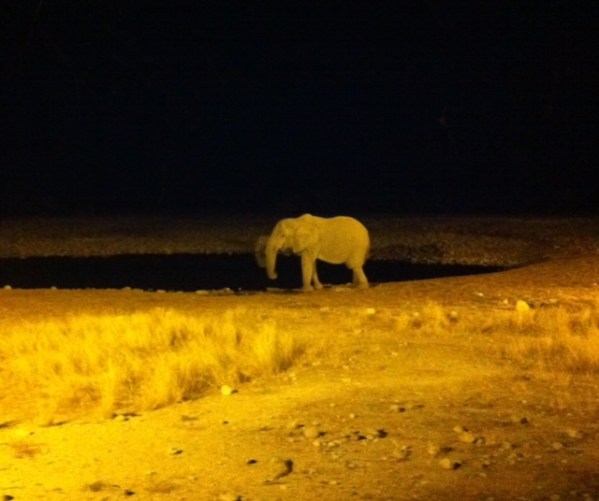
In the silence of the night, four giraffes shared the waterhole. They splayed their forelegs and lowered their necks and eased their heads to the oil-black water, where their reflections copied each move. An elephant lumbered into the scene, ears flapping, trunk swinging. It passed the giraffes, found a spot which it liked and paused for a moment like a chess player pondering a move.

The giraffes stole away and a black rhino took their place and the elephant started to drink. A lion roared in the near distance, filling the night with sound, and sending a panicky dik-dik scuttling. The elephant farted impressively to show how little it cared about lions and carried on taking two-gallon sips. Cicadas buzzed, a bird squawked. The last of the giraffes loped across the back of the set.

A second rhino arrived, then a third. They ignored the other rhino, which waited a minute and then left, as if it hated them too much to share the same waterhole but did not want them to think they had won. It met an elephant on the way out and there was a brief, unexpected stand off; but the rhino gave way and peeled off to the left, affording plenty of room to the elephant.

A jackal trotted to the water, gulped down a few mouthfuls and trotted away. A lone zebra slipped in between the elephants and tensed and listened when the lion roared again. The rhinos and elephants ignored it. Lions don’t worry them.

(c) Richard Senior 2014

Christchurch: Wrecking Balls, Rubble and Ruined Churches

DSC_0864

I’ve put you in what we used to call a city view room,” said the receptionist at one of two surviving hotels in the centre. The view, now, is of endless car parks where office blocks and shops used to be: big open spaces right in the middle of town.

Christchurch was a lovely city before the earthquake. Victorian, Edwardian and Art Deco buildings; heritage trams clanging through the streets, punts creeping along the Avon. But you can rip a few pages from any guidebook written before 2011, because much of the heritage is history now.

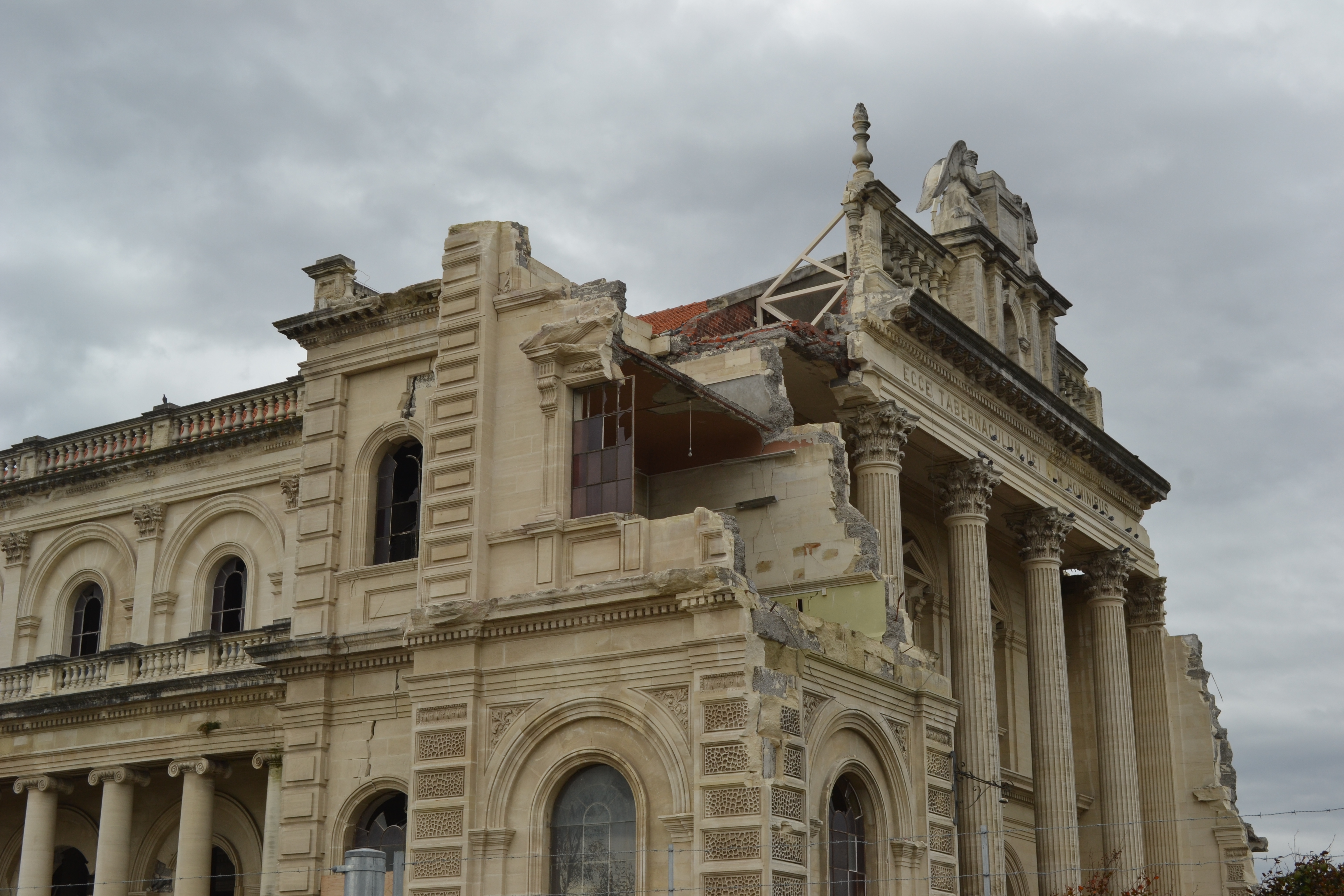
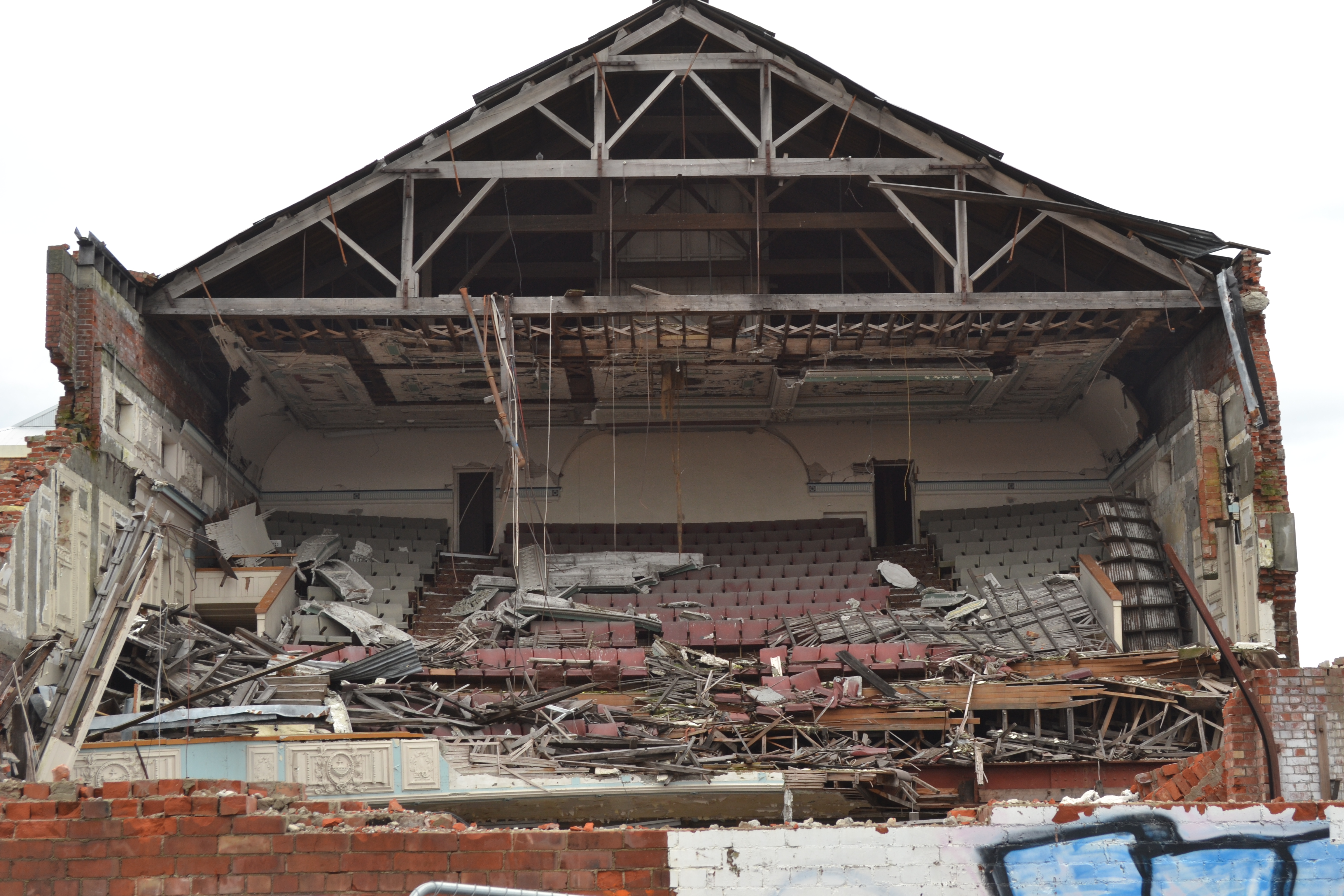
The tracks which meander round the town are filled with moss, because the trams no longer run. The Guthrey Centre, Manchester Courts, the Press Building, the Civic, all gone: crushed to rubble and cleared into piles. The tremors pushed over the cathedral’s tower, knocked Scott of the Antarctic’s statue from its plinth, ripped away walls to make public the private, tumbled whole rows. It killed 185 people.

DSC_0858

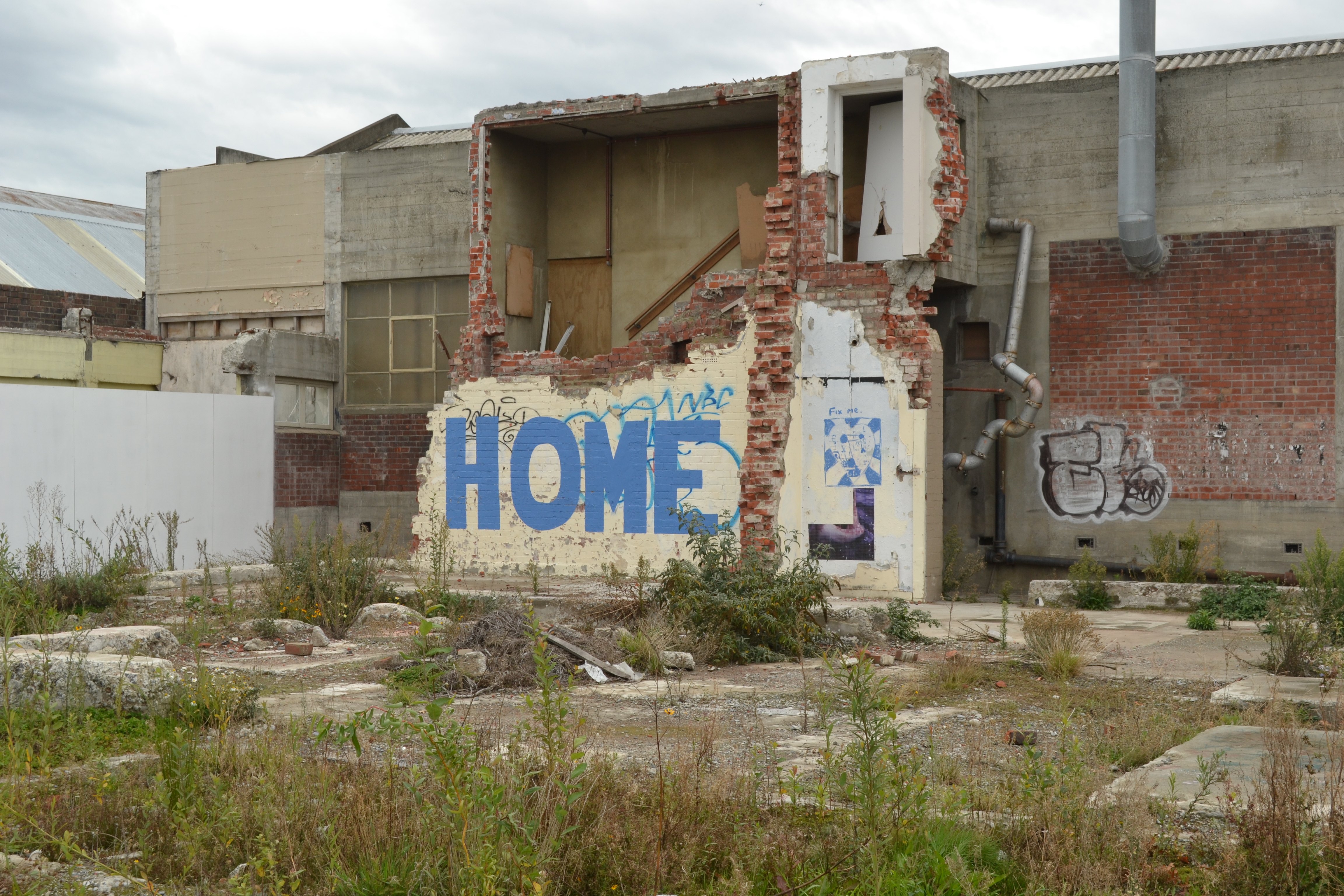
Hardly anything taller than three or four storeys remains. Much of the rest is in ruins. Collapsed roofs, crumpled facades, smashed windows; the floors of the multi-storey car park concertinaed, cellars exposed and filling with water. Dozens of lip glosses litter the floor of a ruined shop. Dummies have been flung in a mass grave.

There are old adverts for staff in the windows of bars which will never open again. The mannequins in Just Jeans are still dressed in the fashions of early 2011. Dusty posters pretend that an Art Deco block will still sell by private treaty, that a tenant is still wanted for a showroom in a “prime corner location” which stands on its own at the end of a street full of wreckage.  Traffic lights pointlessly change where no cars go anymore.

Historic facades balance precariously, propped up with old containers. The buildings behind them have been flattened. A row of Edwardian shops along High Street seems barely damaged at the front, but it is a bombsite at the rear. “Please save High Street,” reads a grubby banner flapping in the wind.  But it looks doubtful whether much of old Christchurch will still be there when the demolition is done. Everywhere you go, you hear the sickening crunch of masonry under the wrecking ball. Even the cathedral is being demolished.

DSC_0857

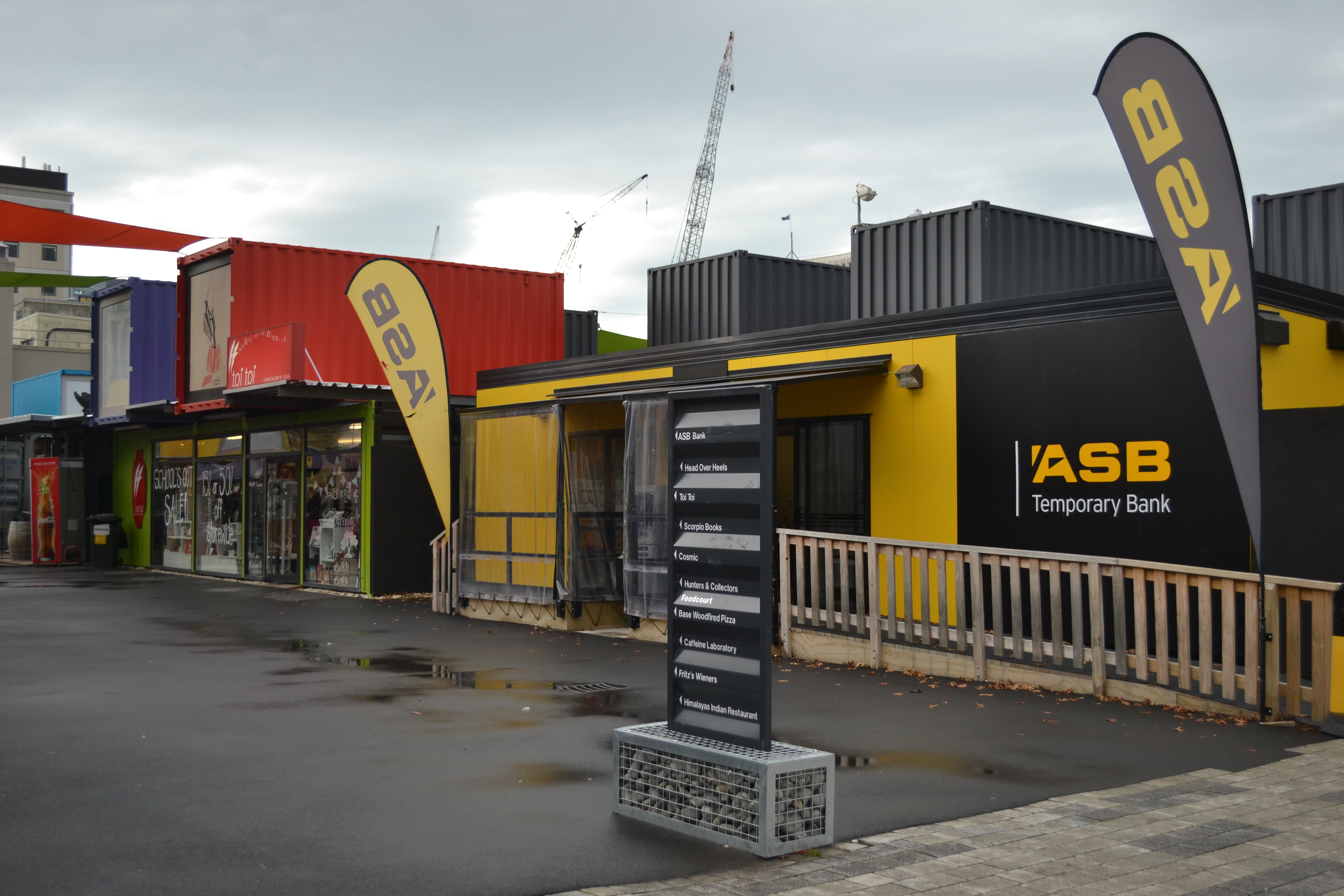
Quotidian life goes on. Businesses have moved to the inner suburbs. Shops have opened in a pop-up mall built from containers stacked and painted in defiantly cheery colours. But the post-apocalyptic pall will hang over the city for years ahead.

DSC_0850

(c) Richard Senior 2014

Stunt driving day: a snapshot

An old Sierra, a disused runway, a bitter cold winter’s day. Into reverse, foot down, gearbox howling. Dump the accelerator. Fling the steering wheel round to the right, clutch down, into neutral. The front whips round, the tyres scream in protest. Smoke and gravel; melting rubber. Clutch in again, first gear, straighten up, drop the clutch, paint black lines on the surface.

Second gear, third. Haul the wheel over again, jerk the handbrake up, flick the back end round. I knew how to do these already. I taught myself long before I had my first driving lesson, at 15 in a Mini I bought for twenty quid. I have grown up a little bit since then…but not too much.

(c) Richard Senior 2014

Salteñas in Sucre

DSC_0838

Freshly cooked pastry, sizzling beef, garlic, oregano, cayenne. The smells from a hole-in-the-wall salteñería wafted after me down the street, caught me up and marched me back.

“Uno salteña por favor.”

¿Pollo, cerdo, o carne de res?”

“Sí.

¿Que?”

“Err, carne.”

¿Carne de res?”

“Sí.

I knew about four words of Spanish, then, and didn’t really know what I was ordering (beef), but I sensed it would be good. Salteñas are pastries stuffed with meat and vegetables in a mildly spiced broth set with gelatine. When they are baked in the oven, the gelatine melts as the pastry crisps, so the filling stays moist and the casing stays dry.

The broth overwhelmed the serviette after the first few bites and started to trickle through my fingers, but the explosion of flavours made me too happy to care.

DSC_0841

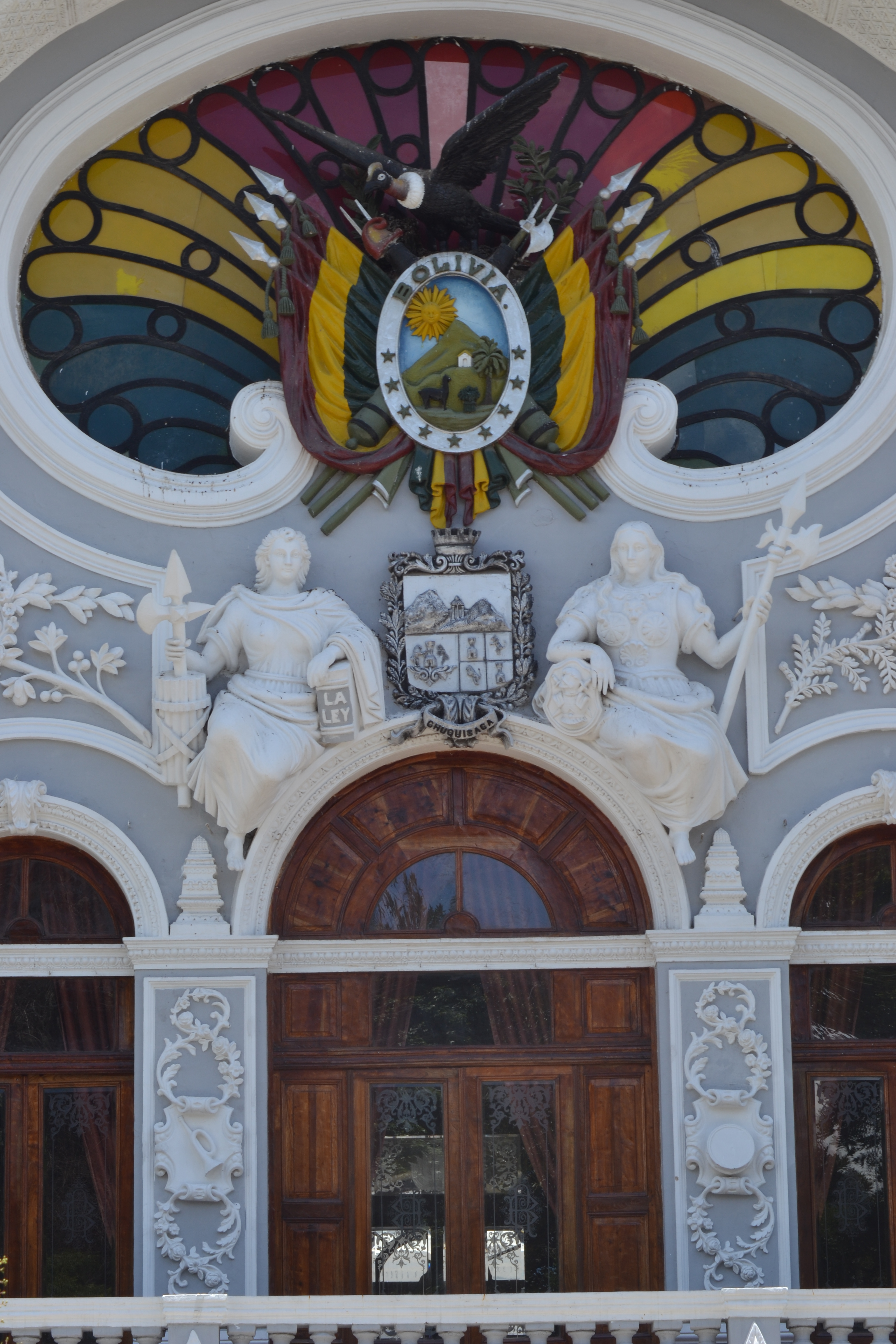
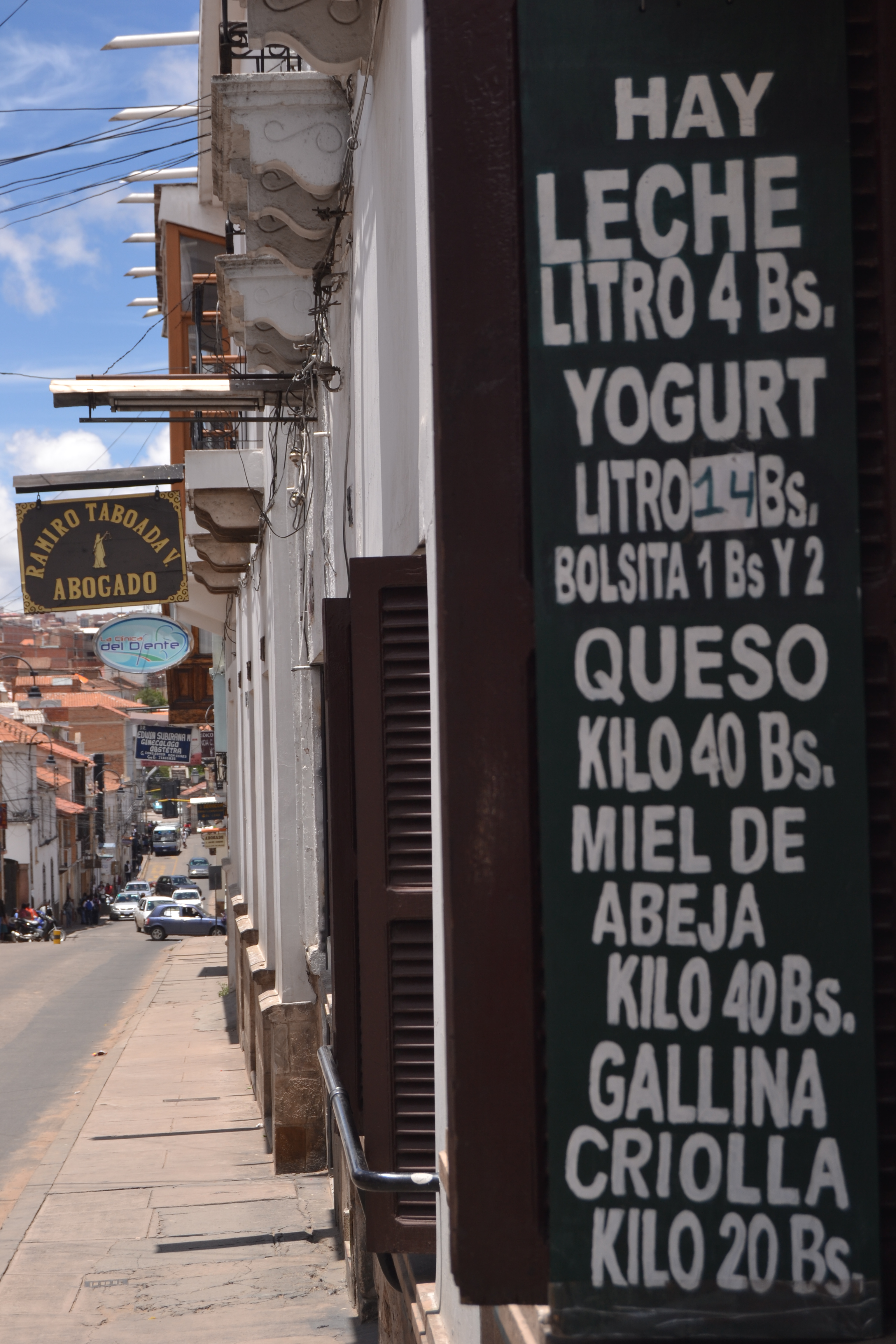
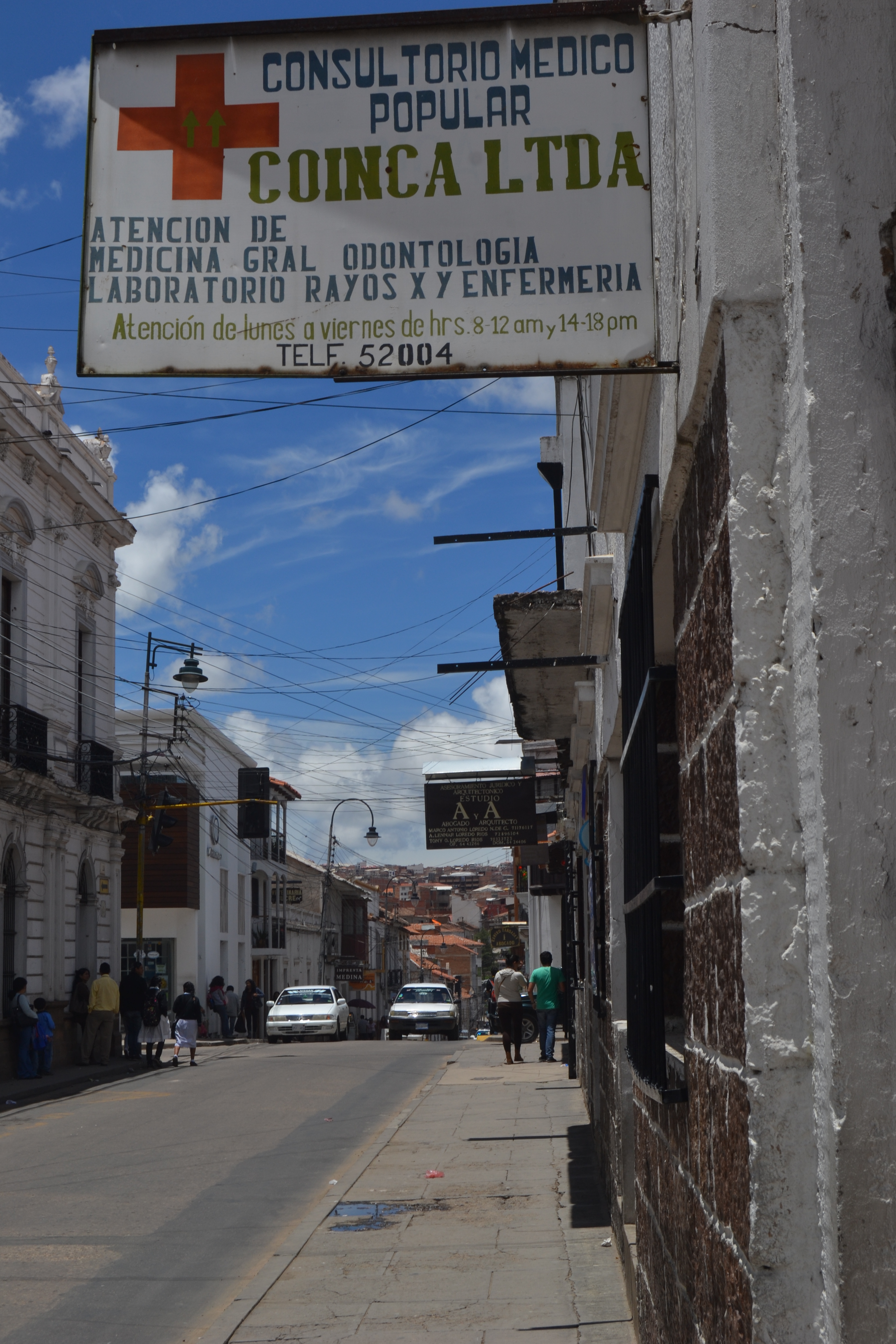
It was the middle of the morning of a glorious day. The sun reflected off the uniform white of the colonial buildings. Only turrets and bell towers disrupted the line of terracotta roofs. Only mountains looked down on the cathedral. It was much as the Spaniards would have seen it when they took a last look as they left in the 1820’s; but the flags which now flutter from every tenth building are Bolivia’s red, yellow and green.

The government has sat in La Paz for more than a century, but Sucre is still the nominal capital, even if it nowadays feels as provincial as Bath. Old men sit on benches in the shade of the palm trees on Plaza 25 de Mayo. Younger men kneel and shine shoes. Drivers stop when the policewoman blows her whistle. No one seems to drop litter or tag walls. It even feels safe late at night.

It is nothing like La Paz.

DSC_0848

(c) Richard Senior 2014

Smoke That Thunders

Dr Livingstone thought that Victoria Falls sounded better than the local name Mosi–oa-Tunya which means “the smoke that thunders”. The government says that it is going to change the name back, which has got people worked up in support and against, but is hardly among the more urgent things which need to done in Zimbabwe. To outsiders, at least, it is what the falls are which matters most, not what they are officially called.

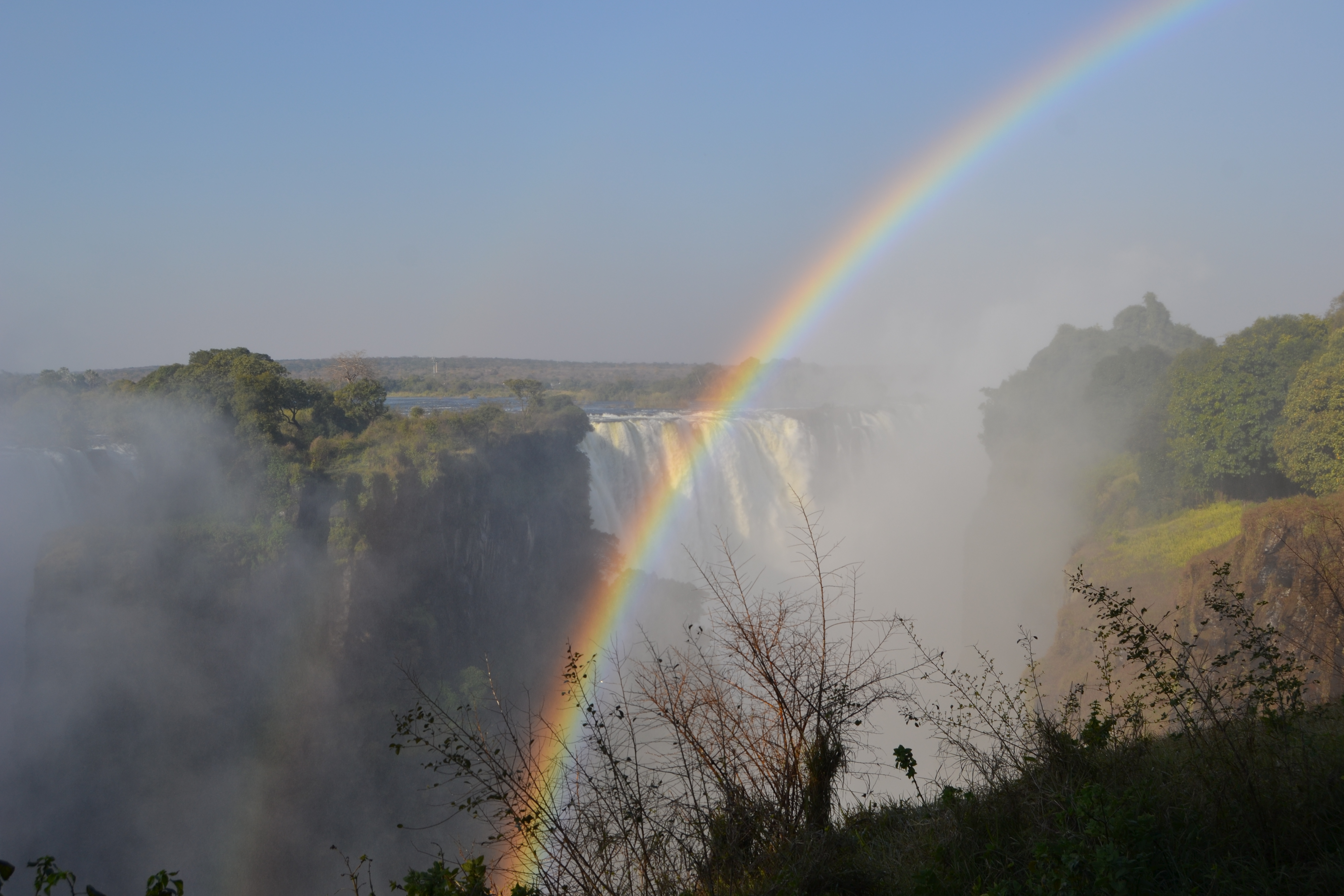
The word “awesome” has become as devalued now as the old Zimbabwe dollar but, when it pops into your head at Victoria Falls, it belongs there. A mile of water, hurtling out of control, tumbles over the edge and disintegrates into abstracts: thick gouache white swirling over slime green, tumbling, tumbling, tumbling a hundred metres into the gorge below, hissing and rumbling, roaring and thundering like some massive industrial process; the spray rebounds, a gathering storm, higher – way higher – than the top of the falls, until a perfect rainbow chops it in two and it comes down again as an unseasonal shower and soaks the path and the tourists who stand there and gawp.

Vic Falls ruin waterfalls for evermore as surely as the Grand Canyon ruins canyons.

DSC_0474

(c) Richard Senior 2014

Going Solo

image (5)

Fancy going up on your own?”

“Oh. Err. Yeah. I guess…”

Right,” said my instructor, “well I’ll go and get a coffee and I’ll see you when you get back”.

This is a change of detail,” he told the tower over the radio. “Captain’s name is Senior. First solo”. He threw off his headset, shut the door behind him and waved, as if I had driven him down to the station.

Oh shit.

Though I had been flying okay for the past few lessons, I still made mistakes and some of them seemed pretty serious to me. I wasn’t sure I would ever be fit to take charge of an aeroplane. But I was sure I wasn’t yet. The spring sunshine started to feel hot in the cockpit and each exhalation growled into the microphone.

GolfEchoZulureadyfordeparture,” I gabbled.

Golf Echo Zulu. Take off at your discretion.”

First stage of flaps. Yank the lever between the seats until it clicks once. Squeeze and drop the brake.

TakingoffnowGolfEchoZulu.”

I roll forward onto the runway, expecting all the time that someone will run out, shouting, angry.  “Oi, what the fuck do you think you’re doing!? Where’s your instructor?”

Boot the rudder pedal to bring the nose round to the centreline, straighten up and slam the throttle forward. The plane bumps along the runway, the engine roaring over the headphones. The torque wants to pull it off into the grass, but I fight against it with the rudder. It is lighter than normal with just me in the cockpit, and anxious to get in the air. Sixty knots, equivalent to motorway speed. Start easing the yoke back. The nosewheel lifts, the rear wheels follow. Lower the nose to climb at 80 knots.
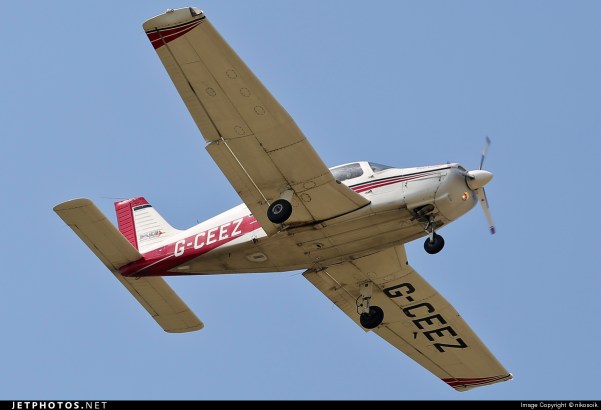
GCEEZ

The nerves have gone now. I have done this dozens of times with my instructor in the right-hand seat. I know what I am doing. Release the flaps. Wind the trimwheel a couple of turns to hold the airspeed. Then bank the wings to 30 degrees, turning south towards London.  Straighten up, still climbing. Canary Wharf, the Gherkin and Wembley Stadium shimmer in the haze. The needle is creeping to 1,000 ft now, circuit height. Lower the nose, trim for 100 knots, then bank to the right again and fly parallel to the runway.

Run through the checks, brakes, undercarriage, mixture, fuel, instruments, carb heat, harnesses, hatches. Call the tower:

“Golf Echo Zulu. Downwind.”

“Golf Echo Zulu. Report Finals.”

“Wilco.”

Something flashes past, low and fast. Shit, what was that? It was just a bird doing 100 knots, or rather me doing 100 knots away from it.

Level with the end of the runway now, looking over my shoulder as it slides under the wing then emerges again behind it. Quick look to the left for traffic, then bank to the right, heading north. Kill the throttle. Let the airspeed fall. Trim. Pull the flap lever up one click, then another. Raise the nose until the airspeed falls to 75 knots. Trim again

Bank to the right, bring the nose into line with the runway, then level the wings. Another click on the flap lever. Call the tower:

“Golf Echo Zulu. Finals.”

“Golf Echo Zulu. Land your discretion. Surface wind calm.”

“GolfEchoZulu.”

Fuck! Fuck! Fuck! Lower the nose! Add power!

The airspeed was hovering around the stalling point, the speed at which the wings stop working and the plane drops out of the sky. Stall at altitude and you can dive to pick the airspeed back up. Stall close to the ground and you crash and die and are on the front page of the local paper.

But it is okay again now and I am sinking right on to the number at the end of the runway. I shift my gaze to the other end and pull the yoke gently back. Floating, floating, floating. Yoke right back now, stopping it landing for as long as I can. Still floating.  Halfway down the runway the back wheels touch the tarmac with a slight squeak but no bump. The nosewheel follows and kisses the ground and I am hard on the brakes and calling for permission to taxi to park.

A good landing, they say, is one you walk away from, but this was one of my best.

(c) Richard Senior 2014

Echo Zulu image with permission and (c) Nicholas Economou Photo
La Paz: Effigies, Offerings and Rebar

DSC_0909

The road from Peru meanders through a poetic landscape, along Lake Titicaca, up and over the mountains, past rivers and plains and glorious eruptions of wildflower. Then all at once you are in honking traffic in the apocalyptic satellite town of El Alto.

A smothering dust covers everything. Every building remains unfinished, and will forever, with rebar sprouting from the floors of notional upper storeys. Aymara ladies buy fruit through the bars on the doors of the shops. Legs protrude from old cars up on jacks on the pavement. Life-sized effigies hang from the lampposts with notices pinned to their chests reading, “This is what we do to thieves”. They do, as well. The 30 lynchings in the first 10 months of 2011 represented “a notable decrease,” according to an upbeat UN.

La Paz is picturesque in spite of itself. The first view from El Alto is a sea of ochre buildings embraced by high peaks, and there is a paradoxical beauty in what seems to be nothing but tower blocks. There is, as you see when you roll into town, more heritage than appears from above. The steep streets of sunken cobbles are lined with colonial buildings, crumbling, faded, covered with graffiti and torn fly-posters, but nonetheless photogenic.

There are numberless markets, but they can’t contain the Aymara vendors who spill out down the pavements and into the road. Stocky ladies in bowler hats kneel on sheets laid anywhere they find a space, selling fruit and veg, meat and fish, clothes and shoes, stolen electronics, herbs and potions, figurines and amulets, and llama foetuses to offer to Pachamama.

Oh, thanks for that,” I imagine her saying, in the tone you use when your cat lays a mouse at your feet.

(c) Richard Senior 2014

Classic travel scams #2: You Didn’t Pay for Last Night

DSC_0358

You didn’t pay for last night,” said the guy on the desk at the guest house in Vang Vieng.

Yes I did.”

“No.”

But I found the receipt screwed up in the bottom of my bag and that was the end of that.

I might have assumed that it was all a mistake if he had not then said exactly the same to the Israeli backpackers who went to the desk after me. They didn’t have a receipt and had a minibus waiting outside, so they had to pay again.

You didn’t pay for last night,” said the lady in the guest house in Luang Prabang a few days after that, and we both knew that I didn’t have a receipt because she had been on the desk all the time. I argued the toss but ended up paying again, and spent the rest of the day in a filthy mood because I ought to have known better by then.

(c) Richard Senior 2014

Escaping Patong

DSC_0115 (2)

I was tired of the babel of English, Russian, German and French, never Thai; of the fat farangs; of the burgers and Heineken; of the parasols laid out in uniform rows.  

So I walked away from the resort and over the hill, about as far as I could get in flip-flops, and stopped at a beach which was smaller and tattier than Ao Patong. It was dotted with stones and bits of dropped litter and things which had washed from the sea. There were no deck chairs or jet skis, and no hawkers came round with sunglasses, watches, ice cream or beer.  I was the only farang there.

I sat and I watched as the tide crept further up the beach and the sun began to fall and it drew a line across the sea and lit the wet sand at the margin. I watched the fishermen set off in their long-tail boats with old car engines spinning long propeller shafts dipped in the sea. The vendors up the hill were grilling fish and the smell drifted down towards me.

A pick-up arrived with a group of Thais in the back, students I think. They jumped out and scampered across the beach and jumped in the sea fully clothed. They were as happy as children, squealing and shouting in the waves, and splashing each other, until the driver beeped his horn and they scampered back and left.

The sun had slipped further by then, backlighting the clouds and silhouetting the fishing boats and the mountains behind them. I could see across to Ao Patong, where the deckchairs were still laid out in neat rows, and the jetskis still chased across the water, and a parasailer floated a few hundred feet above a powerboat tearing round the bay. It was too far away, though, for the English and Russian and German and French voices to reach me, too far away to pick out the hawkers selling sunglasses, watches, ice cream and beer.

I stayed until the last of the sun leaked from the sky and I could barely make out the mountains and boats in the distance. Then I made my way up to the street food stalls and bought fish and rice and a Singha beer and ate at a table with locals.

(c) Richard Senior 2014

How Many Continents? How Many Countries?

image1

What do the Olympic rings represent? “Well it’s definitely not (b),” I said with confidence, “’the five inhabited continents’”. But it was. Hang on, though…. Europe, Africa, Asia, Australasia, North America, South America: six. Then Antarctica: seven.

But that is only one view. The Olympic Committee treats the Americas as one, making six continents in all. Others think it silly to treat Europe and Asia as separate (five countries straddle the two, after all) and speak instead of “Eurasia”. Yet others follow the logic a little bit further and merge Africa, Europe and Asia as “Afro-Eurasia”.

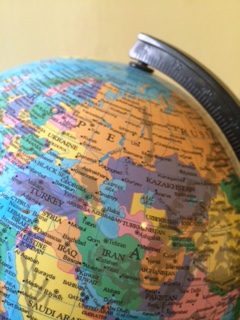
So the world is divided into four, five, six or seven continents, and three, four or five of them are inhabited. But how many countries? A quick Google search will tell you that there are 190, 191, 192, 193, 194 195, 196, 201, 204, 206, 209 or possibly 321.

Man visits every country in record time” reported the British Daily Mail on 25 November 2009 and told the story of Kashi Samaddar’s journey to 194 countries in six years and ten months.

But, almost exactly three years later, the same newspaper reported “British man becomes first person to visit all 201 countries WITHOUT using a plane”.

Then just under a year after that, it reported “British traveller, 24, spends £125,000 and five years visiting every country on earth” and this time counted 196.

The US Travelers’ Century Club identifies 321 territories but acknowledges that “some are not actually countries in their own right”. There are 209 FIFA countries, 204 Olympic nations, but only 193 UN Members (190 of whose sovereignty is not in dispute). The US State Department recognises 195 independent states, but this includes the Holy See – which it is hard to think of as a real country – and excludes Taiwan – which it is hard not to.

The right answer in the pub quiz is probably 196, the State Department’s list plus Taiwan; but that could change in just over ten days when Scotland votes on independence*. And in any case, 134 UN Members also recognise Palestine, 108 recognise Kosovo and 84 have at one point recognised the Sahrawi Arab Democratic Republic of Western Sahara. A handful of others have limited recognition.

So pick any number between 190 and 209.

(c) Richard Senior 2014 

*Update: it did not