The Tyranny of the Bucket List

DSC_0412

My alarm went off at 3.30am. I got dressed and went out and tagged along with the procession of half-asleep travellers crowded into tuk-tuks or furiously pedalling unlit hire bikes through the crepuscular gloom.  At Angkor Wat, the hawkers were patrolling the car park with torches,

“You wan’ coffee-breakfast?”

“Not now, thanks.”

I joined the concert crowd assembling in front of the temple and sat and waited with increasing impatience for an hour or so until the sun struggled over the horizon. Is that it? I thought and went to get coffee-breakfast.

DSC_0324

It occurred to me later that I had seen dozens of landmarks, just as iconic, but had never before felt the need to get up in the middle of the night and watch the sun rise behind them. But it had never before been a Thing You Must Do before You Die.

It is always a must: a sternly-worded injunction, a must try … do not miss … essential … cannot leave without: never a friendly, you could do this if you want. It is like working for a manager proud of being difficult.

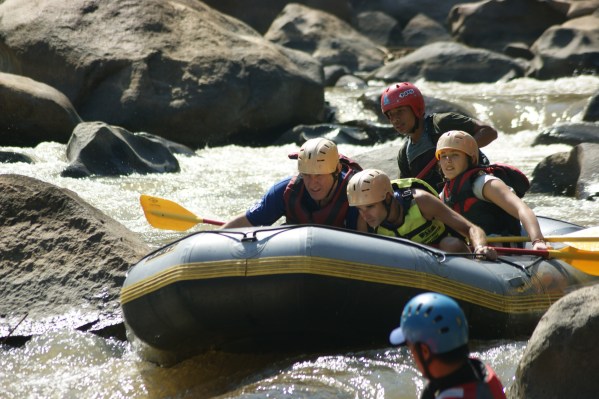
I have been white water rafting, but that was in Thailand which doesn’t seem to count. You have to raft the Lower Zambezi or nothing. I have been to Ibiza several times – I was there for the openings once – but I have never been to a closing party, and that is all the authors of bucket lists recognise. I am not doing very well.
SONY DSC

SONY DSC

I have no chance of getting to all of the 1000 places in Patricia Schultz’s book, especially if I have to find time to read the 1001 books and see the 1001 movies listed in the Quintessence Editions. And I have not even looked at 1001 Foods You Must Taste Before You Before You Die. There are still things outstanding which I should have done before I was 25.

Come to think of it, though, it is hard to see how any one person will ever do all the things which routinely appear on bucket lists. The sort who dream of making a million, meeting the president and having things named after themselves are never going to live out of a van.

Someone putting in the work to get a book published and have an artwork in an exhibition, while becoming fluent in a foreign language, inventing something and running his or her own business, will not have the time to visit every country in the world. He or she will be hard pressed to fit in milking a cow and skinny dipping at midnight.
DSC_0557

In truth, I am not fussed if I never see A Clockwork Orange, and I have wrestled with Finnegans Wake before and been beaten and I am not likely to try again, and while I had the chance to go to the Golden Triangle when I was in Southeast Asia, I decided not to bother.

I have no intention of doing a runner from a fancy restaurant, I am happy to pay for my food; and I certainly do not want to get arrested. I cannot see the point of shouting “the drinks are on me” in a crowded bar, even if (which I don’t) you have pots of money; and I am not sure there is anything to forgive my parents for.

There are, as well, a load of things I have done and want to do which I have never seen on any bucket list but which will stay in my memory long after that early morning at Angkor Wat has faded.

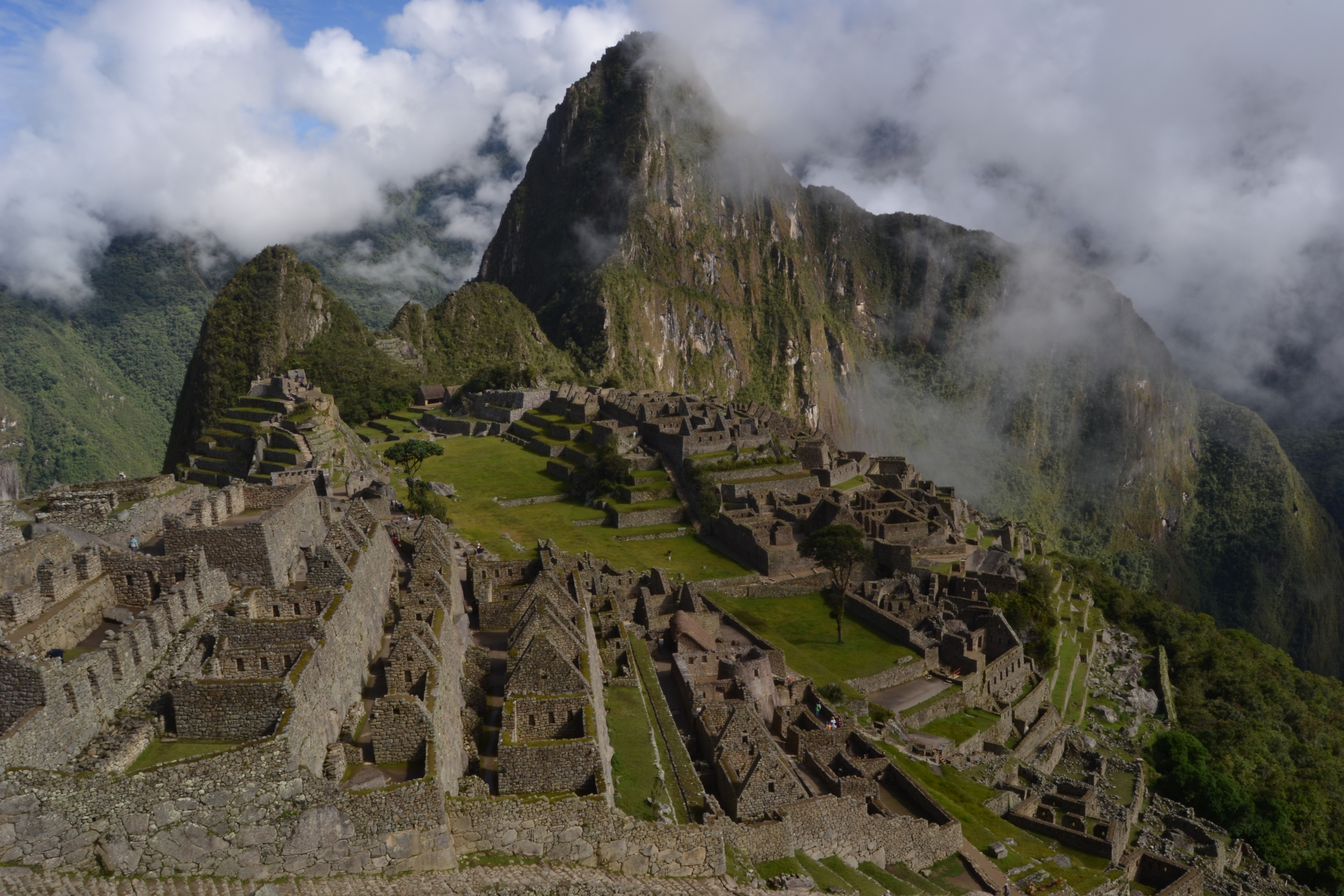
So when I went to Peru and they told me I had to see Machu Picchu at sunrise, I ignored them and spent longer in bed.

(c) Richard Senior 2014

“It is the Journey that Matters in the End…” as Hemingway DIDN’T Say

DSC_0345

It is good to have an end to journey towards; but it is the journey that matters, in the end,” wrote Ursula K Le Guin in her novel, The Left Hand of Darkness, although the internet tends to credit it to Hemingway.

The idea is baffling to regular fortnight a year vacationers, for whom journeys mean getting up early, battling across town, standing in line, getting half undressed, being scanned and frisked, having bits of their hand luggage confiscated, being bullied by cabin staff, sitting for hours between an old lady who thinks out loud and a fat man who snores very loudly, and watching the drinks trolley creep up the aisle to the row before theirs, then shoot back up the other end of the plane and behind the curtain for the rest of the flight, then bowing to pressure from the crowd to stand up the second the plane has come to a stop, even though they know that the doors will not open for ages; then standing in line again and again and again until they have stamps in their passports, cases in their hands and taxis to take them to hotels.

If this is what matters, might as well stay at home.

But on a longer trip, when you are dotting about from place to place, by train, by bus, by car by bike, what you see as you travel between the big sights will lodge in your mind as firmly as the sights themselves. You can get as much from the journey as you can from the end.

When I think of Cambodia, I think of the bus ride to Phnom Penh from Siem Reap, through rural villages of wooden houses balanced on stilts, of hayricks, pitchforks and ox carts, of broods of chicks jogging after hens. In the bank of memories from Vietnam are the journeys on overnight trains, waking and looking out of the window at villagers kneeling in conical hats to harvest the rice in the half-light of the early morning. I remember long road trips in South America through epic landscapes of mountains and plains which stretched for ever, and the occasional Andean herdsman tending llamas an hour from the smallest town.

In New Zealand it was the journeys I enjoyed the most. There is not much to Picton and little more to Nelson but the Inter City bus took a glorious route between them, through the Marlborough wine region where the vines had turned and flooded the fields with an ocean of yellow on either side of the single track road, where the mountains were stacked three deep: green then grey then blue. The Tranz Alpine Express train threaded its way from coast to coast, from the ruins of Christchurch to the thrift stores of Greymouth with me gazing up at endless mountains, and into the depths of a gorge at a fast-flowing river, and out across the expanse of a pine forest with splashes of yellow and brown among the deep dark green.

I rarely plan a trip in detail, sometimes hardly at all. But I always know where I am going to end up. I need that to give it some kind of structure, and to focus on when things go wrong and half of me wants to jack it all in and go home. There is always an end, and it is always a destination; but there is always a whole lot more to the trip. There are all the intermediate ends, the UNESCO sites, the bucket list staples, the Must Sees, the Wonders of the World and – more mundanely – the towns where the ferries dock, the cities where the buses stop; the stations at the ends of the lines. And there are the landscapes and townships and villages I pass through as I travel between them.

It is good to have an end to journey towards; but, yes, it is the journey that matters in the end.

(c) Richard Senior 2014

A Morning in Hanoi’s Old Quarter

DSC_0077

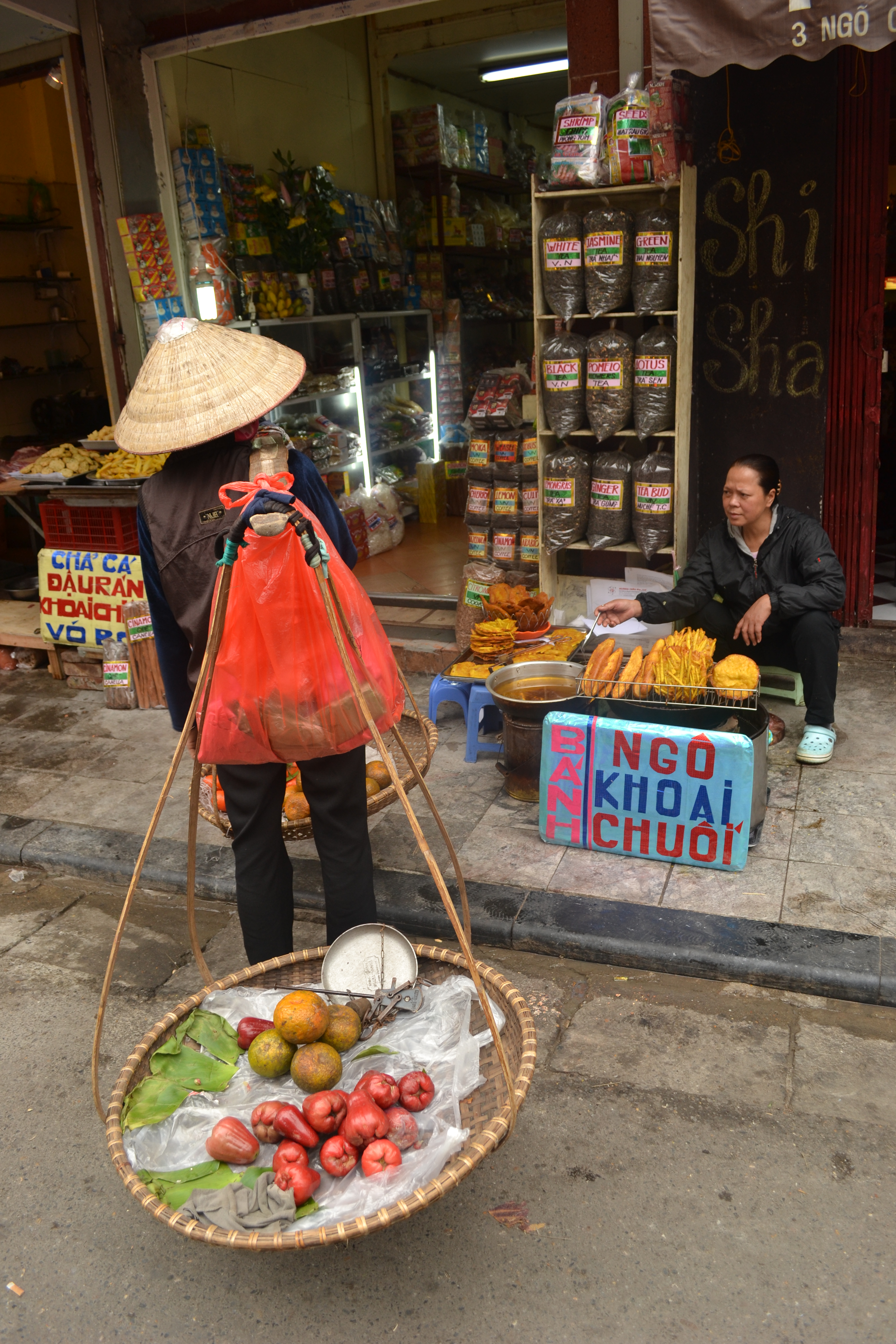
Scooters wail through the tangle of alleys, weaving round ladies in conical hats with yokes balanced over their shoulders and old pushbikes half-buried under baskets of fruit and slowly perambulating cyclos. The sound reverberates off the walls of the decaying colonial buildings with their sagging awnings and missing windows and roofs bodged up with corrugated iron.

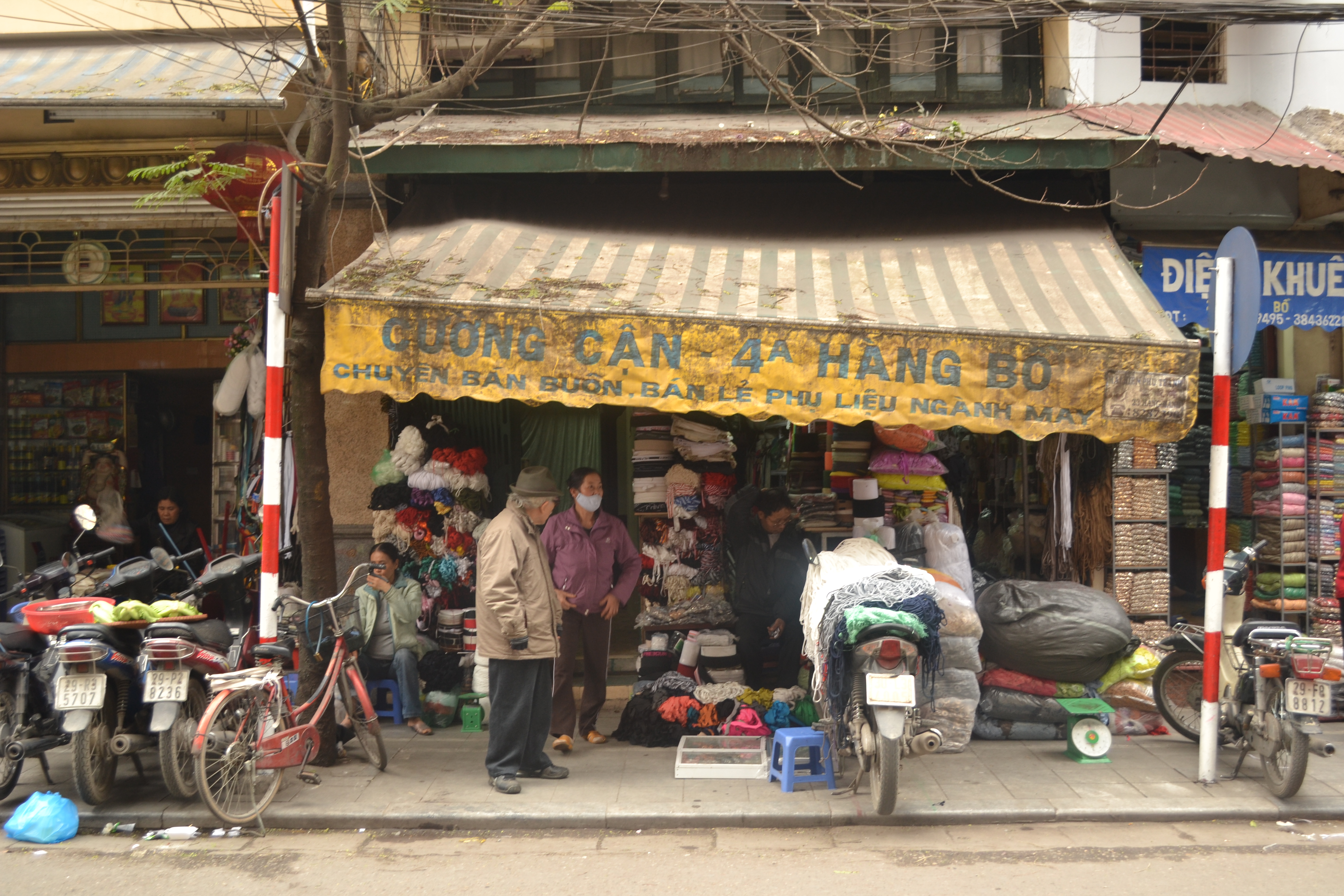
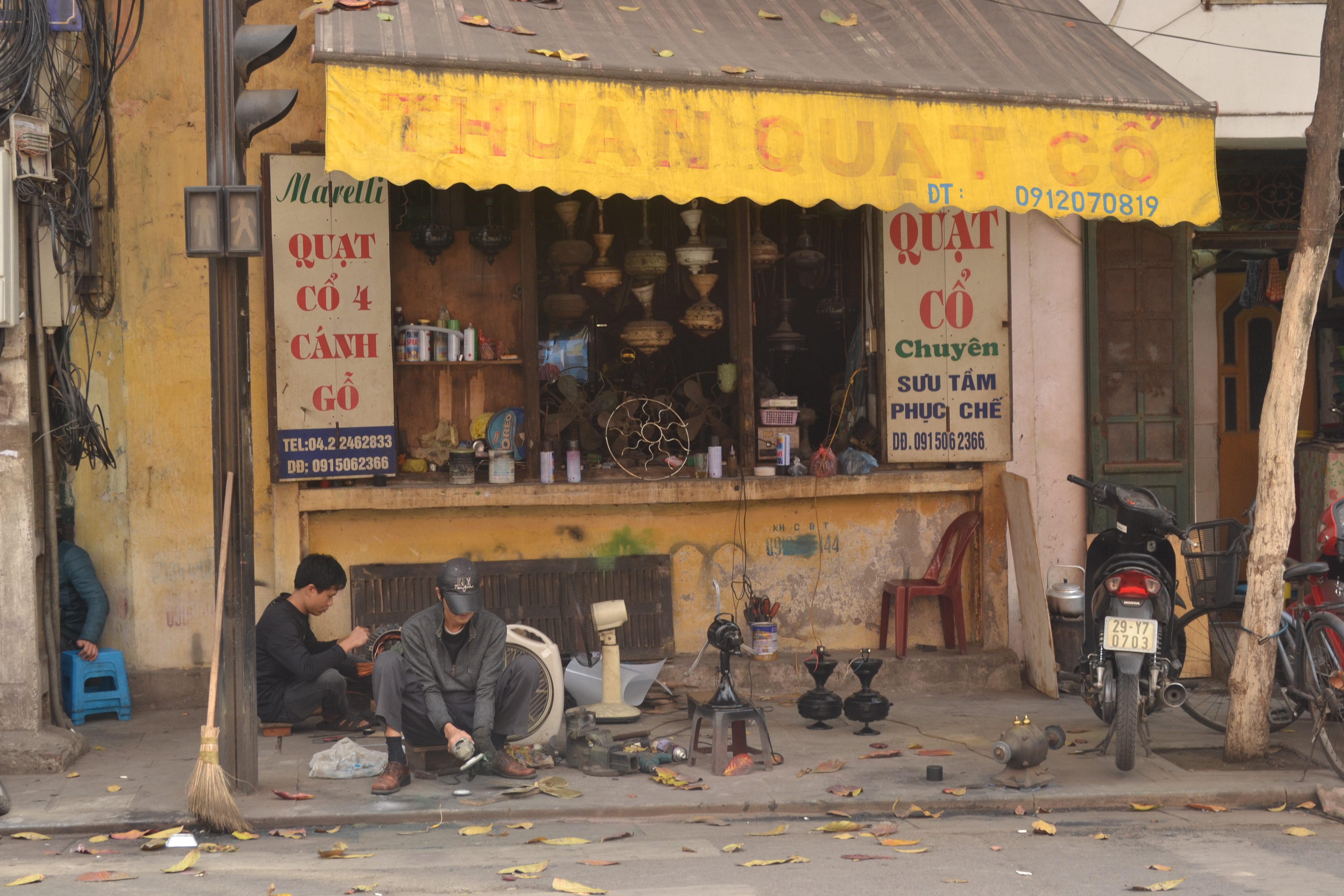
Traders spill out of their shops and fill the pavements with mannequins, fridges, anvils and circular saws. Women sit cross-legged, shaving pigs’ trotters and scaling fish with cleavers; men kneel over sheets of stainless steel, hammering, grinding, welding, drilling, and fashion them into boxes and bins. Street food vendors arrange tight circles of miniature stools on any available corner. There is nowhere to walk but in the road with the scooters.

DSC_0093

One shop sells nothing but heaters. Next door sells nothing but fans. Three doors further on sells lightbulbs. Two doors beyond that sells adaptors and leads. You go to one side of the road when your scooter needs tyres, to the other when it needs a new seat. And if it needs a new mirror as well, then you nip across town to the French Quarter. There are two streets on which every shop sells metal boxes, one street reserved for flowers and one for bamboo poles. Padlocks and door handles have half a street each, as have cooking salt and caged birds. Shoes get a crossroads of their own, but trainers, flip-flops and football boots have to share with army surplus. Musical instruments are lumped together with antiques, on the hunch, perhaps, that people who play instruments are likely to collect antiques.

DSC_0406

Chả Cá Street is named for the single dish which the restaurants along it sell. The best known is Chả Cá La Vong, so well known that restaurants all over town have ripped off its name. It is a poky little place with a rickety staircase leading up to a room with the look and atmosphere of a rowdy works canteen. Though it is in all the guidebooks and on every food blog, most of the other customers are shirt and tie locals. There is no menu, because chả cá really is all they do. They don’t see the need – as a restaurant would at home – for novelty chả cás or alternatives for people who go to a chả cá restaurant but don’t really care for chả cá.

The waiters bring the chả cá in relays. First, a sizzling fondue pot filled with turmeric-stained fish. Then, as that hisses and crackles in the middle of your table, a bowl of rice noodles. Then a ramekin of dipping sauce, a plate of crushed peanuts and a handful of herbs, which the waiter dunks in with the fish to wilt, and leaves you to assemble it when the fish and the herbs are done.

(c) Richard Senior 2014

Phang Nga Bay with the Worst Tourists Ever

DSC_0673

The driver pulled up outside a smart hotel – far removed from my guesthouse in town – and waited.

After waiting a while, he went to ask at reception and, a while after that, the Important people strolled out. They were plainly used to being waited on. I wondered why they had joined a public tour with a bunch of backpackers. Maybe they did too.

The Important man snapped at his wife, the Important woman snapped at their children; and all the Important people treated the driver as if he were their servant. They ignored the rest of us.

Stop the car!” the man ordered five minutes up the road. The woman felt car sick. Then again five minutes later, and again five minutes after that. Then we were on a fast road at the edge of a cliff with nowhere to stop.

“Stop the car!”

“Can’t stop here”.

So the woman slid the door and tried to be sick as we drove. We stopped.

Later than planned, we transferred to a longtail boat and powered through mangrove swamps. Limestone karsts, hundreds of feet tall, slid past either side. The Important people put their umbrellas up against the spray and blocked everyone else’s view. We arrived at Panyee, a Muslim fishing village built on stilts in the shade of a karst, where they served us lunch.  I liked the barbecued mackerel, the breaded shrimps and the saffron rice well enough; but the Important people shouted at the waiters and sent it back.

We stopped briefly at Ko Khao Phing Kan, Scaramanga’s base in The Man With the Golden Gun, then got into two-man canoes and the boatmen rowed us round and inside the karsts, squeezing through fissures and emerging in chimneys of rock with the squawks of the seabirds echoing between the walls and a circle of sky high above.

Some time after we were supposed to be back at the minibus, with the rest of us dutifully sitting inside, the Important woman strode over, grabbed the door mirror and turned it round to check her make up.

I can’t believe she just did that,” I said. The driver shook his head, got out and pushed and pulled and twisted and tapped the mirror until it was roughly where it had been.

Let me use your phone,” the Important man said, making a grab for the driver’s mobile. “I need to make a local call”.

The driver was nonplussed for a moment then thrust his phone without a word towards the man, who made a long chatty call about nothing. I dare say the driver had to pay for it himself, but Important people never trouble themselves with details like that.

We probably didn’t stop more than fifteen times on the way back to Phuket for the Important woman to try to be sick.

I gave the driver a hundred Baht tip because I thought he had earned it. I am not sure the Important people gave him anything.

(c) Richard Senior 2014

The Washing Machine Delivery Man of Huế

DSC_0751

An old man wobbled across the Perfume River on a scooter held together with duct tape and rust. He had a washing machine strapped to his pillion seat and a toolbox balanced on his knee.

A month or so earlier, I had seen a family of three on one scooter – no helmets – on the motorway heading out of Bangkok. Then I saw a family of four, husband, wife and two kids; and I thought that was as many as could squeeze on a scooter, until I crossed into Cambodia and saw five.

The scooters in Phnom Penh scuttle in random directions, like a colony of evicted ants. They make crossing the road an adrenalin sport as they streak past you, too close, performing the horn concerto.

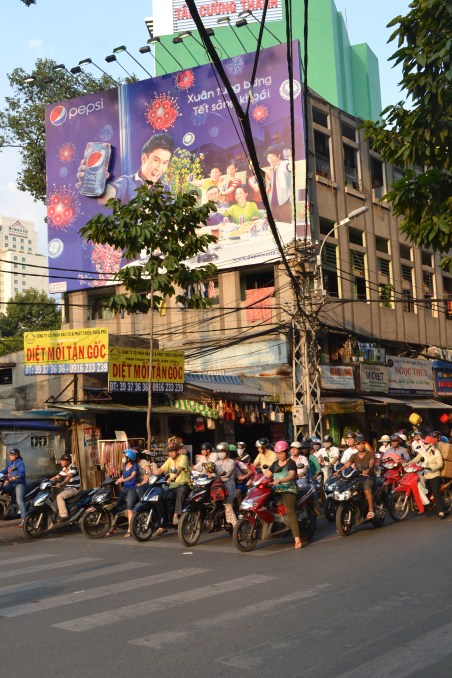
But Cambodia is Switzerland compared with Vietnam. “Seven million people in Saigon,” a guy told me, “and four million scooter”. They swarm like a nightmare of wasps, a cacophony of tiny horns beeping, enough two-stroke motors revving together to outroar a Hell’s Angels convention. They stop for no one, for nothing.

I stood at the lights and wanted to cross but could not see how. Red and green were all the same to the scooters. Then a little old lady in a conical hat with more than her body weight slung from a yoke on her shoulders stepped into the traffic and tottered across while the scooters flowed round her as a river flows round a rock. That is how.

Motorbike taxi drivers lined the side streets touting for business. “Motta bi’, motta bi’” one shouted to me as he jabbed excitedly at his motta bi’. “I know, mate,” I said “I’ve seen one before”. “Marry wanner?” he offered, but I declined that as well. “Lady massage?” That too.

As I made my way up Vietnam, through Laos and back into Thailand, I saw scooters half-buried under bouquets of flowers, and piled up with boxes or water cooler bottles, and a pillion passenger with his arms at full stretch to steady a car bonnet on his lap, and office girls sidesaddle on motorbike taxisapplying their lipstick as they threaded through traffic, and tiny kids blasting down dusty lanes, and the washing machine delivery man crossing the bridge in Huế. 

(c) Richard Senior 2014

Smoke That Thunders

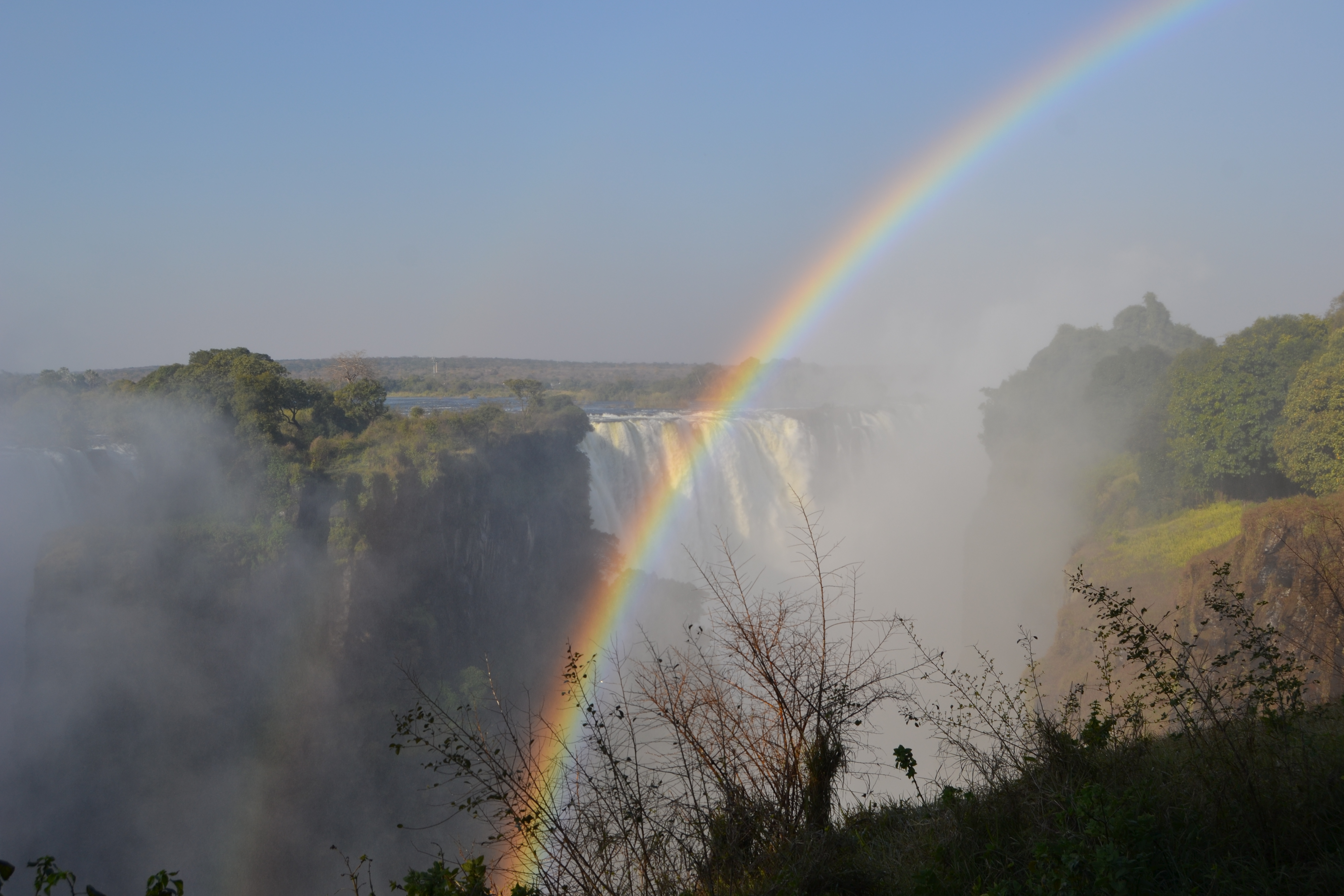
Dr Livingstone thought that Victoria Falls sounded better than the local name Mosi–oa-Tunya which means “the smoke that thunders”. The government says that it is going to change the name back, which has got people worked up in support and against, but is hardly among the more urgent things which need to done in Zimbabwe. To outsiders, at least, it is what the falls are which matters most, not what they are officially called.

The word “awesome” has become as devalued now as the old Zimbabwe dollar but, when it pops into your head at Victoria Falls, it belongs there. A mile of water, hurtling out of control, tumbles over the edge and disintegrates into abstracts: thick gouache white swirling over slime green, tumbling, tumbling, tumbling a hundred metres into the gorge below, hissing and rumbling, roaring and thundering like some massive industrial process; the spray rebounds, a gathering storm, higher – way higher – than the top of the falls, until a perfect rainbow chops it in two and it comes down again as an unseasonal shower and soaks the path and the tourists who stand there and gawp.

Vic Falls ruin waterfalls for evermore as surely as the Grand Canyon ruins canyons.

DSC_0474

(c) Richard Senior 2014

La Paz: Effigies, Offerings and Rebar

DSC_0909

The road from Peru meanders through a poetic landscape, along Lake Titicaca, up and over the mountains, past rivers and plains and glorious eruptions of wildflower. Then all at once you are in honking traffic in the apocalyptic satellite town of El Alto.

A smothering dust covers everything. Every building remains unfinished, and will forever, with rebar sprouting from the floors of notional upper storeys. Aymara ladies buy fruit through the bars on the doors of the shops. Legs protrude from old cars up on jacks on the pavement. Life-sized effigies hang from the lampposts with notices pinned to their chests reading, “This is what we do to thieves”. They do, as well. The 30 lynchings in the first 10 months of 2011 represented “a notable decrease,” according to an upbeat UN.

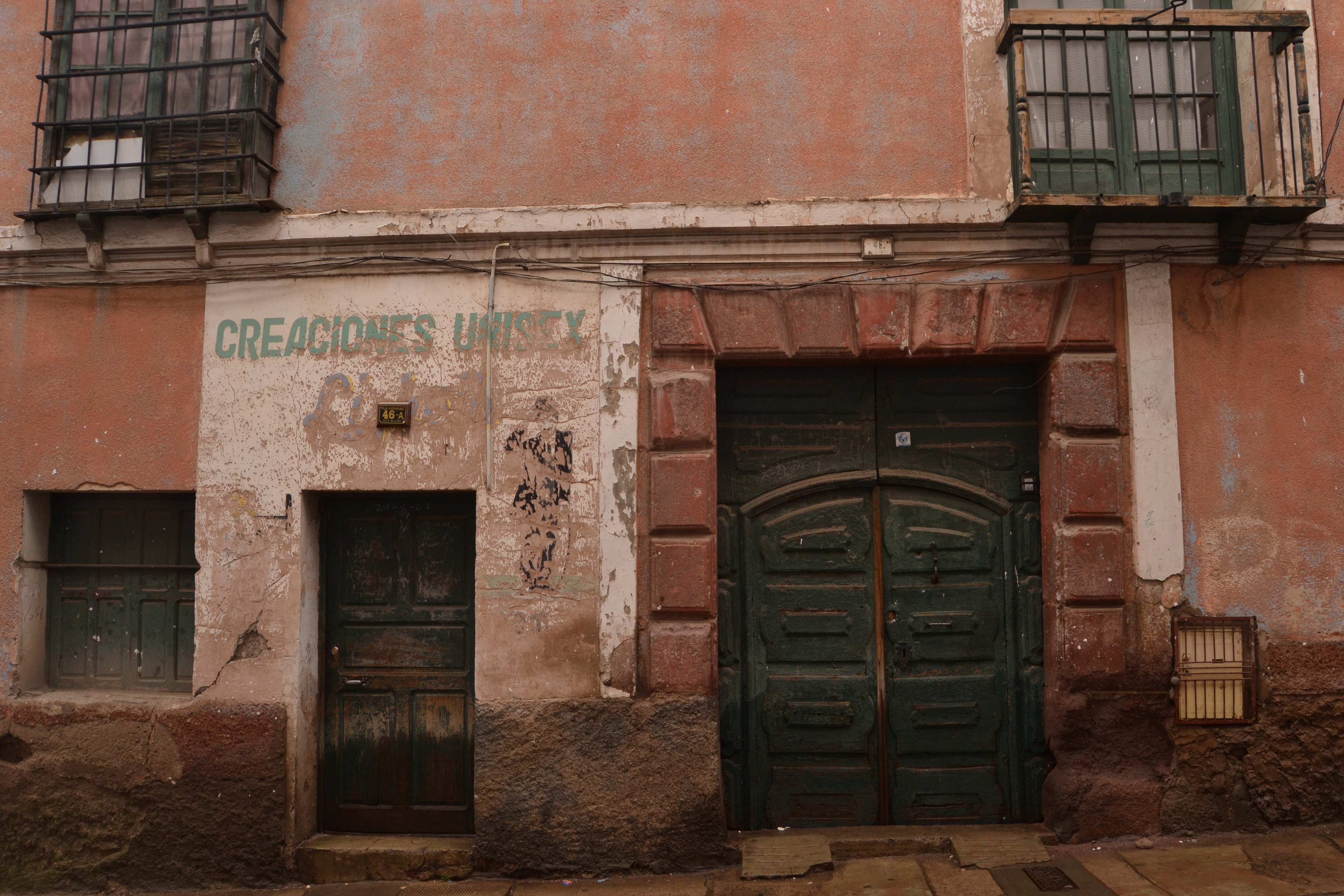
La Paz is picturesque in spite of itself. The first view from El Alto is a sea of ochre buildings embraced by high peaks, and there is a paradoxical beauty in what seems to be nothing but tower blocks. There is, as you see when you roll into town, more heritage than appears from above. The steep streets of sunken cobbles are lined with colonial buildings, crumbling, faded, covered with graffiti and torn fly-posters, but nonetheless photogenic.

There are numberless markets, but they can’t contain the Aymara vendors who spill out down the pavements and into the road. Stocky ladies in bowler hats kneel on sheets laid anywhere they find a space, selling fruit and veg, meat and fish, clothes and shoes, stolen electronics, herbs and potions, figurines and amulets, and llama foetuses to offer to Pachamama.

Oh, thanks for that,” I imagine her saying, in the tone you use when your cat lays a mouse at your feet.

(c) Richard Senior 2014

Escaping Patong

DSC_0115 (2)

I was tired of the babel of English, Russian, German and French, never Thai; of the fat farangs; of the burgers and Heineken; of the parasols laid out in uniform rows.  

So I walked away from the resort and over the hill, about as far as I could get in flip-flops, and stopped at a beach which was smaller and tattier than Ao Patong. It was dotted with stones and bits of dropped litter and things which had washed from the sea. There were no deck chairs or jet skis, and no hawkers came round with sunglasses, watches, ice cream or beer.  I was the only farang there.

I sat and I watched as the tide crept further up the beach and the sun began to fall and it drew a line across the sea and lit the wet sand at the margin. I watched the fishermen set off in their long-tail boats with old car engines spinning long propeller shafts dipped in the sea. The vendors up the hill were grilling fish and the smell drifted down towards me.

A pick-up arrived with a group of Thais in the back, students I think. They jumped out and scampered across the beach and jumped in the sea fully clothed. They were as happy as children, squealing and shouting in the waves, and splashing each other, until the driver beeped his horn and they scampered back and left.

The sun had slipped further by then, backlighting the clouds and silhouetting the fishing boats and the mountains behind them. I could see across to Ao Patong, where the deckchairs were still laid out in neat rows, and the jetskis still chased across the water, and a parasailer floated a few hundred feet above a powerboat tearing round the bay. It was too far away, though, for the English and Russian and German and French voices to reach me, too far away to pick out the hawkers selling sunglasses, watches, ice cream and beer.

I stayed until the last of the sun leaked from the sky and I could barely make out the mountains and boats in the distance. Then I made my way up to the street food stalls and bought fish and rice and a Singha beer and ate at a table with locals.

(c) Richard Senior 2014

Getting Stoned in Kenya

phone 27 236

Everything changed when the police started shooting.

High school students had blocked the road to Namanga, so no-one could cross the border. They were protesting because their school had been waiting five years for a bus to be delivered. Trucks and cars were backed up on each side of the road. Drivers stood around chatting and texting their mates. The protesters danced and chanted. One boy pogoed high in the air, as if performing a set piece for tourists. We jumped out of the bus to enjoy the mid-morning sun. Maasai herdsmen strolled along the track by the side of the road in scarlet robes; they carried traditional knobkerrie clubs in one hand, but one held a mobile phone to his ear with the other. A snake nosed out of a bush. Meerkats sat up and took notice then vanished. A vulture settled on an acacia tree.

Then the police arrived. There were half a dozen of them to fifty or more protesters, but they were just kids and the policemen were big, intimidating men; and they had automatic rifles, tear gas and riot shields. Disperse and go home, the senior one said, or words to that effect in Swahili. But the protesters carried on chanting and dancing. The drivers carried on chatting and texting their mates. We carried on enjoying the sun. The vulture left its perch.

The policemen were frustrated at being ignored and started firing over the heads of the protesters, who scattered, except a boy of somewhere around thirteen who lay on the road in a puddle of blood. Someone said he was dead; someone else said just badly injured. He had been shot; no, hit by a rock; no, trampled by fleeing protesters. No one really knew what had happened.

We got back on the bus in an orderly panic and the drivers melted back to their cars. Then the riot began. The protesters flung stones and they thumped off riot shields. The police replied with tear gas. But the tear gas ran out before the stones and the police sprinted across the plain out of sight.

The protesters, then, stormed down the road, stopping to pick up more stones, determined to throw them at someone. When they stopped level with the bus, we dived onto the floor and the stones came through every window. I held my daypack over my head while more stones hammered into the panels beneath the windows and a few landed inside. A chunk of compacted glass went down the back of my shorts; I was bleeding from a cut on my arm. More protesters passed, right by us, banging on the side of the bus as we stayed down on the floor and hoped they would not try to get in.

Then they were gone and it was quiet and we got up and abandoned the bus and walked to a nearby campsite, emptying the glass out of our clothes as we walked. The road was clear within a few hours and we crossed into Tanzania a bit later than planned and I never found out for sure what happened to the boy who was laid in the road.

No doubt the school is still waiting for its bus.

(c) Richard Senior 2014