Journey through Zimbabwe, Part 6

DSC_0422

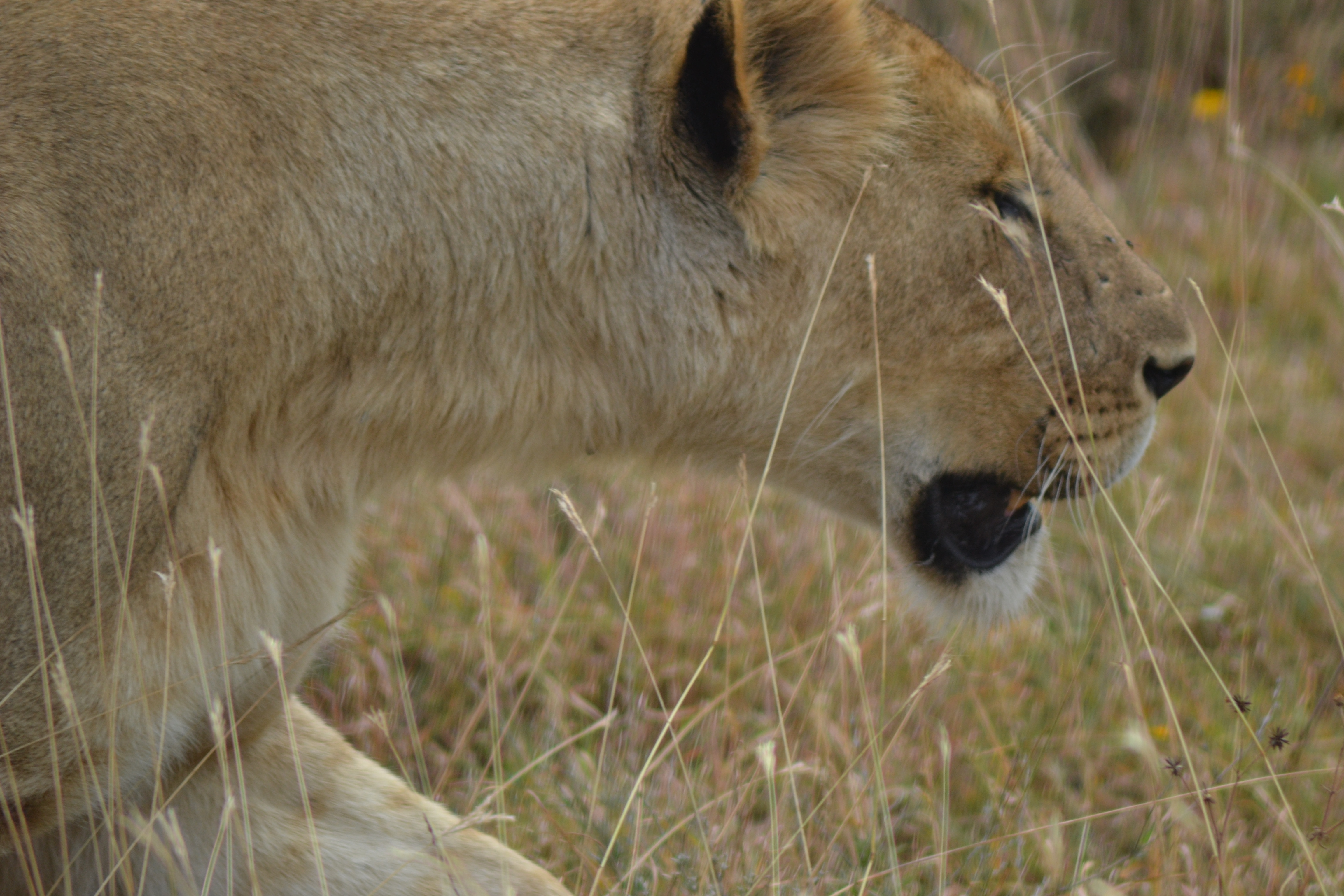
The vultures crowded like excited spectators into the baobab tree. The boldest hopped down and inched towards the buffalo. But a lioness saw them and mock-charged to force them back. She took her turn, then, to tear a piece from the carcass while the male, full for now, reclined in the sun. Another lioness kept watch on the vultures.

Is the buffalo dead?” asked Nahid to everyone’s astonishment.

Nah,” said Lisa, “just resting”.

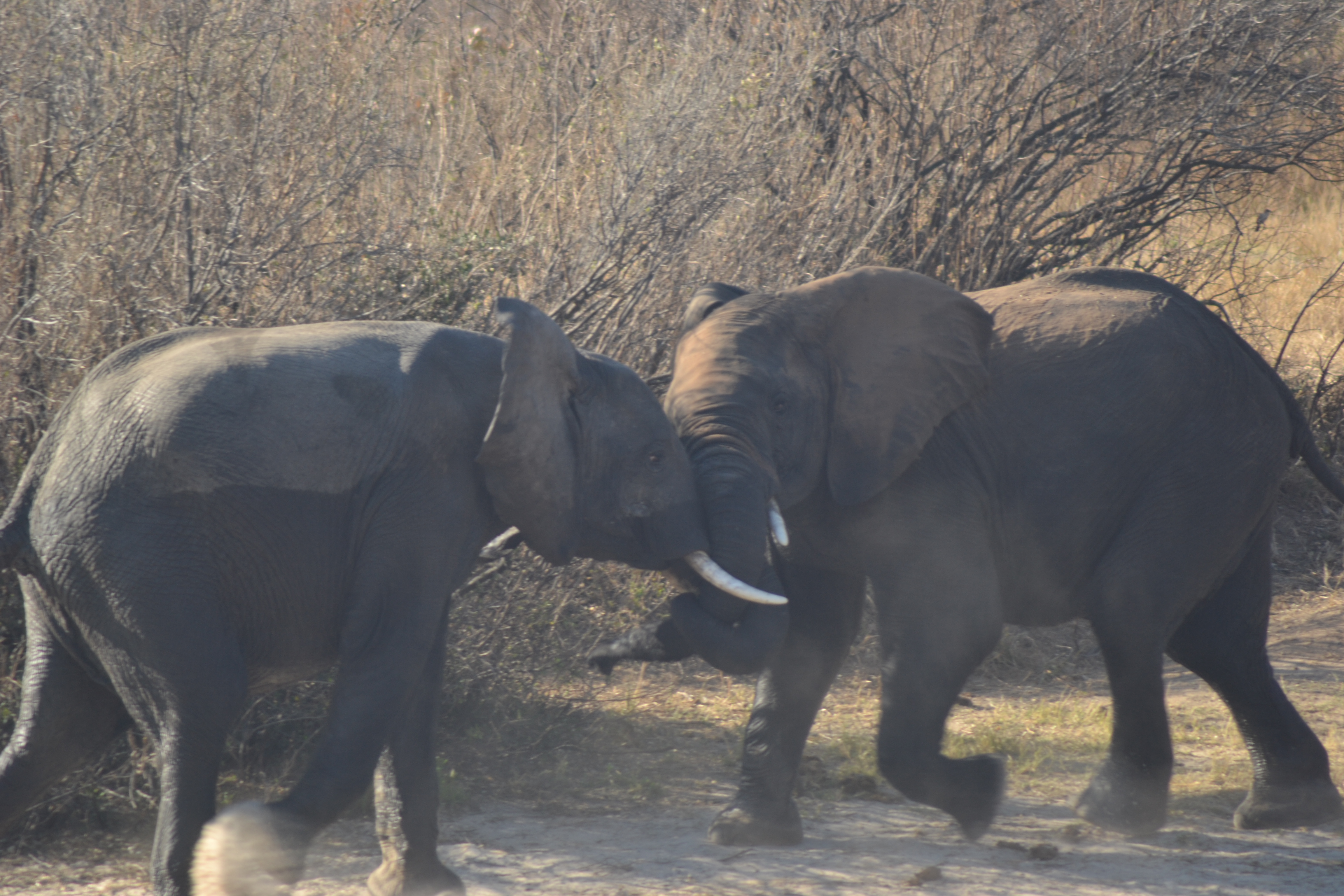
We had turned north from Bulawayo and driven the 200 miles or so to Hwange National Park. It used to be called Wankie Game Reserve, until they found out why visitors were sniggering. It is best known for its elephants. There are something like 40,000 there, in a park the size of Belgium. A small herd bathed in the river, while two young males wrestled on the bank, trunks entwined, tusks locked, stirring up clouds of dust as they struggled for grip.

DSC_0361

Always, on safari, the drivers stop and chat sotto voce about the game they saw further down the track. The word “shumba,” – Shona for lion – had sent us hurrying to see the lions tackling the buffalo carcass.  So I thought nothing of it when the other jeep stopped, but I was puzzled why the passengers sat grinning in silence. Something was off. Then they bombarded us with elephant shit and drove away laughing.

That evening, after a few drinks – and after cleaning off the elephant shit – we set off in the jeep again with torches. Bush babies leaped between branches, and an elephant padded stealthily across the road.  We called in at a smart safari lodge, got more drinks and sat at the waterhole watching zebra and gazelle.

DSC_0428

Then, in the morning, we continued north.

© Richard Senior 2015

The Morning after the Lao Lao Rice Whisky

DSC_0269

I peered at my phone and, when it came into focus, saw that it was time to get up. Then I found that I was already dressed. I jammed my hat on my head instead of brushing my hair, grabbed my backpack and checked out of the guesthouse.

I slipped my sunglasses on as I went outside – although the morning was overcast – and took a motorbike taxi to the bus stop. I was the only falang (Westerner) on the bus, so I knew exactly who the driver and his friend were talking about when they kept using that word in a sniggering conversation. I hid behind my glasses and looked out the window.

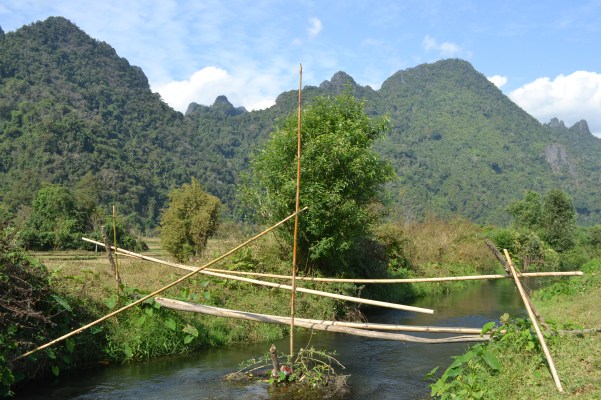
It is only a couple of decades since the mountains surrounding the road to Luang Prabang were riddled with bandits; but only the cows which ran into the road at intervals held us up, and the only other people we saw were the women from the villages of subsistence farms who threshed the corn by hand at the side of the road, and the tiny children who ran out and held up dead animals for sale.

DSC_0276

One girl had a hare barely smaller than her and a boy had what looked like a rat. I turned away, though. Nausea had been hovering in the background all morning, as it was.

It is a glorious, breathtaking route through the mountains. The road struggles up and spirals round with a surprise after every corner, be it soaring peaks, a snaking river, a deep, deep valley, or a big, honking 16-wheeled truck.

The bus pulled into Luang Prabang in the late afternoon and I shouldered my backpack and struggled off to look for a guesthouse.

© Richard Senior 2015

Beer and Losing in Las Vegas

DSC_0012

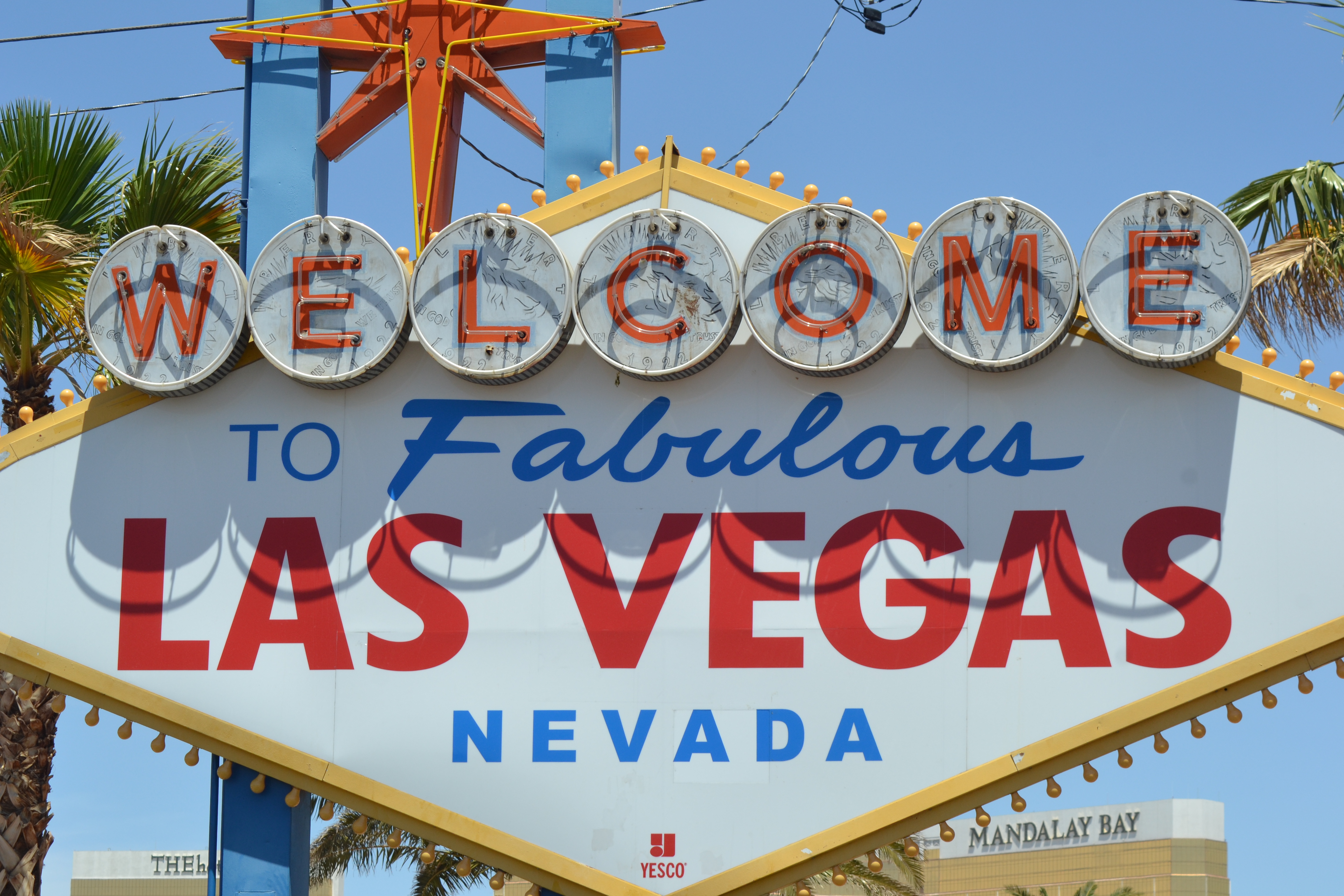
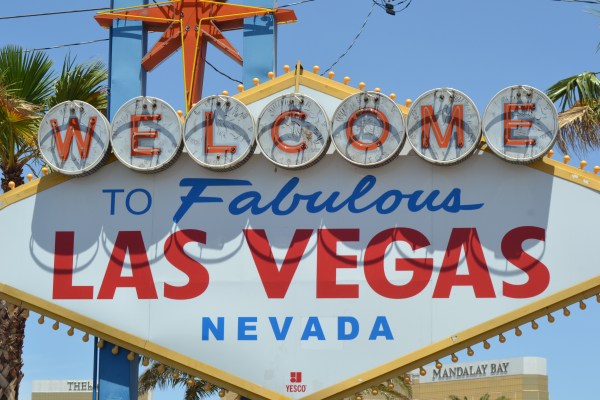
Las Vegas, said Hunter S Thompson in his craziest book, “is not a good town for psychedelic drugs [because] reality itself is too twisted”. It is even worse now.

Elvis is alive and everywhere at once. He shares street space with Spider Men and Optimus Primes, and a man with a sign which reads “kick me in the nuts for $20”.

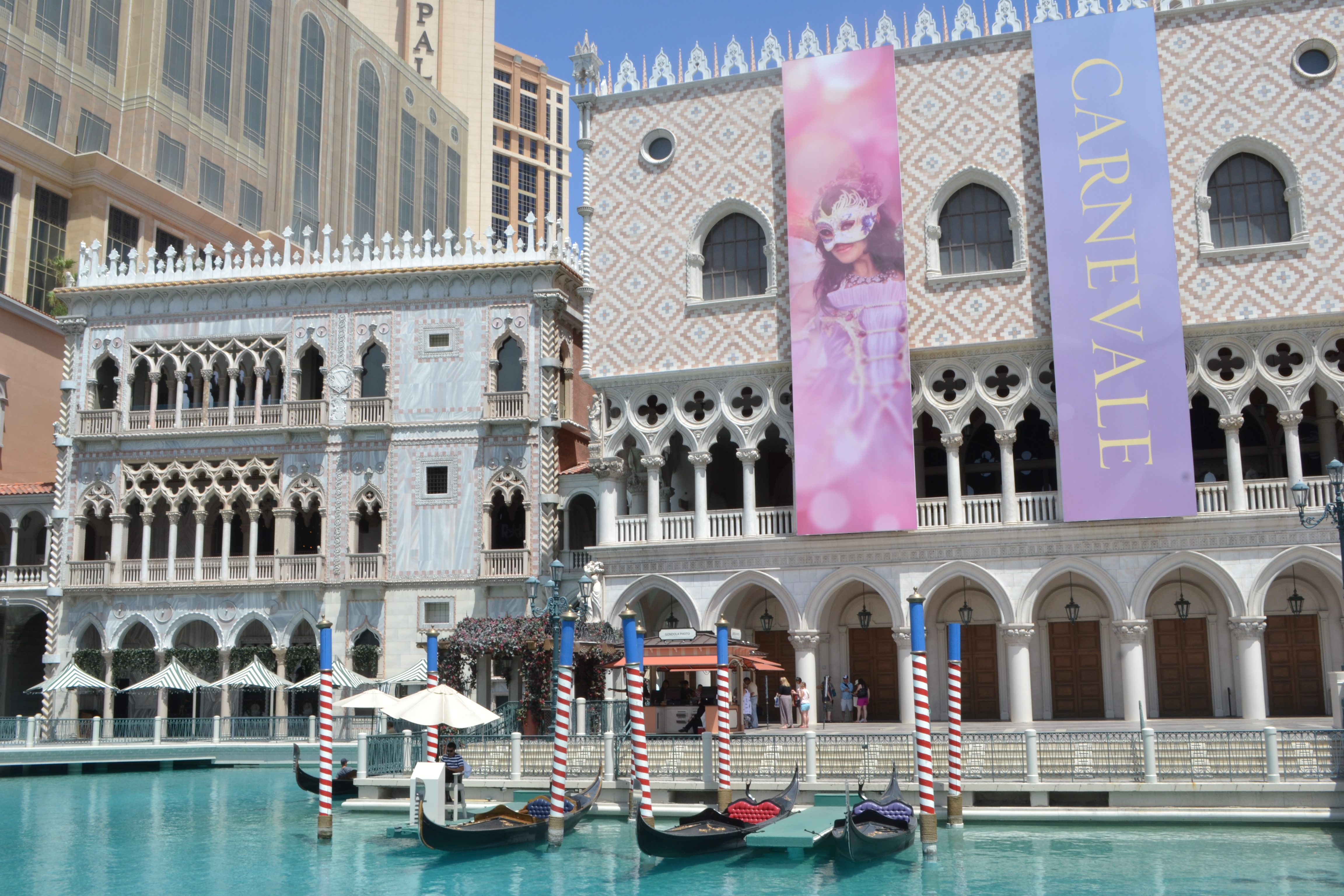
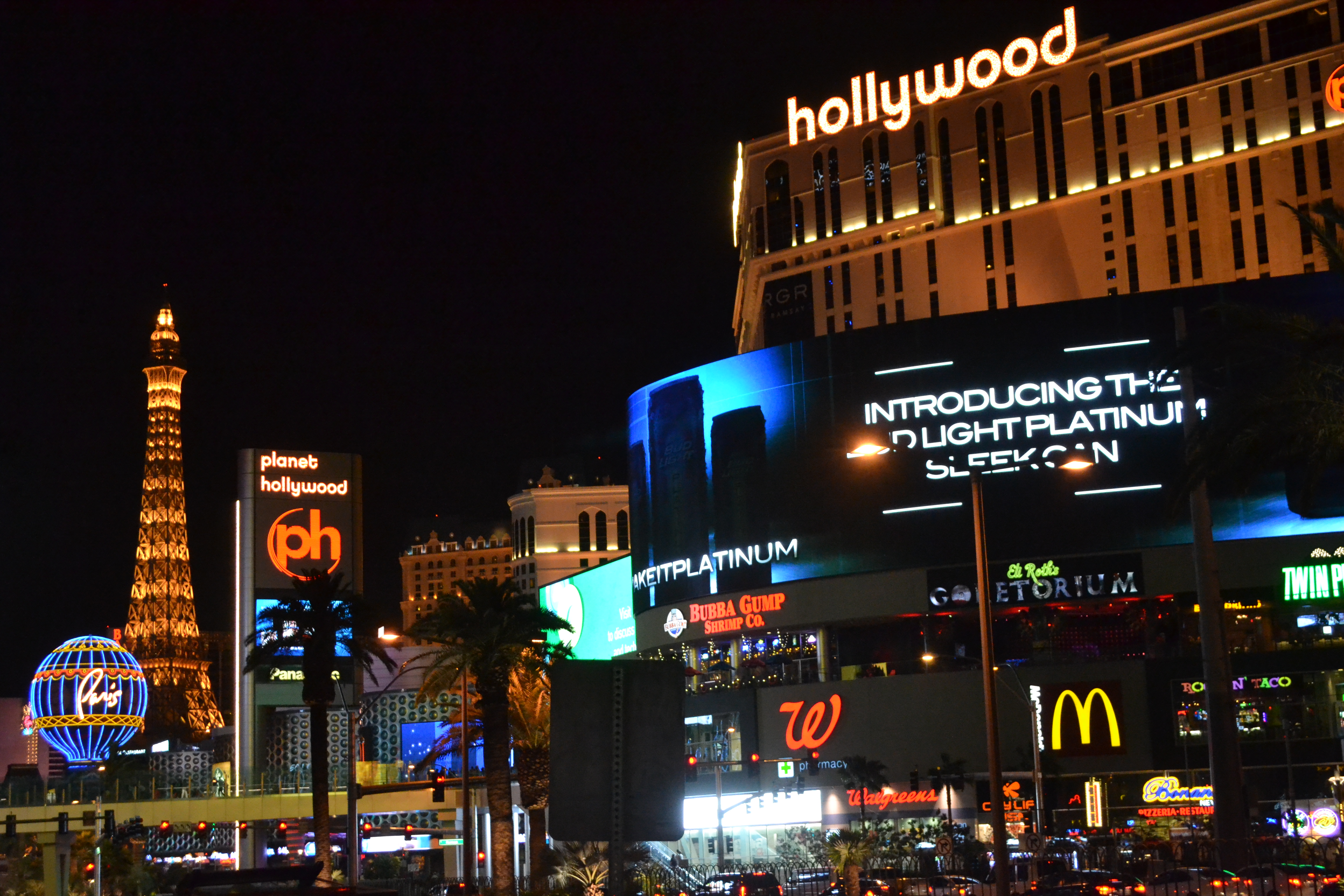
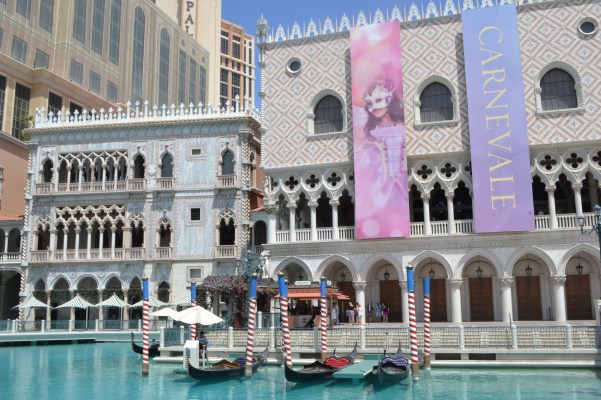
New York is a few steps from Egypt and Rome, and Paris and Venice are across the street. The Ponte Rialto joins the Campanile to the Palazzo Ducale, and gondolas slide through glacier-blue waters. The Eiffel Tower sprouts from the roof of the Louvre; and New York’s great sights are lined up in a row. It is a bit like the world, but with a lot less walking.
DSC_0053

MGM has lions, Mirage has tigers, and all the casinos have cougars. Bellagio has an eight acre lake with hidden fountains which break the surface twice an hour (more often at night) and squirt and dance to music, then stop and retreat underwater.

Luxor is a 400 ft pyramid with a replica sphinx guarding its doorway. Excalibur is a cartoon medieval castle, which would definitely not agree with psychedelic drugs. Paris, Las Vegas (so named in case anyone thinks they have walked by mistake to Paris, France), New York, New York, and the Venetian are amalgams of landmarks in the cities they represent.

If you were as drunk as you were supposed, by tradition, to be in Vegas, you would never quite know whether you were inside or out, or what time of day it was. The shops and restaurants are behind facades which look like a street scene to continue the theme outside, and roofs are painted to look like the sky, and the lighting fools your brain into thinking it is perpetual evening. There are – famously – no clocks to contradict it.
DSC_0076

Five per cent of visitors say that they are there to gamble. Ninety-seven per cent actually do gamble. They get through an average $250 a day. It earns the state $9 billion a year.

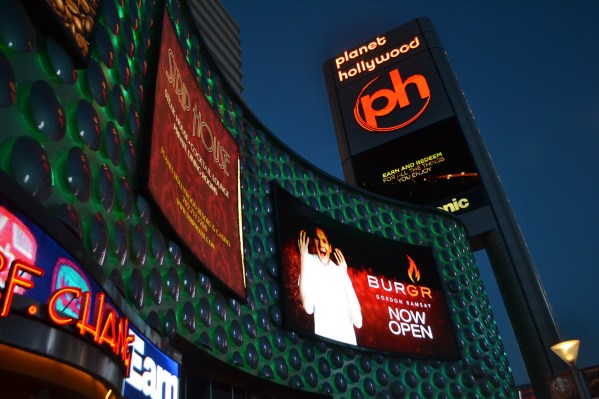
It is all but impossible not to go in a casino at some point. You might be unmoved by the bright, beckoning signs, uncurious about the fanciful themes, indifferent to celebrity chef restaurants and superstar DJ’s, magicians and singers and dancers, but you will still need to pass through a casino or two to get to the monorail, or just to walk the length of the Strip.

And they are so bewilderingly huge that it is hard to get out once in. You follow the signs to the street or the monorail from one room to the next; you go up and down escalators, through bars, past the tables for blackjack, baccarat, poker and craps, past a hundred slot machines and a hundred more until, finally, you get back to where you started.
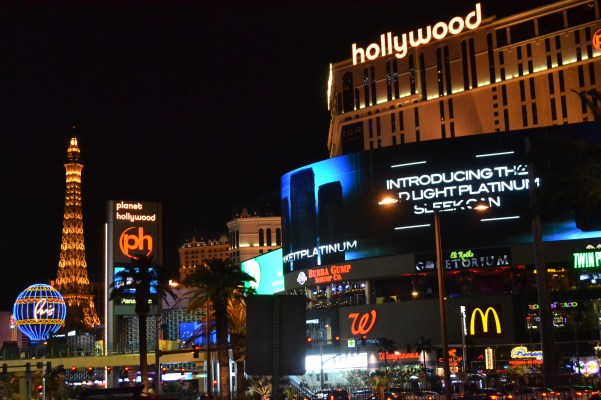
DSC_0116

It is mesmerising to gaze across a stadium-sized casino at the rows of slot machines stretching away to seeming infinity with their flashing lights and plunky music, and the tables, and the sports books with every game and ever race playing at once on the big screens and a wall full of digital statistics which mean as little to me as the company data they print in the Financial Times.

I saw hundreds of dollars robotically fed into slot machines but never saw a cent come out. I heard one shout of triumph from the tables but who knows how much the guy invested to get there. Some apparently make a living from gambling but it is hard to see how when the odds always favour the house.

There are consoles on the bars so you can carry on gambling as you drink, and plenty of bars so you can carry on drinking as you gamble. Then you can wake up in the morning without even the funds for black coffee and headache pills.

The fountains dance, the lights pulsate, the music pumps and big rigs haul in more beer. It is sleazy, it is tacky; it is overblown in every way. Yet there is something compelling about it, something you cannot help like.

© Richard Senior 2015
Queenstown in May

DSC_0170

It was off-season in Queenstown. The sun had apparently been packed away for winter. The mountains were hidden under cloudy drapes. The glorious colours I had seen on the postcards had been taken off display. Tarpaulins were roped across the decks of the sailing boats at anchor on the lake. They had not been touched for months. Even the notorious bars were quiet. I had no winter clothes, so wore everything I had at once, and sat with my back to storage heaters while I was in the hostel.

The jet boats were still taking groups out, and I heard there was whitewater rafting nearby; but it was unthinkable, at that time of year, to do anything which soaked you through. There was bungee as well, but I am too cowardly for that. I took the cable car up Ben Lomond to ride the Luge instead.

The track winds steeply around the mountain and propels you through tunnels and over humps and round banked corners as you barrel along it in a three-wheeled cart. There is a ski lift, then, to take you back to the top so you can do it again and again. There had been a frost in the night and whenever I approached a corner too fast – which I usually did – I went round it sideways and careered into the buffers around the edge, then wobbled back onto the track.

DSC_0152

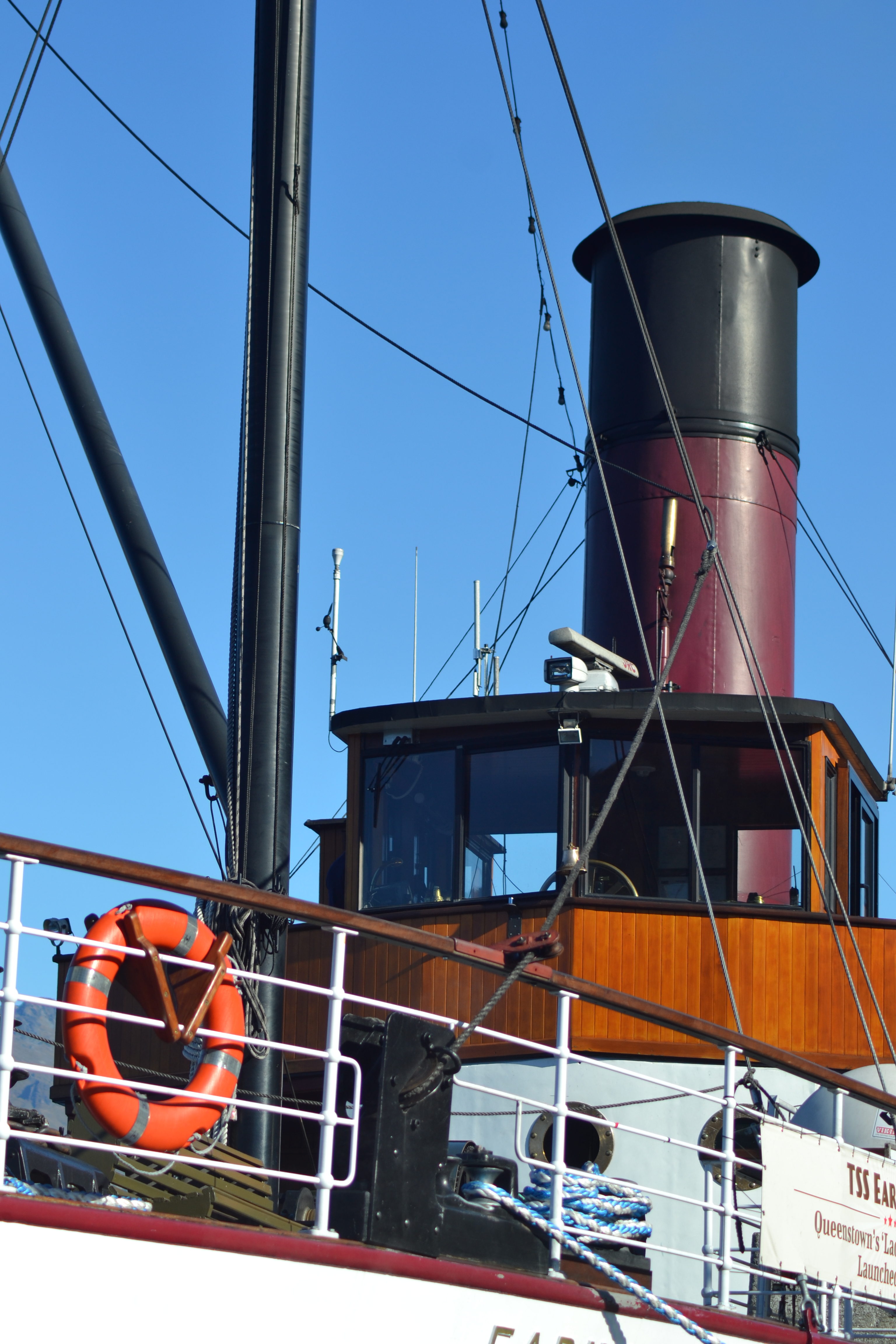
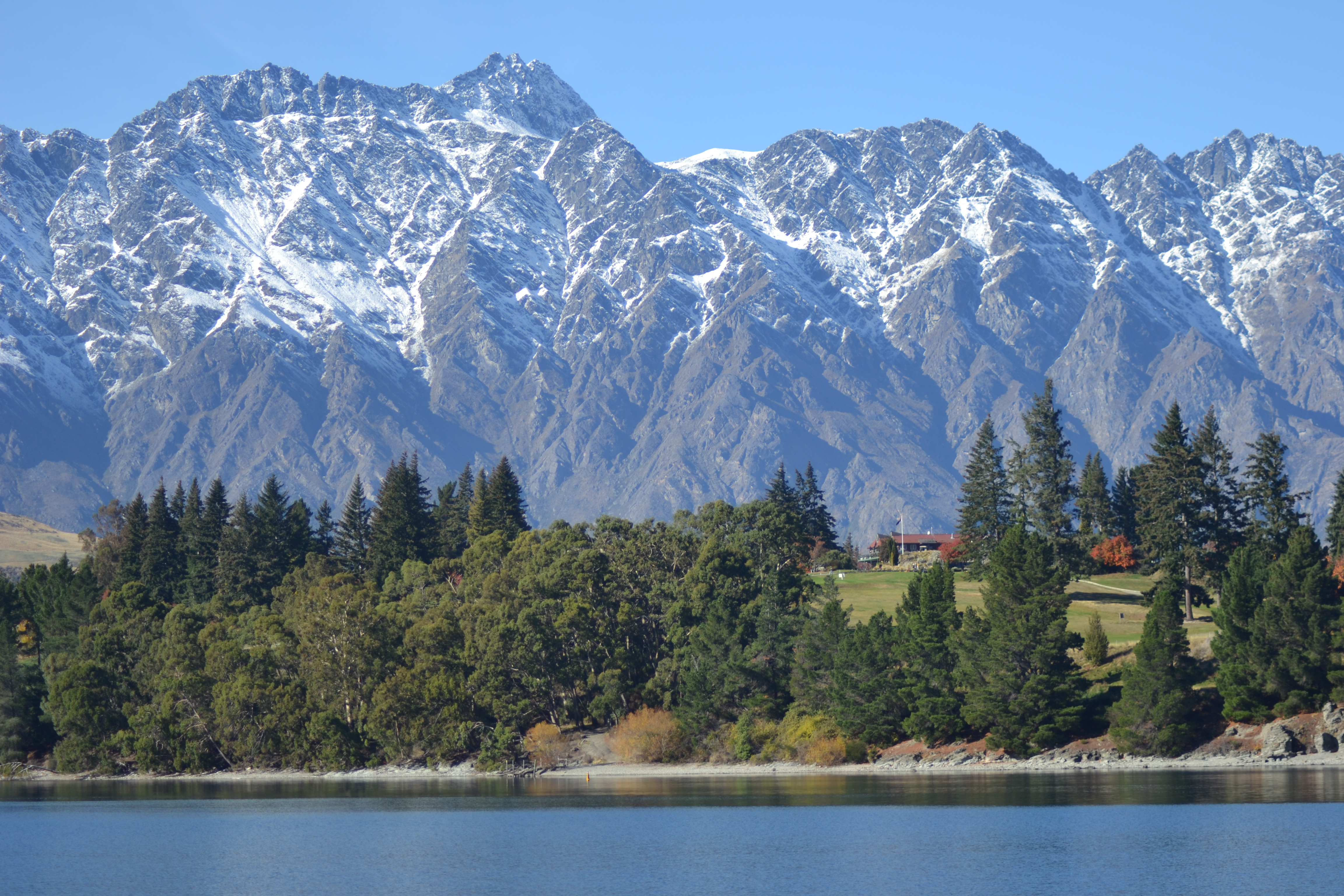
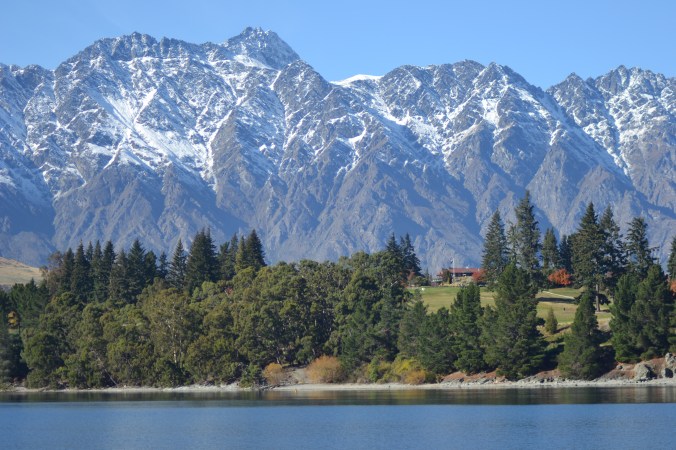
The clouds began to peel away as I waited for the cable car down. It exposed the creases and folds of the mountains and the glorious pallet of colours in the landscape: the dark, dark green of the pine forests, the vivid blue of the lake; the burgundy and green of the heathers; the purple-grey Remarkable Mountains with their white heads stuck in the residual clouds; the wine red leaves, the raspberry leaves, the yellows and oranges, and bronzes and tans; the lime green lawns and the yellow wild grasses. A steamship eased itself across the lake, a stroke of white on a canvas of blue, with a curl of black smoke trailing like a streamer from its funnel.

TSS Earnslaw was built in Dunedin in 1912 and has worked Lake Wakatipi ever since. In the early days, it carried sheep to remote farms which had yet to be connected by road. Now it carries tourists.

You can go stand in the engine room and get in the crew’s way if you like. (They will just shove past you.) The ship was built a long time before health and safety was invented, and the space is crammed with exposed parts which are hot, or sharp or moving. There are big brass gauges and oversize bolts and levers which need swinging on to move.

DSC_0152

A stoker humps coal into the belly of the engine, while another walks round with an oilcan and squirts everything he sees to stop it from seizing up. He turns wheels, opens vents, throws levers, and – after a busy five minutes – the engine begins to chuff and snort and shake. The engineer calls in to look important, wearing white overalls to show that he never has to do the grunt work himself. He points and gives orders and then flicks the telegraph to full ahead and the ship powers across the lake at four knots.

The sun stayed out but the temperature never crept much above seven degrees. The cold seared into my bones. It is a beautiful place, but I was rather glad when I ran out of time and had to head back up to Auckland.

© Richard Senior 2015
A Fresh Look at Bangkok

DSC_0210

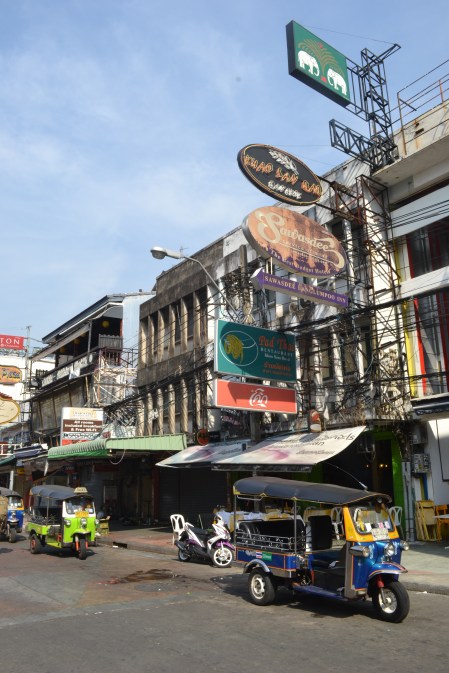
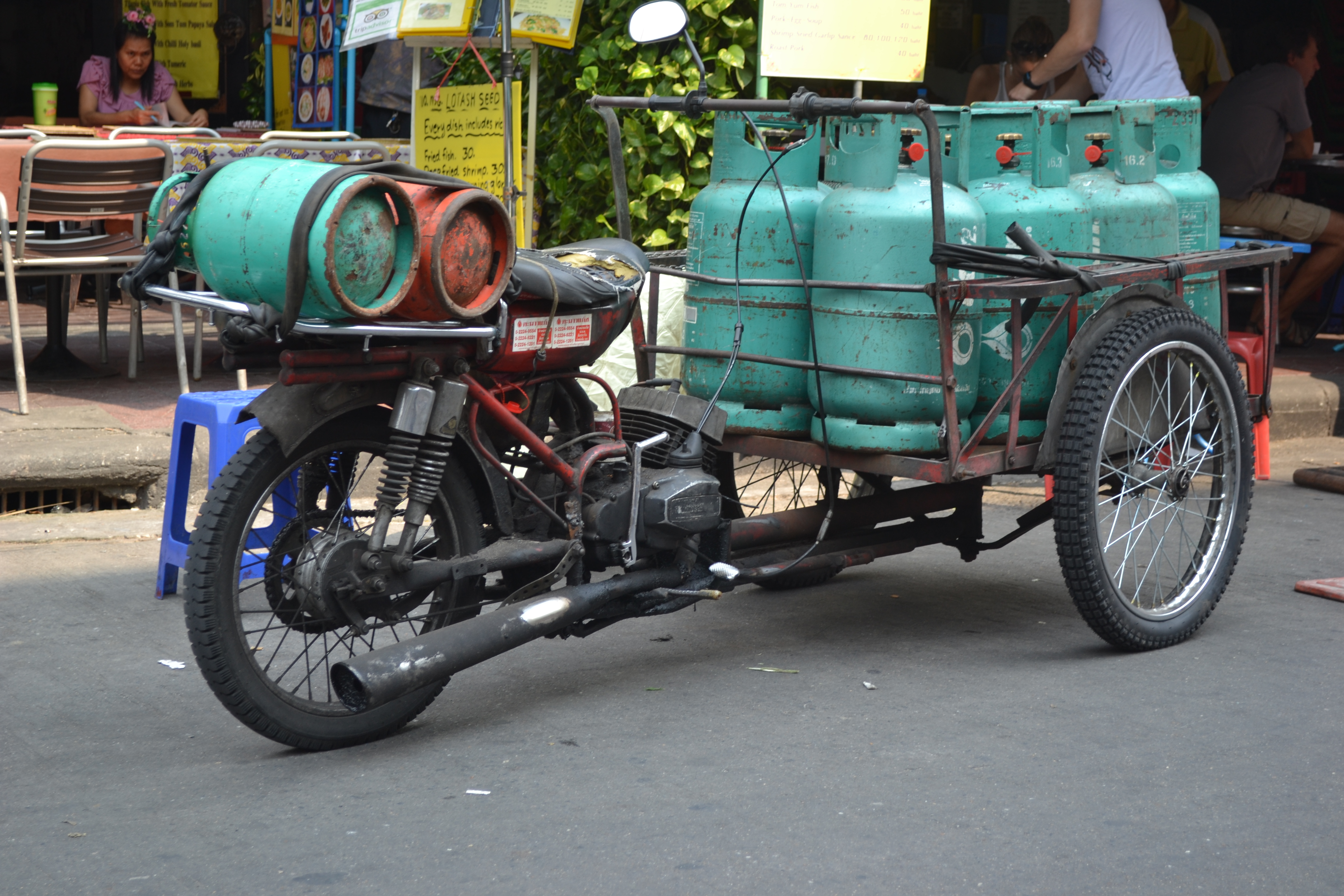
The fruit vendor woke me up when she drove her van down Soi Rambuttri, calling out through a megaphone attached to the roof. The brush seller came after her on a motor tricycle with a putt-putt engine and hee-hawing horn. He had bottle brushes, paint brushes, wire brushes, flue brushes, and every size and every colour of sweeping brush. But no one was buying brushes that morning.

The shopkeepers had rattled up the shutters a few hours before; the barmen had dragged the chairs and tables back onto the street. Travellers sat at a few of them with coffees, cigarettes and Lonely Planet guides; the rest were empty as yet. Tuk-tuk drivers were massing outside the guest houses, like reporters at the home of a shamed politician.

An early ice cream man pedalled past my window on a tricycle with an icebox slung from the handlebars and a tinny chime which suggested a theme from children’s TV. Dee-de-dee; dee-de-dee; dee-de-diddly-dee-de-dee. Behind him was a man with a hundred year-old pushcart piled up with watermelons, who dinged a bicycle bell on the handle as he shoved it down the street. No one was buying watermelons either.

DSC_0058

The street food vendors had claimed their pitches along Rambuttri, around the corner and down the next street. The pad thai, the spring rolls and satays are familiar enough to the travellers passing through, but the rest is new and not all of it welcome, least of all deep-fried crickets and bamboo worms. Thais like them well enough, but if you tell them we eat snails in Europe, they are disgusted.

By the middle of the morning, the roads were an anarchy of honking buses and beeping cars and crazy, fearless motorcycle taxis darting around them; and the pavements were crowded with people and everybody was constantly in somebody’s way. But there were none of the hundred explosions of temper which punctuate every British day, and too readily end in a whirl of fists and knocked over tables. No one seemed to mind very much if someone bumped into them or stood in their way for a moment. And it is easy to say something glib about Buddhist serenity, but it is as much about keeping face.

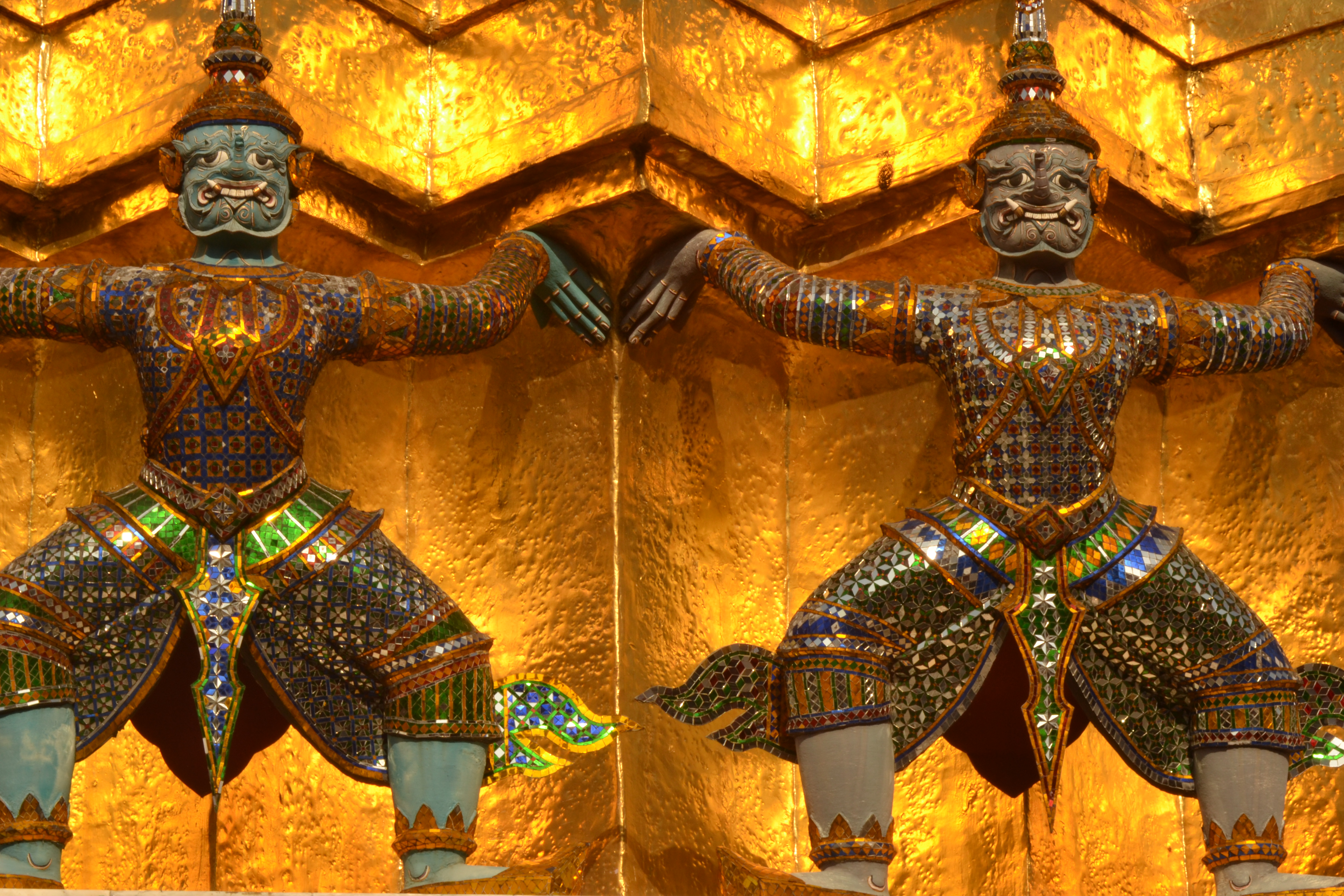
The soaring eaves and gilded stupas of Wat Phrakaew and the Royal Palace shimmered in the haze at the other side of the Sanam Luang public gardens.  There are something like 500 temples in the city and monks are as much an everyday sight as nuns in Rome and estate agents in London.

DSC_0610

There is a long stretch of pavement near the most important temples filled with dozens of stalls selling amulets. The devout believe that they keep them safe or bring them luck. There are effigies and statuettes, medals and coins, bracelets and pendants, stones and used false teeth. Collectors peer at them through magnifying glasses. Groups of monks browse the stalls. Travellers stop and finger the amulets and pretend that they know what they are looking at.

A few blocks away, there is a street on which the shops sells nothing but Buddhas. There are tiny Buddhas and enormous Buddhas and all sizes of Buddha in between; there are sitting Buddhas and lying Buddhas, fat Buddhas, thin Buddhas; Buddhas made of plastic and Buddhas made of steel. Then, next to that is a street on which every shop sells policemen’s caps.

Elsewhere, there are workshops crammed with boxes and drums, bicycle frames, engine parts, pieces of wood and old bathroom fittings, and right in the back there will be an old man engrossed in repairing a pocket watch or stripping an alternator down. Who knows what his business is? There is never a sign (even assuming you know a ช่าง from a ช้าง) and it is often hard to see any connection between the things inside; much of it looks like junk.

DSC_0020

I know that, a couple of miles downtown, there are forests of office blocks which could be in Manhattan, and malls which might be anywhere in Europe, and all your favourite multinationals; and I know that the younger Thais might speak idiomatic, American-accented English, and eat at McDonalds, and stream the same movies and listen to the same music as us.

Yet travellers are way too quick to write off Bangkok as ‘Westernised’. So many people said it to me, so automatically, that it was obvious it was no more a view they had come to themselves than when the man in the pub recites something he read in a tabloid about the economy.

For all that is familiar, there is a great deal that is not; and plenty is all but unfathomable for the average farang traveller.

© Richard Senior 2015
A Hostel Environment

DSC_0227

I was woken at six by the sounds of five people simultaneously stripping beds, emptying lockers and stuffing things into backpacks. Zip – rustle – bang! – thwock – zip – rustle – zip – clang! – zip –  thump, thump! – crackle – zip. 

But they whispered so as not to disturb me.

I had the dorm to myself for most of the morning until a big scowling bloke burst through the door. “Hey, mate; how you doing?” I said, and he glared and said “all right, mate” in a sepulchral tone which made it sound like a threat. Then he collapsed on his bunk, groaned and muttered, jerked and bucked and I wondered if he was drunk, or insane.

I left him to it and he was asleep by the time I got back in the early evening, and I crept around the dorm to be quiet, but I was obviously not quiet enough. “Fuck! Fuck! Fucking-fuck!” he said, as the sleep began to wear off, Then he sprung upright in the bunk and said, “Fucking-fuck, mate! Fucking-fuck!” as if I had just crashed into his car. It was some of the most creative swearing I have heard since a farmer near the village in which I grew up paused to swear in the middle of saying the name of the nearest town.

So I left in a hurry again and went up to the roof terrace where they were having a barbecue and stayed up there until late. Then, at four in the morning, Fucking Fuck’s mobile rang at the volume of a fire alarm and he took the call, had a loud conversation, stumped out and slammed the door.

I went back to sleep for ten minutes or so until I was woken by urgent hammering. I guessed that Fucking Fuck had forgotten his fob – I had done it myself a few times – but it was another, much older guy, who might have been Fucking Fuck’s father. “Is Andrew up yet?” he asked loudly, as if it were quarter to ten. Then he invited himself in and shouted “Andrew! Andrew?” prompting groans and sighs and symbolic turning over from all around the room.

I told him that Andrew had left already and I never saw either of them again.

© Richard Senior 2015
Journey through Zimbabwe, Part 4

DSC_0139

From Masvingo, we drove 150 miles west to Matabeleland and stopped in Bulawayo.

Like a ghost sign on a gable end, old Rhodesia is still plainly visible in the shabby-gentile second city. The Palace Hotel, where Henry Morton Stanley reportedly stayed in the 1890’s, is still open for business. “Scarcely suitable for gentlemen,” he is supposed to have said, “let alone ladies”. It is not as good as that anymore, though.

The joke in Rhodesia’s last stubborn years was that, when international flights came in, the pilots announced, “We are now arriving in Salisbury [Harare] where the local time is 1950”. But that seems like the distant future at the stately Bulawayo Club, with its verandas and courtyards, dark wood and heavy furniture, its chandeliers and hunting trophies, and its 120-year history of giving the right sort of chap a refuge from the wife, the children and hoi polloi: a place for brandy, cigars and snobbery.

DSC_0158

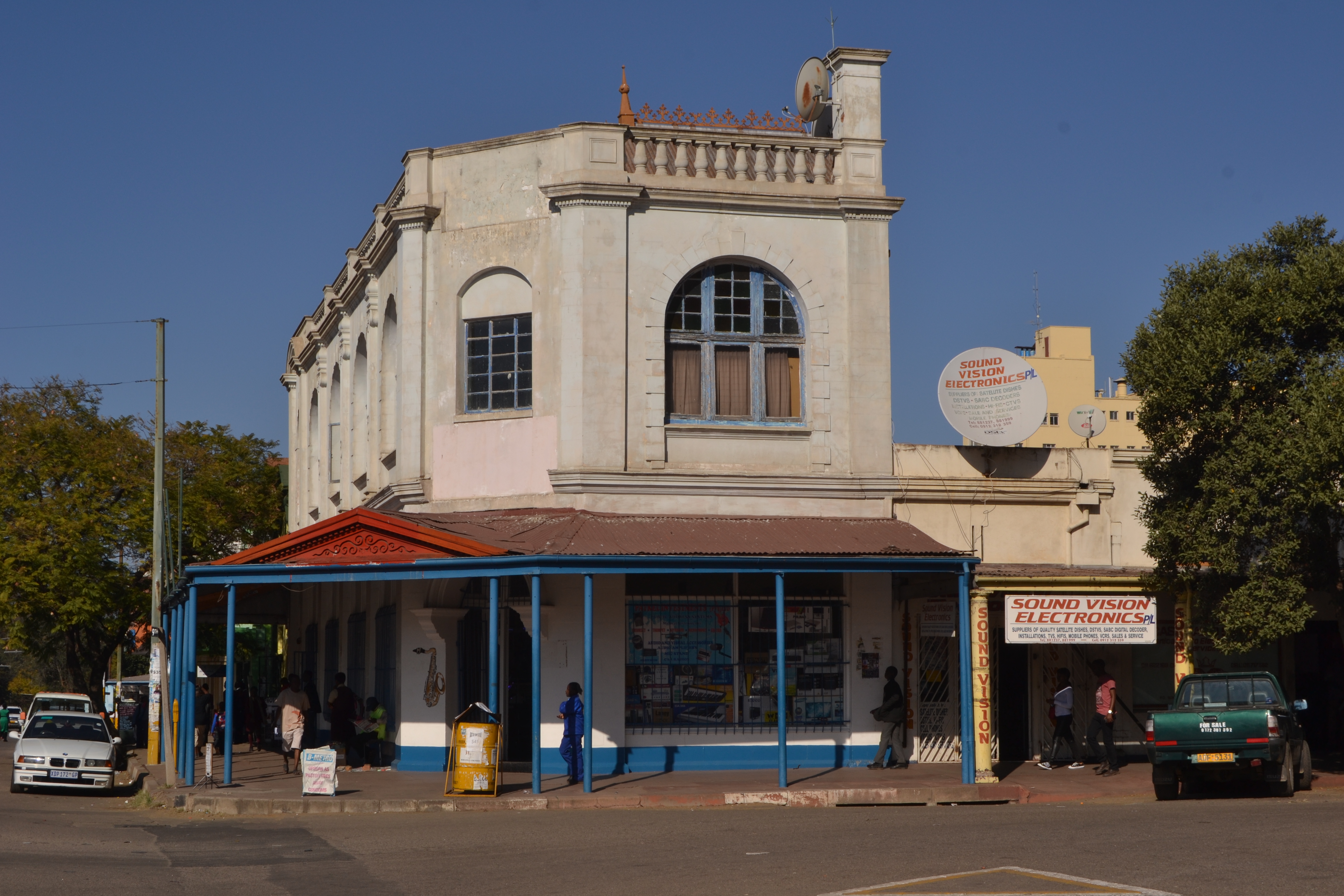
The surrounding streets are lined with parades of Edwardian shops with wrought iron walkways, and signs in Sixties typefaces swinging above the doors: “Le Style Fashions,” “Justin Smith (Pvt) Ltd, the Rexall Chemist”. The paint has faded, the ironwork rusted, the wood is beginning to rot, and the statue of Rhodes which used to stand in the middle of town was toppled long ago; but to outward appearance, little else has changed in the 35 years since Rhodesia was wound up and Zimbabwe came into being.

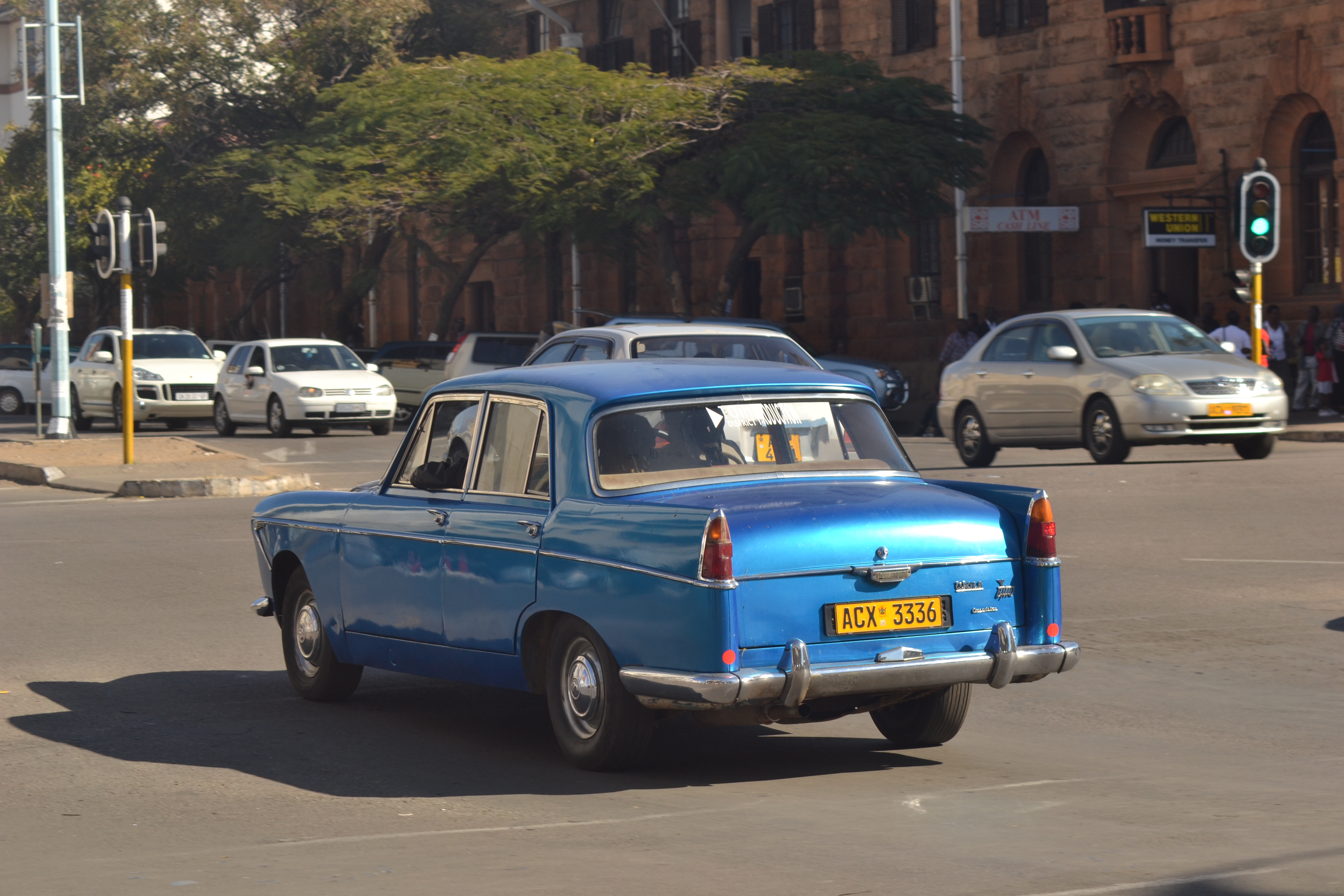
An old Wolseley growled past as I looked around the city centre: a rare classic in Britain, to be polished and taken to shows, but an everyday runabout in Zim. It must have been built sometime around 1960, when the British prime minister spoke in Cape Town of “a wind of change … blowing through this continent,” and signalled the end of the African empire, which entrenched Rhodesia’s white elite, whose prime minister declared that he would “never in a thousand years” agree to majority rule, which in turn led to 15 years of civil war and finally to modern Zimbabwe.

DSC_0129

© Richard Senior 2015
Journey through Zimbabwe, Part 3

DSC_0021

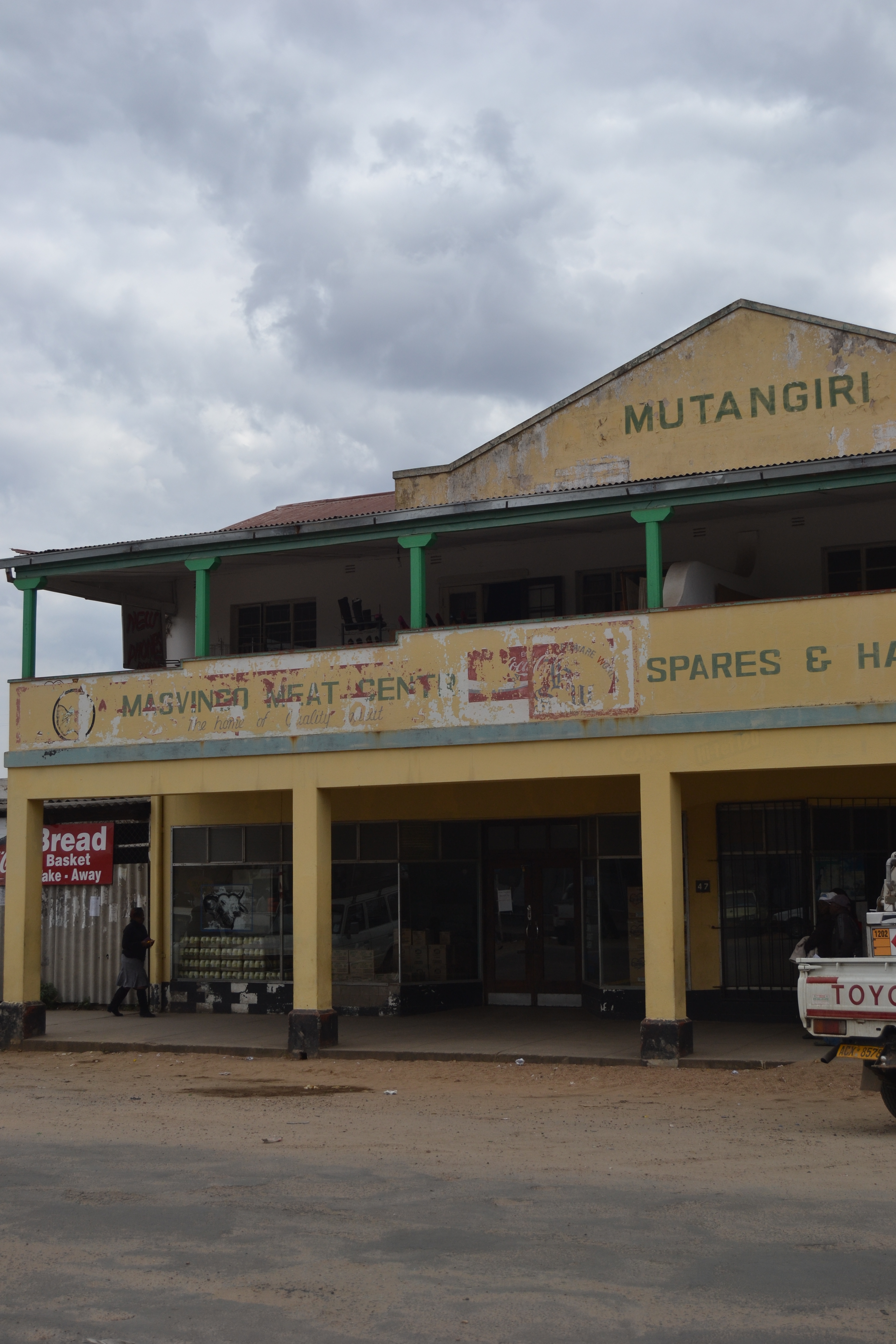
Masvingo is a small, dusty town of functional buildings with scabrous paint and signs mottled with rust.

It never amounted to more than a supply town for cattle ranchers, but it was the Plymouth, Massachusetts of the self-governing colony of Southern Rhodesia, later the unrecognised breakaway state of Rhodesia. Cecil Rhodes’ Pioneer Column set up camp there in 1890 and built the first colonial town. They called it Fort Victoria. The old watch tower and government buildings survive, hidden amongst the low-rise concrete from the back half of the twentieth century.

But, while Rhodesia’s history might have begun in 1890, Zimbabwe’s goes back centuries further. The state took its name from a ruined city to the south of Masvingo, known as Great Zimbabwe, a corruption of dzimba-dza-mabwe: great houses of stone. The oldest part was built around the time of the Battle of Hastings: the newest 400 years later, about the same time as Machu Picchu.

DSC_0052edited

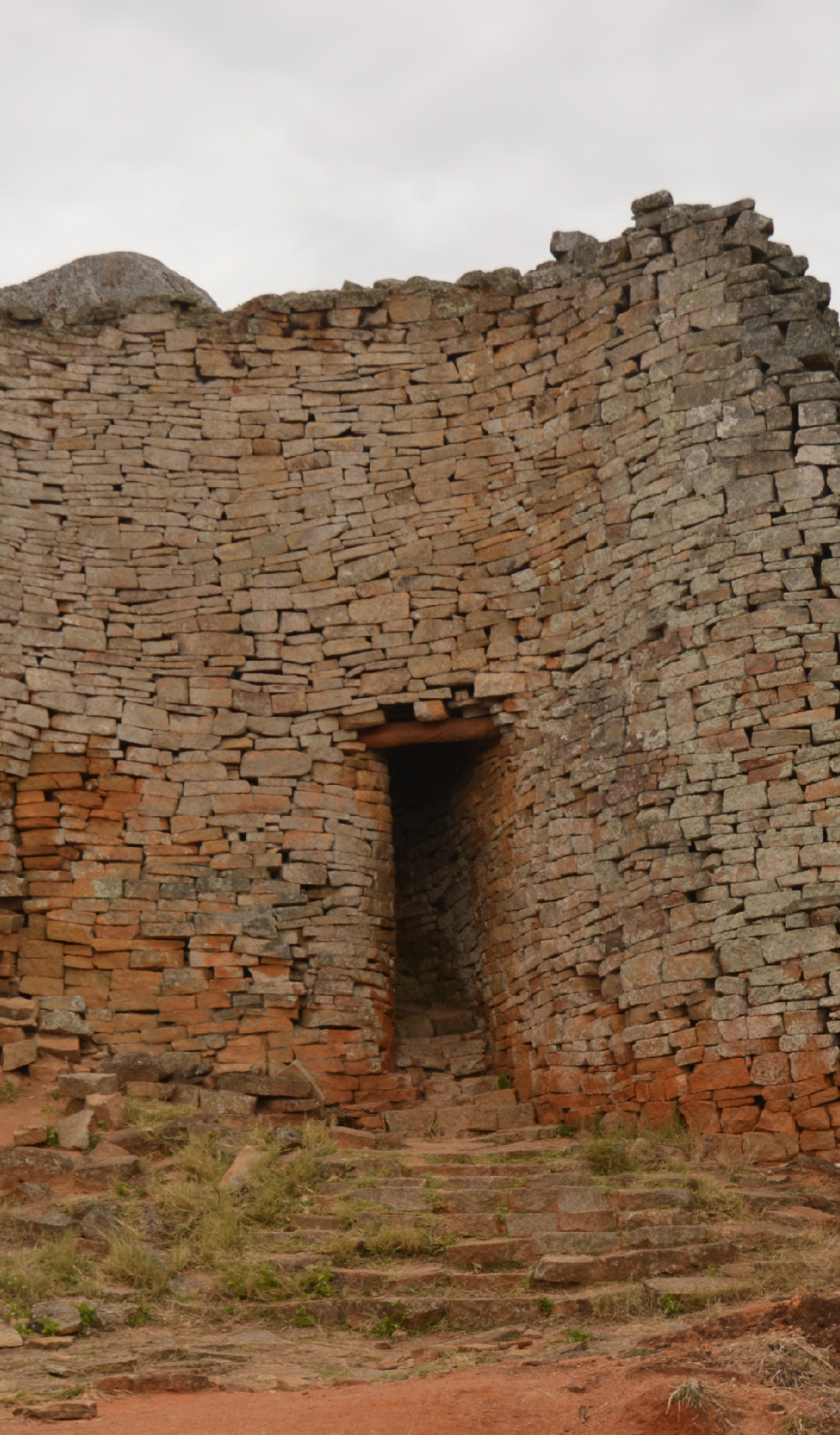
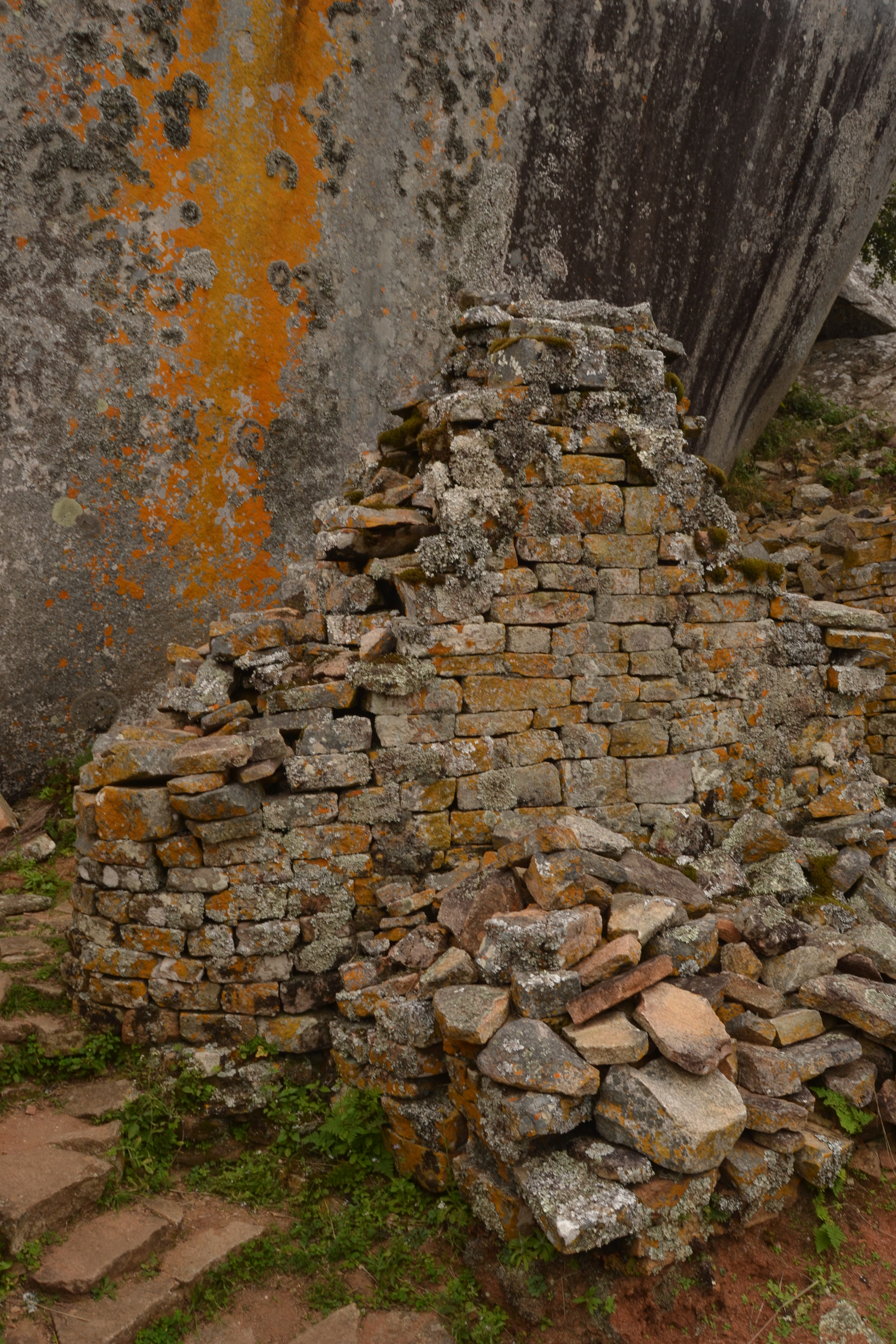
It is a fascinating site, sprawling over 1,800 acres – twice the size of Central Park – with smoothly curving dry-stone walls, speckled with lichen, rising up to 35 feet, and maze-like passages, and trapezoid doorways, and steps wending up between boulders balanced atop one another and emerging in the earliest part of the city – built ten centuries ago – at the crest of a hill overlooking the expansive valley.

It cannot be long before someone influential declares it the Must See sight du jour, and floods it with gushing, purple prose and insists you must see it at sunrise.

DSC_0061

© Richard Senior 2015
Journey through Zimbabwe, Part 2

DSC_0143

The suburbs of Harare look like Surbiton after a disaster. Large bungalows left to rot, gardens overgrown, swimming pools drained, empty double garages with the doors swinging open. The bowling green, tennis club and golf course are much as you would find in the Daily Mail heartlands of Britain, except that the bunkers are filled with the parched red soil of Southern Africa.

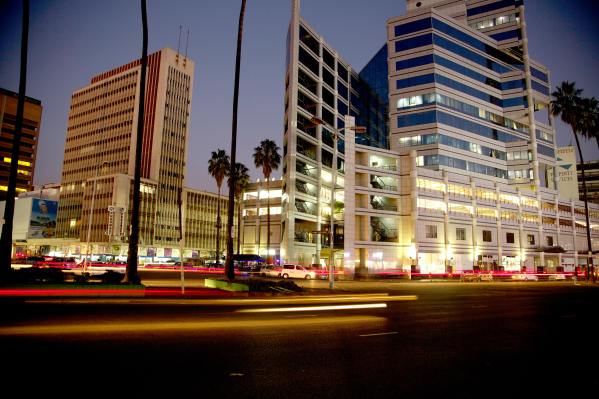
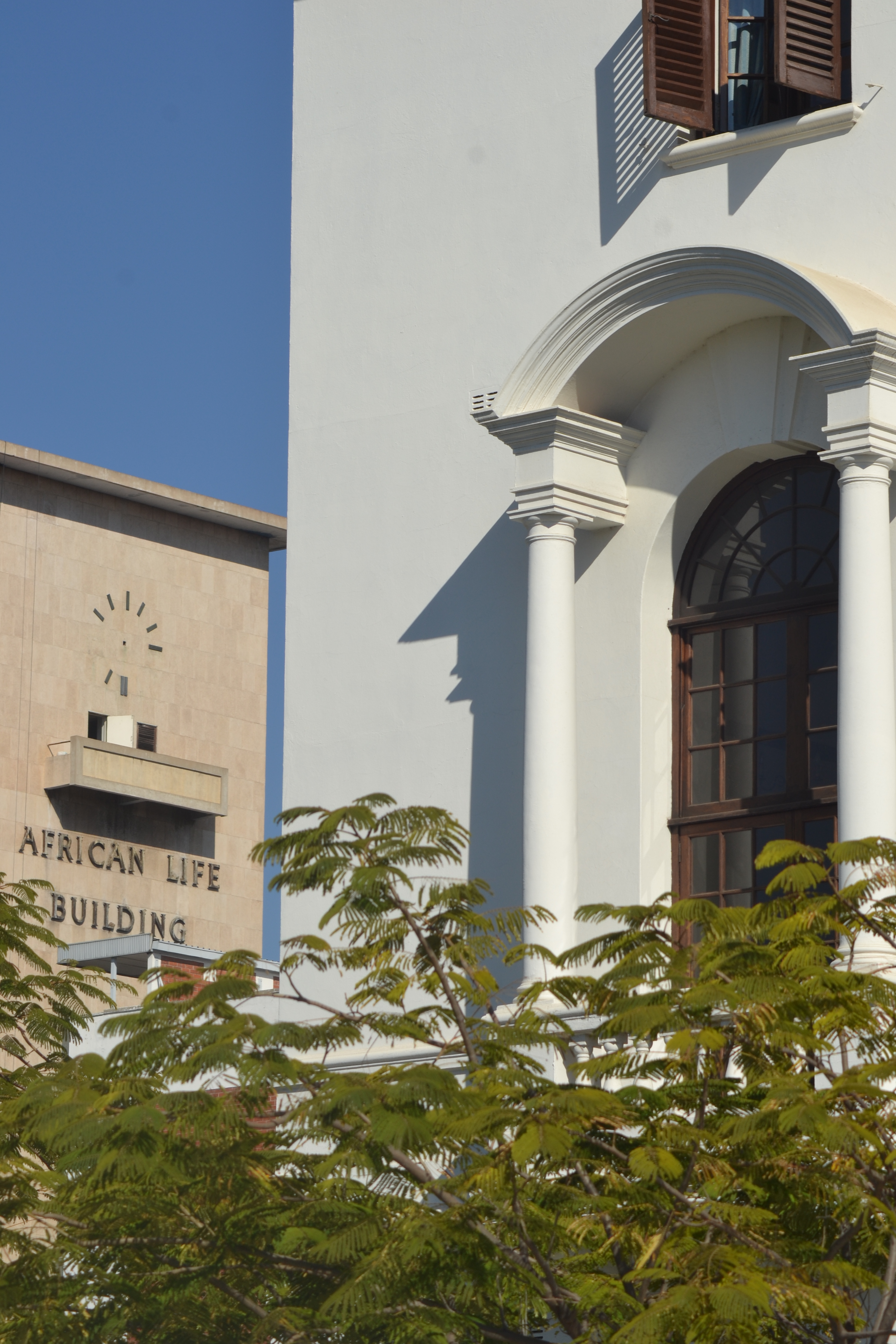
The city centre is grubby; the pavements are crumbling and cratered. Vendors lay newspapers out on the ground and weight them down with old car valves. The architecture seems stuck in a timewarp around the early eighties. But there are still a few colonial buildings, unloved and uncared for yet clinging on: the Art Deco Old Shell Building, the splendidly Edwardian Fereday & Sons on Robert Mugabe Road. The government owns the best buildings, though, and you photograph them at your peril. The journalist, Peter Godwin, wrote of a motorist pulled over and threatened at gunpoint for laughing. “You don’t laugh near the president’s residence,” said the angry soldier. “It’s against the law”.

tatenda-mapigoti-CtqY0-G72qg-unsplash

The ordinary people hurry past – without laughing – in tired pick-ups and tiny hatchbacks towing clouds of smoke, while S class Mercs stand in a line outside. There is wealth in Zimbabwe for a favoured few; and, if you look down Julius Nyerere Avenue, along the line of jacaranda trees, as the sun sets and reflects in the windows of corporate towers, and children saunter home in uniforms evoking an old English school, and a businesswoman strides in patent heels towards the Ernst & Young building, you will struggle to connect it with the ruined country you have seen so often on the news.

We snarled up in rush hour traffic as we headed south out of the city. If the traffic lights worked, no one took any notice, any more than they did of the bewildered policeman blowing his whistle until he was out of breath. The cars rushed to do battle at a crossroads, inching and honking to bully their way through. A pick-up bumped up onto the pavement, churned up gardens and squeezed down an alley and back onto the road further down. An ambulance, hopelessly boxed in, wailed in exasperation.

© Richard Senior 2015
Street scene: Photo by Tatenda Mapigoti on Unsplash

Dingoes and Dad Jokes on Fraser Island

DSC_0322

Fritz was from Austria but had lived in Australia for decades. He was a likeable bloke, although his jokes were all terrible, and he told them relentlessly and we were stuck in a jeep with him all day.  Troy, who drove the other jeep, was as Australian as Vegemite and didgeridoos. He was a big man with a bush hat and mirror shades, and a head full of imagery like “as busy as a one-legged man at an arse kicking competition”.

We trundled off the ferry as it docked at Fraser Island and cut through the rainforest, where Fritz pointed out scribbly gums and funnel web spiders’ nests, then stopped at a lake where the sun arranged shapes on the water and the others swam and I sat on the bank and got bitten by sandflies. Fruit, cheese, biscuits and Fritz’s bad jokes, then back in the Land Cruiser, back through the rainforest and onto the beach and a fast run down the creamy sand, watching out for the plane which uses it as a landing strip.

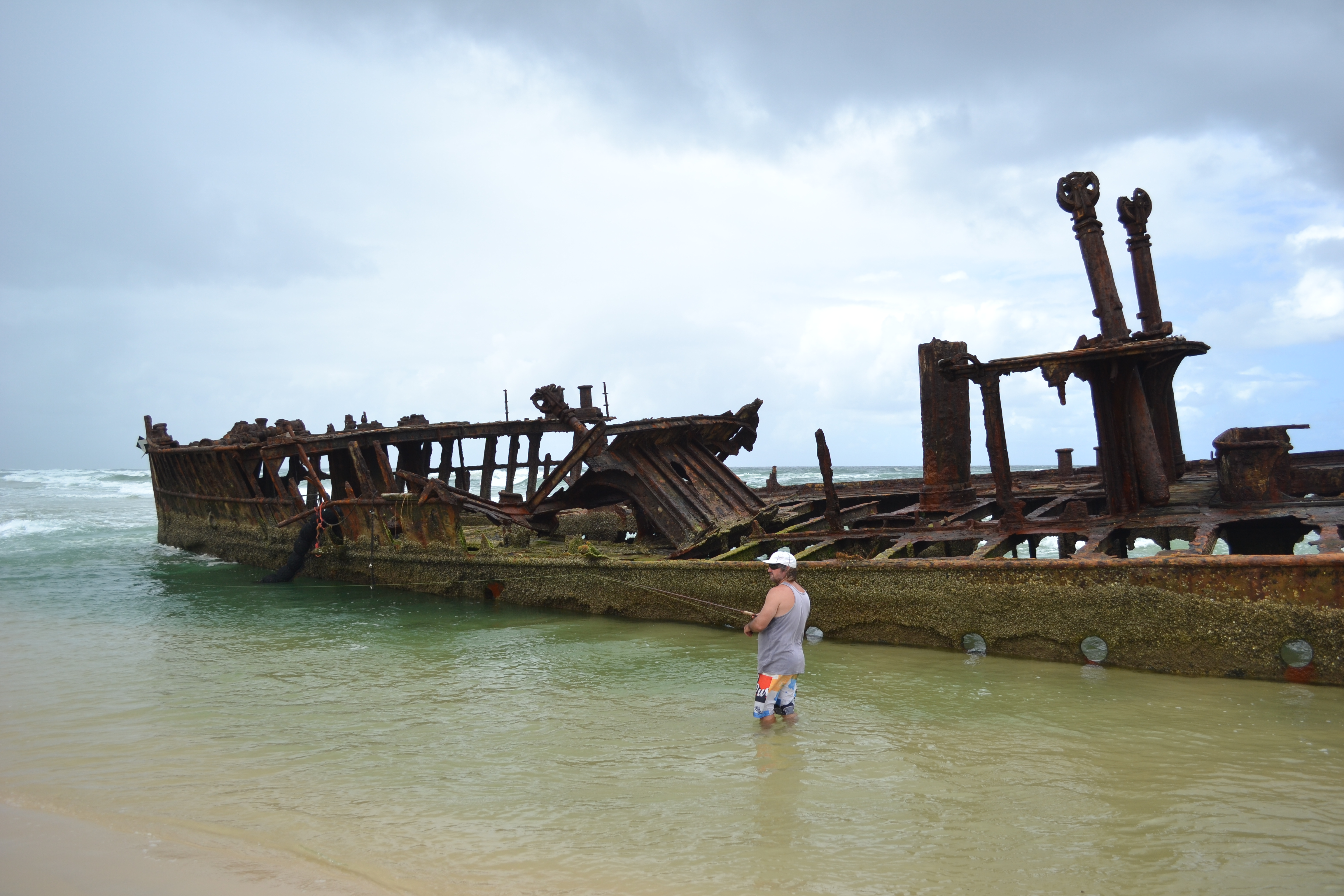
The sky went into a sulk and flung a few minutes of rain at the windscreen. We slowed to look at wild dingoes loping guiltily along the beach and stopped to photograph the wreck of the Maheno, a grand Edwardian liner which slipped its towline and beached on its way to the scrappers in 1935. No one could be bothered to shift it from there and it has been left to decompose.

DSC_0334

Then back in the jeep, speeding down the Seventy Five Mile Beach, slowing to bounce over half-buried rocks, then taking a hill at a run. The sky had cheered up by then. Sandwiches, crisps and beer for lunch.

“Grab some more food, mate,” Troy said.

“No I’m good, mate.

“Another beer then.”

“I’m good, thanks.”

“Does your husband know you’re out?”

We stopped again in the afternoon to clamber up rocks and look out across the frothing ocean, and get bitten by more sandflies; and then again to laugh at a tour bus which had got too close to the water and sunk up to its axles and was listing hard to port. Then hurrying to catch the ferry back to Hervey Bay.

© Richard Senior 2015