La Paz: Effigies, Offerings and Rebar

DSC_0909

The road from Peru meanders through a poetic landscape, along Lake Titicaca, up and over the mountains, past rivers and plains and glorious eruptions of wildflower. Then all at once you are in honking traffic in the apocalyptic satellite town of El Alto.

A smothering dust covers everything. Every building remains unfinished, and will forever, with rebar sprouting from the floors of notional upper storeys. Aymara ladies buy fruit through the bars on the doors of the shops. Legs protrude from old cars up on jacks on the pavement. Life-sized effigies hang from the lampposts with notices pinned to their chests reading, “This is what we do to thieves”. They do, as well. The 30 lynchings in the first 10 months of 2011 represented “a notable decrease,” according to an upbeat UN.

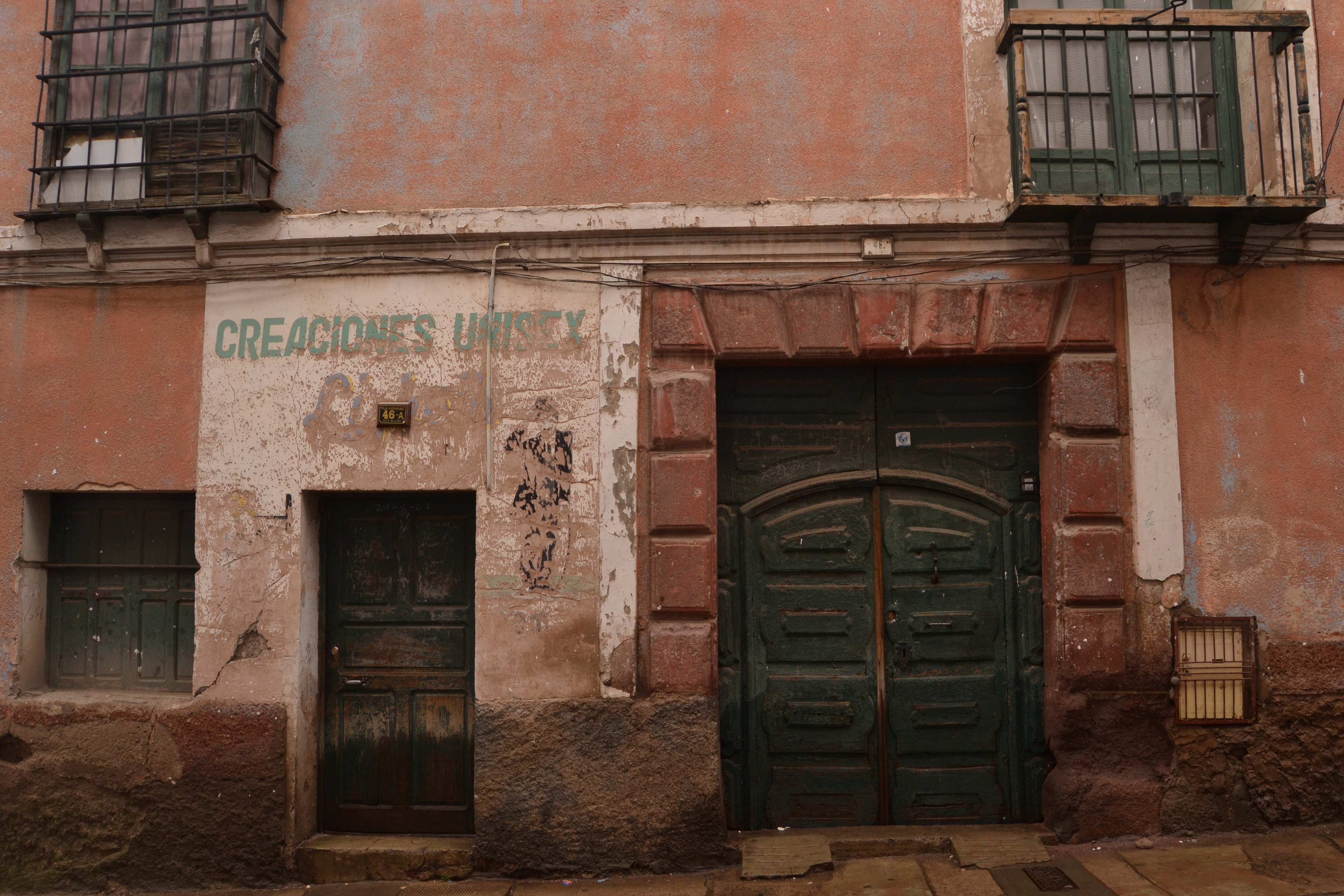
La Paz is picturesque in spite of itself. The first view from El Alto is a sea of ochre buildings embraced by high peaks, and there is a paradoxical beauty in what seems to be nothing but tower blocks. There is, as you see when you roll into town, more heritage than appears from above. The steep streets of sunken cobbles are lined with colonial buildings, crumbling, faded, covered with graffiti and torn fly-posters, but nonetheless photogenic.

There are numberless markets, but they can’t contain the Aymara vendors who spill out down the pavements and into the road. Stocky ladies in bowler hats kneel on sheets laid anywhere they find a space, selling fruit and veg, meat and fish, clothes and shoes, stolen electronics, herbs and potions, figurines and amulets, and llama foetuses to offer to Pachamama.

Oh, thanks for that,” I imagine her saying, in the tone you use when your cat lays a mouse at your feet.

(c) Richard Senior 2014

Classic travel scams #2: You Didn’t Pay for Last Night

DSC_0358

You didn’t pay for last night,” said the guy on the desk at the guest house in Vang Vieng.

Yes I did.”

“No.”

But I found the receipt screwed up in the bottom of my bag and that was the end of that.

I might have assumed that it was all a mistake if he had not then said exactly the same to the Israeli backpackers who went to the desk after me. They didn’t have a receipt and had a minibus waiting outside, so they had to pay again.

You didn’t pay for last night,” said the lady in the guest house in Luang Prabang a few days after that, and we both knew that I didn’t have a receipt because she had been on the desk all the time. I argued the toss but ended up paying again, and spent the rest of the day in a filthy mood because I ought to have known better by then.

(c) Richard Senior 2014

Escaping Patong

DSC_0115 (2)

I was tired of the babel of English, Russian, German and French, never Thai; of the fat farangs; of the burgers and Heineken; of the parasols laid out in uniform rows.  

So I walked away from the resort and over the hill, about as far as I could get in flip-flops, and stopped at a beach which was smaller and tattier than Ao Patong. It was dotted with stones and bits of dropped litter and things which had washed from the sea. There were no deck chairs or jet skis, and no hawkers came round with sunglasses, watches, ice cream or beer.  I was the only farang there.

I sat and I watched as the tide crept further up the beach and the sun began to fall and it drew a line across the sea and lit the wet sand at the margin. I watched the fishermen set off in their long-tail boats with old car engines spinning long propeller shafts dipped in the sea. The vendors up the hill were grilling fish and the smell drifted down towards me.

A pick-up arrived with a group of Thais in the back, students I think. They jumped out and scampered across the beach and jumped in the sea fully clothed. They were as happy as children, squealing and shouting in the waves, and splashing each other, until the driver beeped his horn and they scampered back and left.

The sun had slipped further by then, backlighting the clouds and silhouetting the fishing boats and the mountains behind them. I could see across to Ao Patong, where the deckchairs were still laid out in neat rows, and the jetskis still chased across the water, and a parasailer floated a few hundred feet above a powerboat tearing round the bay. It was too far away, though, for the English and Russian and German and French voices to reach me, too far away to pick out the hawkers selling sunglasses, watches, ice cream and beer.

I stayed until the last of the sun leaked from the sky and I could barely make out the mountains and boats in the distance. Then I made my way up to the street food stalls and bought fish and rice and a Singha beer and ate at a table with locals.

(c) Richard Senior 2014

Getting Stoned in Kenya

phone 27 236

Everything changed when the police started shooting.

High school students had blocked the road to Namanga, so no-one could cross the border. They were protesting because their school had been waiting five years for a bus to be delivered. Trucks and cars were backed up on each side of the road. Drivers stood around chatting and texting their mates. The protesters danced and chanted. One boy pogoed high in the air, as if performing a set piece for tourists. We jumped out of the bus to enjoy the mid-morning sun. Maasai herdsmen strolled along the track by the side of the road in scarlet robes; they carried traditional knobkerrie clubs in one hand, but one held a mobile phone to his ear with the other. A snake nosed out of a bush. Meerkats sat up and took notice then vanished. A vulture settled on an acacia tree.

Then the police arrived. There were half a dozen of them to fifty or more protesters, but they were just kids and the policemen were big, intimidating men; and they had automatic rifles, tear gas and riot shields. Disperse and go home, the senior one said, or words to that effect in Swahili. But the protesters carried on chanting and dancing. The drivers carried on chatting and texting their mates. We carried on enjoying the sun. The vulture left its perch.

The policemen were frustrated at being ignored and started firing over the heads of the protesters, who scattered, except a boy of somewhere around thirteen who lay on the road in a puddle of blood. Someone said he was dead; someone else said just badly injured. He had been shot; no, hit by a rock; no, trampled by fleeing protesters. No one really knew what had happened.

We got back on the bus in an orderly panic and the drivers melted back to their cars. Then the riot began. The protesters flung stones and they thumped off riot shields. The police replied with tear gas. But the tear gas ran out before the stones and the police sprinted across the plain out of sight.

The protesters, then, stormed down the road, stopping to pick up more stones, determined to throw them at someone. When they stopped level with the bus, we dived onto the floor and the stones came through every window. I held my daypack over my head while more stones hammered into the panels beneath the windows and a few landed inside. A chunk of compacted glass went down the back of my shorts; I was bleeding from a cut on my arm. More protesters passed, right by us, banging on the side of the bus as we stayed down on the floor and hoped they would not try to get in.

Then they were gone and it was quiet and we got up and abandoned the bus and walked to a nearby campsite, emptying the glass out of our clothes as we walked. The road was clear within a few hours and we crossed into Tanzania a bit later than planned and I never found out for sure what happened to the boy who was laid in the road.

No doubt the school is still waiting for its bus.

(c) Richard Senior 2014