The narrator of Alex Garland’s The Beach fancies himself as a serious traveller. He is a voyeur of riots and extreme poverty and sneers at the ‘touristy’ Lower Gulf Islands. It is satire, of course, and readers will notice that he sees nothing of Thailand beyond the backpacker ghetto of Khao San Road and what amounts to a private island for young middle class Westerners.
Garland said, of the sort of travellers his book was lampooning, “These people say they aren’t tourists but travellers and think they are special, more sensitive. It’s stupid. They’re not”. The Beach set out to explode their pretensions. But, as with Wall Street and La Dolce Vita, the point is often spectacularly missed.

There are numberless features exploring the supposed difference between tourists and travellers. It clearly matters a lot to some. There are graphs, there are charts, there are tables and pictograms to help you understand. There are lofty quotations from people like Chesterton: “The traveller sees what he sees, the tourist sees what he has come to see”. But almost everyone agrees with Evelyn Waugh that “the tourist is the other fellow”.
If you like being patronised, there are quizzes you can take to see which side of the line you fall; and if –heaven forbid – it turns out that you are only a tourist, WikiHow has a 9-step guide, complete with pictures, to teach you how to become a traveller.
As far as the dictionary is concerned, all of us are travellers (people who travel) and most of us are tourists (people who travel for pleasure) and I generally use the words interchangeably. But I did the quizzes out of curiosity and found that I am 80% traveller according to one, but only narrowly so according to another, and merely a tourist according to a third. None of them was interested in how much I had actually travelled or what I had learned on the way. This is a sample question:
Which do you prefer?
[ ] Having a map
[ ] Having no map
If you prefer to have a map, it suggests you are a tourist.
If you prefer not to have a map, it suggests you are bonkers.
Travellers, says one source, like WiFi connections, while tourists dislike bugs. They cancel each other out in my case. In everyone else’s too, I should think.
Travellers apparently blend in to their surroundings. They do this by wearing Chang Beer singlets in Thailand, chullo hats in South America, Masaai wraps in East Africa and hiking boots with zip-off trousers everywhere else.
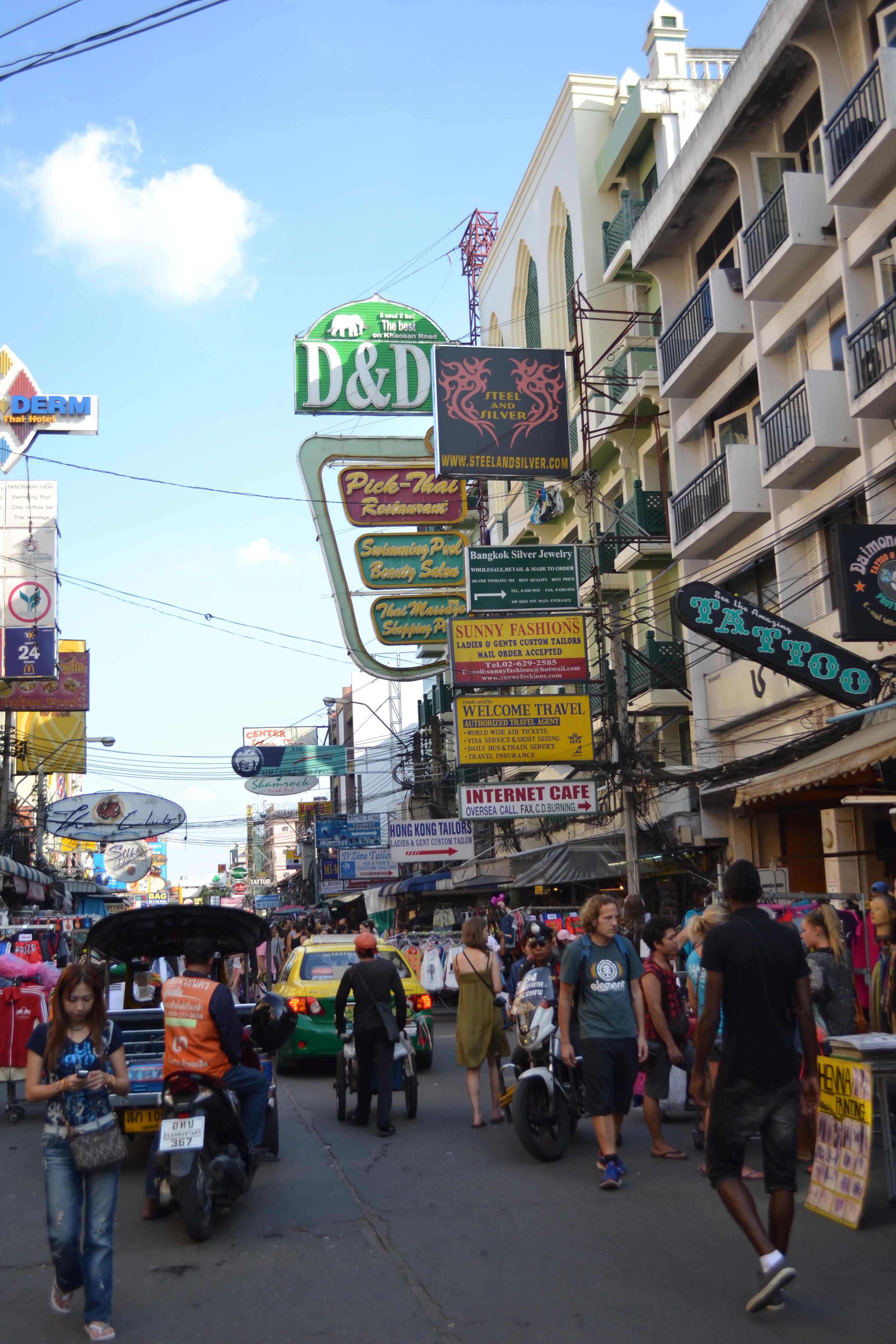
Travellers, we are told, immerse themselves in the local culture, so if you approach a backpacker on Khao San Road with the routine Thai greeting gin khao reu yung (have you eaten yet), he or she will respond with gin khao leauw (I have eaten already), then tell you how to make yum woon sen and start a debate about Thaksin Shinawatra.
It seems to be widely agreed that travellers are not interested in sights, and that this makes them better people. One source scoffs at “buildings of note,” while another has a go at art galleries. It must follow that the tourists who head straight for Macy’s are closer to being travellers than those who go look at Brooklyn Bridge and the Met.

But there are sights and there are sights. The sort of traveller who would laugh in your face if you told him you had spent a morning at St Peter’s Basilica would insist that you need at least a week for the temples of Angkor, if not a month, a year, or several lifetimes.
Some good points are buried within all the snobbery. There is more to the world than the twenty dollar sights, and a ragtag market can be more rewarding than a world-famous cathedral. But to refuse on principle to see the big sights is surely as myopic as refusing to see anything else. If you want to learn something of the local culture – and it is not work, so no one should say that you have to – you need, for sure, to see how ordinary people live; but you need to know something of the history, the politics and religion as well, and that will take you back to the sights which appear in the guidebooks. Better just to go and see the things which interest you and skip the ones which don’t. Never mind whether the guidebooks gush or someone in a bandana scoffs.
Respecting local customs is just good manners, and recognising that things which are different from home may not be worse is about being open-minded. There is no need for an artificial distinction between tourists and travellers.
(c) Richard Senior 2014
 beats the office