Eating up Vietnam #4: Huế


Copy of DSC_0079e

Mr Cu is an excellent photographer. The walls of his restaurant, the Mandarin Café, are crammed with his shots of the people and places of Vietnam. He is a sociable chap, speaks good English, and makes a point of chatting to his customers. He gives them all a postcard of one of his photographs.

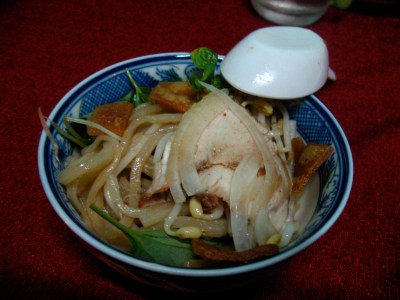
I stayed next door, in the cheekily-named Google Hotel, and stumbled into the Mandarin Café each morning for coffee and a bowl of the city’s famous noodle soup, bún bò Huế.  It is made with beef shank and pigs’ trotters simmered with lemongrass, onion and shrimp paste, then flavoured with fish sauce, sugar and a wallop of chilli powder, poured over round noodles and sprinkled with herbs.

Huế was Vietnam’s imperial capital, until the last emperor abdicated at the end of the Second World War, and there are restaurants across town offering elaborate, expensive, banquets of dishes which they claim were traditionally served to the imperial family, all arranged into the shape of peacocks, elephants and such like. It is impressive enough, but not really what I was there for. The street food interested me a whole lot more.

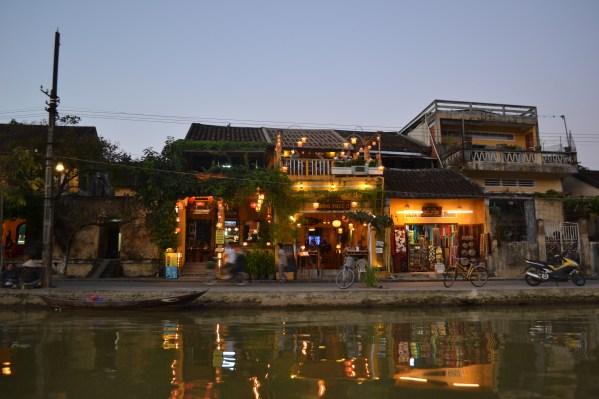
On the banks of the Perfume River, in the shadow of Eiffel’s Trường Tiền Bridge, there is a bustling night market with food carts and picnic tables crowding the pavements. The grills smoke, the prawns sizzle, the vendors shout, the customers jostle, and the aromas fill the air. I ate banh khoai – happy pancakes – as I nosed round the stalls.

The batter is made with rice flour, a good pinch of turmeric, which turns it yellow, and sugar and carbonated water which help it to crisp up on the hotplate. It is stuffed, then, with prawns, pork belly, beansprouts, spring onion and shredded carrot and folded like an omelette.
DSC_0038

I happened upon a restaurant, the next day, a few blocks from the river, which looked run-down enough to be good and ordered nem lui, ground pork and pork skin mixed with garlic, sugar and fish sauce, shaped into sausages, skewered with lemon grass and grilled over charcoal.

It came with a pile of rice papers, lettuce leaves, herbs and cucumber slices and a deceptively complex dipping sauce made with hoisin and fish sauces, chopped pork liver, toasted peanuts and peanut butter. The idea is to force the meat off the skewer with your chopsticks, roll it and some of the leaves and vegetables in the rice paper, then dip it in the sauce.

I got so engrossed in poking about in the ruins of the imperial citadel that I forgot all about having lunch, but bánh bèo from a roadside stall kept me going until evening. These delicate steamed rice cakes are topped with a mixture of chopped prawns and crumbled dried shrimp, pork crackling and sliced spring onions and dressed with nuoc mam sauce, made with rice vinegar, fish sauce and sliced chillies.

Dinner, then, was cơm hến: a bowl of rice topped with tiny clams, sliced spring onion, julienned apple, crispy pillows of fried pig skin and a handful of herbs, served with a jug of clam broth to add to taste.

I had eaten well in Huế but could not help thinking, as I continued north, that I had only tried a small sample of its regional dishes. Never mind. There was Hanoi still to come.

© Richard Senior 2016

Being on the Market in Busan

DSC_0192

It is an imposing modern building on the waterfront in Busan in the south-eastern corner of Korea. The sides are green plate glass; the roof is swooping steel and evokes a flock of gulls in flight. The ground floor is the main hall of the Jagalchi Fish Market, the biggest in South Korea. Above it are six floors of restaurants, below it a two-storey car park.

Casual visitors browse the stalls alongside the trade buyers; they choose their fish and take it upstairs to one of the restaurants, where the chef will gut it, skin it, slice it and send it back to them raw with half a dozen side dishes. This is hoe, South Korea’s answer to sashimi.

The market spills out into the surrounding streets and extends for several blocks. The first world slickness of the main building disappears outside, where the stalls have all the picturesque chaos of a traditional Asian street market.

DSC_0212

A man sits on an upturned crate, his face hidden behind a wide-brimmed hat, gutting and salting mackerel. Formidable ladies in visors and wellingtons squat at stalls under colourful umbrellas either side of the lanes. Behind them are haphazard piles of Styrofoam boxes, plastic bowls, carrier bags and filleting knives.

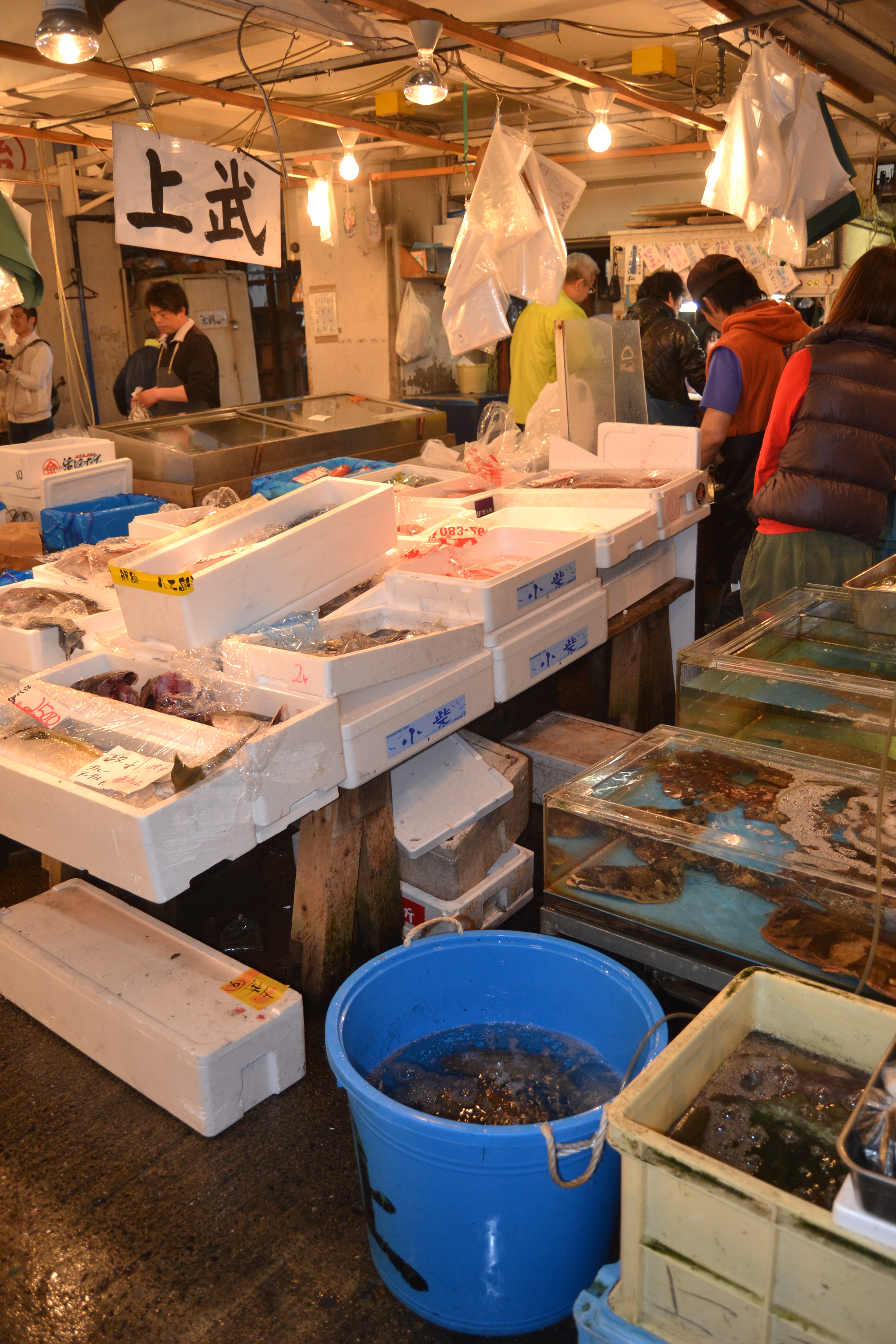
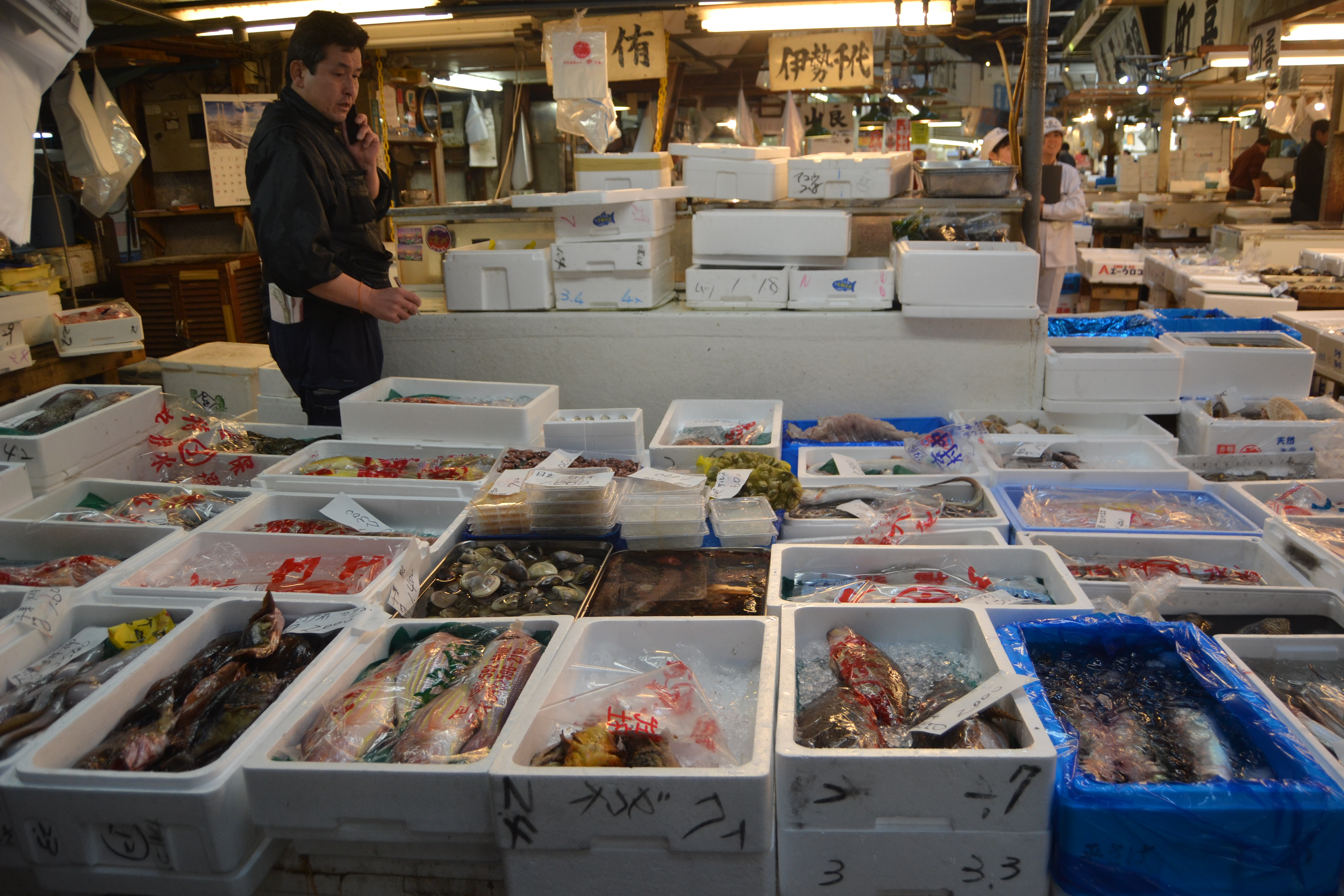
There are fish laid out on plastic sheets draped over planks balanced on buckets: grey mullet, red snapper, flounder, porgy, halibut, shark. There are octopus kept alive in bowls of percolating water; and baskets of fish heads; and every sort of seafood: shrimps, prawns, mussels, clams, sea cucumbers, abalones, sea snails, occasionally squirting jets of water at passers-by like kids with water pistols. There are stacks of jars with baby crabs fermented in chilli paste; and racks of dried squid; and bowls of seaweed, and bottles of chilli sauce.

Shoppers amble up and down the lanes, stopping to look a fish in the eye, peel back its gills, open its cavity, question the woman on the stall. Sometimes a scooter bullies its way noisily through the crowd.

DSC_0208

There are seafood restaurants, where the stalls peter out, with little rooms inside and big tanks outside, piled high with spider crabs and lobster, or a writhing mass of eels. It is rare to find English spoken or written and you are reduced to pointing and guessing, but whatever you get is bound to be fresh and will probably be cheap.

Jagalchi is not – yet – a tourist attraction on the scale of Tsukiji across the Sea of Japan in Tokyo, much as the tourist board tries to talk it up. It is just as rewarding; but no one important, as of yet, has endorsed it as a Must See sight, so it never appears on bucket lists and the tourists come in twos and threes instead of by the coachload. There is no need to restrict entry to certain times or hand out English language maps at the gates or post lists of things which the visitor should refrain from doing.

I was the only Westerner there and the only visitor with a camera. The rest were just trying to buy dinner, and I was trying not to be annoying.

© Richard Senior 2015

Eating Up Vietnam #3: Hội An

DSC_0981

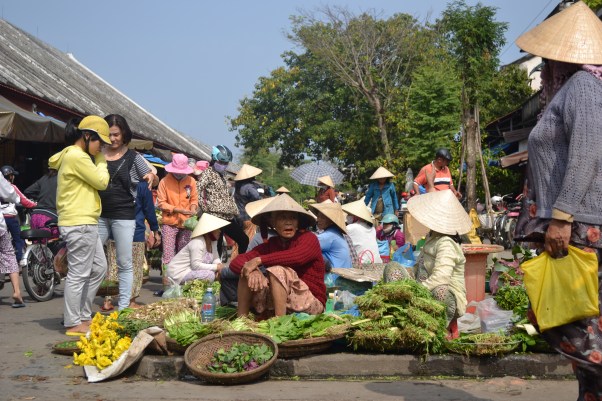
We went first to the market to pick up ingredients. Women in silk trousers and conical hats sat surrounded by baskets piled high with limes, spring onions, garlic bulbs, leafy herbs and turmeric roots. Shoppers weaved between stalls on their scooters.

Back at the cooking school, Hanh gave us each a booklet of recipes and a job to do. I started shredding the unripe papaya, Scott did the same with the carrots and Melissa assembled a dressing sauce with the familiar blend of lime juice, sugar, fish sauce, garlic and chilli.

Every country in Indochina has a take on green papaya salad. The Thai version, som tam, is well-known in the West: the others, not. Vietnam’s món gòi đu đu, is similar but simpler and lacks the conflagration of chillies. Just coat shrimps with paprika and pan-fry fleetingly, then toss with shredded papaya and carrot, mint and sesame seeds in the dressing and garnish with peanuts and onion flakes.

Once the salad was prepped, we started on gỏi cuốn, or ‘fresh’ spring rolls. It was just an assembly job after we had shredded a cucumber and carrot and squeezed the liquid from each. Soften the rice papers briefly in water, dry them off, and roll them up with the shredded vegetables, shrimps, chopped mint and onion flakes, then serve with a dipping sauce.

DSC_0968

Richard, did you say goodbye water,” said Hanh, “because the rice paper still look wet”. I stopped, patted it dry some more, and continued.

We cooked aubergines, then, with a technique more commonly used for fish. Peel, quarter and briefly deep-fry the aubergines, then roast them in a clay pot with spring onions, paprika, sugar and soy sauce until it caramelises. Garnish it with chopped coriander and serve with rice on the side.

The phở was just about ready by the time the aubergines were on the heat. We made a simplified version of this well-known noodle soup with the stock extracted from beef bones furiously boiled for twenty minutes – it is better simmered for an hour or more – with sugar, ginger, coriander, star anise and shallots. We coated a beef fillet with chilli paste and sugar and left it to marinate while the stock was cooking, then sliced it and served it with beansprouts, mint and peanuts and the stock poured over the top.

Hội An has a noodle dish of its own which I like even better than phở. Cao lầu is made with pork shoulder marinated and roasted in the Cantonese way, flat noodles, a generous handful of leafy herbs and pillows of deep fried pork rind. They will tell you in Hội An that it can only be made with water from an ancient well in the town, which is obviously not true, but I never saw it on menus elsewhere.

Cao_Lau_Hoi_An

There is a story, too, about bánh bao vac, or white rose as it is called on English menus. They say that the recipe is a secret, known only to one family which has handed it down the generations and supplies every restaurant in Hội An. It sounds to me like something they have made up for tourists. Surely any good chef could work out what was in it and try different quantities until it was right. But, again, I never saw it anywhere else but Hội An.

White rose is half a dozen rice flour dumplings, stuffed with shrimps, onions and seasoning, topped with deep-fried shallots and served with a sweet dipping sauce. They are much lighter than the Chinese-style dumplings you find all over Asia, and made me think more of tortellini. They are not exactly white and they look nothing like roses.

Cá kho tộ (fish in clay pot) is not a local dish. It is on menus throughout Vietnam. There are any number of variations but the basic idea is to roast snakehead fish, or similar, in a clay pot with a counter-intuitive caramel sauce. I ate it throughout Vietnam, but it was never quite as good as it was in the courtyard of a lovely restaurant overlooking the river in Hội An.

© Richard Senior 2015                     

Cao lầu image: By Dragfyre (Own work) [CC BY-SA 3.0 (http://creativecommons.org/licenses/by-sa/3.0)], via Wikimedia Commons

Eating Up Vietnam #2: Nha Trang

In Nha Trang the hawkers were always there but I did not notice them anymore. They sold friendship bands, cigarettes, playing cards and everything else I could manage without.

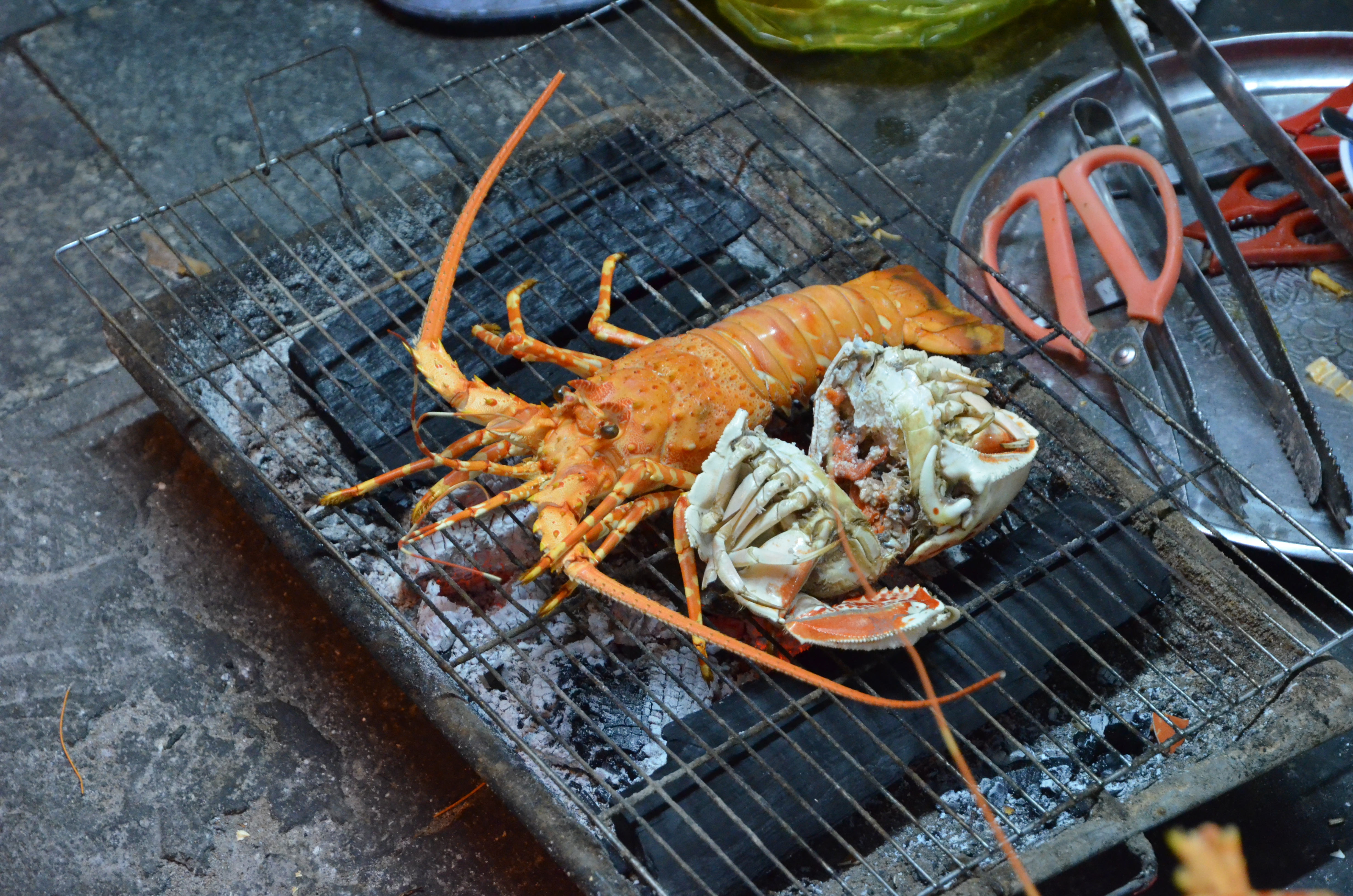
But as I sat on the sand and gazed idly out at the South China Sea, I noticed a lady in a conical hat with a pot of cooked lobsters hanging from a yoke on her shoulder. I got up and followed her across the beach, caught up and asked her how much. “Hundred thousand Dong,” she said. Just under three pounds; four and a half dollars, US.

She segmented the lobster, so the meat was get-at-able with chopsticks, and halved a lime and squeezed the juice into a pot and stirred in pepper to make a simple dipping sauce. It was as much as the lobster needed.

I wandered over to the fruit vendor later in the afternoon, just as she was about to pack up, and I only wanted a pomelo, but she stuffed a bag with two of those, a dragon fruit, a couple of bananas half a dozen mandarins, and nearer a dozen rambutans. “No, no,” I said; “I can’t eat all this”.

Okay for tomorrow,” she insisted and forced the bag on me. I did my best with it that afternoon and finished the rest in the morning, sitting on the beach and peeling fruit with my Swiss Army knife.

Somewhere around midday, an old lady arrived and laid down her yoke and began to set out her stall. She lined up four pots, one filled with spiny lobster, a second with crabs, a third with tiger prawns and a fourth with sea snails, then shook ice onto platters and topped each with a little of the seafood and placed them on top of the pots. She lit the charcoal in a cast iron pan suspended from the yoke, laid a grill over it and let it burn until the charcoal glowed red and grey.

This time, I got a lobster, a crab, two tiger prawns and sea snails dotted with curry paste for my 10,000 Dong. For the same money in London, I would get a miserable sandwich from one of the corporate chains and the mayonnaise would splat on my shirt and ruin my mood. Even an old, small, cooked-from-frozen lobster would cost twice as much back home.

There are too many tourists in Nha Trang for the restaurants to be reliably good, but I found one on a quiet street a few blocks back from the beach, which was as dark and ramshackle as good restaurants tend to be in Southeast Asia, and had a menu of un-touristy dishes like stewed frogs with aubergine in turmeric broth. I ordered miến lươn trộn, which is sliced eel stir-fried in a hot wok and tossed with beansprouts, glass noodles, shredded mint and chilli then sprinkled with onion flakes.

I was done, then, with Nha Trang and went back to my hotel, collected my bag and got an overnight train heading north.

© Richard Senior 2015

Image via Shutterstock

Eating up Vietnam #1: Saigon

pho-263127_1920

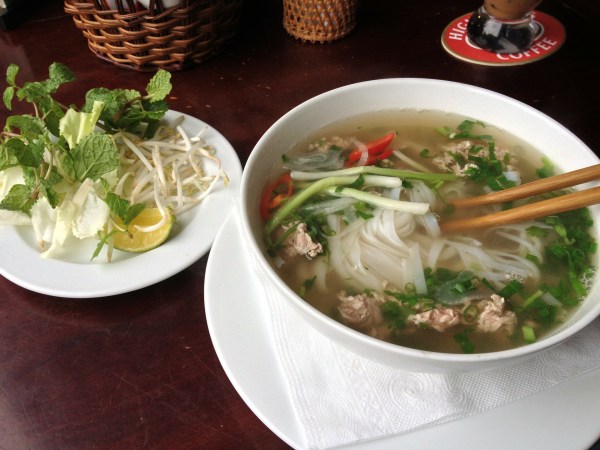
There was a phở shop on the corner down the street from my guesthouse with open sides and wobbly tables on the pavement outside.

I sat at one and ordered phở tái, which the menu translated as “beef soup noodle with half-done beef,” and a Bia Saigon and watched the street vendors pushing carts and carrying yokes and the xe-om* riders hustling for business and a guy slowly pedalling around the block and shaking a rattle which sounded like a maraca. It puzzled me what he was trying to sell and I stopped him, later, and asked. “Lady massage,” he said, “you want?”

The beer came first, then a big plate of herbs, another of bean sprouts and a third with sliced chillies and quartered limes; then a tray of condiments: hoi sin and chilli sauces in squeezy bottles, dark soy sauce in a jug and thick chilli paste in a ramekin. Then came the phở: a great steaming bowl of broth extracted from beef bones, ox tail, flank steak, charred onions and ginger, cinnamon, cardamom, star anise and cloves, poured over flat rice noodles and strips of rare beef, and garnished with sliced spring onions.

Flickr4062448221

I ate phở often as I travelled through Vietnam, elsewhere in Saigon, in Hoi An – where I learned how to make it – and finally in Hanoi; but it is different and better in the South and best at the phở shop on the corner down the street from my guesthouse.

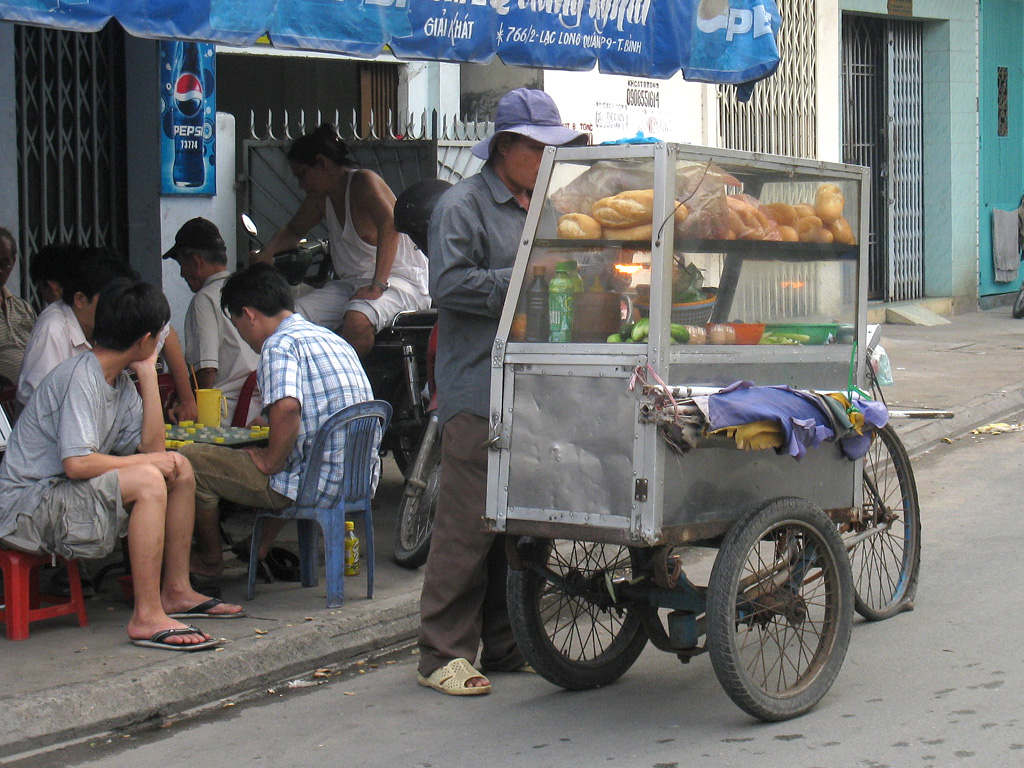
On every other street in Saigon, in the Phạm Ngũ Lão backpacker area, to the north around the museums and to the east in amongst the modern corporate blocks, there are vendors selling bánh from carts. They are sandwiches, in essence, French in inspiration, Vietnamese in execution.

Take a classic baguette, but made with rice flour and lighter than normal, slather it with mayonnaise and hot chilli sauce, then stuff it with shredded, pickled carrot and daikon, sliced cucumber, coriander leaf and some combination of pâte, roasted belly pork, fromage de tête and Vietnamese sausage. I had bánh again and again in Saigon and never got bored of it because each vendor does it differently.

If not bánh for lunch, then spring rolls. That can mean one of two things in Vietnam, and neither is much like the stodgy, finger-sized snacks served in Anglo-Chinese restaurants. There are gỏi cuốn, or ‘fresh’ spring rolls, with shredded carrot and cucumber, chopped mint, onion flakes and cooked prawns rolled in a moistened rice paper and served as it comes; and there are chả giò, or fried spring rolls, with minced pork, shitake mushrooms, diced carrot and cellophane noodles wrapped in a moistened rice paper and deep-fried to a texture like filo pastry. Both are served with a dipping sauce with lime juice, fish sauce, sugar, chilli and garlic.

Noodles soups, rice papers, an abundance of herbs, sharp flavours used judiciously. The menu changes as you travel through Vietnam but the same themes recur: always the same freshness, always the same lightness.

© Richard Senior 2015

*Motorcycle taxi

Pho image via Pixabay

Banh mi image: By Hiển Chu (flickr user “chuhien”) [CC BY 2.0 (http://creativecommons.org/licenses/by/2.0)], via Wikimedia Commons

Eating at Yatai in Fukuoka

DSC_0146

There are few sights in Fukuoka, although there is a handful of heritage buildings, a pleasant park and the remains of a castle, as well as the endless scope for immature sniggering at a name which begins with ‘fuck you’. But there are well over a hundred yatai.

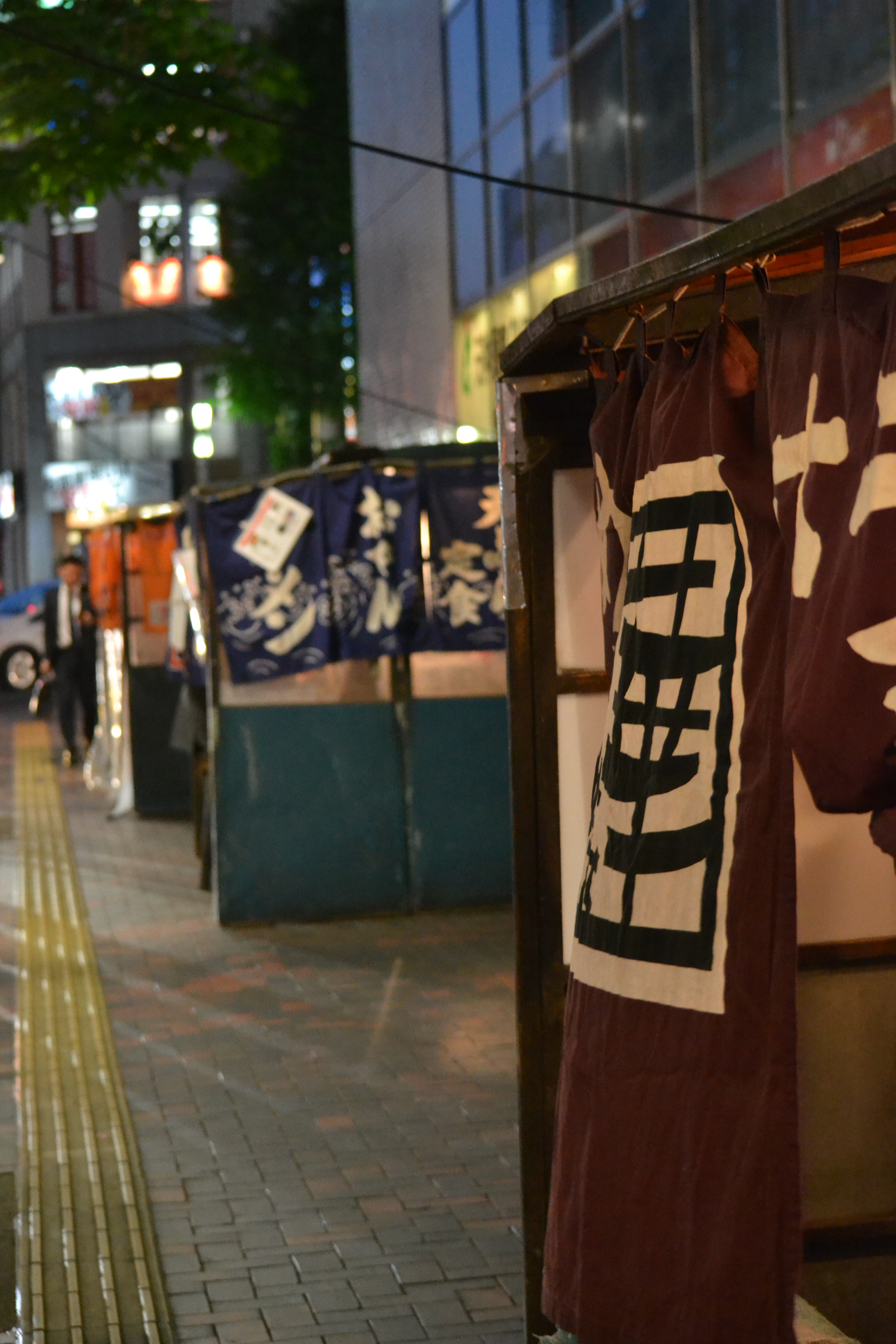
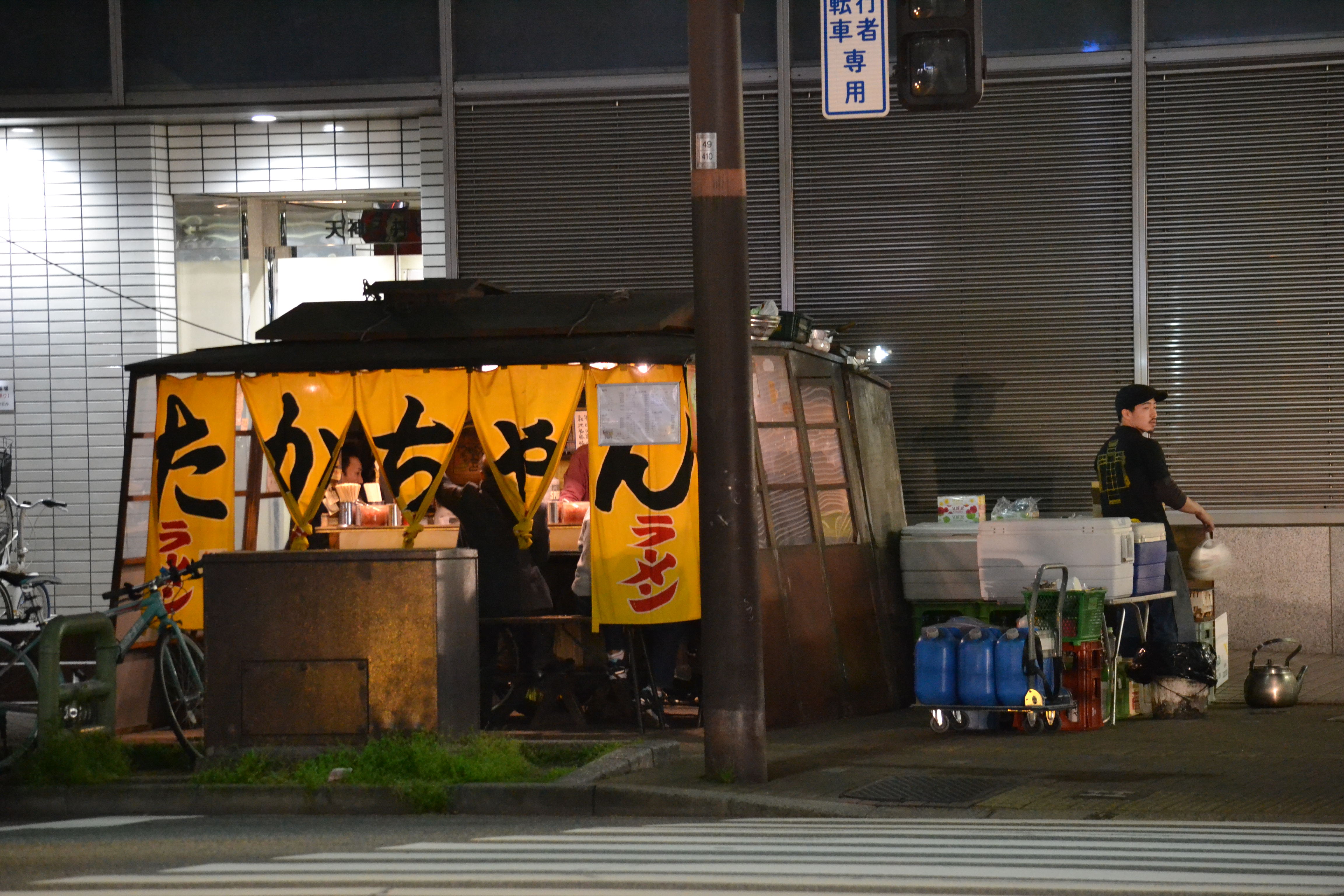
At nightfall, outside the big stores on the main shopping streets, vendors drag trailers up onto the pavement and convert them, Transformer-style, into pop-up restaurants. Yatai, they call them.

DSC_0157

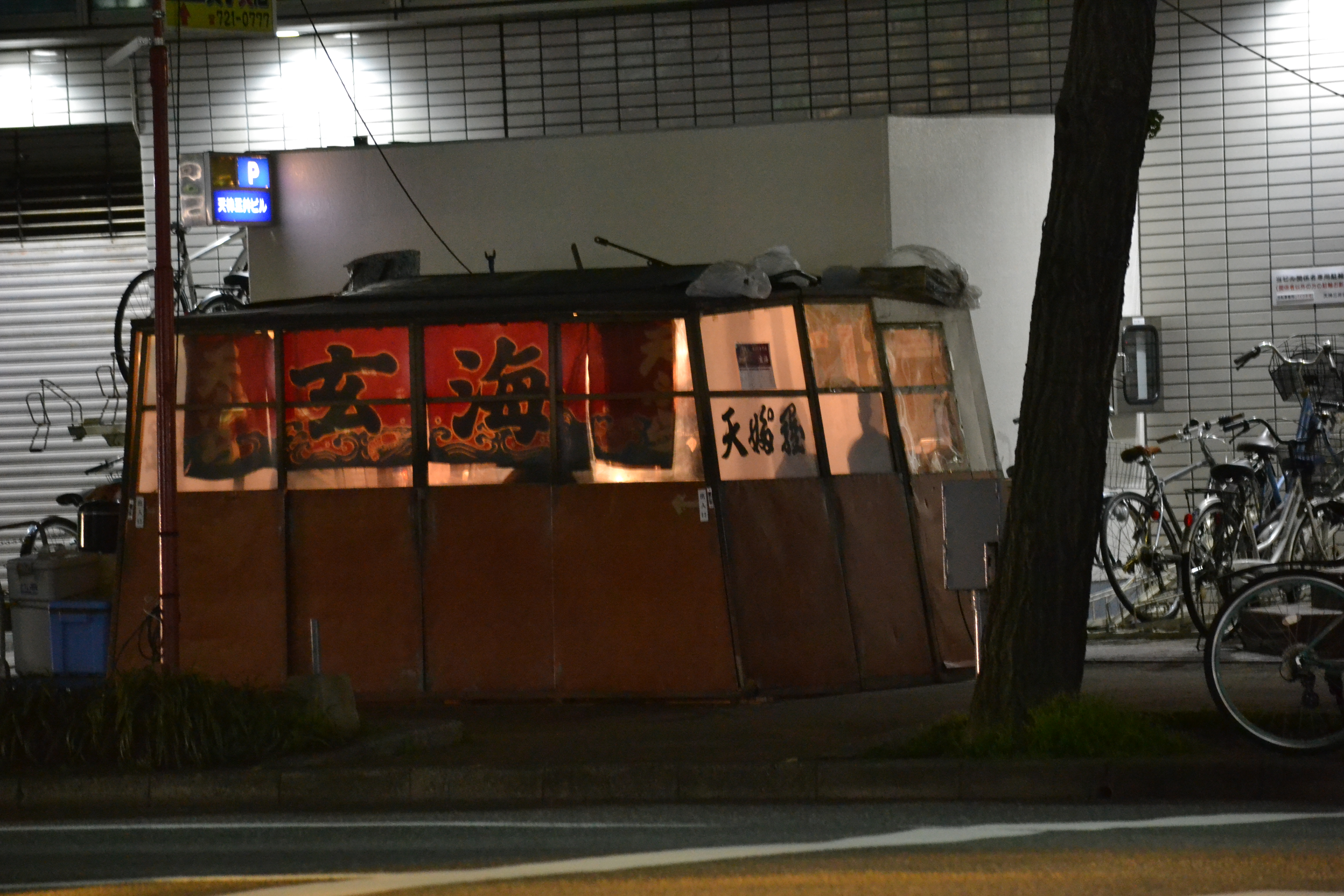
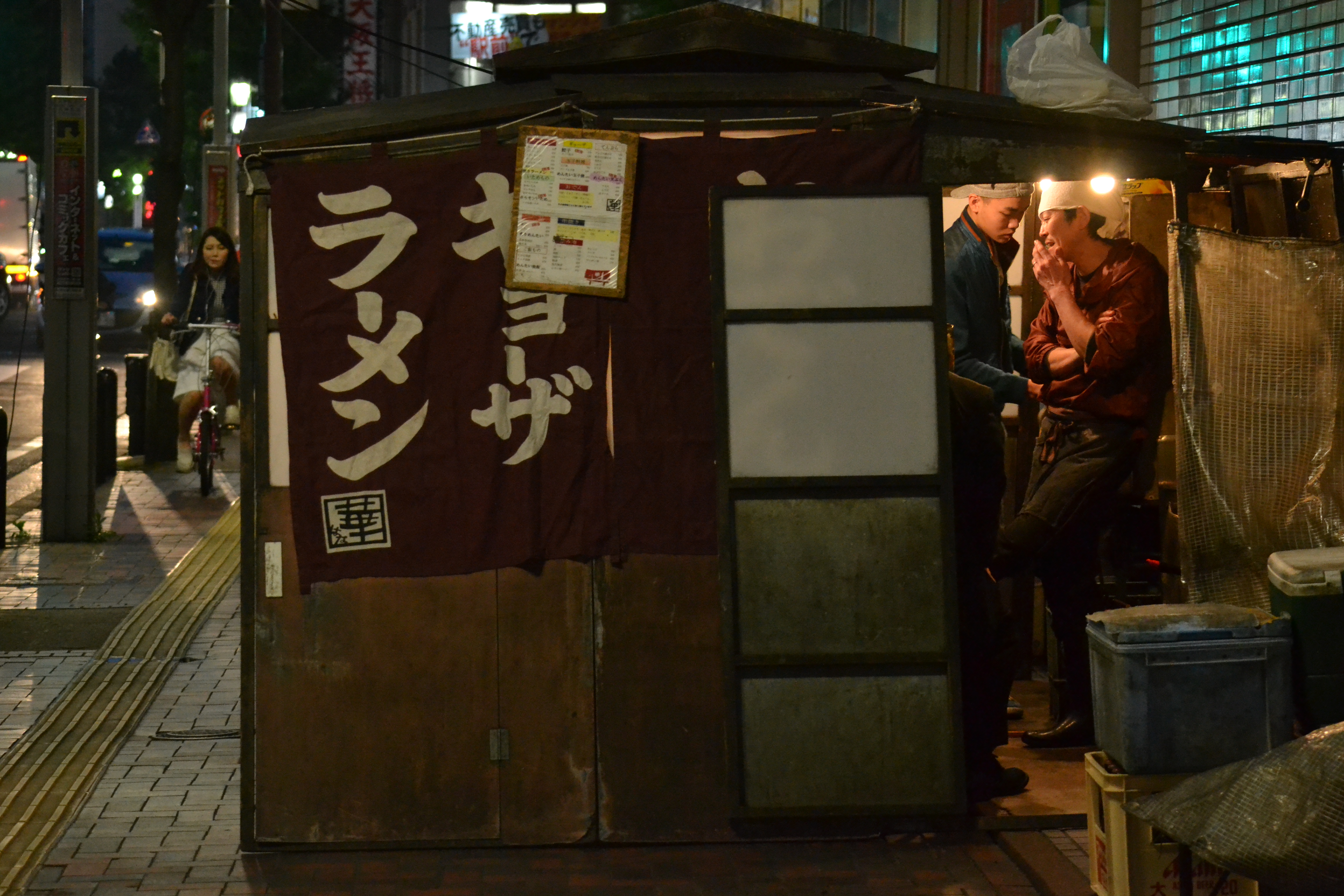
From the outside, they look like workmen’s huts, or makeshift shelters for the homeless, with walls and a roof made of rough wooden sheets and opaque plastic windows. Some are open at one side, some have a curtain made of fabric or plastic, while a few have a proper door.

It is hard not to feel as if you are intruding when you push the curtain aside and take your place at one of the half dozen or so stools round the counter. You will almost certainly be the only foreigner. The other customers will probably be suited salarymen stopping off after work for a snack and a few glasses of shōchū. The chef is unlikely to speak any English; if you are lucky, there might be some English on the menu, and if very lucky it might make sense. A lot of the time, though, you are reliant on pointing, miming, taking pot luck or asking for something which you know they will have.

DSC_0155

There is more or less bound to be ramen, and Fukuoka has its own take on this iconic dish. The thick, unctuous broth is made with pork bones and caramelised onion and ginger, and cooked at a boil instead of a simmer, and served with thin noodles, red ginger, green onions and little puddles of black garlic oil. There will be yakitori, meatballs, gyoza dumplings and mentaiko, another speciality of the city: spiced and lightly-seared cod roe.

The first time I ate at a yatai, I sat with a group of salarymen, ties askew and several shōchūs into a bibulous evening, and one of them spoke excellent English – he modestly denied it – and guided me through the Japanese-only menu with suggestions on what to order. The next time, though, I was on my own but for a hit-and-miss app which could sometimes decipher Japanese script and, if it could not, just made something up. I hoped that the “fishermen with morning mist” was good and went well with the “toolshed drunk in water”. The weave of my t-shirt meant “eight,” the app told me in passing.

DSC_0143

The yatai stay open into the early hours but I dare say they are much like a British kebab shop later on when people tumble out of bars and decide they have to eat. They are packed up, then, and magicked away in that brief hiatus between the latest drinkers shuffling off home and the earliest commuters marching in to work.

Once the sun comes up, there is no sign that the yatai had ever been there.

© Richard Senior 2015

Tsukiji: An Improbable Tourist Attraction

DSC_0412

Big sheds, grim concrete, rusting steel, walkways painted in industrial blue. Bustling vendors in oilskins and wellington boots; porters scudding around on motorised carts. Polystyrene confetti, puddles of melted ice. Stacked crates. Reefer trucks. Everything, in short, you would expect of a municipal fish market, right down to the smell.

But it is not just any municipal fish market: it is Tsukiji Fish Market, by common consent one of Tokyo’s Must See sights. The guidebooks explain, as if with a trumpet fanfare, that it is the World’s Largest Wholesale Fish Market. What next, you might wonder: Asia’s Deepest Sewage Tunnel?  Japan’s Oldest Scrapyard?

DSC_0440

The Lonely Planet Fundamentalists are there at five in the morning, half an hour before the trains start to run, clutching guidebooks flagged up with Post-it notes as they queue in the hope of joining one of the two groups of sixty let in to watch the tuna auction.

The frozen fish are laid out on pallets. Sceptical restaurateurs peer at the eyes, lift the gills, shine their torches into cavities. The auctioneers jump up on boxes, ring handbells, doff their caps and shout and bounce excitedly, like contestants in some incomprehensible game show.  Bidders raise hands casually as if acknowledging a friend, and porters hook the sold tuna and drag them away, then return for the pallets, and hose down the floor as another auction starts across the room.

DSC_0436

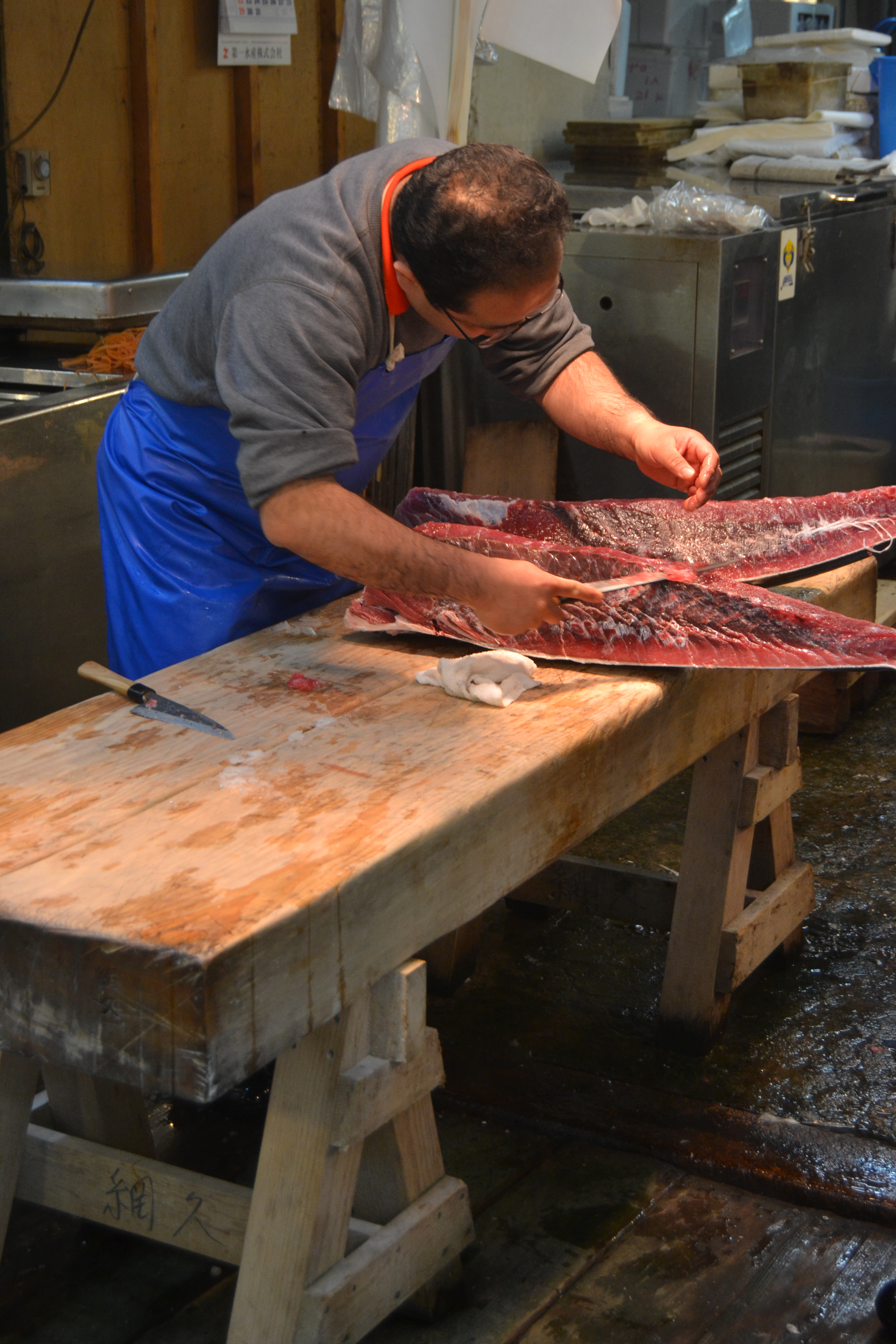
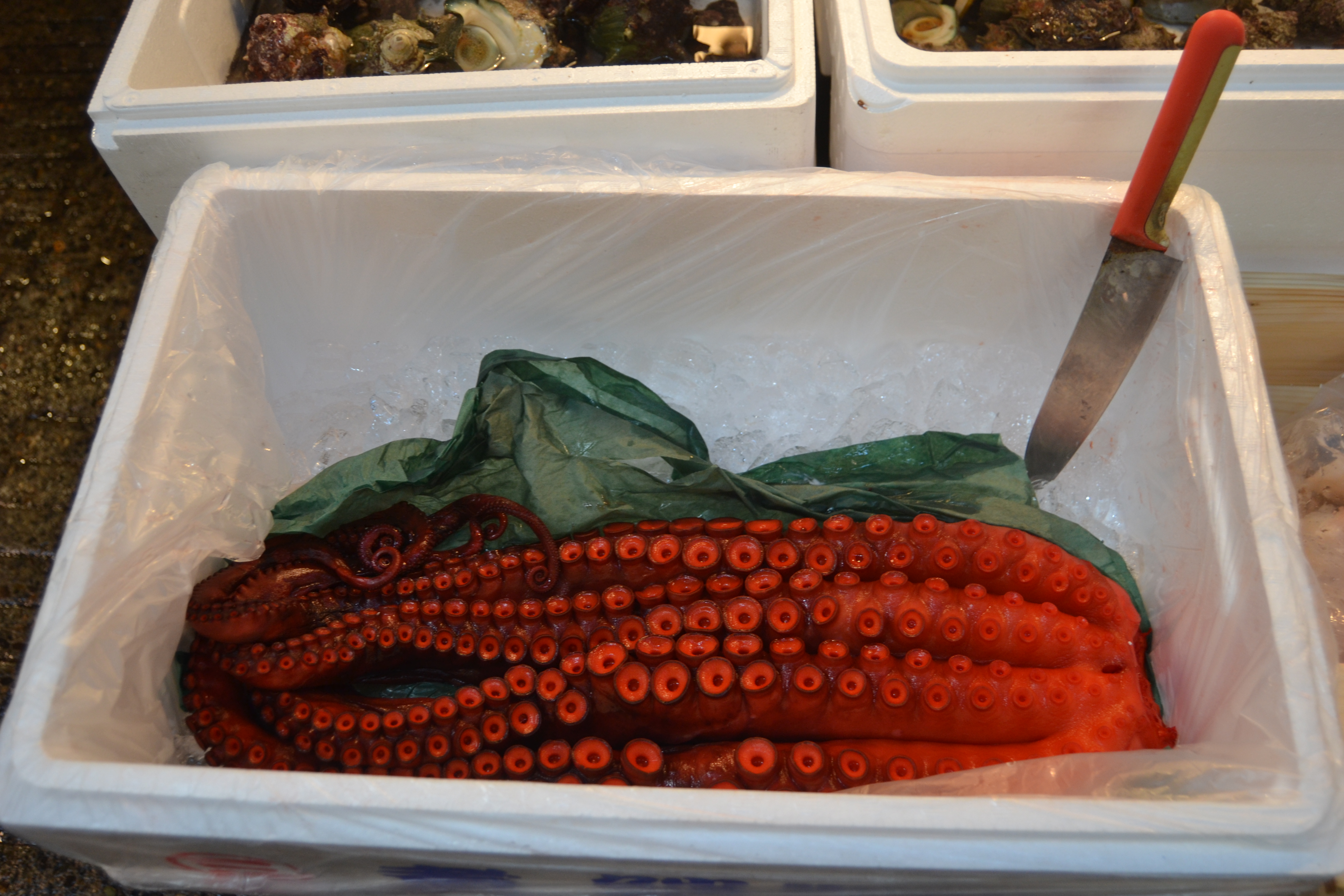
After nine, when the market is quieter, tourists are allowed into the wholesale areas and march fully armed with SLR’s and telephoto lenses across the flooded cobbles, down the aisles between the stalls barricaded with teeming fish tanks and Styrofoam boxes, and stop to watch the fishmongers butchering tuna on trestle tables with knives like swords, and fire off a few shots of chopping boards dripping with blood and hoses left running and boxes stuffed with silvery bass and orangey snapper and brilliant white squid and octopus tentacles as thick as your arm and coiled eels in buckets of water. The stallholders struggle past them and ignore the staccato clicking of camera shutters and the tourists kneeling to get selfies with severed tuna heads. Mercifully there is no room for star jumps.

It is an improbable tourist attraction, but compelling.

DSC_0430

By eleven, the vendors start to pack up and close their stalls and the tourists put their cameras away and join the queues outside the sushi restaurants, where they stand for an hour or two or three and some get bored and peel off to browse the stalls selling knives and pans and bags of dried fish, and the door occasionally slides open and the tourists look briefly hopeful until it slides shut again. There is room inside, at a squeeze, for around a dozen at the bar and tables. The sushi chefs work centre stage, slicing, moulding, plating up; another, stage right, stirs a vat of rice with a paddle.

How fresh is the fish?” someone behind me in the queue asked a regular. “Well, it was swimming an hour ago,” came the reply.

© Richard Senior 2015  

24 Hours in Paris

I arrived in Paris in the afternoon off the TGV from Bern.

I had seen the sights on previous trips and wandered, now, as I might in London with no itinerary and no real aim, just enjoying the amble through the daily life of one of the world’s great cities. I walked down Rue Volney, hung a left into Rue des Capucines, then a right and down through Place Vendome to the Jardin des Tuileries and along the right bank to the Tower.

I crossed there and backtracked along the left bank and went to the Musée d’Orsay, where I stayed until they turned people out. I love the old Beaux-Arts station building, and the Manets, the Monets, the Van Goghs, the Cézannes, and Renoir’s Bal du Moulin de la Galette and Caillebotte’s Raboteurs de Parquet, which I had prints of on my wall as a student.

DSC_0093

I stopped for dinner at a bistro busy with a garrulous after-work crowd. There were old cycle racing posters and desilvered mirrors on the walls, and hams and saucisson hanging over the counter, and a short menu of bistro staples. I ordered one of those salads the French do so well, with a nice mix of leaves and walnuts tossed in a vinaigrette, topped with slivers of hard, sharp cheese and greedy slices of Bayonne ham, and followed that with crispy, gelatinous pieds de cochon swilled down with a carafe of red.

I had arranged to have lunch the next day with a local girl whom I knew when she lived in London, but she cried off and I had the day to myself. I was out early and walked by a different route down to the river and crossed Pont Neuf over the prow of Ile de la Cité into the old bohemian quarter to look for the places which Hemingway wrote about in A Moveable Feast and The Sun Also Rises.

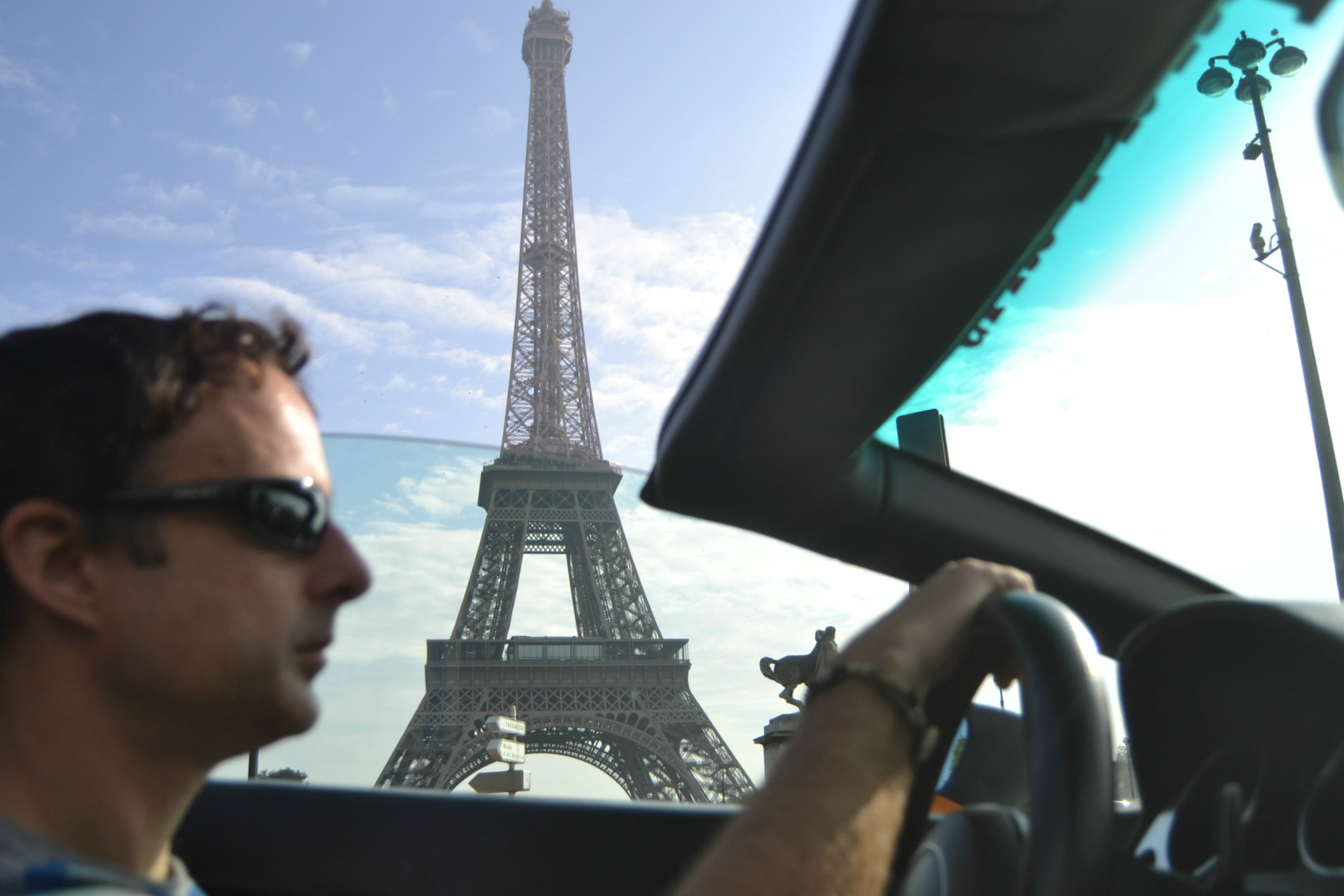
When I had done with Hemingway, I walked back up to Place de la Concorde where I had seen the Gallardo Spyder the day before with “Drive it for 89€” on the side. I guessed there would be more to it than that, but no. Show them your licence, pay them the money and sign to confirm that you have not been drinking or smoking, and it is yours for the next twenty minutes.

DSC_0121 e

I prodded the starter button and blipped the throttle and the V10 roared, and the guy directed me on a route through town which took in the big sights but avoided the worst of the traffic. Alongside the river, top down, the engine snarling behind me, then – as invited – into a tunnel and burying the accelerator in the carpet. The Gallardo streaked forward, the howling V10 reverberated off the walls of the tunnel and a motorbike in the right-hand lane was sucked back instantly into the distant past. Out into daylight, then through another tunnel, foot down again, then up to the Place de l’Étoile and down the Champs-Élysées, back to where I started.

I had just enough time, then, for a quick lunch at a bistro on the way to my hotel. It was an old, wood-panelled place with black and white photos of a bygone Paris on the walls. The husband and wife team who ran it seemed to know most of the customers well. She stayed at their tables to chat after taking their orders; he interposed now and then from the bar across the room.

Rillettes, a bavette of beef with shallot sauce and fries, a glass of red, a bottle of water and an espresso for the price of a pizza and Coke in London. I love the democratic food culture in France. Focussed women in designer suits sat a table away from bantering men in paint-spattered overalls – unthinkable in the class-bound, proudly unequal UK.

I grabbed my bags and took a bus to the Gare du Nord for the Eurostar home. The neighbourhood was no smarter than it had been when I was last there, ten years before, and I had arrived late at night and had to walk round drunks sprawled across the pavements, but it felt marginally safer in daylight.

© Richard Senior 2015

Eating Sushi in London and Kanazawa

image1 (4)

I was part way through a run of long nights at the office. It was hours since the pinstriped crowd had made its way to the Tube, with its furled umbrellas and gym kits and Little Brown Bags. The City was silent then, without the murmur of innumerable phone conversations and the clatter of brogues and stilettos.

The pub on the corner had filled up with after-work drinkers, who got louder with every beer, then thinned out as they drifted off home. It was closed by the time I got out. Lights had been left on for show in the Gherkin and the Lloyd’s Building was uplit in blue. But the streets of the Square Mile were deserted then. Even the cleaners had been and gone. A gust of wind blew grit in my eye, and sent a dropped newspaper scuttling down the street.

It would have been too late for dinner by the time I got home, so I stopped at the sushi bar a little before it closed. The staff were cleaning up and winding down. Only a few plates were left on the conveyor. I watched them do their rounds, and daydreamed about sushi in Japan.

Three years on and I had given up being a lawyer and I was in Kanazawa in a sushi restaurant a few steps from the Omicho market, which bustles each morning with seafood vendors whose stalls are crowded with rows of spider crabs, piles of scallops, and ruby-fleshed tuna, silvery mackerel and bloated puffer fish. Some of the things on the menu were familiar enough. The sushi bar I used to call in after work had prawn nigiri and salmon roe norimaki. But not flounder fin, gizzard shad or horse mackerel; nor salted plum with cucumber makizushi.

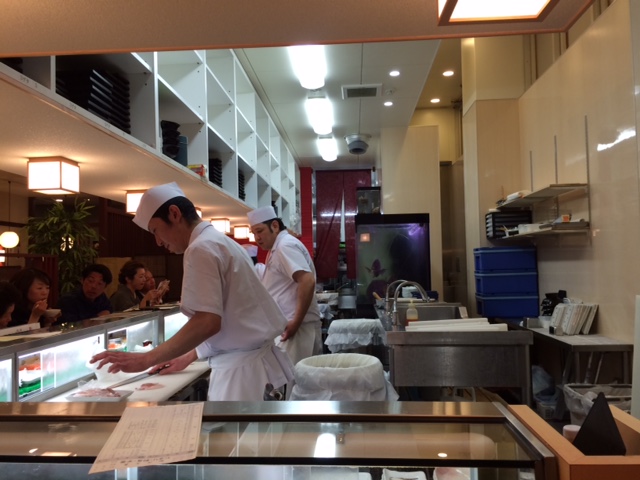
The chef reached in the cabinet for a slab of tuna and sliced off a strip with an easy flick of the wrist. He wet his hand under the tap and, in the same movement, reached behind him into a barrel of rice and scooped up a handful which he had moulded into shape by the time he had brought it up to his board. He dipped his finger into a pot of wasabi and smeared it over the rice then glued on the strip of tuna, plated up and handed it over the counter to the customer.

Then he was onto the next order, rolling raw sea urchin and vinegared rice into a square of seaweed; then lightly searing a flounder fin with a woof of flame from a blowtorch. He worked at speed but never noticeably hurried; his movements were fluid, almost balletic, each seemingly casual cut precise.

The sushi there was as different from the sushi I had eaten at home as freshly-made pesto is different from the stuff in jars. I ordered three pieces, then another three, and another three after that.

It seemed a lifetime ago that I was eating sushi because I would be home too late to make dinner.

© Richard Senior 2015

Journey through Zimbabwe, Part 7*

DSC_0513
Dr Livingstone thought that Victoria Falls sounded better than the local name, Mosi–oa-Tunya, which means “the smoke that thunders”. It did to him. The government is threatening to change the name back, which has got people worked up in support and against, but is hardly among the more urgent things which need to done in Zimbabwe. As with Myanmar, Ho Chi Minh City, and Uluru, the old name will stick whatever the government says.

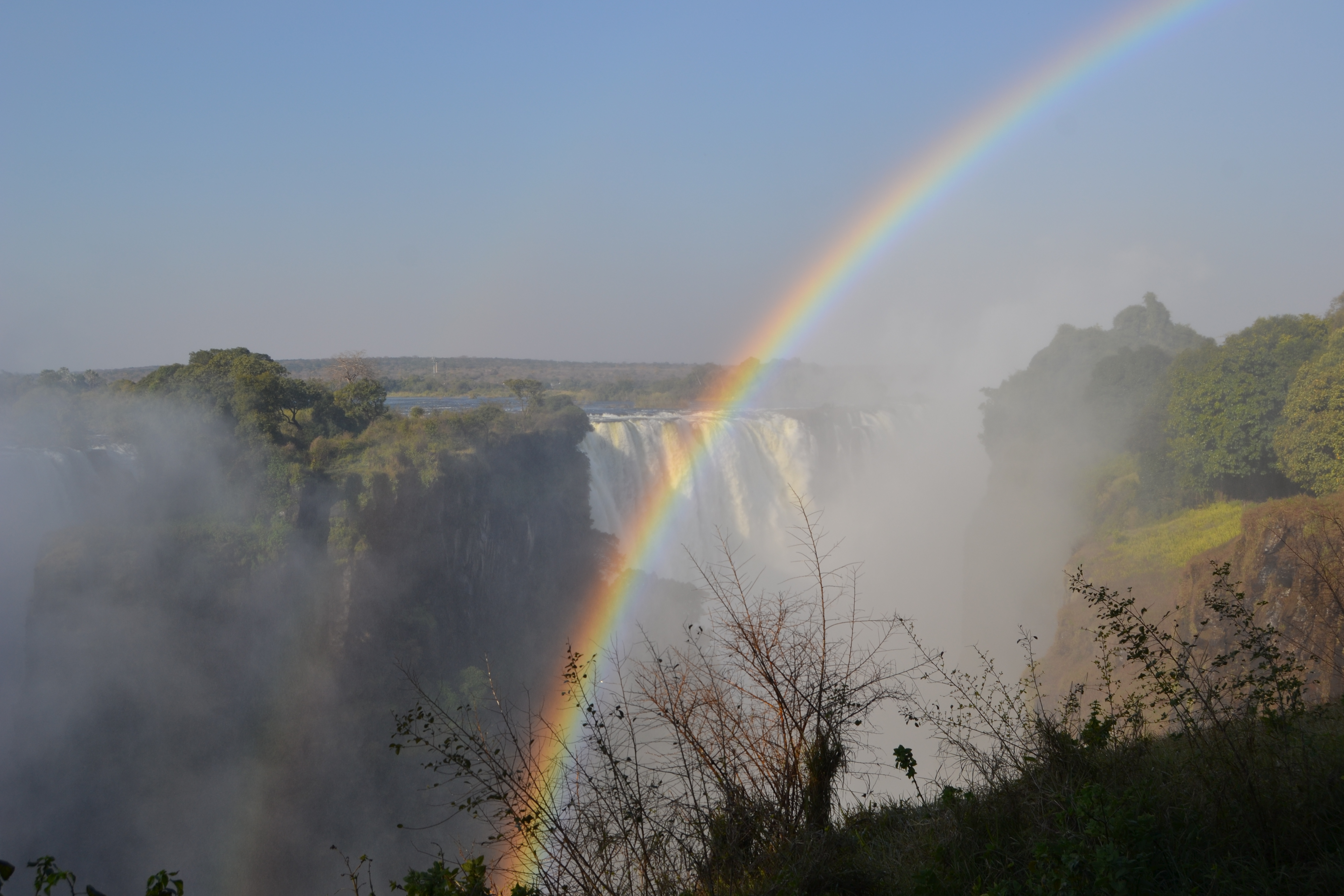
The word “awesome” has become as devalued now as the old Zimbabwe dollar; but, when you first see the falls and it pops into your head, it belongs there. A mile of water, hurtling out of control, tumbles over the edge and disintegrates into abstracts: thick gouache white swirling over slime green, tumbling, tumbling, tumbling a hundred metres into the gorge below, hissing and rumbling, roaring and thundering like some massive industrial process; the spray rebounds, a gathering storm, higher – way higher – than the top of the falls, until a perfect rainbow chops it in two and it comes down again as an unseasonal shower and soaks the path and the sightseers who stand there and gawp.

DSC_0474

Victoria Falls is a tourist town, but it was never anything else. Almost as soon as Livingstone had reported back, the curious came to see the falls and curio traders came to sell the curious curios. A village grew up and then a town. The railway came west from Bulawayo, and Cecil Rhodes commissioned a bridge across the Zambezi into modern-day Zambia. What started as temporary quarters for railway workers ended up as the grandly Edwardian Victoria Falls Hotel with its hushed five star luxury, its private path to the falls, and its zebra skin drapes and kudu heads and sepia photos of locally famous white men.

Hawkers follow tourists down the street, waving wooden animals and bundles of worthless billion dollar notes. Agents compete to take them on day trips across the border, or send them bungee jumping, zip-lining and white-water rafting. The shops sell curios and postcards, souvenir t-shirts and safari suits with as many pockets as anyone could want. (The locals shop at markets out of town.) There is pizza and car hire, tapas and bureaux de change; there is French fine dining and Chinese takeaway. And there is Boma.

DSC_0564

A whole goat, on the bone, was splayed across a vertical frame in a fire pit and slowly cooked for hours so that the meat smoked while it grilled and the fat rendered down and fuelled the fire and the aroma filled the room. Marinated warthog steaks, eland meatballs and boerewors sausages were grilled to order in front of you. There were mounds of the polenta-like sadza, which I had read about in Doris Lessing, and found was the same thing as ugali in Kenya; and salads and soups and dried mopane worms – actually caterpillars – which you pick at and crunch like a bag of crisps.

I would miss Zimbabwe, but it was time, now, to move on: time to explore Botswana.

© Richard Senior 2015

*Part originally posted as ‘Smoke that Thunders’ on 11 September 2014