Decoding the Tokyo Metro

IMG_2370

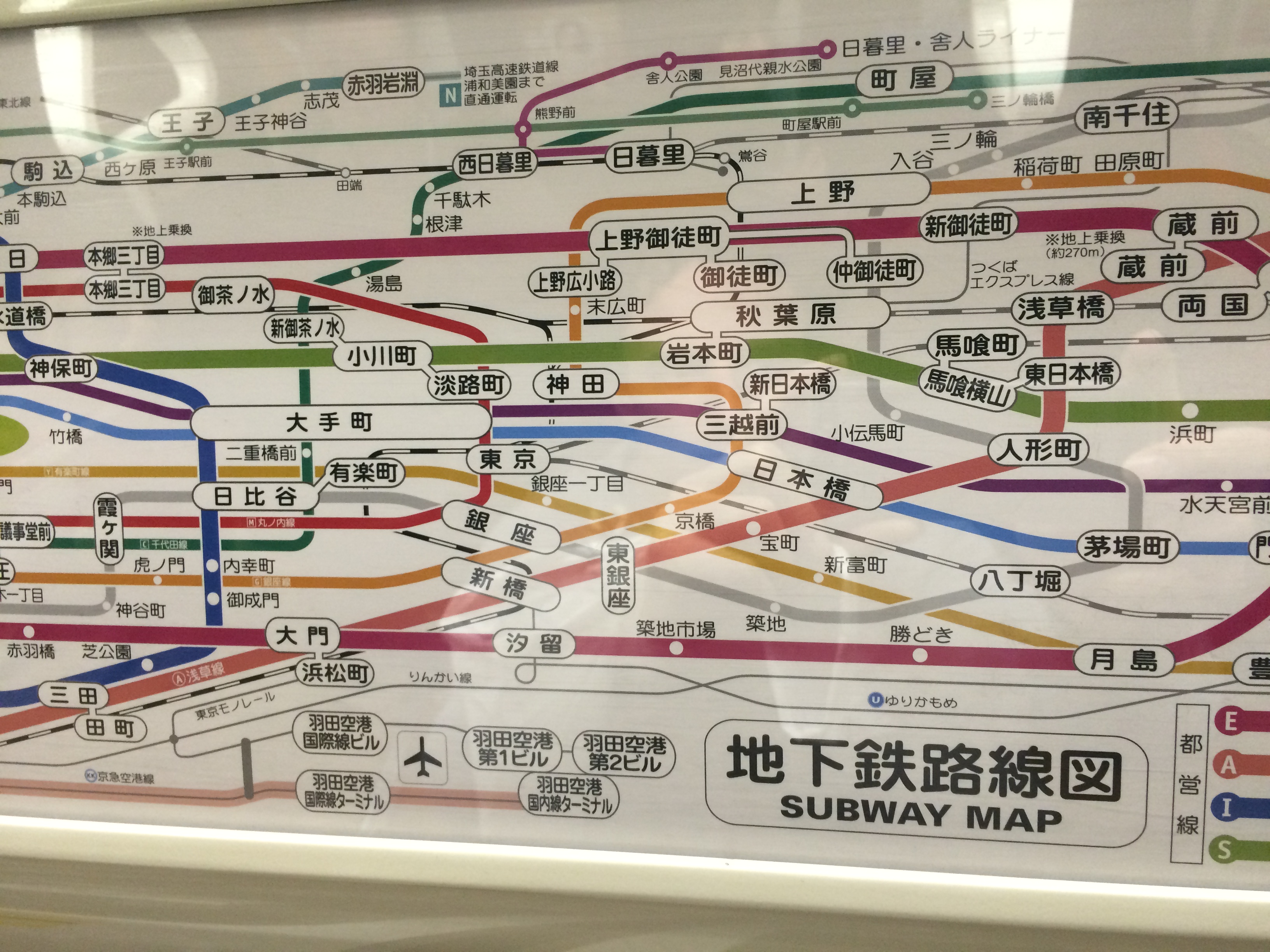
It looked like a multi-coloured version of the squiggle people do when they are trying to get a pen going.

It might have been a wiring diagram for a Toyota Camry had it not been for the words “Subway Map” in the bottom right-hand corner. They were the only words in English: the station and line names were all in Japanese.

I compared it with the subway map which came with my guidebook, but it might as well have been for a different city. Neither seemed to reconcile with the map in the back of the leaflet I had picked up at a station I passed through earlier. It made no sense.

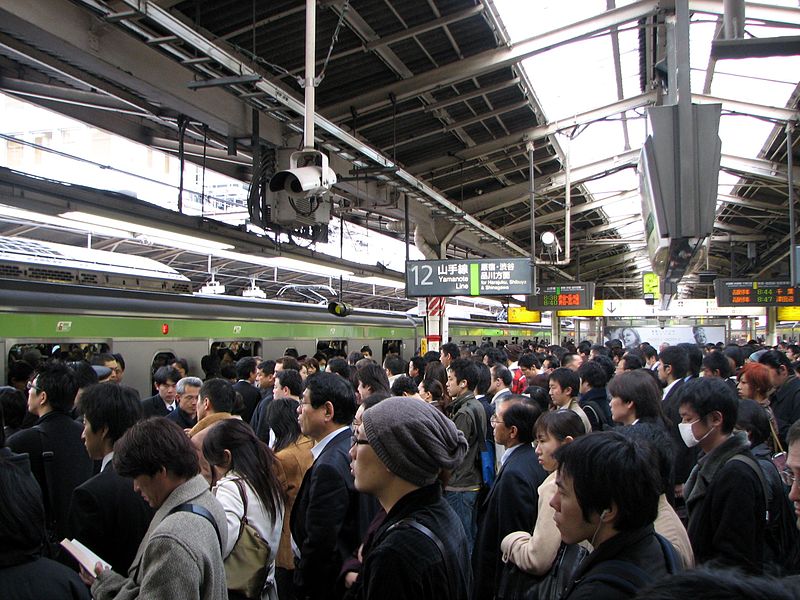
I got off at Shinjuku and went through to the ticket hall to try to find a better map. I remembered then why I had heard of Shinjuku: it is officially the busiest station in the world. Some 3.64 million people pass through it every day, roughly equivalent to the entire population of Los Angeles, or the combined populations of Birmingham and Greater Manchester.
800px-Rush_hour_at_Shinjuku_02

They all seemed to have arrived at once. I stood, bewildered, with my guidebook in one hand and my baffling map in the other, looking from one bank of searing neon to the next as busy people in suits knocked me this way and that.

There were fifty-one platforms to choose from, and two-hundred exits to leave by if I decided to bugger that and get a taxi. Somewhere amid the mass of humanity, under the kaleidoscope of neon, behind all the cheerful jingles to announce that a train was arriving or leaving, on one or other of the Yamanote Line, Chūō Main Line, Chūō Rapid Line, Chūō Sōbu Line, Shōnan-Shinjuku Line, Saikyō Line, Odakayu Odawara Line, Keio Line, Keio New Line, Maranouchi Line, Toei Shinjuku Line, or Toei Ōedo Line was the train I needed to take. There was only a 50:1 chance of getting it wrong.

I struggled with a combination of maps and signs, got on a train and counted off the stops. Then – to my astonishment – I was back in Ōimachi, right where I had started two hours before. All of the maps agreed that that was impossible. But there I was.

For a good two days, I tried and failed to understand why all the maps seemed so very different, how two stations could be adjacent on one map and have five or six stations between them on another. I followed signs through stations the size of airports, which took me up through three levels of platforms, out through shopping malls and down the street, round the corner, to a different station entirely. It all remained a mystery.
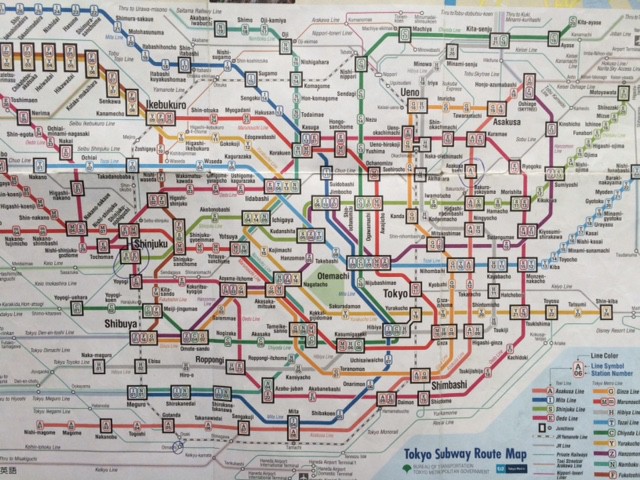
image1 (4)

Then I found out that there are two separate subway networks, the four publicly-owned Toei Lines and the nine privatised Tokyo Metro Lines, and another dozen or so networks of mass-transit railways, some owned by the state, some by private companies, which connect with, run parallel to and operate in much the same way as the subway network but are not technically part of it; then there are a further sixteen suburban lines. There are different maps for different networks.

It all made sense then and, in time, I could use the system without a map and a vacant expression. I thought that I ought to have got a certificate or something.

At rush-hour it hardly matters whether you know where you ought to be going. A Tokyo commuter crowd is like a fast-flowing river. Only the strongest can swim against the tide: the rest are swept along with the current, forced round obstructions and out into the open sea.

If the crowd transfers to the Hibuya Line, then so do you; if it takes Exit A, then you take Exit A as well; and if the crowd stops off at a department store to buy a tie then you need to think quickly what colour would go best with your shirt.

© Richard Senior 2015

Station image: “Rush hour at Shinjuku 02” by Chris 73 / Wikimedia Commons. Licensed under CC BY-SA 3.0 via Wikimedia Commons – https://commons.wikimedia.org/wiki/File:Rush_hour_at_Shinjuku_02.JPG#/media/File:Rush_hour_at_Shinjuku_02.JPG
Khao San Road: a Flashback

DSC_0061

Everyone starts on Khao San Road. It is where Richard met Daffy in The Beach; “a decompression chamber,” Garland called it, “for those about to leave or enter Thailand, a halfway house between east and West”.

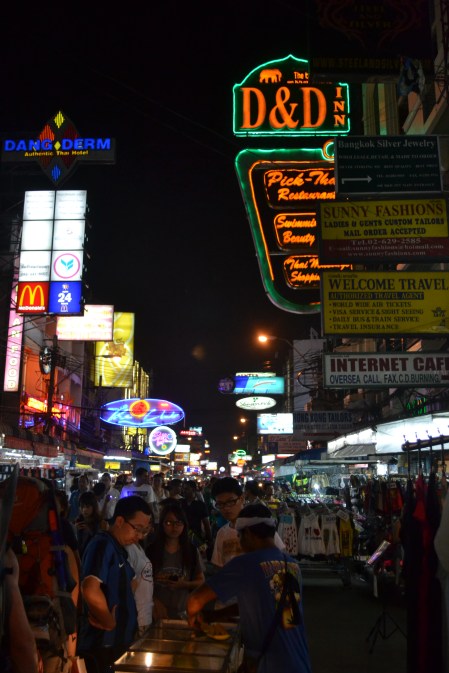
It bustled with travellers coming and going. They arrived, pale and bewildered, in clothes far too hot for Thailand in December. They left, nut brown and relaxed, in singlets and fishermen’s trousers, with friendship bands halfway to the elbow.

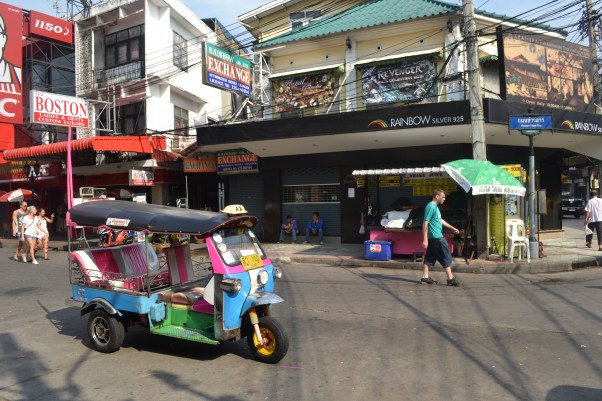
Growling tuk-tuks inched through the crowds and parked. The drivers shouted out to every traveller, and so did the tailors, the masseurs, the “masseurs,” and the endless procession of hawkers.

EDM oomphed from bars which boasted that they never asked for ID, and backpackers who looked as if they needed bars which never asked for ID flailed in approximate time to the music.

DSC_0203

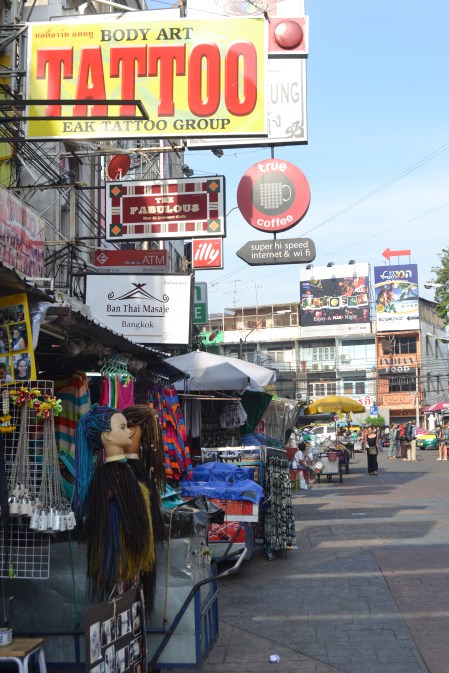
Monster signs protruded from the buildings, glowing, flashing, pulsating. There were tailors and jewellers and clothes shops; there were tattooists and body-piercers. All of them seemed to stay open all night

There was McDonalds, there was Subway, there was KFC. There was a guy selling deep fried scorpions. You could buy knock-offs of just about anything you wanted, trainers, watches, sunglasses, DVD’s. You could get a degree certificate and driving licence forged to order.

It was too much, then, on that first night three years ago tomorrow. It was just five days since I had handed back my corporate BlackBerry, and the first time in almost a decade that I had not been digitally connected to the office. It was the first time I had truly had a break.

I walked a block to Soi Rambuttri, which was a little less manic, in the way that Palermo is a little less manic than Naples. The bars had live singers instead of DJ’s and they murdered The Beatles, the Stones and Oasis, and one crooned “It’s raining, it’s pouring, the old man is snoring” in the style of a Rat Pack tribute.

DSC_0022

I was not expecting much from the ramshackle bar where I stopped for dinner, but it was late, I was tired and I needed to eat. It was great, though; all of it: the soft-shelled crab smothered in yellow curry paste, the red snapper barbecued whole, the nam prik dipping sauce piquant with lime juice, garlic and chilli, the steamed jasmine rice, the cold Singha beer.

As I sat and ate and heard Hotel California for the third and far from the last time that night, hawkers trooped through the bar to offer me things I didn’t want. No friendship bands, thanks: I’ve got some already. No lighter: I don’t smoke. No postcards. No playing cards. No sculptures of motorbikes. No wooden frogs which croak when you rub them with sticks; and, no, I don’t want a bigger one either.

I said no, I said no, I said no again. She said, okay fifty Baht for two.

I had been, then, to something like twenty countries, but, apart from a month in Hong Kong on business, it had been a week here and a long weekend there; ten days was about the longest I had been away. I had always, as well, known what I would be doing from day to day. This time I just had a few scribbled ideas of countries and cities I might want to see and no idea, yet, how to get from one to the other. But I had months to work that out.

In the first few days, I tried to see everything at once, as if I were in Thailand on a hurried vacation, as if I would be cross-examined later by over-competitive colleagues trying to catch me out with a ‘must-see’ sight that I had missed. But it registered soon enough that I was free until the summer to see and do what I wanted, and that none of the old shit mattered any more.

That was three years, thirty countries and five continents ago. The impressions I formed at the time seem naïve and unworldly in retrospect. I am not sure I would even notice, now, some of the things which enchanted me then. Some of the excitement has worn off along the way, but there is too much fascinating diversity in the world for travelling ever to become a routine.

© Richard Senior 2015

Modern Moscow: Red Stars and Three-Pointed Stars

DSC_0028

Moscow, in the popular imagination, is much as Tolstoy described it in 1881:

Stench, stones, luxury, poverty. Dissipation. A collection of robbers who have plundered the people and conscripted soldiers and judges to guard their orgies while they feast.”

In this imaginary Moscow, Red Square, the Kremlin and St Basil’s are adrift in a sea of sodden tower blocks; vodka-sozzled men are slumped in every doorway and ferret-faced youths skulk in the shadows with flick-knives, and hookers work the bars where Armani-suited ‘businessmen’ drink Champagne by the gallon while their chauffeurs keep the limos running outside.

I ought to have travelled enough, now, to know that the world is rarely as we imagine it to be. Yet Moscow still surprised.

I expected crumbling stucco, peeling paint, broken pavements and potholed roads, but that was still the Moscow of the imagination. The real Moscow was clean, well-maintained and freshly-painted. Not just in Red Square and the streets around it, as you might expect, but out to the Garden Ring and beyond.

The skyline was not the monotony of brutal concrete we are often invited to picture, but an exuberant mix of styles and periods, from the ice cream cones of St Basil’s, the towers, the spires and the domes of the Kremlin, through Tsarist-era mansions, theatres and department stores, through Stalin’s landmark Seven Sisters, modelled in part on and resembling New York’s early skyscrapers, to the smooth curves and sharp angles of corporate towers in the commercial district, like a pastiche of Hong Kong Central.

DSC_0121

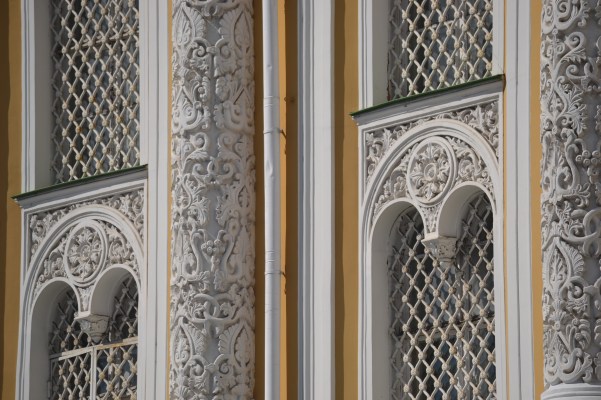
There is no truth in the idea that the handful of big sights are all that is left of the heritage. There are cathedrals and palaces and shops and apartment blocks built under the Tsars in Neoclassical, Art Nouveau, Eclectic and Russian Revival styles, and redbrick factories built when factories were built to make a statement, and the monumental buildings which Stalin commissioned to feed his vanity. There are unexpectedly few modern buildings and no real carbuncles, at least not until you get out to the peripheries with the scrapyards and big hammer industries.

I thought that all trace of the communist era would, by now, have been carefully erased, much in the Stalinist tradition. But modern Moscow has worked round its Soviet heritage, creating juxtapositions like a frieze of Lenin on the wall of the Valentino store and an advertising hoarding for Porsche under a Socialist-Realist mosaic. Stars and wheatsheaves and hammers and sickles are everywhere, worked into railings around public parks, embossed on doors and carved into the stonework of public buildings. There are still Romanov eagles, as well.

The Yeltsin era stereotypes are outdated now. Sure, I heard Ferraris snarling through the streets, but not as often as in Zurich; and I saw homeless guys sitting by ATM’s, but no more than in London. Moscow is no longer, to the extent it ever was, just the super-rich and the desperately poor with nothing much in between.

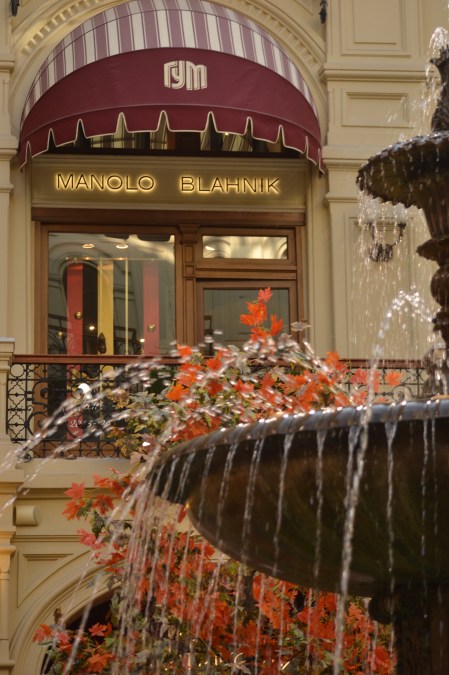
Modern Moscow seems overwhelmingly middle-class: a city of mid-range BMW’s and Mercedes, of diffusion-line Armani and entry-level Tag Heuers, of picnics in Gorky Park with a nice bottle of wine from the food hall in GUM, of weekends browsing the New Tretyakov Gallery and contemporary art in the old Red October chocolate factory.

DSC_0060

Moscow, without doubt, is a cultured city; it is chock-full of galleries and theatres. Everyone has heard of the Bolshoi and the Maly – the Big and the Small – but there is also the Moscow Art, Lenkova, Mayakovska, Satire, Pushkin, Mossovet, Satiricon, Variety, Russian Army, Kolobov Novaya, Taganka, Romeni, Sovremennik and Yermolova. There were half a dozen theatres within a block of the rooms I stayed in near the Garden Ring.

Despite all the hysterical pieces I have read about violent crime, Moscow felt as safe to me as any European city, much safer than big cities in the US.

This, of course, is a visitor’s perspective. It is in no way meant to downplay the very real problems in this autocratic state. But still, after the first day there, I began to doubt whether the people back home who talk loudly and confidently about Moscow have actually been within five hundred miles of it.

© Richard Senior 2015

Tangier: From the Serene to the Sinister

DSC_0002

Tangier is at peace early in the morning. The shouting and jostling, the growling of scooters, the beeping of horns, the working-day sounds of hammers and saws and push-carts being trundled over cobbles are for later, much later. Nothing much happens before ten.

All you hear for two or three hours after sunrise is the sussing of sparrows, the guffaw of the gulls, the strangulated crowing of cockerels, and a single, early, petit taxi down at the old port.

The waking sun casts a painterly light on the buildings tightly packed up the hill to the Kasbah*. There are domes and minarets and hundreds of flat roofs in different sizes, at different levels and different angles. Each has a cluster of rusting satellite dishes, a listing aerial and a line of washing; some have the ruins of old children’s bicycles.

Some time after nine, the shutters go up on the hole-in-the-wall stores, which all seem to sell the same staples: tissues, bottled water, boot polish, hair spray, soap and Laughing Cow cheese. Workmen arrive and start hammering and sawing. Bread sellers fill display cabinets with discs of khobz bread; micro-patisseries put out their wasp-blown pastries.

image2

A man emerges onto the roof of the building next door; he hawks, spits, farts, and begins his morning exercises. A woman in a bright pink hijab opens a door onto another roof terrace and unpegs her washing. There are more petits taxis down at the port by then, and a few people milling about. The scooters and sirens seem to start all at once, as if somebody flicked a switch.

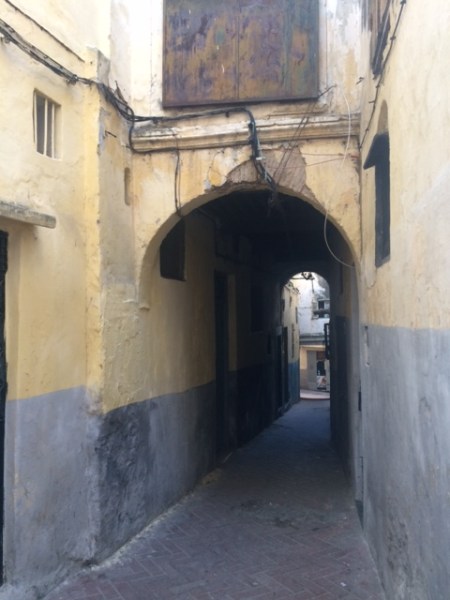
You go downstairs and walk round the corner, along the alleys, past the hole-in-the-wall shops, towards the square. The Medina** is a wiring diagram of alleys, all sinister shadows and eerie silences, which are suddenly shattered by your footsteps on the cobbles reverberating between the walls.

You take what looks like a shortcut and end up, lost, at the other side of the Medina and eventually, by chance, after much frustrated wandering, several dead ends and mounting anxiety, you know where you are again.

Round a dog-leg corner, a pair of sullen young men are leaning against the walls, one either side, and you have no choice but to carry on walking towards them, even if every instinct urges you not to. They ease themselves upright as you approach, and, back home, that always means trouble. But you are not at home, now, and they are just making way for you.

DSC_0021

The cafés are filling up in the Petit Socco, the square at the heart of the Medina. People seem to stop and stare as you swing into the square, sit down and order what everyone is drinking: mint tea. There is surprising hostility in some of their faces, or so it seems.

Suddenly there is an excitable shout and a scraping of chairs from one of the darker salons de thé and a bunch of young men explodes into the square, shoving and shouting; fingers are jabbed, Arabic consonants coughed up and spat out. You expect knives to be pulled and glasses to be smashed and tables and chairs knocked over. But, again, you are not at home any more and all that happens is that one of the men slaps another on the arse and they stop shouting, start giggling and go back to finish their tea.

Chinese motor-trikes with pick-up bodies rattle down the street as you sit and sip your tea; a man walks up it, towards the Grand Socco, holding a small flock of quacking ducks upside down. A truck stops to make a delivery and a cat curls up in its shade for a nap; her excitable kittens scamper underneath to swipe at the breather tube hanging behind the cab.

A little after midday, muezzins across town start the call to prayer: Allāhu akbar. Ash-hadu an-lā ilāha illa allāh…. When the first one starts, another takes it up straightaway, as if suddenly reminded, then a third, a fourth, a fifth, until it echoes across the rooftops from every corner of the Medina and beyond, dropping off one by one, until there is again, finally, a single voice. It is spine-tingling the first time you hear it but it soon becomes part of the regular background noise.

Except, that is, for the first call to prayer, at dawn. “As-salatu Khayrun Minam-nawm,” the muezzin sings at half-past five in the morning: prayer is better than sleep.

I’ll be the judge of that, you think sulkily.

(c) Richard Senior 2015

*Fortified part of the Medina

**Ancient walled city

Ko Phi-Phi: On Irony Island

Phi Phi Le

Phi-Phi was a quiet island of Muslim fishermen, until the travellers arrived.

There were only a few at first, but then their friends came and their friends’ friends and their friends’ friends’ younger brothers, who came with a bunch of people they had met on Samui, and a few crates of beer and a big bag of weed and some music. It is not quiet anymore.

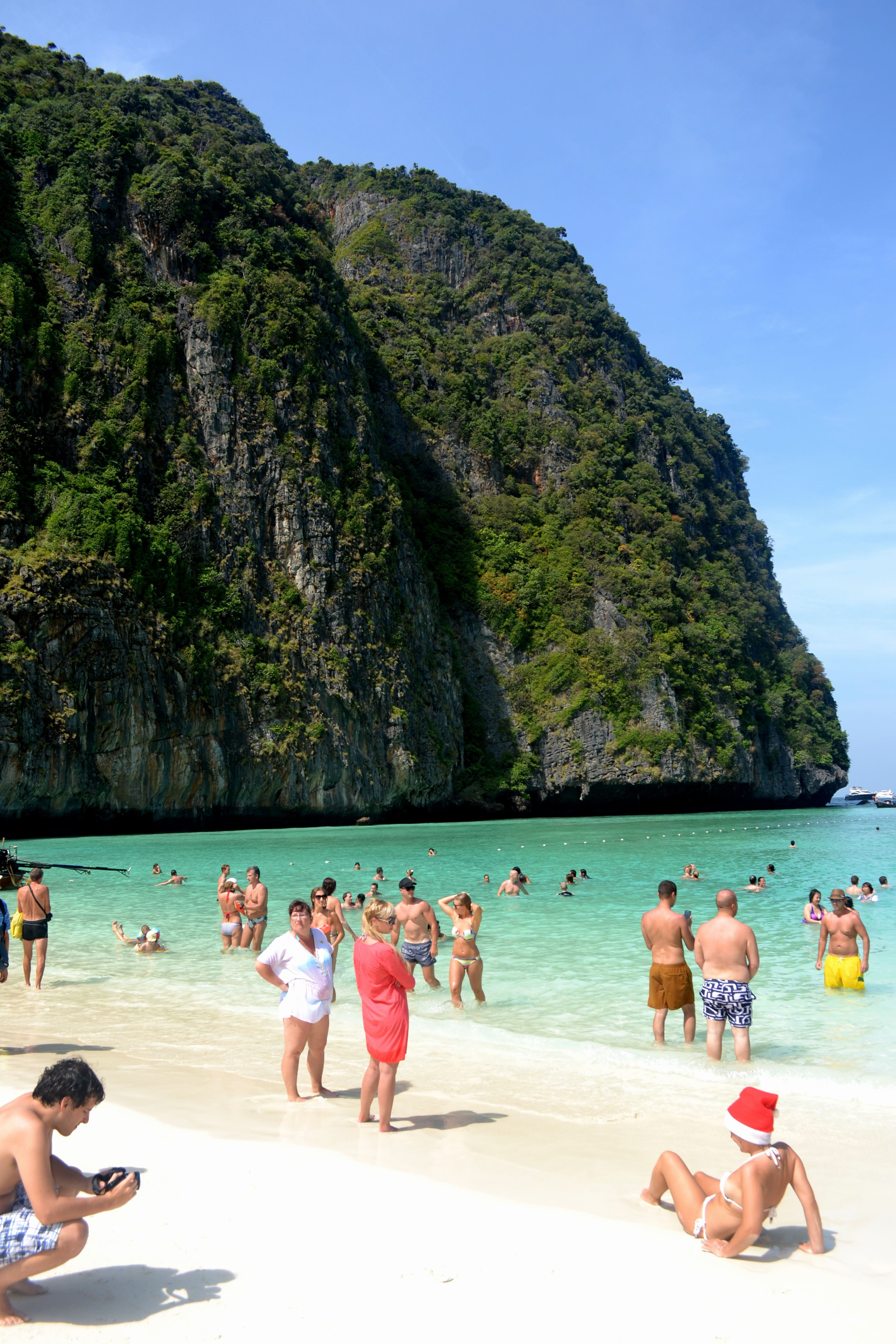
Loh Dalum Beach is still beautiful, so long as you keep looking out to sea. Behind you, there is a line of bars with big sound systems and bigger neon signs. There is EDM at Slinky, dubstep at Stones and reggae at the Chillout Bar.

Sometime around nine, the DJ’s jerk up the volume and bare-chested performers run onto the stage and juggle with burning batons. One swings two burning balls connected by a chain around his torso and between his legs. Then two of them douse a rope in petrol, light it and swing it with increasing speed and invite volunteers to skip with it. Plenty try. Buckets make you do things like that.

When the sun starts to set, every guesthouse and restaurant on the way to the beach brings out a tray of plastic buckets like children use for sandcastles. Each contains a packet of straws, a quarter bottle of Sang Som whisky, a Coke and an energy drink. The idea is to tip all the drinks into the bucket and suck them up through the straw until you are hammered enough to skip with a burning rope.

The Coke and the energy drink keep you alert when, by rights, you should be asleep in a corner and you think you are fine and get another bucket and then it is sometime in the afternoon the next day.

Slinky has a stage on the beach so you can look out to sea as you dance. There is a dead tree in front of it with its trunk stripped, its branches lopped off and two slats of wood nailed to the top to make a platform just big enough to stand on.

Throughout the night, when I was there, travellers tried to climb to the top of the tree to dance on the platform in front of the crowd. A Scandinavian guy powered himself up in three fluid movements, an Irish guy got partway up then slithered to a giggling heap on the sand, and an English girl squeezed herself half onto the platform but could neither stand up nor climb down and stayed where she was, with her arms and legs waving uselessly like a beetle on its back.

It is all good fun and an essential stop on the Banana Pancake Trail; but when the effects of the buckets have finally worn off, you might start to imagine it from a local’s perspective. “It puts money in their economy,” some travellers shrug.

Yet there is disquiet back home if a Polish shop opens on the high street, and outrage if planning consent is given for a mosque. Professionally intolerant columnists write another 2,000 inflammatory words, and badly-spelled bigotry is circulated on Facebook. Meanwhile, in Thailand, the children and grandchildren of the angry people have taken a sleepy island and made it into a version of Ibiza.

It is Leonardo DiCaprio’s fault. The Beach was filmed on Ko Phi-Phi Le, even though it was set in the Lower Gulf Islands on the opposite coast. It is a fifth of the size of the main island, Phi-Phi Don, which itself is only five miles by two, and as stunningly beautiful as the book says it should be.

It is a bit less crowded than Times Square, and slightly more relaxing than the running of the bulls. Boats crowd into the tiny bay, dripping oil into the lovely cyan water. The roar of the motors echoes around the cliffs. Thousands of feet kick the pristine sand into a lunar landscape disaster. Tourists excited to be standing where DiCaprio stood let crisp packets drop and blow about the beach until they get stuck into crevices. They pose for their Facebook profile shots and a wave snatches up their Sprite bottles and bobs them out to sea.

In all the noise and confusion, irony slips by unnoticed.

© Richard Senior 2015

Peru between the Sights

coca cola edit

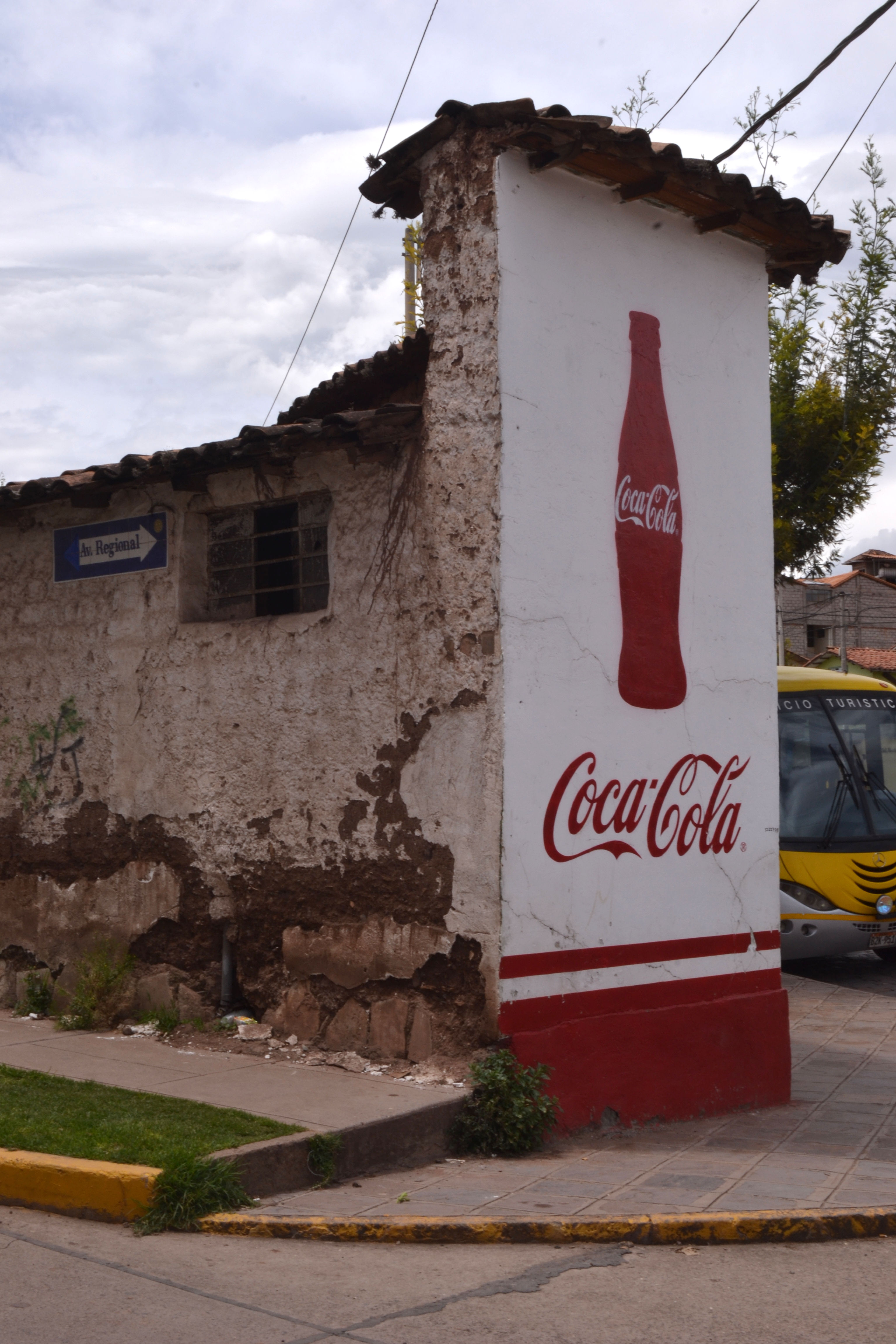
It was a dark restobar with a wobbly iron staircase, terracotta floor tiles and stacked Coca Cola crates.

Two old men were having a one-sided fight outside. The first lurched onto the street and hit the other on the shoulder in the way that you might greet a friend. The second took it badly, started shouting and pummelling the drunk man’s shoulders. He kicked him in the arse and he fell over and lay as helpless as a bug upside down. A policeman saw them, strode over, helped the drunk man up and sent both of them on their way.

Aguas Calientes began, a century ago, as a camp for railway workers and still looks as if it might be abandoned on half a day’s notice. The buildings seem to have been put up in a hurry and occupied before they were finished. The only road out leads up to the mountains. The railroad alone links the town to the rest of Peru.

The tracks serve as the high street and shops and restaurants open straight onto the platform. When the train approaches, a man in a cap strolls out of a bar and onto the track and waves a red flag and pedestrians shuffle aside. The train passes and whistles and the man with the flag goes back to his drink and the pedestrians pick up their journey.

DSC_0585

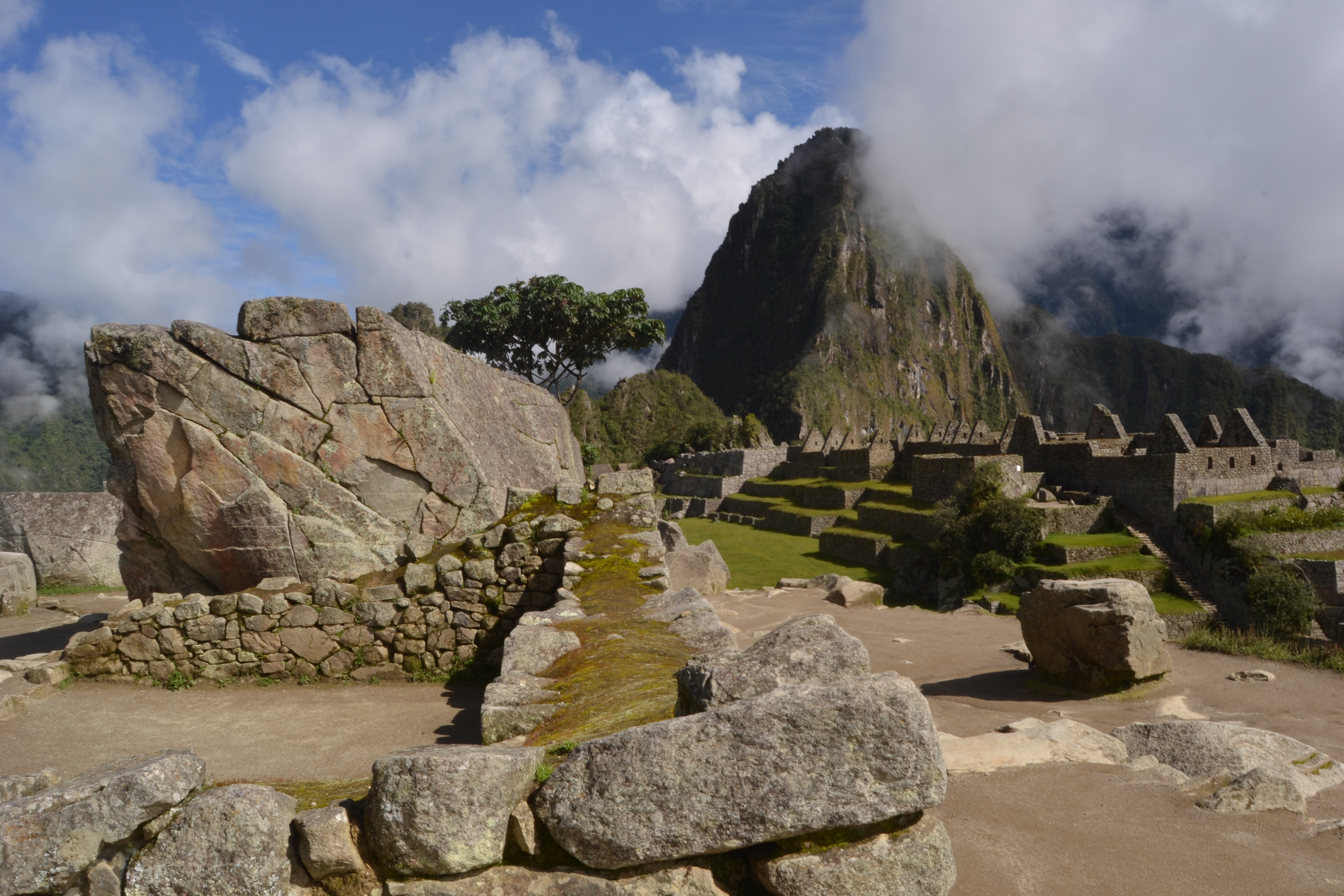
I had reached Aguas Calientes the hard way, via the Inca Trail, and seen a glimpse of Machu Picchu at the end. I got back on the bus to the mountains in the morning to see it properly.

There had been a landslide a few days earlier and there were rocks the size of houses at the side of the road. A team was working to clear them but progress was slow; sledgehammers made little impression on rocks of that size. There were more rocks overhanging the road and it seemed as if a sneeze might dislodge them and if one had fallen with the bus underneath there would have been nowhere for the driver to swerve.

There was a boulder in the middle of the road near the top, blocking it to traffic. The bus stopped and disgorged the passengers and we walked round the corner, up the hill, to another bus which took us the last few hundred yards.

Around lunchtime, then, I took the two buses back to Aguas Calientes and bustled onto a train to Ollantaytambo, just as it was about to leave, and gazed out of the window at the angry river, an Amazon tributary, and the verdant mountains either side, and adobe villages with political slogans painted on walls, and Quechua ladies leading llamas, and tethered donkeys and free-ranging pigs, and a dog trying to face down a bull which was roped to the ground from a ring in its nose.

DSC_0473

The station was a chaos of bewildered travellers and persistent vendors:

“¡Taxi! ¡Taxi! ¡Cusco! ¡ Taxi!”

“¡Choc-o-late!”

“¡Cusco-Cusco-Cusco!”

“¡Empanadas!”

“¡Taxi, amigo! ¡Taxi!”

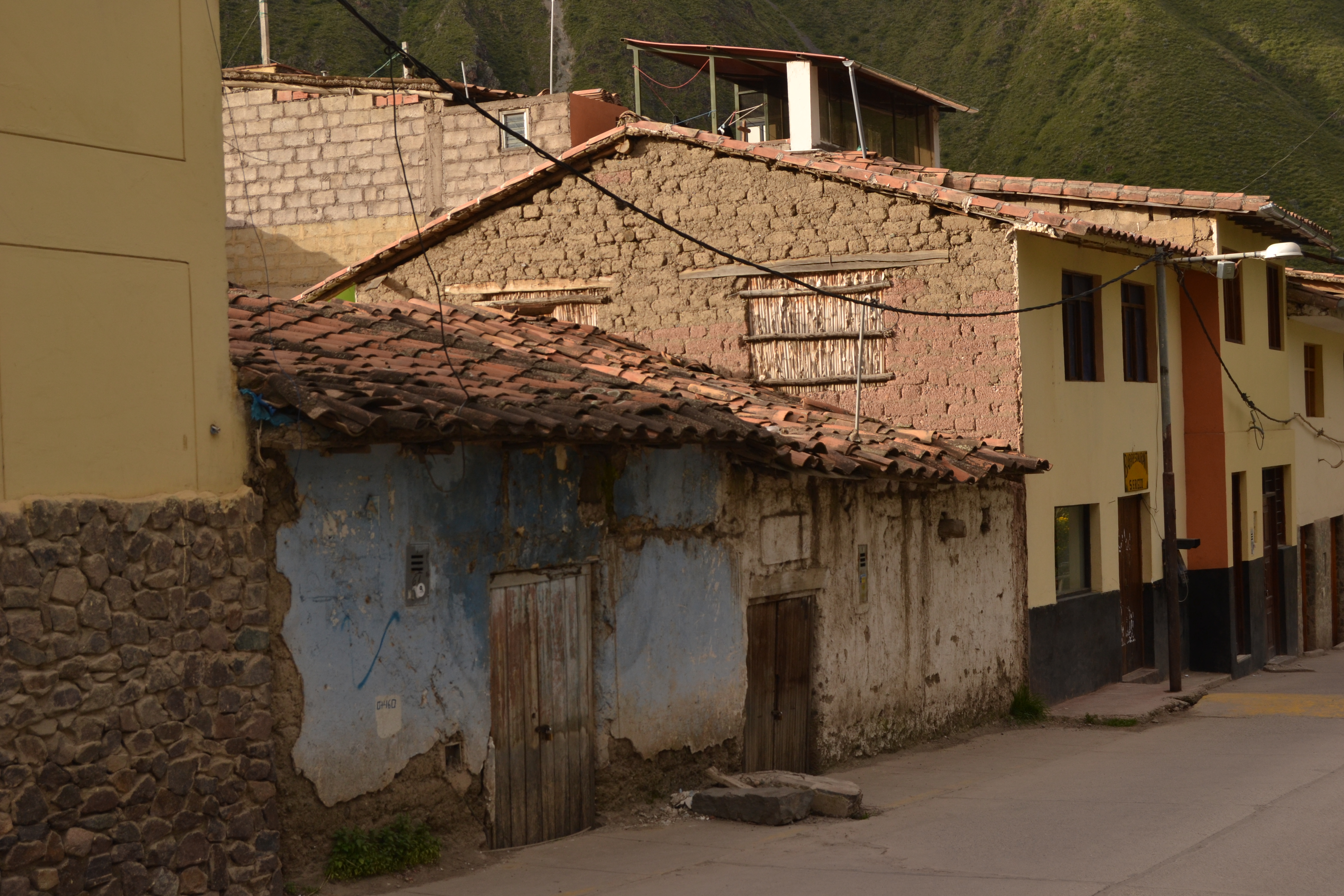
I forced my way through and got on a bus to Cuzco. I had stayed there before but had only seen the Centro Historico and the scenic route out past the Incan ruins of Saqsaywaman. The western suburbs are nothing like that, with rubble and weeds where the pavements should be and houses of unpainted concrete and rusty rebar sticking out of roofs and people buying provisions through bars on the doors of the shops.

As so often, the bits which the tourists see have little to do with the lives of ordinary people who live there.

© Richard Senior 2015

Rīga, You’re Lovely, but Please Let Me Sleep!

DSC_1189

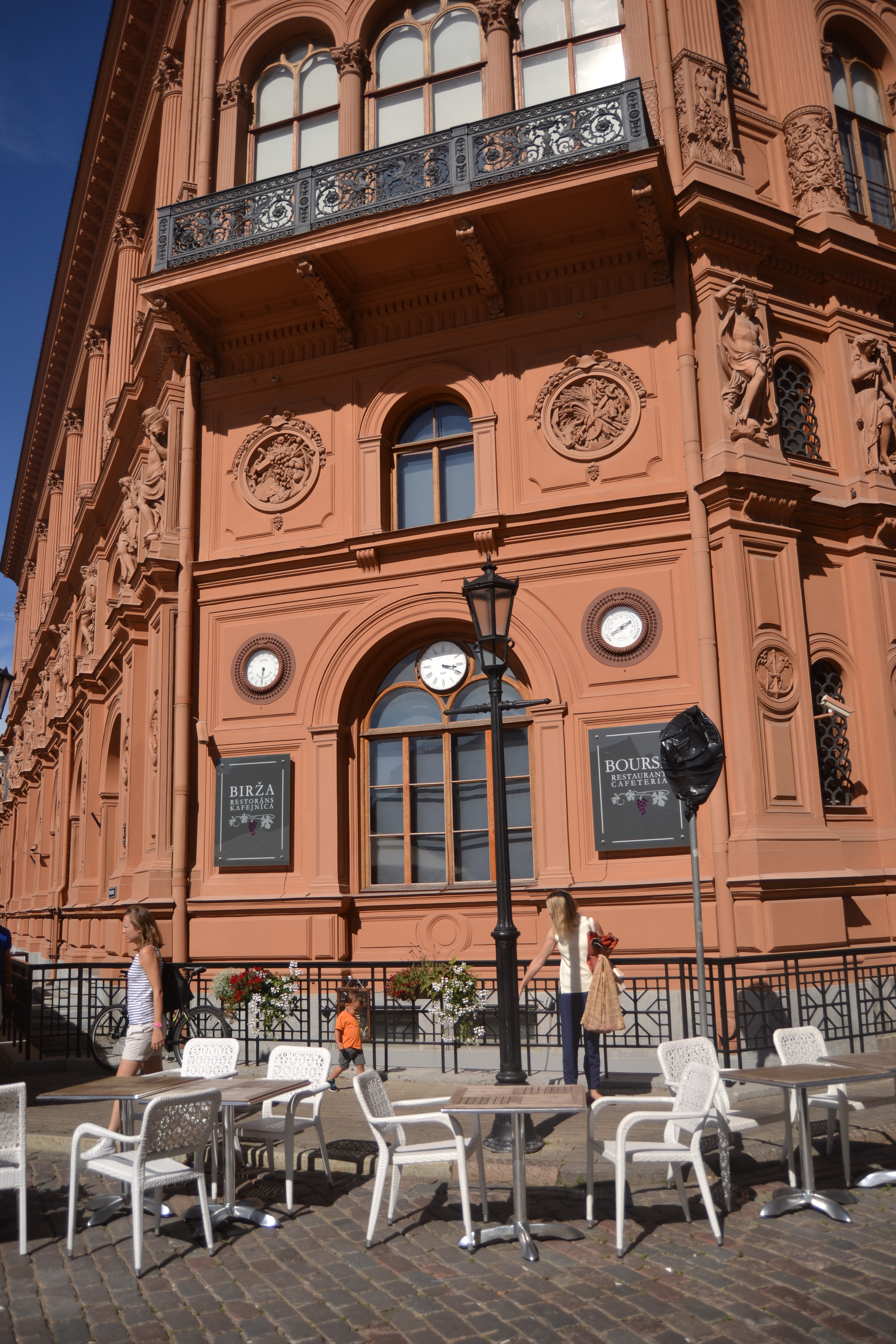
A breeze blew off the Daugova River and tempered the munificent sun. Trams howled and clanked along the boulevards which frame Old Rīga. Cobbled lanes converged in squares with verdigrised spires, turrets and towers, gargoyles, grotesques and columns.

The sun brought out the Beautiful People. They strolled in the squares, ducked into shops and draped themselves over chairs at tables under awnings, accessorising with cigarettes and espressos; they sprawled and frolicked in Batejkalna Park across the boulevard at the edge of the old town.

It is a pleasant park on a sunny day with its sloping lawns and meandering paths and cast iron standard lamps. The Pilsētas Kanāls divides the park into two and hands out half each to the Old Rīga and Centrs neighbourhoods. A pretty wooden launch from 1907 chugs tourists along the canal. It chugs under bridges, past a fountain, through a tunnel, alongside the Central Market, then chugs out onto the river under the railway bridge and the road bridge and back through the marina, past moored yachts, and round again to the canal.

DSC_1154

The market was the biggest in Europe, once. Its buildings were made from old Zeppelin hangers. The stalls spill out into the surrounding streets and occupy several blocks. You can buy a whole salmon, a big sack of cat litter and a Soviet air force uniform, if they all happen to be on your shopping list.

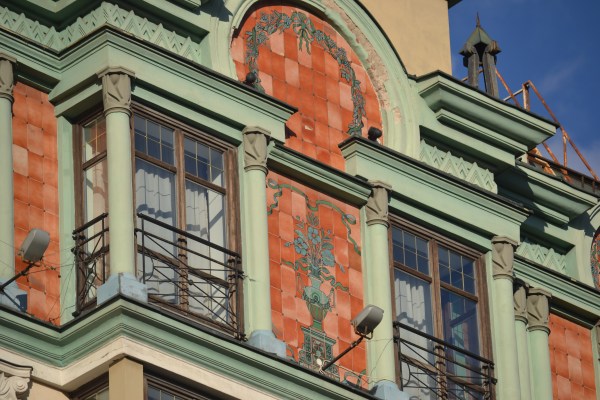
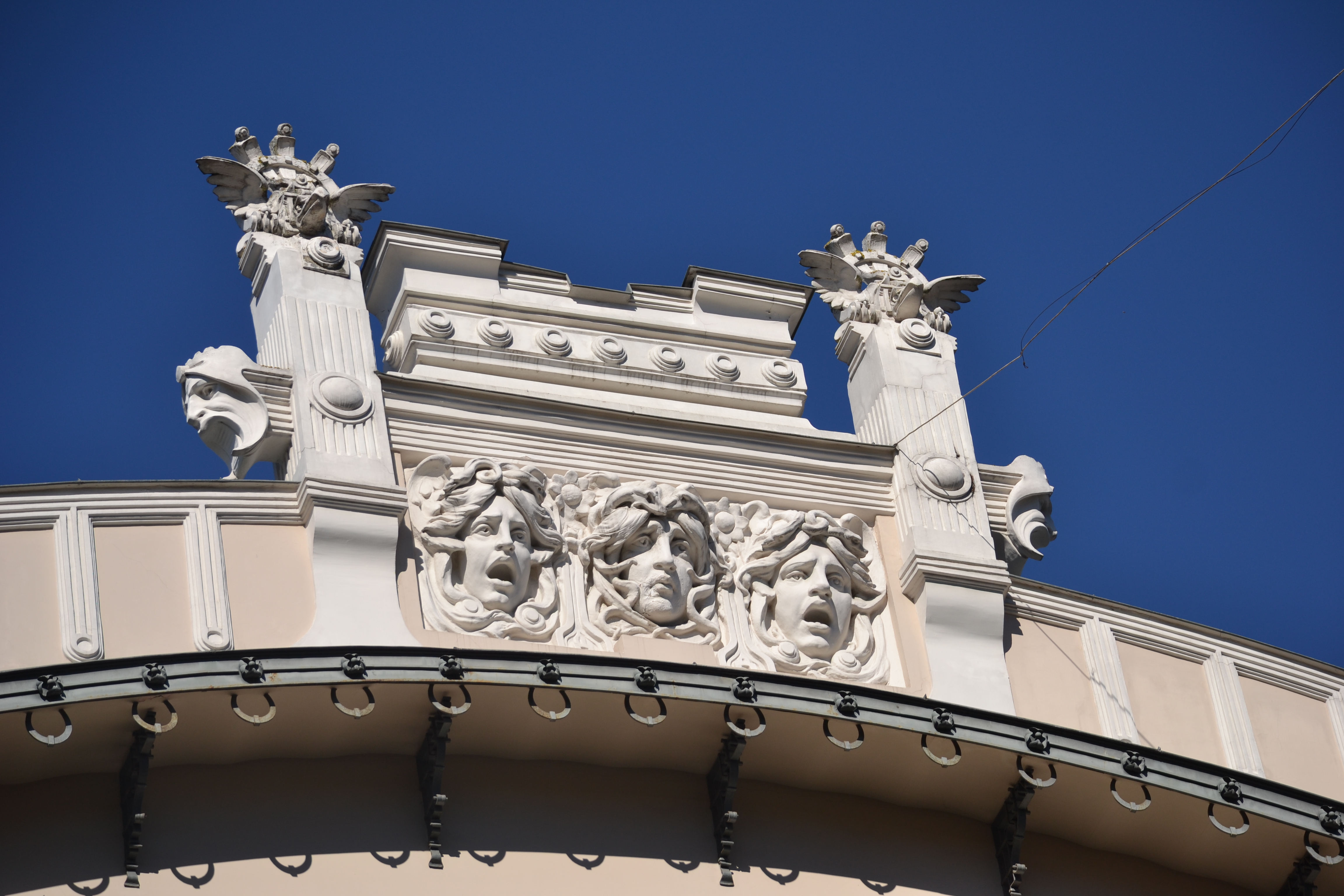
Centrs is quieter than Old Rīga but just as beguiling. It has more Art Nouveau facades than you will see in one place anywhere else in the world, and they are as exuberant as anything but Gaudí’s Modernista buildings. Mikhail Eisenstein, father of Sergei, the Battleship Potemkin director, designed some of the more arresting, with eagles, sphinxes, lion’s heads, keyhole-shaped windows, and human faces with gaping mouths and expressions which suggest they have just seen the architect’s bill.

I had a room in the top of a townhouse right in the middle of Old Rīga. It was just a mattress on the floor of a room little bigger, but I was happy enough with that. Or at least I was until I tried to sleep and found out how good the sound system was on the late bar round the corner. Earplugs just muted the higher frequencies and seemed to trap the bass in my skull.

I got up and got dressed and went out in the end. It was a warm night and I walked round Old Rīga, then sat a table at a bar in the square and had a couple of beers. The music had stopped by the time I got back and I slept then, finally, for a few hours until the other guests began to get up. Whenever the heavy front door slammed shut, as it always did, it shook the whole fabric of the building; two people walking down the corridor was like a surprise attack by a battalion.

DSC_1328

The next night was the same, except that people moved into the room next door a couple of hours after the music stopped and the walls were so thin that their conversation was as clear as if they had been sitting on the edge of the bed.

I logged, fuzzy-headed, onto a booking site and paid a lot more than I normally would for a nice hotel overlooking Batejkalna Park. It was a lovely room and, on a normal Saturday, it would doubtless have been as peaceful as I had hoped; but that Saturday was the Rīga Festival and right across the street there was a 24-hour basketball marathon with booming commentary and amped-up EDM.

Fine, then, I thought, perhaps I will sleep when I get to Estonia.

© Richard Senior 2015

Eating Up Vietnam #2: Nha Trang

In Nha Trang the hawkers were always there but I did not notice them anymore. They sold friendship bands, cigarettes, playing cards and everything else I could manage without.

But as I sat on the sand and gazed idly out at the South China Sea, I noticed a lady in a conical hat with a pot of cooked lobsters hanging from a yoke on her shoulder. I got up and followed her across the beach, caught up and asked her how much. “Hundred thousand Dong,” she said. Just under three pounds; four and a half dollars, US.

She segmented the lobster, so the meat was get-at-able with chopsticks, and halved a lime and squeezed the juice into a pot and stirred in pepper to make a simple dipping sauce. It was as much as the lobster needed.

I wandered over to the fruit vendor later in the afternoon, just as she was about to pack up, and I only wanted a pomelo, but she stuffed a bag with two of those, a dragon fruit, a couple of bananas half a dozen mandarins, and nearer a dozen rambutans. “No, no,” I said; “I can’t eat all this”.

Okay for tomorrow,” she insisted and forced the bag on me. I did my best with it that afternoon and finished the rest in the morning, sitting on the beach and peeling fruit with my Swiss Army knife.

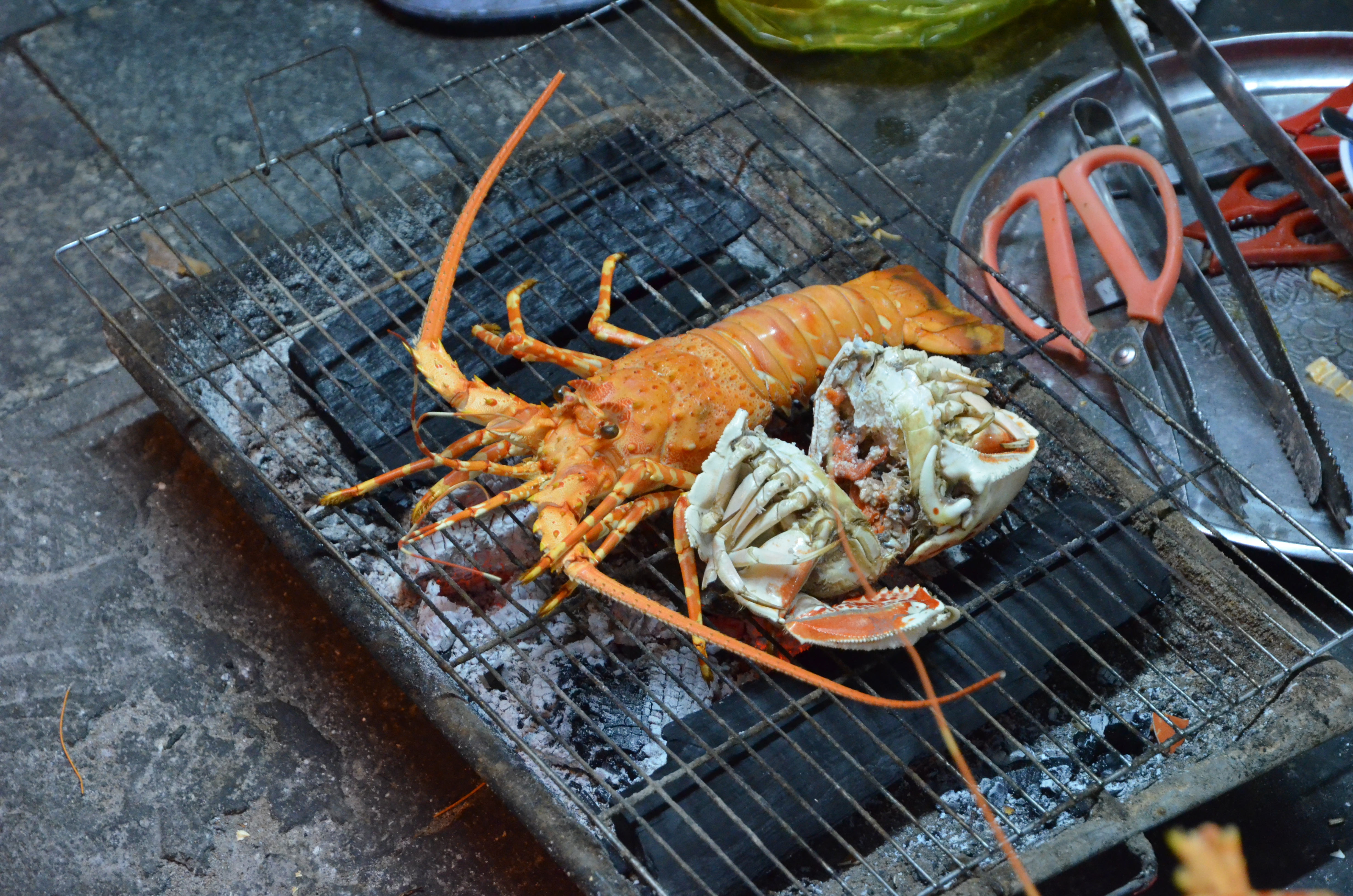
Somewhere around midday, an old lady arrived and laid down her yoke and began to set out her stall. She lined up four pots, one filled with spiny lobster, a second with crabs, a third with tiger prawns and a fourth with sea snails, then shook ice onto platters and topped each with a little of the seafood and placed them on top of the pots. She lit the charcoal in a cast iron pan suspended from the yoke, laid a grill over it and let it burn until the charcoal glowed red and grey.

This time, I got a lobster, a crab, two tiger prawns and sea snails dotted with curry paste for my 10,000 Dong. For the same money in London, I would get a miserable sandwich from one of the corporate chains and the mayonnaise would splat on my shirt and ruin my mood. Even an old, small, cooked-from-frozen lobster would cost twice as much back home.

There are too many tourists in Nha Trang for the restaurants to be reliably good, but I found one on a quiet street a few blocks back from the beach, which was as dark and ramshackle as good restaurants tend to be in Southeast Asia, and had a menu of un-touristy dishes like stewed frogs with aubergine in turmeric broth. I ordered miến lươn trộn, which is sliced eel stir-fried in a hot wok and tossed with beansprouts, glass noodles, shredded mint and chilli then sprinkled with onion flakes.

I was done, then, with Nha Trang and went back to my hotel, collected my bag and got an overnight train heading north.

© Richard Senior 2015

Image via Shutterstock

An Onsen Town

Yamananka Onsen

“The Japanese have the same attitude to bathing as Frenchmen reserve for eating: they do it with a mixture of connoisseurship and physical abandon. A bath can be enjoyed alone, but it is more often taken with many others, keeping up with the latest gossip while scrubbing one’s neighbour’s back” – Ian Buruma, A Japanese Mirror

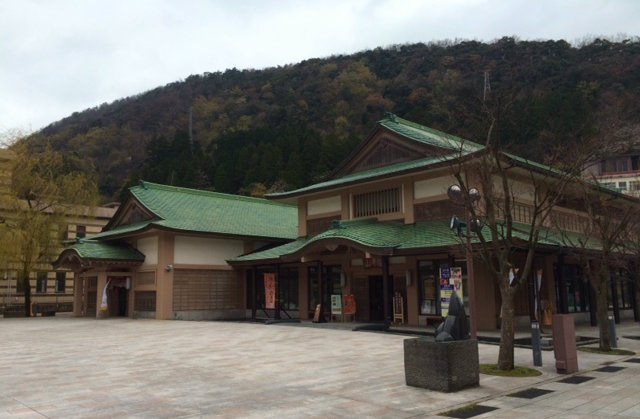
Yamanaka Onsen was deep in the mountains. It had rained and the road was damp and the mist clung to the peaks of the mountains. In the bottom of the gorge, a river followed the road in a series of undisciplined curves. It was a striking, mineral-rich green and flowed rapidly after the rain. A truss bridge stretched high across the river, triangular in section, violet in colour, describing a lazy S-shape. It led to a path through a park filled with cherry blossoms, and alongside the river, past a waterfall to a shrine and a 2,300 year-old cedar. Ryokans were clustered around the river on the edge of town.

It was the middle of the morning and the main street was all but deserted. There were no customers in the old wooden stores. It was early, yet, for the sake brewery, the tea-house and the soba noodle shop; and there were no tourists, but me, to browse the shops which sold the lacquerware for which the region is famous.

The town was built around hot springs and the two public bath houses, one for men and one for women, are centrepieces of the plaza.  The waters, at a temperature of 48.3 degrees Celsius and rich in calcium and sodium sulphate, are said to relieve “muscular pain, joint pain, shoulder pain, bruises, chronic digestive diseases, haemorrhoids, over-sensitivity to cold, fatigue, arteriosclerosis, cuts, burns, chronic skin diseases and motor paralysis”.

I slipped my trainers off and went in, only to be stopped at the door and made to understand through urgent, embarrassed gestures that the smaller building across the plaza was the men’s bath house.

I had come unprepared, as ever, and had to hire a towel and buy a sachet of shower gel. There were lockers in the foyer for shoes and valuables and, with those locked away, I went through to the wood-panelled changing room and folded my clothes into a basket and slotted it onto the shelf. It is illegal to be untidy in Japan.

It was a bright, spacious bath house with a pitched wooden ceiling and high windows running the length of the room. The walls and the floor were tiled in muted colours; there was a tiled pillar in the centre of the bath with a plinth you could sit on and lean your back against it. Around the edge, there were shower heads and mirrors set low. I took a plastic stool from the stack, sat down and showered, then padded across the room to the bath and slid into the hot water. The idea is to soak for a while, get out, shower off and soak again. I have no idea whether it does anything for the conditions it is said to relieve, but it is without doubt relaxing.

There were a couple of locals bathing, perhaps connoisseurs but thankfully not acting with the physical abandon which Ian Burumu mentioned in the extract above. They politely ignored me and I politely ignored them. We had no language in common to gossip, in any case; and I was not going to scrub anyone’s back.

© Richard Senior 2015  

Picton Picked On

DSC_0827

I spent the night in Picton because that was where the ferry docked.

It is on the same sort of scale as the arse-end-of-nowhere village I grew up in, with about half a dozen streets and a harbour. Notable people who have lived there are said to include the 37th-to-last man to be hanged in New Zealand. It has at least one heritage building, and Katherine Mansfield wrote a short story, The Voyage, about people leaving it for Wellington.

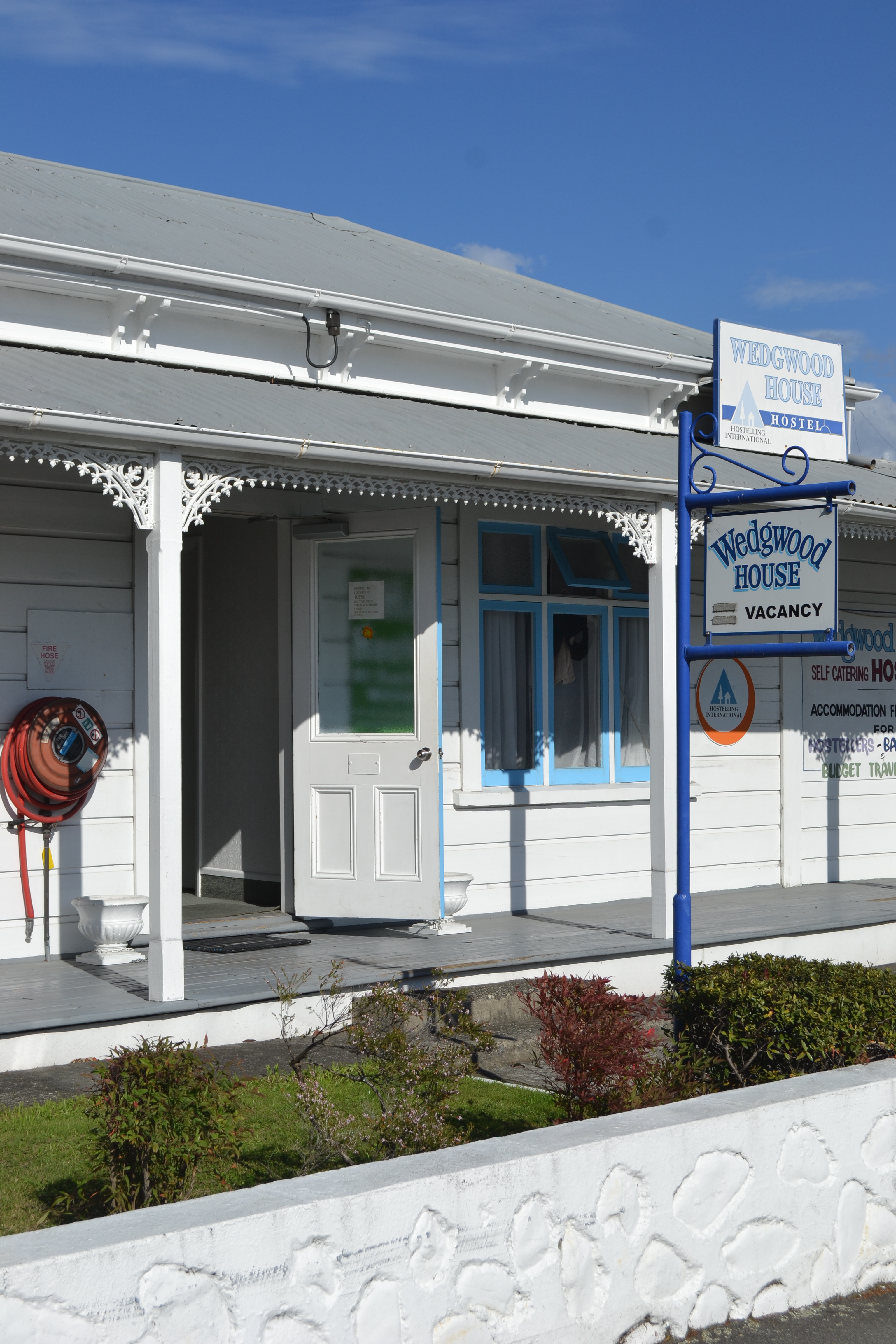
My hostel had the air of a seafront hotel in winter. I had a four-bed dorm to myself. A clock ticked oppressively in the communal room. A Japanese guy, sitting alone, was working his way through a big box of beers and there were two rows of empties on the table. There was a European guy at the other side of the room, ignoring him. He mimed deep concentration on his book as I walked in, so he could get away without saying hello. The Japanese guy was too distracted by the beer. We three seemed to be the only guests.

It felt wrong, somehow, to make noise in the kitchen, so I cooked as if someone were sleeping nearby, ate quickly and had an early night; I was asleep well before ten.

DSC_0826

I was full of energy and cheer in the morning, then, and went for a run around Picton. It did not take long. Once I had showered and changed and tidied my backpack to kill some more time, there was nothing to do but check out and walk slowly to the bus interchange. There was still plenty of time to see the hulk of the tall ship, Edwin Fox, before I caught my bus.

It was built in Calcutta in 1853 (Edwin Fox, that is, not the bus) and took troops to the Crimea, convicts to Australia and migrants to New Zealand before it was retired and used as a bunker for coal. It was left to rot on a beach for decades and it is in a shocking state now. But that makes it more interesting, to my mind, than a carefully-restored ship on which the only original thing is the name.

It is claimed as the Oldest Merchant Sailing Ship in the World and the Ninth Oldest Ship Afloat, but I find it hard to believe assertions like that because they rarely turn out to be true.

I was bored enough to check the point, this time, and sure enough a quick Google search threw up a merchant sailing ship named Charles W Morgan which was built twelve years before Edwin Fox and still sails around New England. Edwin Fox, moreover, is in a dry dock, so it is not afloat at all, let alone the ninth oldest ship afloat.

But none of that matters much. It is an interesting old ship, and they ought just to leave it that.

© Richard Senior 2015