A Fresh Look at Bangkok

DSC_0210

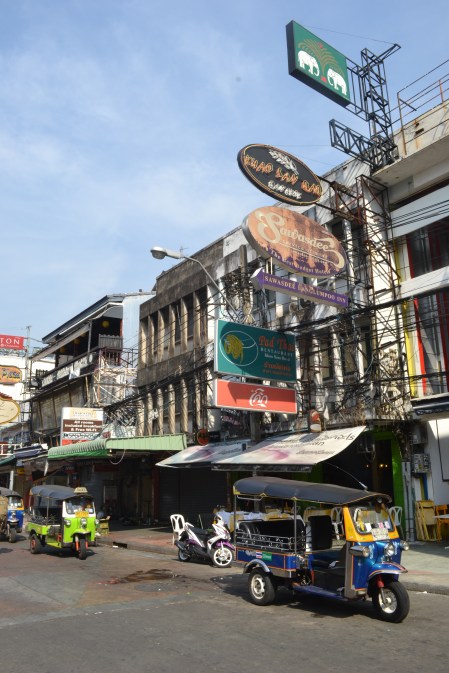
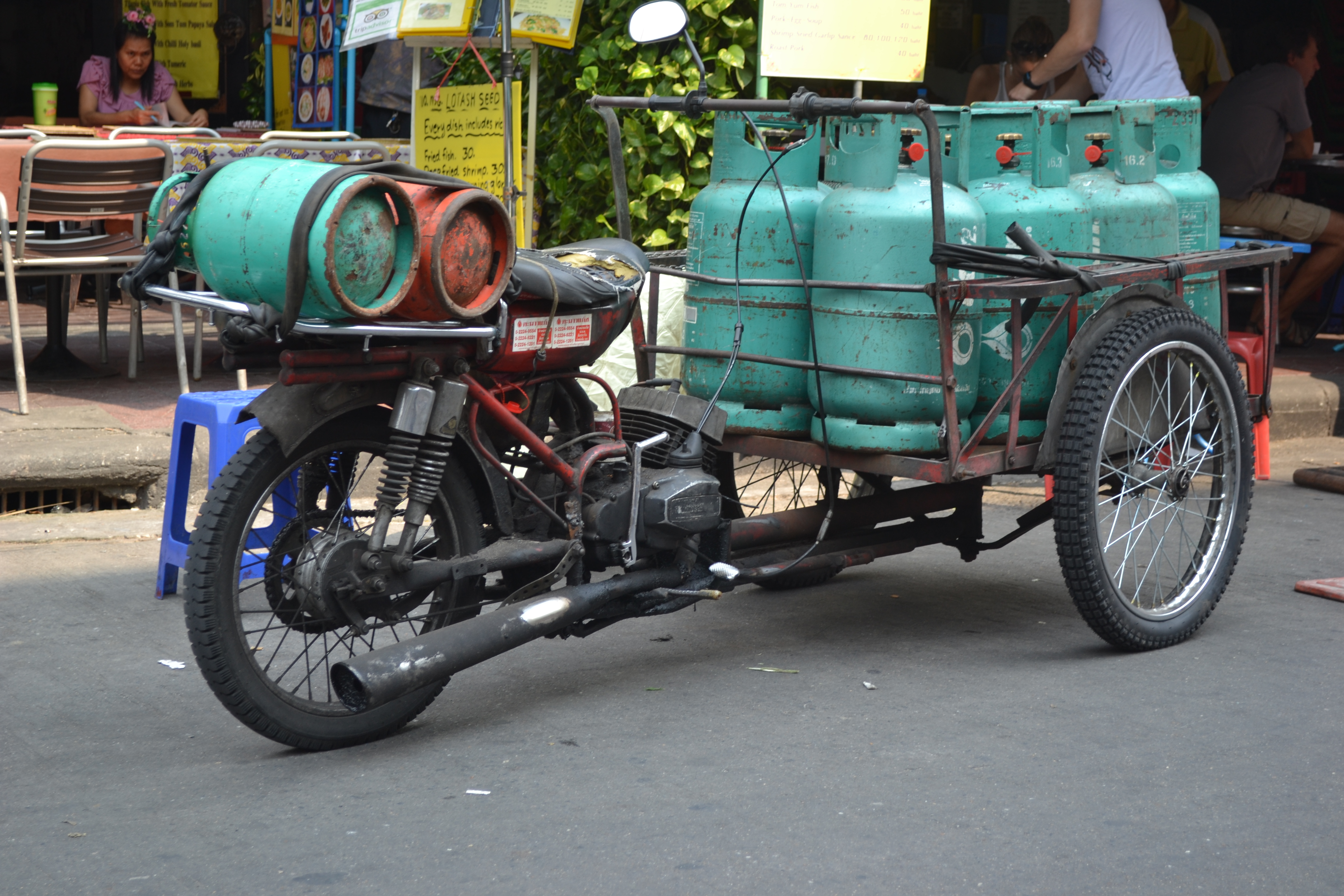
The fruit vendor woke me up when she drove her van down Soi Rambuttri, calling out through a megaphone attached to the roof. The brush seller came after her on a motor tricycle with a putt-putt engine and hee-hawing horn. He had bottle brushes, paint brushes, wire brushes, flue brushes, and every size and every colour of sweeping brush. But no one was buying brushes that morning.

The shopkeepers had rattled up the shutters a few hours before; the barmen had dragged the chairs and tables back onto the street. Travellers sat at a few of them with coffees, cigarettes and Lonely Planet guides; the rest were empty as yet. Tuk-tuk drivers were massing outside the guest houses, like reporters at the home of a shamed politician.

An early ice cream man pedalled past my window on a tricycle with an icebox slung from the handlebars and a tinny chime which suggested a theme from children’s TV. Dee-de-dee; dee-de-dee; dee-de-diddly-dee-de-dee. Behind him was a man with a hundred year-old pushcart piled up with watermelons, who dinged a bicycle bell on the handle as he shoved it down the street. No one was buying watermelons either.
DSC_0058

The street food vendors had claimed their pitches along Rambuttri, around the corner and down the next street. The pad thai, the spring rolls and satays are familiar enough to the travellers passing through, but the rest is new and not all of it welcome, least of all deep-fried crickets and bamboo worms. Thais like them well enough, but if you tell them we eat snails in Europe, they are disgusted.

By the middle of the morning, the roads were an anarchy of honking buses and beeping cars and crazy, fearless motorcycle taxis darting around them; and the pavements were crowded with people and everybody was constantly in somebody’s way. But there were none of the hundred explosions of temper which punctuate every British day, and too readily end in a whirl of fists and knocked over tables. No one seemed to mind very much if someone bumped into them or stood in their way for a moment. And it is easy to say something glib about Buddhist serenity, but it is as much about keeping face.

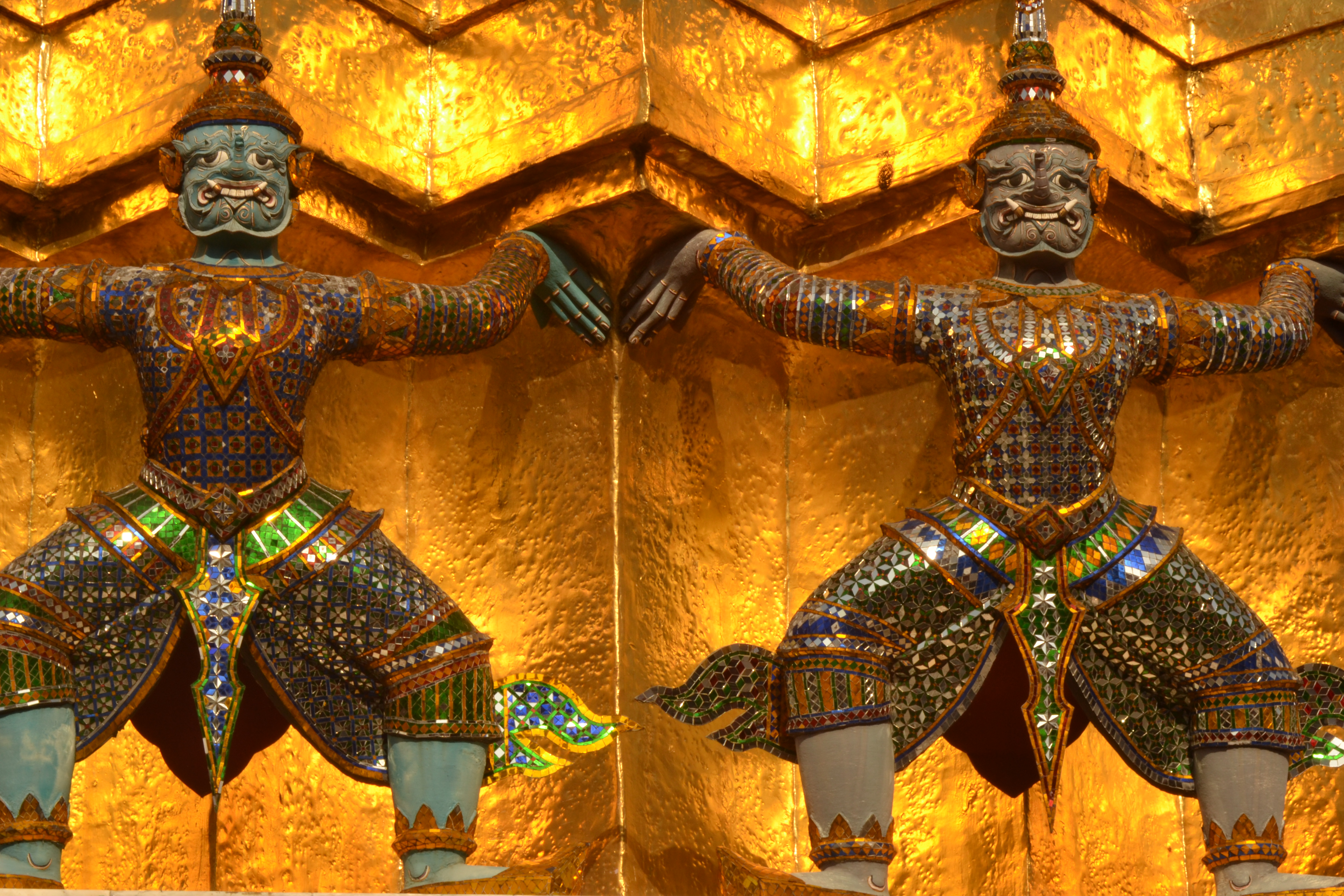
The soaring eaves and gilded stupas of Wat Phrakaew and the Royal Palace shimmered in the haze at the other side of the Sanam Luang public gardens.  There are something like 500 temples in the city and monks are as much an everyday sight as nuns in Rome and estate agents in London.
DSC_0610

There is a long stretch of pavement near the most important temples filled with dozens of stalls selling amulets. The devout believe that they keep them safe or bring them luck. There are effigies and statuettes, medals and coins, bracelets and pendants, stones and used false teeth. Collectors peer at them through magnifying glasses. Groups of monks browse the stalls. Travellers stop and finger the amulets and pretend that they know what they are looking at.

A few blocks away, there is a street on which the shops sells nothing but Buddhas. There are tiny Buddhas and enormous Buddhas and all sizes of Buddha in between; there are sitting Buddhas and lying Buddhas, fat Buddhas, thin Buddhas; Buddhas made of plastic and Buddhas made of steel. Then, next to that is a street on which every shop sells policemen’s caps.

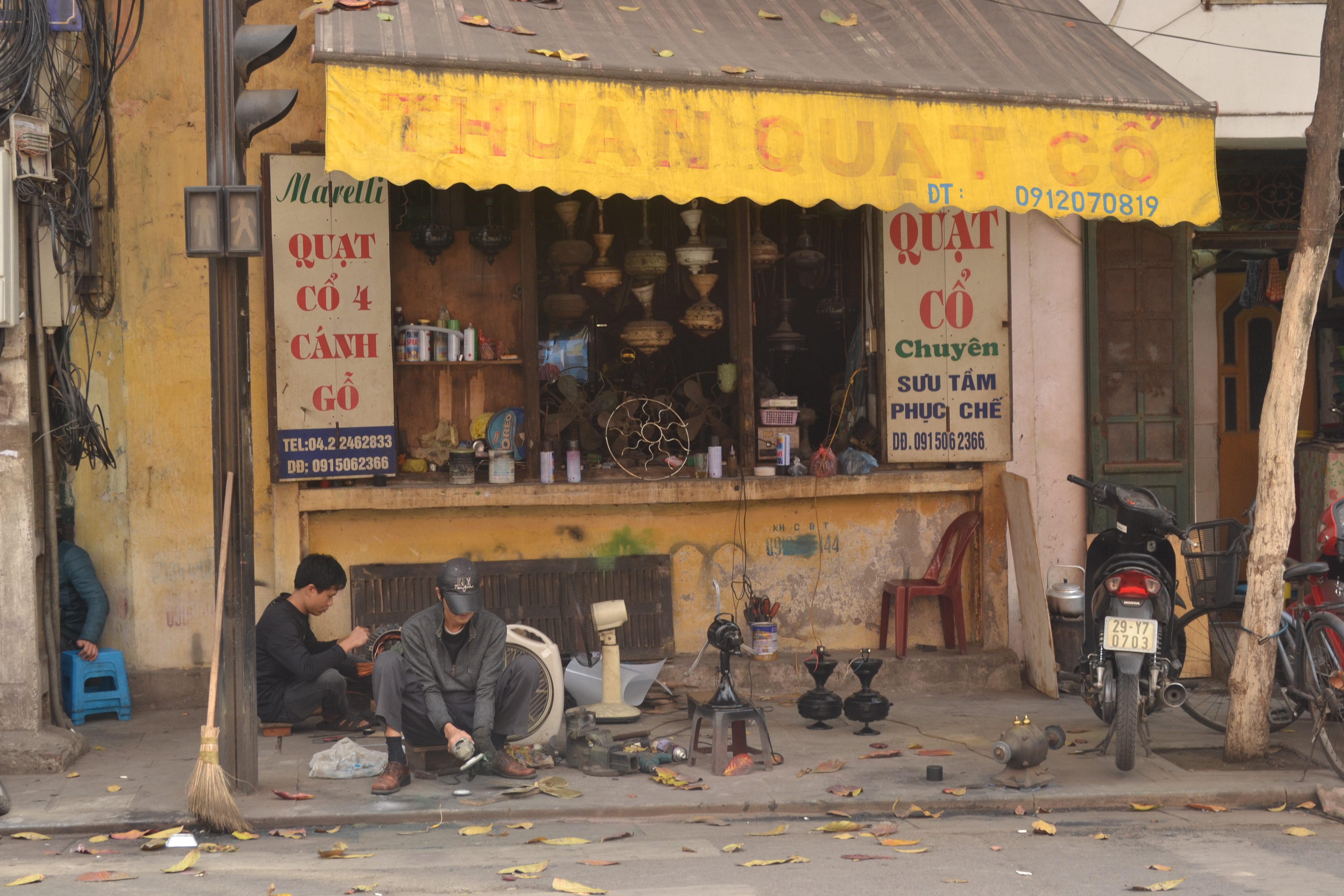
Elsewhere, there are workshops crammed with boxes and drums, bicycle frames, engine parts, pieces of wood and old bathroom fittings, and right in the back there will be an old man engrossed in repairing a pocket watch or stripping an alternator down. Who knows what his business is? There is never a sign (even assuming you know a ช่าง from a ช้าง) and it is often hard to see any connection between the things inside; much of it looks like junk.
DSC_0020

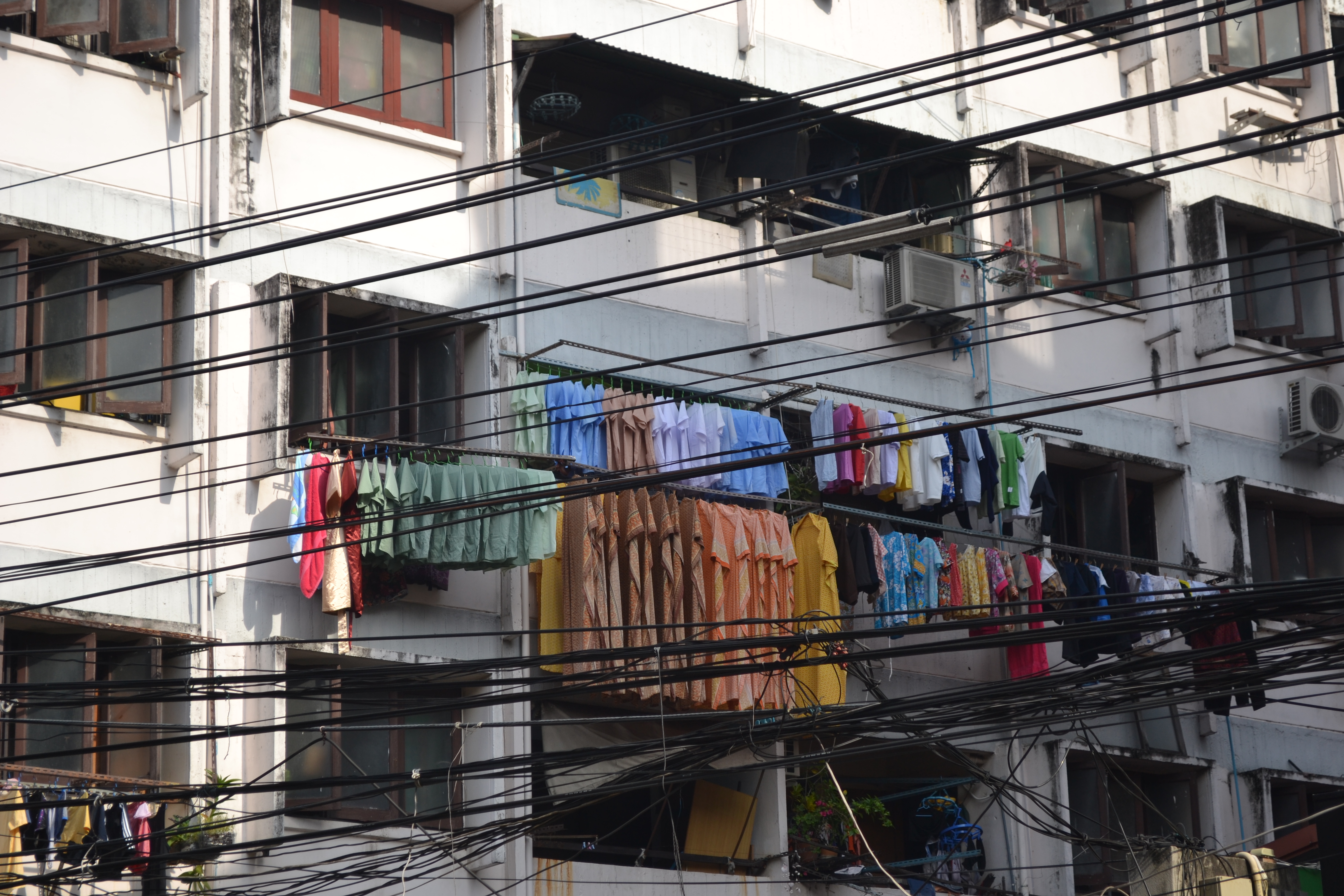
I know that, a couple of miles downtown, there are forests of office blocks which could be in Manhattan, and malls which might be anywhere in Europe, and all your favourite multinationals; and I know that the younger Thais might speak idiomatic, American-accented English, and eat at McDonalds, and stream the same movies and listen to the same music as us.

Yet travellers are way too quick to write off Bangkok as ‘Westernised’. So many people said it to me, so automatically, that it was obvious it was no more a view they had come to themselves than when the man in the pub recites something he read in a tabloid about the economy.

For all that is familiar, there is a great deal that is not; and plenty is all but unfathomable for the average farang traveller.

© Richard Senior 2015
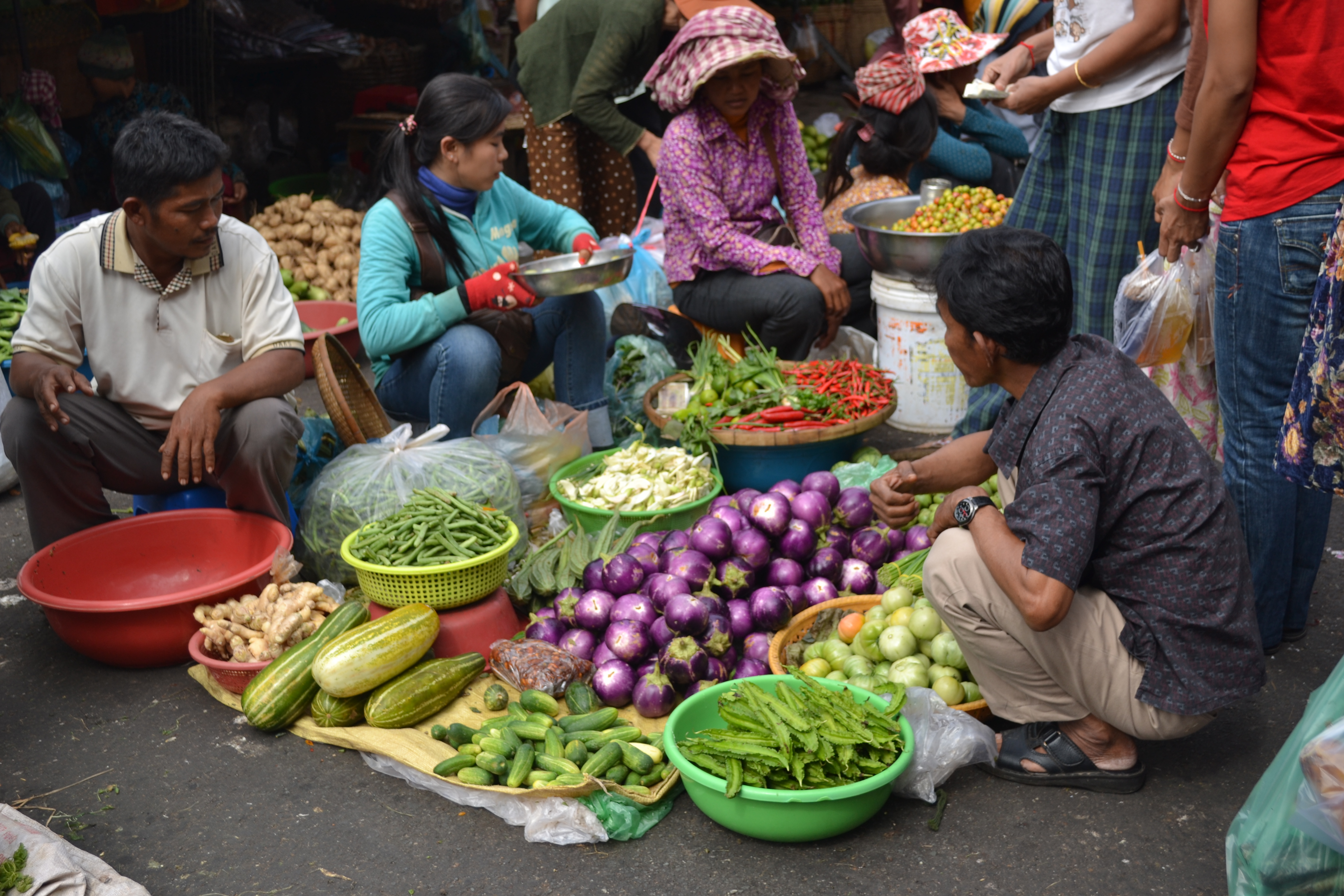
More than Just Fried Spiders: Eating in Cambodia

DSC_0570

Deep-fried tarantulas were an adventure too far for me, so I ordered prahok instead. The waiter tried to warn me off.

It is a popular ingredient in Khmer cooking, but the pungent, sewagey smell often revolts barangs (Westerners). Fresh fish is crushed, dried in the sun, salted and left to ferment in a jar for weeks, months and anything up to three years. It is added to all sorts of dishes as a thickener or condiment, and eaten on its own as a dip for raw vegetables in the style of anchoïade in the South of France. The taste is fine, as long as you stay upwind of it and take shallow breaths.

But there is more to Cambodian food than stinky fish and spiders. Meals are put together as they are in neighbouring Thailand with rice at the heart of them and a balance of textures and flavours: soups, salads, curries and pickles; something fried, something grilled, something sour, something bitter. But – prahok notwithstanding – Khmer food tends to be subtler than Thai with herbs more prominent and chilli restrained.

Take papaya salad. It is broadly the same dish whether you order it in Phnom Penh and call it bok lahong or order it in Bangkok and call it som tam; but in Cambodia the chillis are sliced and served on the side so you can add as many or as few as you like, or none at all if you please: in Thailand they are bashed up with the salad and it as hot as the cook decides.

fish-amok-921926_1920

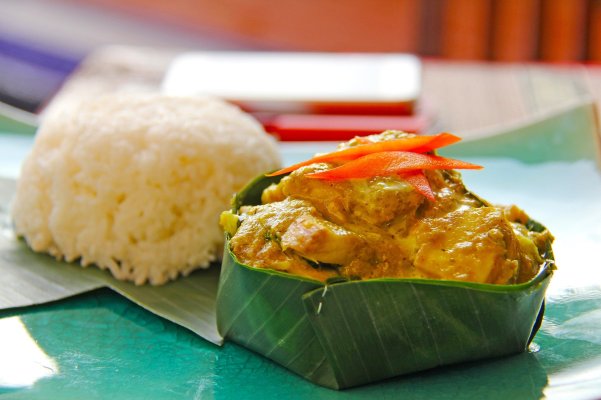
The Thais have their own take on amok trey, which the guidebooks call the national dish of Cambodia; but theirs, ho mok pla, is spicier. In the Khmer version, flaked catfish is mixed with coconut milk and a delicate curry of turmeric, lemongrass, galangal and shallots, and steamed and served in a banana leaf, then garnished with a sliver of red chilli.

There is crossover, too, with the neighbours to the east. Street food vendors in Phnom Penh sell a crusty baguette stuffed with slices of pork, slabs of pâté, coriander and pickled vegetables. They call it num pang but it is a rebadged version of the well-known Vietnamese bánh mì. Then again, every noodle shop in Saigon sells hủ tiếu Nam Vang, or Phnom Penh noodle soup. It is called kuy teav in Khmer and half of Phnom Penh slurps down a bowl of it for breakfast each morning.

Lok lak, the best-known Khmer dish after amok, is much the same thing as the Vietnamese bò lúc lắ (shaking beef). Strips of marinated beef are quickly stir-fried and served with sliced salad vegetables, lettuce and a dipping sauce. The idea is to parcel up a mouthful of beef and vegetables in a lettuce leaf and dunk it in the sauce.

I had it at the Foreign Correspondent’s Club in Phnom Penh, a lovely colonial villa on the riverfront. The shutters were open and the bamboo blinds rolled right up and the fans on the roof lazily revolved and the breeze from the Tonle Sap River wafted through the windows and cut the stifling air. Illuminated boats glided past as I sat and sipped an Angkor beer and ate the lok lak and unseen scooters snarled somewhere below.

© Richard Senior 2015
Amok image: via Pixabay 

Faded Huế

DSC_0180

The arches of the Trường Tiền Bridge soar and dip over the Perfume River, where barges which look two centuries old chug back and forth throughout the day, towards and away from the watercolour mountains far off to the west, and where, of an evening, traders spread their goods on blankets laid out on the bank, and street food vendors light their grills and the flames dance and the smoke coils up and the shrimps sizzle and scent the air, and big neon signs flash adverts from the opposite bank, and lights along the span of the bridge sweep from white to purple to yellow to blue to red to green and white again.

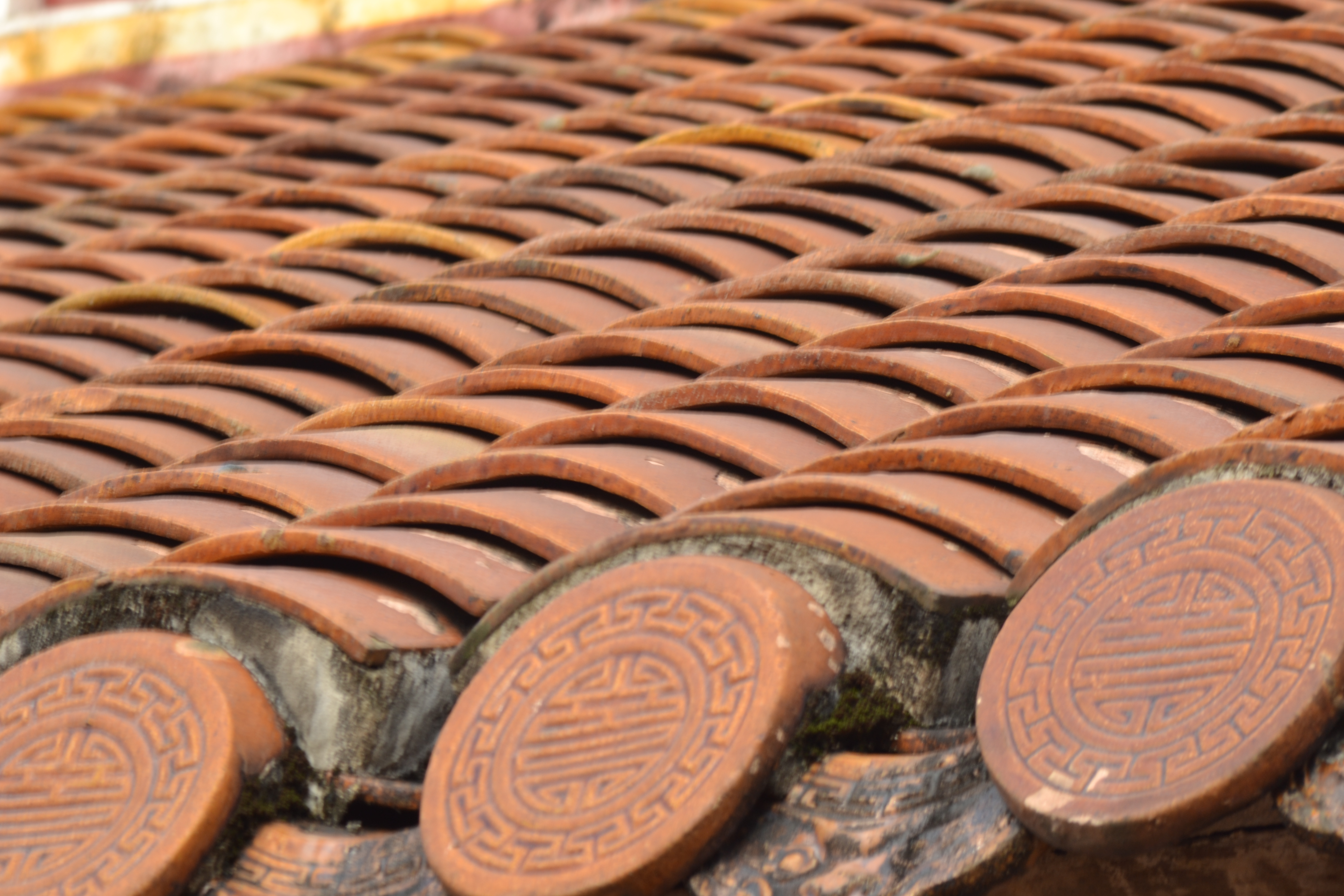
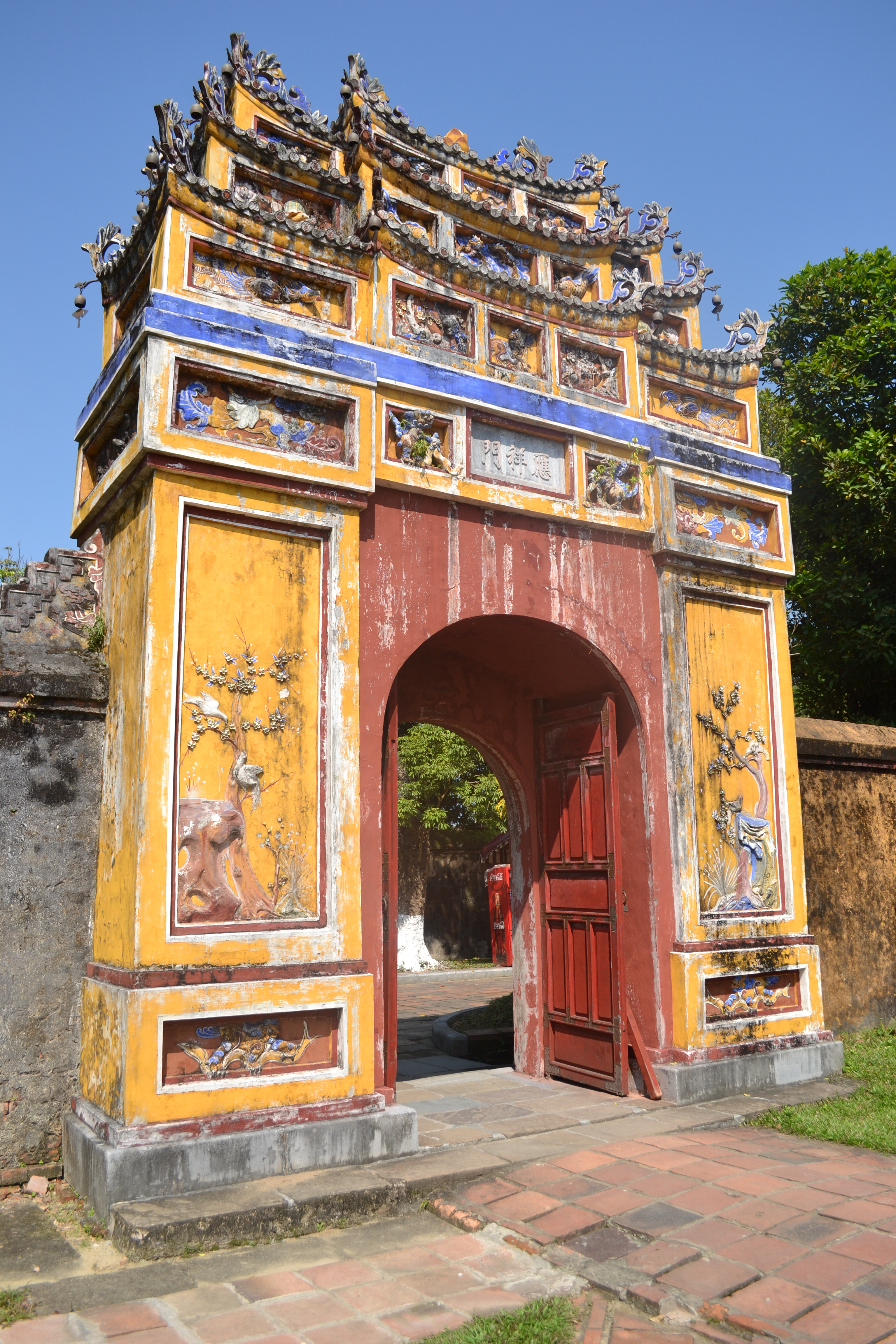
Huế was the capital for the Nguyển dynasty which ruled Vietnam from the start of the nineteenth century. A matryoshka of citadels, one inside the other, led through to the Forbidden Purple City, where the emperor lived with his concubines. There were moats and bastions and multi-tiered gateways; and palaces and temples, and gilded columns and carvings and fretwork, and cylindrical tiles surmounted by dragons. It was a place of exquisite beauty.

DSC_0220

But the city was bombed and shelled and shot at by three different armies in the French and American wars and much lay in ruins when the bell clanged on the final round of the Battle of Huế, which the US Marines won on points.  “Did we have to destroy the town in order to save it?” asked a Marine captain, echoing what another officer had said about Bến Tre further down south a month before.

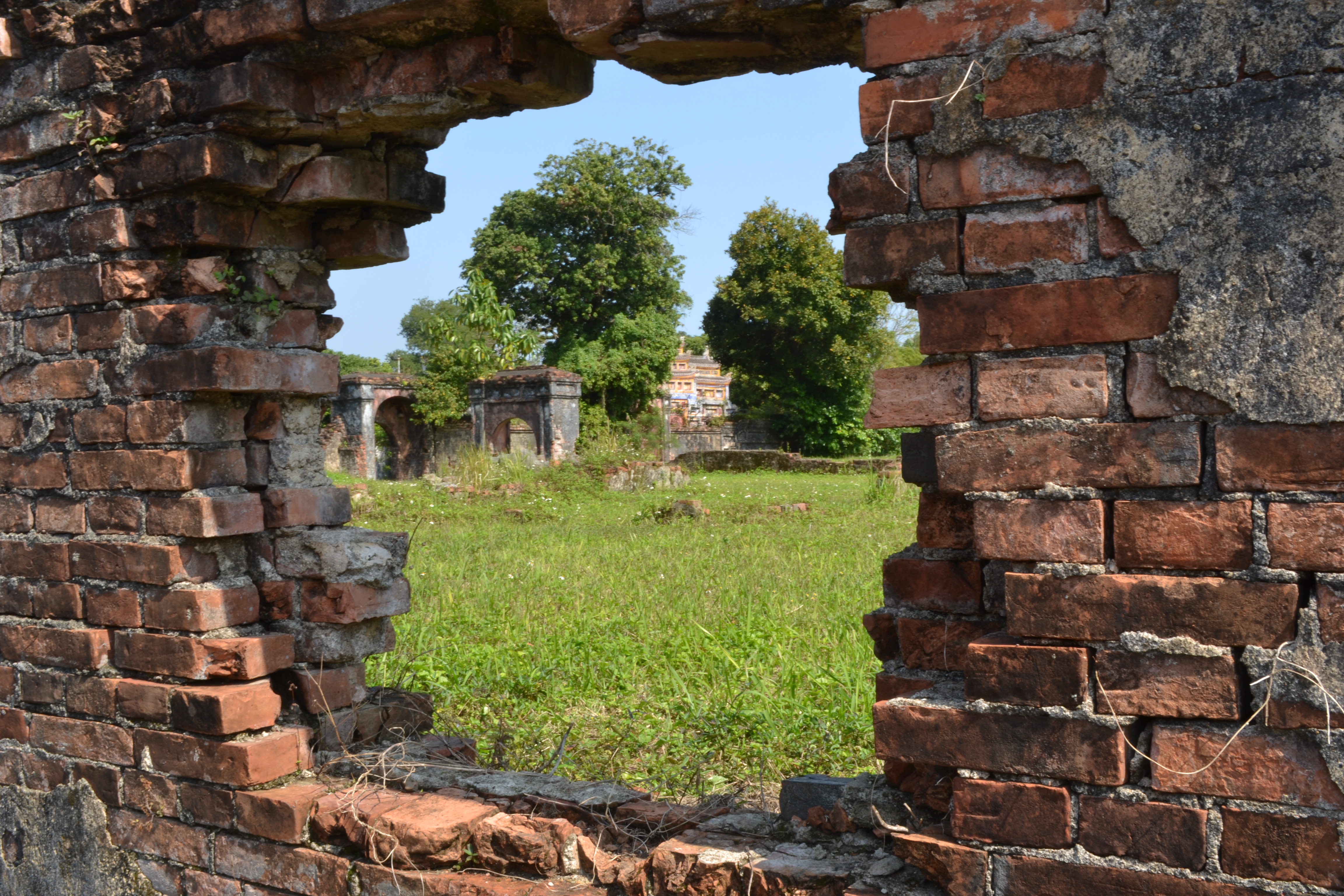
There is not a lot left of the Forbidden Purple City beyond the stumps of shattered brick which poke from the grass where palaces used to stand, and a portentous flight of steps bookended with dragons which carries you up to an anti-climactic flower bed laid out in the broken foundations.

Elsewhere in the complex, the buildings have been carefully restored and rebuilt. The work is ongoing and, while I was there, men were tearing tin sheets from the roof of a ravaged temple. Enough has been done to evoke the majesty of the Imperial City that was; but there are still dozens of buildings blackened by napalm, pierced with shells, pitted by bullets, untouched and left to decay since 1968, when the battle staggered to its wearied close.

DSC_0270

I spent a good two days wandering the site and – away from the parts which have been freshly restored – I was often alone and there was at least a moat and a two-metre thick wall between me and the bustle of the modern town outside the citadel and the only sounds I could hear were the chirping of birds, the chatter of cicadas and leaves gently falling from the trees.

I strayed into courtyards which time had grassed over and poked inside buildings which looked long forgotten with roofs sagging inwards and rotten doors hanging off hinges. I was not at all sure I was supposed to be there, but there was nothing to keep me out. In one quiet corner, I happened upon an elephant, chained up like a guard dog and left unattended. It huffed and stamped its foot in warning.

In the late afternoon, I left the citadel and made my way across the bridge and back to the hotel with the closing scene of Full Metal Jacket screening in my head:

“We hump down to the Perfume River to set in for the night… I’m so happy that I am alive….”

© Richard Senior 2015
New Year’s East

DSC_0152 (2) - Copy

I had been bouncing around the Andaman Islands and landed up in Krabi.

A party crowd washed down to the coast for the long weekend, bought fireworks by the armful and let them off on the beach.

Street food stalls appeared all the way down the road through Nopparat Thara. Chicken skewers and air-dried squid were piled up on trestle tables; gallons of chilli sauce, hundreds of quartered limes. Smoke from the grills drifted towards Ao Nang. A vendor made som tam in an earthenware mortar, bashing the garlic and chilli, the shredded papaya, the snake beans and tomatoes.

I expected a party on New Year’s Eve on the ponderous curve of peachy sand. But the only poster I saw was for a buffet and live band at a hotel in Ao Nang, and that was hardly worth staying up for.

But, with half a day left to run of the year, I spotted a flyer for Luna Bar (presumably the model for Moon Bar in Richard Arthur’s I of the Sun) which promised deep house and EDM, fireworks and whisky buckets. More fun than a live band and buffet, for sure.

Luna was ominously quiet at 10pm, when I wandered in and scooped up a bucket of the sort which I took to the beach as a child. It came with a quarter of Sang Som whisky, a bottle of Coke and an energy drink and I tipped them in and walked through to the beach, where the holiday crowd was still exploding ordnance. (The firework sellers did well that night.)

The bar began to fill up as the year faded out and the crowd spilled onto the beach. They crammed together in raggedy rows, like rush hour commuters, holding up paper lanterns half their own size, lighting them and letting them go. The flickering lights stretched the length of the beach. There were forty, or fifty, or more in the air at a time. A few, swayed by gusts, caught fire and dropped to the water: the rest floated out over spectral karsts, way out into the Andaman Sea.

Then, at midnight, the music stopped and giant Roman candles sputtered into flame on posts along the waterfront. Explosions reverberated like howitzer shells and the glorious colours spilled across the sky. Lines of racing yellow tadpoles mutated into pin cushions of pink, blue and green, distorted, collapsed and came back to earth as a glittering, sparkling downpour.

All the stresses and disappointments I had run away from back home seemed a lifetime ago right then.

Happy New Year!

© Richard Senior 2014

Santa in Sunnies: Christmas Day on the Beach

DSC_0724

It was the middle of the morning on Christmas Day and the sun was hot enough to burn.

The beach was crowded but the only Thais were the boat taxi men, calling out “boat-boat” from under their awning when anyone went near. The rest were Western backpackers in boardies, bikinis and Santa hats. They sprawled on the sand and frolicked in the waves and lined up the empty Singha beer bottles. One prattled about finding a turkey to roast, saying much the same thing a few dozen times, as if polishing a phrase for a piece he was writing. “Hey mate,” another shouted to every guy on the beach, “What’s your best ladyboy story?” As if everybody had several, and would happily share.

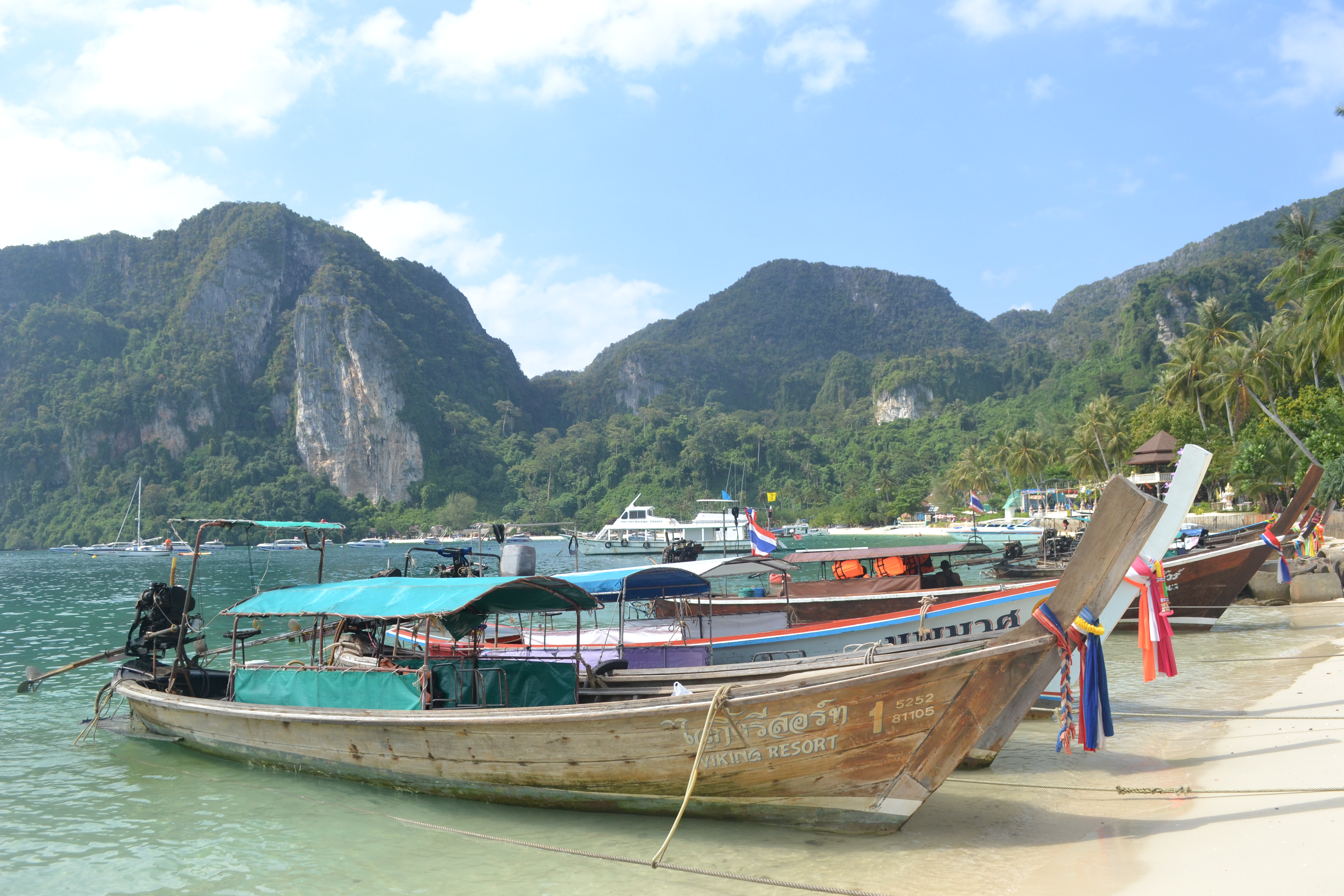
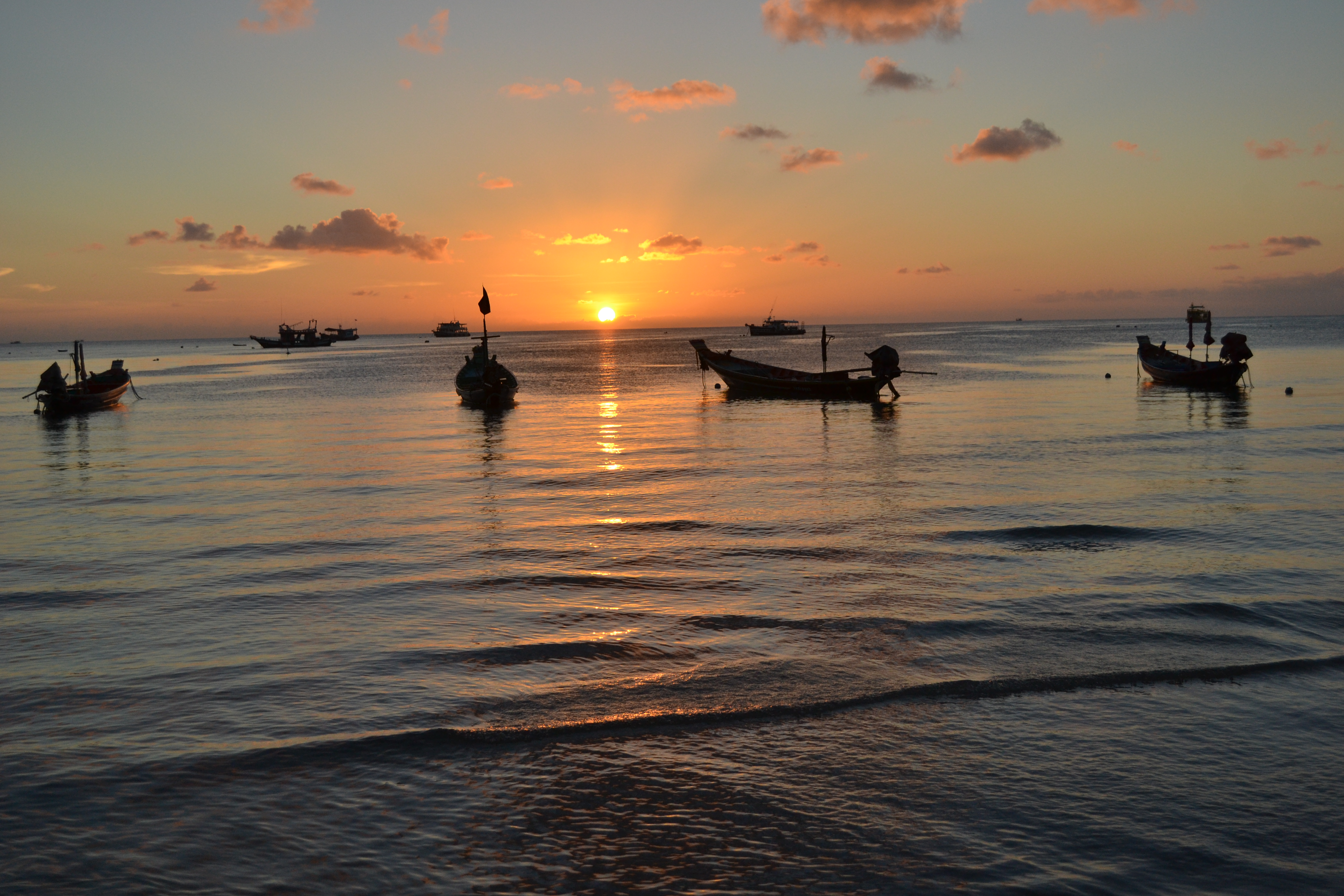
I grew tired of them and crossed the isthmus to the quieter, second best beach and sat on the sand near an empty bar where Errol Dunkley sang Ok Fred and Bob Marley was jamming. Longtail boats, moored in a line, nodded at the edge of the beach. A small yacht dropped its sails and slid into the harbour. The owner of a sports cruiser started its engines and revved them a few times, filling the air with a sound like a supercar underwater.

DSC_0732

I found a restaurant by chance when I cut through an alley where an old lady sat mending socks in a doorway and a skeletal man pumped air into the tyre of a rusty bike. The walls were jerry-built from reclaimed wood and the tables and chairs were cheap plastic things intended for a garden. But the eyes of the fish on ice in the doorway were inky black and their gills were cardinal red. There were none of the tacky Christmas songs I had heard from the restaurants I had passed in the middle of the village. It was, after all, just a regular Tuesday in Thailand.

A little silver tabby sat down beside me and let out a spare any change meow. I gave her a piece of grilled snapper, and then heard a different meow. It was a poor old red Persian with a sneeze and battle scars and one ear folded down. We agreed to share the fish three ways. They let me eat all the rice.

Merry Christmas all.

(c) Richard Senior 2014

Some Corner of a Foreign Field That Shall Be Forever…France

image1 (10)

There are bistros much like it on the back streets of every town in France. The tables and chairs will be simple and cheap, and may very well not match. On the wall will be photographs of long-dead people in old-style hats and long-closed shops on no-longer-fashionable streets, or motor racing posters from decades ago, or tarnished mirrors enamelled with Pernod adverts.

Portions are hearty, garlic abundant, and prices low. There are no foams and emulsions, no confits of this, nor saboyans of that: just simple, honest to goodness food. In Provence, there will be daube de boeuf, a meltingly tender ox cheek simmered for hours in red wine; in Languedoc cassoulet, a great sizzling bowl of duck leg, sausage and haricots blancs. Everywhere, there will be gratins and remoulades, steaks and charcuterie. Wine will be sold by the carafe. Customers will shout and guffaw. The patron will linger by tables, sharing jokes with regulars.

A couple run Le Café de Paris on their own. She does the cheffing, he is front of house. The menu du jour is chalked up on a blackboard outside. It was the same every jour, as far as I could tell. Terrine maison to start and steak de boeuf with sauce bordelaise, green salad and pommes frites. Everything was nicely done. The steak was cooked rare and rested, the bordelaise sauce well-flavoured, the frites fat and crispy, the salad sparingly dressed in a proper vinaigrette.

Oh, and I almost forgot to mention that it is not in France at all but on a side street in a little town in Laos.

(c) Richard Senior 2014

The Kindness of Strangers

DSC_0683

I jumped out of the back of the songthaew (shared taxi) and wandered off to find a guest house. By the time I was a hundred yards down the road, and the songthaew was the other side of the island, it hit me that my daybag was still under the seat. In it were my camera, laptop, emergency funds, spare credit card and enough documents to clone me.

I flagged down another songthaew and got him to take me to the depot, where they asked me a few questions and I was out at the end of the first round:

“What was the number of the songthaew?”

“Pass.”

“Was it an Izuzu or a Hyundai?”

“Pass.”

 “What was the driver’s name?”

“Pass.”

I looked in the back of the parked songthaews, the controller phoned round the drivers, and I wrote out my contact details, but none of us expected my bag to turn up.

I felt numb as I headed back to Chaweng, checked into a guest house and dropped off what was left of my stuff. But my spirits rose a bit when I went to the beach and felt the powdery white sand underfoot, and a bit more when I sat with a Singha beer and watched the jetskiers carving up the sea and listened to the waves collapsing on the shore. Gradually, as the sun slipped down, everything twisted into focus. It’s only stuff isn’t it? I told myself.

I had an email in the morning from a girl in Moscow, who told me that her mother was on holiday on Samui and had found my bag and in it a print-out with my email address at the top. The lady spoke no English so had asked her daughter back home, who did, to get in touch with me.  I went in a taxi to a smart hotel up in the hills and retrieved my bag with everything still in it.

I had got back what I had given up as lost for good; but – more than that – I had seen human nature at its best. People might get themselves wrapped up with greed and envy, prejudice and spite; but they are capable, too, of spontaneous acts of kindness towards a perfect stranger.

(c) Richard Senior 2014

The Tyranny of the Bucket List

DSC_0412

My alarm went off at 3.30am. I got dressed and went out and tagged along with the procession of half-asleep travellers crowded into tuk-tuks or furiously pedalling unlit hire bikes through the crepuscular gloom.  At Angkor Wat, the hawkers were patrolling the car park with torches,

“You wan’ coffee-breakfast?”

“Not now, thanks.”

I joined the concert crowd assembling in front of the temple and sat and waited with increasing impatience for an hour or so until the sun struggled over the horizon. Is that it? I thought and went to get coffee-breakfast.

DSC_0324

It occurred to me later that I had seen dozens of landmarks, just as iconic, but had never before felt the need to get up in the middle of the night and watch the sun rise behind them. But it had never before been a Thing You Must Do before You Die.

It is always a must: a sternly-worded injunction, a must try … do not miss … essential … cannot leave without: never a friendly, you could do this if you want. It is like working for a manager proud of being difficult.

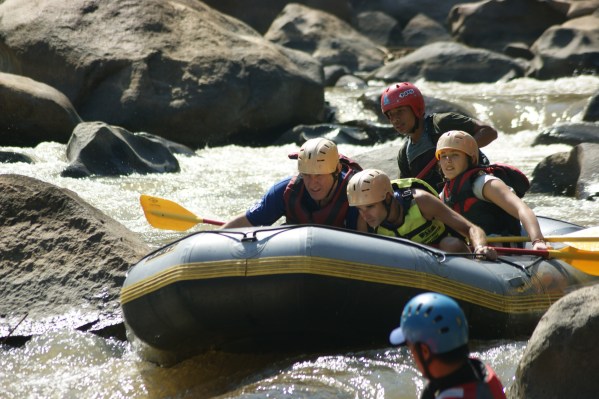
I have been white water rafting, but that was in Thailand which doesn’t seem to count. You have to raft the Lower Zambezi or nothing. I have been to Ibiza several times – I was there for the openings once – but I have never been to a closing party, and that is all the authors of bucket lists recognise. I am not doing very well.

SONY DSC

SONY DSC

I have no chance of getting to all of the 1000 places in Patricia Schultz’s book, especially if I have to find time to read the 1001 books and see the 1001 movies listed in the Quintessence Editions. And I have not even looked at 1001 Foods You Must Taste Before You Before You Die. There are still things outstanding which I should have done before I was 25.

Come to think of it, though, it is hard to see how any one person will ever do all the things which routinely appear on bucket lists. The sort who dream of making a million, meeting the president and having things named after themselves are never going to live out of a van.

Someone putting in the work to get a book published and have an artwork in an exhibition, while becoming fluent in a foreign language, inventing something and running his or her own business, will not have the time to visit every country in the world. He or she will be hard pressed to fit in milking a cow and skinny dipping at midnight.

DSC_0557

In truth, I am not fussed if I never see A Clockwork Orange, and I have wrestled with Finnegans Wake before and been beaten and I am not likely to try again, and while I had the chance to go to the Golden Triangle when I was in Southeast Asia, I decided not to bother.

I have no intention of doing a runner from a fancy restaurant, I am happy to pay for my food; and I certainly do not want to get arrested. I cannot see the point of shouting “the drinks are on me” in a crowded bar, even if (which I don’t) you have pots of money; and I am not sure there is anything to forgive my parents for.

There are, as well, a load of things I have done and want to do which I have never seen on any bucket list but which will stay in my memory long after that early morning at Angkor Wat has faded.

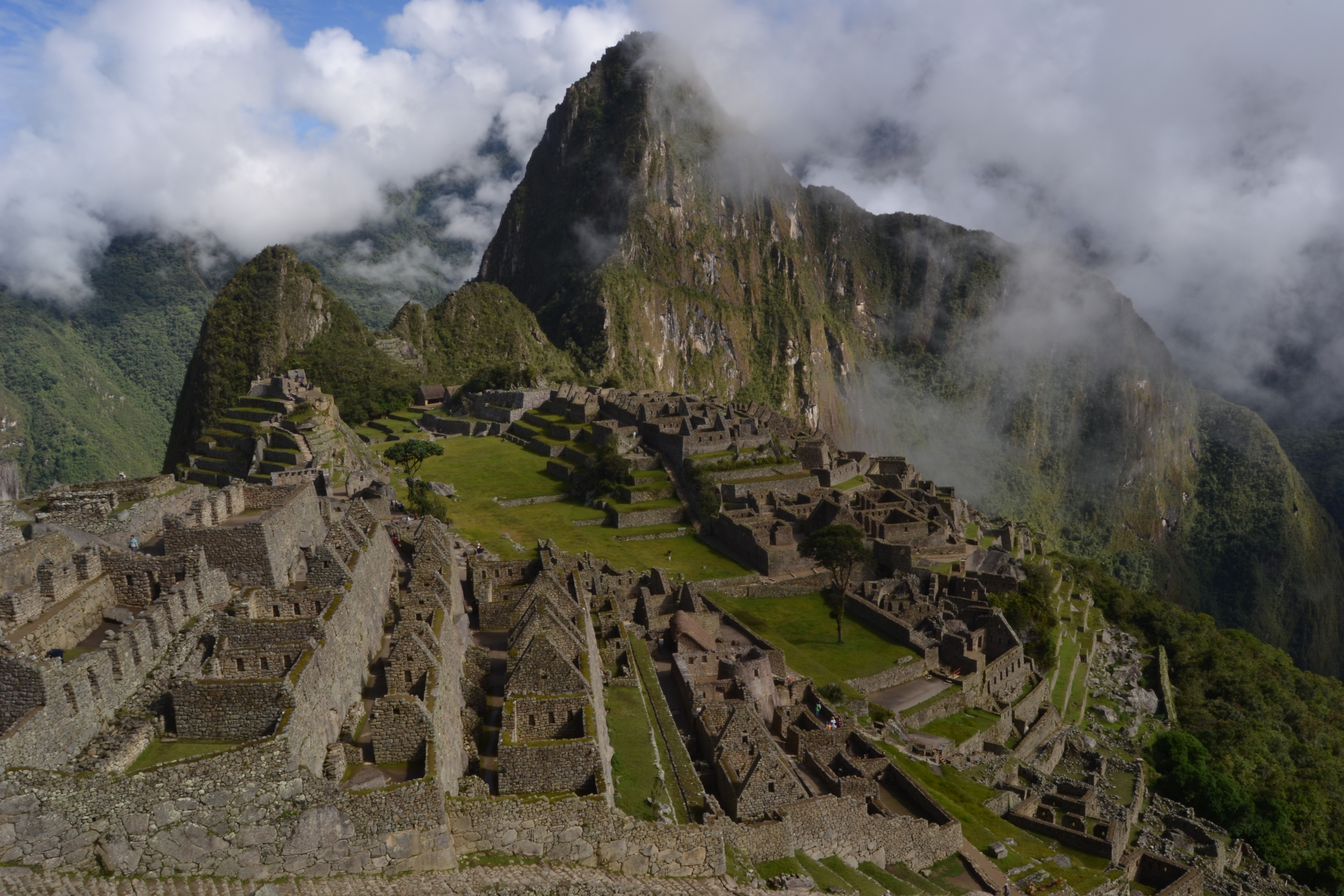
So when I went to Peru and they told me I had to see Machu Picchu at sunrise, I ignored them and spent longer in bed.

(c) Richard Senior 2014

“It is the Journey that Matters in the End…” as Hemingway DIDN’T Say

DSC_0345

It is good to have an end to journey towards; but it is the journey that matters, in the end,” wrote Ursula K Le Guin in her novel, The Left Hand of Darkness, although the internet tends to credit it to Hemingway.

The idea is baffling to regular fortnight a year vacationers, for whom journeys mean getting up early, battling across town, standing in line, getting half undressed, being scanned and frisked, having bits of their hand luggage confiscated, being bullied by cabin staff, sitting for hours between an old lady who thinks out loud and a fat man who snores very loudly, and watching the drinks trolley creep up the aisle to the row before theirs, then shoot back up the other end of the plane and behind the curtain for the rest of the flight, then bowing to pressure from the crowd to stand up the second the plane has come to a stop, even though they know that the doors will not open for ages; then standing in line again and again and again until they have stamps in their passports, cases in their hands and taxis to take them to hotels.

If this is what matters, might as well stay at home.

But on a longer trip, when you are dotting about from place to place, by train, by bus, by car by bike, what you see as you travel between the big sights will lodge in your mind as firmly as the sights themselves. You can get as much from the journey as you can from the end.

When I think of Cambodia, I think of the bus ride to Phnom Penh from Siem Reap, through rural villages of wooden houses balanced on stilts, of hayricks, pitchforks and ox carts, of broods of chicks jogging after hens. In the bank of memories from Vietnam are the journeys on overnight trains, waking and looking out of the window at villagers kneeling in conical hats to harvest the rice in the half-light of the early morning. I remember long road trips in South America through epic landscapes of mountains and plains which stretched for ever, and the occasional Andean herdsman tending llamas an hour from the smallest town.

In New Zealand it was the journeys I enjoyed the most. There is not much to Picton and little more to Nelson but the Inter City bus took a glorious route between them, through the Marlborough wine region where the vines had turned and flooded the fields with an ocean of yellow on either side of the single track road, where the mountains were stacked three deep: green then grey then blue. The Tranz Alpine Express train threaded its way from coast to coast, from the ruins of Christchurch to the thrift stores of Greymouth with me gazing up at endless mountains, and into the depths of a gorge at a fast-flowing river, and out across the expanse of a pine forest with splashes of yellow and brown among the deep dark green.

I rarely plan a trip in detail, sometimes hardly at all. But I always know where I am going to end up. I need that to give it some kind of structure, and to focus on when things go wrong and half of me wants to jack it all in and go home. There is always an end, and it is always a destination; but there is always a whole lot more to the trip. There are all the intermediate ends, the UNESCO sites, the bucket list staples, the Must Sees, the Wonders of the World and – more mundanely – the towns where the ferries dock, the cities where the buses stop; the stations at the ends of the lines. And there are the landscapes and townships and villages I pass through as I travel between them.

It is good to have an end to journey towards; but, yes, it is the journey that matters in the end.

(c) Richard Senior 2014

A Morning in Hanoi’s Old Quarter

DSC_0077

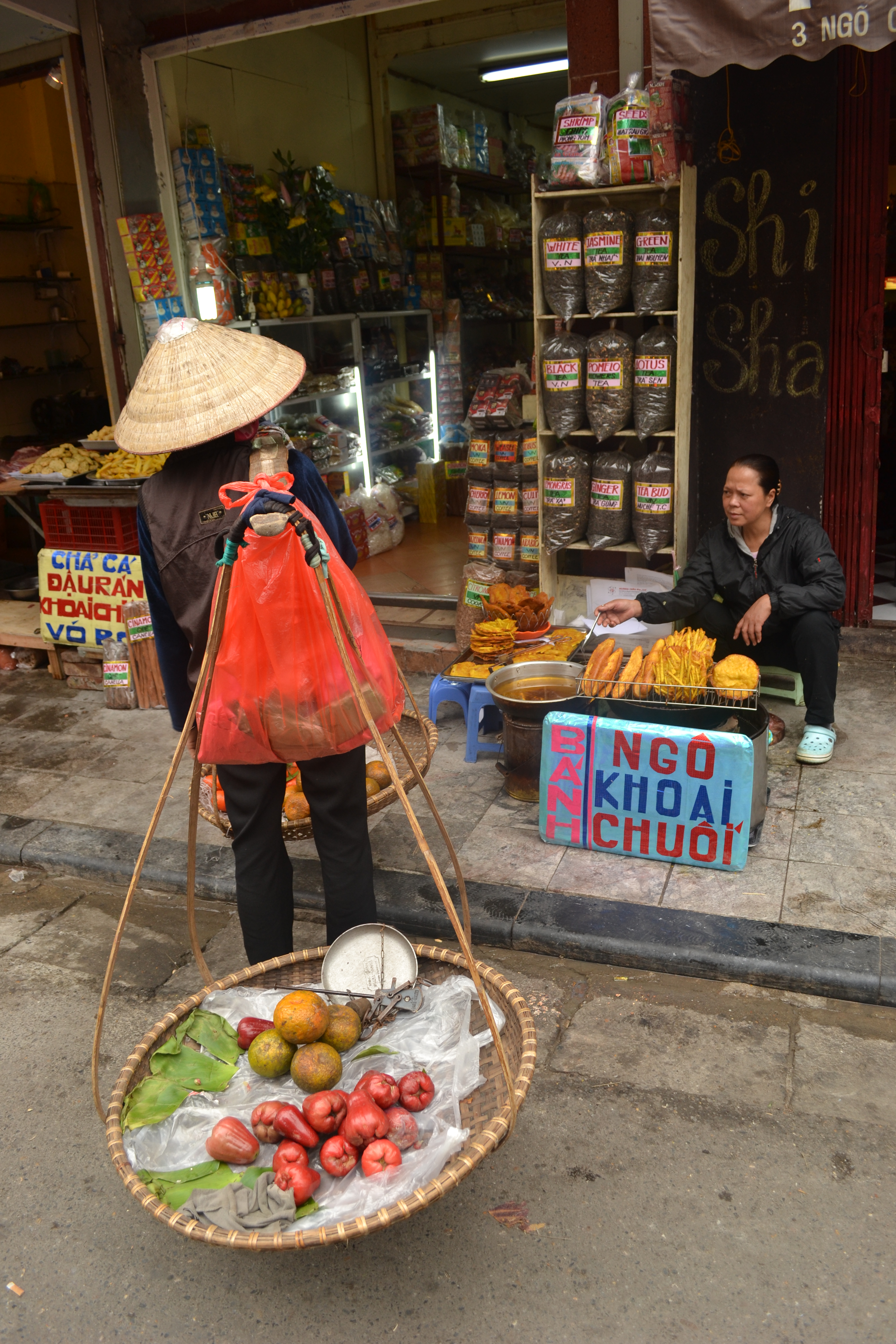
Scooters wail through the tangle of alleys, weaving round ladies in conical hats with yokes balanced over their shoulders and old pushbikes half-buried under baskets of fruit and slowly perambulating cyclos. The sound reverberates off the walls of the decaying colonial buildings with their sagging awnings and missing windows and roofs bodged up with corrugated iron.

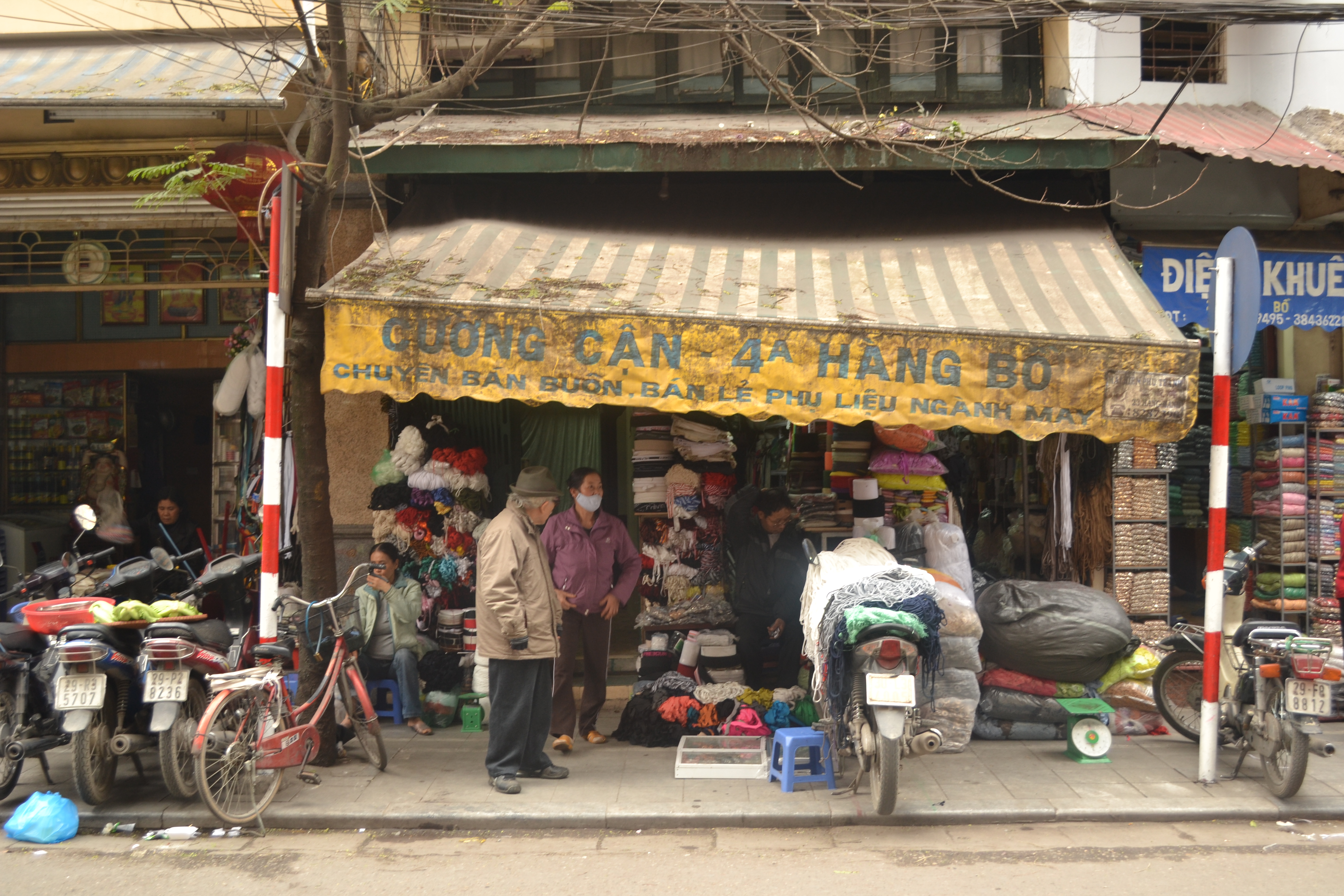
Traders spill out of their shops and fill the pavements with mannequins, fridges, anvils and circular saws. Women sit cross-legged, shaving pigs’ trotters and scaling fish with cleavers; men kneel over sheets of stainless steel, hammering, grinding, welding, drilling, and fashion them into boxes and bins. Street food vendors arrange tight circles of miniature stools on any available corner. There is nowhere to walk but in the road with the scooters.

DSC_0093

One shop sells nothing but heaters. Next door sells nothing but fans. Three doors further on sells lightbulbs. Two doors beyond that sells adaptors and leads. You go to one side of the road when your scooter needs tyres, to the other when it needs a new seat. And if it needs a new mirror as well, then you nip across town to the French Quarter. There are two streets on which every shop sells metal boxes, one street reserved for flowers and one for bamboo poles. Padlocks and door handles have half a street each, as have cooking salt and caged birds. Shoes get a crossroads of their own, but trainers, flip-flops and football boots have to share with army surplus. Musical instruments are lumped together with antiques, on the hunch, perhaps, that people who play instruments are likely to collect antiques.

DSC_0406

Chả Cá Street is named for the single dish which the restaurants along it sell. The best known is Chả Cá La Vong, so well known that restaurants all over town have ripped off its name. It is a poky little place with a rickety staircase leading up to a room with the look and atmosphere of a rowdy works canteen. Though it is in all the guidebooks and on every food blog, most of the other customers are shirt and tie locals. There is no menu, because chả cá really is all they do. They don’t see the need – as a restaurant would at home – for novelty chả cás or alternatives for people who go to a chả cá restaurant but don’t really care for chả cá.

The waiters bring the chả cá in relays. First, a sizzling fondue pot filled with turmeric-stained fish. Then, as that hisses and crackles in the middle of your table, a bowl of rice noodles. Then a ramekin of dipping sauce, a plate of crushed peanuts and a handful of herbs, which the waiter dunks in with the fish to wilt, and leaves you to assemble it when the fish and the herbs are done.

(c) Richard Senior 2014