Beaches, Boats and a Brother from Another Mother

DSC_0119

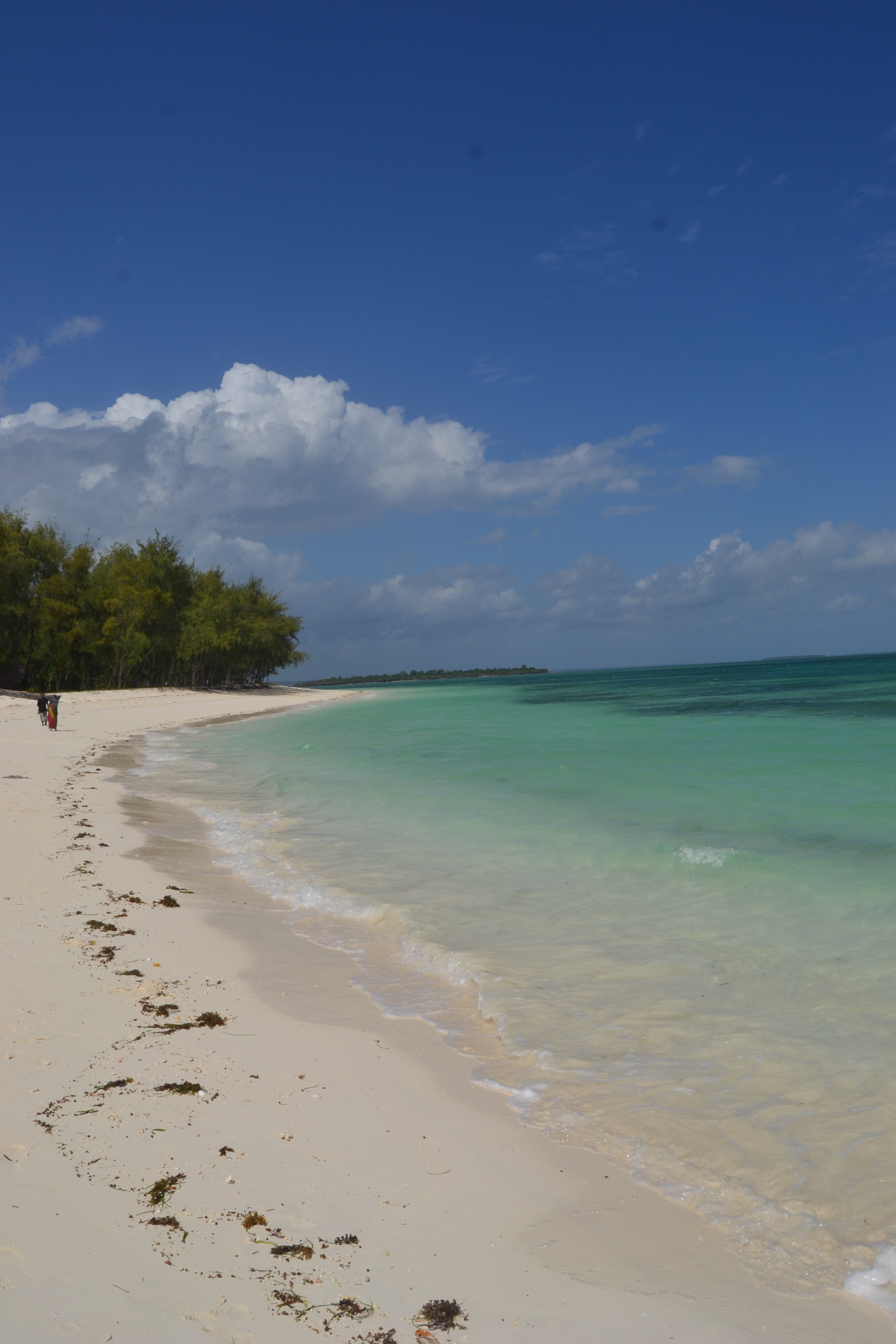
Kendwa Beach on the northern tip of Zanzibar is a version of the Maldives for backpackers. The sand is as soft and dazzlingly white, the ocean as inviting, the sky as unblemished and blue.

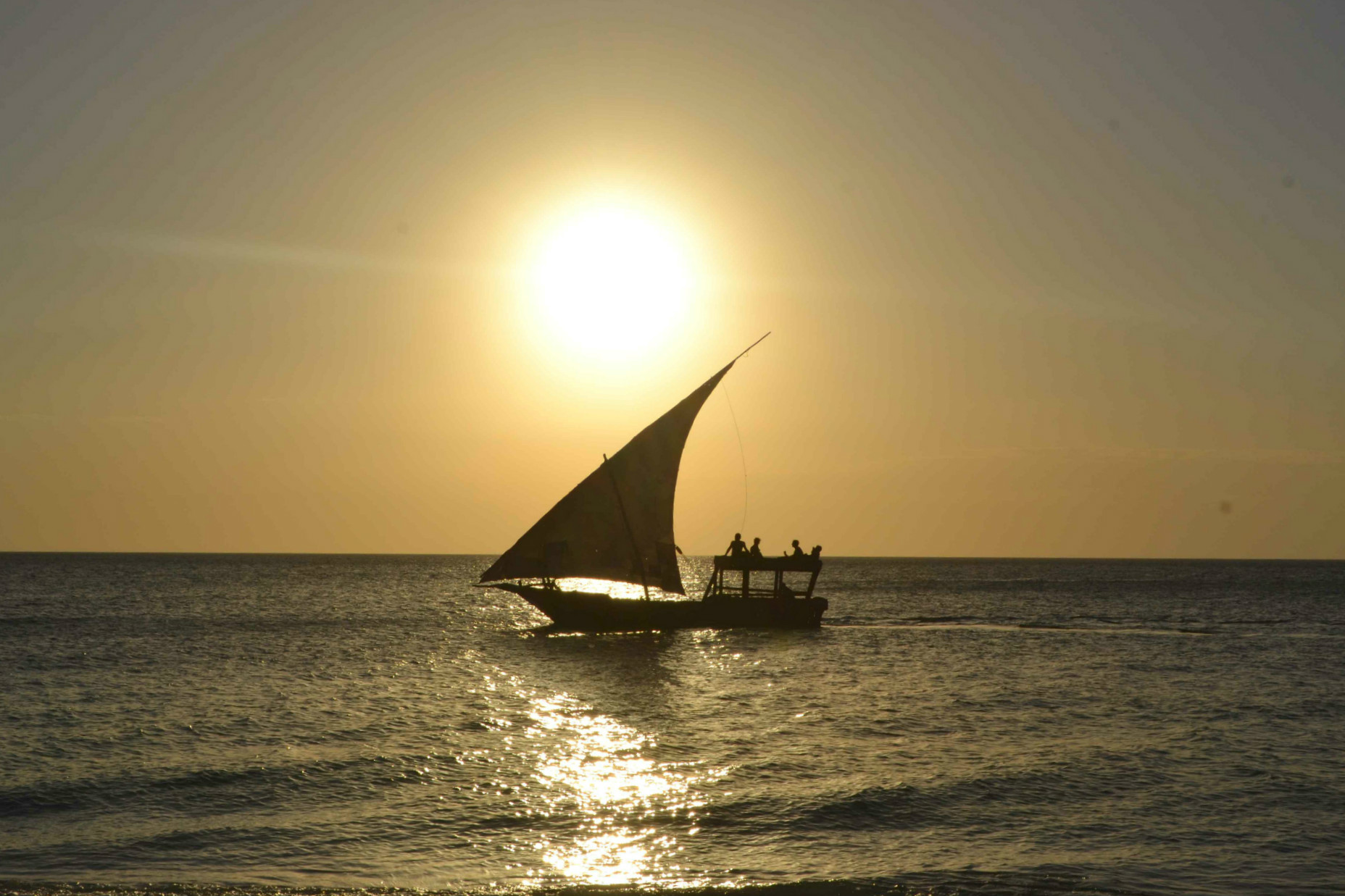
It was a lazy few days. I sprawled on the beach, listened to the shushing of the waves, felt the sun warm my skin and watched the sailing dhows slide past. I walked now and then to the other end of the beach where the fishermen stretched out their nets on the sand to dry and sat in beached boats under canopies and bantered. I turned down a few dozen offers of snorkelling trips, and sunset cruises and bags of weed from the touts who worked the beach.

Hey Rasta man,” they called when they saw my band. It is from Bolivia, not Jamaica, but it is the same red, yellow and green.

Hey.

Jambo. You okay for tonight brother?” He meant did I want any weed.

Yeah, no worries.

Hakuna matata.

DSC_0223 edit

Another guy kept pace with me down the beach, trying to bully me onto a sunset cruise on a dhow.

I’ll think about it.”

“Okay brother from another mother.”

Then he called out to the skipper of a dhow who was about to cast off and pointed to me and said something in Swahili.

No, no,” I said, shaking my head and crossing my palms in front of each other; and he got incoherently angry.

I’m a man,” he said, “but you make me into a woman.

What!?”

“I’m a Rasta man. Allah, he see everything.”

Don’t you mean Jah? I thought, but decided not to share it.

I thought you were a good guy, brother. Not like the other white guys who promise one thing and mean another. Now you make me look bad.”

“I didn’t promise anything. I said I’d think about it. I haven’t made you look bad at all.”

“I speak to the captain. I told him to wait cos you were coming”.

“Well I didn’t tell you to.”

“You’re not in England now, brother. You’re in Zanzibar. Be careful brother. Be very careful”.

DSC_0082

I knew he was just trying to get me to give him some money, but I avoided his end of the beach after that, and I was kind of glad to go back to Stone Town to get the ferry for Dar es Salaam.

I went up on deck and idly watched the crew loading cargo at speed. A guy who must have been a foreman – or thought that he ought to be – darted about shouting instructions, then slipped and fell on his arse. The other guys roared and he leaped up and silently loaded all the heaviest things at a hundred miles an hour.

Then after a sporty crossing, a walk and another journey across the harbour on the rusty old chain ferry, I was back where I had started three days before. I watched as hundreds, if not a couple of thousand, surged down the steps, along the ramp and up the road, as vendors threaded between them or shouted from stalls, and honking cars forced their way inch by inch out of side streets.

It was a mundane, everyday sight: the equivalent of a crowd descending on the subway in a European city. Yet the image will flash across my brain whenever I think of Africa, long after the big sights have faded from memory.

© Richard Senior 2015
Tsukiji: An Improbable Tourist Attraction

DSC_0412

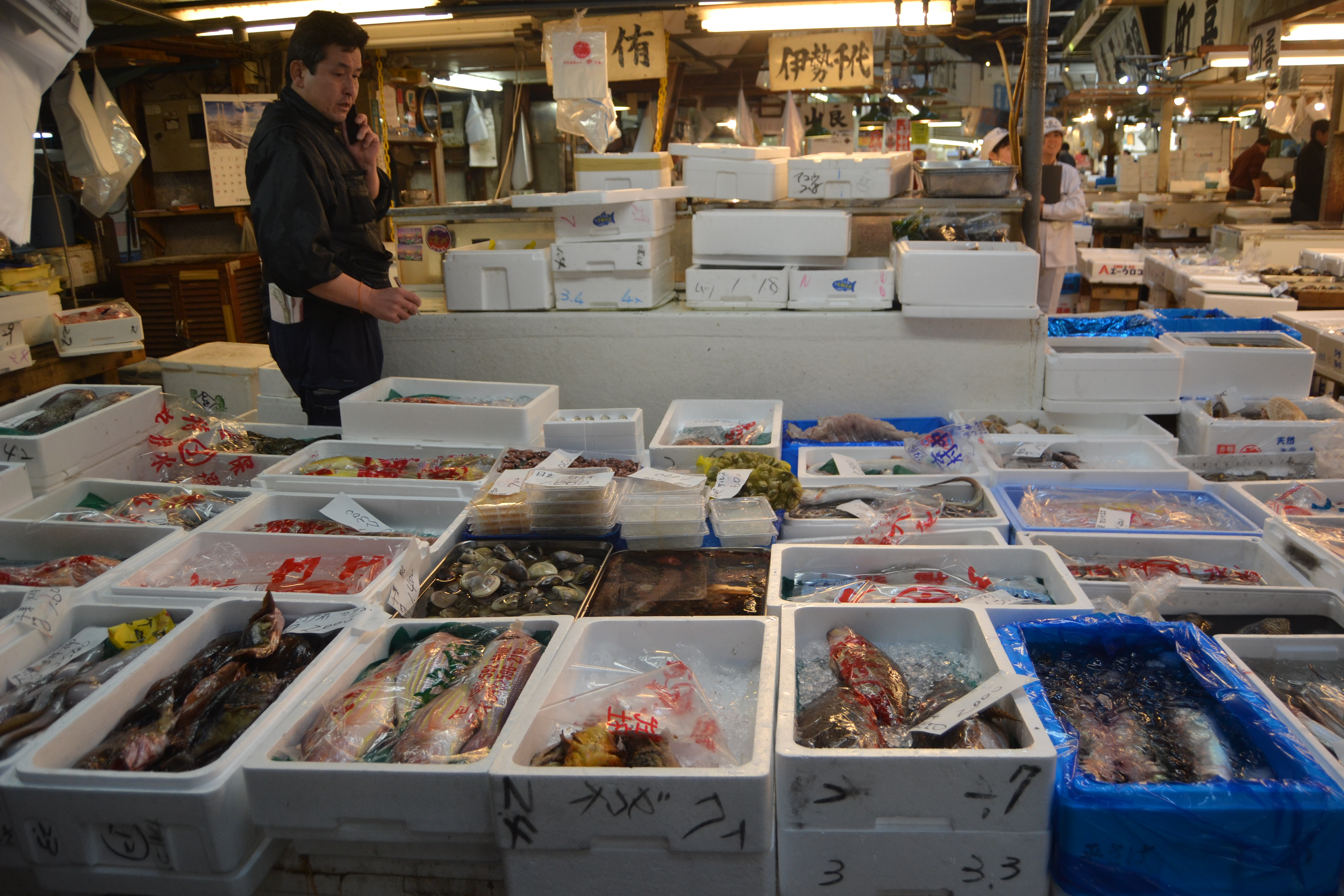
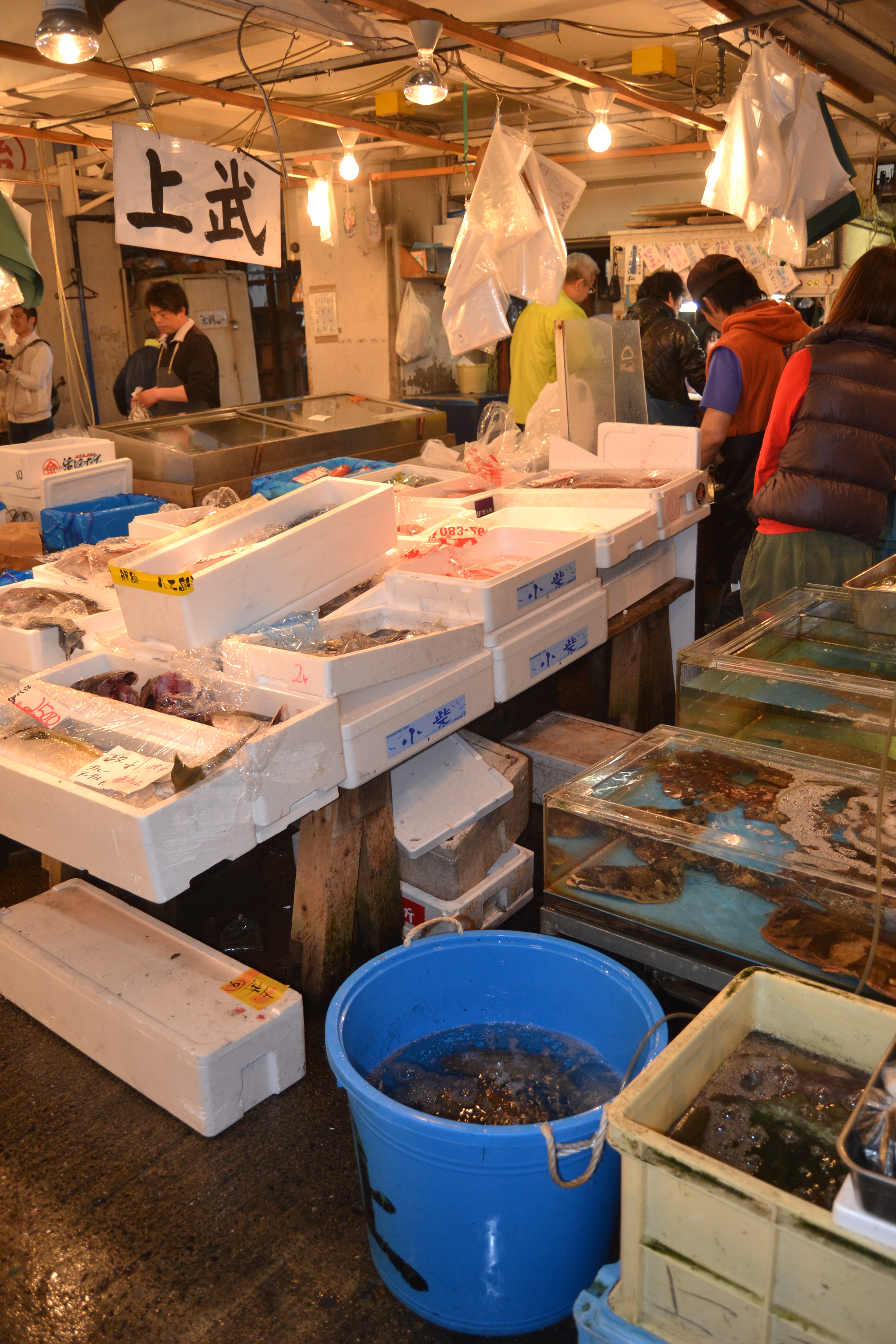
Big sheds, grim concrete, rusting steel, walkways painted in industrial blue. Bustling vendors in oilskins and wellington boots; porters scudding around on motorised carts. Polystyrene confetti, puddles of melted ice. Stacked crates. Reefer trucks. Everything, in short, you would expect of a municipal fish market, right down to the smell.

But it is not just any municipal fish market: it is Tsukiji Fish Market, by common consent one of Tokyo’s Must See sights. The guidebooks explain, as if with a trumpet fanfare, that it is the World’s Largest Wholesale Fish Market. What next, you might wonder: Asia’s Deepest Sewage Tunnel?  Japan’s Oldest Scrapyard?

DSC_0440

The Lonely Planet Fundamentalists are there at five in the morning, half an hour before the trains start to run, clutching guidebooks flagged up with Post-it notes as they queue in the hope of joining one of the two groups of sixty let in to watch the tuna auction.

The frozen fish are laid out on pallets. Sceptical restaurateurs peer at the eyes, lift the gills, shine their torches into cavities. The auctioneers jump up on boxes, ring handbells, doff their caps and shout and bounce excitedly, like contestants in some incomprehensible game show.  Bidders raise hands casually as if acknowledging a friend, and porters hook the sold tuna and drag them away, then return for the pallets, and hose down the floor as another auction starts across the room.

DSC_0436

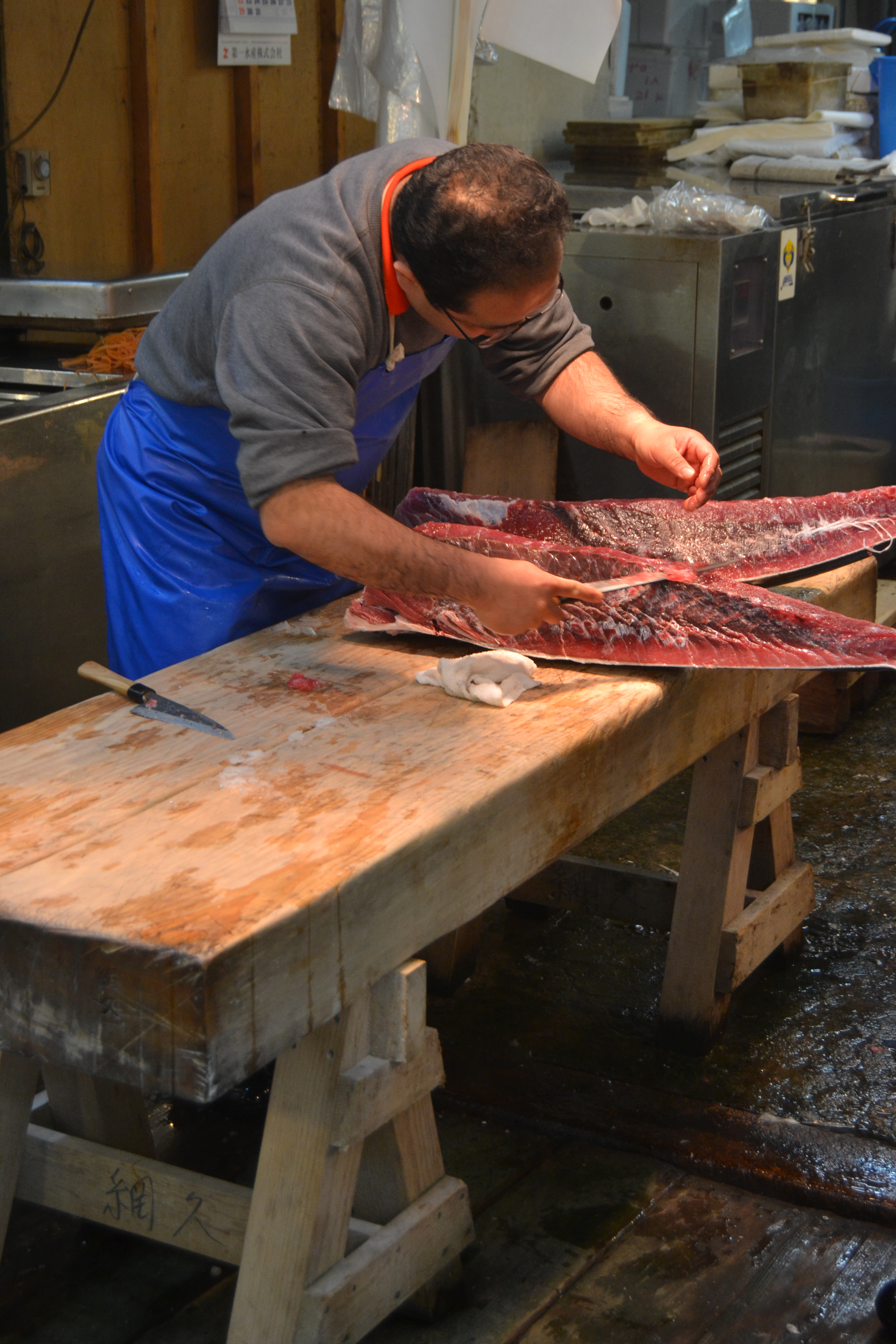
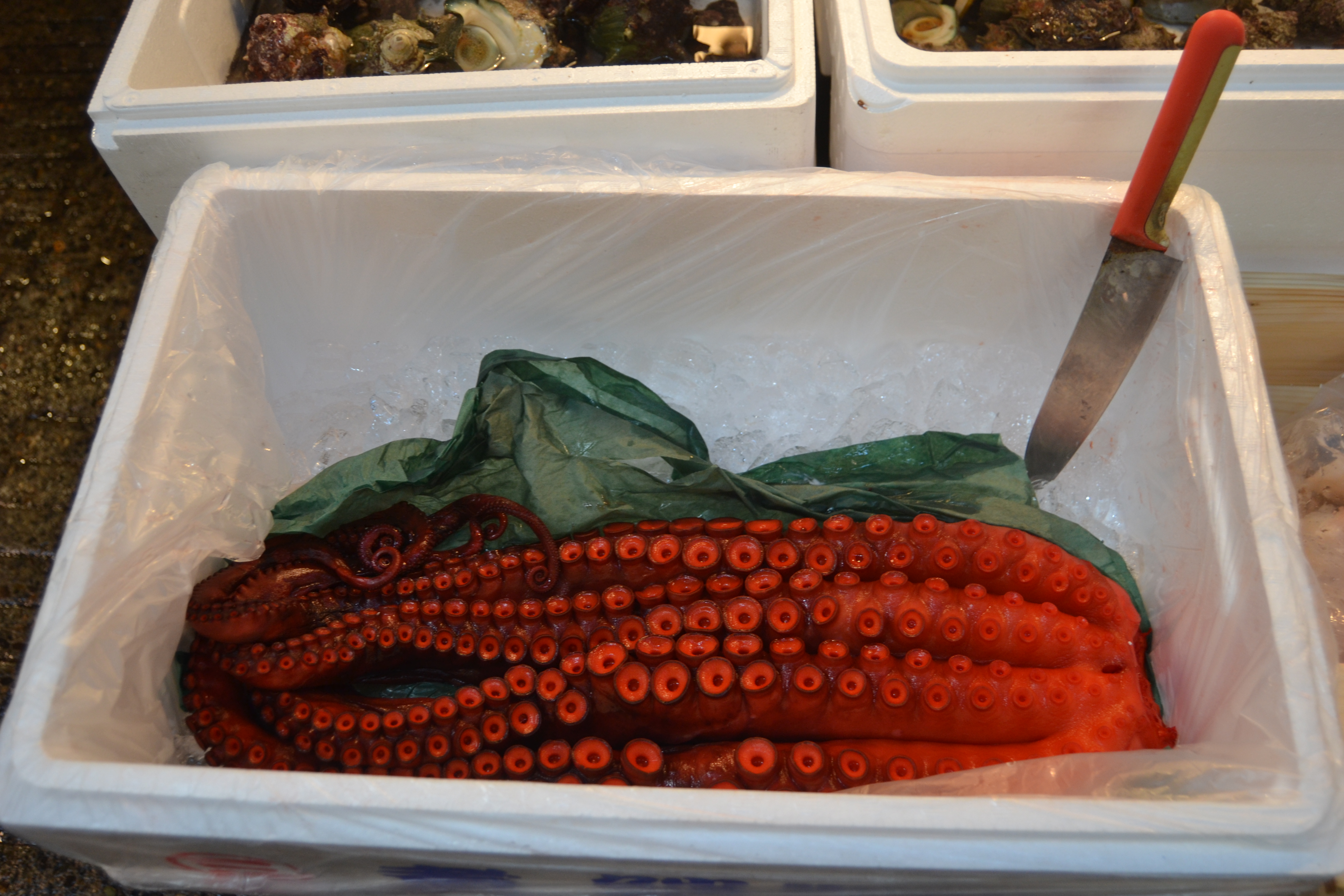
After nine, when the market is quieter, tourists are allowed into the wholesale areas and march fully armed with SLR’s and telephoto lenses across the flooded cobbles, down the aisles between the stalls barricaded with teeming fish tanks and Styrofoam boxes, and stop to watch the fishmongers butchering tuna on trestle tables with knives like swords, and fire off a few shots of chopping boards dripping with blood and hoses left running and boxes stuffed with silvery bass and orangey snapper and brilliant white squid and octopus tentacles as thick as your arm and coiled eels in buckets of water. The stallholders struggle past them and ignore the staccato clicking of camera shutters and the tourists kneeling to get selfies with severed tuna heads. Mercifully there is no room for star jumps.

It is an improbable tourist attraction, but compelling.

DSC_0430

By eleven, the vendors start to pack up and close their stalls and the tourists put their cameras away and join the queues outside the sushi restaurants, where they stand for an hour or two or three and some get bored and peel off to browse the stalls selling knives and pans and bags of dried fish, and the door occasionally slides open and the tourists look briefly hopeful until it slides shut again. There is room inside, at a squeeze, for around a dozen at the bar and tables. The sushi chefs work centre stage, slicing, moulding, plating up; another, stage right, stirs a vat of rice with a paddle.

How fresh is the fish?” someone behind me in the queue asked a regular. “Well, it was swimming an hour ago,” came the reply.

© Richard Senior 2015  
Scambodia

DSC_0529

There was hardly anyone on Soi Rambuttri that early in the morning, except the taxi drivers who doorstepped me as usual:

You wan’ taxi? Where you go?”

“Cambodia.”

That shut them up for a minute, but no longer than that; one of them followed me down the street:

“I take you Cambodia. Fi’ thousand Baht.”

But I had already paid 250 Baht for a seat in a minibus driven by a lunatic. On the motorway, driving as if getting away from a bank job, pulling right up – just inches away – to the car in front, then lurching out to overtake. On a single-track road, about to overtake a pick-up when it pulled out to overtake the truck in front, then overtaking the pick-up while it was overtaking the truck. There was another truck in front of that and a third speeding towards us, but somehow squeezing between them.

Once, a barrel fell off a trailer and bounced straight towards us, but the driver swerved round it with an unconcerned flick of the wrist. Once, he lost control, briefly, on gravel and had the minibus sideways but opposite-locked it back into line like a racing driver.

A few hours of this, punctuated by gasps and screams, then waiting forever and forever and forever: to get a visa, to be checked through the Thai border, and then checked through the Cambodian border down the street.

The agent warned us not to trust Cambodian ATM’s. “Maybe it give you cash, maybe it keep your card, and it take you one week minimum to get it back.” No, he said, “My advice, get the cash you need for one week, two week, however long you stay, at Thai side then cross over Cambodian side and change at the border. Best rate in the country.” I wondered why none of this was in the guidebook, but everyone else went to the ATM and withdrew a bundle of Bahts and, like a dull-witted sheep, I got in the queue behind them: I fell for it too.

The bus to Siem Reap would be there in an hour, maybe longer. It would then take three hours to get there. “But if you want I arrange taxi.” I fell for that one too, along with a bunch of girls from Lisbon.

The whole border crossing is a racket. I should have realised it was. Everyone is in on it; everyone gets a piece of the unsuspecting travellers, from the agents through the money-changers to the taxi drivers. But I had not yet finished being ripped off.

I have a hotel, very cheap,” the agent said.

Course you have, I thought: a favour for a mate at best, an outright scam at worst. But I glanced at the brochure he thrust at me, out of politeness.

 “Aircon, WiFi, just 400 Baht one night.

I looked but could not see the catch I expected. It was £7 and the place looked fine and even if it was nothing like the pictures, I thought, I could put up with it for three nights.

Where you from?” asked the jolly man from the hotel.

UK.”

“I am from CK – Cambodian Kingdom. Which area in UK?”

“London.”

“Lavly jabbly.

That’s quite good. Is Jamie Oliver on TV here?”

“Who?”

“Where did you hear ‘lovely jubbly’?”

“That is what they say in London? Lavly jabbly?”

My room was not ready yet, he said, but they were putting me up in another hotel and he would pick me up in the morning, lovely jubbly. It was a characterful old colonial villa.

There was no coffee at the hotel and I was half asleep when he came to collect me. He told me they were still getting my room ready – still? – but I could drop off my bags and he would take me to the temples so I did not have to hang around waiting, lovely jubbly. That’s nice, I thought, and shuffled sleepily around Angkor Thom, dreaming about coffee. Then I finally got a cup – filthy stuff – and my brain woke up and told me that I had been stupid again.   

The two-day temple tour I had somnambulantly agreed to was costing me 500,000 Riel, or 4000 Baht, or £70, or ten nights’ accommodation. The agencies, I saw later, were charging 100,000 for the same tour in a minibus. Like Cambodian coffee, it left a very nasty taste.

I had booked three nights but could not wait to leave Siem Reap and as soon as I got back from the second day of my exorbitant temple tour, I checked out and got a bus to Phnom Penh. The hotel tried to say I had overstayed and had to pay more, but I told them they had screwed enough out of me already.

Then I discovered that evening that, while I was on my temple tour, they had stolen all of my Riels, most of my Bahts and a lot of my emergency Dollars from the pouch I left in the safety deposit box. Lovely fucking jubbly.

© Richard Senior 2015

Losing Momentum in Auckland

DSC_0577 edit

The rain cascaded off the awnings, bounced off the pavement, puddled in the street. I squinted through the rain-spattered window as the suburbs rolled endlessly by; and the bus stopped and the driver switched off the ignition and I realised that the last ten minutes of suburb had actually been the city centre.

I stayed on the bus and took it back up the hill and splashed through the puddles to my hostel. It was a few doors from a liquor store across from a strip club which was next to a brothel which was next to the Salvation Army. An old man tried to pick fights with passing cars as he shuffled up the street, swiping at them with his umbrella and shouting in Drunk English, “ay, yafaggincan-yafagger;fagarff!” But it was New Zealand, so there was none of the edginess which all of that implies.

I had been travelling for four months by the time I reached Auckland: two continents, four time zones, six countries, a dozen cities, twice as many towns, and more planes, trains, boats, buses, minibuses, taxis, tuk-tuks, songthaews, xe-oms and cyclos than I had kept count of. I had sustained the momentum until then but lost it as surely and rapidly as a car suddenly out of fuel. The rain did not help enthuse me.

I could hardly be bothered to explore the city, let alone work out where to go from there. Instead I skulked in the hostel reading, listening to music, doing laundry and non-jobs like tidying out my backpack: all the things you travel 11,000 miles for.

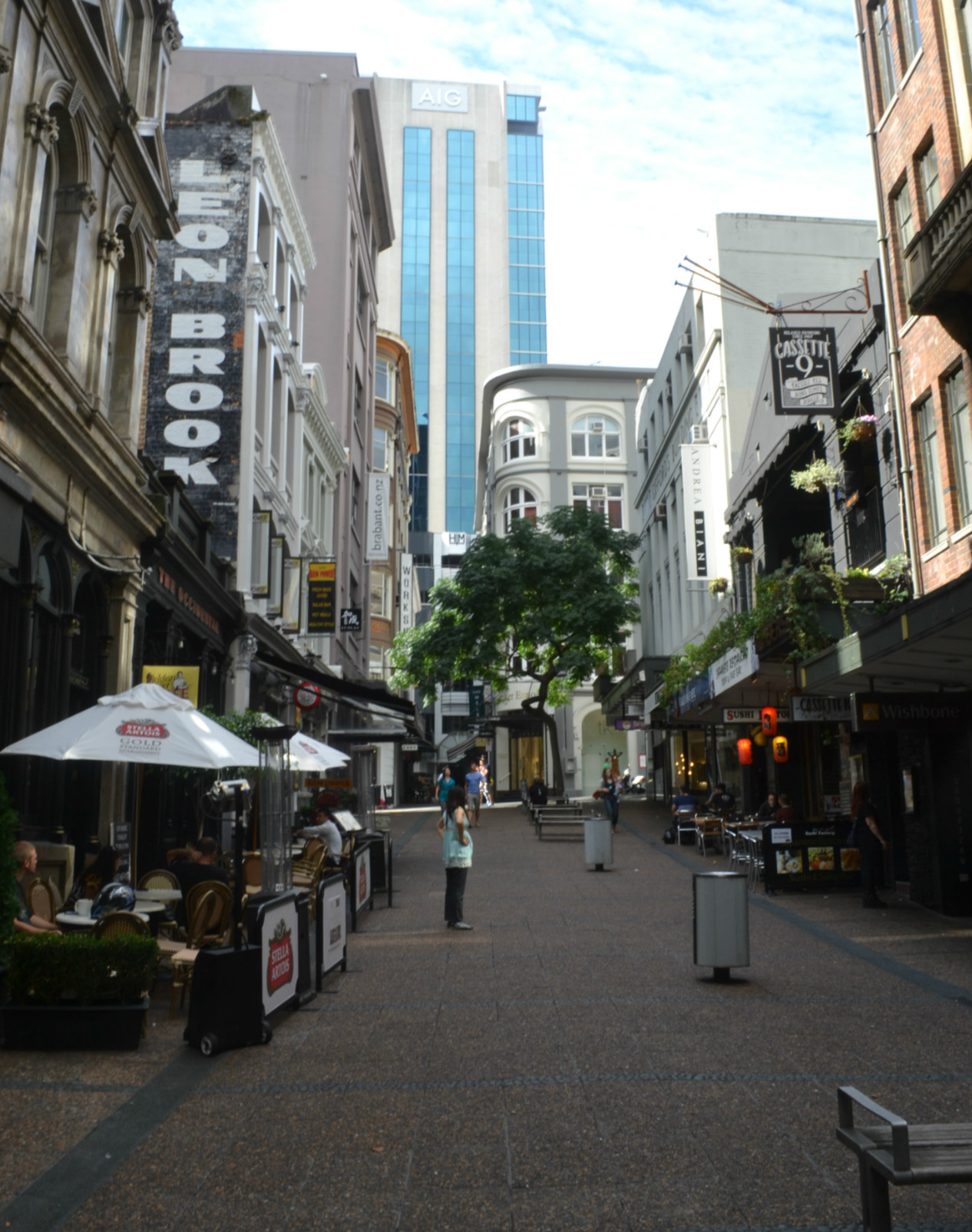
I tagged along with Fred from Brazil on one of his cost-cutting missions to the Countdown supermarket for the cut-price end-of-the-day sandwiches and a few cans of whatever beer was on offer, went drinking with Ernst from Germany to a bar called Cassette Nine, where – reckoned my guidebook – “Auckland’s most out there hipsters” go and the beer was on $5 a glass promotion and neither of us was fit to drive or operate machinery next day. It was still raining in any case.

Ernst and his hangover left for Coromandel and a Chinese guy moved in and told us we stank and opened a window, and found out our names, and where we were from, and what we did – or had done – for a living, and where we were going and where we had been, and sidestepped our questions of him. I never even caught his name. He told Fred that his English would improve if he stayed longer in New Zealand and me that I did not speak English in the way that most Englishmen do. Then, when he had insulted everyone, he said something about having work to finish off, left and never came back.

Pablo from Argentina moved into the dorm in his place at three in the morning, unzipped his bag, took out his laptop and tap-ta-tap-tapped for an hour. He turned out to be a nice enough guy, although his English was limited and my Spanish is pitiful so conversation was difficult.

Fred left and an English couple moved in; Pablo left and a Japanese guy replaced him. I carried on skulking in the hostel for a couple more days but eventually managed to come up with a plan and got the momentum back. It was still raining when I caught the Inter City bus to Rotorua.

© Richard Senior 2015
Why Nagasaki is Much More than a Bombsite

DSC_0849 edit

The influx of foreigners had to be stopped, said alarmists. There were too many already, and they were coming in increasing numbers. It was a threat to traditional values. Some brought with them a dangerous, alien religion, which – the alarmists maintained – they were determined to impose on everyone. Anything they did was suspected to be a front for religious extremism. Some of that faith had, indeed, been involved in violent incidents in which many had been killed, and all fell under suspicion. They were treated as potential subversives until proven otherwise.

Shogun Iemitsu reacted by shutting Japan off from the outside world. Foreigners were prohibited from entering, those already there were sent home. Christianity was banned. It became a capital offence to leave the country. Japan was isolated for 220 years.

But it was not hermetically sealed. Foreign trade did not end, it was just heavily restricted. The Dutch East India Company had been happy to spread rumours that its Catholic rivals were aggressively proselytising under cover of their trading companies, and the Shogun rewarded its loyalty to Japan with a monopoly on trade with Europe. The Dutch stayed when the Spanish and Portuguese were expelled, albeit ghettoised on the tiny man-made island of Dejima in Nagasaki harbour: the only place in Japan to which foreign ships were allowed to sail.

Dejima interior 2

Dejima has been restored and rebuilt as an open-air museum with the buildings fitted out much as they would have been in the seventeenth century, a fascinating blend, unique in Japan, of East and West with heavy European furniture in tatami mat rooms and paper screens abutting papered walls.

In 1853, Commodore Matthew Perry persuaded the Shogun to open up Japan to trade with the United States by anchoring a fleet of heavily-armed warships in Edo Bay, firing the cannons (ostensibly to celebrate the Fourth of July) and asking nicely. The other Great Powers then demanded, and got, trade agreements of their own.  The isolation policy was abandoned.

DSC_0870 edit

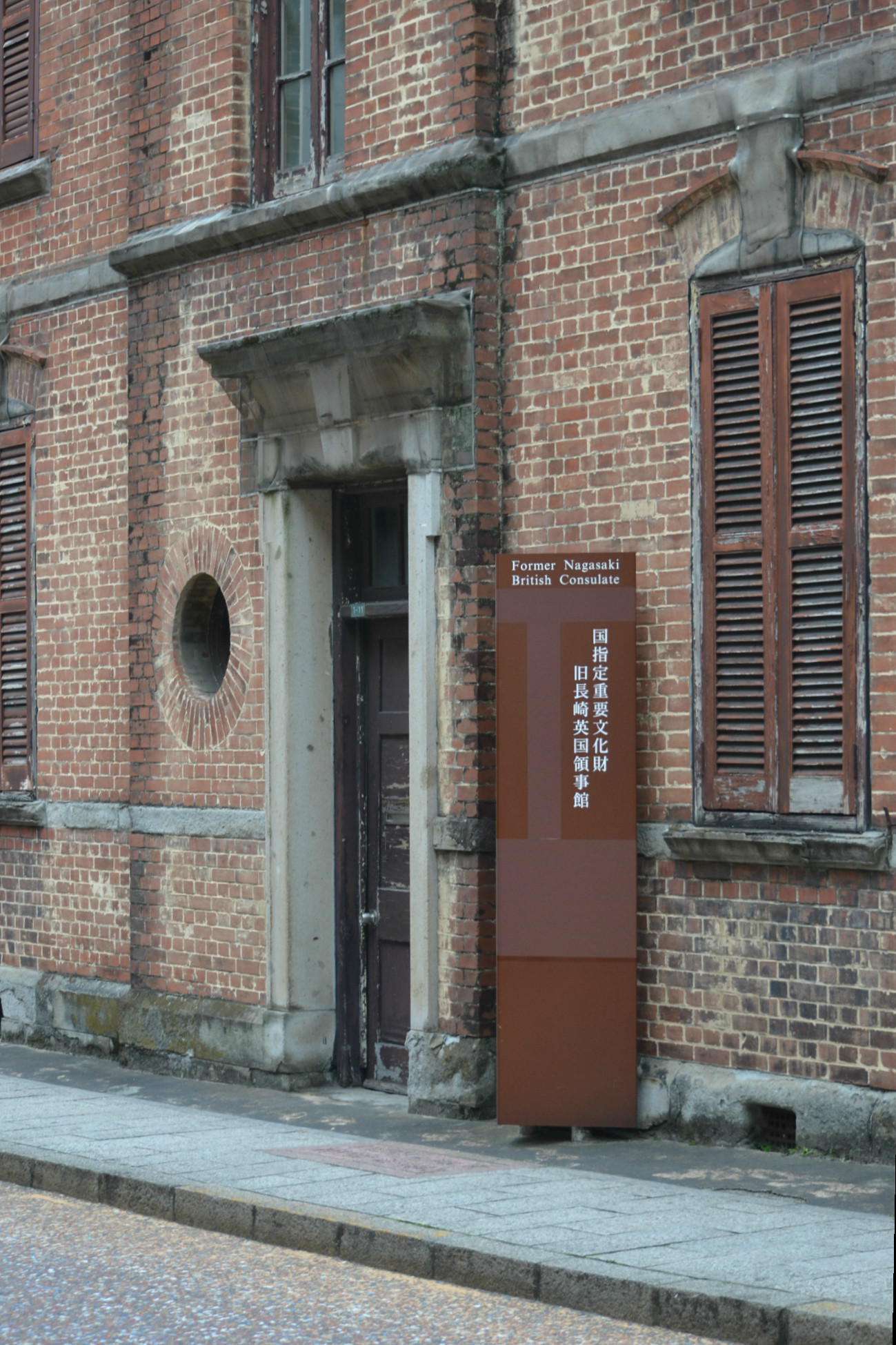
Japan once again gave a reluctant home to ambitious Westerners like the Scotsman, Thomas Glover, who moved to Nagasaki in 1859, initially to Dejima and later to a house he had built, the first of many in the city in Western colonial style, in the hills on a plot with the best view in Nagasaki. It is still there now, and open to the public; there are more Western-style houses and the old red-brick British Consulate further down the hill.

A few blocks away are the paifang ornamental gates, the paper lanterns and Confucian shrines of the Chinatown established when Nagasaki became a free port and Chinese traders moved out from their compound in the hills. It is crammed, now, with restaurants serving the city’s iconic fusion dishes, champon and sara udon. Nagasaki is a great food city. It claims the best Wagyu beef in Japan.

DSC_0850

Glover traded in anything in which there was money, be it opium, tea, ships or arms. He secretly sold weapons to the rebels who became the leaders of the Meiji Restoration, which overthrew the shogunate and restored the emperor. It was good for business.

Where, before, anything Western had been treated with suspicion, it was now indiscriminately embraced: everything from battleships to ballroom dancing, from Cognac to colonial expansion.

Japan was suddenly building ships and trains, mining coal and making steel; it built up a strong modern army, won wars against China and Russia and became a colonial power. Nagasaki was at the heart of it all, and so was Thomas Glover. By 1870, though, he had overreached himself and gone bankrupt. Yet with his contacts and experience, he was taken on by emerging Japanese companies like the Nagasaki Shipyard & Machinery Works, better known later as Mitsubishi. It still has yards in Nagasaki with half-finished cruise liners looking like multi-storey car parks.

DSC_0898

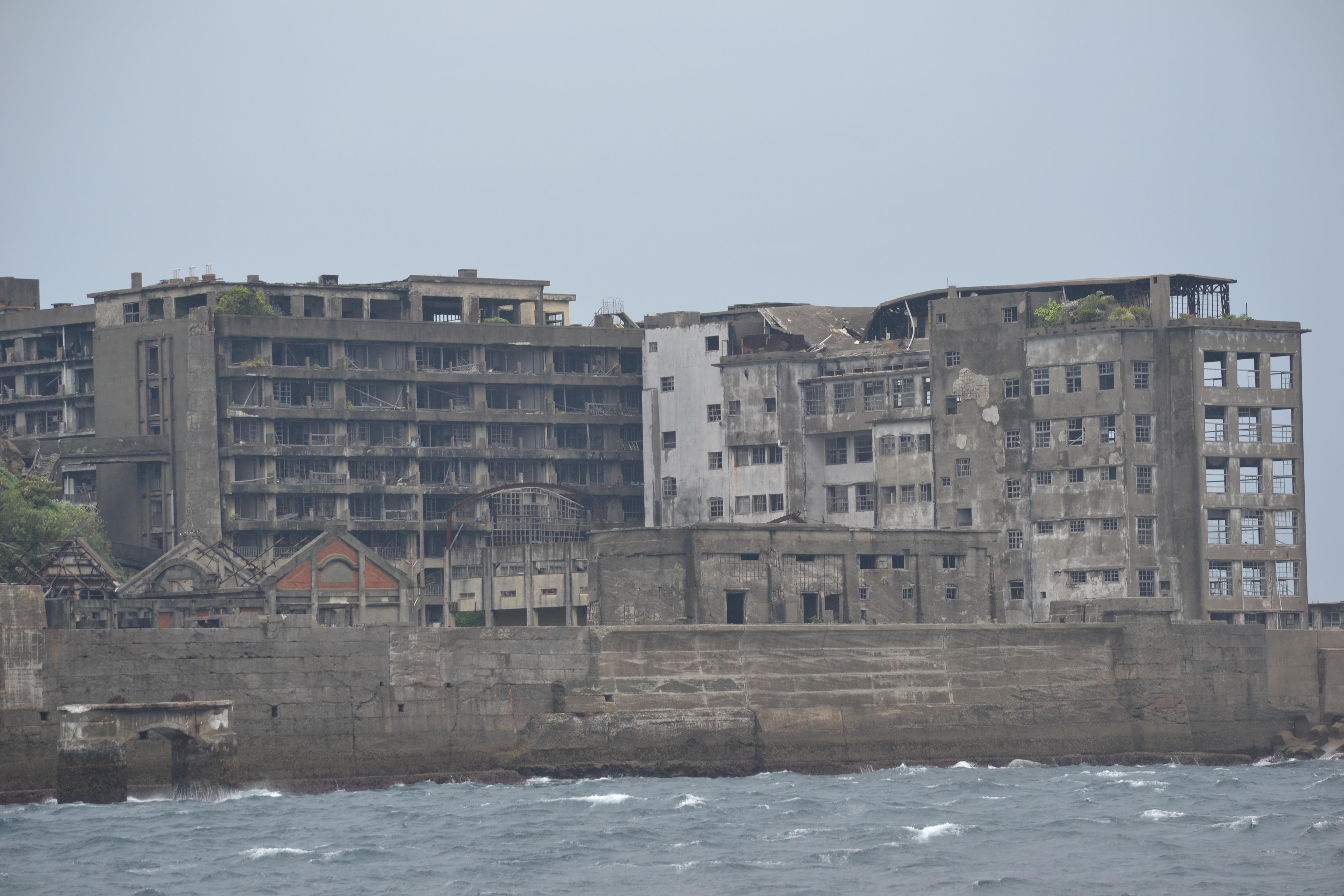
In the 1880’s, Mitsubishi bought Gunkanjima (Battleship Island), a few miles from Nagasaki, where it set up an undersea coal mine and built apartment blocks in which over 5,000 lived, until the mine closed and the entire population left in the 1970’s. The derelict island served as Raoul Silva’s base in Skyfall.

The tensions at the core of the Meiji Restoration were never resolved in the helter-skelter rush to industrialise. They led to assassinations, rebellions and attempted coups and, in time, to Manchuria, Nangking, Pearl Harbor and the brutalising of prisoners of war. That ignoble episode ended seventy years ago almost to the day with the atomic bombing of Nagasaki. “The war situation has developed not necessarily to Japan’s advantage,” as Hirohito put it with imperial understatement.

DSC_0920

As in Hiroshima, there is a memorial park to the victims and a museum which shows, with the same quiet dignity, what happened to tens of thousands of ordinary people when the Bomb exploded. There are old air raid shelters cut into hillsides, the single surviving leg of a shrine gate marooned in the middle of a Post-War development, the ruins of the old Shirayama Elementary School incorporated into the modern school buildings, and the blackened belfry of the Urakami Cathedral lying where it fell.

The dead, the disfigured, the grievously injured should never, of course, be forgotten; but Nagasaki, too, deserves to be known as more than a bombsite.

© Richard Senior 2015

Hiroshima Seventy Years On

DSC_0608

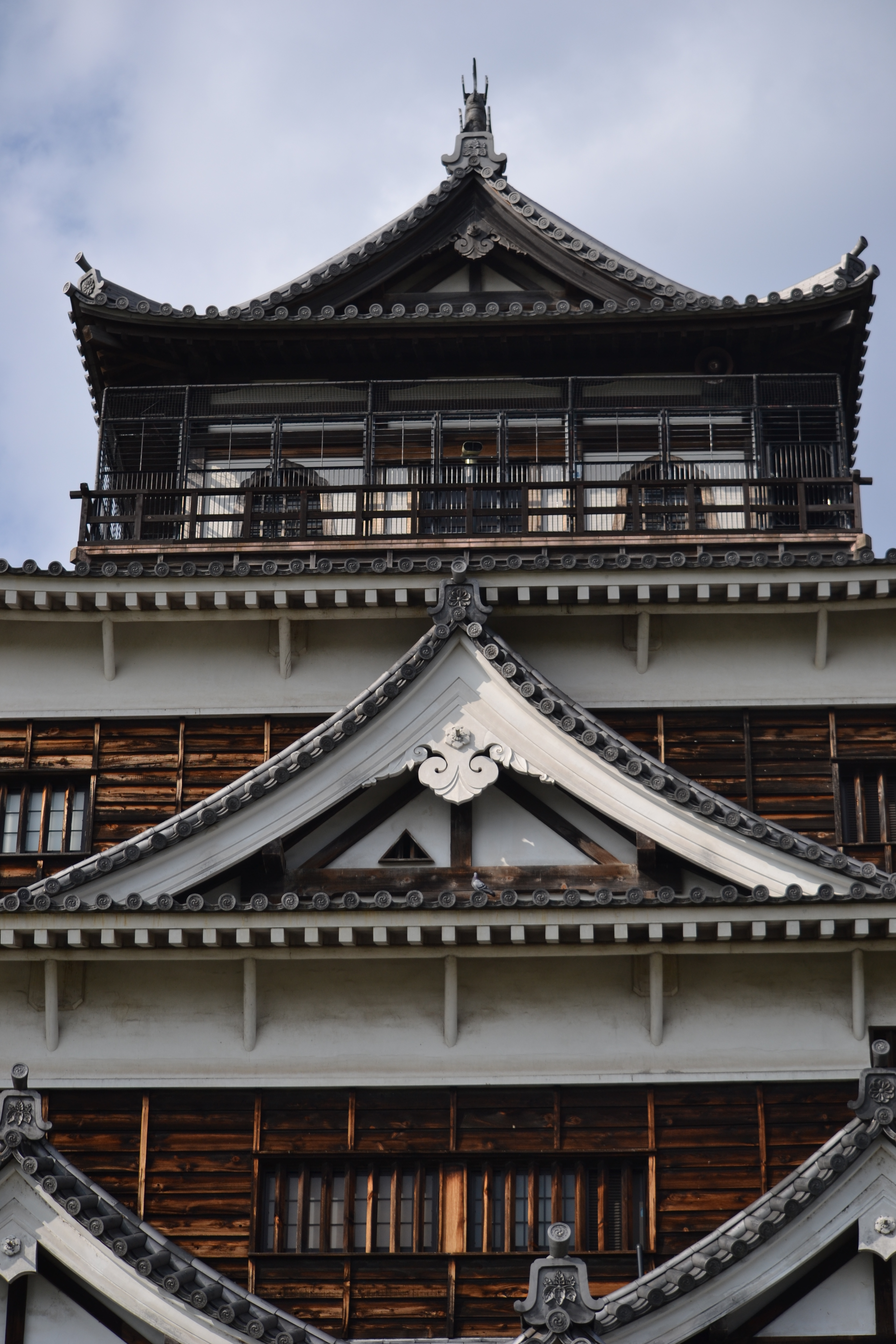
The Ōta River divides into two, then three, then six and empties into the Inland Sea. It segments the city into islets. Historic trams clatter over the bridges. A cobbled path follows the course of the river under the shade of cherry trees which erupt into blossom in late March. In the park, nearby, there is a classical castle, originally built in pine in the 1590’s and rebuilt in concrete in the 1950’s. The original was destroyed seventy years ago today, along with five square miles of the city.

One plane, one bomb, at least 70,000 dead at a stroke, at least the same number again of the after-effects; 70% of Hiroshima flattened.

The ruins of the Prefectural Industrial Promotion Hall have been left as they were at the end of that terrible day, the steelwork of the dome crumpled inwards, the outer wings collapsed, the stonework gouged and pitted. It is often said to have survived because the A-bomb exploded directly above it, but it actually exploded over a hospital 500 feet away and obliterated that. When Dr Shima, who had been out of town, came back to Hiroshima, the only traces he found were the bones of his patients and an implement he had bought before the War, in America.

The area around it, a bustling densely-packed neighbourhood at 8am on 6 August 1945, a wasteland by 8.15, has been turned into a memorial park. What is now the information centre was then a fuel distribution point, where the luckiest man in Hiroshima worked. Just as Colonel Tibbets was lining up Enola Gay for its bombing run, Eizō Nomura popped down to the basement for documents. Everyone else in the building was immolated. He lived on into his eighties.

DSC_0563

Academics and journalists, hawks and doves, conservatives and radicals have been debating the bombing for seventy years; they will be debating it for seventy more. Was it morally wrong? Was it a war crime? But was it any worse than fire-bombing? Was it justified by Japan’s own conduct? Was the only alternative a hard-fought invasion in which the Allies alone would have lost a million men? But was the War not won already by then? Had Japan not already offered terms of surrender? Was it less about ending that war as forestalling the next one? Was it done pour encourager les autres?

But few on any side of the argument stop to consider what the bombing actually meant, beyond the big numbers. The Peace Museum tells the human stories with dignity. Spectacles, wristwatches, school uniforms, a lunch box, a tricycle, melted tiles and fused bottles anchor the dreadful stories in real people’s lives. The 70,000 dead, not just a statistic but a pile of carbonised bodies: women, children, elderly people, Korean forced labourers, Allied POW’s. The countless more who survived, but with the most horrific injuries.

Across the park, a flame has burned since 1964. It will burn until the last nuclear weapon is destroyed. It will burn for a long time yet.

The nine nuclear states now have, between them, enough weaponry to end the world at the push of a button. It is improbable that any government would make a reasoned decision to launch an attack. But nuclear states have been led by presidents who were frequently drunk. One is currently led by a ruthless and erratic dictator. Mitterand and Carter each left the nuclear codes in suits which they sent to the dry cleaners; Reagan and Clinton mislaid them. Bombs have been dropped accidentally, although mercifully did not explode. There were several occasions in the Cold War when computer errors, warning shots and all too realistic war games suggested an incoming attack and the caution or quick-thinking of one individual was all that prevented a nuclear war being started by mistake.

On every other page of the comments book at the Hiroshima Peace Museum are two words which must surely come into the head of most who visit: never again.

© Richard Senior 2015
Sand, Salt and Sunsets in the Atacama Desert

DSC_0363 edit

Chile, that “long petal of sea, wine and snow” in the beautiful words of its Nobel laureate, Pablo Neruda, stands out on a map of the world. At 2,700 miles north to south, it is longer than any other country except Brazil – roughly the same as Britain and the United States bolted together. Yet it is all of 40 miles wide at its narrowest point east to west, 220 at its widest and a little over 100 on average.

The south has glaciers and ski slopes, the north has the Atacama Desert. Geographers know it as the driest place on earth, but it is better known now for the San José mine where, in 2010, 33 copper miners were trapped underground for over two months.

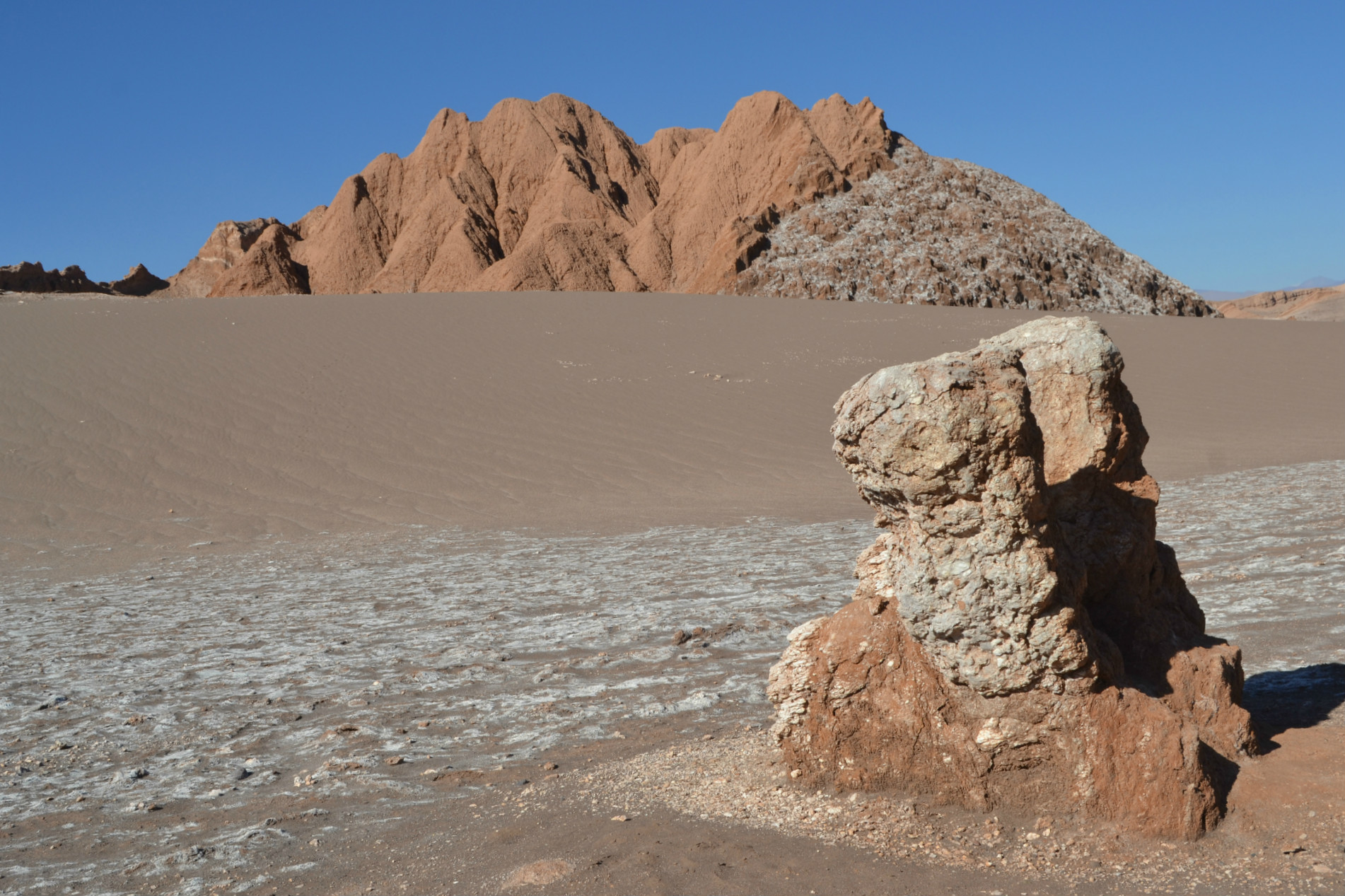
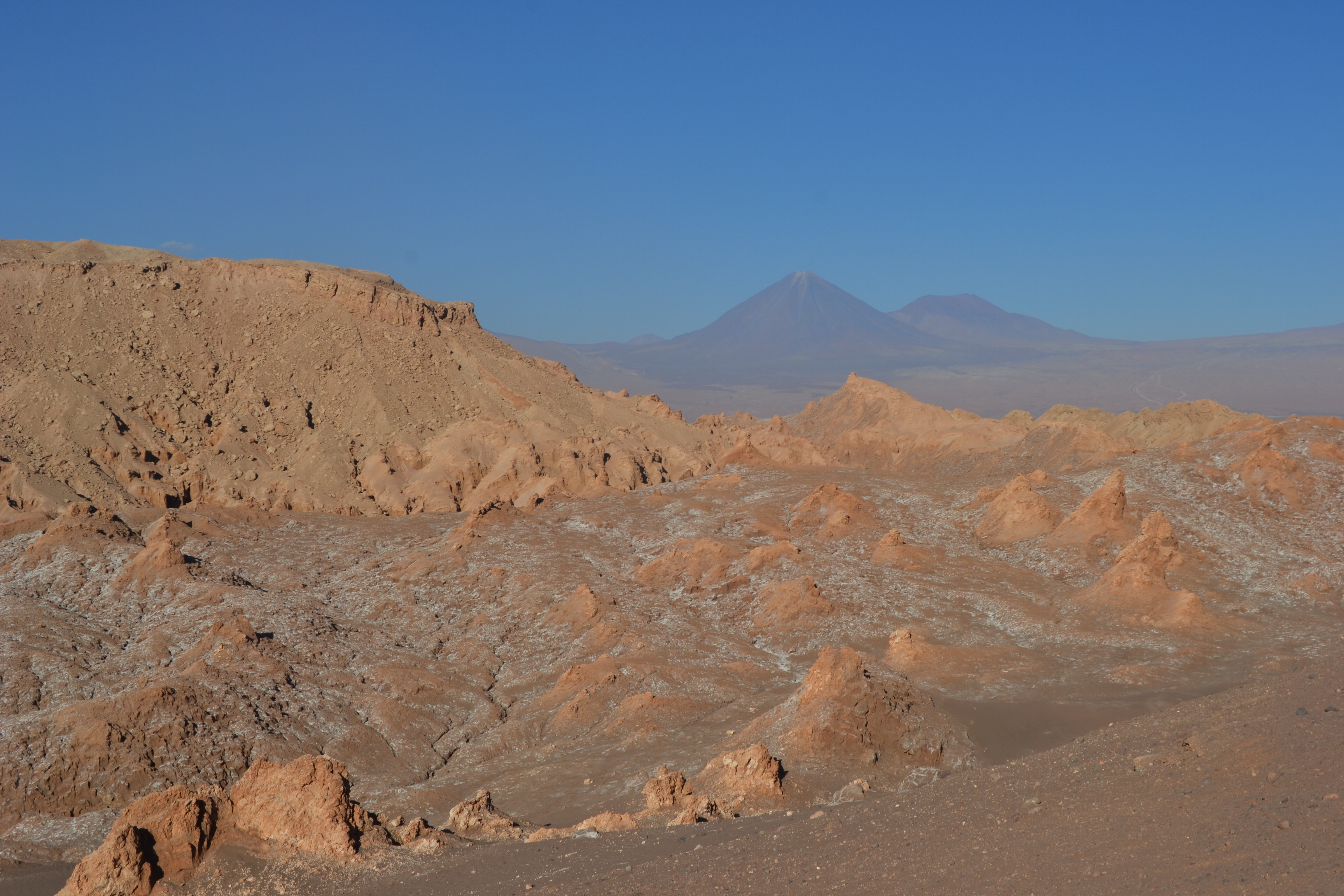
Valle de la Lune (Moon Valley) is around 300 miles to the north of that, roughly in the middle of the desert. The sand is sprinkled with ancient salt deposits, like lorryloads of Shake n’ Vac. Natural sculptures sprout in the middle of nothingness. Dunes rise three storeys high, pristine except for a narrow strip which has been corrugated by the wind. Nature has carved the variegated sandstone into walls, as if of a fairytale castle. There are narrow alleys which you can squeeze through, and jump in alarm when the walls bang as they cool in the late afternoon and you think the whole lot will collapse.

As the sun dies down and the sky dims, the golden rocks turn gradually pink then gradually red. The Licancabur Volcano we had tracked towards on our way from Bolivia was pink at the crater, blending to red, then blue, then purple at the base of the cone. Busloads of people had come to watch the sun set. They crouched with their cameras, fussing with tripods; or sprawled on the rocks, sipping wine from plastic cups.

DSC_0380

Back in San Pedro, I went to a restobar with tables outside and a bonfire to chase off the chill of the evening. The fire crackled and scented the air as I looked through the menu and the waiter brought a basket of bread and the bowl of pebre, which always comes with it in Chile. It is simple enough to make. Roughly chop a handful of coriander, toss with a couple of diced tomatoes, a few sliced spring onions and a finely diced green chilli, add a glug of wine vinegar, three or four of olive oil, a sprinkle of seasoning, and toss it all again.

I was out by seven the next morning, looking to hire a bike. But everything was closed. Doors were bolted, windows were shuttered; there was no one else about. It was the same again when I went back at eight. A few cafes had opened by nine, but everything else was still shut. I had a coffee and an empanada de pino as I waited for the hire shops to unlock their doors. Then I really needed the exercise: Chilean empanadas are massive things, like half a rugby ball.

Sometime around 9.30, the keenest of the hire shops opened for business and I chose a mountain bike which surprised me by stopping when I squeezed the brakes. Hire bikes tend just to slow down. I had, as always, to remind myself that it was left hand drive. Squeeze hard on what would be the back brake at home and you are over the handlebars wondering how it happened.

I pootled around town and into the outskirts and rode out to the remains of a pre-Incan fortress named Pukará de Quitor. I could have cycled all day in that weather, but I had a bus to catch in the early afternoon: South towards Santiago.

© Richard Senior 2015
Townships of Tanzania

DSC_0722

The road out of the Serengeti was barely a road at all. The jeep rattled, the windows vibrated, and the contents of my pockets shook themselves free and collected on the seat around me. “African massage!” Frederick shouted over the noise.

He was a confident driver and kept the speed up and steered sharply round any rocks which looked as if they might threaten the tyres. But there had been other confident drivers down that road. One was staring at a jeep upended in a ditch, looking bemused as to how it had happened. Another had abandoned his with the windows smashed, the roof stove in and every panel dented.

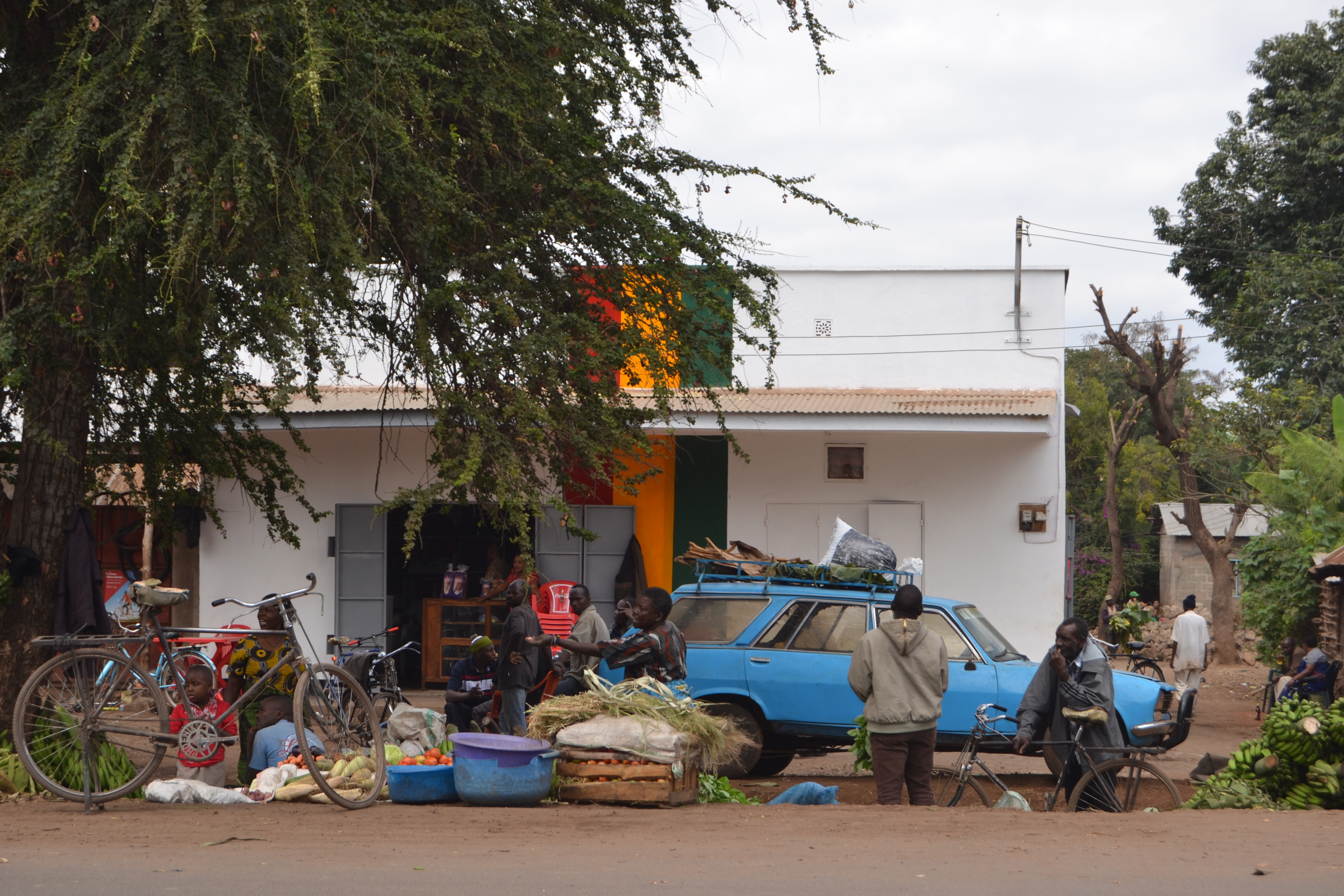
Frederick dropped us at a township, where we stayed the night. The stalls on the main street sold Tingatinga paintings to tourists on their way to the national parks: cartoonish animals and semi-abstracts of African ladies. There were rusty old bikes with no handgrips or brakes piled high with green bananas. On the side roads, women knelt and sold lettuces and tomatoes from plastic bowls. Little boys played pool on a table they had made by laying planks over upturned buckets. Their cues were canes and the balls were lemons and limes.

DSC_0743

I stared out of the window of the bus heading south in the morning. The country, at times, could almost have been European, except that the scale was all wrong. Nowhere in Europe would you find so much space unclaimed: a place where you can look to the horizon on either side and not see a town, or a farm, or a superstore.

The road passed through dusty townships with huts built from wattle and daub, or mud bricks topped with thatch, or tin sheets nailed to wooden frames. Some had windows, none was glazed. The business names alluded to lions (Simba Freight, Simba Concrete), acacia trees and – incongruously – Arsenal Football Club. Always Arsenal, never Spurs. I saw a “Gunners Supermarket,” an “Arsenal Salon,” an “Arsenal FC Bar,” and the Arsenal logo painted on walls, and on the side of trucks.

Motorcycle taxi drivers waited for custom on Chinese bikes. Men sat and played draughts with beer bottle tops on hand–drawn boards. Perfectly poised women carried jugs on their heads to the well. Children ran out and waved and shouted, except one who jerked up his forearm and gave me the middle finger. I taught him the British equivalent.

DSC_0740

© Richard Senior 2015

A Typical Ko Tao Day

DSC_0675

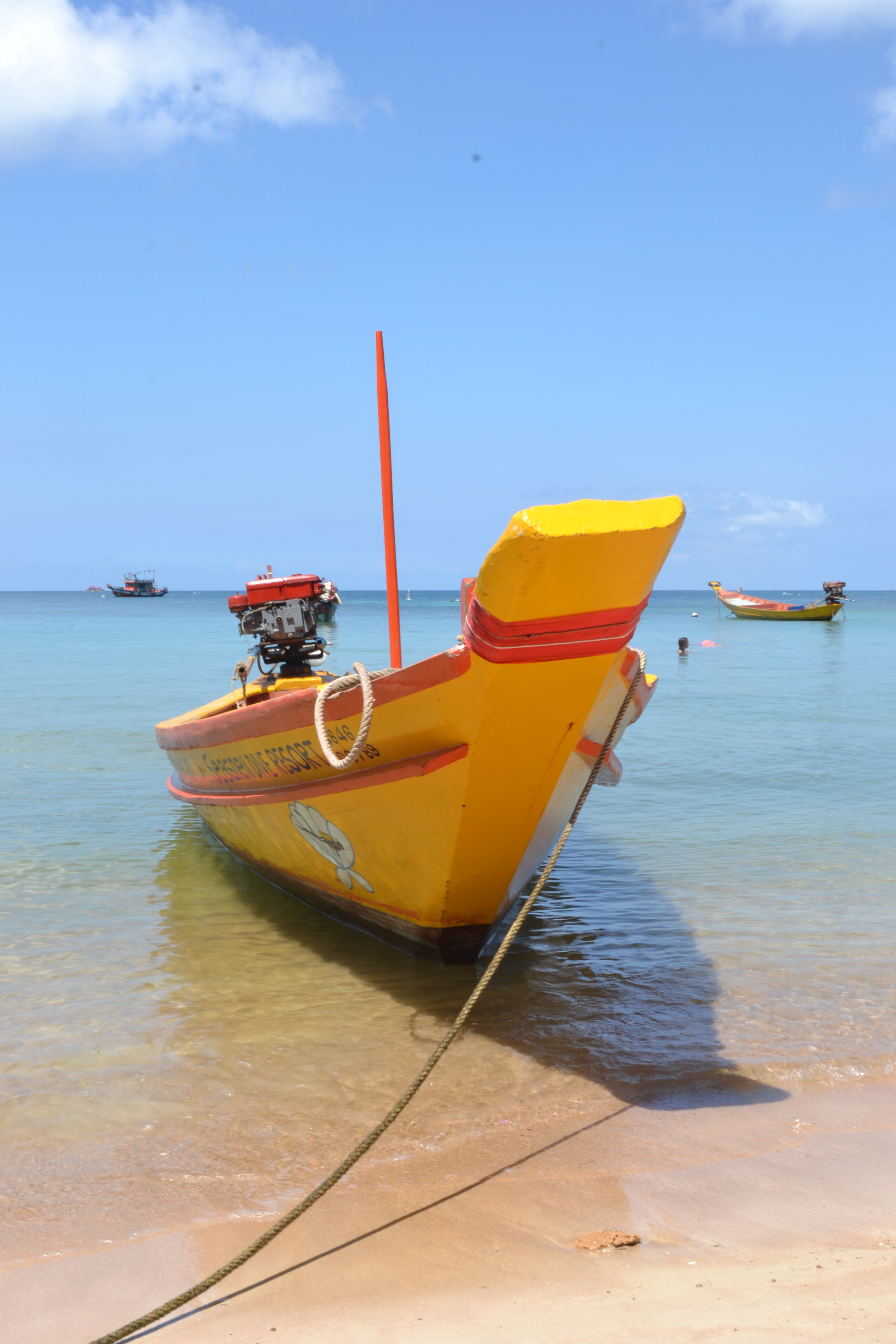
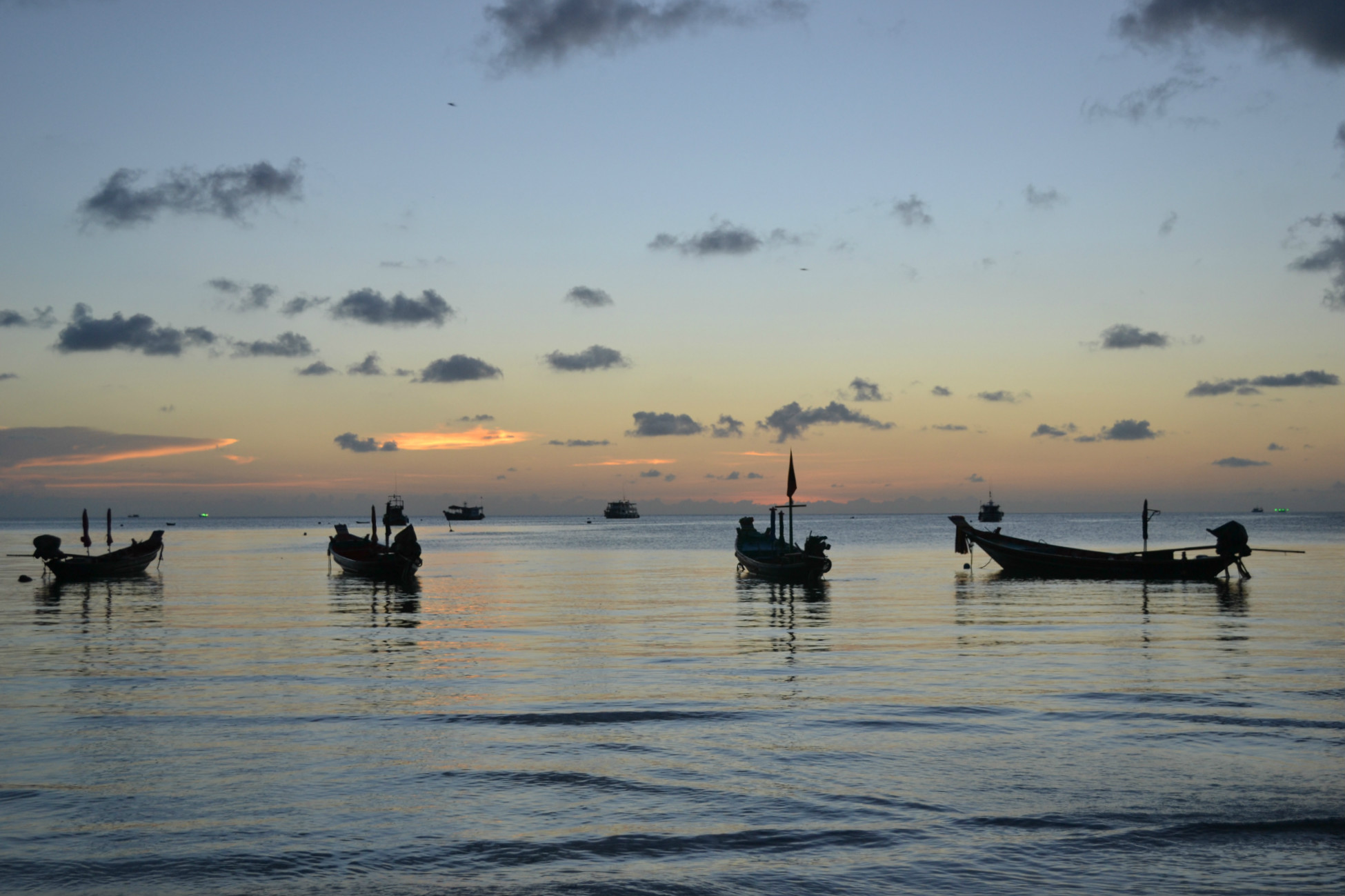
The beach is empty in the early morning, although the sun is hot enough to enjoy. Coconut palms stretch over the sand to the sea. Longtail boats are anchored in a line a little way out from the shore and, beyond them, more randomly, are the bigger dive boats. Fish writhe in the shallows. An eagle circles overhead. You claim your spot and open your book.

Sometime around ten, a guy wanders out from the dive school, barefoot and shirtless, cracks up a Marlboro and starts to set up for the day. He is a farang but he has been there long enough to synchronise to the local pace. He does everything casually, as if it is not really work. But then why should he rush? Why should anyone rush? He wades out to the boat, grabs the anchor chain and drags it ashore, then loads it with oxygen bottles.

The instructor arrives with a class of laughing students. They try on their masks and startle themselves when they experiment with the oxygen tap. They assemble in the boat and motor out of sight.

DSC_0686 e

You go back to your book and stay on the beach and colour evenly on each side. The divers come back around six in the evening, still laughing, and repair to loungers in front of the beach bars and balance bottles of Singha on the sand and fuss with Rizlas. The bars play muted dubstep or reggae until the sun has gone and they crank up the volume and the BPM’s and start the fire show.

You stay on the sideline with a bottle of Singha and watch as they set up a limbo pole, douse it in petrol and set it alight. The Thais from the bar, shirts off to show off their tattoos and six-packs, duck under it easily and invite the farangs to have a go. They start a raggedy, giggling line and lurch towards the burning pole and stagger and stumble under it, except one guy in Ray Bans at midnight who slides a cigarette into his mouth and pauses to light it on the pole as he slips underneath.

You’re crazy doing that,” you tell him. But he insists that he only smokes five a day.

© Richard Senior 2015

Escape to Alcatraz

DSC_0851

It is only a mile and a half from the mainland, but the water is cold and the tides are strong, and the authorities were confident that no one would escape from what would become the world’s most notorious prison.

There is still a stern warning as you approach by boat from Pier 33 about the penalty for procuring or concealing escapes, but the old sign is rotten and the letters have faded and it is half a century since Alcatraz closed.

Winds howl across the island, gulls screech overhead. The perimeter fence is threadbare with rust. Paint is flaking, windows are broken, lichen is overwhelming the walls. The concrete is cracked and crumbling in the old recreation yard.

Knowledge of the outside world is what we tell you,” declared the Warden in Escape from Alcatraz, “…your world will be everything that happens in this building”. But the outside world was teasingly close. The recreation yard overlooked the Golden Gate Bridge. Music and party voices drifted over the water. It is hardly surprising that three dozen inmates tried to escape, in two dozen separate attempts. The only surprise is that there were not more.

DSC_0879

 “No one has ever escaped from Alcatraz,” said the Warden in the movie, “and no one ever will”. But on 11 June 1962, three bank robbers crawled through holes they had spent a year chiselling into the walls of their cells with spoons, into a service corridor, up a ventilation shaft, onto the roof, down the prison wall and over the fence. They left dummy heads made of toilet paper, soap and hair in their beds to fool the guards – which it did until morning – and paddled away in a dinghy made out of raincoats. They were never found, nor heard of again.

The movie implies that they got away. Some believe that they did. The evidence they rely on is flimsy, but so is the evidence the authorities relied on to conclude that the escapees drowned. The official version meant that the Warden could carry on boasting that no one had ever escaped from Alcatraz: it saved its reputation with the public. Yet within less than a year it had closed for good.

Native American activists occupied the island in 1969; they stayed for nineteen months. Faded ‘Red Power’ slogans are still plainly visible on the prison block and watchtower. The Warden’s quarters are now just a shell, after they were gutted by a fire which got out of hand during the occupation, or – say conspiracy theorists – which was started deliberately by saboteurs out to discredit the activists.

Everything on Alcatraz looks to have been left as it was when the last of the inmates departed, or when the occupation ended. It has not, as so often, been repainted, remodelled and rebuilt until you wonder if anything you see is much older than things which you have in the back of the shed at home.

DSC_0887

The cells, five feet by nine feet, are kitted out as they were with a bunk, a tiny cold-water sink and toilet, and a few are left open so you can step inside. You can wander down the wings, known as Michigan Avenue, Broadway, Park Avenue and the Sunset Strip, into the cavernous dining room secretly fitted with tear gas canisters, and the kitchen with the breakfast menu for the last day the prison was open, assorted dry cereals, steamed whole wheat, scrambled egg, milk, stewed fruit, toast, bread, and butter, and out into the recreation yard.

There are none of those stupid interactive exhibits which kids run round trying to break. You are not subjected to tabloid-style propaganda about evil inmates and hero guards and told that crime does not pay and that prison works. There is an audio guide but it is a lot more interesting than they usually are, with a well-thought mix of information – neither dumbed-down nor sensationalised – and accounts by ex-prisoners and guards. Mostly, though, you are just left alone to explore at your own pace and work things out for yourself.

© Richard Senior 2015