Eating Up Vietnam #2: Nha Trang

In Nha Trang the hawkers were always there but I did not notice them anymore. They sold friendship bands, cigarettes, playing cards and everything else I could manage without.

But as I sat on the sand and gazed idly out at the South China Sea, I noticed a lady in a conical hat with a pot of cooked lobsters hanging from a yoke on her shoulder. I got up and followed her across the beach, caught up and asked her how much. “Hundred thousand Dong,” she said. Just under three pounds; four and a half dollars, US.

She segmented the lobster, so the meat was get-at-able with chopsticks, and halved a lime and squeezed the juice into a pot and stirred in pepper to make a simple dipping sauce. It was as much as the lobster needed.

I wandered over to the fruit vendor later in the afternoon, just as she was about to pack up, and I only wanted a pomelo, but she stuffed a bag with two of those, a dragon fruit, a couple of bananas half a dozen mandarins, and nearer a dozen rambutans. “No, no,” I said; “I can’t eat all this”.

Okay for tomorrow,” she insisted and forced the bag on me. I did my best with it that afternoon and finished the rest in the morning, sitting on the beach and peeling fruit with my Swiss Army knife.

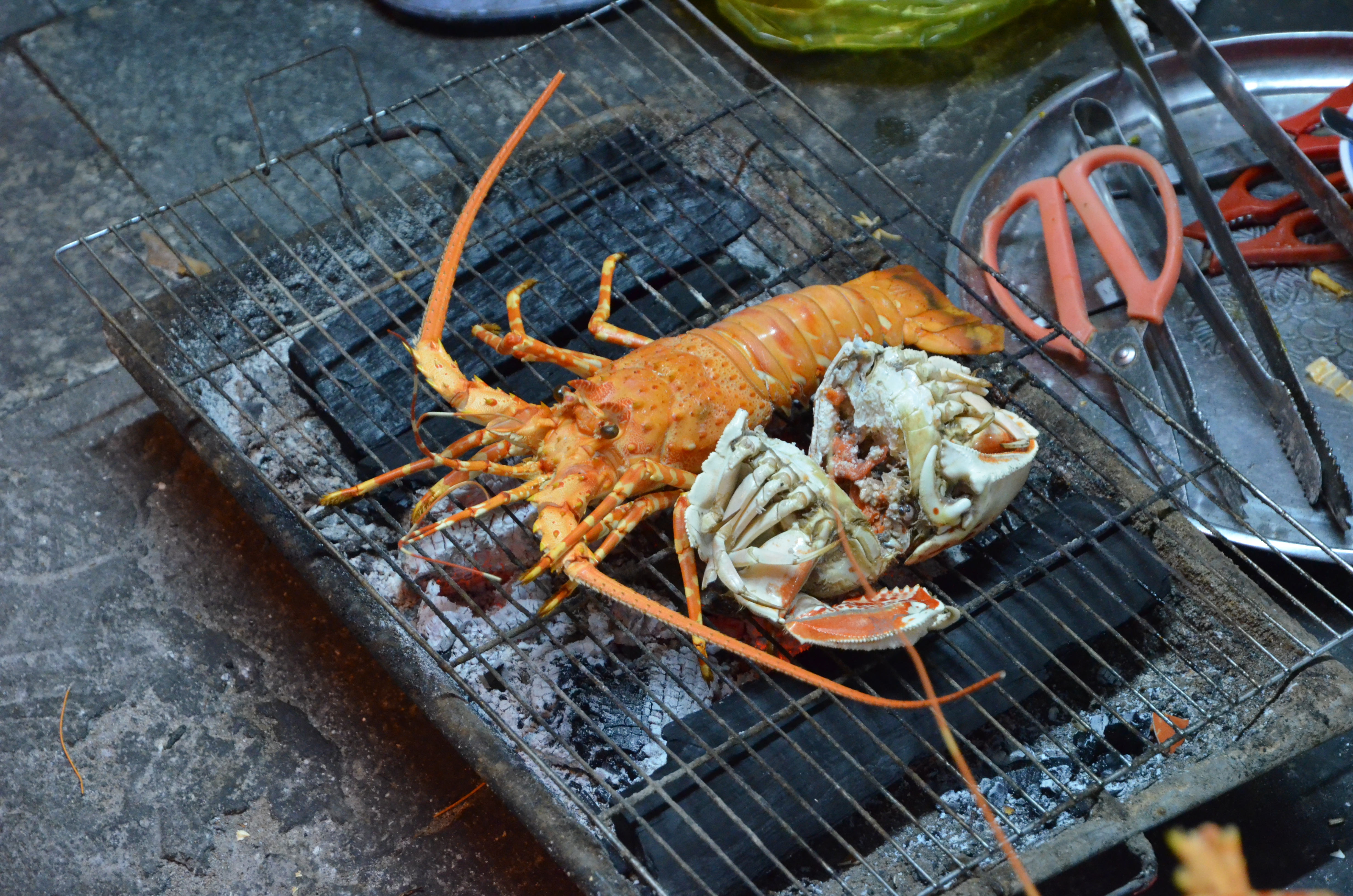
Somewhere around midday, an old lady arrived and laid down her yoke and began to set out her stall. She lined up four pots, one filled with spiny lobster, a second with crabs, a third with tiger prawns and a fourth with sea snails, then shook ice onto platters and topped each with a little of the seafood and placed them on top of the pots. She lit the charcoal in a cast iron pan suspended from the yoke, laid a grill over it and let it burn until the charcoal glowed red and grey.

This time, I got a lobster, a crab, two tiger prawns and sea snails dotted with curry paste for my 10,000 Dong. For the same money in London, I would get a miserable sandwich from one of the corporate chains and the mayonnaise would splat on my shirt and ruin my mood. Even an old, small, cooked-from-frozen lobster would cost twice as much back home.

There are too many tourists in Nha Trang for the restaurants to be reliably good, but I found one on a quiet street a few blocks back from the beach, which was as dark and ramshackle as good restaurants tend to be in Southeast Asia, and had a menu of un-touristy dishes like stewed frogs with aubergine in turmeric broth. I ordered miến lươn trộn, which is sliced eel stir-fried in a hot wok and tossed with beansprouts, glass noodles, shredded mint and chilli then sprinkled with onion flakes.

I was done, then, with Nha Trang and went back to my hotel, collected my bag and got an overnight train heading north.

© Richard Senior 2015

Image via Shutterstock
An Onsen Town

Yamananka Onsen

“The Japanese have the same attitude to bathing as Frenchmen reserve for eating: they do it with a mixture of connoisseurship and physical abandon. A bath can be enjoyed alone, but it is more often taken with many others, keeping up with the latest gossip while scrubbing one’s neighbour’s back” – Ian Buruma, A Japanese Mirror

Yamanaka Onsen was deep in the mountains. It had rained and the road was damp and the mist clung to the peaks of the mountains. In the bottom of the gorge, a river followed the road in a series of undisciplined curves. It was a striking, mineral-rich green and flowed rapidly after the rain. A truss bridge stretched high across the river, triangular in section, violet in colour, describing a lazy S-shape. It led to a path through a park filled with cherry blossoms, and alongside the river, past a waterfall to a shrine and a 2,300 year-old cedar. Ryokans were clustered around the river on the edge of town.

It was the middle of the morning and the main street was all but deserted. There were no customers in the old wooden stores. It was early, yet, for the sake brewery, the tea-house and the soba noodle shop; and there were no tourists, but me, to browse the shops which sold the lacquerware for which the region is famous.

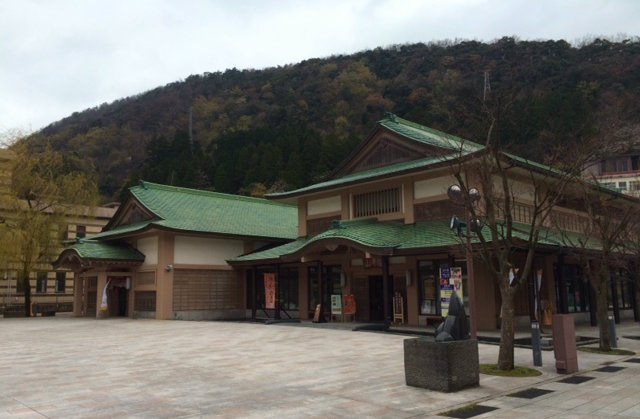
The town was built around hot springs and the two public bath houses, one for men and one for women, are centrepieces of the plaza.  The waters, at a temperature of 48.3 degrees Celsius and rich in calcium and sodium sulphate, are said to relieve “muscular pain, joint pain, shoulder pain, bruises, chronic digestive diseases, haemorrhoids, over-sensitivity to cold, fatigue, arteriosclerosis, cuts, burns, chronic skin diseases and motor paralysis”.

I slipped my trainers off and went in, only to be stopped at the door and made to understand through urgent, embarrassed gestures that the smaller building across the plaza was the men’s bath house.

I had come unprepared, as ever, and had to hire a towel and buy a sachet of shower gel. There were lockers in the foyer for shoes and valuables and, with those locked away, I went through to the wood-panelled changing room and folded my clothes into a basket and slotted it onto the shelf. It is illegal to be untidy in Japan.

It was a bright, spacious bath house with a pitched wooden ceiling and high windows running the length of the room. The walls and the floor were tiled in muted colours; there was a tiled pillar in the centre of the bath with a plinth you could sit on and lean your back against it. Around the edge, there were shower heads and mirrors set low. I took a plastic stool from the stack, sat down and showered, then padded across the room to the bath and slid into the hot water. The idea is to soak for a while, get out, shower off and soak again. I have no idea whether it does anything for the conditions it is said to relieve, but it is without doubt relaxing.

There were a couple of locals bathing, perhaps connoisseurs but thankfully not acting with the physical abandon which Ian Burumu mentioned in the extract above. They politely ignored me and I politely ignored them. We had no language in common to gossip, in any case; and I was not going to scrub anyone’s back.

© Richard Senior 2015  

Picton Picked On

DSC_0827

I spent the night in Picton because that was where the ferry docked.

It is on the same sort of scale as the arse-end-of-nowhere village I grew up in, with about half a dozen streets and a harbour. Notable people who have lived there are said to include the 37th-to-last man to be hanged in New Zealand. It has at least one heritage building, and Katherine Mansfield wrote a short story, The Voyage, about people leaving it for Wellington.

My hostel had the air of a seafront hotel in winter. I had a four-bed dorm to myself. A clock ticked oppressively in the communal room. A Japanese guy, sitting alone, was working his way through a big box of beers and there were two rows of empties on the table. There was a European guy at the other side of the room, ignoring him. He mimed deep concentration on his book as I walked in, so he could get away without saying hello. The Japanese guy was too distracted by the beer. We three seemed to be the only guests.

It felt wrong, somehow, to make noise in the kitchen, so I cooked as if someone were sleeping nearby, ate quickly and had an early night; I was asleep well before ten.

DSC_0826

I was full of energy and cheer in the morning, then, and went for a run around Picton. It did not take long. Once I had showered and changed and tidied my backpack to kill some more time, there was nothing to do but check out and walk slowly to the bus interchange. There was still plenty of time to see the hulk of the tall ship, Edwin Fox, before I caught my bus.

It was built in Calcutta in 1853 (Edwin Fox, that is, not the bus) and took troops to the Crimea, convicts to Australia and migrants to New Zealand before it was retired and used as a bunker for coal. It was left to rot on a beach for decades and it is in a shocking state now. But that makes it more interesting, to my mind, than a carefully-restored ship on which the only original thing is the name.

It is claimed as the Oldest Merchant Sailing Ship in the World and the Ninth Oldest Ship Afloat, but I find it hard to believe assertions like that because they rarely turn out to be true.

I was bored enough to check the point, this time, and sure enough a quick Google search threw up a merchant sailing ship named Charles W Morgan which was built twelve years before Edwin Fox and still sails around New England. Edwin Fox, moreover, is in a dry dock, so it is not afloat at all, let alone the ninth oldest ship afloat.

But none of that matters much. It is an interesting old ship, and they ought just to leave it that.

© Richard Senior 2015

On Nevsky Prospekt

DSC_0676

“There is nothing finer than Nevsky Prospekt, at least not in Petersburg; for there it is everything. And, indeed, is there anything more gay, more brilliant, more resplendent than this beautiful street of our capital?” Nikolai Gogol, Nevsky Prospekt

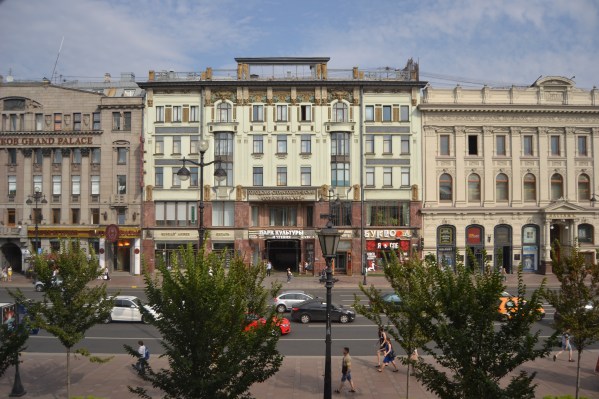
There were once wooden blocks set into the cobbles to muffle the sound of carriages. Nevsky Prospekt, they reckoned, was the quietest high street in Europe. Not now. Ducatis howl, Porsches snarl, and a pair of rally cars crackle and pop as they tailchase towards the Neva. Smoky old Ladas keep up as well as they can.

The crowds spill out of the five Metro stations along its length and stroll across the series of bridges which span the canals while skaters and bladers weave between them and leafleters step out, proffering flyers for bars and restaurants and ‘gentlemen’s clubs’.

There are hot dog carts and ice cream carts every few hundred yards along the pavement. Tour reps stand ready with maps and tickets and credit card readers, and sightseeing boats chug along the canals which bisect the street; the commentary echoes under bridges.

DSC_0817

It is a four-and-a-half kilometre slice out of Russian history. Mussorgsky lived at No 13. He met at Balakirev’s apartment at No 84 with Tchaikovsky, Borodin and Rimsky-Korsakov. Shostakovich gave his first public performance at No 52; Anton Rubinstein gave his at No 30. Tolstoy lived at 147. Pushkin dropped into the cafe at No 18 on his way to the last duel of his life. Dostoevsky edited The Citizen magazine at No 77. Nadya Krupskaya lived at 97; her fiancé, the barrister’s assistant, Vladimir Ulyanov lived at 83. He got involved in radical politics in his spare time and, like Dostoevsky, was arrested for it and sent to Siberia. He returned, under the assumed name of Lenin.

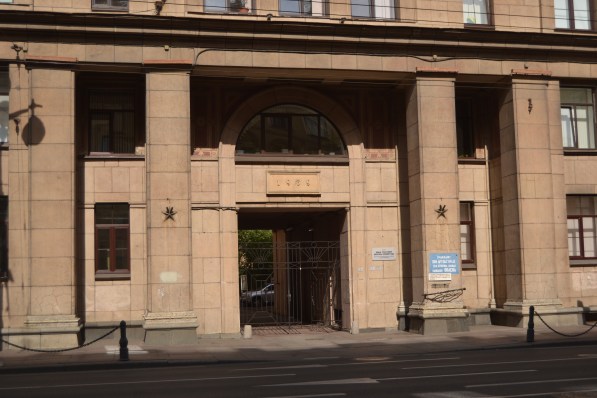
Neither the Soviets, who renamed the city Leningrad, nor the Nazis, who laid siege to it for over two years, changed much about Nevsky Prospekt. Some buildings were wrecked in the War, but rebuilt – if not as they were, then at least sympathetically with the rest of the street. ‘School No 210’ was built in 1939 and is as austere as its name suggests, but it is the only Soviet building on the main strip. There remains a painted sign on the wall from the days of the siege, which reads:

“Citizens! This side of the street is more dangerous during artillery bombardment.”

DSC_0684

The facades of Nevsky Prospekt are still, by and large, what they were when Lenin returned in triumph to Finlyandsky Station. Some date from the time of Catherine the Great, most from before Nicholas II.

The morning air is no longer “filled with the smell of hot, freshly baked bread” as it was in Gogol’s time. Chronic shortages at the bread shops on Nevsky Prospekt sparked the riots which set off the revolution which swept away the Tsar. The bread shops would disappear, as well; and the silversmiths, the perfumiers, the French confectioners and English merchants and the civil servants who parade through the pages of Dostoevsky and Gogol.

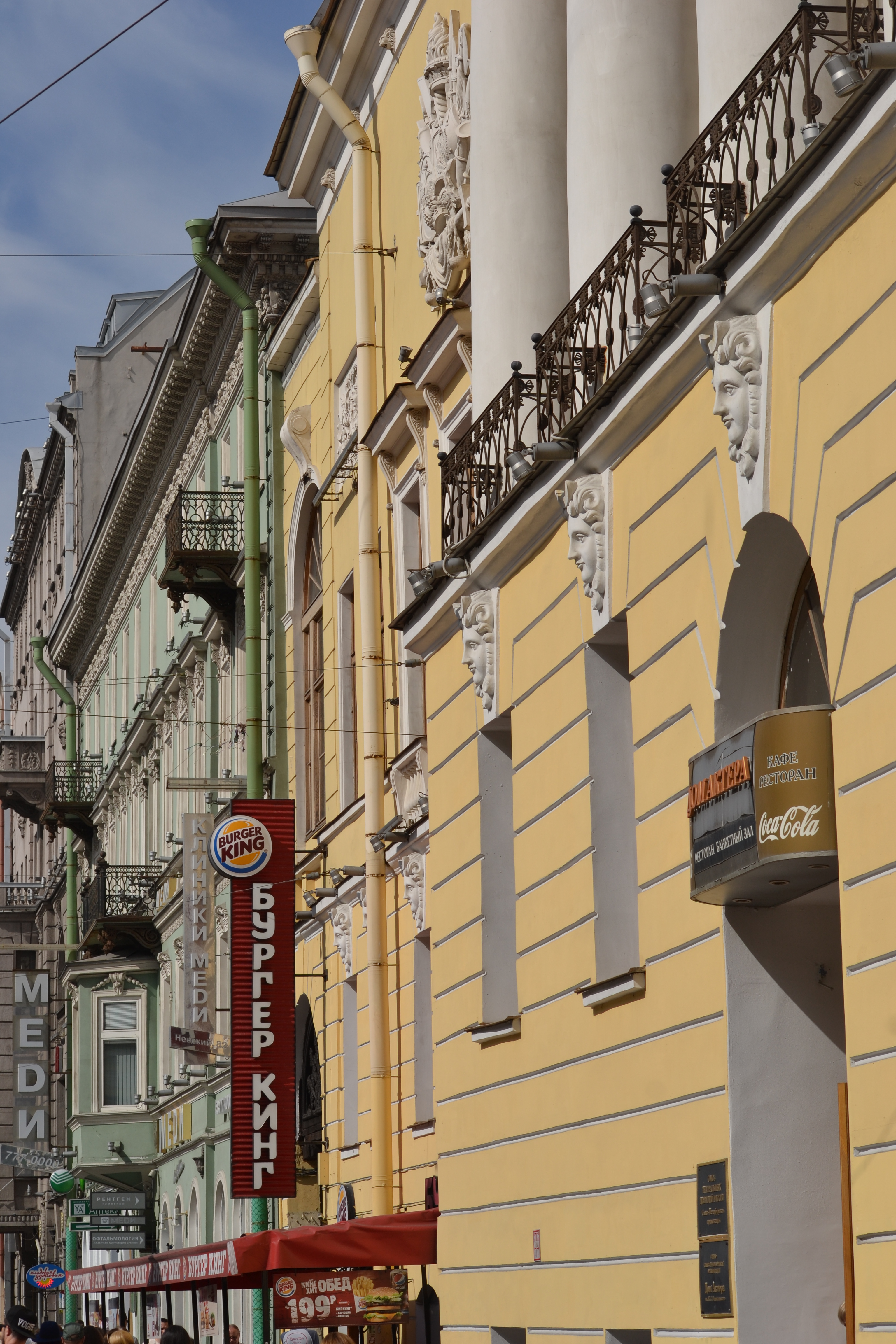
But, when communism fell, the banks, the insurers, the luxury shops and the five-star hotels came back to this Russian Champs-Élysées. Макдоналдс, Бургер Кинг and Старбакc кофе came with them: two burger joints and a coffee shop, whose world-famous logos help decipher the Cyrillic script. Sberbank remains; so does Intourist, once the state travel agency, staffed by KGB agents, now in joint venture with Thomas Cook.

DSC_0454

The Art Nouveau landmark, Dom Knigi, offices of the Singer Company in Tsarist times, is still the city’s largest bookstore, as it has been since Lenin’s first years of power. Tourists flock in and go upstairs to sit in Café Singer. They cross the road to see Kazan Cathedral, modelled on St Peter’s Basilica; and stroll round the corner, along the canal, to the onion-domed exuberance of the Church on the Spilled Blood – built on the spot where a Tsar was shot dead.

Back on Nevsky, they walk a block to the west to the pink-painted excess of the Stroganoff Palace, where beef stroganoff was supposedly invented, and on, then, to the top of the street with the gleaming spire of the Admiralty building directly ahead and, to the right, the most opulent of St Petersburg’s opulent buildings, the Tsar’s Winter Palace.

They might cross the Neva to Vasilyevsky Island or head north to Mars Field and the Summer Gardens or south to St Isaac’s Cathedral, but they will, without doubt, end up back on Nevsky Prospekt.

© Richard Senior 2015

At the Movies in LA

DSC_0350

All of LA’s a set and all the men and women in it merely actors.

Everything seems a cliché from the movies. The pap-pa-pap-pap of impatient drivers. The apocalyptic howl of the siren on a ladder truck. The Harpo Marx horn on the fire truck behind it. The cops congregating in the coffee shop. Their angular black and white cars with chirping sirens and “To protect and to serve” on the doors.

There is, in the hills, the establishing shot from numberless movies – the stock symbol of the movie business – a seventies replica of a twenties advert for a housing development: forty-five foot letters erratically spaced to spell HO LLY W OOD.

‘Hollywood’ is an anachronistic shorthand now, like ‘Fleet Street’ for the London press. Of the old majors from Hollywood’s Golden Age, roughly between Warner’s The Jazz Singer in 1927 and Universal’s The Birds in 1963, only Paramount remains. The rest of what is now the Big Six long ago moved out into Los Angeles County.

DSC_0354

Hollywood Boulevard has the much-photographed, much-parodied Walk of Fame with its 2,500 pink stars embossed with the names of the biggest stars in this city of stars; it has Grauman’s Chinese Theater with the hand and footprints of more big stars, and the Dolby Theater where another constellation of stars assembles each year for the Oscars.

But it soon fades to the west into soulless suburbia and to the east into discount stores and beyond to Thai Town and Little Armenia. Drop two blocks south and you are on the legendary Sunset Boulevard, but east of the Strip, it is a characterless stretch of gas stations and orthodontists.

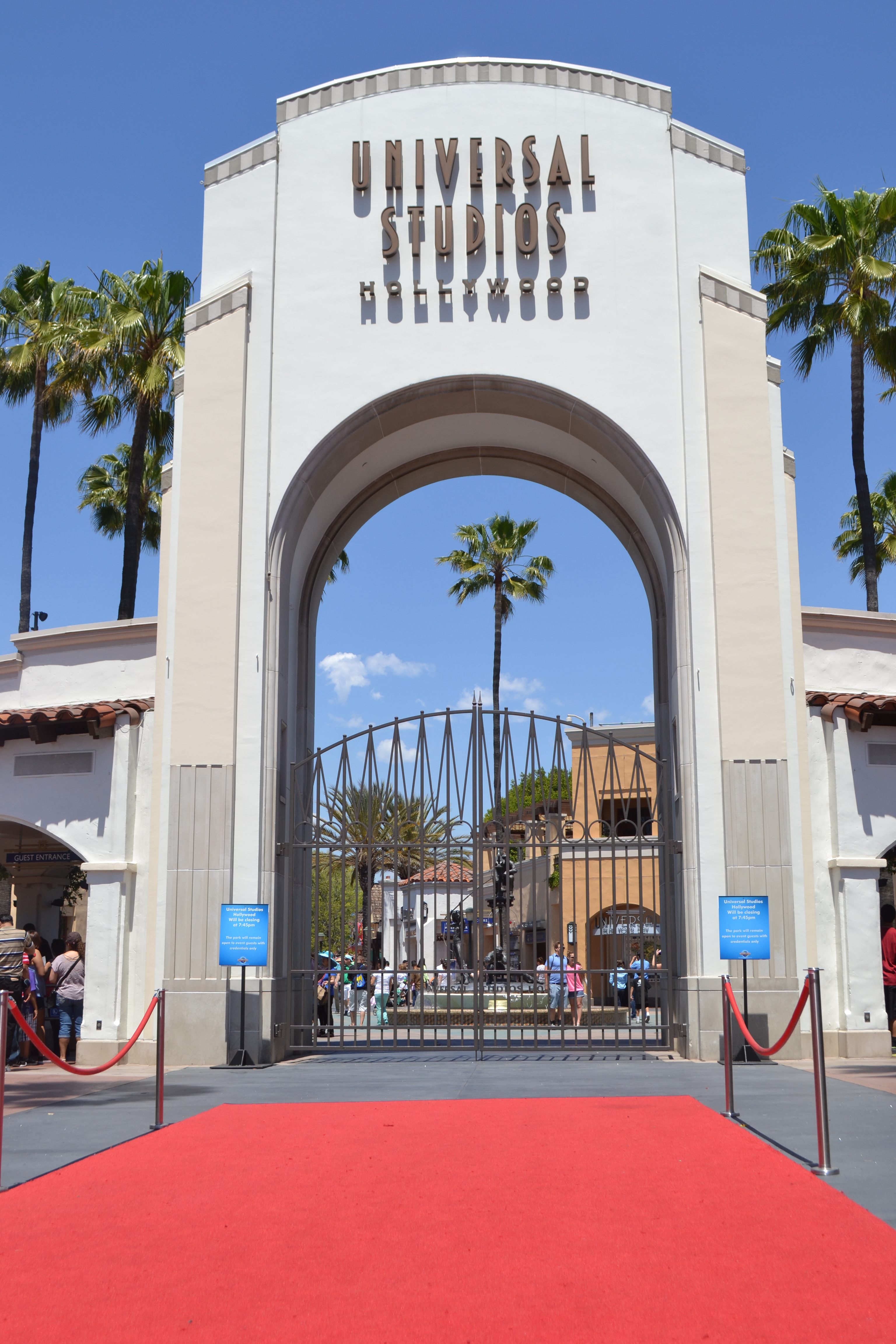
Universal Studios is not technically in LA, because it stands on a 415 acre plot of unincorporated land within the city boundary. Los Angeles firemen have access to it but Los Angeles taxmen do not. It is part working studio, part theme park, and all tourist trap. But it is as good a way as any to pass an afternoon in LA, if you check your pretensions in at the door.

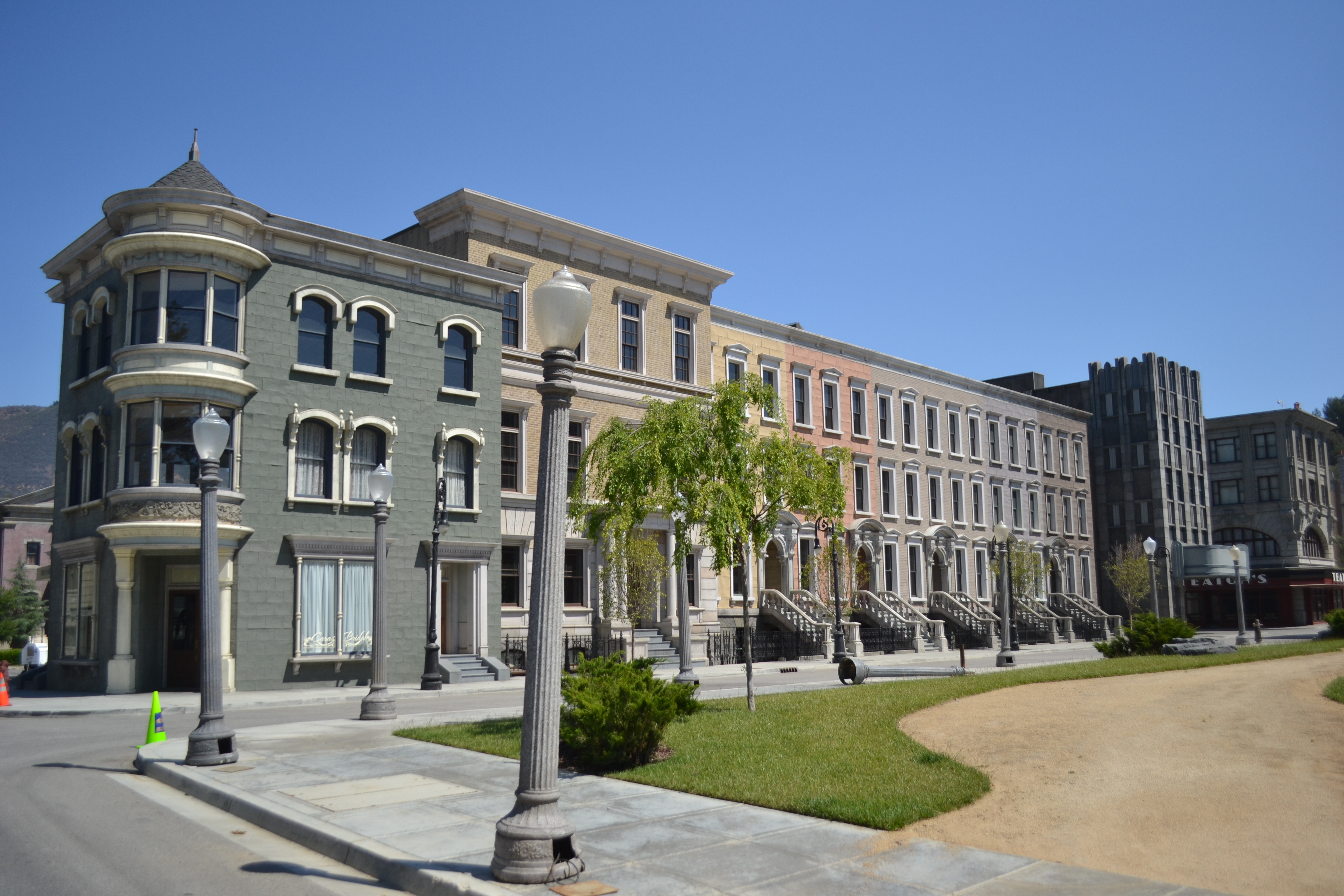
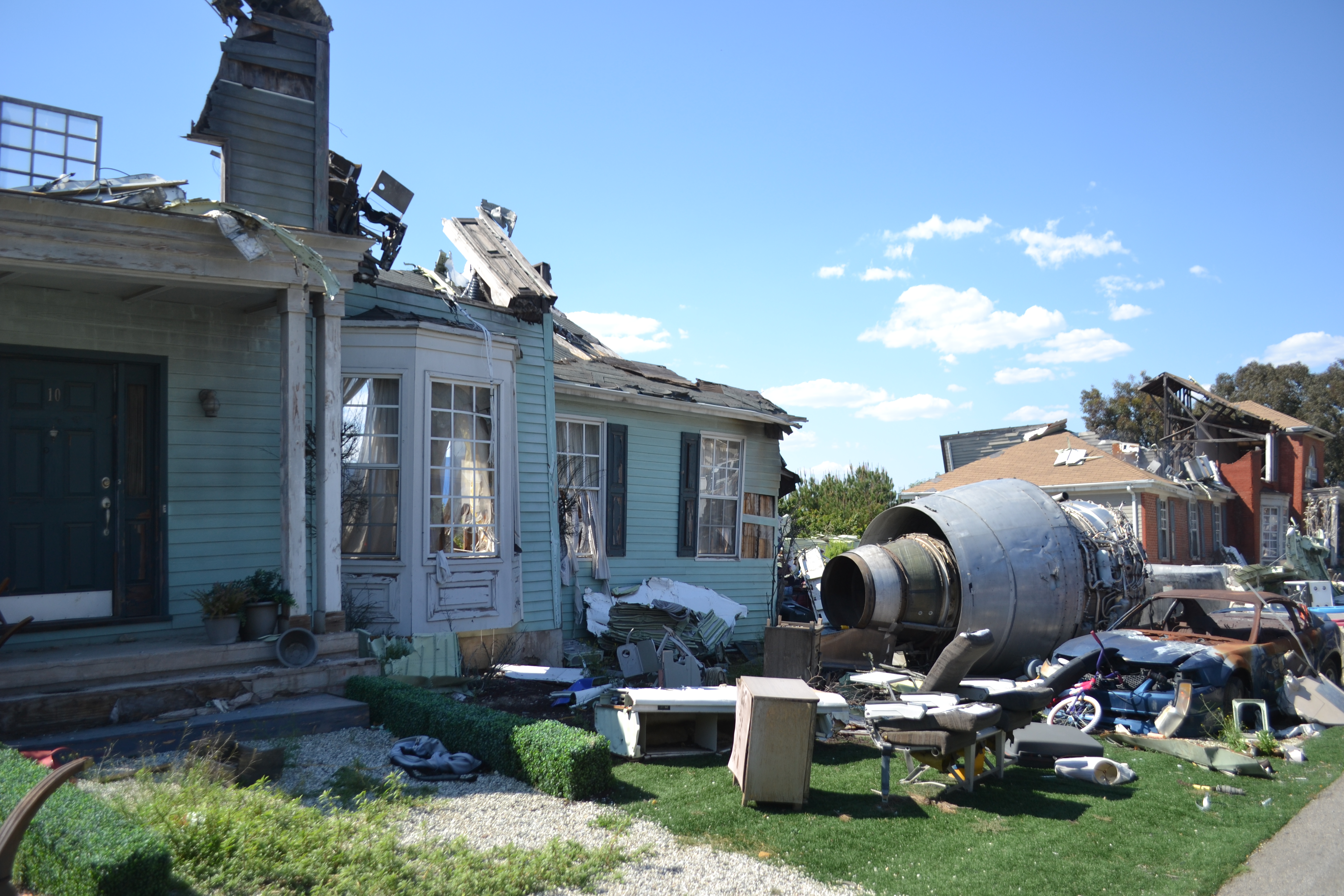
A tram takes you through generic sets which you have seen in dozens of movies: a Wild West town, a Mexican village, the business district of every city in the world with skyscrapers which stop at third floor level and a square of townhouses which can be anywhere from eighteenth century Vienna to Hell’s Kitchen last week. It passes through the sets of War of the Worlds, with a real Boeing 747 chopped into pieces among ruined houses, Jaws, where ‘Bruce’ the mechanical shark breaks out of the water as the tram approaches, and Psycho where an actor dressed as Norman Bates dumps Marion’s body in the trunk of the Ford and stumps towards you with a knife.

Copy of DSC_0368

There is a simulated flash flood and a simulated earthquake, in which the tram shakes and everything around it disintegrates; there is a collection of cars from the movies, a demonstration of special effects, a room of memorabilia, and movie-themed roller coasters.

It is crassly commercial, of course; it is as cheesy as a family-sized quattro formaggi pizza. But you can hardly attack it for that. Might as well attack an elephant for being big and having a trunk.

© Richard Senior 2015

They Do Things Differently in Helsinki

DSC_0266


Whole sides of salmon sizzle on the grill at a stall in the marketplace down by the harbour. There are stalls with baskets of lingonberries, bilberries, cloudberries and cranberries under brightly-coloured awnings. There is reindeer meat and handicrafts from Lapland and fur hats for epic winters.

The sun sparkles on the waves in the harbour where a woman sells freshly-caught fish from her boat and a full-rigged sailing ship rocks at its moorings and a deckhand monkeys up the mast and guffawing young men putter off in a motorboat and the Soumenlinna ferry backs out of its berth and a yacht glides in with its staysail pregnant with wind.

Old Detroit cars throb down the North Esplanade past the rattling trams. It is rare to see them in Europe, at least in any number, but they do things differently in Helsinki.

11888058_1661875587389501_2799554755825574886_n

Senate Square, a block from the harbour, was supposedly modelled on St Petersburg, by a German architect, in the familiar neo-classical style. Yet its confident simplicity seems quintessentially Finnish.

Helsinki’s architects have drawn from established international schools, but interpreted them in their own way. Bold statements are rare. Helsinki is not Riga, nor Barcelona. But clean lines, smooth curves and clever details are commonplace. Everything, moreover, seems harmonious, as if the city had been planned all at once instead of evolving over two centuries.

The ethos extends beyond architecture. Design is to Helsinki what fashion is to Milan. The design district, spread over twenty-five streets north and west of the harbour, has something like 200 shops selling deceptively simple, often revolutionary, furniture, homeware, lighting and glass.

rsz_dsc_0418

On almost any street, you can find a store selling chairs so radical and yet so practical, it is as if centuries of chair designers have been going about it all wrong. You can find gastropubs selling craft beers and salmon and harissa burgers with pimientón-dusted fries, and restaurants with cool white walls and blonde wood tables and sautéed reindeer with lingonberries on the menu. Yet you can walk several blocks before you find an ATM. They do things differently in Helsinki.

Wherever you are in the city, you are never more than a few blocks from a park. They are not so much ring-fenced from urban development as blended seamlessly into it. You can cycle round the headland, stroll along the water’s edge watching the paddle-boarders, use the outdoor gyms, or sit with a picnic and gaze at whimsical sculptures. There are public saunas dotted about the centre and even the cheapest hotels, even backpacker hostels, have their own; many Finns have them at home.

Across the bridge from the city centre, past the iconic Hakaniemi Market Hall, the traditionally working-class Kallio district is now full of character cafes, organic food shops and hipsters. The boys wear Breton jerseys and Romanov beards, the girls vintage dresses and brogues; everyone wears hats and tatts. There was a guy swanking round in jackboots and an officer’s cap worn at an unmilitary angle, and another in the trousers and waistcoat of a three-piece suit and nothing underneath but tattoos.

11896098_1661713117405748_5680836720705825_n

They do things differently in Helsinki, the capital of the nation which gave us the jollity of Sibelius and the irritating Nokia Tune, and Angry Birds and the Egg chair, a historically progressive state which had universal suffrage before anyone else but New Zealand, and which – in the Nordic social democratic tradition – built a comprehensive welfare state in parallel with a robust economy and one of the highest per capita incomes in the world.

Some say that it is the most liveable city in the world. I saw no reason to disagree with them.

© Richard Senior 2015

Staying in a Japanese Ryokan

DSC_0936

“Two person?”

“One.”

Two person.”

“No. There’s only one of me.”

He huffed and searched through his papers until – like prosecuting counsel presenting a witness with an incriminating letter – he showed me the message from the booking site. “Two person!”

Well that must be a mistake.”

“Hmph. Two person.”

It was a small ryokan* up a quiet side street in Nagasaki. The owner, it seemed, would never quite forgive me for only being one person, but reluctantly showed me to the room.

I had left my trainers at reception and changed into the Crocs supplied to walk through the building and now changed from those to the slippers inside the door of the room. There was a separate pair to change into when using the toilet.

The hallway led off to a small bathroom and a separate toilet with all the accessories you come to expect in Japan, the heated seat, the hot water jet, the sound effects to spare your embarrassment. Beyond them, through a sliding screen, was the main tatami-mat room. At the other side of the room, there was a paper screen on a wooden lattice which filtered the light from the windows overlooking the street. Behind it was a narrow room, like an indoor balcony, with polished wood floors, a fridge, a garment rail and space to put luggage out of sight of the main room.

There was a low table and a cushion to kneel on and a kettle, tea pot and cups for green tea, and a neatly folded futon and traditional clothes. The walls were painted a peaceful taupe and were bare except for discrete ornaments in the alcove. Even the mirror attached to a small set of drawers was covered with a drape so as not to disrupt the harmony of the room. “Owner does not say a busybody,” it said in the information pack.

DSC_0932

A bell sounded as I went downstairs and the owner, who does not say a busybody, came out of his office and supervised me while I laced up my trainers. He was a taciturn, expressionless man and it was unnerving to have him standing there, silently, as if watching to make sure I did not slip behind the desk and steal the petty cash. I suppose it was just his idea of customer service.

Another bell sounded when I came back in, and the owner – still not saying a busybody – stood and watched me take my trainers off. He did it every time.

He had been in the room while I was out and straightened things up. He must have despaired of my gaijin** untidiness. Clothes strewn about, now perfectly folded; a discarded t-shirt placed on a hanger; scattered books, stacked. A dropped towel replaced with a fresh one. Even an empty carrier bag crisply folded into four.

I changed into the yukata, like a long, thin dressing gown with flowing sleeves, tied the obi sash around it and pulled the haori jacket on over the top, then made a cup of green tea, and laid out the futon for the night.

Each evening when I came back to the ryokan, the futon had been neatly packed away, the yukata folded, the tea replenished and whatever clutter I had brought into the room tidied behind the screen.

When I checked out and got the bill, the prices had all been scored through and replaced in neat manuscript with lower figures. The owner had given me a discount because I was not, in fact, two person.

© Richard Senior 2015

*Traditional Japanese inn

**Foreigner

Vientiane: the Small-Town Capital City

DSC_0174

Vientiane’s not exactly your giant metropolis, old boy,” said a repellent character in John Le Carré’s classic novel, The Honourable Schoolboy. The city is always there, in the background, referenced throughout, and a central character even spent time there, but somehow it never acquires three-dimensional shape.

It is much the same in real life.

Vientiane passed largely unnoticed by the outside world through the tragic, tumultuous history of Post-War Southeast Asia. It has none of the resonance of Hanoi, Saigon or Phnom Penh and little of their heritage, beyond the occasional colonial building, often derelict, overgrown, forgotten.

Even the familiar soundtrack of the region, the howling scooters, the cacophony of horns, the too-loud music, the shouting vendors, is strangely muted. The tuk-tuk drivers let you pass without hustling for business. No one follows you down the street, revising their prices for the trinkets you have already declined. You are not constantly offered sex, drugs and spring rolls.

There is a handful of splendid temples, but I am not sure they would have merited more than a polite glance if I had gone the other way round and seen Chiang Mai and Luang Prabang first. There is, as well, the notorious ‘vertical runway’. The United States, desperate to keep Laos from going communist, sent funds and materials to build an airport, but instead the royalist government built a massive triumphal arch: a Buddhist Arc de Triomphe. Laos went communist anyway.

I was out at eight to explore the city and had run out of things to see by lunchtime. Once I had reserved a seat in a minibus out of town next morning, there was nothing to do but to go to the National Museum. It is in one of the best of the surviving colonial buildings, once the French Colonial Governor’s residence, and – with depressing predictability – it is due to be torn down any day soon to make room for a hotel.

DSC_0217

It had the forlorn air of small-town museums run by old ladies, with a few real treasures bulked out with maps and models and the sort of stuff which clutters up garden sheds.

The first floor is devoted to modern history, which here – in one of the few remaining Marxist-Leninist states – is weaved into a coherent narrative of revolutionary struggle. The bitterness is undisguised, but understandable too.

Laos has spent much of its history having indignities done to it by more powerful states. It has been sacked, invaded, colonised, administered, bullied, propped up, used as a proxy and had 270 million cluster bombs dropped on it by a faraway superpower for fear that another superpower might acquire it as an ally. Forty years on, Lao children still routinely lose arms and legs when they happen upon one of the 80 million which failed to explode.

French colonial rule is represented by paintings in the style of First World War propaganda, showing snarling soldiers clubbing women to death with rifles and dropping babies down wells. Rusting guns and faded flags commemorate “The fighting to liberate the connty [sic] against the American Imperialists and the puppet soldiers from 1954-63”.

The tabloid language might have been copied straight from the museums in Hanoi and loses the story some of the force it would have if it were just told straight. It is probably for the good that a lot of the captions are along the lines of:

“The weapons with which the carbon farming was Imperialist US.”

And

“The weapons caron farming as you guard leader in the time from.”

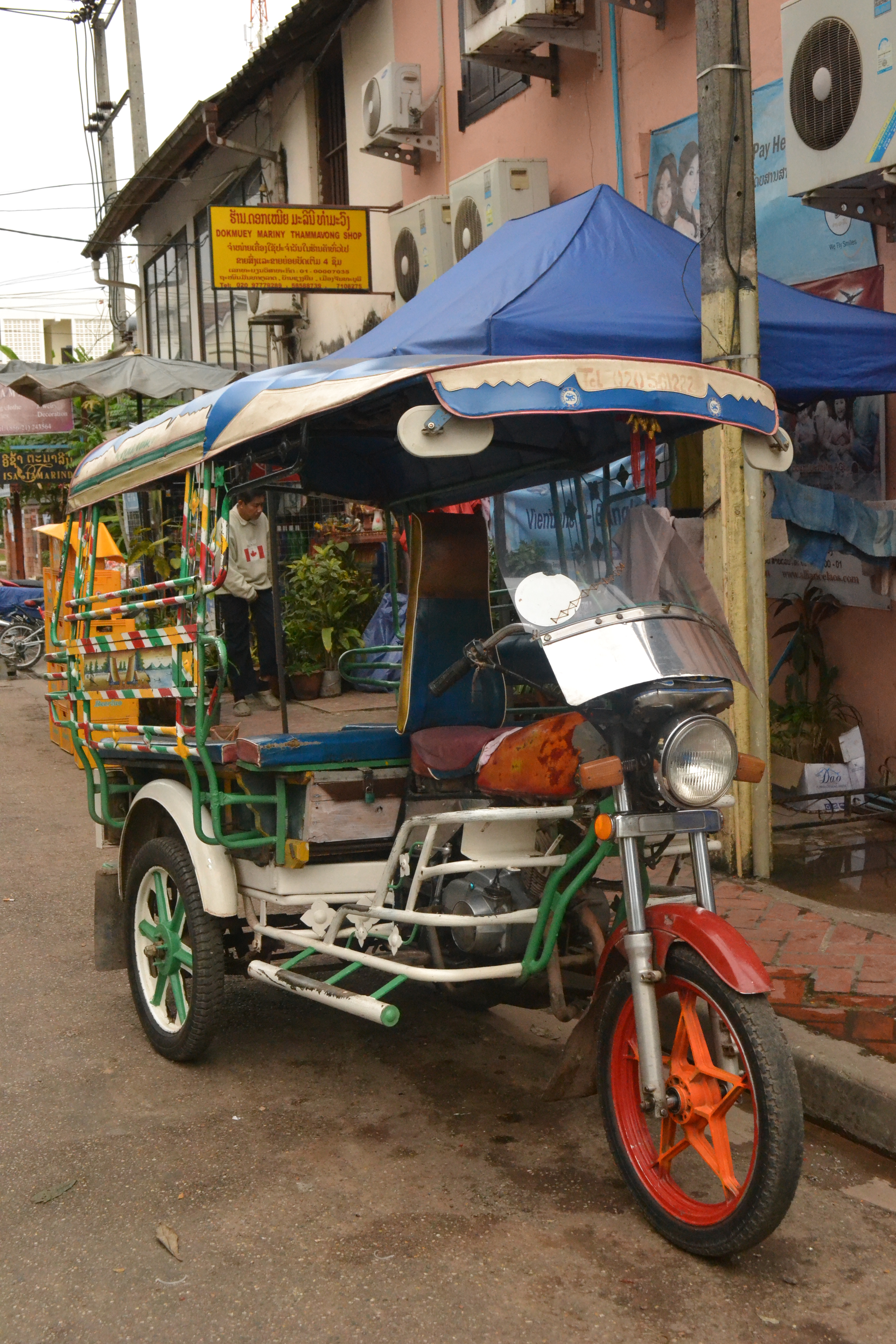
With this as a benchmark, you have to applaud the tuk-tuk drivers on the street outside for advertising trips to the “Fendship Bedge,” the “Fiendship Brege” and the “Freshdip Brig”.

None is quite Friendship Bridge, but you can at least understood what they mean.

© Richard Senior 2015

Namibian Nights

DSC_0067

A rough, sandy excuse for a road led to the Spitzkoppe mountains. The sky was a searing blue lightly streaked with cloud. The peaks were the colour of caramel, the texture of crumpled paper. The afternoon sun lit the face of the rock, leaving their fissures and folds in deep shadow. The grass was the green-tinged yellow of over-ripened limes. In amongst it were spiky, highly poisonous, Damara milk bushes.

On the rock in a hollow at the base of one peak, there are Bushmen paintings of hunters, rhinos, giraffes and jackals. They have been there at least two millennia, and anything up to six. Yet they are out in the open as if painted last week and of no more significance than a tag on a shutter in a run-down part of town.

It is easy to see why Kubrick chose this timeless landscape for the dawn of man scene at the start of 2001: A Space Odyssey. Nothing much has changed since the Bushmen were there. A primitive toilet and the occasional notice are the only incursions of the modern world. The nearest town is 60km away. As so often in Africa, you come face-to-face with your own inconsequence in the earth’s epic narrative and see, for once, how petty, how parochial our conceits, our ambitions and anxieties are.   

We camped for the night in the lee of a mountain and the pegs got no purchase in the sand and the tents just sat on the ground, but it was a still night and there was no risk of them blowing away. Urban time has little meaning where there is nothing but natural light, so like the Bushmen millions of years before, we retired and rose with the sun.

DSC_0221

A little after dawn, we struck camp and headed out through the desert to the long, desolate shore known to the Bushmen as the Land God Made in Anger, to the Portuguese as the Gates of Hell, and now as the Skeleton Coast. Among the bleached bones of beached whales which birthed the modern name are the rusting hulks of over a thousand ships which ran aground on this treacherous shore.

Diogo Cão sailed down the coast in 1486 and planted a cross to claim the cape for Portugal, but the Portuguese never got a foothold in Namibia and the Germans, who did, took down the cross in the nineteenth century and shipped it back to Germany.

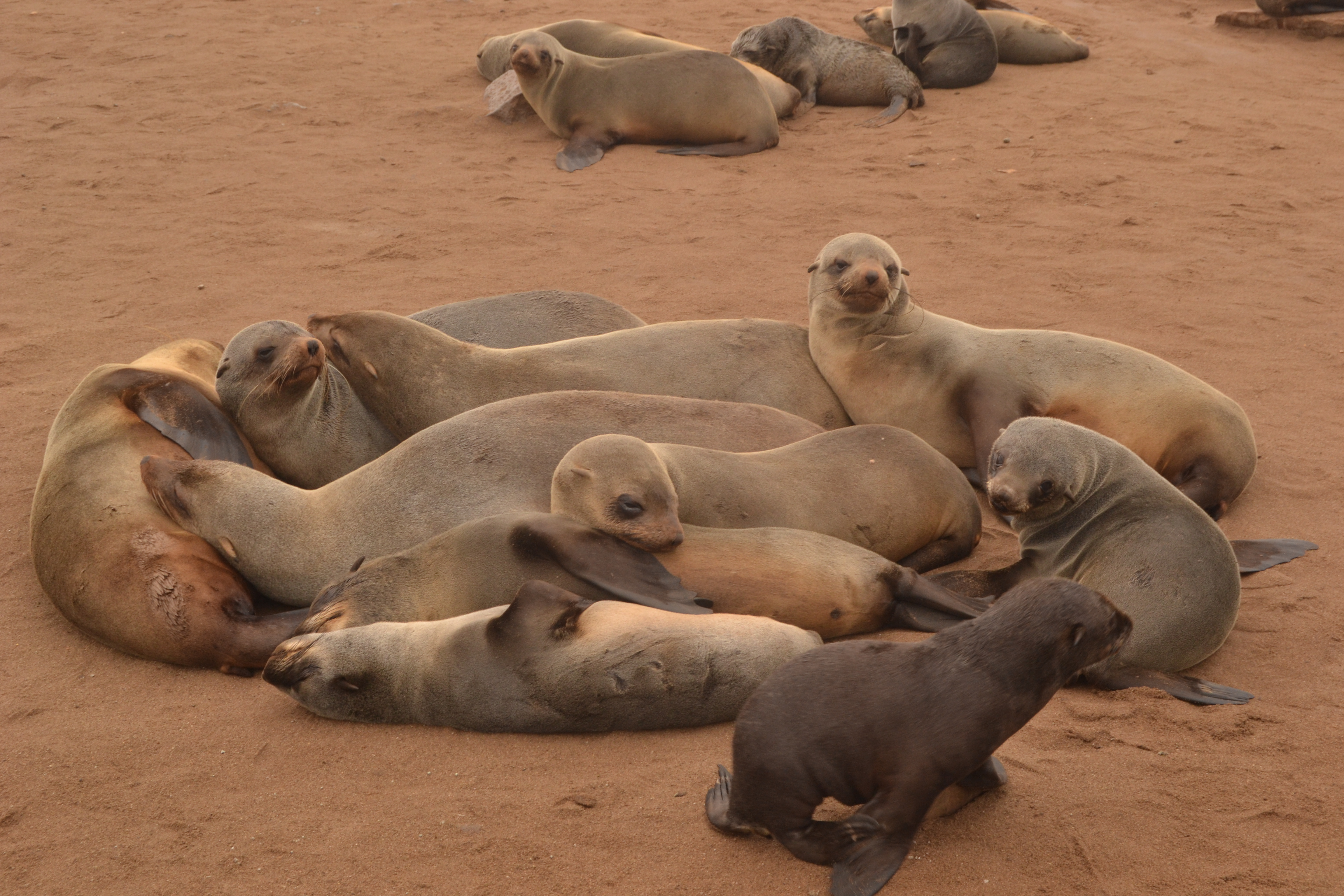
Cape Cross, where the old cross no longer stands, is home now to thousands of fur seals which swim backstroke in the surf, slide onto the rocks and lay in great piles on the sand, playing, fighting, mating and barking like fat men guffawing. They stink, of course, but they no doubt think the same about us.

© Richard Senior 2015

The Dictator who Came in from the Cold

DSC_0981

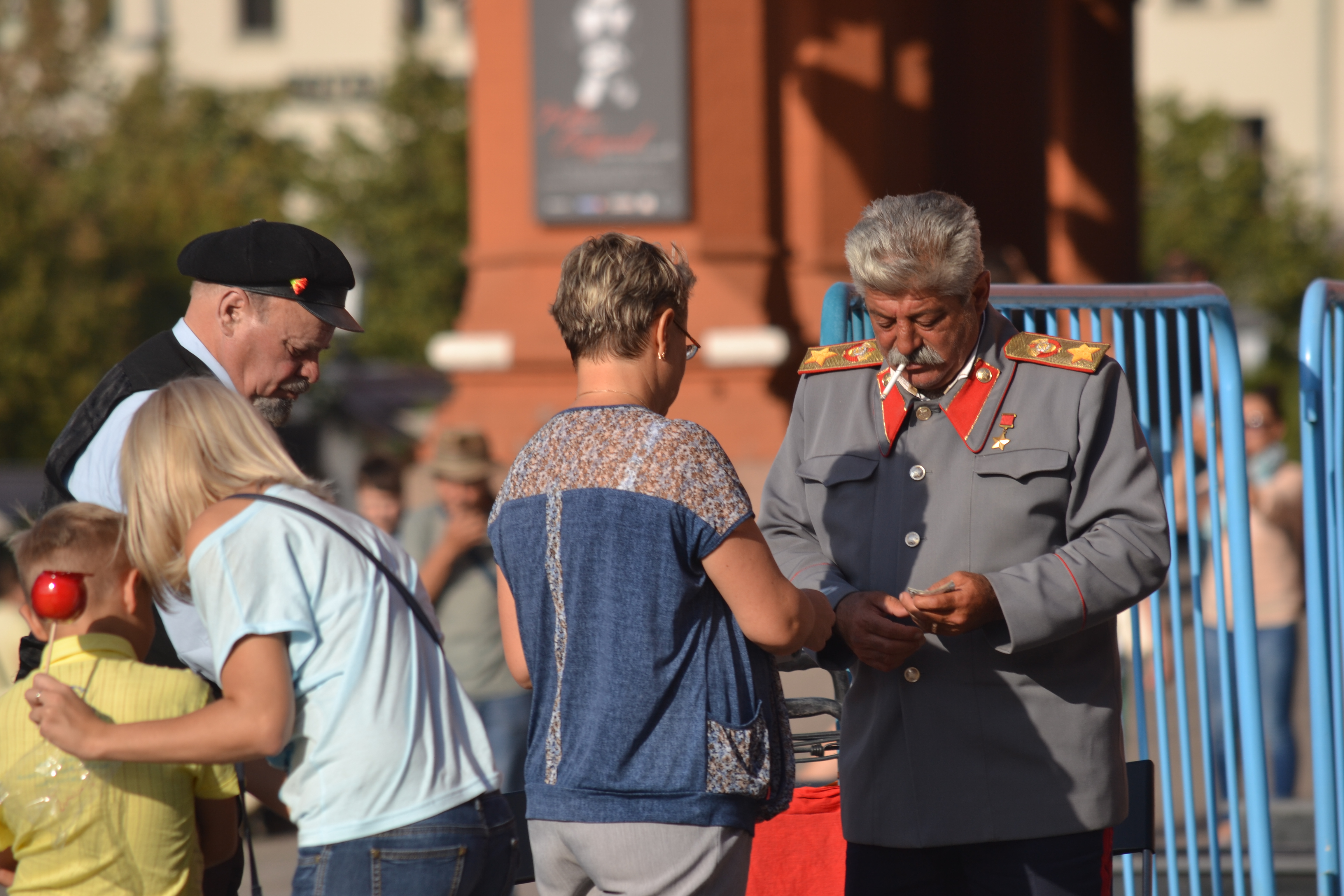
Stalin lookalikes work Red Square, puffing on pipes and pretending to talk into mobile phones. There are Lenins, as well, and a much less convincing Putin; but it is Stalin the tourists want to be photographed with, as if with a favourite uncle.

There was nothing avuncular about Stalin, although sycophants gave him cuddly names like “Father of the Peoples” and “Best Friend of All Children”.  Even a Marxist historian described him as “an autocrat of exceptional, some might say unique, ferocity, ruthlessness and lack of scruple*”.

Death solves all problems,” reckoned Stalin, “No man, no problem”. It took little to get yourself shot under his regime, much less to get 25 years in a labour camp. An incautious word, a malicious rumour, a family connection, a suspect nationality, a friendship with an unperson, a target not met (obviously sabotage), surviving a Nazi camp (obviously a spy), or just because someone with power took against you.

DSC_0916

The number killed in the purges, starved in the famines and worked to death in the labour camps has been estimated at anything between 4 and 60 million, most often between 10 and 20. But at such orders of magnitude the exact figure hardly matters. Stalin knew that well enough. “One death is a tragedy,” he said, “a million deaths is a statistic”.

In his lifetime, he was lauded as “the Greatest Genius of All Times and Peoples,” but Khrushchev denounced him in 1956 and he remained an unperson – Khrushchev became one as well – until the end of the communist era. But there was always a current of affection for the old dictator. The idea of being ruled by a silnaya ruka – iron hand – is deeply embedded in Russian history; and the industrialisation, under Stalin, of what had been a hopelessly backward agrarian economy was truly impressive, although achieved at appalling human cost.

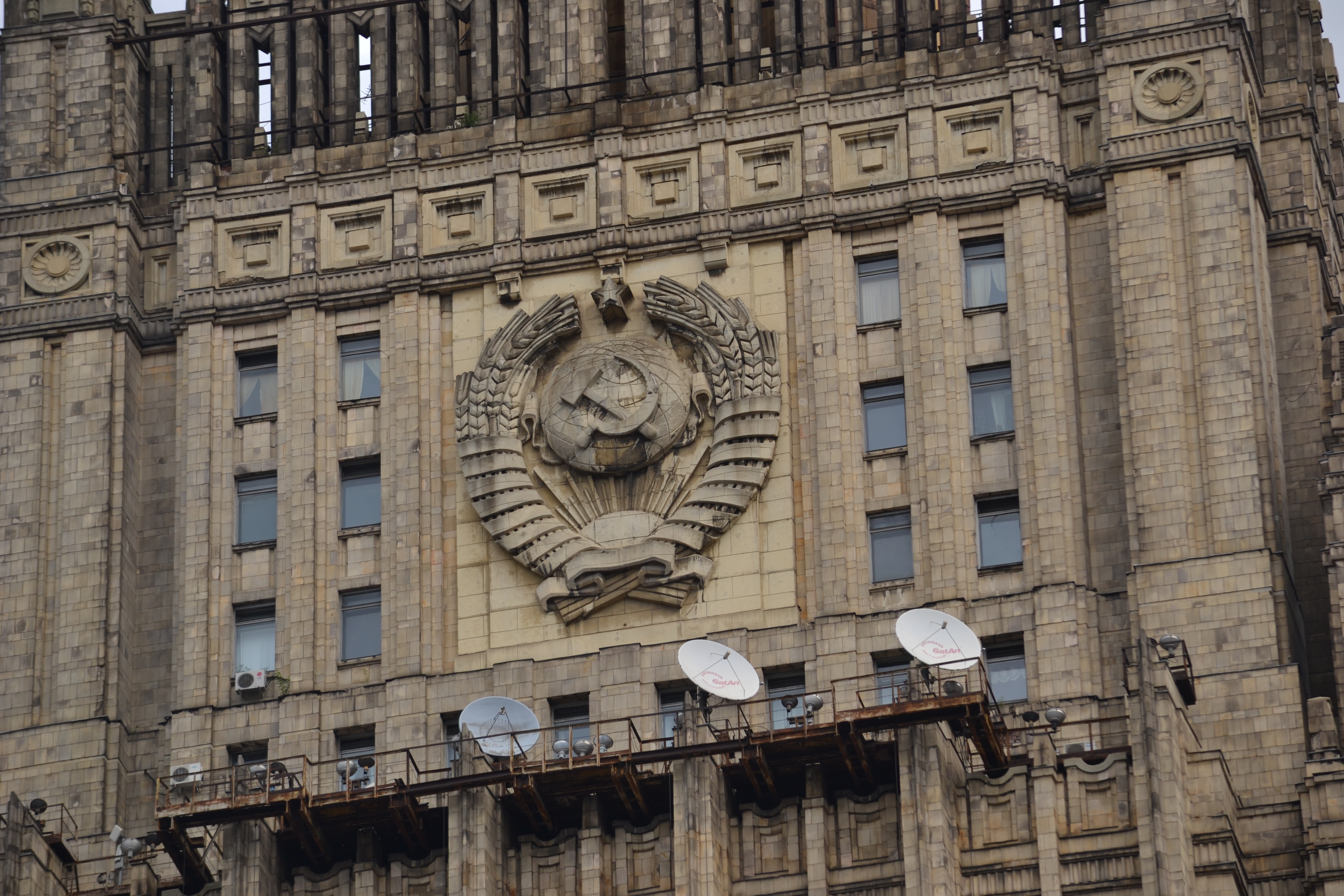
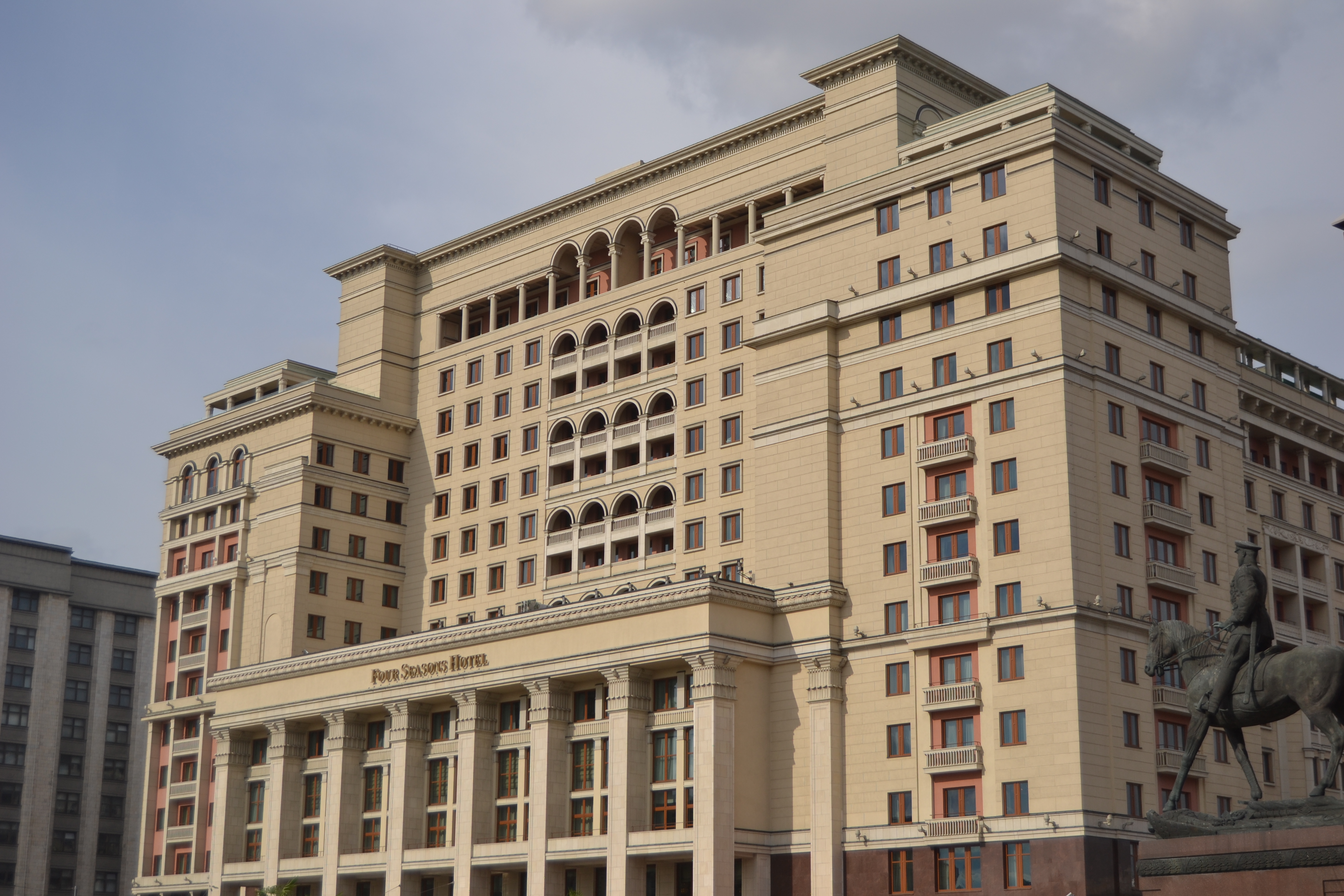
Stalin’s legacy is everywhere in Moscow, from the ruby glass Soviet stars on the Kremlin’s towers, through the famously extravagant Metro stations, the yet more extravagant All-Russia Exhibition Centre in the suburbs, to the skyscrapers known as the Seven Sisters, blending Modernism, Baroque and Gothic in the Stalin Empire Style, and the Four Seasons Hotel with its asymmetrical front, because the Greatest Genius of All Times and Peoples approved both of the designs he was asked to choose from and the architect dared not tell him he had goofed.

DSC_0962

The vanity projects siphoned funds away from public housing, and as the ‘Palaces for the People’ were going up, the people themselves were crammed into communal flats.

“The creatures outside looked from pig to man, and from man to pig, and from pig to man again; and already it is was impossible to say which was which.” **

Stalin’s reputation, paradoxically, began to improve when the Soviet Union collapsed. Less than half of Russians surveyed in 2001 had a negative impression of him. By 2006, it was only 29%; some 47% had a positive impression, and 35% said they would vote for Stalin if he were alive and standing for election today. In 2008, he came third in a poll to find the Greatest Russian in History.

This all might seem incredible, looking from the outside, but patriotic nostalgia, anywhere in the world, often does.

Statues and billboards of Stalin have begun to reappear in the past decade, for the first time since the Khrushchev years. Government-approved schoolbooks put a positive spin on his actions. President Putin has responded to questions about him with classic whataboutery. Yes the Great Terror was bad, he acknowledged, but not as bad as Hiroshima or Vietnam. “What’s the real difference between Cromwell and Stalin?” he asked rhetorically, and answered himself, “None whatsoever”. 

It might seem  counter-intuitive for a leader from the authoritarian-nationalist right to defend one of the revolutionary left. But Stalin, in turn, admired Tsar Ivan the Terrible. A silnaya ruka transcends ideology.

© Richard Senior 2015

*Eric Hobsbawm, Age of Extremes

**George Orwell, 1984