Faded Huế

DSC_0180

The arches of the Trường Tiền Bridge soar and dip over the Perfume River, where barges which look two centuries old chug back and forth throughout the day, towards and away from the watercolour mountains far off to the west, and where, of an evening, traders spread their goods on blankets laid out on the bank, and street food vendors light their grills and the flames dance and the smoke coils up and the shrimps sizzle and scent the air, and big neon signs flash adverts from the opposite bank, and lights along the span of the bridge sweep from white to purple to yellow to blue to red to green and white again.

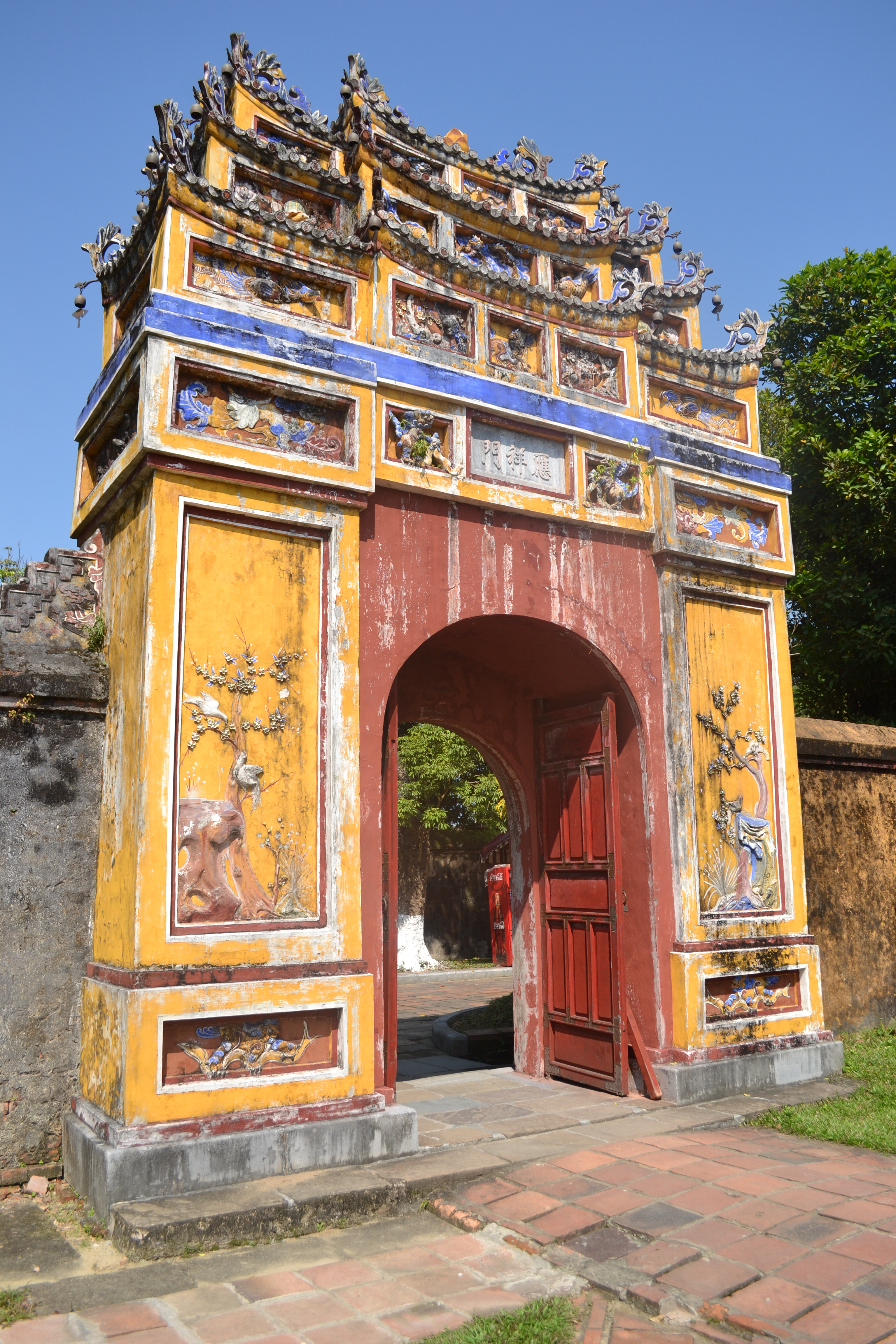
Huế was the capital for the Nguyển dynasty which ruled Vietnam from the start of the nineteenth century. A matryoshka of citadels, one inside the other, led through to the Forbidden Purple City, where the emperor lived with his concubines. There were moats and bastions and multi-tiered gateways; and palaces and temples, and gilded columns and carvings and fretwork, and cylindrical tiles surmounted by dragons. It was a place of exquisite beauty.

DSC_0220

But the city was bombed and shelled and shot at by three different armies in the French and American wars and much lay in ruins when the bell clanged on the final round of the Battle of Huế, which the US Marines won on points.  “Did we have to destroy the town in order to save it?” asked a Marine captain, echoing what another officer had said about Bến Tre further down south a month before.

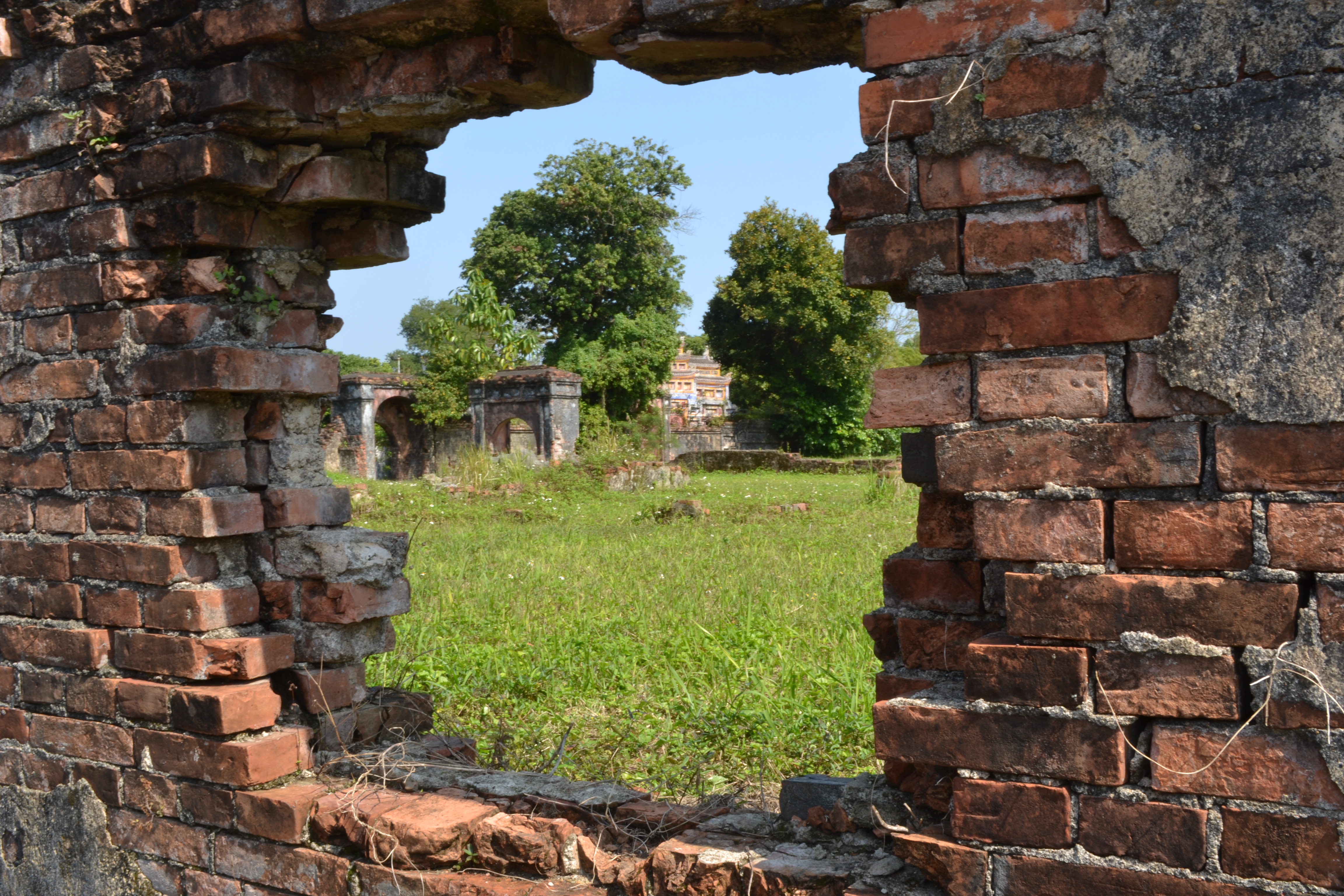
There is not a lot left of the Forbidden Purple City beyond the stumps of shattered brick which poke from the grass where palaces used to stand, and a portentous flight of steps bookended with dragons which carries you up to an anti-climactic flower bed laid out in the broken foundations.

Elsewhere in the complex, the buildings have been carefully restored and rebuilt. The work is ongoing and, while I was there, men were tearing tin sheets from the roof of a ravaged temple. Enough has been done to evoke the majesty of the Imperial City that was; but there are still dozens of buildings blackened by napalm, pierced with shells, pitted by bullets, untouched and left to decay since 1968, when the battle staggered to its wearied close.

DSC_0270

I spent a good two days wandering the site and – away from the parts which have been freshly restored – I was often alone and there was at least a moat and a two-metre thick wall between me and the bustle of the modern town outside the citadel and the only sounds I could hear were the chirping of birds, the chatter of cicadas and leaves gently falling from the trees.

I strayed into courtyards which time had grassed over and poked inside buildings which looked long forgotten with roofs sagging inwards and rotten doors hanging off hinges. I was not at all sure I was supposed to be there, but there was nothing to keep me out. In one quiet corner, I happened upon an elephant, chained up like a guard dog and left unattended. It huffed and stamped its foot in warning.

In the late afternoon, I left the citadel and made my way across the bridge and back to the hotel with the closing scene of Full Metal Jacket screening in my head:

“We hump down to the Perfume River to set in for the night… I’m so happy that I am alive….”

© Richard Senior 2015

Downtown and Almost Out in LA

DSC_0298edited

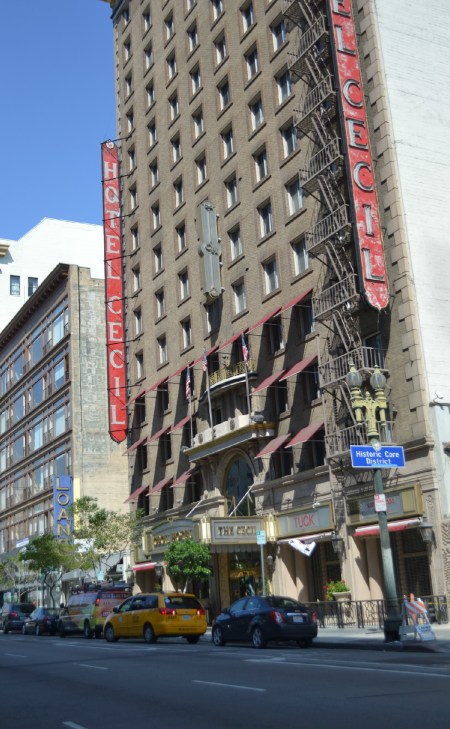
Some weeks before I booked, guests had complained that the water tasted funny. When an engineer went onto the roof to check the tank, he found the body of a girl floating in it. She had been there for three weeks.

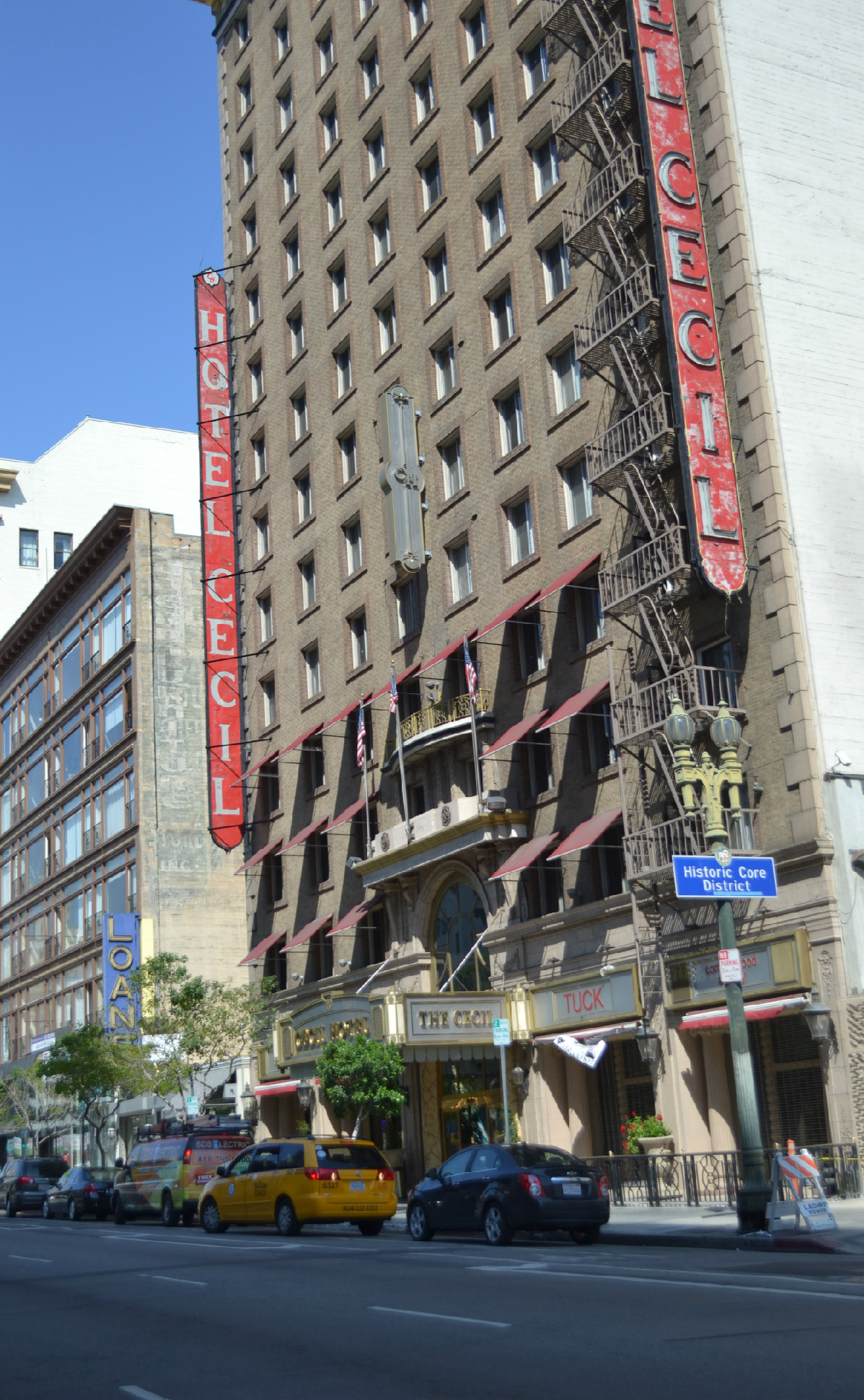
The Cecil has had a miserable history. It was a smart hotel when it opened, in the Jazz Age, for business travellers when LA was rapidly growing and downtown was stuffed with banks. But the bottom fell out of the neighbourhood in the Great Depression and there were no more business travellers. The hotels along Main became single room occupancy, flophouses, cheap rooms let by the week and month to the chronically out of luck: the last stop before the streets.

Alcoholics Anonymous held meetings in the Cecil in the early forties. A series of people jumped to their deaths from its windows in the fifties and sixties. One landed on a hapless passer-by and killed him too. A woman was strangled, stabbed and raped in her room in the early sixties. Then the serial killers, Richard “Nightstalker” Ramirez and Jack Unterwenger, based themselves there in the eighties and nineties as they prowled Skid Row for victims.

But, in the late noughties, when downtown LA took tentative steps upmarket, the Cecil’s new owners began to convert it back to a regular hotel. “Change checks in at a skid row hotel,” snooted the LA Times, “…the hip and near-homeless meet in the lobby of the 80-year-old Cecil and in the dim hallways, one sometimes encounters guests who have been using drugs or alcohol”. Their reporter should try staying in Ibiza.

Copy of DSC_0414

Five years on, it looked grand to me with its cavernous lobby, its marble floor, its dark wood panelling, polished brass fittings and chandeliers. High on the side wall there was an old painted sign which had obviously once read “Low Monthly & Weekly Rates” in the days when the Cecil was a flophouse, but “Monthly” had been clumsily overpainted with “Daily”. If I noticed it then, though, I missed the significance.

I was straight off a sleepless flight across the Pacific and dreaming of a room of my own – I had been in dorms for the past ten weeks. But when the receptionist swiped my card, the bank said no. It said it again, several times, when I tried to get cash from ATM’s. The bank’s computer thought it was being clever when it spotted that my card had been used on two continents at about the same time and stopped it. But no one had told it about the international dateline.

I was in Skid Row with no means of paying for a room for the night.

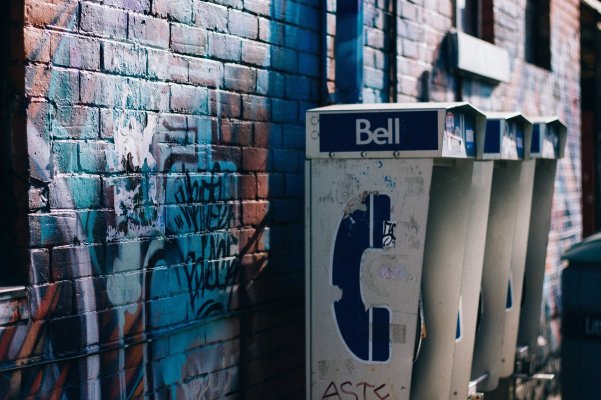
I usually carry a couple of hundred dollars for emergency funds, but most had been stolen from the safety deposit box of a dodgy hotel in Cambodia. My spare credit card had been cancelled in Australia after I thoughtlessly entered the wrong PIN, and I had never got round to calling the company. My phone would not work in the States, and the hotel refused to let me use theirs, and I wasted my time and limited dollars with payphones outside. All I could do was to bang off an email to family and friends and hope that one of them would pick it up and could help. But it was the middle of the night in the UK by then.
art-1837124_1920

The girl on reception was as helpful as you would imagine her to be to a customer who arrived without money, but at least she let me leave my bags there.

LA is the loneliest and most brutal of American cities,” mused Kerouac while staying in a flophouse on this very street, where ”the beatest characters in the country swarmed on the sidewalks”. Even now, with gentrification well underway, half the people you see look as if they would kill you for $20.The other half look as if they would do it for fun.

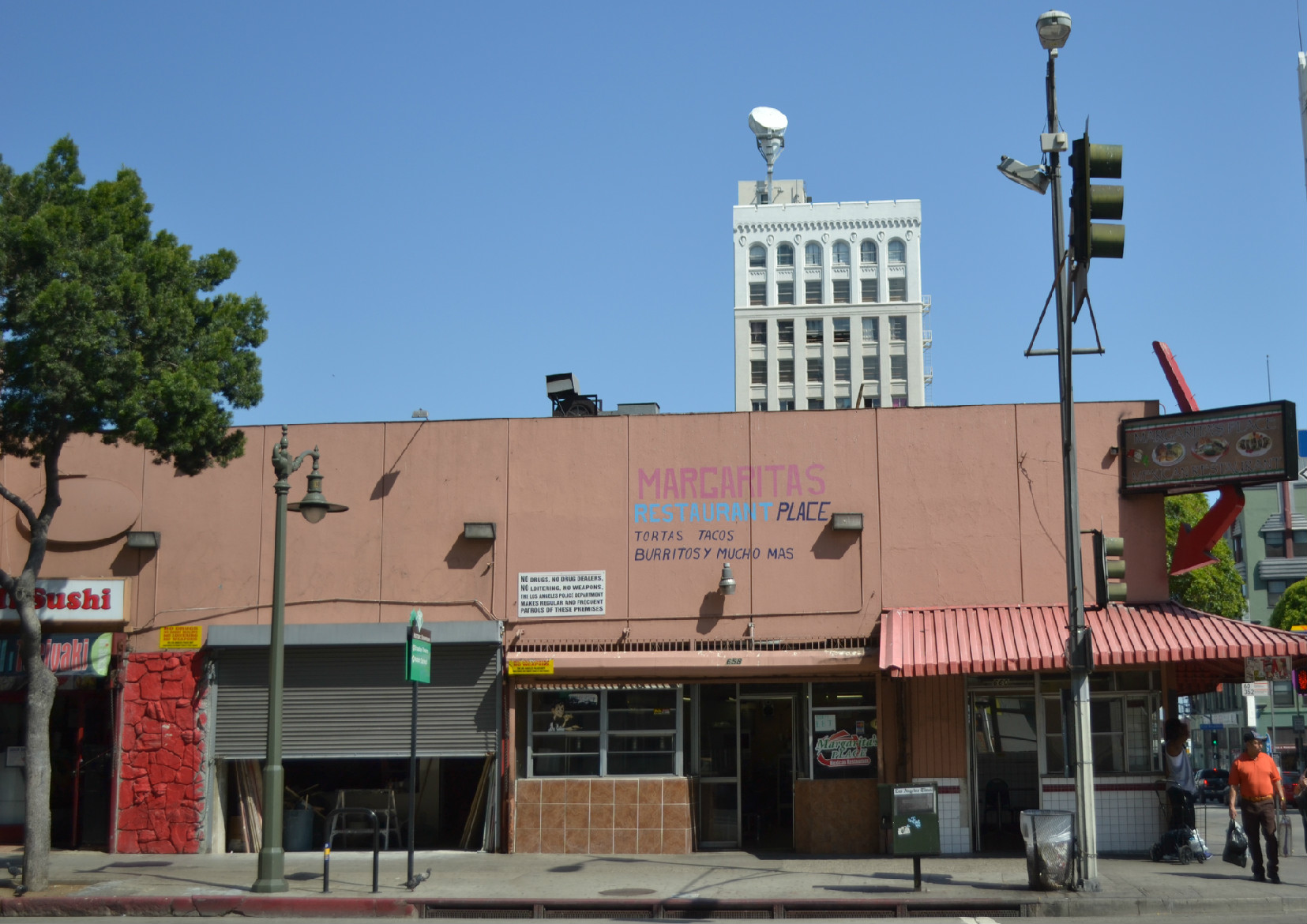
There were signs on the stores on 7th and Main which read “NO drugs, NO drug dealers, NO loitering, NO weapons. The Los Angeles Police Department makes regular and frecuent [sic] patrols of these premises”. I saw all four of the things that were supposedly unwelcome, but never saw the LAPD.

A steady procession of derelicts made their way down the street with their pitiful things piled up in old trolleys. Some shuffled along, head down, shrinking from the rest of the world, while others were shouty-aggressive, ready to take it on. One guy stopped and asked me for change, and I shook my head. I barely had any change. “I ain’t got no shirt bro,” he protested, “I aint got no shirt” and held open his jacket to prove it.

DSC_0296edited

Another guy parked his trolley in the middle of the road and raged at some goddam motherfuckers in his head. I glanced across and he called me a motherfucker as well. I ought to have known better than to look. I saw the same guy later on, powering down the street with a knife in the back of his waistband, the hilt on open display.

A group of beat men sat in a row on the corner of 6th, one in a beat wheelchair, the others with their backs to a building, legs stretched out on the pavement. The smog of an Amsterdam coffee shop clung to the air around them. The man searching the bins in front of the Cecil had a Hemingway beard and a grimy face and looked at a glance to be somewhere the wrong side of fifty; but as I watched him I saw that he could not have been much more than thirty. Across the road, there was a guy sprawled out against a fence, who had lost a shoe and was halfway to losing the sock as well but was far too blasted to care.

I felt desperately sorry for all of the people I saw, but anxious – nonetheless – at the thought of spending a night on the streets among them.

Afternoon bled into evening, then evening into night. A friendlier girl took over reception and I talked her into giving me a card for the lounge upstairs; but it was against her better judgment, and I guess understandably so. I was zombified from lack of sleep, my nerves were shot, and I had no confidence that I would be able to stay in the hotel all night. I stood, I sat, I checked my emails. I tried to read, I tried to write; I checked my emails again. The clock slowed to the pace of a night without sleep when every second lasts a minute and every minute an hour. I checked my emails one more time.

From outside, a furious shouting, an exchange of abuse, a chilling scream, the hurrying wails of the hardworked LAPD. A “brutal, hot, siren-whining night” just like Kerouac recalled. Every sound frayed my nerves a bit more.

But by half-past one in the morning, my mother – bless her – had picked up my email, spoken to the hotel and paid the bill and I was in the room at last after two hours’ sleep in sixty.

© Richard Senior 2015

Payphone image via Pixabay
Journey through Zimbabwe, Part 1

DSC_0176_copy

The Zambezi sparkles in the sun as it drives a broad wedge between Zambia and Zimbabwe on its way from Angola, past Namibia, past Botswana, and on until it topples over Victoria Falls and continues through Mozambique and spills out into the Indian Ocean.

A troop of baboons was free-running the border post, vaulting up onto the back of a trailer and running along, dropping off, scooting across the yard, up the side of the building, grasping a window ledge, springing up, leaping and grabbing for the roof, sliding down the satellite dish, back into the car park, over the fence in a couple of bounds, then stopping to rest and eat a pilfered sandwich.

Passport control is well into Zimbabwe, but one desk is officially Zambia and I officially left at some notional point as I walked the few metres across the floor to buy a Zimbabwe visa. Much of the world pays US$30, but Brits pay 50 because of Cecil Rhodes, and Canadians 75 – I am told – because their PM was recently rude about Uncle Bob.

Unity, Freedom, Work is Zimbabwe’s motto, but the unity is fragile, there is little freedom and barely any work. Robert Mugabe’s ZANU-PF has reportedly murdered, tortured, beaten and flattened the villages of people it believed to support the opposition. The economy was once one of the strongest in the region: now it is one of the weakest in the world. Unemployment has hovered around 90% for years. The regime blames sanctions. Others blame the regime.

shutterstock_1714867108

But Zimbabwe was – for different reasons – a pariah state before Mugabe and ZANU-PF, before it was Zimbabwe; and its unhappy modern history dates at least to the 1880’s, to the Scramble for Africa and Cecil Rhodes’ dream of the British Empire stretching from the Cape to Cairo.

For miles and miles after the border, there was nothing but waist-high yellow grass flecked with red, except for a few generations of car wreck: a Humber from the forties, a Chevrolet from the sixties and others too screwed up and stripped of parts to be recognised.

We stopped for diesel at a flyblown filling station with big chunks of the canopy missing. Ragged men sat listlessly on the grass around it. A Rottweiler stood up and glared from a crumpled pick-up truck. The Lion’s Den Butchery around the back had dust-encrusted grilles on the door and hardly looked inviting; but inside there was a chiller cabinet filled with biltong and more of it drying on racks on the walls and I bought a few dollars’ worth and pigged it all as we headed south to the capital.

© Richard Senior 2015

Countryside image: Shutterstock

A Bus to Puno

DSC_0004

The bus station was teeming with Quechua families with suitcases-worth of belongings in rainbow papooses which they squeezed through the doors of the buses. There were a few gringo backpackers, too, with the look of the road about them. Touts shouted destinations, barely pausing to breathe. “Arequipa-Arequipa-Arequipa-Arequipa-Aquipa-Aquipa-Aquip-Aquip….” But no one was buying tickets to Arequipa.

I wanted to go to Puno and knew from the guidebook that it would be a full day’s drive.

Will it be a coach?” I asked.

“…Almost,” the guy said.

DSC_0006 - Copy

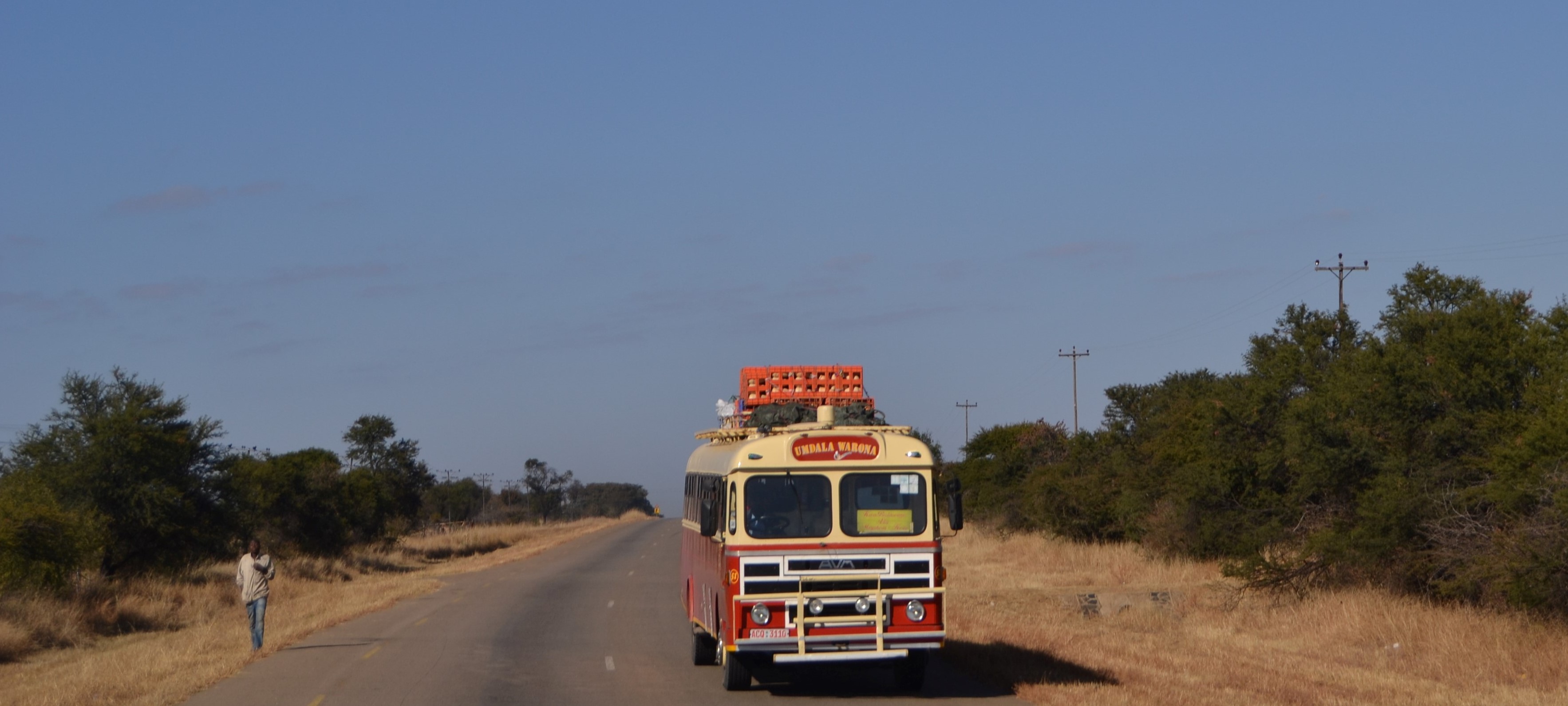
I imagined a scrapper with four bald tyres and seats like park benches and filthy windows taped shut; and it was easy to picture, because most of the buses in Lima had been like that. I expected to arrive in the sort of discomfort you feel when you commute on British trains.

It was not so bad, though. The bus cannot have been more than thirty years old – not much more, at any rate – and although it pumped out black smoke and wallowed over bumps, it looked capable of getting to Puno. The buses in Lima never looked as if they would make the next traffic lights.

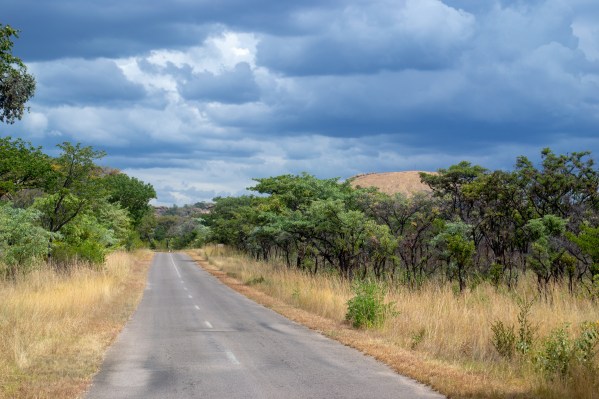
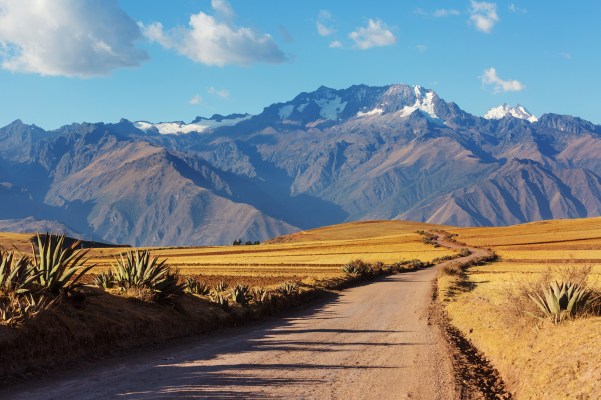
The single track road stretched for hours ahead on its serpentine way through an endless landscape of plains reaching out to distant mountains in front of mountains in front of still more mountains, chaperoned by a river and flocks of sheep and herds of llamas which grazed beside and blundered right onto the road, forcing the driver to stop.

shutterstock_706388656

Sometimes, in the middle of miles of nothing, there was an adobe hut with a collapsing thatched roof which looked like a relic from decades ago, but nearby there was a Quechua herdsman who could surely have lived nowhere else. There were the ruins of an ancient stone village, with a new adobe village abutting it; there were charming little towns, a long way from the Gringo Trail; and then there was Juliaca.

All the gringos stared out the window as we passed through, much as they might at a car smash. It is the scariest city I have ever seen, despite growing up in West Yorkshire. The roads were just mud and boating lake puddles in the bit that I saw: no surface, no pavements at all. Dangerous-looking young men lounged in doorways, scowling from under hoods. My guidebook warned that daytime muggings were common enough, and at night were too frequent to mention.


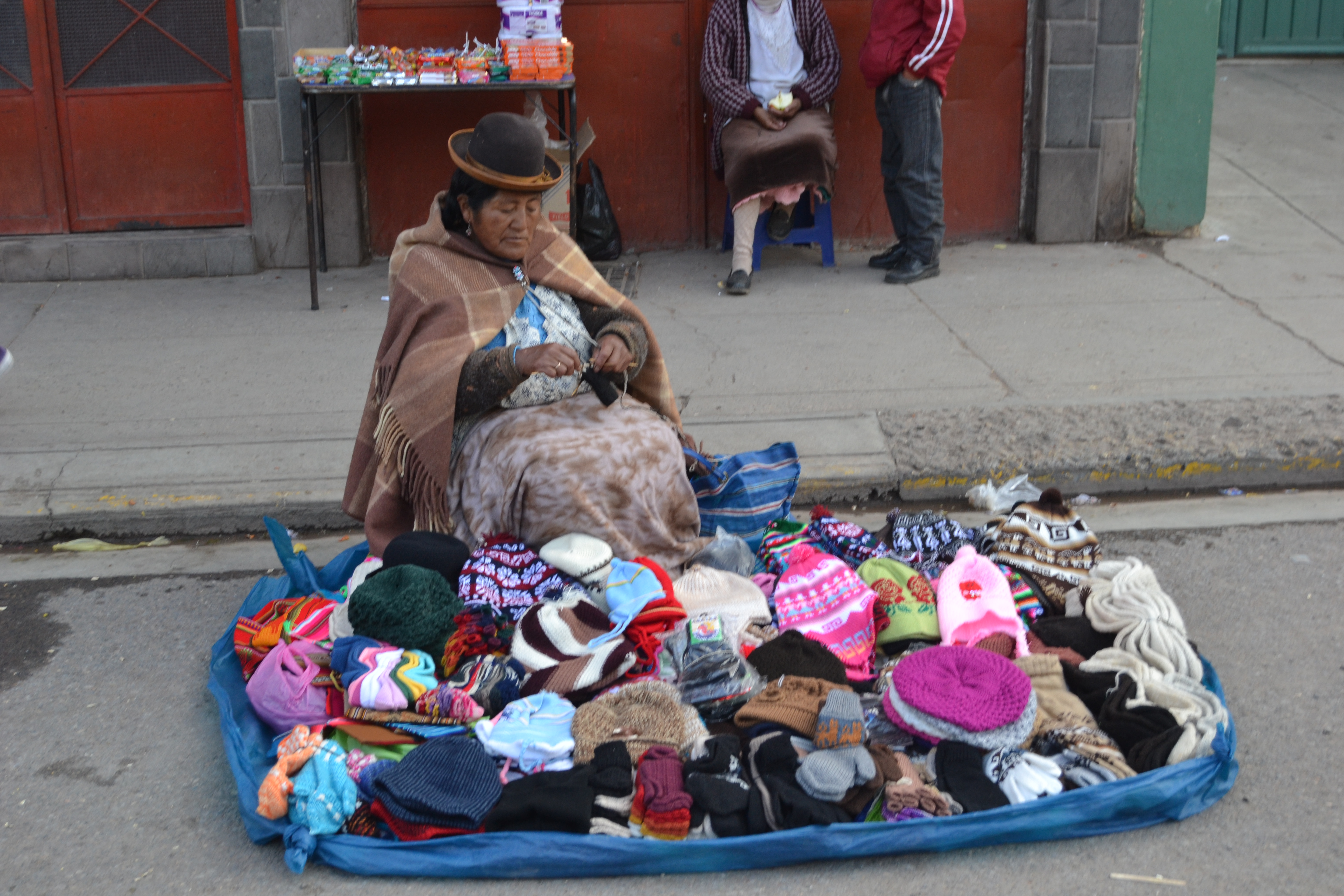
But Puno is better, in parts. It has a nice Baroque cathedral, photogenic decay and indigenous markets selling colourful fabrics and sandals made from car tyres. It is worth a day of your time.

DSC_0689

I arrived, by chance, the day before the festival of La Virgen de la Candelaria and the party erupted all over town next morning. There were street food vendors on every corner and I bought an anticucho (marinated beef heart skewer) outside my hotel and tried to eat it while I threaded my way through the crowds. Scuse me! Scuse… err… ¡Permesso! There were brass bands and flautists and men with big drums they call wankaras. Aymara dancers trooped down the street whirling batons. I wanted to cross but there was never a gap, so I joined the parade and slipped out further down the road. Wankara, someone said.

A very drunk man leaned against a wall in a lane, with his head lolling a few centimetres from speeding mototaxis. Another happily pissed in the middle of the road and people pretended not to notice.

It was like a Saturday night back home.

© Richard Senior 2015

Landscape image: Shutterstock

Travelling by Tube in New Zealand


shutterstock_1249089607

There were six of us in the minibus on the way to the Waitomo Caves, all looking ridiculous in wetsuits, ankle-length wellingtons and miners’ helmets, each clutching an inflated inner tube out of a tractor tyre.

We squeezed through a gash in the side of the mountain and climbed down into a chamber, stooping and huddling together to fit. I was nearest to the crevice which led further in, so the guide sent me on ahead and told me to stop when I heard a roaring sound. I inched along between the walls, splashing through water, seeing what little the lamp on my helmet cared to light up, and listened for a roaring sound. I realised what it was when I heard it.

All I had to do, the guide said when the others caught up, was to approach the waterfall backwards, stand on the edge, hold the inner tube up to my bum as if suffering with haemorrhoids and leap backwards into the water.

The sensible part of my brain warned me sternly against it, as if I were five and it were my father grabbing hold of my arm to stop me running into the road. Fair enough, as I never got round to learning to swim. But if I listened to the sensible part of my brain, I would still be at my desk in London, alternately stressed and bored. I would be on the Tube, instead of on a tube.

I backed up to the edge and jumped, ducked under and swallowed a mouthful of nasty water, then bobbed back up on my tube with the endorphin rush you always get when your brain says no and you go ahead anyway and come out of it okay.

We reclined on our tubes and floated along the underground river which led through a passage with stalactites bearing down on us, until we got to another waterfall, twice the height of the first. I stood back and let the others go first – “no, no, after you,” I said with the pantomime politeness of the British, and nothing to do with being scared – then jumped and sank deeper and ingested more water and came up choking and spitting, but felt fantastic as soon as I could breathe again.

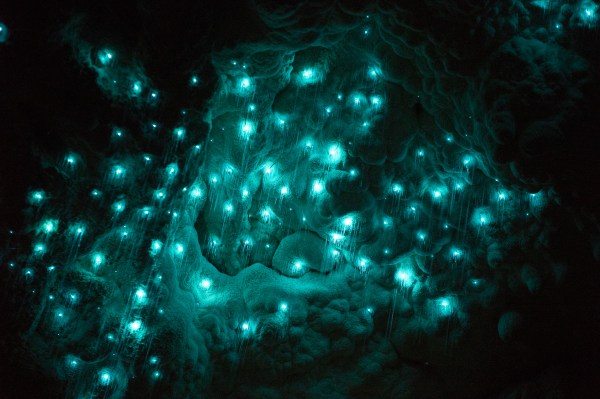
We switched off our lamps as we came out in a cavern and stared up at a roof which was speckled with glow worms and looked like a diorama of space. There were thousands, no tens of thousands, an uncountable number of blue-white dots of effulgence stretching as far as I could see.

We slid silently through the darkness and the LED’s on the backs of the helmets advanced in a line and wound round the corners and the glow worms winked above us until the river burst out above ground through a fissure in the rock and we came out squinting into the afternoon sunlight.

© Richard Senior 2015

Image: Shutterstock

New Year’s East

DSC_0152 (2) - Copy

I had been bouncing around the Andaman Islands and landed up in Krabi.

A party crowd washed down to the coast for the long weekend, bought fireworks by the armful and let them off on the beach.

Street food stalls appeared all the way down the road through Nopparat Thara. Chicken skewers and air-dried squid were piled up on trestle tables; gallons of chilli sauce, hundreds of quartered limes. Smoke from the grills drifted towards Ao Nang. A vendor made som tam in an earthenware mortar, bashing the garlic and chilli, the shredded papaya, the snake beans and tomatoes.

I expected a party on New Year’s Eve on the ponderous curve of peachy sand. But the only poster I saw was for a buffet and live band at a hotel in Ao Nang, and that was hardly worth staying up for.

But, with half a day left to run of the year, I spotted a flyer for Luna Bar (presumably the model for Moon Bar in Richard Arthur’s I of the Sun) which promised deep house and EDM, fireworks and whisky buckets. More fun than a live band and buffet, for sure.

Luna was ominously quiet at 10pm, when I wandered in and scooped up a bucket of the sort which I took to the beach as a child. It came with a quarter of Sang Som whisky, a bottle of Coke and an energy drink and I tipped them in and walked through to the beach, where the holiday crowd was still exploding ordnance. (The firework sellers did well that night.)

The bar began to fill up as the year faded out and the crowd spilled onto the beach. They crammed together in raggedy rows, like rush hour commuters, holding up paper lanterns half their own size, lighting them and letting them go. The flickering lights stretched the length of the beach. There were forty, or fifty, or more in the air at a time. A few, swayed by gusts, caught fire and dropped to the water: the rest floated out over spectral karsts, way out into the Andaman Sea.

Then, at midnight, the music stopped and giant Roman candles sputtered into flame on posts along the waterfront. Explosions reverberated like howitzer shells and the glorious colours spilled across the sky. Lines of racing yellow tadpoles mutated into pin cushions of pink, blue and green, distorted, collapsed and came back to earth as a glittering, sparkling downpour.

All the stresses and disappointments I had run away from back home seemed a lifetime ago right then.

Happy New Year!

© Richard Senior 2014

Serengeti Snapshots


DSC_0486

Early morning in the Serengeti, squeezing six to a pop-top Land Cruiser.

Jambo Frederick.”

“Karibou.”

A herd of wildebeest crosses the road, five or six deep, stretching for ever. Hundreds of wildebeest, a thousand perhaps. The hooves collectively thunder; a cacophony of oinking grunts. A few get confused and run the wrong way, young males stop to pick fights and hit on the females; but they are all sucked back into the relentless flow.

Thompson’s and Grant’s gazelles, impalas, giraffes and dozens of zebra graze at the side of the track. A dung beetle rolls a dropping the size of a baseball uphill.  A young wildebeest bounds into a herd and tries to take over, but the dominant male sees him off.

DSC_0490

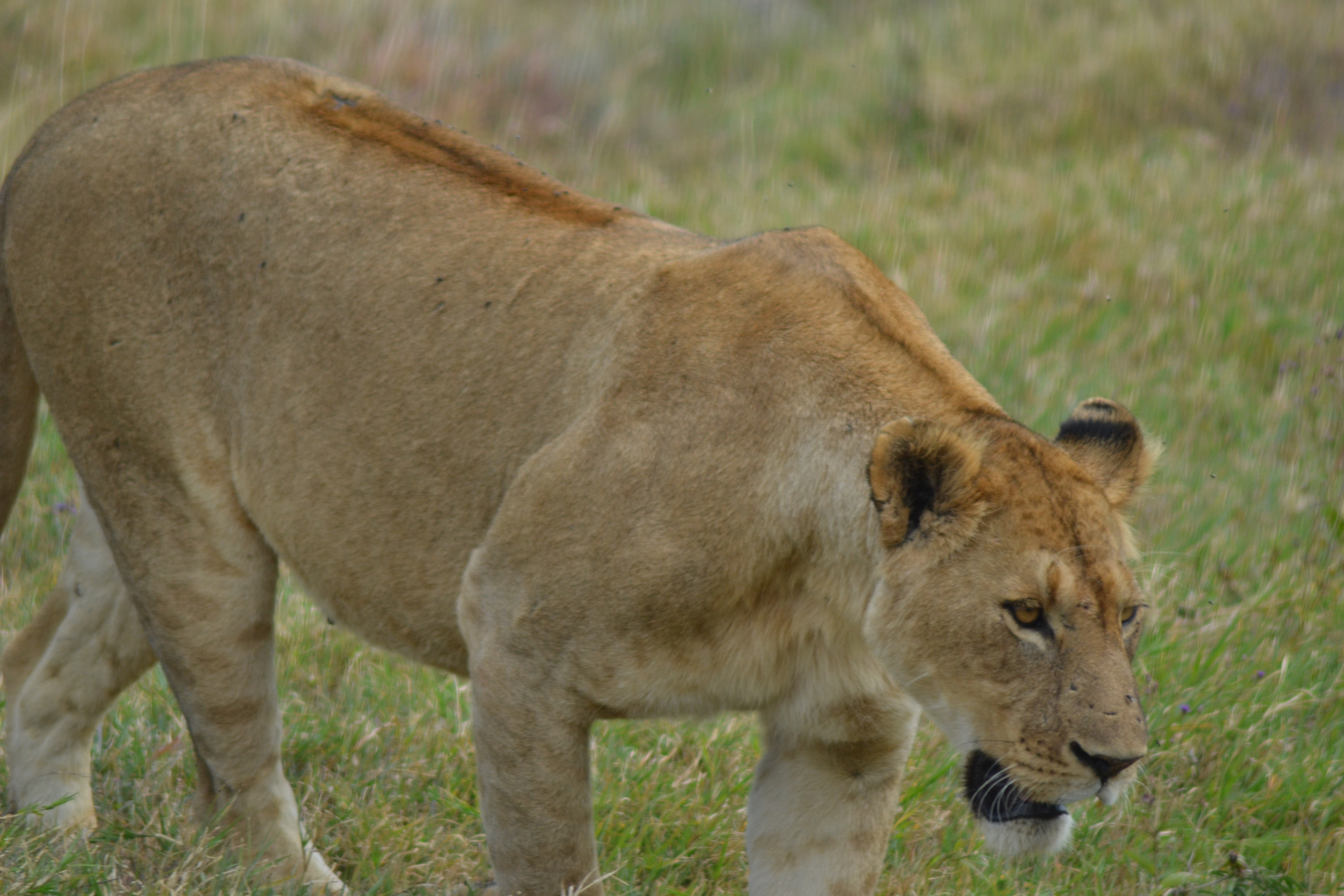
A stream choc-a-block with cooling hippos and, a little apart from them, a solitary croc. They respect each other, like nuclear states, because each could destroy the other. A lioness pokes her head out the bush, peers around, and strolls along the edge of a stream to a shadier spot, followed at a jog by ten unruly month-old cubs the size of little ginger cats. A second lioness acts as rearguard.

Back to the same spot in the afternoon, the trees by then thick with vultures. A lioness appears with blood on her face and paws. The cubs jogs after her in ones and twos and they all clamber down to the stream to drink and wash the blood from their fur, then leap over the water and move on, leaving the carcass to the vultures.

DSC_0419

Poa kicheze,” Frederick says.

What’s that?”

“It means ‘cool’; ‘very cool’.”

“Porky cheesy?”

“Poa kicheze.”

“Pork a chaise, eh?”

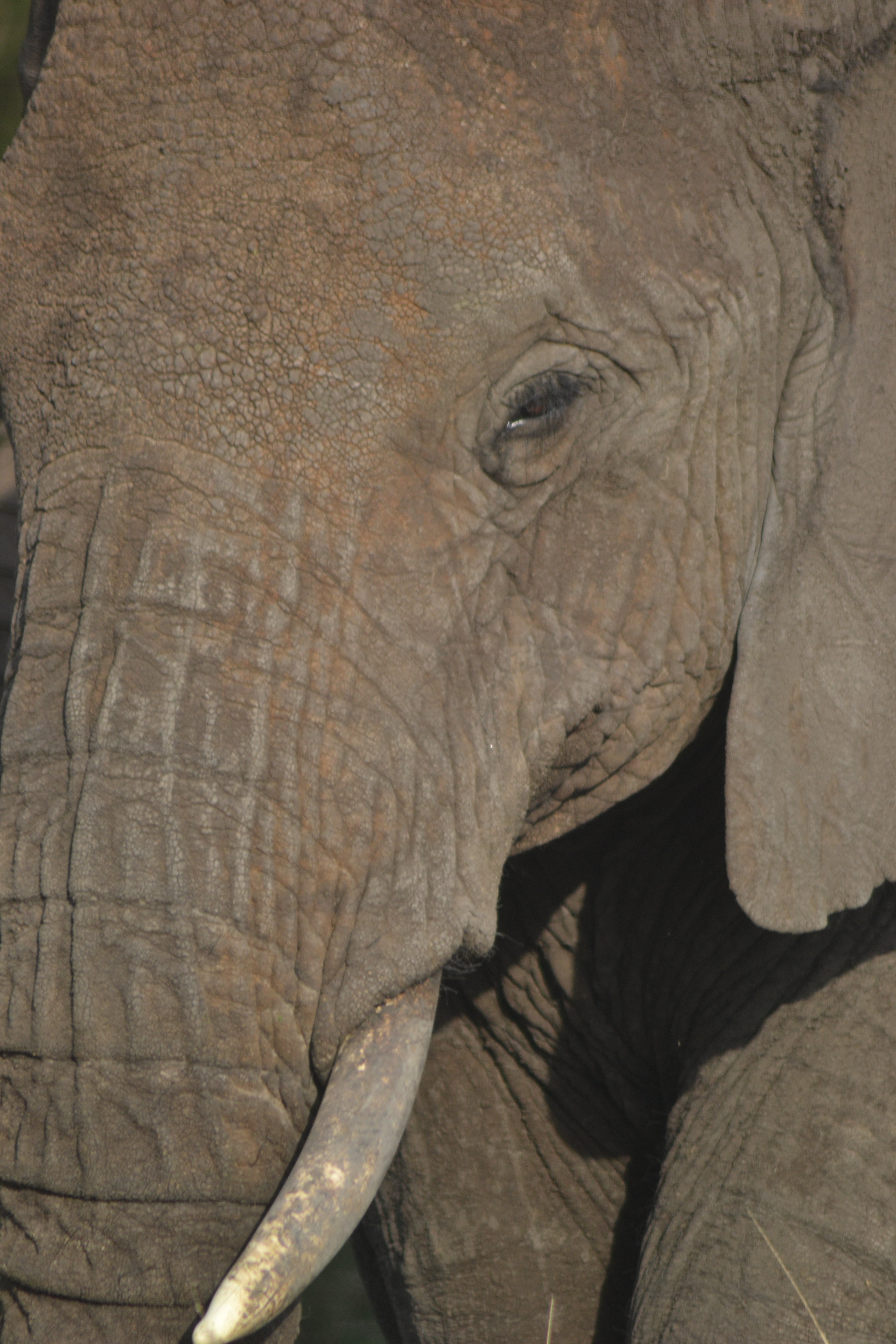
A herd of elephants wants to graze where the lions have gone, and elephants think nothing of lions. They spread out and advance in a row, like soldiers clearing a jungle. One lioness hurries the cubs away while the other stays back and glares at the elephants; but the elephants press on with slow determination. The lioness has to save face, so she waits till the elephants are inches away, then leaves with studied nonchalance.

DSC_0657

Sawa-sawa?” says Frederick, “Okay?”

Yes, sour-sour”.

But the jeep will not start. The elephants are looking at us now. One of the bulls flaps his ears and looks angry. Elephants are bad-tempered things. And an elephant will toss over a jeep as casually as you would flick a bug from your arm. Frederick calls out to another driver and asks him to shunt the jeep from behind to get it going. It works.

“Asante sana, Frederick”.

“Karibou”.

Thank you very much. You’re welcome.

(c) Richard Senior 2014

Santa in Sunnies: Christmas Day on the Beach

DSC_0724

It was the middle of the morning on Christmas Day and the sun was hot enough to burn.

The beach was crowded but the only Thais were the boat taxi men, calling out “boat-boat” from under their awning when anyone went near. The rest were Western backpackers in boardies, bikinis and Santa hats. They sprawled on the sand and frolicked in the waves and lined up the empty Singha beer bottles. One prattled about finding a turkey to roast, saying much the same thing a few dozen times, as if polishing a phrase for a piece he was writing. “Hey mate,” another shouted to every guy on the beach, “What’s your best ladyboy story?” As if everybody had several, and would happily share.

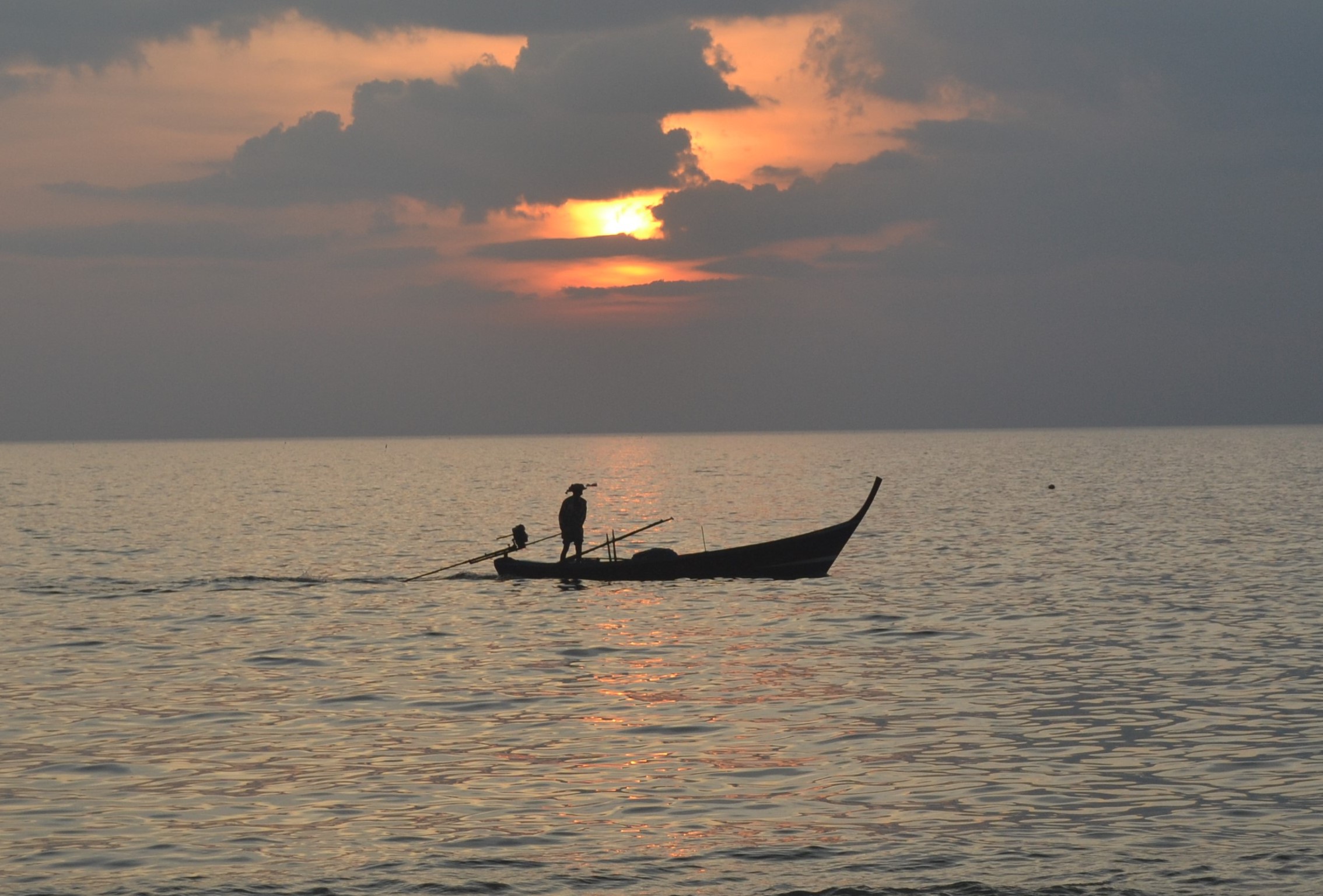
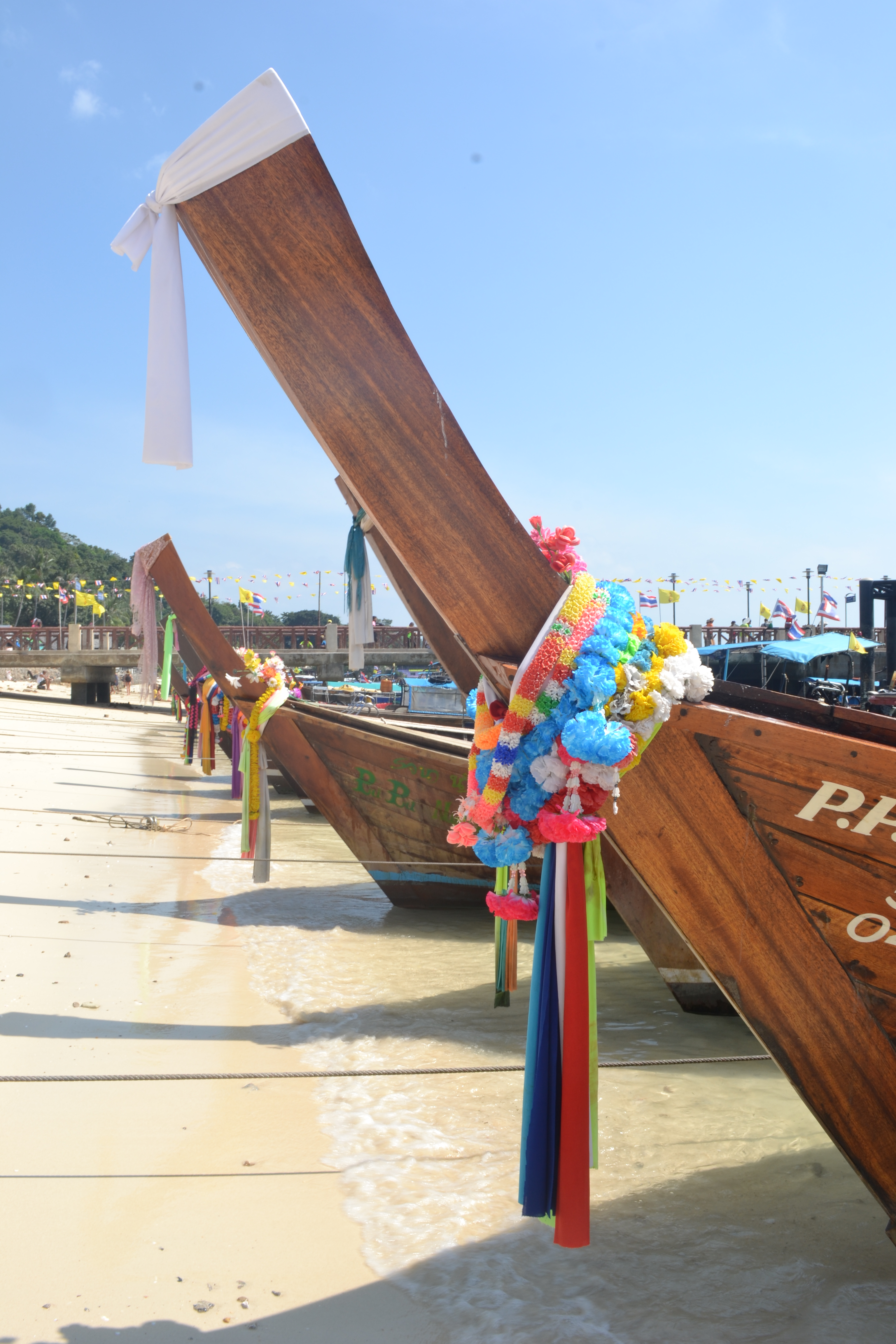
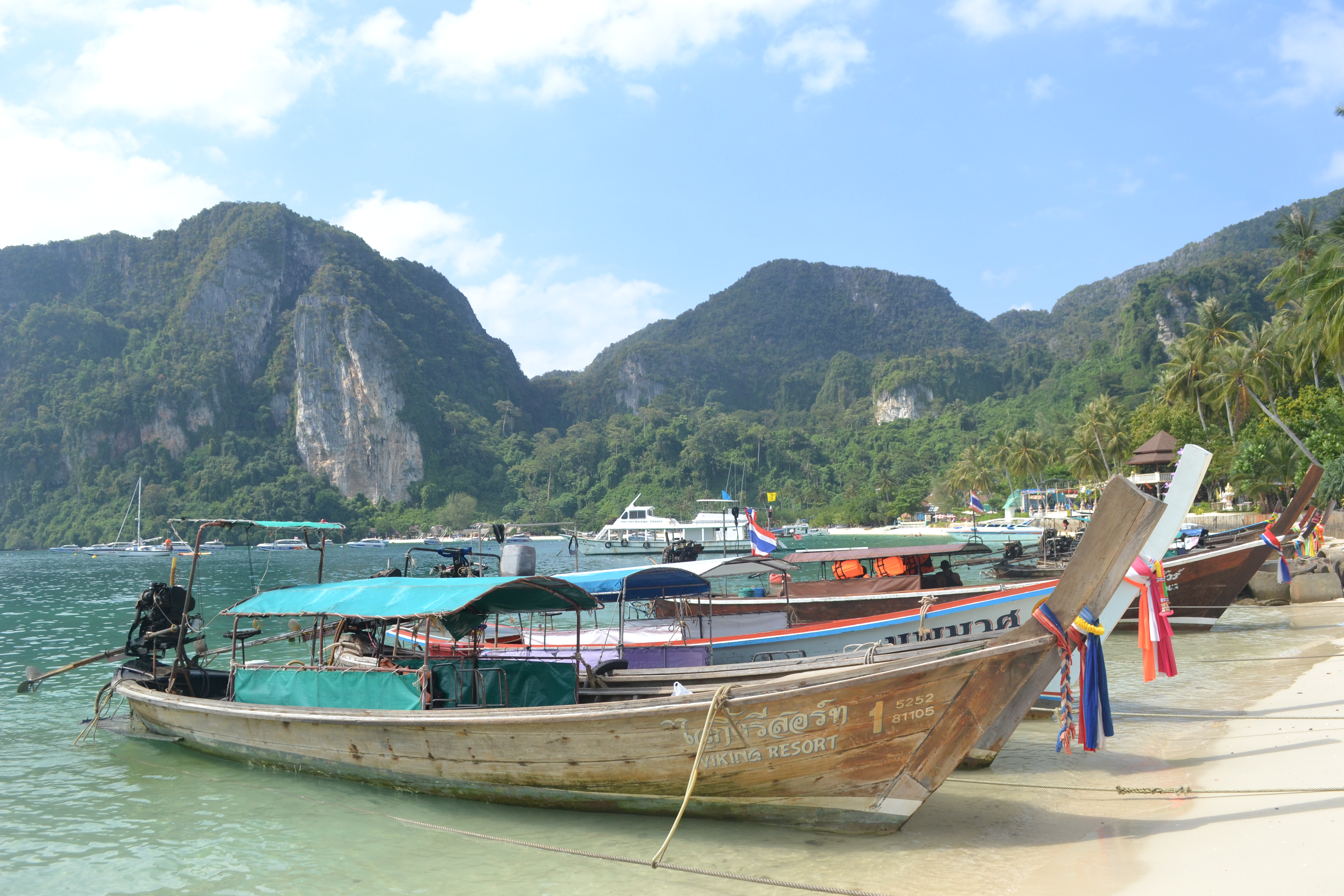
I grew tired of them and crossed the isthmus to the quieter, second best beach and sat on the sand near an empty bar where Errol Dunkley sang Ok Fred and Bob Marley was jamming. Longtail boats, moored in a line, nodded at the edge of the beach. A small yacht dropped its sails and slid into the harbour. The owner of a sports cruiser started its engines and revved them a few times, filling the air with a sound like a supercar underwater.

DSC_0732

I found a restaurant by chance when I cut through an alley where an old lady sat mending socks in a doorway and a skeletal man pumped air into the tyre of a rusty bike. The walls were jerry-built from reclaimed wood and the tables and chairs were cheap plastic things intended for a garden. But the eyes of the fish on ice in the doorway were inky black and their gills were cardinal red. There were none of the tacky Christmas songs I had heard from the restaurants I had passed in the middle of the village. It was, after all, just a regular Tuesday in Thailand.

A little silver tabby sat down beside me and let out a spare any change meow. I gave her a piece of grilled snapper, and then heard a different meow. It was a poor old red Persian with a sneeze and battle scars and one ear folded down. We agreed to share the fish three ways. They let me eat all the rice.

Merry Christmas all.

(c) Richard Senior 2014

A Perspective on Lima

DSC_0062

Lima is a pretty city,” reckoned Che Guevara in The Motorcycle Diaries. “Lima is an atrocity,” insisted Matthew Parris in Inca Kola.

Parris’s impression is the one generally held, especially by those who have never been. Lima has a shocking reputation. It is ugly, they say; it is dangerous. There is nothing much to look at while you are being mugged at gunpoint. Parris noticed concrete and tin, dead dogs and cars without windscreens.

The city is smothered in fog for much of the year, which cannot help to endear it. “The white veil,” Melville called it in Moby Dick. But I was there in late January, when the sky was blue more often than not, and the sun was hot enough to redden my neck. The fogs came, all right; but ephemerally, like dry ice from a smoke machine.

DSC_0011

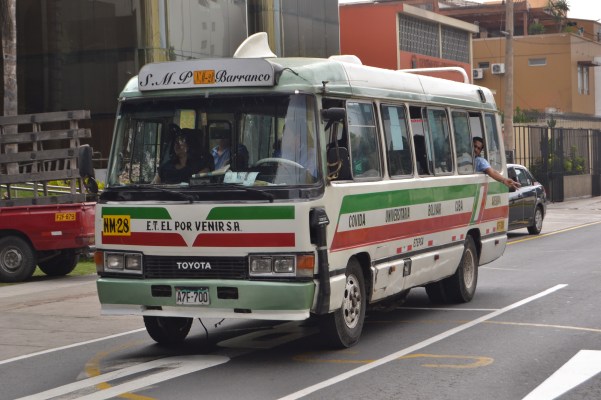
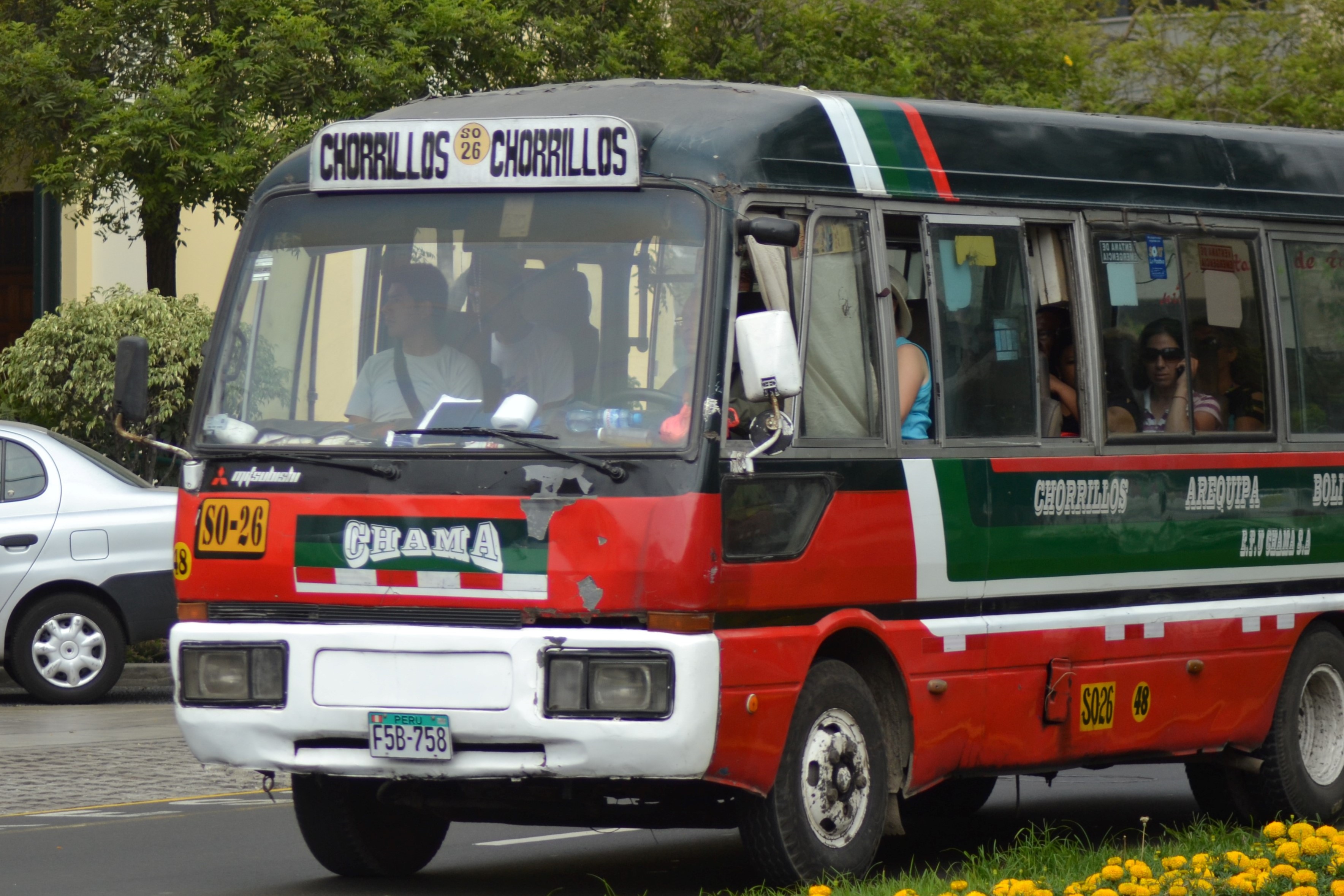
I think Lima must, in any case, have smartened itself up in the twenty-four years since Parris was there. I never saw a dead dog – although strays were everywhere – and saw only one car that was missing a windscreen. Most were in a lot better fettle than the minibuses, which roared along with blowing exhausts, great gashes down their sides and several important bits missing.

Hotel development in the Miraflores district has been about as unsympathetic as it could be (Guevara would have been spared that in 1952); but next door Barranco is full of character with its shabby-gentile colonial buildings in jaunty, contrasting colours like forest green and lilac, anorak blue and orange, and dogshit brown and dayglo pink. It would be a stretch, though, to call it pretty.

The Centro Historico is genuinely pretty with its plazas, its fountains, its grand public buildings and a cathedral to which Guevara devoted a long and exuberant paragraph. You might, for a moment, imagine yourself in an important city in Spain; but the illusion cannot last for long. A shanty town spreads round and up the surrounding mountains, painfully visible from all over town; and just a few blocks from the grandest plaza are workaday districts with litter in the doorways and broken chairs slung onto roofs.

DSC_0068

In short, it is not as irredeemably ugly as popularly believed, but it is hardly Cuzco either. The danger is apparently real, but even at night it feels a lot less edgy than somewhere like La Paz.

My guidebook – never knowingly underwhelmed – reckoned Lima “the gastronomic capital of the continent”. That sounds like windy exaggeration, but two of its restaurants are listed among the World’s 50 Best: equal with London, one fewer than Paris. It is the place to go to eat ceviche, Peru’s most famous dish: a buzzword, now, on fine-dining menus in the English-speaking world.

The chef squirts lime juice over sliced raw fish, and then flavours it with garlic, chilli, coriander and red onion and leaves it to marinate so that the acid in the juice “cooks” the fish. “Better than it sounds,” said Parris, who seems to have the classical Englishman’s approach to food and usually only mentioned it when it upset somebody’s stomach.

image1 (11)

The version I had at a smart restaurant overlooking the sea in Miraflores used chunks of sea bass, crab claws and scallops, and came with the Peruvian staples, sweet potato and corn. “Una experencia incomparable,” the menu declared with a good pinch of hyperbole, but it was very good.

(c) Richard Senior 2014

Some Corner of a Foreign Field That Shall Be Forever…France

image1 (10)

There are bistros much like it on the back streets of every town in France. The tables and chairs will be simple and cheap, and may very well not match. On the wall will be photographs of long-dead people in old-style hats and long-closed shops on no-longer-fashionable streets, or motor racing posters from decades ago, or tarnished mirrors enamelled with Pernod adverts.

Portions are hearty, garlic abundant, and prices low. There are no foams and emulsions, no confits of this, nor saboyans of that: just simple, honest to goodness food. In Provence, there will be daube de boeuf, a meltingly tender ox cheek simmered for hours in red wine; in Languedoc cassoulet, a great sizzling bowl of duck leg, sausage and haricots blancs. Everywhere, there will be gratins and remoulades, steaks and charcuterie. Wine will be sold by the carafe. Customers will shout and guffaw. The patron will linger by tables, sharing jokes with regulars.

A couple run Le Café de Paris on their own. She does the cheffing, he is front of house. The menu du jour is chalked up on a blackboard outside. It was the same every jour, as far as I could tell. Terrine maison to start and steak de boeuf with sauce bordelaise, green salad and pommes frites. Everything was nicely done. The steak was cooked rare and rested, the bordelaise sauce well-flavoured, the frites fat and crispy, the salad sparingly dressed in a proper vinaigrette.

Oh, and I almost forgot to mention that it is not in France at all but on a side street in a little town in Laos.

(c) Richard Senior 2014