Why Travel? Ask the Earl of Oxford

Edward_de_Vere,_17th_Earl_of_Oxford_-_Project_Gutenberg_eText_13403

Maybe you travel for the challenge, or just for the hell of it. Or to learn about other cultures, or yourself. Or try out a language you learned in night school. Or see the cities where your favourite movies were set. Perhaps you want to escape a humdrum life, or recover from burnout, or salve a midlife crisis. You might want to put off the need to grow up, get a job and start talking at length about house prices.

Or else you had an accident in front of the Queen like the 17th Earl of Oxford. As Aubrey told the story in Brief Lives, with his spelling and capitalisation preserved:

 “making of his low obeisance to Queen Elizabeth, happened to let a Fart, at which he was so abashed and ashamed that he went to Travell, 7 yeares. On his returne the Queen welcomed him home, and sayd, My Lord, I had forgott the Fart”.

New Year’s East

DSC_0152 (2) - Copy

I had been bouncing around the Andaman Islands and landed up in Krabi.

A party crowd washed down to the coast for the long weekend, bought fireworks by the armful and let them off on the beach.

Street food stalls appeared all the way down the road through Nopparat Thara. Chicken skewers and air-dried squid were piled up on trestle tables; gallons of chilli sauce, hundreds of quartered limes. Smoke from the grills drifted towards Ao Nang. A vendor made som tam in an earthenware mortar, bashing the garlic and chilli, the shredded papaya, the snake beans and tomatoes.

I expected a party on New Year’s Eve on the ponderous curve of peachy sand. But the only poster I saw was for a buffet and live band at a hotel in Ao Nang, and that was hardly worth staying up for.

But, with half a day left to run of the year, I spotted a flyer for Luna Bar (presumably the model for Moon Bar in Richard Arthur’s I of the Sun) which promised deep house and EDM, fireworks and whisky buckets. More fun than a live band and buffet, for sure.

Luna was ominously quiet at 10pm, when I wandered in and scooped up a bucket of the sort which I took to the beach as a child. It came with a quarter of Sang Som whisky, a bottle of Coke and an energy drink and I tipped them in and walked through to the beach, where the holiday crowd was still exploding ordnance. (The firework sellers did well that night.)

The bar began to fill up as the year faded out and the crowd spilled onto the beach. They crammed together in raggedy rows, like rush hour commuters, holding up paper lanterns half their own size, lighting them and letting them go. The flickering lights stretched the length of the beach. There were forty, or fifty, or more in the air at a time. A few, swayed by gusts, caught fire and dropped to the water: the rest floated out over spectral karsts, way out into the Andaman Sea.

Then, at midnight, the music stopped and giant Roman candles sputtered into flame on posts along the waterfront. Explosions reverberated like howitzer shells and the glorious colours spilled across the sky. Lines of racing yellow tadpoles mutated into pin cushions of pink, blue and green, distorted, collapsed and came back to earth as a glittering, sparkling downpour.

All the stresses and disappointments I had run away from back home seemed a lifetime ago right then.

Happy New Year!

© Richard Senior 2014

Serengeti Snapshots


DSC_0486

Early morning in the Serengeti, squeezing six to a pop-top Land Cruiser.

Jambo Frederick.”

“Karibou.”

A herd of wildebeest crosses the road, five or six deep, stretching for ever. Hundreds of wildebeest, a thousand perhaps. The hooves collectively thunder; a cacophony of oinking grunts. A few get confused and run the wrong way, young males stop to pick fights and hit on the females; but they are all sucked back into the relentless flow.

Thompson’s and Grant’s gazelles, impalas, giraffes and dozens of zebra graze at the side of the track. A dung beetle rolls a dropping the size of a baseball uphill.  A young wildebeest bounds into a herd and tries to take over, but the dominant male sees him off.

DSC_0490

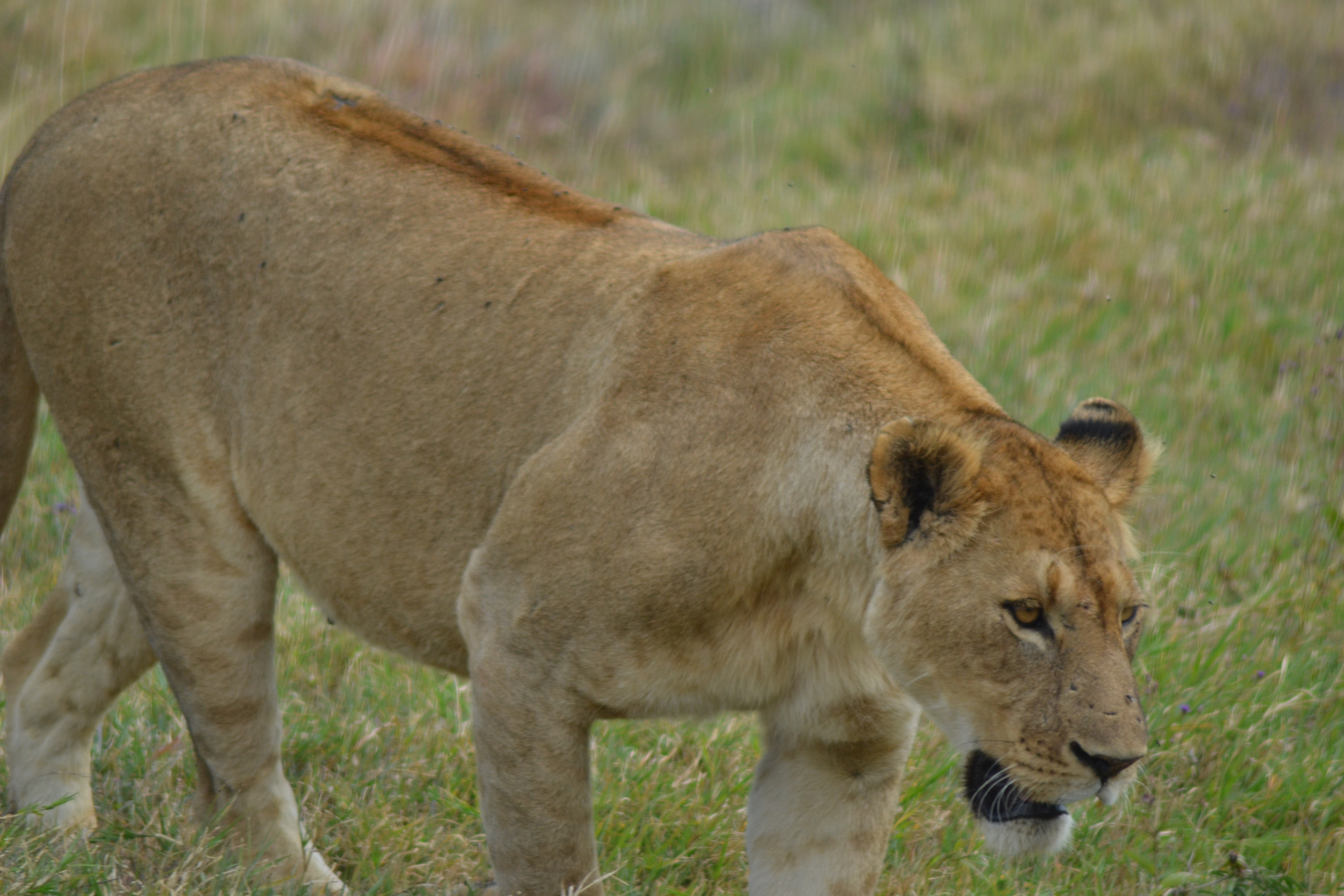
A stream choc-a-block with cooling hippos and, a little apart from them, a solitary croc. They respect each other, like nuclear states, because each could destroy the other. A lioness pokes her head out the bush, peers around, and strolls along the edge of a stream to a shadier spot, followed at a jog by ten unruly month-old cubs the size of little ginger cats. A second lioness acts as rearguard.

Back to the same spot in the afternoon, the trees by then thick with vultures. A lioness appears with blood on her face and paws. The cubs jogs after her in ones and twos and they all clamber down to the stream to drink and wash the blood from their fur, then leap over the water and move on, leaving the carcass to the vultures.

DSC_0419

Poa kicheze,” Frederick says.

What’s that?”

“It means ‘cool’; ‘very cool’.”

“Porky cheesy?”

“Poa kicheze.”

“Pork a chaise, eh?”

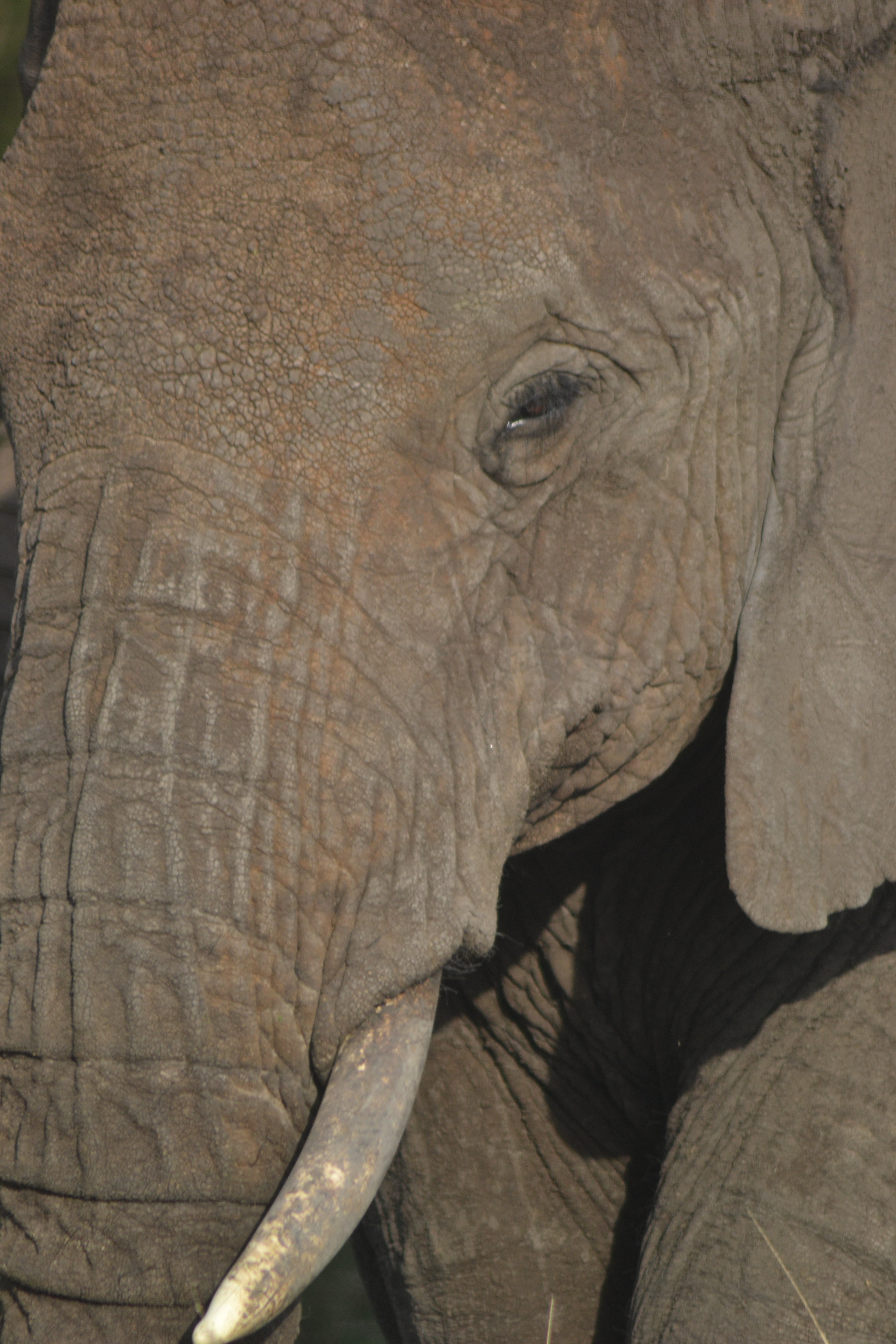
A herd of elephants wants to graze where the lions have gone, and elephants think nothing of lions. They spread out and advance in a row, like soldiers clearing a jungle. One lioness hurries the cubs away while the other stays back and glares at the elephants; but the elephants press on with slow determination. The lioness has to save face, so she waits till the elephants are inches away, then leaves with studied nonchalance.

DSC_0657

Sawa-sawa?” says Frederick, “Okay?”

Yes, sour-sour”.

But the jeep will not start. The elephants are looking at us now. One of the bulls flaps his ears and looks angry. Elephants are bad-tempered things. And an elephant will toss over a jeep as casually as you would flick a bug from your arm. Frederick calls out to another driver and asks him to shunt the jeep from behind to get it going. It works.

“Asante sana, Frederick”.

“Karibou”.

Thank you very much. You’re welcome.

(c) Richard Senior 2014

Santa in Sunnies: Christmas Day on the Beach

DSC_0724

It was the middle of the morning on Christmas Day and the sun was hot enough to burn.

The beach was crowded but the only Thais were the boat taxi men, calling out “boat-boat” from under their awning when anyone went near. The rest were Western backpackers in boardies, bikinis and Santa hats. They sprawled on the sand and frolicked in the waves and lined up the empty Singha beer bottles. One prattled about finding a turkey to roast, saying much the same thing a few dozen times, as if polishing a phrase for a piece he was writing. “Hey mate,” another shouted to every guy on the beach, “What’s your best ladyboy story?” As if everybody had several, and would happily share.

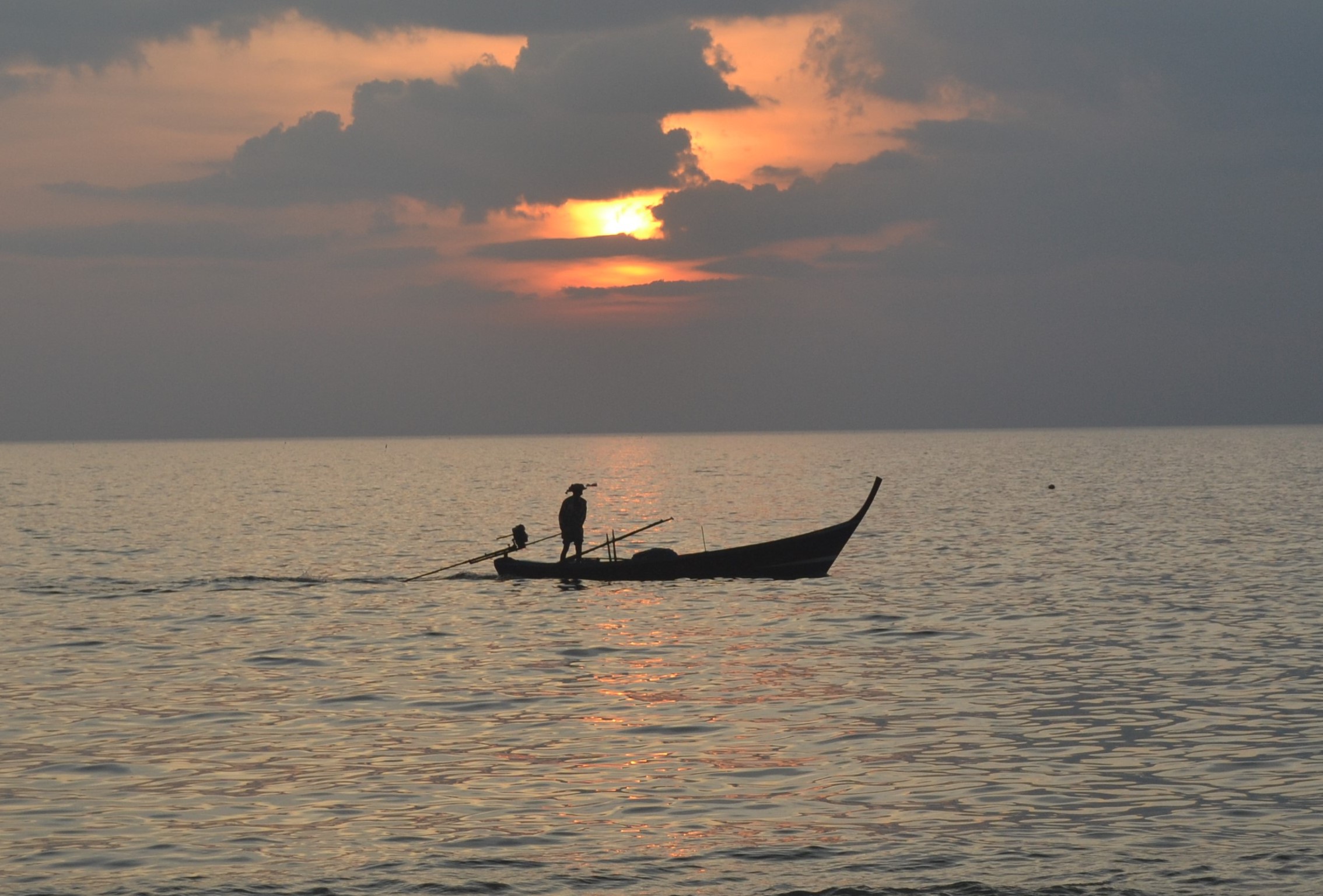
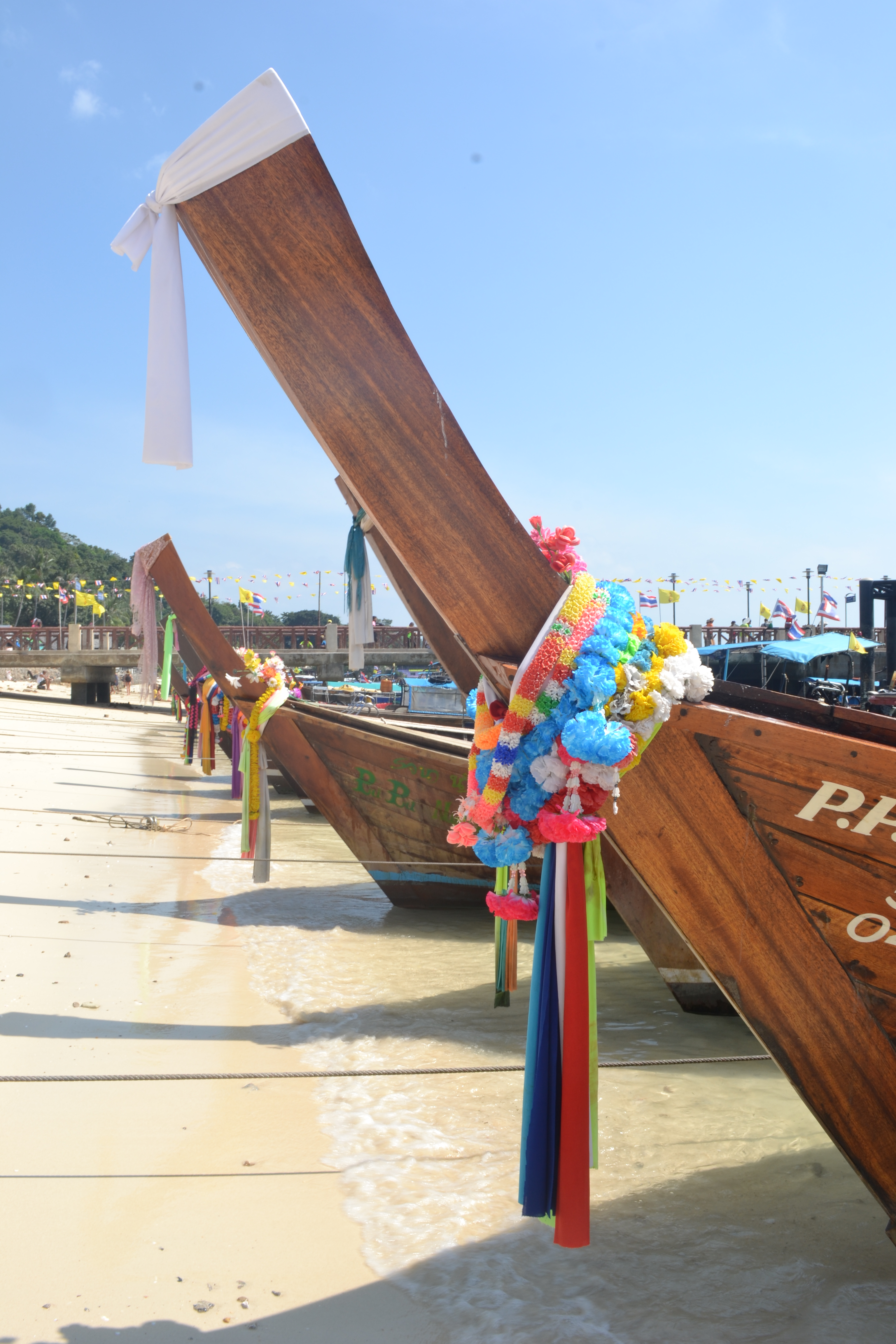
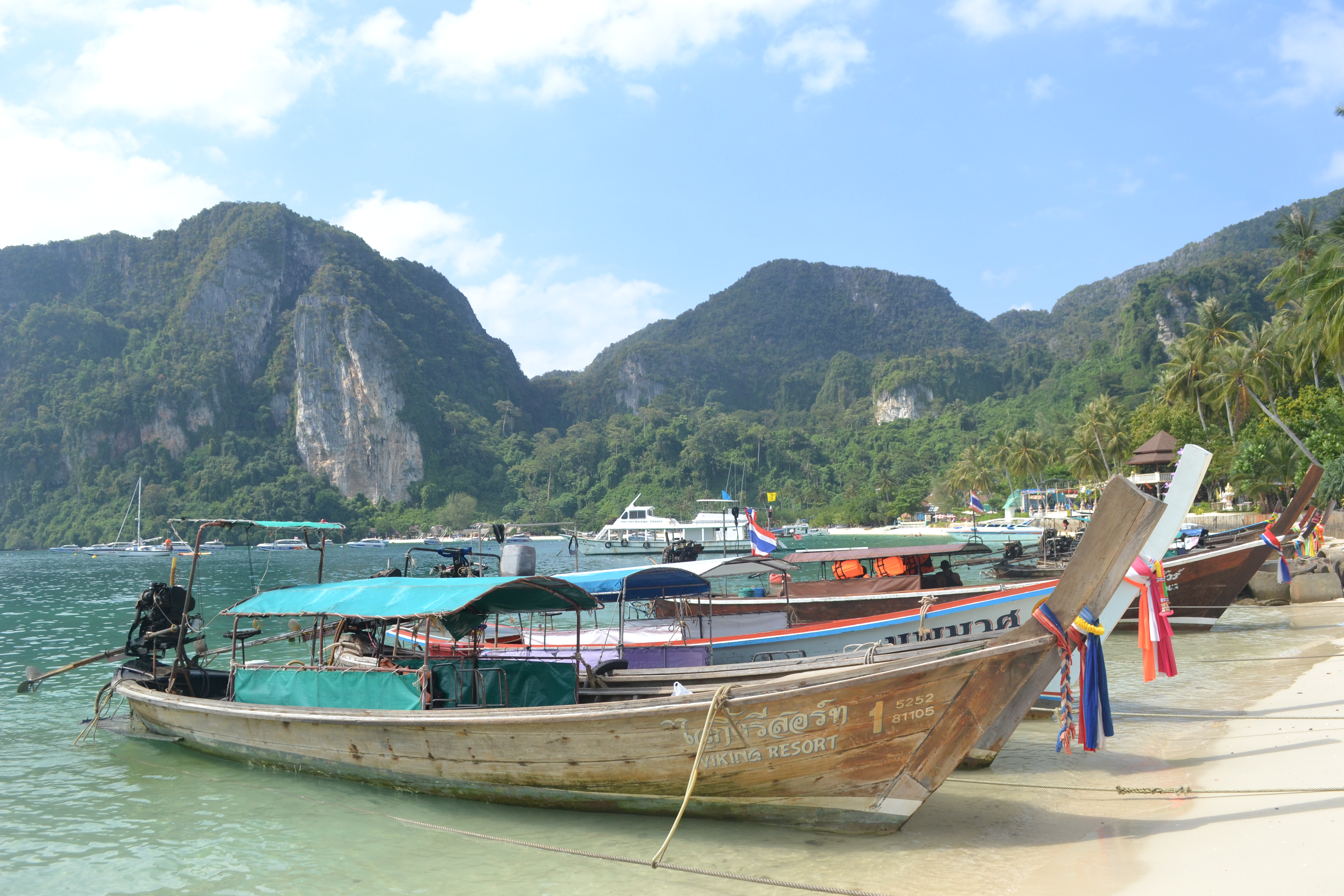
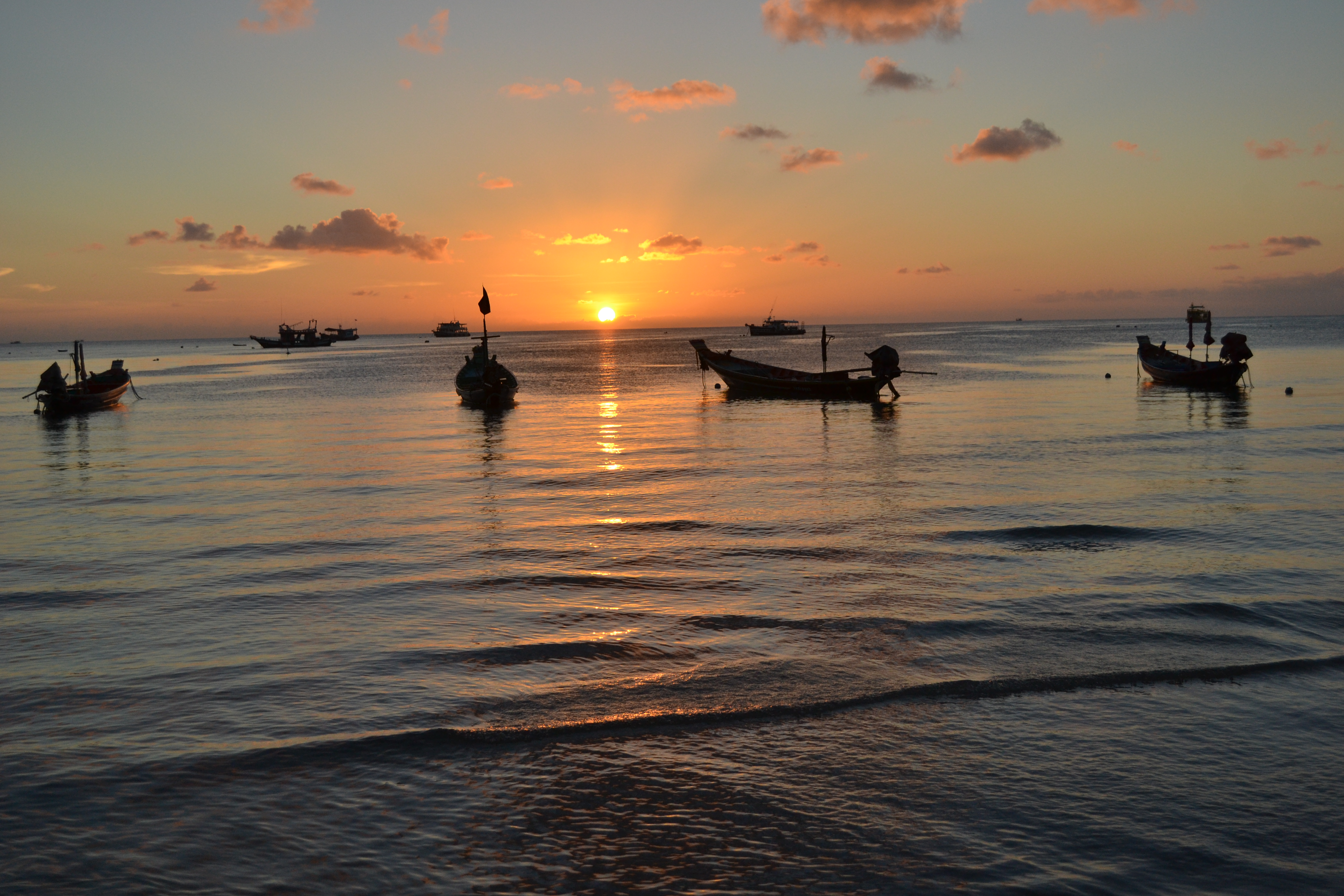
I grew tired of them and crossed the isthmus to the quieter, second best beach and sat on the sand near an empty bar where Errol Dunkley sang Ok Fred and Bob Marley was jamming. Longtail boats, moored in a line, nodded at the edge of the beach. A small yacht dropped its sails and slid into the harbour. The owner of a sports cruiser started its engines and revved them a few times, filling the air with a sound like a supercar underwater.

DSC_0732

I found a restaurant by chance when I cut through an alley where an old lady sat mending socks in a doorway and a skeletal man pumped air into the tyre of a rusty bike. The walls were jerry-built from reclaimed wood and the tables and chairs were cheap plastic things intended for a garden. But the eyes of the fish on ice in the doorway were inky black and their gills were cardinal red. There were none of the tacky Christmas songs I had heard from the restaurants I had passed in the middle of the village. It was, after all, just a regular Tuesday in Thailand.

A little silver tabby sat down beside me and let out a spare any change meow. I gave her a piece of grilled snapper, and then heard a different meow. It was a poor old red Persian with a sneeze and battle scars and one ear folded down. We agreed to share the fish three ways. They let me eat all the rice.

Merry Christmas all.

(c) Richard Senior 2014

A Perspective on Lima

DSC_0062

Lima is a pretty city,” reckoned Che Guevara in The Motorcycle Diaries. “Lima is an atrocity,” insisted Matthew Parris in Inca Kola.

Parris’s impression is the one generally held, especially by those who have never been. Lima has a shocking reputation. It is ugly, they say; it is dangerous. There is nothing much to look at while you are being mugged at gunpoint. Parris noticed concrete and tin, dead dogs and cars without windscreens.

The city is smothered in fog for much of the year, which cannot help to endear it. “The white veil,” Melville called it in Moby Dick. But I was there in late January, when the sky was blue more often than not, and the sun was hot enough to redden my neck. The fogs came, all right; but ephemerally, like dry ice from a smoke machine.

DSC_0011

I think Lima must, in any case, have smartened itself up in the twenty-four years since Parris was there. I never saw a dead dog – although strays were everywhere – and saw only one car that was missing a windscreen. Most were in a lot better fettle than the minibuses, which roared along with blowing exhausts, great gashes down their sides and several important bits missing.

Hotel development in the Miraflores district has been about as unsympathetic as it could be (Guevara would have been spared that in 1952); but next door Barranco is full of character with its shabby-gentile colonial buildings in jaunty, contrasting colours like forest green and lilac, anorak blue and orange, and dogshit brown and dayglo pink. It would be a stretch, though, to call it pretty.

The Centro Historico is genuinely pretty with its plazas, its fountains, its grand public buildings and a cathedral to which Guevara devoted a long and exuberant paragraph. You might, for a moment, imagine yourself in an important city in Spain; but the illusion cannot last for long. A shanty town spreads round and up the surrounding mountains, painfully visible from all over town; and just a few blocks from the grandest plaza are workaday districts with litter in the doorways and broken chairs slung onto roofs.

DSC_0068

In short, it is not as irredeemably ugly as popularly believed, but it is hardly Cuzco either. The danger is apparently real, but even at night it feels a lot less edgy than somewhere like La Paz.

My guidebook – never knowingly underwhelmed – reckoned Lima “the gastronomic capital of the continent”. That sounds like windy exaggeration, but two of its restaurants are listed among the World’s 50 Best: equal with London, one fewer than Paris. It is the place to go to eat ceviche, Peru’s most famous dish: a buzzword, now, on fine-dining menus in the English-speaking world.

The chef squirts lime juice over sliced raw fish, and then flavours it with garlic, chilli, coriander and red onion and leaves it to marinate so that the acid in the juice “cooks” the fish. “Better than it sounds,” said Parris, who seems to have the classical Englishman’s approach to food and usually only mentioned it when it upset somebody’s stomach.

image1 (11)

The version I had at a smart restaurant overlooking the sea in Miraflores used chunks of sea bass, crab claws and scallops, and came with the Peruvian staples, sweet potato and corn. “Una experencia incomparable,” the menu declared with a good pinch of hyperbole, but it was very good.

(c) Richard Senior 2014

Some Corner of a Foreign Field That Shall Be Forever…France

image1 (10)

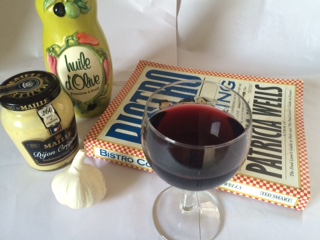
There are bistros much like it on the back streets of every town in France. The tables and chairs will be simple and cheap, and may very well not match. On the wall will be photographs of long-dead people in old-style hats and long-closed shops on no-longer-fashionable streets, or motor racing posters from decades ago, or tarnished mirrors enamelled with Pernod adverts.

Portions are hearty, garlic abundant, and prices low. There are no foams and emulsions, no confits of this, nor saboyans of that: just simple, honest to goodness food. In Provence, there will be daube de boeuf, a meltingly tender ox cheek simmered for hours in red wine; in Languedoc cassoulet, a great sizzling bowl of duck leg, sausage and haricots blancs. Everywhere, there will be gratins and remoulades, steaks and charcuterie. Wine will be sold by the carafe. Customers will shout and guffaw. The patron will linger by tables, sharing jokes with regulars.

A couple run Le Café de Paris on their own. She does the cheffing, he is front of house. The menu du jour is chalked up on a blackboard outside. It was the same every jour, as far as I could tell. Terrine maison to start and steak de boeuf with sauce bordelaise, green salad and pommes frites. Everything was nicely done. The steak was cooked rare and rested, the bordelaise sauce well-flavoured, the frites fat and crispy, the salad sparingly dressed in a proper vinaigrette.

Oh, and I almost forgot to mention that it is not in France at all but on a side street in a little town in Laos.

(c) Richard Senior 2014

Are You a Tourist or a Traveller… And Who Cares?

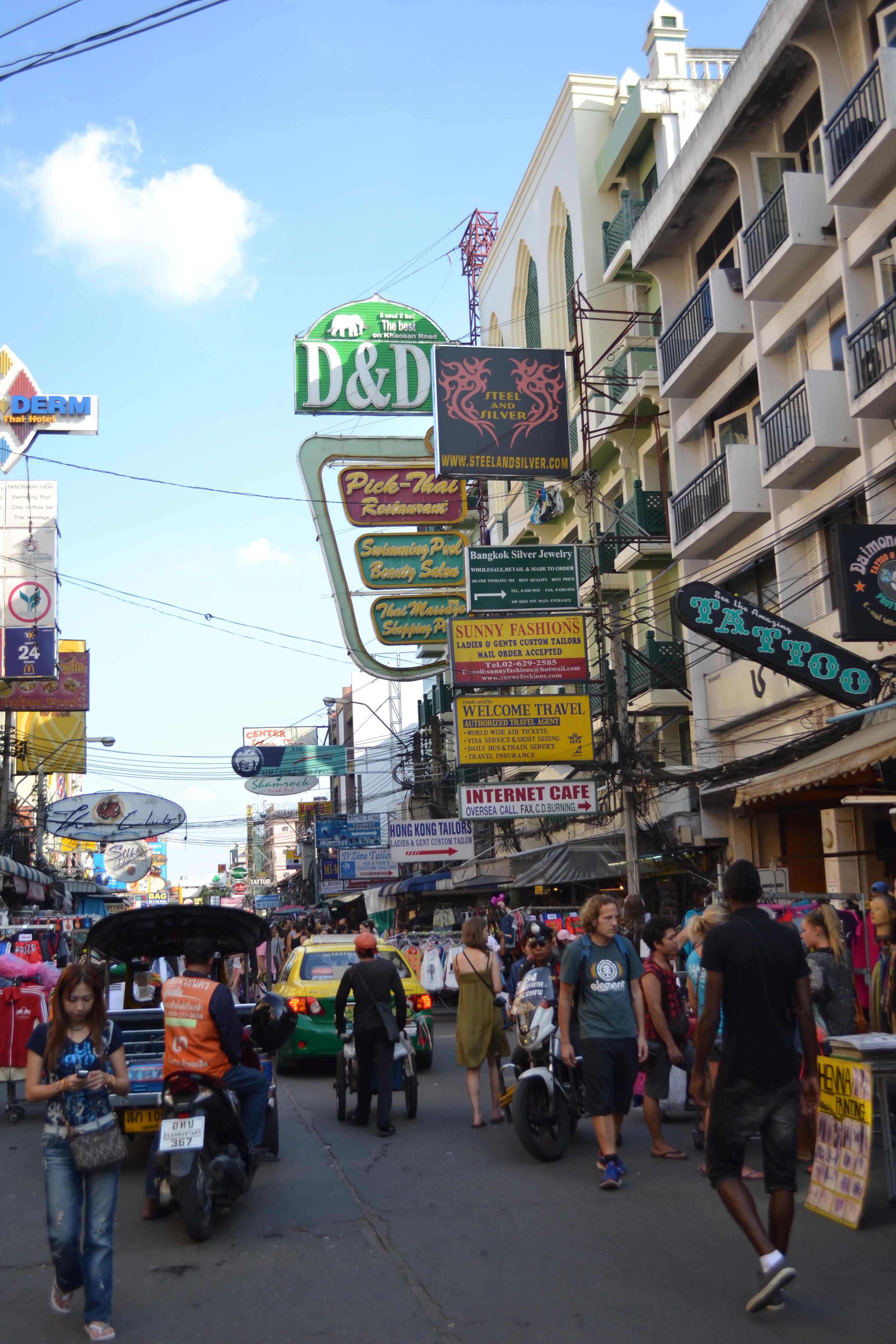
The narrator of Alex Garland’s The Beach fancies himself as a serious traveller. He is a voyeur of riots and extreme poverty and sneers at the ‘touristy’ Lower Gulf Islands. It is satire, of course, and readers will notice that he sees nothing of Thailand beyond the backpacker ghetto of Khao San Road and what amounts to a private island for young middle class Westerners.

Garland said, of the sort of travellers his book was lampooning, “These people say they aren’t tourists but travellers and think they are special, more sensitive. It’s stupid. They’re not”. The Beach set out to explode their pretensions. But, as with Wall Street and La Dolce Vita, the point is often spectacularly missed.

DSC_0077 (2)

There are numberless features exploring the supposed difference between tourists and travellers. It clearly matters a lot to some. There are graphs, there are charts, there are tables and pictograms to help you understand. There are lofty quotations from people like Chesterton: “The traveller sees what he sees, the tourist sees what he has come to see”. But almost everyone agrees with Evelyn Waugh that “the tourist is the other fellow”.

If you like being patronised, there are quizzes you can take to see which side of the line you fall; and if –heaven forbid – it turns out that you are only a tourist, WikiHow has a 9-step guide, complete with pictures, to teach you how to become a traveller.

As far as the dictionary is concerned, all of us are travellers (people who travel) and most of us are tourists (people who travel for pleasure) and I generally use the words interchangeably. But I did the quizzes out of curiosity and found that I am 80% traveller according to one, but only narrowly so according to another, and merely a tourist according to a third. None of them was interested in how much I had actually travelled or what I had learned on the way. This is a sample question:

Which do you prefer?

[   ] Having a map

[   ] Having no map

If you prefer to have a map, it suggests you are a tourist.

If you prefer not to have a map, it suggests you are bonkers.

Travellers, says one source, like WiFi connections, while tourists dislike bugs. They cancel each other out in my case. In everyone else’s too, I should think.

Travellers apparently blend in to their surroundings. They do this by wearing Chang Beer singlets in Thailand, chullo hats in South America, Masaai wraps in East Africa and hiking boots with zip-off trousers everywhere else.

DSC_0009

Travellers, we are told, immerse themselves in the local culture, so if you approach a backpacker on Khao San Road with the routine Thai greeting gin khao reu yung (have you eaten yet), he or she will respond with gin khao leauw (I have eaten already), then tell you how to make yum woon sen and start a debate about Thaksin Shinawatra.

It seems to be widely agreed that travellers are not interested in sights, and that this makes them better people. One source scoffs at “buildings of note,” while another has a go at art galleries. It must follow that the tourists who head straight for Macy’s are closer to being travellers than those who go look at Brooklyn Bridge and the Met.

DSC_0722


But there are sights and there are sights. The sort of traveller who would laugh in your face if you told him you had spent a morning at St Peter’s Basilica would insist that you need at least a week for the temples of Angkor, if not a month, a year, or several lifetimes.

Some good points are buried within all the snobbery. There is more to the world than the twenty dollar sights, and a ragtag market can be more rewarding than a world-famous cathedral. But to refuse on principle to see the big sights is surely as myopic as refusing to see anything else. If you want to learn something of the local culture – and it is not work, so no one should say that you have to – you need, for sure, to see how ordinary people live; but you need to know something of the history, the politics and religion as well, and that will take you back to the sights which appear in the guidebooks. Better just to go and see the things which interest you and skip the ones which don’t. Never mind whether the guidebooks gush or someone in a bandana scoffs.

Respecting local customs is just good manners, and recognising that things which are different from home may not be worse is about being open-minded. There is no need for an artificial distinction between tourists and travellers.

(c) Richard Senior 2014

The Kindness of Strangers

DSC_0683

I jumped out of the back of the songthaew (shared taxi) and wandered off to find a guest house. By the time I was a hundred yards down the road, and the songthaew was the other side of the island, it hit me that my daybag was still under the seat. In it were my camera, laptop, emergency funds, spare credit card and enough documents to clone me.

I flagged down another songthaew and got him to take me to the depot, where they asked me a few questions and I was out at the end of the first round:

“What was the number of the songthaew?”

“Pass.”

“Was it an Izuzu or a Hyundai?”

“Pass.”

 “What was the driver’s name?”

“Pass.”

I looked in the back of the parked songthaews, the controller phoned round the drivers, and I wrote out my contact details, but none of us expected my bag to turn up.

I felt numb as I headed back to Chaweng, checked into a guest house and dropped off what was left of my stuff. But my spirits rose a bit when I went to the beach and felt the powdery white sand underfoot, and a bit more when I sat with a Singha beer and watched the jetskiers carving up the sea and listened to the waves collapsing on the shore. Gradually, as the sun slipped down, everything twisted into focus. It’s only stuff isn’t it? I told myself.

I had an email in the morning from a girl in Moscow, who told me that her mother was on holiday on Samui and had found my bag and in it a print-out with my email address at the top. The lady spoke no English so had asked her daughter back home, who did, to get in touch with me.  I went in a taxi to a smart hotel up in the hills and retrieved my bag with everything still in it.

I had got back what I had given up as lost for good; but – more than that – I had seen human nature at its best. People might get themselves wrapped up with greed and envy, prejudice and spite; but they are capable, too, of spontaneous acts of kindness towards a perfect stranger.

(c) Richard Senior 2014
Riding History in San Francisco

DSC_0738

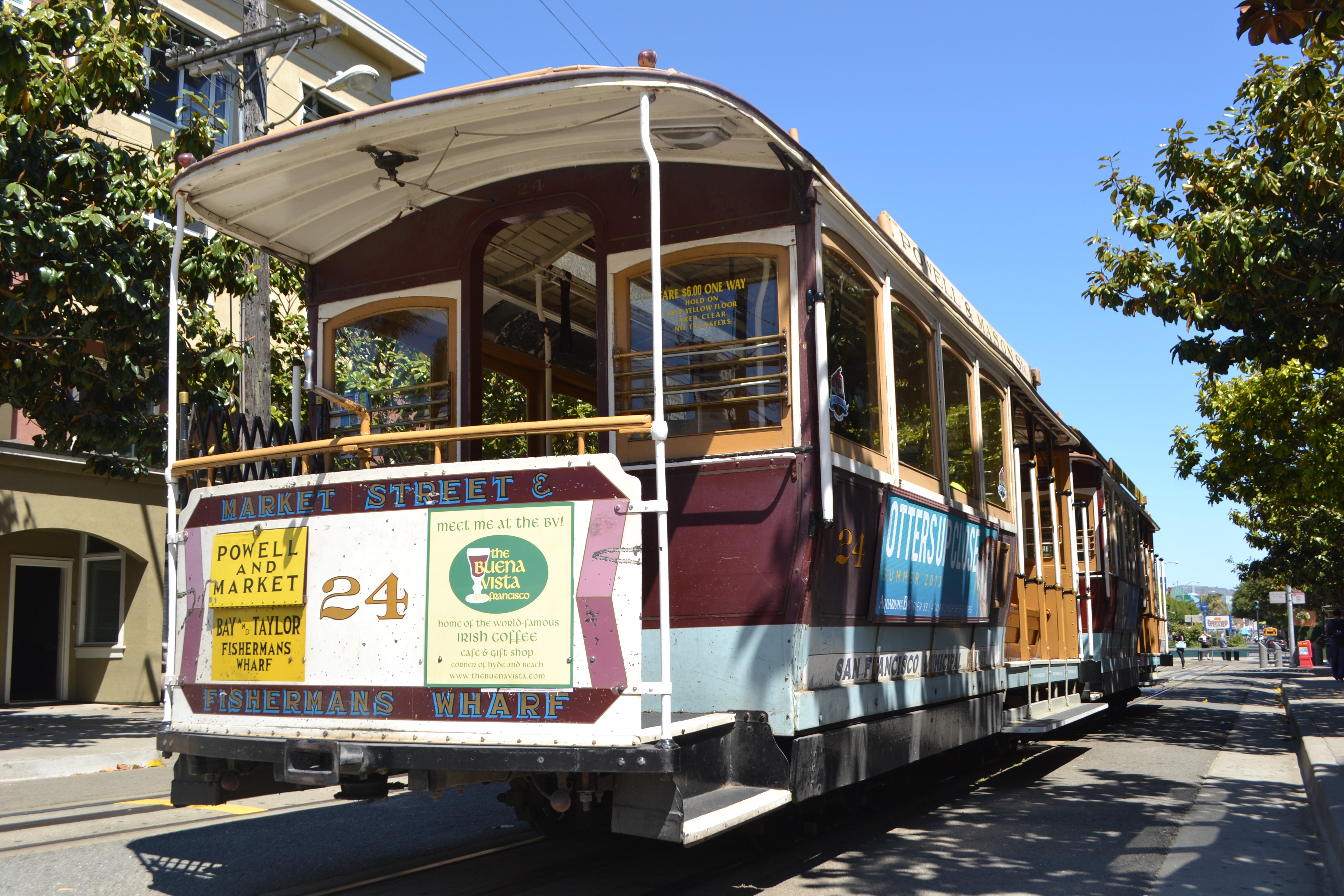
The cable cars would never have survived in Britain. The unsmiling grey people who make the important decisions would have killed them off long ago. Inefficient, an accountant would have sniffed: they need two people to operate them instead of one. Dangerous too, a health and safety officer would have added: someone could jump or fall off the platform and go under the wheels and get squashed and sue us. They would have gone to the scrappers with London’s Routemaster buses.

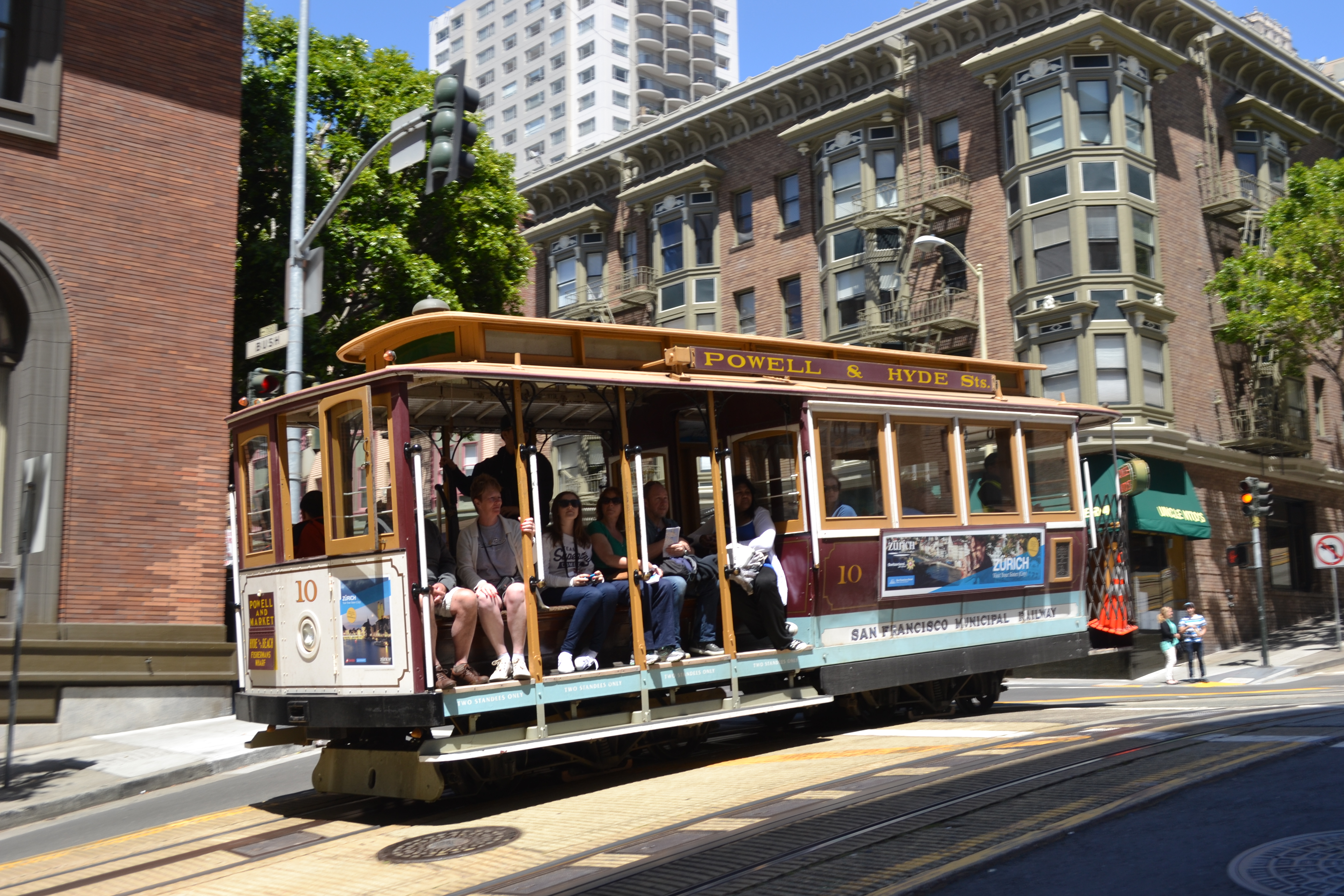
It almost happened in San Francisco in the late 1940’s, when the cable cars were coming up to 75 years old; but a citizen’s committee forced a referendum and won it. The cars are a National Historic Landmark now and, much as it might be a tourist cliché, few visitors leave without riding one.

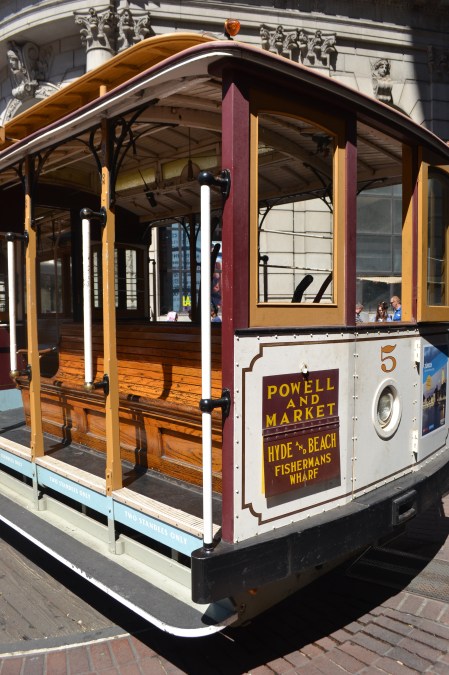
You have to wait in line for an age at the terminus up near Fisherman’s Wharf, but a car will eventually trundle down the hill and onto the wooden turntable set into the road. The stocky gripman and skinny conductor will jump out, lean against it and shove it round to face the other way. It is delightfully archaic.

DSC_0937

You stand on the platform and hang on to the pole in the open doorway. The conductor dings the bell and the gripman tugs on hefty levers and the car jerks forward and climbs through North Beach to the summit of Columbus Avenue and begins its descent downtown. Tourists whoop and scream as the car tips into the dizzying hills, as if they really believe you could fall off the edge of the world in the heart of an American city. But the gripman has the lever hard back so the car never gathers much speed, except on one or two corners when he lets it go so it can build up the momentum to get round.

Then down, down, down, stopping at each block, as the gripman calls out the street name and some passengers jump off and some climb on; then clanking past Chinatown, glimpsing the other suspension bridge, the one no one cares about because it is not funky orange; tourists genuflect in the street to get action shots as the car rolls towards them, the gripman rings the bell to get them to move; and then on and down to the turnaround at Market Street in a quiet corner of the Tenderloin.

It would, in truth, have been quicker to walk, much quicker to take the bus. But it would not have been half as much fun.

DSC_0745

(c) Richard Senior 2014
Zanzibar Night Market

DSC_0041

When the sun goes down, trestle tables go up in Forodhani Gardens in the middle of Stone Town in Zanzibar.

The tables are filled with lobsters, gleaming white squid, fat octopus tentacles, kingfish, marlin and tuna. Dozens of vendors light charcoal grills and wheel in juice presses like old-fashioned mangles. The crowds swarm in and jostle each other and the vendors shout and orders are placed and fish is thrown onto the grill. The juice man works at pit stop speed, forcing sugar cane through the press, folding it, forcing it through again, then again, and again, until it has given up all of its juice. Then he mixes in lime and ginger.

Squid is deceptively hard to get right. So many restaurants cook it too long, or not long enough. But the grill man knew better than that. He sliced it up with a few quick strokes and tipped it onto a paper plate with a handful of salad and a good squirt of chilli and tomalley sauce. He owed me some change but talked me into settling for a coconut bread. I ate the squid and the bread as I looked round the rest of the stalls, then replaced them with kingfish and green pepper skewers.

(c) Richard Senior 2014