Night Bus to Bangkok   

DSC_0061       

They told me that the trains were all fully-booked, but I had heard that before in Thailand.

It usually just means that you have to go out the station and down a side street to an agent who will – for a price – get a ticket biked over from goodness knows where. But the crowds who had flocked south to spend New Year’s Eve on the beach were now going home and, this time, the trains really were fully-booked. All that the fast-talking agents could offer was a seat on the VIP Bus.

A minibus collected me from Nopparat Thara in the middle of the afternoon and dropped me at the interchange in Krabi Town, where a confusion of travellers sat hugging their backpacks with fluorescent dots on their singlets.

Buses came and buses went. The staff shouted, flung their arms in the air and darted about. Travellers got up, looked around uncertainly, and hurried to the bus, but most were turned back because their fluorescent dots were not the right colour.

Orange was the wrong colour several times, until, eventually, a bus came to take me as far as Surat Thani on the opposite coast, where I arrived in a tropical storm. The rain drummed on the tin-sheet roof as I waited; water advanced across the floor. Travellers lifted their feet and hoisted their backpacks onto spare seats.

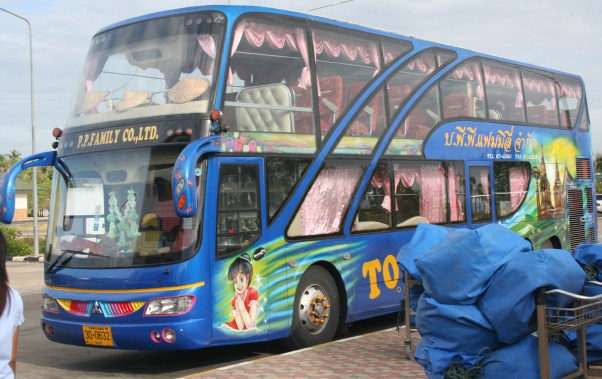
The VIP bus was a big six-wheeled, double-decker coach with luridly airbrushed flanks, similar to the one below. There were no frills beyond reclining seats and curtains to pull across the windows.
Thailand_-_Night_Bus

I could no more sleep on a bus than compose a piano concerto, but that was okay because I had a pile of books for the journey. Then the driver turned off the roof lights and I flicked the switch for the reading lamp and nothing happened. Twelve hours, then, of lampposts, signs and crash barriers.

It was sometime around midnight, I think, when we pulled into the services with dozens of similar buses, all heading north to Bangkok and beyond. I threaded between them and went inside, then realised I had no idea which bus was mine. I had a feeling it was red, but it might have been blue, unless that was the one I had taken to Surat Thani, and I thought it was somewhere around halfway down the third, or fourth, or possibly fifth, line of buses, but several had come and several had gone in the meantime. I blundered from bus to bus, looking for clues, and found mine largely by chance. It was yellow.

Hours later, when I was about the only passenger still awake, we pulled into a lay-by behind a van, and I could see people milling about and hear conversation and lockers being opened and shut but could not work out what was happening. I thought it was the police, then I thought it was hijackers, then we set off again and I thought no more about it.

At something to five, I spotted tuk-tuks and temples and then the roof lights came on and the woman doled out hot towels and we stopped and the doors hissed open.

The bus was supposed to run to Khao San Road, the main street of the backpacker ghetto, but the place we stopped looked alien to me in the pre-dawn gloom through the fog of a sleepless night. I was mobbed by tuk-tuk drivers clamouring for business when I tried to get my bearings, so I ducked down an alley between rows of closed shops and came out into another road and tried again to work out where I was.

What street’s this?” I asked another traveller.

Khao San Road, man.”

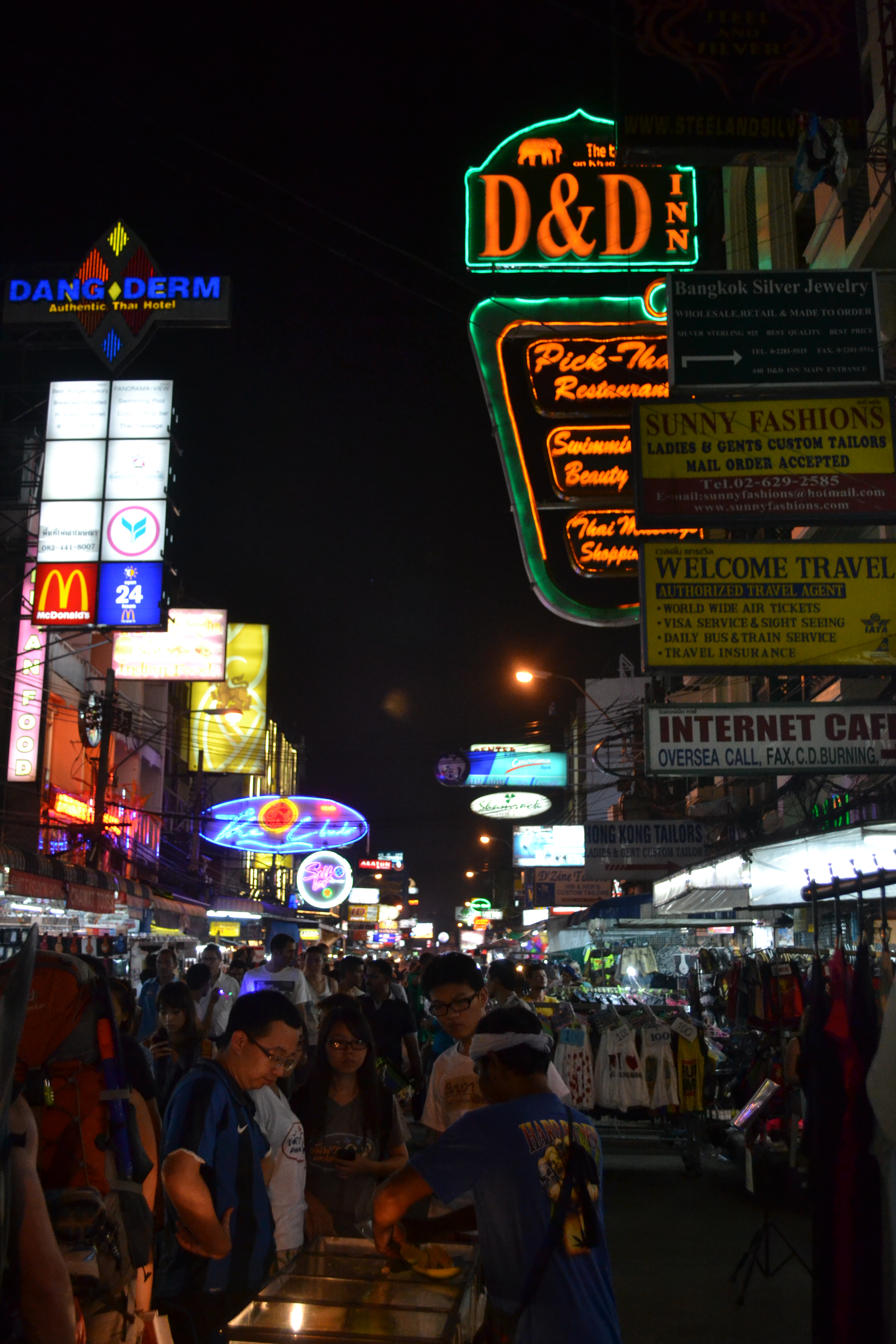
I had walked down it dozens of times, but from early in the morning to late at night, it had always been crowded with travellers and hawkers and tuk-tuks and taxis and big neon signs and bustling bars; and now in the silent early hours, with everything shut and the lights all off and the travellers sleeping and tuk-tuk drivers busy with buses arriving a block away, it was an altogether different street.

I checked into a guesthouse and opened my backpack and saw that the string I never bother to fasten had been neatly tied in a bow, and I worked out, then, why we had stopped in the lay-by.

© Richard Senior 2015

Bus image: By Flying Pharmacist (Own work) [GFDL (http://www.gnu.org/copyleft/fdl.html) or CC BY-SA 3.0 (http://creativecommons.org/licenses/by-sa/3.0)], via Wikimedia Commons
A Spin and a Soaking in Sydney Harbour

rsz_jet_boat_sydney_harbour_15967179529_1

I sat in the sun on the edge of the jetty while I waited for the boat to come in. But they made me get up and stand behind a fence to avoid the small risk that I might, somehow, fall in the harbour.

I had forgotten all that. I had been in Southeast Asia for the past three months and no one, there, stops you from doing things because they might be dangerous. You are allowed to – have to – gauge risks for yourself, like an adult. But I was in Sydney, now; back in the developed world, where  you are forever being politely pushed about:

Could you put your seatbelt on please … take your bag off the seat … can you pop that in the cloakroom … please don’t touch that you’re not allowed up there … excuse me, that’s not safe … can you move back towards the wall, if you don’t mind… due to safety regulations… stand in a line, please … for the safety and comfort of all our passengers … could I see your ID again…and, erm, if you wouldn’t mind just WAITING there….

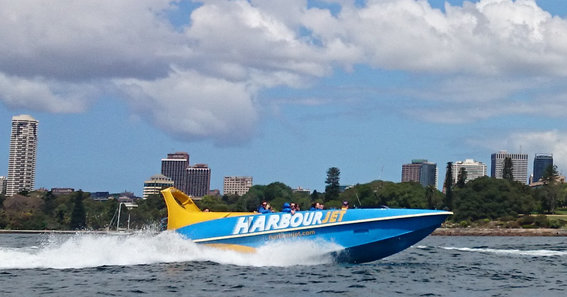
The jet boat had the pugnacious look and deep-throated growl of a racing powerboat, but worked like a jet ski with a big inboard motor which forced water from under the hull out the back. It went like stink, stopped in its own length and could be encouraged to spin like a coin on a table.

EDM pumped from the speakers at the back; the passengers punched the air. The skipper eased out of the harbour, past the Opera House, into open water, soundtracked by Avicii’s Levels. He whacked open the throttle, the motor snarled, the boat stood up on the plane and lunged towards the Heads. Then he flung the wheel over to starboard and held it in a tight turn while the passengers, feeling the G, gripped the bars on the seats in front; and straightened up, hurtled forward, and flung the wheel over to port.

Straightening up again then, and pounding ahead, the skipper chopped the throttle and locked the wheel and the boat whirled round its axis, sending a mini-tsunami over the whooping, shrieking passengers. Throttle back open, streaking across the bay, a brutal crash stop, an incredible deceleration, like nothing I had experienced before in a boat or car; another wave consuming us; soaked through to the pants.

Throttle wide open again, on course to ram the Manly ferry, then skidding away; then spinning around a buoy; more spins, more crash stops, more screams, more whoops, more Avicii, more soakings, then slowing and sliding back into harbour.

I peeled off my t-shirt, wrung out a gallon of water and drip-drip-dripped up the quay.

© Richard Senior 2015

Image: By FotoSleuth (Jet Boat Sydney Harbour) [CC BY 2.0 (http://creativecommons.org/licenses/by/2.0)], via Wikimedia Commons (cropped from original)

Eating up Vietnam #1: Saigon

pho-263127_1920

There was a phở shop on the corner down the street from my guesthouse with open sides and wobbly tables on the pavement outside.

I sat at one and ordered phở tái, which the menu translated as “beef soup noodle with half-done beef,” and a Bia Saigon and watched the street vendors pushing carts and carrying yokes and the xe-om* riders hustling for business and a guy slowly pedalling around the block and shaking a rattle which sounded like a maraca. It puzzled me what he was trying to sell and I stopped him, later, and asked. “Lady massage,” he said, “you want?”

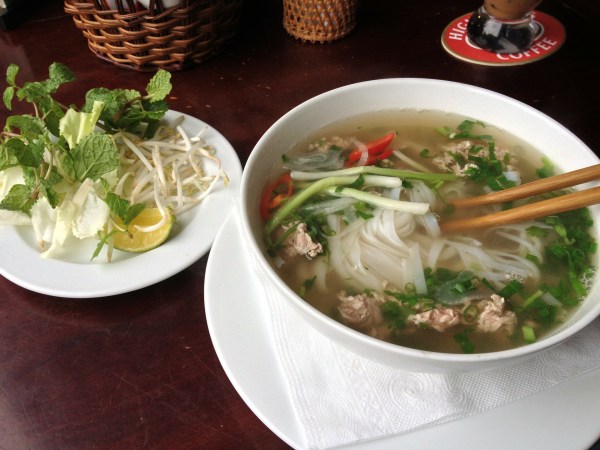
The beer came first, then a big plate of herbs, another of bean sprouts and a third with sliced chillies and quartered limes; then a tray of condiments: hoi sin and chilli sauces in squeezy bottles, dark soy sauce in a jug and thick chilli paste in a ramekin. Then came the phở: a great steaming bowl of broth extracted from beef bones, ox tail, flank steak, charred onions and ginger, cinnamon, cardamom, star anise and cloves, poured over flat rice noodles and strips of rare beef, and garnished with sliced spring onions.

Flickr4062448221

I ate phở often as I travelled through Vietnam, elsewhere in Saigon, in Hoi An – where I learned how to make it – and finally in Hanoi; but it is different and better in the South and best at the phở shop on the corner down the street from my guesthouse.

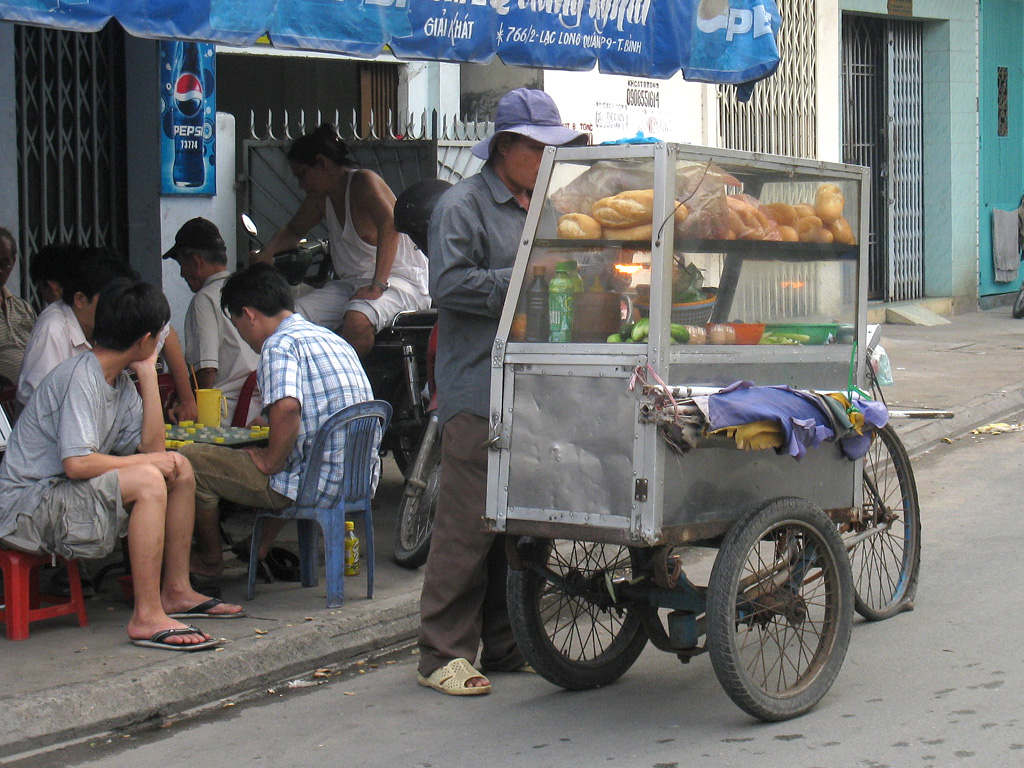
On every other street in Saigon, in the Phạm Ngũ Lão backpacker area, to the north around the museums and to the east in amongst the modern corporate blocks, there are vendors selling bánh from carts. They are sandwiches, in essence, French in inspiration, Vietnamese in execution.

Take a classic baguette, but made with rice flour and lighter than normal, slather it with mayonnaise and hot chilli sauce, then stuff it with shredded, pickled carrot and daikon, sliced cucumber, coriander leaf and some combination of pâte, roasted belly pork, fromage de tête and Vietnamese sausage. I had bánh again and again in Saigon and never got bored of it because each vendor does it differently.

If not bánh for lunch, then spring rolls. That can mean one of two things in Vietnam, and neither is much like the stodgy, finger-sized snacks served in Anglo-Chinese restaurants. There are gỏi cuốn, or ‘fresh’ spring rolls, with shredded carrot and cucumber, chopped mint, onion flakes and cooked prawns rolled in a moistened rice paper and served as it comes; and there are chả giò, or fried spring rolls, with minced pork, shitake mushrooms, diced carrot and cellophane noodles wrapped in a moistened rice paper and deep-fried to a texture like filo pastry. Both are served with a dipping sauce with lime juice, fish sauce, sugar, chilli and garlic.

Noodles soups, rice papers, an abundance of herbs, sharp flavours used judiciously. The menu changes as you travel through Vietnam but the same themes recur: always the same freshness, always the same lightness.

© Richard Senior 2015

*Motorcycle taxi

Pho image via Pixabay

Banh mi image: By Hiển Chu (flickr user “chuhien”) [CC BY 2.0 (http://creativecommons.org/licenses/by/2.0)], via Wikimedia Commons

The Breakaway Republic of Užupis

DSC_0864

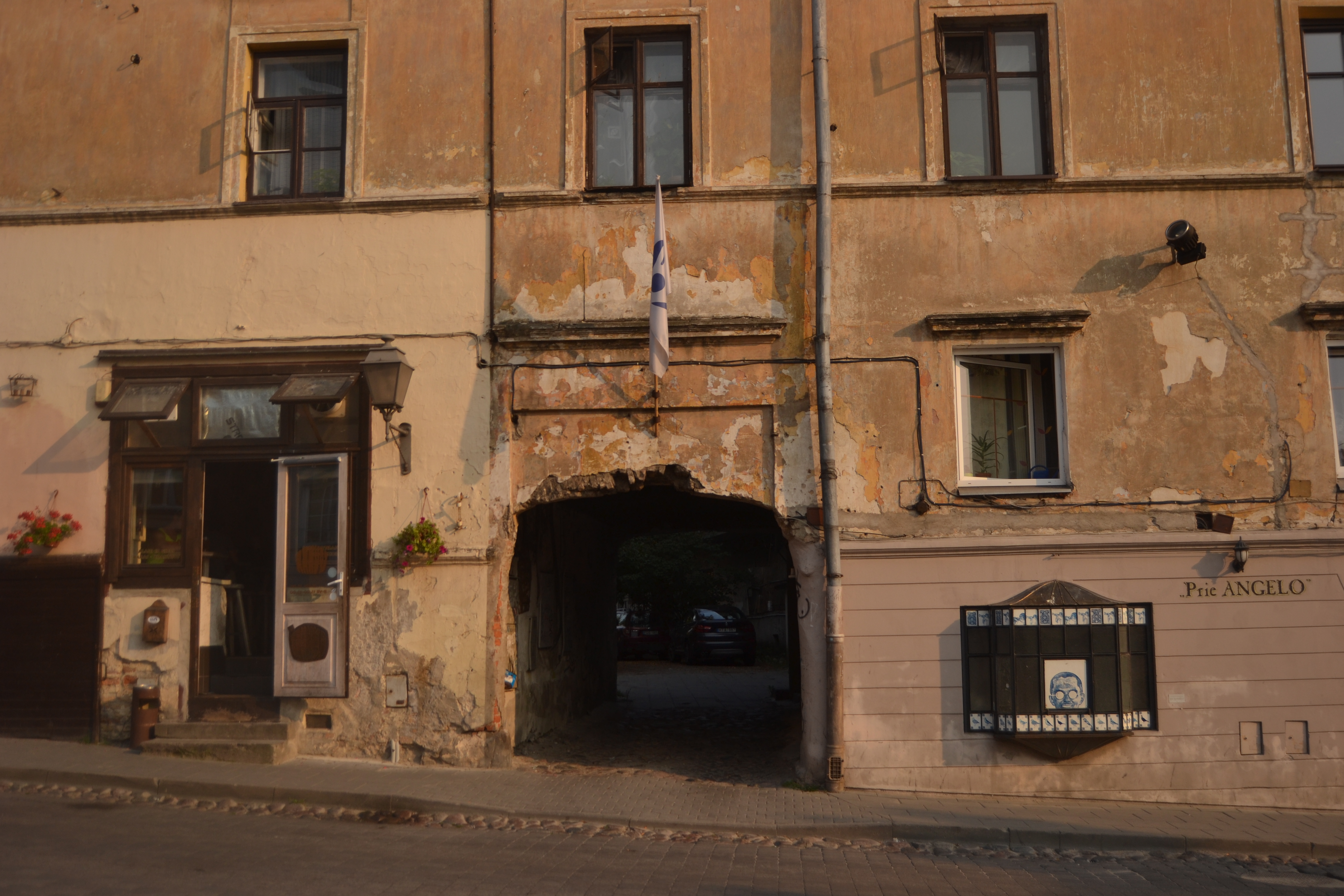
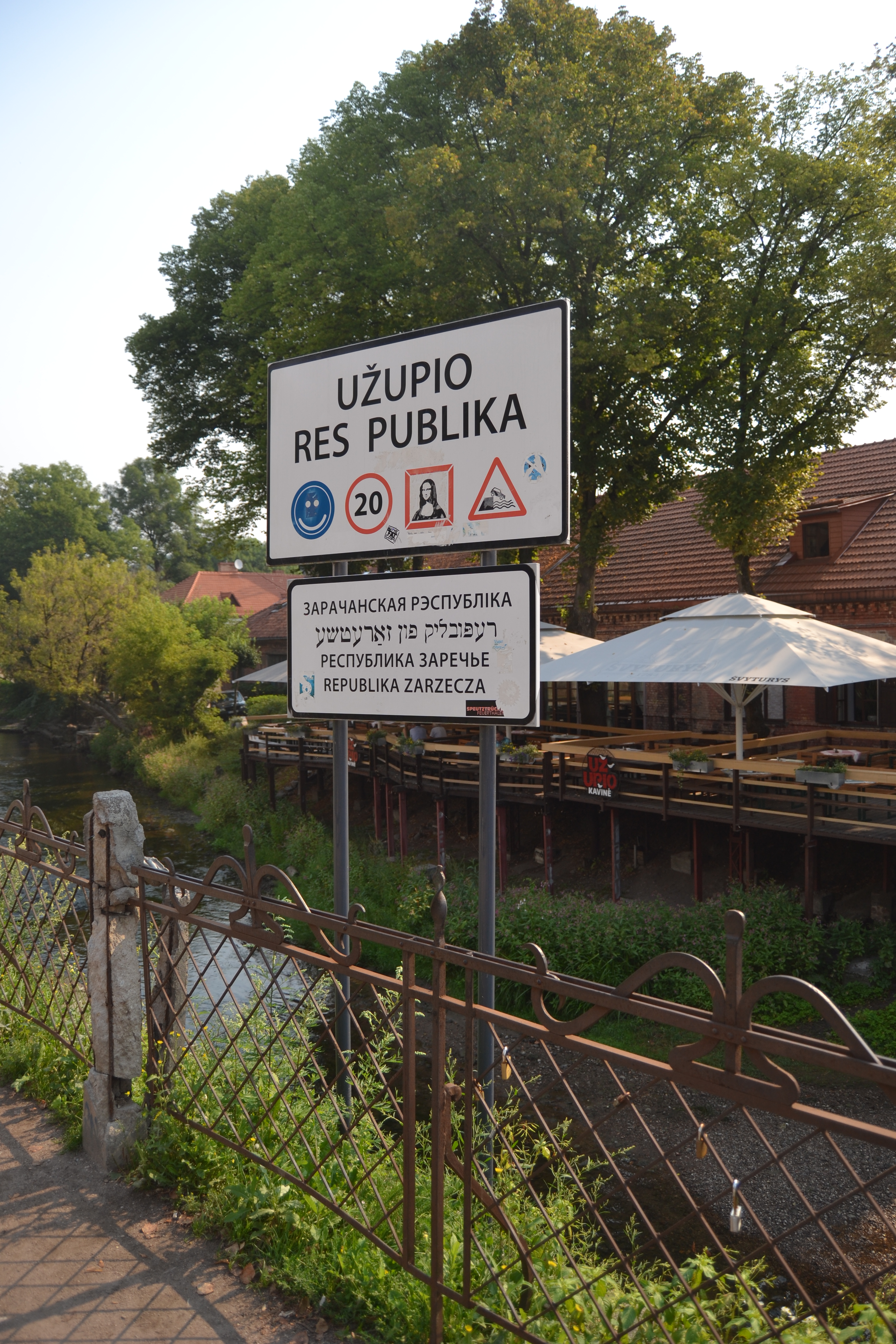
Užupis was the bohemian quarter of Vilnius, until 1997 when it declared itself an independent republic.

It was a peaceful secession, unlike Lithuania’s from the Soviet Union. No tanks rolled over the bridges across the Vilnia River. Lithuanian troops never engaged the 12-man Užupian army. The authorities did not tear down the Užupian flag (a hand with a hole in it against a background whose colour changes with the seasons). They stood by as the self-declared president appointed a council of ministers, and the new government erected signs either side of what it claimed as the international border.

But neither Lithuania nor anyone else recognised the breakaway state.

DSC_1001

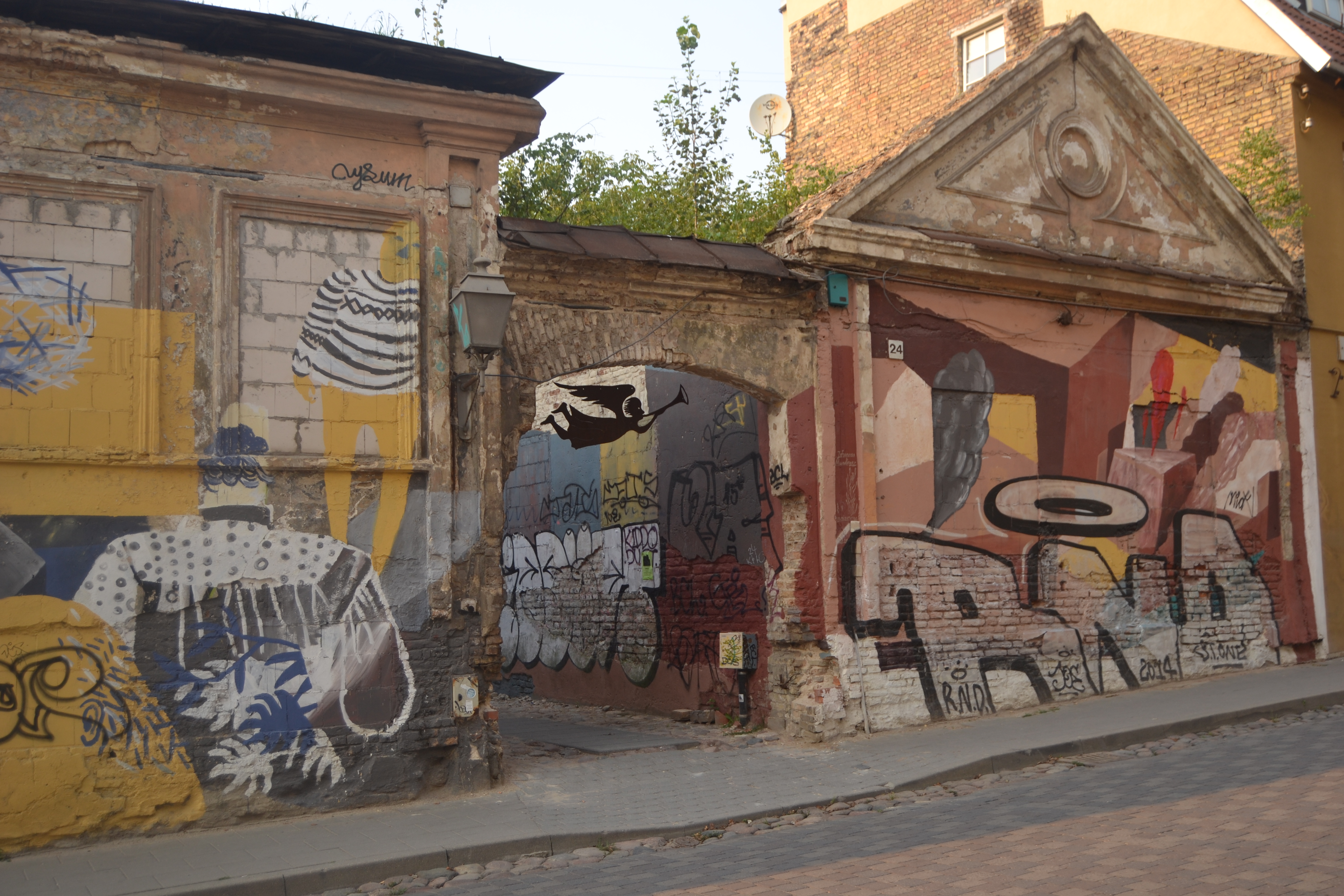
Užupis still has the broken-brick, rotten-wood, flaking-paint post-Soviet shabbiness which has mostly been gentrified out of the Baltic states, now; but there is a cheerful, arty atmosphere amid the dilapidation. The hipsters who drink at the fashionable bars coexist happily with the marginal types who squat in the crumbling apartments. Artist and Drunkard are popular occupations.

There are no multinationals here; not even Subway, KFC, Costa and Tesco, which all must have outlets on the moon. The businesses there are, a convenience store, a dentist, a café, and several bars, restaurants and galleries, are local concerns. Most have Užupis, or some derivation, in their company name; many fly the national flag.

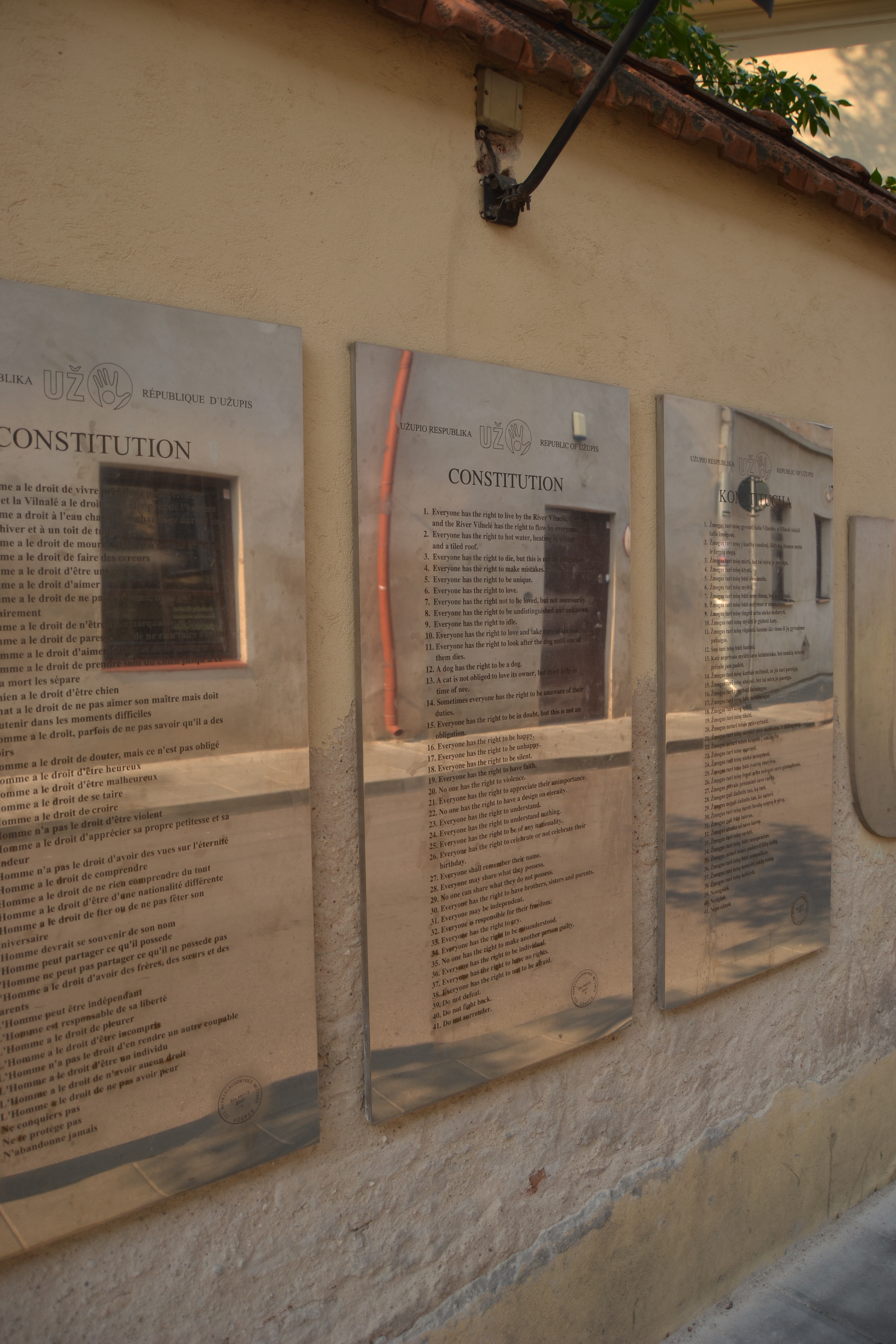
On one wall on a side road just off the main street, there are stainless steel boards engraved with the constitution in 23 languages. It is unlike any other constitution.

DSC_0857

The world would surely be a nicer place if all governments acknowledged that “Everyone has the right to love,” “Everyone has the right to be happy” and “Everyone has the right not to be afraid”. The idea would, of course, enrage the icy-hearted misanthropes who write for the tabloids. That is reason alone to promote it.

All constitutions should recognise that “Everyone has the right to love and take care of a cat” and, correspondingly, that “A cat is not obliged to love its master, but it must help him in difficult times”. Likewise that “Everyone has the right to look after a dog till one or the other dies” and that “A dog has the right to be a dog”.

Yet it is not all so enlightened. “Everyone shall remember his name” could lead to grave injustice, particularly on a Saturday night.

DSC_1017

For 364 days of the year, the borders with Lithuania are as open as any in Europe, outside countries like Bosnia, Belarus and Britain. But once a year, the authorities post guards on the bridges to check and stamp passports.

It is done symbolically to mark Independence Day, which falls on the 1st of April: a clear indication – if any were needed – that the founding fathers were not so much fired by patriotic zeal as kind of taking the piss.

© Richard Senior 2015

Random Shit from around the World

„Ripley’s_Believe_It_or_Not!“_-_Museum_in_Atlantic_City,_NJ

  • Only English-speaking dogs woof-woof (very posh British dogs bow-wow). Polish dogs how-how. Thai dogs hong-hong. Israeli dogs hav-hav.
  • Yet most of the world’s cats meow, albeit may not spell it as ours do.
  • The gesture which means “a table for two please” in Tokyo means “fuck off” in London.
  • And the gesture with which you ask for the bill in Japan is used jocularly in Britain to suggest warding off the devil. If you used it in the same context, it would mean that you found the waiter repulsive or annoying. Mind you, if the first thing you did when you walked into the restaurant was to tell him to fuck off, he might not be too surprised.
  • The thumbs up gesture, as in Facebook likes, means “up yours” in parts of the Middle East. Hitchhikers will not get far with it.
  • There is a bust of Frank Zappa on public display in Vilnius, Lithuania, although he never visited the country and has not the slightest connection with it.
  • Number four is unlucky in Hong Kong and many buildings jump straight from the third to the fifth floor. High-rise blocks sometimes miss out all floor numbers with a four in them, so a 36-storey building might have a 50th floor.        
  • In much of Northern Europe, it is customary to strip off before using a sauna or steam bath. Try it in Britain, though, and you are likely to be arrested.
  • Australia boasts the world’s largest artificial trout, artificial prawn, artificial banana, and artificial potato, while South Africa has the largest artificial pineapple, Canada the largest artificial mushroom, and New Zealand the largest artificial carrot.
  • Baseball is hugely popular in Japan. It is screened in bars much as football is in Europe.
  • The United States, Burma and Liberia are the only countries not to have adopted the metric system. However, while it has been officially adopted in the UK, imperial weights and measures are still commonly used, and many British people use a hybrid system, for example weighing their suitcase in kilogrammes and themselves in stones.
  • No one outside the UK, Australasia and the Irish Republic has a clue what a stone is.
  • Atchoo might be the default sneeze in the English-speaking world but it is no more an involuntary noise than hello, goodbye and thank you. The stock sneeze in Poland it is ap-sik, in Korea eitchee and in Japan hakushon. There are oddities though. My father sneezed in Japanese and my Australian friend sneezes in Polish.
  • The colour red suggests danger, passion and socialism in Europe, good luck and prosperity in China and Sunday in Thailand. Blue denotes depression, pornography and conservatism in Europe, immortality in China and Friday in Thailand. (Thais have a colour for every day of the week.)
  • In the 1970’s a Finnish politician proposed, as an austerity measure, to stop buying Donald Duck cartoons for youth centres. It was mischievously reported that Donald Duck had been banned on moral grounds because he goes about without trousers on. It remains a popular urban myth.
  • However, just last year, Winnie the Pooh was rejected as a mascot for a Polish playground on much the same moral basis.
  • In Japan, you can smoke in restaurants but it is illegal to smoke on the street. It is generally the other way round in Europe.
  • The Vietnam War is known as the American War in Vietnam. World War II is (in some contexts) known as the Great Patriotic War in Russia.
  • In Thailand, you could – until the laws were tightened this year – buy alcohol from a shop at any time of night, and early morning, but not during the day. In much of Europe, you can buy it at any time of day but not after 8pm (Norway), 9pm (Finland), 10pm (Russia) or 11pm (UK).
  • The English football league club, Arsenal, has widespread support in East Africa. Its logo often appears on buildings and vehicles and its name is annexed by cafes and such like across Kenya and Tanzania.
  • Beer, cigarettes and hot coffee in cans are all widely available from street vending machines in Japan.
  • Ibuprofen, routinely sold in supermarkets in Europe, is a controlled drug in Hong Kong. Yet the strong painkiller Diclofenac can be bought over the counter.
  • The Da Vinci Code was banned in Lebanon, for religious reasons rather than because it is so badly written. Animal Farm has been banned in just about every authoritarian state, whether communist or not, from the Soviet Union onwards.

© Richard Senior 2015

Image: By W. Reichmann (Own work) [CC BY-SA 3.0 (http://creativecommons.org/licenses/by-sa/3.0)], via Wikimedia Commons
Reading Round the World

image3

In Thailand I started with the backpacker novels. Alex Garland’s satirical classic, The Beach, is a useful guide on how not to travel: cocoon yourself with other Westerners, see little of the country, experience nothing beyond the beaches and drugs, never interact with locals, and feel smug and superior all the while.

Richard Arthur’s I of the Sun is more inspirational, although I had covered much the same ground as the narrator by the time I read it. The novel well captures the moodswings of long-term travel: the conceit, one minute, that you have got some rare insight into the local culture, and the realisation, the next, that you know nothing; and the way that you go from being forever impatient to move on to the next town, the next country, the next continent, to hardly being bothered to leave the guesthouse for days on end.

I had never heard of John Burdett until I found one of his Sonchai Jitpleecheep novels in a book exchange on Phi Phi. They are just detective stories, but then you could say that about Chandler too, and they are written well enough and contain more insight into Thai culture than a thousand pieces about “Nineteen Things to Do in Bangkok,” or whatever.

James Eckardt’s The Year of Living Stupidly careers from Bangkok via Phuket to Phnom Penh and took me across the border from Thailand to Cambodia. Once there, and in a radical shift of mood, I started reading Loung Ung’s harrowing account of a childhood under the Khmer Rouge, First They Killed My Father.

In Saigon, it was predictably Graham Greene’s The Quiet American; and that led me on to a bootleg copy of Michael Maclear’s The Ten Thousand Day War, which I bought from a beach vendor in Nha Trang, and in turn to Bao Ninh’s The Sorrow of War, which tells the familiar story from the forgotten perspective of the North Vietnamese conscript: not the fanatical communist usually portrayed but a scared, cynical kid, like the GI’s on the other side.   

In Laos, it was Another Quiet American, Brett Dakin’s account of the two years he spent living in Vientiane and working for the Lao Tourism Authority. It was going on fifteen years since he had written it and it was equally remarkable to see how much had changed as how much had stayed the same.

I turned to old favourites in the States: Hunter S Thompson’s Fear and Loathing in Las Vegas in Las Vegas and Kerouac’s Big Sur in San Francisco. (I had read On the Road for the umpteenth time a few months before.)

image1 (8)

Che Guevara’s Motorcycle Diaries and Matthew Parris’s Inca Kola saw me through Peru and Bolivia, and I had just started Isabel Allende’s The House of the Spirits when I crossed into Chile. Her memoir, My Invented Country, and Marc Cooper’s Pinochet and Me kept my head in Santiago when I got home.

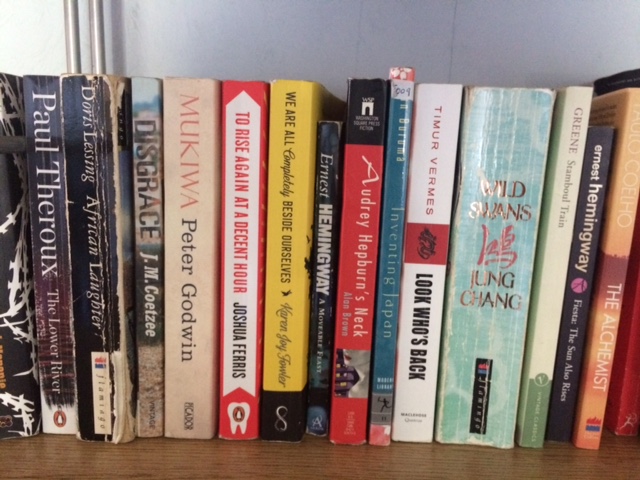
Hemingway was inevitable in Kenya and Tanzania: The Green Hills of Africa and The Snows of Kilimanjaro. Then in Malawi, Jack Mapanje’s And Crocodiles are Hungry at Night taught me a lot I did not know about the paranoid regime of Hastings Banda, while Paul Theroux’s The Lower River made me paranoid about present-day Malawi.

I had read NoViolet Bulawayo’s We Need New Names, set against the eviction of white farmers and beating of opposition supporters, before I went to Zimbabwe, and read Doris Lessing’s African Laughter – written in the early, optimistic Mugabe years – while I was there. I topped that up after I came home with Lessing’s The Grass is Singing, Peter Godwin’s Mukiwa and The Fear and Alex Fuller’s Let’s Not Go to the Dogs Tonight. In South Africa, then, I read JM Coetzee’s Booker-prize-winning Disgrace and, around the time I saw the cell on Robben Island where he started writing it, Nelson Mandela’s Long Walk to Freedom.

Ian Buruma’s Japanese Mirror is dated now but still relevant. It explained idiosyncrasies like the wearing of white gloves by police officers, train dispatchers, taxi drivers and so on (a symbol of purity, apparently). I had moved on from Tokyo by the time I started Alan Brown’s novel, Audrey Hepburn’s Neck, but whenever I picked it, I was taken back and reminded of details like the cans of hot coffee in vending machines on every street corner.

I was a Law student, like Raskolnikov, when I first read Crime and Punishment, but I bought another copy in St Petersburg at the iconic House of Books on Nevsky Prospekt and re-read it as I walked the streets which Dostoevsky alludes to. By the time I got to Moscow, I had moved on to Martin Sixmith’s compelling history simply named Russia.

Now, freshly home from there, I have a pile of Bulgakovs, Gogols, Pasternaks and Solzhenitsyns to work through.

© Richard Senior 2015

Eating at Yatai in Fukuoka

DSC_0146

There are few sights in Fukuoka, although there is a handful of heritage buildings, a pleasant park and the remains of a castle, as well as the endless scope for immature sniggering at a name which begins with ‘fuck you’. But there are well over a hundred yatai.

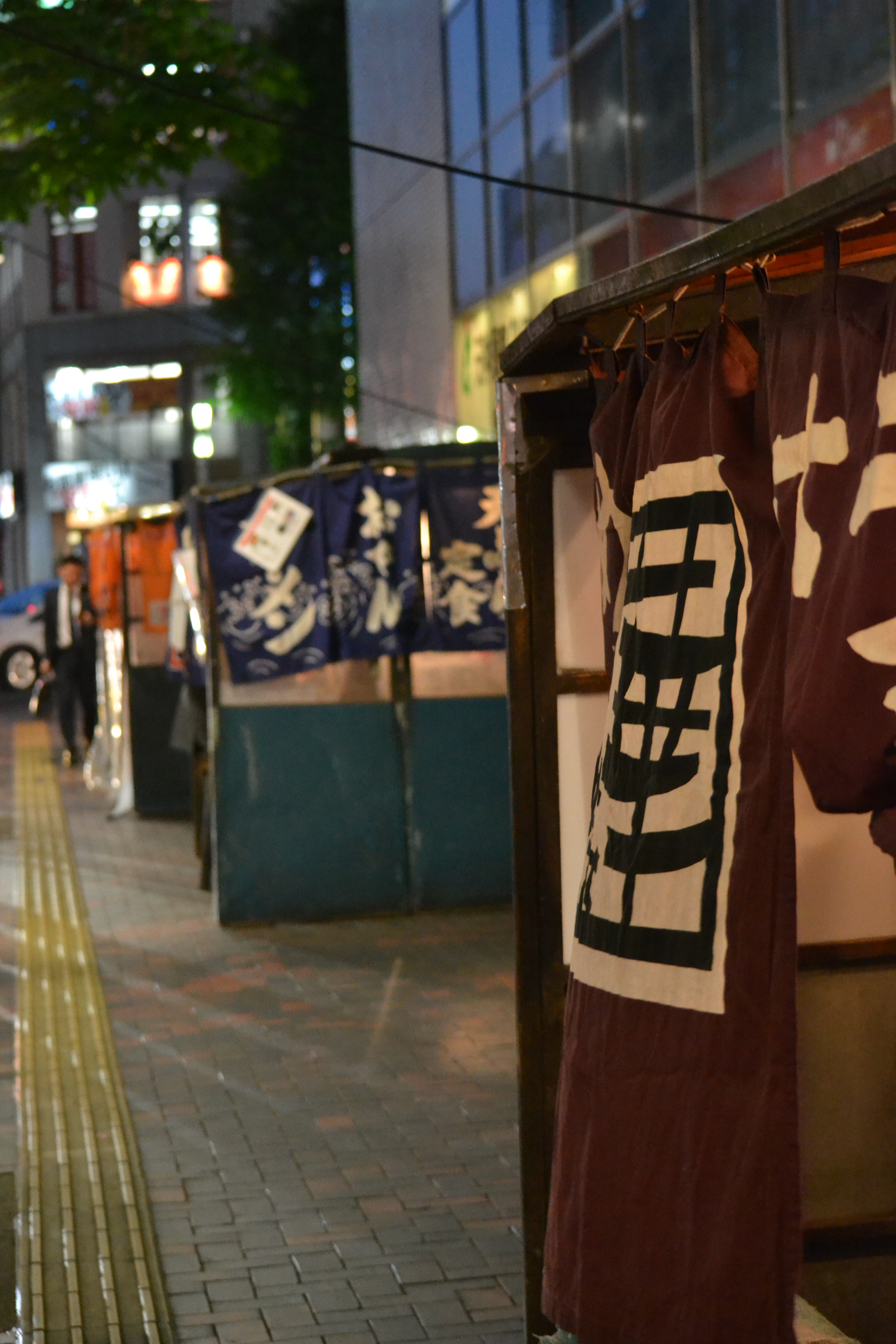
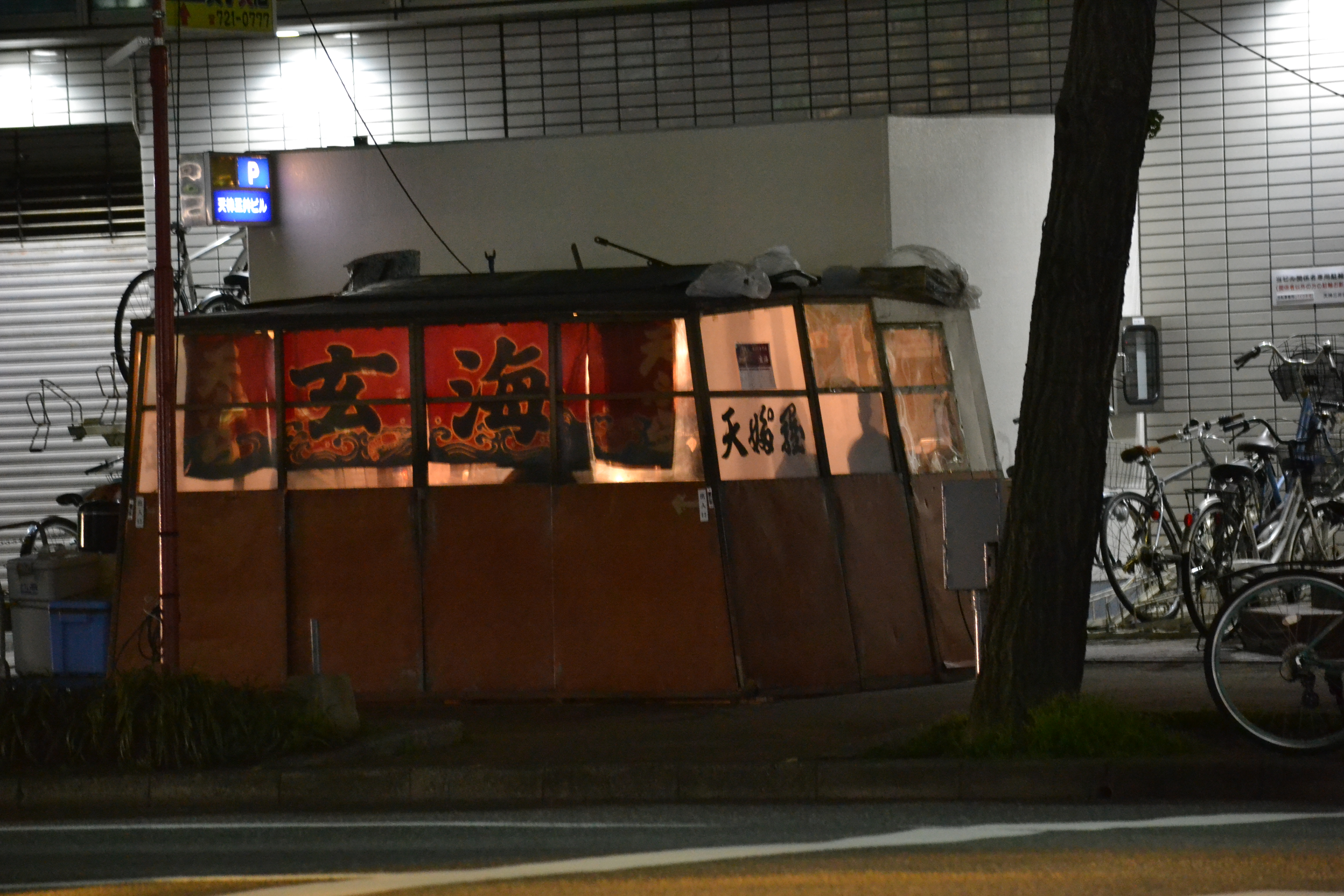
At nightfall, outside the big stores on the main shopping streets, vendors drag trailers up onto the pavement and convert them, Transformer-style, into pop-up restaurants. Yatai, they call them.

DSC_0157

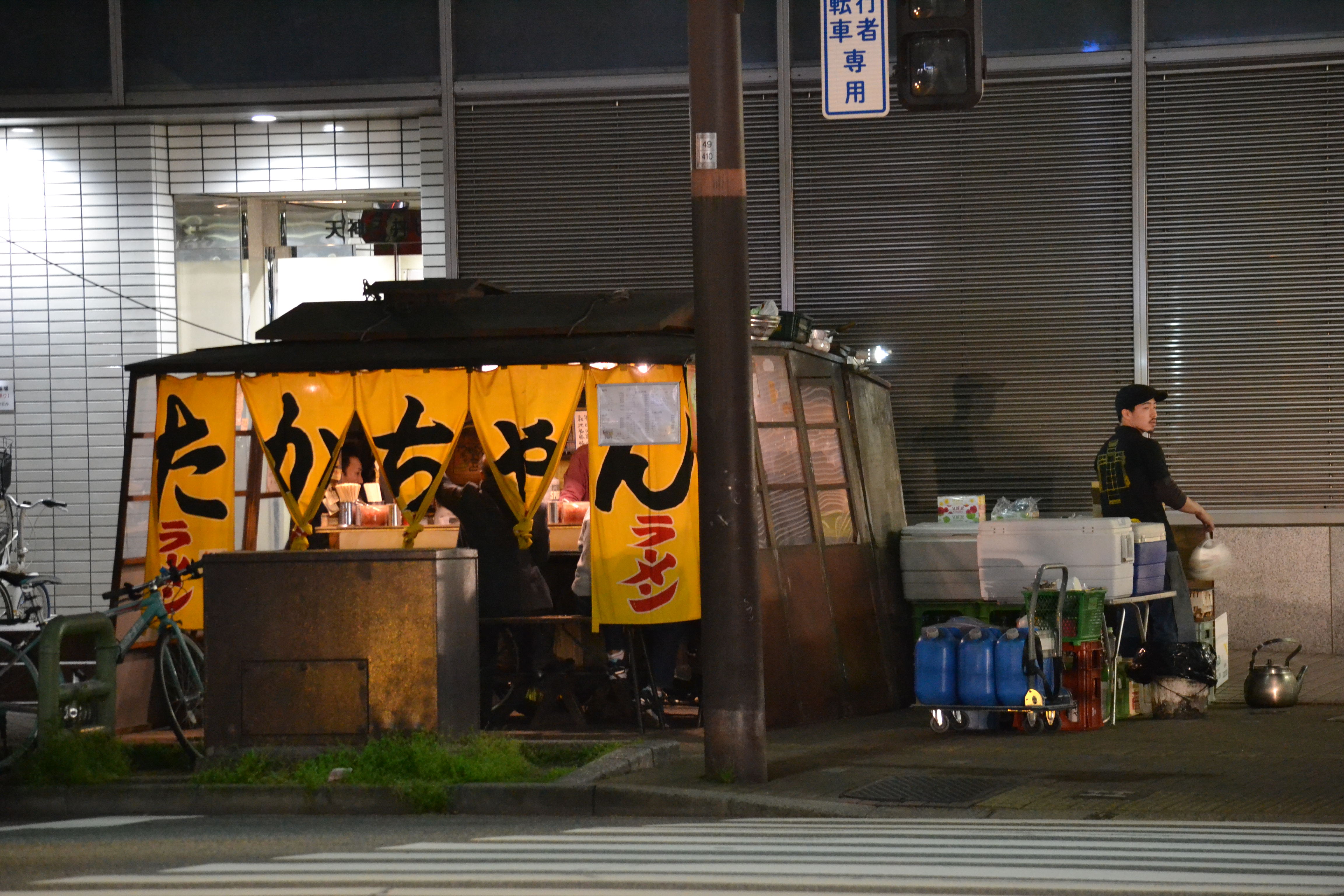
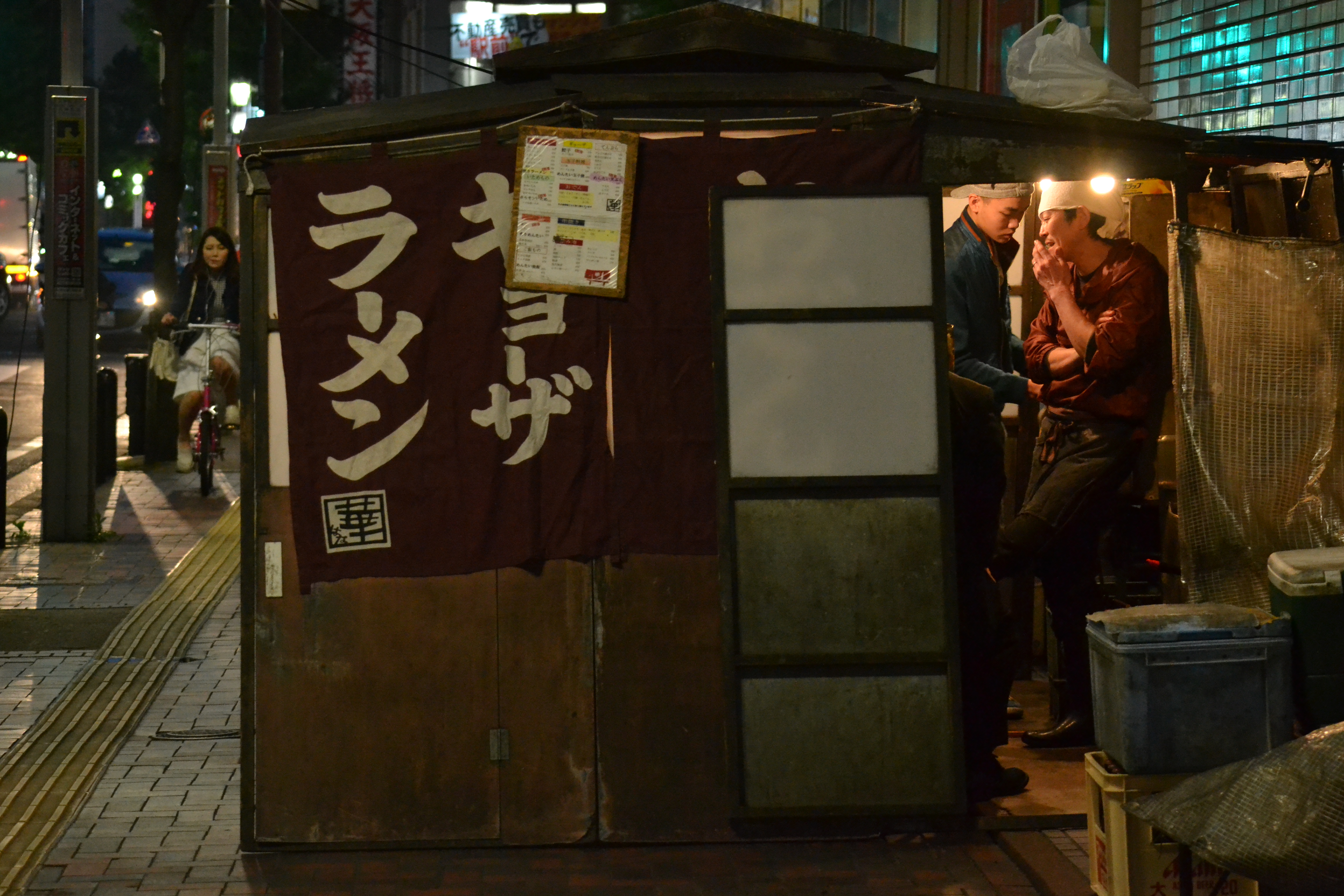
From the outside, they look like workmen’s huts, or makeshift shelters for the homeless, with walls and a roof made of rough wooden sheets and opaque plastic windows. Some are open at one side, some have a curtain made of fabric or plastic, while a few have a proper door.

It is hard not to feel as if you are intruding when you push the curtain aside and take your place at one of the half dozen or so stools round the counter. You will almost certainly be the only foreigner. The other customers will probably be suited salarymen stopping off after work for a snack and a few glasses of shōchū. The chef is unlikely to speak any English; if you are lucky, there might be some English on the menu, and if very lucky it might make sense. A lot of the time, though, you are reliant on pointing, miming, taking pot luck or asking for something which you know they will have.

DSC_0155

There is more or less bound to be ramen, and Fukuoka has its own take on this iconic dish. The thick, unctuous broth is made with pork bones and caramelised onion and ginger, and cooked at a boil instead of a simmer, and served with thin noodles, red ginger, green onions and little puddles of black garlic oil. There will be yakitori, meatballs, gyoza dumplings and mentaiko, another speciality of the city: spiced and lightly-seared cod roe.

The first time I ate at a yatai, I sat with a group of salarymen, ties askew and several shōchūs into a bibulous evening, and one of them spoke excellent English – he modestly denied it – and guided me through the Japanese-only menu with suggestions on what to order. The next time, though, I was on my own but for a hit-and-miss app which could sometimes decipher Japanese script and, if it could not, just made something up. I hoped that the “fishermen with morning mist” was good and went well with the “toolshed drunk in water”. The weave of my t-shirt meant “eight,” the app told me in passing.

DSC_0143

The yatai stay open into the early hours but I dare say they are much like a British kebab shop later on when people tumble out of bars and decide they have to eat. They are packed up, then, and magicked away in that brief hiatus between the latest drinkers shuffling off home and the earliest commuters marching in to work.

Once the sun comes up, there is no sign that the yatai had ever been there.

© Richard Senior 2015

Staying in a Brothel by Accident

RedLightDistrictAmsterdamTheNetherlands

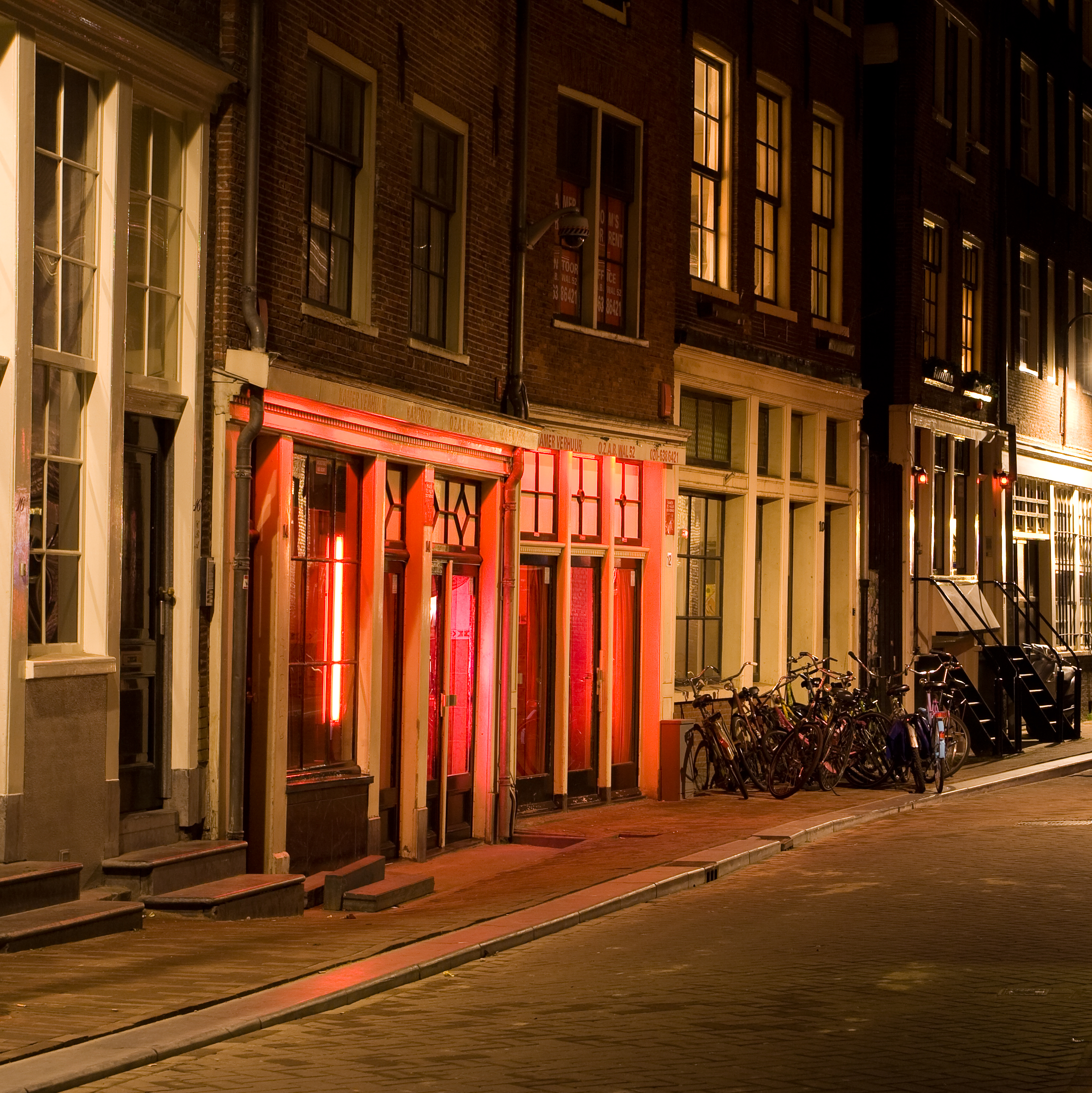
There was no sign for the hotel on the frontage, just a flashing neon sign which read “24 Hr Spa”. In case that was too subtle, a smaller sign read “men only” and – lest anyone still not get it – pulsating red lights traced the outline of the silhouette of a woman on the door.

I looked again at the email from the booking site, thinking that I had made a mistake, but the street number was right. I looked again at the frontage and this time spotted the word ‘hotel’ – отель – on one of the top-storey windows.

I was stopped at the door by a thick-set, close-cropped man who growled something in threatening Russian.

“Err…hotel?”

“Ugh. Hotel on fourth floor.”

It was an old, tall St Petersburg town house with a stone staircase which spiralled up the middle of the building and originally led off to apartments. On the landing of the second floor, there was a life-size cardboard cut-out of a smiling girl holding a sign which offered massages to men on the fourth floor. The fourth? On the third, there was more flashing neon, an arrow and the words “erotic massages for men” in English then Russian then English again. On the fourth, the signs pointed right to a spa and left to a hotel.

I turned left with misgivings, because the name was different from the one I booked and because I have never seen a hotel with a row of girls sitting in a corridor instead of a reception desk. But it was the wrong place anyway. They sent me across the landing to the spa, where there was a girl behind a bit of a desk in a bit of a dress and heels so high she probably had to have lessons in them.

Reach-ad?” she said.

Richard, yeah.”

A girl slinked down the stairs and loitered there until the ‘receptionist’ sent her away.

This is the hotel?”

“Da,” she said, as if it had not been a stupid question. “This is hotel. I show you room. ”

I followed as she clattered down the corridor past empty rooms with open doors and little inside except king-sized beds. There was one of those in my room, and a table, a kettle, an en suite and air con which, all in all, is a lot more than I am used to these days. Did it really matter, I reflected, if it was a knocking shop on the side, or perhaps more to the point a knocking shop which was a hotel on the side? In any case there was not a lot I could do about it now, except waste money on another hotel and waste time looking for it. So long as the extras were not compulsory.

The location was good, the room was comfortable; and the doorbell chimed throughout the night and the girls walked on the wooden floors in their heels and doors opened and shut and there was noisy braggadocio, hiding nerves, from the clients in reception, but earplugs shut all that out.

Then, on the last night, I was woken at five by hammering at my door and opened it to a burly drunk in late middle age and a vest. I guessed he had got the wrong room, but I slammed the door in his face and locked it again before he could state his business.

And people imagine travel to be glamorous.

© Richard Senior 2015

Image: Massimo Catarinella (Own work) [CC BY-SA 3.0 (http://creativecommons.org/licenses/by-sa/3.0)], via Wikimedia Commons
24 Hours in Sokcho

DSC_0368

The bus from Gangneung pulled into Sokcho at 10.30. I spotted the guest house as we rounded the last corner and walked up there, dropped off my bags, picked up a map, and took a local bus out to Seoraksan National Park.

It was too late to think about doing the ten-hour round trip to the top of Daecheongong Peak and back; so I headed, instead, for Ulsanbawi which tops out at a more manageable 876m –  still 50 metres higher than the world’s tallest building. I was as well-prepared as ever with a vague tourist map, no water and ordinary street clothes.

DSC_0344

The path, only gently sloping to start with, meandered past a kneeling Buddha and stone lanterns and alongside a river which had dried to a trickle and was lined with blossoming cherry trees, and over an ornamental bridge, past a temple complex with kingfisher blue roof tiles and exquisitely painted eaves, and on and into the depths of the forest of deep green firs and brighter green deciduous trees from which – in the distance – the jagged peaks protruded.

I followed the path into the trees and over boulders and across more bridges and up and up, as the terrain became more difficult, and out onto a plateau where an ancient hermitage had been cut into the mountainside and up again to a spit of rock which I scrambled up and looked back across the expanse of the park into the floor of the valley way below. The peak, though, still brooded over me, hundreds of feet above. Its upper slopes looked more or less vertical.

DSC_0347

They were. There was an iron walkway up to the top with – depending on whom you ask – 800, 808, 888 or over 900 steps, which in any case is like walking halfway up the Empire State Building. I had aimed to get to the top without stopping but lost my resolve halfway up the walkway and stopped to rest, but only for a moment, because a sprightly old lady in luminous hiking gear surged past me and shamed me into pressing on.

The reward, though, for reaching the peak was a breathtaking view across the park, across the countryside, back to Sokcho and on to the coast and out over the Pacific.

DSC_0354

It was mid-afternoon by the time I got down, too late for lunch, too early for dinner, but I stopped anyway at an outdoor restaurant and ordered the local dish known as squid sundae, which sounds a bit Heston Blumenthal, but has nothing to do with the Western dessert of the same name. It is a squid body stuffed with diced pork, tofu, tentacles and shitake mushrooms, steamed and sliced into rings.

There was a shorter, easier trek through the woods, over rocks and bridges to the Yukdam Pokpo and Biryong Pokpo falls, and that passed an hour so before I got the bus back to Sokcho and poked around the fishing harbour and market and took the hand ferry across to the North Korean expat village (Sokcho was the wrong side of the border before the war and is an hour from the DMZ now).

11205992_1622313454679048_632365230945364815_n

Koreans are said to go Sokcho just for the mudeumhoe (raw fish platter) in which the fish is sliced carpaccio-style and served on bean thread noodles with the tableful of side dishes you always get in Korea. There was enough, this time, for a small group: a fried fish, sashimi, oysters, whelks, squid sundae, squash, soup, salad, kimchee (fermented cabbage) and goodness knows what else. Thankfully you are not expected to eat it all.

Then I was back on the intercity bus in the morning, heading for Chuncheon, the last stop en route to Seoul.

© Richard Senior 2015

Tallinn When the Ships Leave

DSC_1514

The walls of Tallinn had been up for six centuries when the Wall went up and were still up three decades later when the Wall came down and when Estonia joined the EU and then the Euro and the border posts came down and the prices went up and the tourists flooded in.

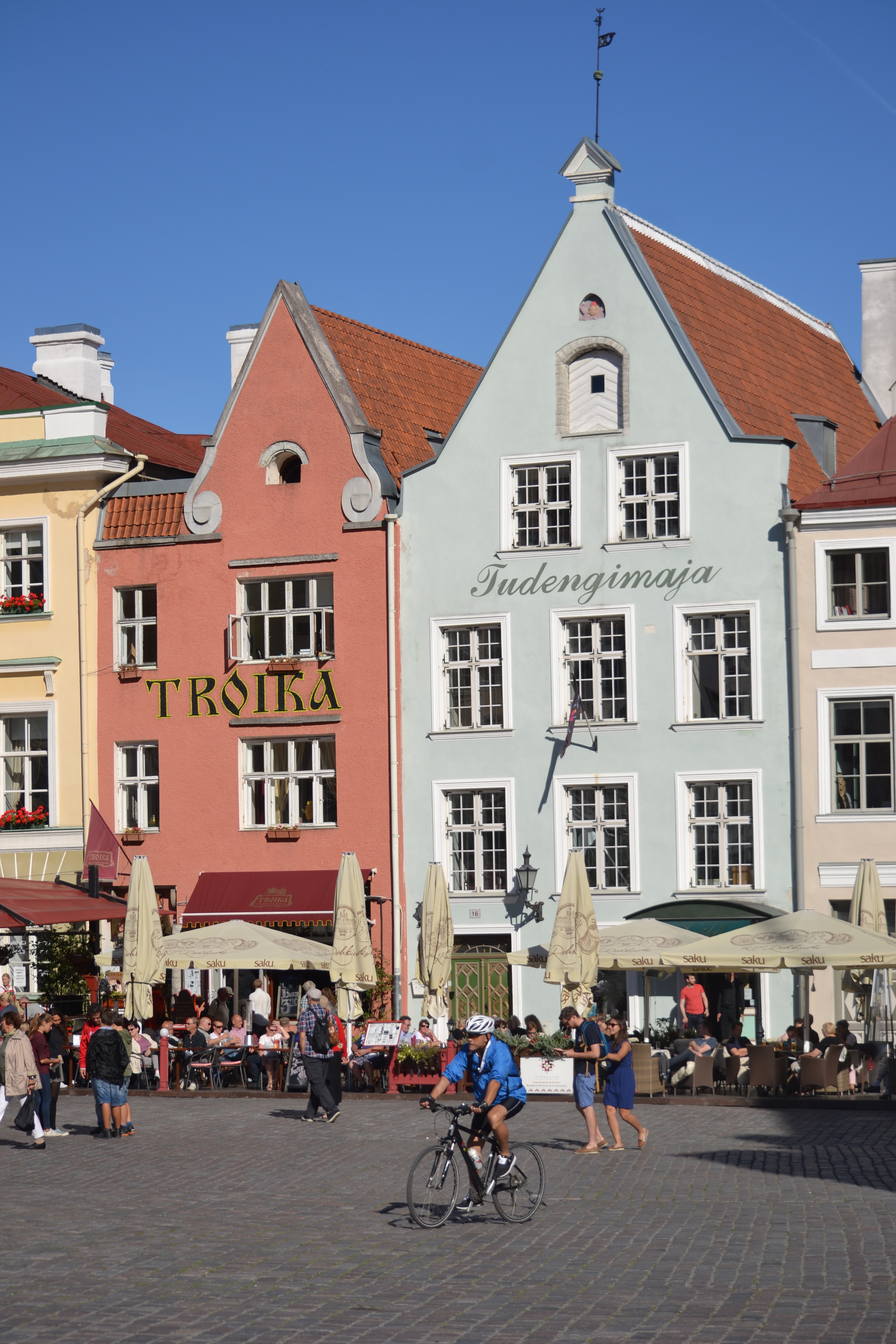
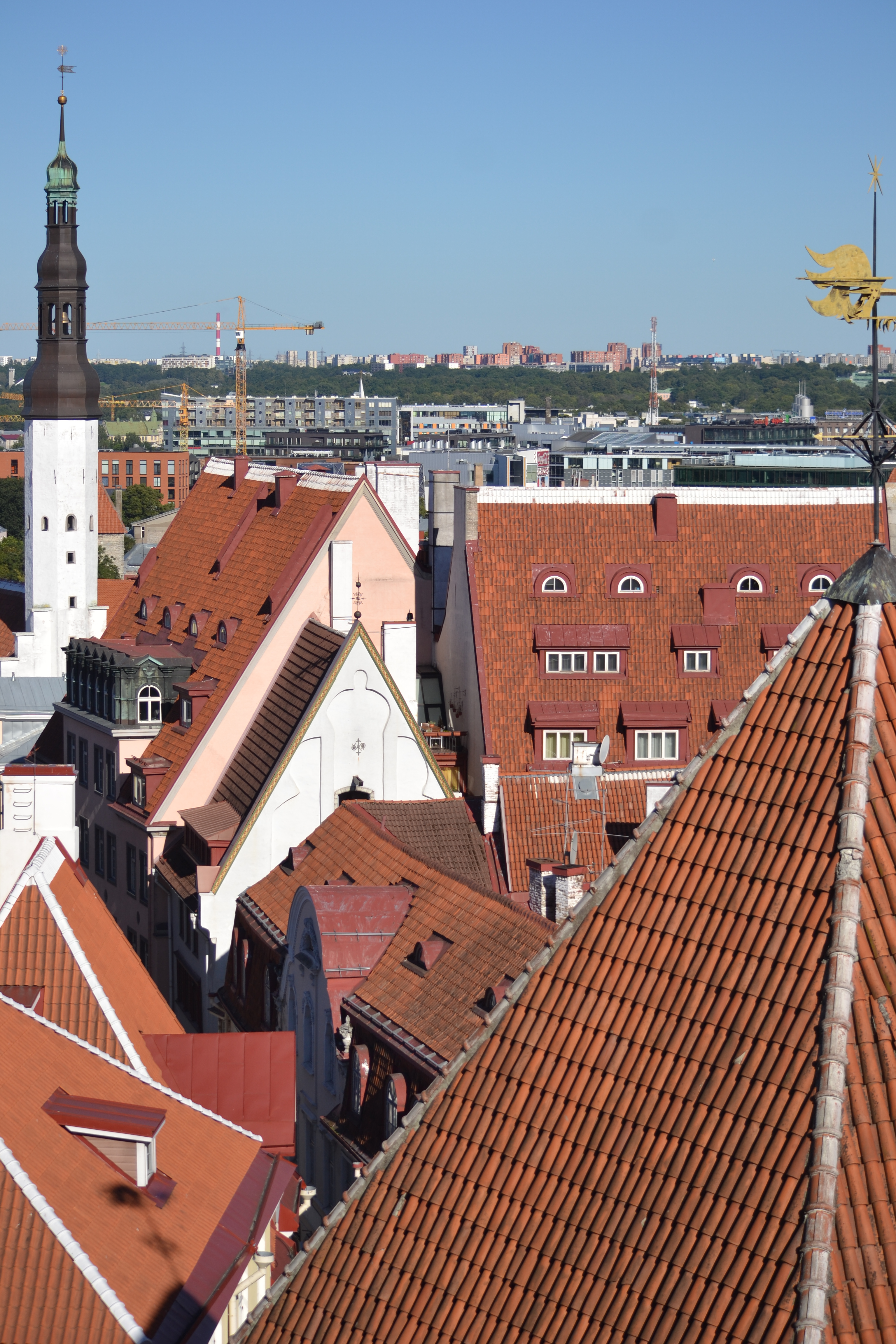
They come to gaze at the old city walls and the terracotta-topped turrets and the cobbled lanes and the merchants’ houses and craftsmen’s guilds and the spires and arches and old wooden houses and pastel-painted facades and to smirk at the sign which modestly claims that “parts of the old monastery [are] of historical interest” and a tower called Kiek in de Kök, which sounds painful but turns out to be Low German for ‘peep in the kitchen’.

The old town was made a conservation area in the middle sixties – around the time that architects everywhere decided that buildings should be unpleasant to look at – and the medieval skyline has not been interrupted by discordant modern blocks and, within the walls, old Tallinn has retained its historic integrity and manages without the cheesy, oversized logos of global chains which so many ancient towns think they need.

DSC_0157

The buildings, which were shabby and soot-blackened in the Soviet days, have since been cleaned up and freshly painted; and the town has been cleaned up, as well, since the early, free-wheeling, post-Soviet days when dive bars offered cheap drinks and bad music to roaring stags and screeching hens, and working girls openly hustled for business in the middle of town. It is a beautiful, charming, intensely photogenic city.

But for much of the day, it is hardly worth taking your camera out because every building has people standing in front of it, straightening their hair with their fingers and smiling uncertainly while significant others take endless snapshots for family albums, and friends photographing each other doing the sort of jumps you see in the brochures for self-styled adventure travel companies – the sort which look like a soldier being machine-gunned from behind.

I carefully picked my way through the chicanes of selfie sticks, and ducked and hurried and did emergency stops to avoid photobombing strangers, and got repeatedly stopped by couples who pressed their cameras on me and appointed me their official photographer, as they posed in front of buildings, straightening their hair with their fingers and smiling uncertainly. I stood, as if at a level crossing while a goods train passed, as tour groups with loud voices and louder shorts rallied behind the flag, saying “hey, ain’t it priddy,” and “questo è bellissimo” and “look, dear, aren’t there a lot of foreigners”.

Half a million people live in Tallinn and another half million pour off the cruise ships every year. All of them seemed to be there at once, on the same baking August weekend as me.

DSC_0148

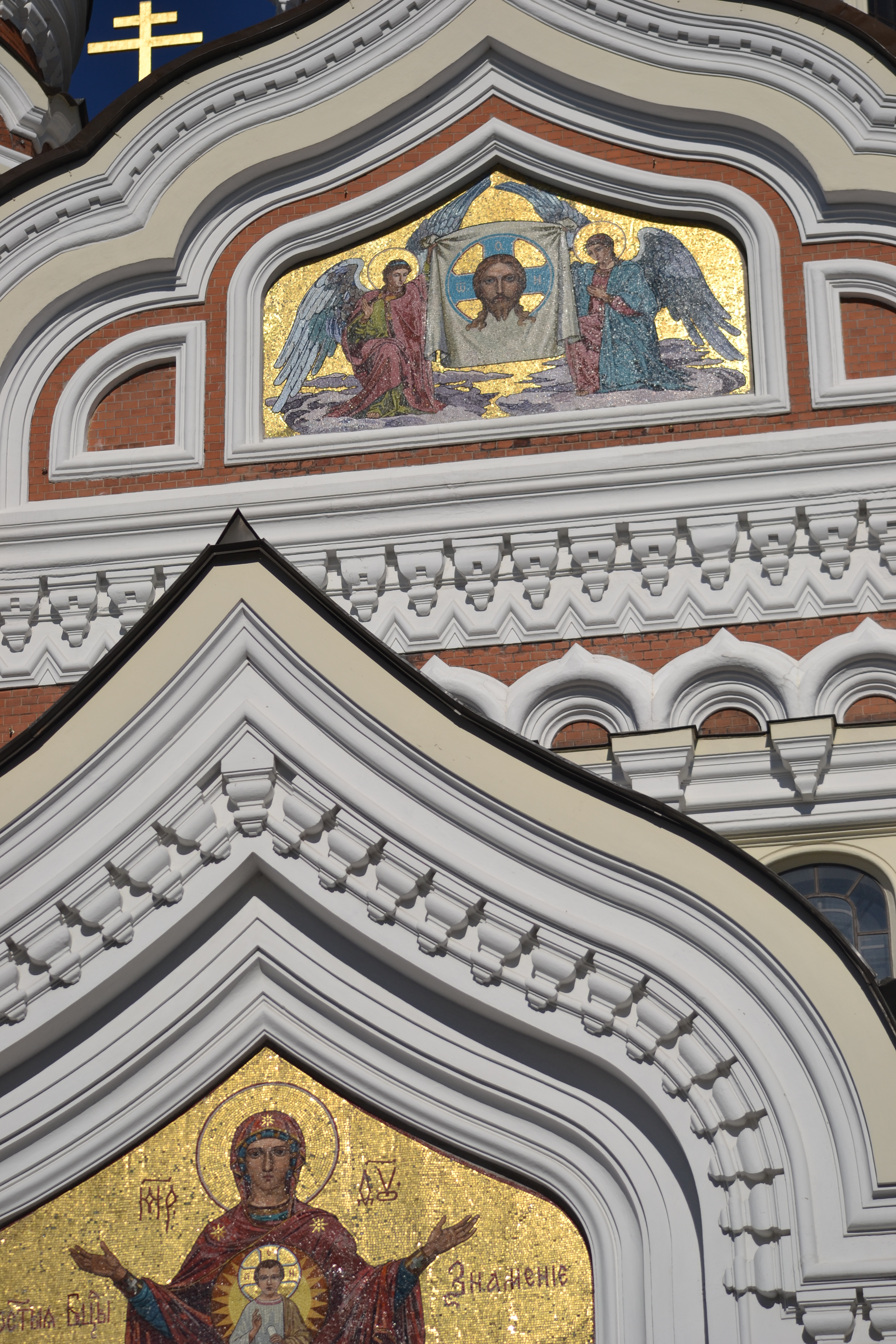
Then at five o’ clock, the foghorns of the ships in the harbour farted and the multiple bells of the Alexander Nevsky Orthodox Cathedral announced the hour: the big confident bells, the apologetic little bells, the sonorous bongs and incessant tinkles, all clashing together in a great cacophony like a big box of assorted bells dropped down a flight of stairs. They went on ringing for at least a minute – I thought they might keep it up the whole hour – and, distracted by them, I did not notice at first that the crowds had melted away, that the lanes had cleared, that no one was posing now in front of the buildings straightening their hair with their fingers and smiling uncertainly, and no one was asking me to take their photo, and the pied pipers of the tour companies had led their groups to the harbour.

It was dreamlike, then, in the narrow lanes with the dwindling sunlight playing on the buildings and casting long shadows and few people about and little sound except my own footsteps on the cobbles.

 © Richard Senior 2015